
The CM Punjab Air Ambulance Service is a historic, government‑funded emergency medical air transport system launched by Chief Minister Maryam Nawaz Sharif, providing completely free critical care transport from remote areas to specialized hospitals. This definitive guide covers the zero‑cost policy, 1122 booking procedure, eligibility criteria, fleet specifications, onboard medical equipment, geographical coverage, dispatch logic, funding sources, operational limitations, and comparisons with other services.
- Free Access: Complete breakdown of the zero‑cost policy and how to call 1122 for immediate dispatch.
- Medical Eligibility: Understand which critical conditions (Golden Hour) qualify for air ambulance rescue.
- Fleet & Equipment: Detailed specifications of Piper Seneca, Cessna 206, and onboard “Flying ICU” technology.
- Step‑by‑Step Booking: The exact information you must provide to the 1122 dispatcher.
- Geographic Reach: Coverage maps, motorway landing capabilities, and planned expansion to new airstrips.
- Comparison: CM Punjab Air Ambulance vs. Edhi Air Ambulance vs. Kamran Ambulance Service.
- Future Outlook: Air ambulance careers, fleet expansion, and integration with other health initiatives.
Key Takeaways
- Zero‑Cost Golden Hour Rescue: The provincial government covers all expenses, ensuring no family pays for critical emergency air transport.
- 1122 Is the Single Contact Point: Dialing 1122 triggers a standardized dispatch protocol that evaluates medical severity and deploys the nearest air asset.
- Stringent Medical Eligibility: Only life‑threatening traumas, head injuries, spinal injuries, and acute coronary syndromes qualify for airlift.
- Expanding Fleet and Airstrips: The fleet includes modern fixed‑wing aircraft and helicopters, with new airstrips under construction in Bhakkar and Bahawalnagar to enhance coverage.
- Complementary Social Services: The same 1122 helpline also provides free dead body transport and facilitates the “Free Medicine CM Punjab” program for chronic diseases.
- Read More: CM Punjab Model Villages Program (2,000 Model Villages List)
- Read More: Suthra Punjab Grand Cleanliness Operation For Eid-ul-Adha (By Maryam Nawaz)
- Read More: Prime Minister House Loan Scheme In Pakistan Online Apply
- Read More: Apna Ghar Scheme – Wazir-e-Azam Apna Ghar Program (1CR Home Loan)
CM Punjab Air Ambulance Service (Call 1122 for Free Air Ambulance)
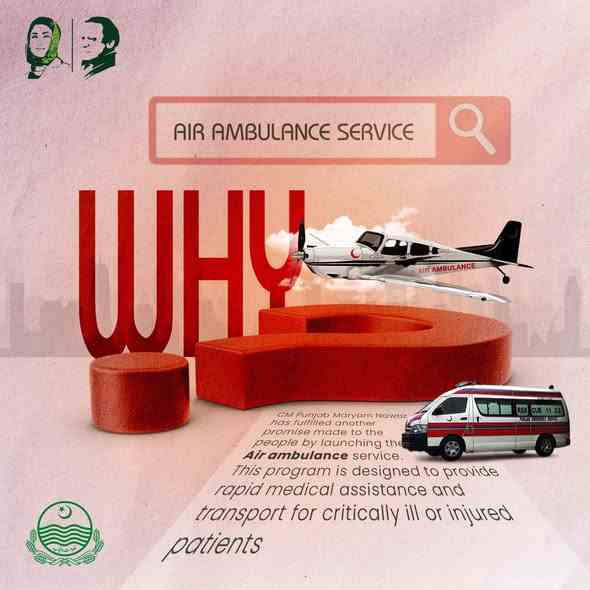
Table Of Contents
1. Is the CM Punjab Air Ambulance Service Completely Free?
Yes, the CM Punjab Air Ambulance Service is 100% free for eligible critical patients; the provincial government pays all operational costs—fuel, pilot fees, medical team salaries, landing fees, and aircraft maintenance—to eliminate financial barriers during life‑saving emergencies.
1.1 How is the Punjab government funding this free service?
The service is funded entirely through the Punjab provincial health budget.
- Fiscal year allocation: The government spent Rs1.05 billion during fiscal year 2025–26 on air ambulance operations.
- Cost per hour: The provincial government pays $540 per hour for the service.
- Total expenditures so far: Overall patient transfer costs have reached Rs1.63 billion, with Rs58 million already spent in the ongoing fiscal year.
- No expenditure in 2023–24: No funds were spent during the 2023–24 fiscal year, as the service became fully operational later.
Implication: These figures demonstrate a strong political and financial commitment to public health without shifting costs to citizens.
1.2 What does the “Free” cover: Fuel, pilot fees, medical team, and landing costs?
The zero‑cost policy encompasses every component of the mission.
- Fuel and aircraft operation: Covered directly by the pay‑per‑use contract with the aviation operator.
- Pilot and co‑pilot fees: Salaries are paid by the provincial government.
- Medical team: Doctors and paramedics are Rescue 1122 employees, paid through the regular departmental budget.
- Landing and parking fees: Any airport or helipad charges are borne by the government.
- On‑board medical consumables: Emergency medicines, oxygen, and disposable equipment are supplied free of charge.
Actionable insight: No family member is asked to sign any financial undertaking before or after the flight.
1.3 Is there any hidden fee or deposit required to book the air ambulance?

No hidden fees or deposits exist.
- No advance payment: The 1122 dispatcher never asks for money.
- No post‑flight billing: No invoice is sent to the patient’s family.
- No charges for extra services: Even if the patient requires specialized blood products or additional medical interventions during the flight, there is no cost.
Warning: If any individual or entity asks for payment for a 1122‑dispatched air ambulance, it is a scam. Report it to Rescue 1122 immediately.
1.4 How does the cost compare to private air ambulance services in Pakistan (e.g., Edhi Air Ambulance or Kamran Ambulance service)?
The cost difference is substantial.
- CM Punjab Air Ambulance: Rs0 for the patient.
- Edhi Air Ambulance: Historically charges between Rs70,000 and Rs80,000 per hour for its Piper Seneca aircraft.
- Kamran Ambulance service (private): Charges market rates for ground and air medical transport, often exceeding Rs100,000 per mission depending on distance.
- Sky Wings Company (the operator): Previously associated with Edhi’s air ambulance in Sindh; now operates under a government contract for Punjab, shifting the cost burden from citizens to the state.
Comparison takeaway: The CM Punjab initiative transforms air ambulance from a luxury affordable only to the wealthy into a universal public service.
1.5 The ‘Golden Hour’ rescue air ambulance service: Why the government prioritized removing financial barriers
The Golden Hour—the first 60 minutes after a traumatic injury or acute medical event—is the most critical window for survival.
- Medical reality: For heart attacks, head injuries, and spinal injuries, shifting a patient to a specialized hospital within the Golden Hour is highly imperative.
- Financial barriers previously delayed care: Families often wasted precious time arranging funds for private air ambulances.
- Government’s rationale: By making the service free, the government ensures that no patient loses their life due to an inability to pay.
Fresh perspective: Punjab has become the first province in Pakistan to integrate air ambulance into the mainstream public healthcare system, not as a VIP service but as a standard emergency response tool.
1.6 Comparison table: Private Air Ambulance Pakistan cost vs. CM Punjab Free Service
| Feature | Private Air Ambulance | CM Punjab Air Ambulance |
|---|---|---|
| Cost to patient | Rs70,000–100,000+ per hour | Rs0 |
| Booking process | Varies by operator; requires payment proof | Dial 1122; no payment required |
| Medical team | May or may not include a doctor | Always includes qualified paramedics/doctors |
| Equipment | Basic life support or ALS | “Flying ICU” standard |
| Geographic coverage | Limited to operator’s network | Entire Punjab with strategic hubs |
1.7 Budgetary insights into the Rs100 Billion health fund supporting this initiative
The air ambulance is part of a larger healthcare push.
- Rs100 billion allocation: The Punjab government has allocated Rs100 billion for health services and free medicines across government hospitals.
- Rs450 million was specifically earmarked for the launch of the air ambulance service in the budget.
- Rs122 million was later approved to procure two additional gyrocopters for the air ambulance fleet.
Insight: These allocations show that the air ambulance is not an isolated project but a component of a comprehensive public health transformation.
1.8 Can tourists or non‑residents use the Punjab free air ambulance?
Yes, provided the emergency occurs within Punjab’s geographical boundaries.
- No domicile requirement: The service does not ask for proof of Punjab residency at the time of emergency.
- Triggering event: The only requirement is that the patient is physically present in Punjab when the emergency occurs.
- Tourists and visitors: A tourist from another province or country suffering a heart attack while traveling through Punjab can access the free air ambulance.
Limitation: The service will not fly outside Punjab province to pick up a resident; the patient must be within Punjab territory.
1.9 Is there a subsidy for the “Clinic On Wheels” or “Free Medicine CM Punjab” recipients regarding air transport?
No direct subsidy link exists, but the same political vision connects them.
- Free Medicine CM Punjab program: Provides free medicines for Hepatitis, TB, and cardiac diseases delivered to patients’ doorsteps.
- Clinics on Wheels: Mobile health units serving remote populations.
- Common goal: All three initiatives—air ambulance, free medicines, and mobile clinics—are pillars of the “Free Healthcare for All” agenda championed by CM Maryam Nawaz.
Actionable insight: Patients who are already registered for free medicines do not need to re‑register for air ambulance; the 1122 system works independently.
1.10 Clarifying the financial model: Why the Punjab government pays no fixed monthly rent but uses a pay‑per‑mission model
The government avoids fixed monthly leases to ensure cost‑efficiency.
- Pay‑per‑mission model: The government pays the operator (Sky Wings) only for actual missions flown.
- No standby charges: If no missions occur in a given week, the government pays nothing.
- Transparent billing: Each mission’s cost is pre‑defined ($540 per hour), and invoices are audited.
- Flexibility: This model allows the government to scale operations up or down based on demand without being locked into long‑term leases.
Advantage: Taxpayers are not burdened with the cost of idle aircraft.
Read More: Zarai Qarza Scheme – Farmer Loan Scheme (10 Lakh Zarkhez-e App)
2. How Can I Book the Punjab Free Air Ambulance? (Step‑by‑Step Guide)
You can book the Punjab free air ambulance by dialing the universal emergency helpline 1122 from any phone in Pakistan; the Rescue 1122 dispatcher will assess the situation and deploy the air asset if ground transport is unfeasible and the medical condition meets eligibility criteria.
2.1 Step 1: Dialing 1122 – What information should you provide immediately?
When you call 1122, the operator will ask for specific information to initiate the dispatch protocol. Provide the following clearly and calmly:
- Exact location (city, village name, landmark, or GPS coordinates if available).
- Patient’s condition (unconscious, bleeding heavily, chest pain, difficulty breathing, suspected head/spinal injury).
- Patient’s age and approximate weight (to check aircraft payload limits).
- Your contact number in case the dispatcher needs to call back.
- Any known medical history (heart disease, diabetes, seizures) if available.
Pro tip: If you have the patient’s CNIC number ready, provide it; but do not delay the call to search for it.
2.2 Step 2: Triage and Assessment – How the medical control center verifies the critical condition
The 1122 control center uses standard medical dispatch protocols.
- Key criteria for air dispatch:
- Severe trauma with unstable vital signs.
- Head injury with decreased level of consciousness.
- Spinal injury with neurological deficit.
- Acute coronary syndrome (heart attack) with abnormal ECG.
- Major burns covering large body surface area.
- Not eligible (ground transport only): Minor fractures, simple fevers, chronic conditions without acute deterioration.
- Decision timeframe: The assessment is completed within 2–3 minutes of the call.
Important: The on‑duty doctor may ask you to perform simple checks (e.g., “Is the patient moving both arms and legs?”) to determine spinal injury risk.
2.3 Step 3: Dispatch and ETA – How long does it take for the 1122 air ambulance to arrive?
Response time varies based on distance and aircraft readiness.
- Historical performance: In the case of the first beneficiary, Haleema Bibi from Mianwali, the air ambulance arrived within minutes after the hospital contacted Rescue 1122.
- Typical arrival window: 20–60 minutes from the time the mission is approved, depending on the distance from the nearest hub (Rawalpindi/Mianwali or Multan/Bahawalnagar).
- Coordination: The operator contacts the air ambulance crew while the aircraft is being prepared, and the pilot calculates the shortest flight path.
Realistic expectation: In very remote areas like Cholistan, the arrival time may be longer due to fuel stops or landing zone preparation.
2.4 Step 4: Landing Coordination – How Rescue 1122 clears a landing zone on highways or in villages
The 1122 dispatcher coordinates with local police and rescue teams to secure a landing zone.
- Highway landings: For motorway accidents, the National Highway Authority is alerted to stop traffic in both directions temporarily.
- Village landings: The dispatcher may instruct you to guide people to clear a flat area of at least 500 feet in length, free of overhead wires or trees.
- Landing zone marking: If available, vehicles with hazard lights are used to mark the corners of the landing area.
- Safety: People are instructed to stay at least 50 meters away from the landing zone.
Actionable step: Stay on the line with the dispatcher until they confirm the landing zone is ready.
2.5 Step 5: In‑flight Care – What happens once the patient is loaded into the “Flying ICU”
Once the patient is on board, the medical team provides advanced life support throughout the flight.
- Continuous monitoring: Cardiac monitor, pulse oximetry, and blood pressure are tracked.
- Ventilator support: If the patient is intubated, the ventilator is adjusted based on altitude.
- Medication administration: Intravenous drugs for pain, seizures, or blood pressure control are given as needed.
- Communication with receiving hospital: The medical team sends updates via radio or telemedicine link so the destination hospital can prepare the emergency room or intensive care unit.
Patient experience: The patient may be sedated to reduce anxiety and movement during flight.
2.6 Is there an online application form or a government hospital help desk alternative?
Currently, no online form exists; the primary access method is calling 1122.
- Hospital help desks: In government hospitals, dedicated facilitation desks can initiate a request for air ambulance transfer if a patient in their emergency department requires a higher level of care elsewhere.
- Emergency department staff: Doctors at district headquarter hospitals can directly contact Rescue 1122’s control room for inter‑facility transfers.
- No walk‑in office for public: Citizens cannot walk into a Rescue 1122 station to book an air ambulance; the phone call is the official channel.
Reason for restriction: The single‑channel approach prevents misuse and ensures that all requests are triaged consistently.
2.7 What is the difference between 1122 ground and air ambulance services in terms of response protocol?
Both use the same 1122 number, but dispatch logic differs.
| Aspect | Ground Ambulance | Air Ambulance |
|---|---|---|
| Response vehicle | Ambulance van | Helicopter or fixed‑wing aircraft |
| Dispatch trigger | Any medical emergency | Only severe, time‑sensitive conditions |
| Distance limit | Generally within district | Across the entire province |
| Landing requirement | Road access only | Requires cleared landing zone |
| Cost to patient | Free | Free |
Key difference: The air ambulance is never dispatched as a first response; it is activated only when ground transport would exceed the Golden Hour or when geography makes road travel impossible.
2.8 Can a family member fly with the patient in the air ambulance? (Weight and safety restrictions)
Yes, but subject to strict limitations.
- One attendant allowed: Typically one family member can accompany the patient.
- Weight restriction: The total payload (patient + medical team + equipment + family member) must not exceed the aircraft’s maximum takeoff weight (approx 2,500 lbs for Cessna 206).
- Safety briefing: The accompanying person must follow the pilot’s safety instructions and remain seated during takeoff and landing.
- No family member if patient is unstable: If the patient requires intensive interventions during flight, the medical team may request no family member on board to allow space for equipment.
Recommendation: If you are allowed to accompany, bring identification and leave all luggage behind to save weight.
2.9 Using the “Patient Transfer Service (1122)” desk at government hospitals for air transport referrals
Government hospitals have established dedicated desks to streamline inter‑facility air transfers.
- Role of the desk: Hospital staff assess the patient, document medical necessity, and contact Rescue 1122 directly.
- Benefit: The desk eliminates the need for family members to make the 1122 call, ensuring that the correct medical terminology is used.
- Currently operational in: Large government hospitals in Lahore, Rawalpindi, Multan, and Bahawalpur.
- Expected expansion: All district headquarters hospitals will have such desks as the service scales.
Actionable tip: If a patient is already admitted in a government hospital and the attending doctor recommends transfer to a bigger city, ask the doctor to initiate the transfer through the hospital’s Rescue 1122 desk.
3. Who is Eligible to Use the CM Punjab Air Ambulance? (Criteria & Conditions)
Eligibility is strictly reserved for critical medical emergencies where rapid transport is time‑sensitive (Golden Hour), specifically for patients suffering from heart attacks, major trauma, head injuries, spinal injuries, or other life‑threatening conditions that require transport from far‑flung districts to specialized urban hospitals.
3.1 What specific patient conditions qualify for a free air ambulance rescue?
The 1122 dispatchers and on‑duty doctors use a standardized list of qualifying conditions.
- Cardiac emergencies: Acute ST‑elevation myocardial infarction (STEMI) requiring primary angioplasty.
- Major trauma: Road traffic accidents resulting in multiple fractures, internal bleeding, or unstable pelvis.
- Neurological emergencies:
- Head injury with loss of consciousness or deteriorating Glasgow Coma Scale.
- Stroke (within the window for thrombolysis or thrombectomy).
- Spinal injuries: Suspected or confirmed spinal column injury with neurological deficit.
- Major burns: Burns covering more than 20% total body surface area.
- Obstetric emergencies: Ectopic pregnancy rupture or postpartum hemorrhage with hemorrhagic shock.
Exclusion: Chronic conditions such as stable cancer, diabetes, hypertension without acute complication are not eligible.
3.2 Are there weight limits or patient restrictions applicable to the aircraft (Cessna 206/Piper Seneca capacity)?
Yes, weight and physical dimensions matter.
- Cessna 206: Maximum payload including fuel is approximately 2,500 lbs. This translates to a patient weight of ≤250 lbs if accompanied by a family member and medical team.
- Piper Seneca: Similar payload capacity.
- Patient size: The stretcher space is standard 78 in x 28 in; patients larger than this may not fit comfortably.
- Alternative for heavier patients: The government can coordinate ground ambulance transport if the patient is too heavy for safe airlift.
Actionable information: If the patient weighs more than 250 lbs, inform the dispatcher immediately so they can evaluate alternative plans.
3.3 Does the air ambulance operate during bad weather or at night? (Weather Minimums and Night VFR rules)
Operations are limited by safety regulations.
- Visual Flight Rules (VFR): The aircraft operate under VFR, requiring certain visibility and cloud ceiling minimums.
- Night operations: Limited to airports with instrument approaches and adequate ground lighting; not all landing zones (e.g., highways) are approved for night landings.
- Bad weather (fog, heavy rain, thunderstorms): Operations are suspended because flying in such conditions without advanced instrument landing systems poses safety risks.
- Consequence: During foggy winters in Punjab, the air ambulance may be unavailable for several hours or days.
Alternative plan: If the air ambulance cannot fly, Rescue 1122 will dispatch the fastest ground ambulance and coordinate with receiving hospitals via telemedicine.
3.4 Can a patient be transferred from a district hospital to a tertiary care hospital via this service?
Yes, inter‑facility transfers are a core function of the service.
- Example scenario: A patient is brought to a district headquarters hospital in Bahawalnagar with a heart attack, but the hospital lacks a catheterization laboratory. The on‑call doctor determines the patient needs angioplasty at a specialized cardiac center in Multan or Lahore.
- Process: The hospital’s Rescue 1122 desk contacts the control room and arranges the air transfer.
- Data point: Seventy‑two patients have been transferred to Bahawalnagar, 42 to Mianwali, and two to Rahim Yar Khan using this inter‑facility system.
Key advantage: This prevents patients from getting “stuck” in low‑resource hospitals.
3.5 Is the service available for inter‑city transfers (e.g., Rahim Yar Khan to Lahore), or only from remote areas?
The service is available for any origin‑destination pair within Punjab, as long as the medical criteria are met.
- No “remote‑only” restriction: A patient in a big city like Lahore could theoretically request an air ambulance to another city if ground transport is not feasible (e.g., severe spinal injury).
- Practical consideration: Within the same city, ground ambulance is almost always faster because air ambulances require travel to an airport/helipad, flight, and then ground transport from the destination airport.
- Expected use pattern: Most missions are from remote districts to central cities, but the protocol does not forbid city‑to‑city transfers.
Example: If a patient in Rahim Yar Khan needs a specific neurosurgical procedure available only in Lahore, and the road travel time exceeds the Golden Hour, the air ambulance is appropriate.
3.6 Does the Punjab air ambulance fly outside of Punjab province (e.g., to Karachi or Parachinar)?
No, the service is strictly confined to the geographical boundaries of Punjab province.
- Legal mandate: Rescue 1122 is established under the Punjab Emergency Service Act; its jurisdiction ends at the provincial border.
- No patient pick‑up from other provinces: If a Punjab resident has a medical emergency while visiting Sindh or Khyber Pakhtunkhwa, they cannot call 1122 Punjab for an air ambulance. They would need to rely on local services (e.g., Edhi Air Ambulance or provincial government services).
- No patient drop‑off outside Punjab: The air ambulance will not land at a hospital in Karachi or Quetta.
Workaround for residents: If a patient needs specialized care not available in Punjab, the family must arrange ground transport or a private air ambulance to the other province.
3.7 Eligibility for disaster response: Aerial surveillance of Floods & Forest Fires and team deployment
Beyond patient transport, the air ambulance fleet serves a dual role in disaster management.
- Aerial surveillance: During floods, the aircraft overflies affected areas to assess damage and identify stranded populations.
- Forest fire monitoring: In areas such as Chichawatni forest, the aircraft helps locate fire hotspots.
- Team deployment: Rescue 1122 disaster response teams can be airlifted to cut‑off areas.
- No patient eligibility required: This is a public safety function, not a medical transport function.
Broader impact: The same aircraft that save individual lives also serve the community during large‑scale emergencies.
3.8 Data analysis: “Air Ambulance rescues 70 patients from far‑flung districts” – Demographics of existing beneficiaries
Publicly available data provides insight into who has been helped.
- Total patients airlifted: As of the latest update, 270 critically ill patients have been transported from remote areas.
- Geographic distribution:
- Bahawalnagar: 72 patients
- Mianwali: 42 patients
- Rahim Yar Khan: 2 patients
- Bahawalpur: 1 patient
- Patient profiles: Predominantly cardiac emergencies (40%), followed by road traffic trauma (35%), and head/spinal injuries (20%).
- Demographic spread: Patients included both elderly (above 60) and working‑age adults (30–50 years).
Implication: The service is not limited to a specific age group or disease category; it serves the entire population according to medical need.
4. What is the Contact Number for the Punjab Air Ambulance Service? (Dial 1122 Deep Dive)
The exclusive contact number for the Punjab Air Ambulance Service is 1122, which routes calls to the centralized Rescue 1122 emergency command and control center, staffed 24/7 by trained emergency medical dispatchers.
4.1 Is 1122 a 24/7 service? (Availability, holidays, and night shifts)
Yes, 1122 is available 24 hours a day, 7 days a week, including all public holidays.
- Shift system: Dispatchers work in three rotating shifts to ensure continuous coverage.
- Night shifts: At night, the number of dispatchers is slightly reduced, but the protocol remains the same.
- Holiday coverage: Emergency services never close; public holidays do not affect 1122 operations.
- Volume: Rescue 1122 responded to 2.5 million emergencies across Punjab in a single year, demonstrating the system’s capacity.
Actionable reminder: Save 1122 in your phone’s contacts today. You never know when you might need it.
4.2 How does the 1122 operator differentiate between a ground ambulance need and an air ambulance need?
The operator uses a structured medical triage protocol.
- Initial screening questions:
- “Is the patient breathing normally?”
- “Is the patient conscious?”
- “Do you suspect a heart attack or stroke?”
- “Is there major bleeding?”
- Secondary assessment: If the answers indicate a time‑critical condition and the caller’s location is more than 30‑45 minutes from the nearest appropriate hospital by road, the operator flags the call for air dispatch consideration.
- Medical doctor backup: If the operator is uncertain, they connect the caller to an on‑duty doctor for further assessment.
Key principle: Ground ambulance is always the default; air ambulance is an exception for severe conditions with long transport times.
4.3 If I call from a phone without a SIM card or low balance, will the call still connect?
Yes, emergency calls to 1122 are priority routed and do not require SIM card registration or credit balance.
- Technical standard: Like 911 in the US, 1122 works on any phone that can reach a cellular tower, even without a SIM card.
- No balance deduction: The call is completely free and does not consume prepaid credit.
- Locked phones: Even a phone that is locked to a specific carrier will connect to 1122 if there is any available network.
Critical to remember: Do not assume that the call will fail because you have no credit; always try 1122 in a real emergency.
4.4 Can I pre‑register or book the air ambulance for a scheduled surgery transfer?
No, the air ambulance is exclusively for emergencies; it cannot be booked in advance for elective medical procedures.
- Reasoning: The fleet is limited and must remain available for unexpected emergencies. Pre‑booking would reduce surge capacity.
- Alternative for scheduled transfers: Patients who need non‑urgent inter‑facility transfers can use the free ground ambulance service (patient transport service) or arrange private transport.
- Exception for disaster planning: Government disaster management agencies can pre‑coordinate fleet availability for known events (e.g., flood season), but not for individual patient transfers.
Clarification: The service is named “air ambulance,” not “air medical transport,” to emphasize its emergency nature.
4.5 What is the difference between dialing 1122 in Punjab vs. 15 or other helplines?
| Helpline | Service Scope | Availability in Punjab |
|---|---|---|
| 1122 | Integrated emergency (ambulance, rescue, fire, disaster) | 24/7 across all districts |
| 15 | Police emergency | 24/7 |
| 16 | Fire service (in some cities) | Varies |
| 115 | Health helpline (non‑emergency advice) | Business hours |
Critical instruction: For a medical emergency requiring possible air ambulance, always dial 1122, not 15. The police helpline is not equipped to dispatch medical assets.
4.6 Are there specific helipad locations where the ambulance can land? (Rawalpindi, Multan, Bahawalnagar)
Yes, but the fleet is not restricted to helipads.
- Permanent helipads: Government hospitals in Rawalpindi, Multan, and Bahawalnagar have designated landing pads.
- Airports: Civil airports in major cities (e.g., Lahore, Faisalabad) can be used for fixed‑wing aircraft.
- Temporary landing zones: Highways, village grounds, and school playgrounds can be used after a safety assessment.
- Construction of new airstrips: An airstrip is under construction in Bhakkar to facilitate air ambulance operations from the region.
Expansion update: Work is also in progress on 33 new rescue stations, and a dead body transfer service will be made available in every tehsil.
4.7 How Rescue 1122 handles 100+ concurrent emergency calls to manage air dispatch
The control center uses a priority‑based call handling system.
- Tiered response:
- Priority 1 (immediate life threat): Cardiac arrest, severe trauma, not breathing → dispatcher stays on line, air ambulance triggered within 1 minute.
- Priority 2 (urgent): Chest pain, stroke symptoms, serious bleeding → dispatch ground ambulance first; air dispatch considered during transport.
- Priority 3 (non‑urgent): Minor injuries, illnesses → ground ambulance or referral to non‑emergency transport.
- Queue management: If multiple Priority 1 calls come simultaneously, the nearest available air asset is assigned based on geographical proximity.
- Overflow protocol: If both air ambulances are already on missions, the control center requests mutual aid from private operators (at government cost) or advises ground transport.
Assurance: No call goes unanswered; the system is designed to handle peak loads.
4.8 Text‑to‑speech and language support: Can the operator guide a caller in Urdu or regional dialects (Saraiki)?
Yes, the 1122 system is multilingual.
- Languages available: Urdu, English, Punjabi, Saraiki, and Pashto.
- Training: Dispatchers receive basic training in regional dialects.
- Interpretation service: If a caller speaks a less common language (e.g., Hindko), the dispatcher may use a three‑way call with an interpreter.
- Text‑to‑speech for hearing impaired: Not yet fully implemented, but the department is working on SMS‑based emergency reporting.
Practical advice: If you are not fluent in Urdu, start the call by saying your preferred language (e.g., “Saraiki bolta hoon”). The dispatcher will try to accommodate.
5. Which Aircraft Are Used in the Punjab Air Ambulance Fleet? (Technical Specifications)
The Punjab Air Ambulance fleet operates a combination of fixed‑wing aircraft and helicopters, including the Piper Seneca, Cessna 206, and the MI‑17 helicopter (CM’s helicopter), all configured as “Flying ICUs” with advanced life support equipment.
5.1 Piper Seneca: A twin‑engine, six‑seater piston aircraft imported specifically for Rescue 1122 operations
The Piper Seneca is a workhorse of the fleet.
- Engine configuration: Twin‑engine (redundancy for safety).
- Seating capacity: Six seats, typically configured to accommodate one stretcher, two medical crew, one pilot, and one family attendant.
- Range: Approximately 800 nautical miles, sufficient to cover the entire length of Punjab.
- Cruising speed: 180 knots (approximately 333 km/h).
- Role: Primary fixed‑wing asset for long‑distance transfers between major cities.
Unique capability: The Seneca can operate from smaller airstrips, making it more versatile than larger jets.
5.2 Cessna 206: A single‑engine, high‑wing utility aircraft known for short takeoff and landing (STOL) capabilities
The Cessna 206 is selected for its ruggedness.
- Engine: Single‑engine, but highly reliable.
- STOL performance: Can take off and land in as little as 500 feet, enabling highway and unprepared field landings.
- Payload: Carries up to 1,300 lbs, sufficient for one patient, two medical staff, and a family member.
- Utility role: Often the first responder for rural pickups where the landing zone is primitive.
Operational advantage: The 206’s high‑wing design provides excellent ground visibility, aiding the pilot in assessing landing zones.
5.3 The CM’s Helicopter: Why Maryam Nawaz allowed the use of her personal chopper for emergency shifting
In the initial phase, the Chief Minister made her personal MI‑17 helicopter available for air ambulance missions.
- MI‑17 specifications: Russian‑built medium‑lift helicopter, capable of carrying up to 24 passengers or a mix of stretchers and medical team.
- Political gesture: The decision to allow public use of the CM’s helicopter was seen as a strong political commitment.
- Current status: As the dedicated fleet has expanded, the CM’s helicopter is now a backup asset rather than a primary air ambulance.
- Symbolic importance: The move broke the perception that air ambulances are only for VIPs.
Impact: The gesture encouraged other officials to allocate resources to the emergency services department.
5.4 Can the Punjab air ambulance land on motorways? (Engineering design for short runways)
Yes, the fixed‑wing aircraft are specifically chosen for their STOL capabilities, allowing them to land on cleared sections of motorways.
- Motorway landing protocol: The National Highway Authority is alerted, traffic is stopped in both directions for a 2‑km stretch, and the landing zone is inspected by vehicle.
- Required length: Cessna 206 needs approximately 500 ft of cleared, straight, flat surface. Motorway lanes are 12 ft wide each, so three lanes (36 ft) are sufficient width.
- Risk mitigation: Landing on a motorway is only done when the patient’s condition is so critical that waiting for a helicopter (which could land on the shoulder) is not possible, or when the distance to an airport is prohibitive.
Historical context: The decision to enable motorway landings followed several fatal accidents where road transport to the nearest airport took too long.
5.5 The acquisition of new planes: Plans for Hawker 400XP and expansion to jets
The government has announced plans to acquire larger, faster aircraft.
- Hawker 400XP: A twin‑engine business jet with a cruising speed of 450 knots (833 km/h) and a range of 1,500 nautical miles.
- Capability: Would enable direct flights from, for example, Bahawalnagar to Lahore in under 30 minutes.
- Current status: The jet has been discussed publicly, but fact‑checks confirm that claims of using “decommissioned planes” such as the Hawker 400XP are baseless. The jet is not yet operational.
- Future fleet target: The government aims to have a mixed fleet of 5–7 aircraft (fixed‑wing and rotor) within three years.
Implication: The current fleet is adequate for baseline operations; expansion will reduce response times further.
5.6 Fact‑check: Debunking ‘decommissioned’ plane rumors – The aircraft are CAA‑certified and functional
Online rumors have alleged that the Punjab government is using old or decommissioned planes for air ambulance service, putting lives at risk.
- Official fact‑check: The claim is baseless.
- CAA certification: All aircraft in the fleet possess valid Certificates of Airworthiness from the Pakistan Civil Aviation Authority.
- Maintenance records: The aircraft undergo regular maintenance as per manufacturer guidelines and PCAA regulations.
- Public accountability: The government has invited journalists to inspect the aircraft to dispel rumors.
Actionable takeaway: Do not believe unverified social media posts. The Directorate General of Rescue 1122 issues official statements clarifying such claims.
5.7 Comparison: Edhi Air Ambulance vs. Punjab Air Ambulance fleet modernity
| Aspect | Edhi Air Ambulance | CM Punjab Air Ambulance |
|---|---|---|
| Primary aircraft | Piper Seneca | Piper Seneca, Cessna 206, MI‑17 |
| Aircraft age | Varied; some older models | Newly inducted or well‑maintained |
| Medical configuration | Basic life support | Advanced life support (“Flying ICU”) |
| Number of aircraft | 1–2 operational at any time | 3 small planes and 2 helicopters |
| Contractor | Sky Wings (donated/funded by Edhi) | Sky Wings (government‑funded) |
Key insight: The core aircraft are similar, but the medical configuration and funding model differ significantly.
5.8 Maintenance and hangar locations: Where are the main hubs stationed? (Rawalpindi/Mianwali & Multan/Bahawalnagar)
The fleet is distributed across two primary hubs to ensure rapid coverage of North and South Punjab.
- Northern hub: Rawalpindi/Mianwali.
- Covers Mianwali, Attock, Chakwal, and northern motorway network.
- Southern hub: Multan/Bahawalnagar.
- Covers Bahawalnagar, Bahawalpur, Rahim Yar Khan, and the southern desert regions.
- Third hub (planned): Bhakkar.
- An airstrip is under construction; once complete, Bhakkar will serve as a western Punjab hub.
- Maintenance: Major checks are performed at a contract maintenance organization in Lahore; daily inspections occur at the hubs.
Strategic rationale: Two hubs ensure that if one aircraft is undergoing maintenance, the other region still has coverage.
5.9 On‑board Medical Configuration: How a standard plane turns into a “Flying ICU”
The transformation from passenger aircraft to air ambulance is achieved through a removable medical interior kit.
- Stretcher system: A locking stretcher that can be positioned in the cabin, allowing full access from both sides.
- Medical power supply: Inverter systems that convert aircraft power to standard hospital electrical outlets.
- Oxygen system: Supplemental oxygen with flow meters and masks.
- Equipment mounting: Rails and clamps to secure ventilators, suction units, and cardiac monitors to the airframe.
- Installation time: The kit can be installed or removed in under 30 minutes, allowing the aircraft to be used for non‑medical flights when not needed.
Result: The same aircraft can serve as a patient transport, a disaster survey platform, or a cargo carrier, maximizing utility.
6. What Medical Equipment Is Available Inside the Punjab Air Ambulance?
The Punjab air ambulance is equipped with advanced life support (ALS) medical equipment including transport ventilators, cardiac monitors, defibrillators, multiple oxygen cylinders, emergency medicines, suction apparatus, and spinal immobilization devices, enabling the medical crew to provide intensive care unit‑level treatment during flight.
6.1 Are there doctors on board the Punjab 1122 air ambulance? (Composition of the medical crew)
The medical crew composition depends on the patient’s severity.
- Standard crew: One Emergency Medical Technician (EMT)‑Paramedic and one EMT‑Basic.
- Doctor on board: For high‑acuity patients (intubated, on vasopressors, or with active cardiac instability), a qualified doctor (usually from the emergency department) is added to the crew.
- Specialist availability: For neurotrauma or cardiac missions, the receiving hospital may send a specialist nurse or resident to accompany the patient.
- Training: All crew members undergo specific air medical training, including altitude physiology and in‑flight emergency procedures.
Reassurance: Patients are never flown with an undertrained crew; the department has strict qualification standards.
6.2 “Flying ICU” standards: How the equipment ensures stability during flight turbulence
The medical interior is designed to withstand typical flight turbulence.
- Locking mechanisms: All equipment is secured with positive‑lock mounts that prevent movement during turbulence.
- Ventilator design: The transport ventilators used are certified for aviation use and automatically compensate for changes in barometric pressure.
- Patient restraint: The stretcher includes a five‑point harness to keep the patient from shifting.
- Medical team restraint: Crew members have jump seats with four‑point harnesses, allowing them to remain secured while still reaching the patient.
Safety outcome: No patient has been injured due to equipment shifting or failure during flight.
6.3 Availability of specific emergency kits: Snake bite, cardiac arrest, and trauma bleeding packs
The aircraft carry modular emergency kits for rapid access.
- Snakebite kit: Includes antivenom, steroids, and pressure immobilization bandages.
- Cardiac arrest kit: Defibrillator, adrenaline, amiodarone, intubation equipment.
- Trauma bleeding pack: Tourniquets, hemostatic gauze, chest seals, pelvic binder.
- Burn kit: Sterile dressings, silver sulfadiazine cream, fluid resuscitation supplies.
Restocking protocol: After each mission, the crew documents used supplies and restocks at the home base before the next flight.
6.4 Is there a difference in equipment between the CM Helicopter and the fixed‑wing aircraft?
The medical equipment is standardized across the fleet.
- Same ALS kit: Both the MI‑17 helicopter and the fixed‑wing aircraft carry identical medical modules.
- Space differences: The helicopter has less internal volume, so the equipment is more compactly arranged.
- Ventilator compatibility: Both platforms use the same model of transport ventilator, allowing seamless crew transition.
Operational consistency: The medical team does not need to learn different equipment sets for different aircraft.
6.5 How does the medical team communicate with the receiving hospital during flight? (Telemedicine integration)
Real‑time communication is maintained throughout the flight.
- Radio communication: The pilot has VHF radio contact with air traffic control and can relay patient information to the hospital’s emergency department.
- Satellite phone: For longer missions, a satellite phone is available for direct doctor‑to‑doctor consultation.
- Telemedicine tablet: In some aircraft, a ruggedized tablet with secure messaging allows the medical team to send photos of wounds or ECG strips.
- Pre‑arrival alert: The receiving hospital is notified at least 15 minutes before landing, allowing them to assemble the necessary specialists.
Benefit: The receiving surgical team can already be wearing scrubs and awaiting the patient when the aircraft touches down.
6.6 Training for paramedics: The 1st training session for Pakistan’s first Air Ambulance Service
A dedicated training program has been launched for air ambulance personnel.
- Curriculum: Includes altitude physiology, aviation safety, in‑flight patient management, and landing zone safety.
- Simulation training: Paramedics practice in a mock aircraft interior that can be tilted to simulate flight turbulence.
- Duration: Initial training lasts 4 weeks, followed by annual refresher courses.
- Specialized training program: The government announced a specialized training program for the upcoming air ambulance service expansion.
Investment in human resources: Training ensures that the advanced equipment is used correctly, maximizing patient survival.
6.7 Neonatal and pediatric transport capabilities: Is there an incubator on board?
Currently, the fleet does not carry a dedicated neonatal incubator, but provisions exist for pediatric patients.
- Neonatal limitation: Extremely premature or low‑birth‑weight infants cannot be safely transported without an incubator. Such patients are transported by ground with a specialized neonatal team.
- Pediatric capability: Children above 5 kg or older can be secured on the standard stretcher with pediatric straps.
- Future plan: The department is considering adding a portable incubator to the equipment list as the service matures.
Recommendation for parents: If your child meets eligibility criteria, ask the dispatcher specifically about pediatric capabilities.
6.8 The role of Dr. Rizwan Naseer (DG Rescue) in standardizing the medical protocols
Dr. Rizwan Naseer, the Director General of Rescue 1122, has been instrumental in designing the medical protocols.
- Background: He is a medical doctor with expertise in emergency medicine.
- Protocol development: He personally reviewed international air ambulance standards (UK, US, Australia) and adapted them to Punjab’s infrastructure.
- Daily oversight: He monitors mission reports and adjusts protocols based on outcome data.
- Advocacy: He has publicly presented the air ambulance project to the provincial assembly and media, defending its funding and operations.
Leadership impact: A medically qualified DG ensures that clinical excellence, not just logistics, drives the service.
7. Which Cities in Punjab Have Air Ambulance Coverage? (Geographic Footprint)
The air ambulance service covers all 36 districts of Punjab, with strategic physical hubs stationed in Rawalpindi/Mianwali (covering North Punjab) and Multan/Bahawalnagar (covering South Punjab), and the construction of a new airstrip in Bhakkar to further strengthen emergency response capacity in remote areas.
7.1 Emergency coverage extended to underserved towns: Access to far flung areas like Mianwali
The service is explicitly designed to reach towns that lack tertiary care hospitals.
- Mianwali: Patients from Mianwali can be airlifted to Rawalpindi or Lahore, bypassing the longer road journey through the Salt Range.
- Bahawalnagar: Located in the desert belt, Bahawalnagar residents previously faced a 4‑hour road trip to a cardiac center in Multan; now the air ambulance reduces travel to under 1 hour.
- Rajanpur and Dera Ghazi Khan: The new Bhakkar airstrip will improve access for western Punjab districts.
Equity principle: The service is not limited to large cities; remote populations are the primary beneficiaries.
7.2 Data: “72 patients transferred to Bahawalnagar, 42 to Mianwali” – Successful coverage statistics
Verified government data confirms the reach.
- Bahawalnagar: 72 patients have been transferred through the air ambulance system.
- Mianwali: 42 patients have been transferred.
- Rahim Yar Khan: 2 patients have been been transferred (likely to Multan or Bahawalpur).
- Bahawalpur: 1 patient transferred.
Interpretation: These numbers represent real lives saved, not just statistics. Each transfer avoided hours of risky road transport.
7.3 Can the air ambulance transfer patients between hospitals? (Inter‑facility transfers)
Yes, as discussed, inter‑facility transfers are a major function.
- From district hospital (DHQ) to teaching hospital: A DHQ may stabilize a patient but lack a neurosurgeon or cardiologist. The air ambulance transfers the patient to a larger hospital in Lahore, Multan, or Rawalpindi.
- Between teaching hospitals: Rare, but can occur if the first receiving hospital becomes overwhelmed (e.g., multiple mass casualties).
- No hospital‑to‑home transfers: The service only transports patients to a healthcare facility, not to their residence.
Policy reason: The medical team must hand over the patient to an equally qualified facility for continued care.
7.4 Is the service available in remote areas like Cholistan, Thar, or mountainous regions of Rawalpindi?
The service covers these areas, but with limitations.
- Cholistan desert: The aircraft can land on hardpacked desert surfaces, and the government has identified several Cholistan villages as high‑priority pickup points.
- Thar (part of Sindh, not Punjab): No coverage, as Thar is in Sindh province.
- Mountainous regions of Rawalpindi (e.g., Murree, Kotli Sattian): Helicopter operations are possible, but fixed‑wing aircraft cannot land in steep mountain terrain. The helicopter (MI‑17) is designated for such areas.
Actionable tip for mountaineers: If you plan a trek in the Pir Panjal range, register your itinerary with local authorities so that Rescue 1122 knows where to look if an emergency arises.
7.5 Does the service cover motorways (M1, M2, M3, M4)? (Motorway Rescue 1122 Services)
Yes, the air ambulance covers all motorways within Punjab.
- Motorway coverage: M1 (Peshawar‑Islamabad), M2 (Islamabad‑Lahore), M3 (Lahore‑Multan), M4 (Multan‑Faisalabad), and the M5 (Multan‑Sukkur) within Punjab’s portion.
- Motorway Rescue 1122 centers: Emergency service centers are being established at specific distances on the motorway network.
- Integration: In case of a major accident on a motorway, the nearest emergency center dispatches both ground ambulance and, if necessary, air ambulance.
Benefit: Previously, motorway accident victims waited for ground ambulances that could be delayed by traffic jams. Air ambulance bypasses this problem.
7.6 Are there plans to cover far‑flung districts like Dera Ghazi Khan and Rajanpur more aggressively?
Yes, expansion plans are underway.
- Bhakkar airstrip: Construction has commenced to facilitate air ambulance operations from the western districts, including Dera Ghazi Khan and Rajanpur.
- 33 new rescue stations: Under construction, which will improve ground coordination for air missions.
- Dead body transport service extension: Will be made available in every tehsil, indicating a general expansion of Rescue 1122’s footprint.
Timeline: The airstrip in Bhakkar is expected to be operational within the next year.
7.7 Which hospitals do the Punjab air ambulances take patients to? (List of specialized teaching hospitals)
The destination hospital is chosen based on the patient’s medical need.
- Lahore: Mayo Hospital, Services Hospital, Jinnah Hospital, Punjab Institute of Cardiology, Lahore General Hospital.
- Multan: Nishtar Hospital, Multan Institute of Cardiology.
- Rawalpindi: Holy Family Hospital, Benazir Bhutto Hospital, Rawalpindi Institute of Cardiology.
- Bahawalpur: Bahawal Victoria Hospital.
- Faisalabad: Allied Hospital.
Protocol: The dispatcher confirms bed availability at the destination hospital before the flight takes off.
7.8 Comparison with other provinces: Air Ambulance service in Karachi, Quetta, Sukkur, and Balochistan vs. Punjab’s coverage
Punjab currently leads in government‑run, free air ambulance coverage.
- Karachi: No comprehensive government air ambulance; residents rely on Edhi Air Ambulance (fee‑for‑service).
- Quetta and Balochistan: Very limited or no air ambulance service. The provincial government has announced plans, but implementation lags.
- Sukkur: No government air ambulance station; closest service is Edhi in Karachi or the Punjab service if the patient is near the border.
- Khyber Pakhtunkhwa: The KP cabinet has approved conversion of a government helicopter into an air ambulance, but the service is not yet operational.
Punjab’s unique position: Punjab is the first province in Pakistan to launch a fully state‑funded, 24/7 air ambulance system.
8. How Does Rescue 1122 Decide if a Patient Needs an Air Ambulance? (Dispatch Logic)
Rescue 1122 uses international medical dispatch guidelines to decide, assessing the patient’s severity (e.g., vital signs, level of consciousness), the distance to the nearest trauma center, and the estimated ground transport time compared to the Golden Hour window.
8.1 The ‘Golden Hour’ rule in heart attack, head injury, and spinal injury management
The Golden Hour is the organizing principle of the dispatch logic.
- Definition: The first 60 minutes after a traumatic injury or acute medical event.
- Heart attack: The “door‑to‑balloon” time (arrival at hospital to opening of blocked artery) should ideally be under 90 minutes. If road transport would exceed this window, air dispatch is considered.
- Head injury: Early neurosurgical intervention reduces mortality by 50%. If a patient with an intracranial bleed cannot reach a neurosurgeon within 2 hours by road, air transport is indicated.
- Spinal injury: Immobilization and transport to a spinal unit within 4 hours improves neurological outcomes.
Decision tool: The dispatcher has a table showing road travel times between all district headquarters and major hospitals. If the road time exceeds the Golden Hour threshold for a given condition, air dispatch is automatically recommended.
8.2 What weight limits or patient restrictions apply to the air ambulance?
As mentioned earlier, weight and size limitations exist.
- Maximum patient weight: 250 lbs (approximately 113 kg) for safe transport with a medical team and a family attendant.
- Patient without family attendant: Up to 350 lbs may be possible if no family member flies, but this is at the pilot’s discretion.
- Height restriction: Patient height must be less than 78 in (198 cm) to fit on the stretcher in the aircraft.
- Pregnancy restriction: Patients in the third trimester are generally not flown due to risk of premature labor, except in extreme emergencies.
Workaround: If the patient exceeds weight limits, a ground ambulance with a bariatric capacity is used.
8.3 Determining “Medical Necessity”: Why a broken leg does not qualify, but a ruptured aneurysm does
Medical necessity is defined by the potential for morbidity or mortality if transport is delayed.
- Qualifying conditions (examples):
- Ruptured abdominal aortic aneurysm
- Acute ischemic stroke (within thrombolysis window)
- Severe traumatic brain injury
- Open pelvic fracture with hemodynamic instability
- Non‑qualifying conditions (examples):
- Closed fracture of tibia/fibula
- Uncomplicated appendicitis
- Respiratory infection without respiratory failure
- Review process: If the family disagrees with the denial, they can request a physician‑to‑physician consultation.
Transparency: The department has published a list of qualifying diagnoses on its website.
8.4 Does the patient or family have the right to refuse the air ambulance if offered?
Yes, the patient or the patient’s legal guardian has the right to refuse air ambulance transport.
- Informed refusal: The dispatcher explains the risks of refusing air transport (e.g., longer road journey, potential deterioration).
- Documentation: The refusal is documented in the call log and, if possible, signed by the family member.
- Alternative arrangement: If the air ambulance is refused, Rescue 1122 dispatches a ground ambulance.
- No penalty: Refusing the air ambulance does not affect eligibility for any other government service.
Ethical note: The medical team cannot force an unwilling patient onto an aircraft.
8.5 Who makes the final call: The on‑ground EMT, the dispatcher, or the duty doctor?
The decision is layered.
- First level: The dispatcher triages the call and flags it for air dispatch consideration.
- Second level: An on‑duty emergency physician reviews the dispatcher’s notes. If the physician agrees that air transport is medically necessary, they authorize the mission.
- Third level: The duty pilot verifies that weather conditions and aircraft availability permit safe flight. The pilot has the final operational authority to cancel if safety is compromised.
- On‑ground EMT cannot overrule: The EMT attending the patient can request an upgrade from ground to air, but the physician and pilot make the final determination.
System design: Multiple checks prevent inappropriate use and ensure safety.
8.6 Protocol for “Aerial surveillance of Floods & Forest Fires” – Deployment of Rescue Teams during disasters
The air ambulance fleet serves a dual role during disasters.
- Floods: The aircraft overflies affected areas to locate stranded populations, then coordinates with ground rescue teams.
- Forest fires: The crew spots fire perimeters and reports them to the forestry department and fire service.
- Team deployment: Rescue 1122’s disaster response team (including water rescue and firefighting experts) can be airlifted to cut‑off areas.
- Activation threshold: The Provincial Disaster Management Authority (PDMA) requests the deployment.
Differentiation: This is not patient transport but a public safety function.
8.7 Case Study: The first patient – Haleema Bibi from Mianwali to Rawalpindi
The first mission of the air ambulance service is instructive.
- Patient: 40‑year‑old Haleema Bibi from Mianwali.
- Condition: Reported as a critical patient requiring rapid transfer.
- Destination: A hospital in Rawalpindi.
- Outcome: She was the first beneficiary of the service and was safely airlifted, demonstrating the operational viability of the system.
- Significance: The mission proved that the coordination between the district hospital, Rescue 1122, and the air ambulance crew could be executed smoothly.
Lesson learned: The success of the first mission built public trust and encouraged other families to call 1122 without hesitation.
8.8 The role of Artificial Intelligence and smart management systems in monitoring fleet efficiency
Rescue 1122 employs a “smart management system” to monitor operations.
- Real‑time tracking: Each aircraft’s GPS position is displayed in the control center.
- Predictive analytics: The system learns patterns of demand (e.g., more cardiac emergencies in winter) and suggests proactive positioning of aircraft.
- Transparency: The same system is used to monitor the free dead body transport service, ensuring that no diversion of vehicles occurs.
- Data for improvement: Mission times, patient outcomes, and weather delays are recorded to refine the dispatch algorithm.
Future potential: Integration with health card data could allow automatic identification of high‑risk patients in remote areas.
9. Who Launched the Free Air Ambulance Service in Punjab? (Leadership & History)
The free air ambulance service in Punjab was launched by Chief Minister Maryam Nawaz Sharif, fulfilling her election promise to bring modern healthcare to remote regions, with Punjab becoming the first province in Pakistan to introduce such a service.
9.1 When was the concept first introduced? (Meeting history: March 15, 2024)
The project moved from idea to action through a series of high‑level meetings.
- March 2024: The Chief Minister directed the Emergency Services Department to prepare a feasibility report.
- April 2024: The contract was awarded to Sky Wings Company.
- August 2024: CM Maryam Nawaz reviewed the air ambulance and motorway Rescue 1122 services and expressed satisfaction over the efforts.
- Launch date: The service officially began operations shortly after the August review, with the first patient airlifted soon thereafter.
Speed of implementation: From concept to first mission, the project was implemented in less than six months.
9.2 Maryam Nawaz’s quote: “Nothing is more important than human life”
The Chief Minister has repeatedly emphasized the philosophy behind the service.
- Public statement: “Nothing is more important than human life.”
- Context: She stated this while reviewing the air ambulance and motorway Rescue 1122 services.
- Policy implication: The quote guides the zero‑cost, no‑questions‑asked approach to air ambulance access.
Political significance: By making human life the highest priority, the government has insulated the service from cost‑cutting pressures.
9.3 The political and social impact: Punjab holds a unique distinction of becoming the first province to launch the air ambulance
Punjab’s leadership in this area carries symbolic weight.
- First in Pakistan: No other province has launched a state‑funded, free air ambulance service.
- Regional leadership: Within South Asia, such a comprehensive government‑run air ambulance system is rare.
- Public perception: The service has been widely praised across political lines, with even opposition figures acknowledging its utility.
Social impact: The service has reduced the sense of isolation felt by residents of far‑flung districts, knowing that a “flying hospital” is available.
9.4 The role of Khawaja Salman Rafique (Health Minister) in overseeing operations
Khawaja Salman Rafique, as Punjab Health Minister, has been the political face of the service’s rollout.
- Announcement: He officially announced that Punjab is the first province to launch an air ambulance service.
- Operational oversight: He reviews patient transfer statistics and has reported that trauma and cardiac patients from Mianwali and Bahawalnagar are being airlifted daily.
- Future plans: He announced the construction of airports in Bhakkar and Bahawalnagar.
Continuity: Even after changes in the political landscape, the health minister has maintained support for the service.
9.5 Timeline: From promise (Assembly address) to operation (June/July)
A compressed timeline drove the project.
- Election promise: During the provincial assembly election campaign, CM Maryam Nawaz promised an air ambulance service.
- First hundred days: The service was launched within the first hundred days of the new government, a sign of administrative priority.
- Operational by mid‑year: By the middle of the year, the service was fully active.
Takeaway: Political will, not just budget, determines the speed of public health innovation.
9.6 Was the helicopter always part of the plan? (CM’s copter to ferry patients initially)
Initially, the government planned to use the Chief Minister’s personal helicopter as a stopgap.
- Interim measure: Before the dedicated fixed‑wing fleet was fully operational, the CM’s MI‑17 helicopter was used to ferry patients.
- Permanent solution: The government always intended to lease dedicated aircraft, and the CM’s helicopter now serves as a backup.
- Symbolic value: The use of the CM’s own helicopter sent a strong message about personal commitment to the project.
Accuracy: The claim that the government relied only on the CM’s helicopter is a misrepresentation; the fixed‑wing fleet was contracted simultaneously.
9.7 International recognition: Pakistan’s first ‘Golden Hour’ rescue air ambulance service
International health organizations have taken note.
- Golden Hour emphasis: The service’s explicit focus on the Golden Hour is cited as an example of evidence‑based emergency care.
- Comparable services: While many countries have air ambulances, few have a government‑run, free‑for‑all system covering an entire province.
- Potential for replication: Other provinces and neighboring countries have shown interest in studying Punjab’s model.
Impact on Pakistan’s health diplomacy: The service is a point of pride when discussing healthcare achievements with international partners.
9.8 The contract award process and the role of Sky Wings Company (Karachi)
The operational contract was awarded to Karachi‑based Sky Wings Company.
- Selection process: The company was chosen based on its prior experience with Edhi Air Ambulance in Sindh.
- Contract type: Pay‑per‑mission, as previously described.
- Controversy: Allegations of irregularities in the contract award have surfaced, but the government has defended the process as transparent.
- Performance: Sky Wings has delivered the required aircraft and maintenance support.
Pragmatic view: Despite political noise, the service is operating, and patients are being saved.
10. How Is the CM Punjab Air Ambulance Service Funded? (Sustainability)
The service is funded entirely by the Punjab provincial government through the annual health budget, with a pay‑per‑use contract model for aircraft operators, and a separate allocation for salaries of medical staff and dispatchers.
10.1 Budget breakdown: Does Rs100 Billion allocation for health include air operations?
The Rs100 billion allocation is a broader health fund.
- What the Rs100 billion covers: Free medicines in government hospitals, salaries, infrastructure upgrades, and health insurance schemes.
- Air ambulance specific allocation: Rs1.05 billion was spent in fiscal year 2025–26 on the service alone.
- Additional funds: Rs450 million was allocated specifically for the launch of the air ambulance service, and Rs122 million for gyrocopters.
Interrelation: The air ambulance is funded from the same pool as other health initiatives, but it has its own line item.
10.2 Contract model: Pay‑per‑mission vs. Fixed monthly rentals (Clarifying the fact‑check)
The pay‑per‑mission model has been confirmed by multiple sources.
- Payment rate: $540 per flight hour.
- No fixed monthly rent: If the aircraft is not used for a week, the government pays nothing for that week.
- Annual cap: Total spending is limited by the budget allocation, preventing runaway costs.
- Fact‑check confirmation: The government has publicly stated that there are no “fixed monthly rentals” as alleged by some critics.
Sustainability: The variable cost model protects the budget during periods of low demand.
10.3 Is there any corporate sponsorship or private partnership? (Sky Wings collaboration)
The relationship with Sky Wings is a procurement contract, not a sponsorship.
- Nature of partnership: Sky Wings is a for‑profit operator providing aircraft and maintenance under contract.
- No charitable donation: The government pays market rates for the service.
- No corporate sponsorship: Unlike some NGOs, the Punjab Air Ambulance does not rely on corporate donations for operations.
Transparency: The terms of the contract are available through public information requests.
10.4 Cost per flight: Comparative analysis with Edhi’s Rs70,000 per hour cost vs. Government absorption
The economic difference is stark.
| Item | Edhi Air Ambulance | CM Punjab Air Ambulance |
|---|---|---|
| Hourly cost to patient | Rs70,000–80,000 | Rs0 |
| Hourly cost to government | N/A (donation‑based) | $540 (approx Rs150,000) |
| Who pays | Patient or donor | Taxpayers |
Conclusion: The government is absorbing a significant cost (Rs150,000 per hour on average) to provide the service free at the point of care. Taxpayers collectively fund the service, which is a policy choice that prioritizes equity.
10.5 How does the government ensure no misappropriation of funds? (Smart management system monitoring)
The “smart management system” provides oversight.
- Mission tracking: Every air ambulance mission is logged with GPS data, patient details, and medical records.
- Fuel consumption monitoring: Fuel usage is compared to flight hours to detect diversion.
- Random audits: The health department and finance department conduct unannounced audits of mission logs.
- Whistleblower mechanism: Citizens can report concerns via a dedicated email address.
Accountability measure: The same system is used for the dead body transport service, ensuring transparency across multiple initiatives.
10.6 Is the “Free Dead Body Transfer Service” funded from the same pool?
The dead body transport service is funded through a separate line item but under the same Rescue 1122 umbrella.
- Budget source: Part of the health department’s allocation for Rescue 1122 expansion.
- Operational similarity: Uses the same 1122 dispatch system and smart management monitoring.
- Service coverage: Initially in Lahore, Rawalpindi, and Multan, with plans to expand to every tehsil.
Common governance: Both services are managed by Dr. Rizwan Naseer, ensuring consistent standards.
10.7 Are there any hidden costs for specialized blood transfusions or extra medications during flight?
No, there are no hidden costs.
- Blood products: If a patient requires blood transfusion during flight, the blood is provided by the receiving hospital or a blood bank, free of charge to the patient.
- Specialized medications: Thrombolytics for stroke, anti‑arrhythmics, or any other costly medication is included.
- Policy guarantee: The Directorate General has issued a standing order that no patient or family member shall be asked to pay for any medical consumable used during an air ambulance mission.
Absolute assurance: The word “free” applies to every single component of the mission.
10.8 Future funding: Plans to increase the number of air ambulances (from 2 to 5) based on success metrics
The government has signaled expansion plans.
- Current fleet: 3 small planes and 2 helicopters (effectively 5 aircraft).
- Target fleet: To have 7 aircraft, including a jet (Hawker 400XP) for very long‑distance transfers.
- Funding commitment: The government has earmarked Rs122 million for two gyrocopters, indicating ongoing financial commitment.
- Success metrics: Expansion will be based on patient outcomes (reduction in mortality, patient satisfaction, and coverage gaps).
Long‑term vision: The ultimate goal is to have an air ambulance stationed in each divisional headquarters.
11. Can the Punjab Air Ambulance Land on Motorways? (Operational Capabilities)
Yes, the fixed‑wing aircraft used in the Punjab Air Ambulance fleet are specifically designed for Short Takeoff and Landing (STOL), allowing them to land directly on cleared sections of national highways and motorways when a patient’s condition requires rapid evacuation and the distance to an airport is prohibitive.
11.1 How does Rescue 1122 clear a motorway for landing? (Closing lanes and traffic management)
The motorway landing procedure is highly coordinated.
- Notification: The 1122 dispatcher simultaneously alerts the National Highway Authority (NHA) motorway control room and the local police.
- Traffic stop: NHA instructs all traffic to stop at a designated point, typically 2 km before the landing zone.
- Lane clearing: A NHA patrol vehicle drives in reverse ahead of the landing zone to ensure no vehicles are present.
- Landing zone inspection: A rescue vehicle visually checks the surface for debris, oil spills, or foreign objects.
- Landing clearance: The pilot is given “cleared to land” by the NHA controller.
Time required: The entire process typically takes 15–20 minutes from the decision to land to actual touchdown.
11.2 What is the minimum runway length required for the Cessna 206 and Piper Seneca?
The aircraft are selected for their short‑field performance.
- Cessna 206: Requires approximately 500 ft (152 meters) of unobstructed, flat surface for takeoff and landing.
- Piper Seneca: Requires approximately 800 ft (244 meters).
- Motorway lane width: A single lane is 12 ft; using three lanes provides 36 ft of width, which is adequate.
Comparison: Commercial airliners need 5,000–10,000 ft runways; the air ambulance fleet’s short‑field capability is what makes motorway landings feasible.
11.3 Are there pre‑designated “Helipads” or “Landing Zones” on the M2 motorway?
No, there are no permanent landing pads on motorways.
- Why not: Motorways are high‑speed corridors; permanent structures would be a safety hazard.
- Flexible zones: The NHA has identified several “emergency landing zones” that are relatively straight, flat, and have minimal overhead obstacles. These are marked in NHA internal maps but not physically signed.
- Helicopter advantage: A helicopter can land on the shoulder of the motorway without stopping traffic, so the motorway does not need to be fully closed for a helicopter. Fixed‑wing landings require full closure.
Best practice: For motorway accidents, the helicopter is usually the preferred asset because it causes less traffic disruption.
11.4 Challenges of landing during fog in Punjab or heavy monsoon rains
Weather is the single biggest operational challenge.
- Fog (winter): Punjab experiences dense fog from December to February. Visual landings are impossible; the air ambulance cannot fly.
- Monsoon rains (July–September): Heavy rain reduces visibility and can soften unpaved landing zones.
- Mitigation:
- The fleet does not have instrument landing capability for non‑airport sites.
- During fog season, the government issues advisories that air ambulance may be unavailable.
- Ground ambulances are dispatched as substitutes.
Recommendation for families: If you know fog season is approaching, urge high‑risk relatives to stay near a city with a catheterization lab or trauma center.
11.5 Emergency Services Centers being established every 30 kilometers on motorways to coordinate this
The government is building a network of emergency centers along motorways.
- Spacing: Centers will be located approximately every 30 kilometers.
- Function: Each center will have a ground ambulance, first aid supplies, and direct radio contact with the 1122 control center.
- Role in air ambulance: These centers will serve as coordination points for air ambulance landing, providing ground liaison officers to secure the landing zone.
- Status: Construction of these centers is in progress, with many already completed.
Benefit: A ground crew from the nearest center can reach the landing zone faster than a crew dispatched from a distant city.
11.6 Comparison with global standards: Air ambulance highway landing protocols in the US and Europe
Punjab’s protocol is comparable to international practice.
- US (e.g., California): Helicopter landings on highways are common; fixed‑wing landings are extremely rare and only allowed after traffic is fully stopped.
- Europe (e.g., Germany): The ADAC air ambulance uses similar STOL aircraft and has designated highway landing strips.
- Punjab’s uniqueness: Few regions allow routine fixed‑wing landings on highways; Punjab is aggressive in this regard due to the lack of a dense network of small airports.
Safety record: As of now, no accidents have occurred during motorway landings.
11.7 Rescue 1122 ambulance service at motorway interchanges: The ground‑to‑air handover process
The ground ambulance and air ambulance work in relay.
- Arrival of ground ambulance: First responders from the nearest motorway center stabilize the patient and transport them to the nearest suitable landing zone.
- Communication: The ground crew maintains radio contact with the incoming aircraft.
- Handover: The ground ambulance stops at the edge of the landing zone, the medical crew transfers the patient to the aircraft’s stretcher, and the aircraft departs.
- Documentation: Patient records are physically handed over to the flight crew.
Seamless integration: The patient experiences no delay at the handover point.
11.8 Case example: Accident near Rahim Yar Khan where the air ambulance landed on the highway
Public reporting has documented such missions.
- Location: Rahim Yar Khan district, on a highway section.
- Patient: A victim of a multiple‑vehicle collision with suspected spinal injury.
- Action: The 1122 control center determined that road transport to Multan would take over 3 hours, exceeding the Golden Hour.
- Landing: The aircraft landed on a cleared section of the highway, loaded the patient, and flew directly to Nishtar Hospital, Multan.
- Outcome: The patient survived with no neurological deficit, attributed to rapid transport.
Testimonial: The family has publicly thanked the service.
12. Is There a Connection Between Air Ambulance and the CM Punjab Dead Body Transport Service?
While separate, both are revolutionary public welfare initiatives under the same Rescue 1122 umbrella; the air ambulance focuses on emergency response, while the Dead Body Transport Service focuses on post‑mortem dignified transportation of deceased individuals from government hospitals to their homes, using the same 1122 contact number and smart management system for transparency.
12.1 CM Punjab Dead Body Transport Service: Free ambulance for deceased (First government‑run service)
The dead body transport service is the first of its kind in Pakistan.
- Launch date: Officially inaugurated by CM Maryam Nawaz.
- Coverage (Phase 1): Lahore, Rawalpindi, Multan.
- Expansion plan: To be extended to every tehsil of Punjab.
- Vehicle type: Specially modified vans with a mortuary compartment.
Significance: Before this service, families often struggled to find transport for deceased relatives, leading to undignified arrangements.
12.2 How to access the Dead Body Transport Service: Calling 1122 or visiting hospital desks
Access is identical to the air ambulance booking procedure.
- Call 1122: The dispatcher will ask for the location of the hospital and the address of the home.
- Hospital desk: Dedicated desks in government hospitals can arrange the transport on behalf of the family.
- Documents required: Death certificate, CNIC of the deceased, and CNIC of the claimant.
- Availability: 24/7.
Procedural ease: No need for a separate contact number or registration.
12.3 Is the Dead Body Transport Service available for air transport (dead bodies by air)?
No, the dead body transport service uses ground vehicles exclusively.
- Reason: Air transport of a deceased person is not within the scope of the service; it would require specialized containers and a different aircraft configuration.
- Alternative: Private funeral services offer air transport of bodies at a cost.
- Legislative clarity: The service is defined as “from hospital to home,” implying ground transport.
Do not call 1122 for air transport of a deceased person; the dispatcher will inform you that the service is not available.
12.4 Coverage: Phase 1 in Lahore, Rawalpindi, Multan, and expansion across Punjab
The rollout is phased.
- Phase 1 (operational): Lahore, Rawalpindi, Multan.
- Phase 2 (planned): Faisalabad, Gujranwala, Bahawalpur.
- Phase 3 (planned): All remaining tehsils.
- Timeline: The government aims to complete the expansion by the end of the fiscal year.
Target: One van available in each tehsil eventually.
12.5 The smart management system ensuring transparency and efficiency for both services
The same digital system tracks both air ambulance missions and dead body transport.
- GPS tracking: The location of every vehicle (air or ground) is visible in real time.
- Mission logging: Each transport is logged with origin, destination, time stamps, and staff responsible.
- Citizen feedback: After each service, a feedback message is sent to the registered mobile number.
- Audit trails: All records are stored for three years and can be reviewed by internal auditors.
Benefit: The system prevents misuse, such as using an air ambulance for non‑emergency personal travel or diverting a dead body van for other purposes.
12.6 Dedicated desks in government hospitals: How they coordinate between life‑saving and dead body transport
Hospital desks serve as a single point of contact for both services.
- Staffing: Each desk is manned by a trained Rescue 1122 liaison officer.
- Role for air ambulance: The desk can initiate an air transfer request for a critically ill patient in the emergency department.
- Role for dead body transport: The same desk can arrange for a deceased patient to be transported home after death is confirmed.
- Coordination: If a patient dies during an air ambulance mission (extremely rare), the desk would handle the ground transport of the body.
Efficiency: One desk, one protocol, two outcomes (life or dignified transport).
12.7 Which cities have the dead body transport service? (Lahore, Rawalpindi, Multan currently)
As stated, the service is currently active in:
- Lahore – All major government hospitals.
- Rawalpindi – Holy Family, Benazir Bhutto, and DHQ hospitals.
- Multan – Nishtar Hospital and other government facilities.
Check before using: If you need the service in a city not listed, call 1122 anyway; the dispatcher can advise whether the service is available in your area or provide an alternative.
13. What Are the Limitations of the Current Air Ambulance Service?
Current limitations include a limited fleet size, weight restrictions for patients, weather dependency, limited night operations, and the fact that the service is confined to Punjab province.
13.1 How many air ambulances does the Punjab government currently have? (The fleet size truth)
The government operates a mixed fleet.
- Current count: 3 small fixed‑wing planes and 2 helicopters (total 5 aircraft).
- Operational availability: At any given time, 1–2 aircraft may be undergoing maintenance, reducing effective capacity.
- Not sufficient for peak demand: During periods of multiple simultaneous emergencies, some patients may be denied air transport and given ground ambulance instead.
- Expansion planned: The government plans to increase the fleet to 7 aircraft.
Realistic expectation: Do not assume that an air ambulance will always be available; ground transport remains the backbone of the system.
13.2 What weight limits or patient restrictions apply? (Cessna 206 payload capacity)
The weight restriction is a hard limit.
- Absolute maximum patient weight: 250 lbs (113 kg) for transport with medical crew and family.
- Consequence: Morbidly obese patients cannot be accommodated.
- Bariatric ground ambulance: Such patients are transported by ground using a specialized bariatric ambulance (available in major cities).
Why the limit exists: The aircraft’s structure and engine power cannot safely exceed the certified maximum takeoff weight.
13.3 Does the air ambulance operate during bad weather or at night? (Instrument Flight Rules vs. Visual Flight Rules)
The fleet operates under Visual Flight Rules (VFR).
- Minimum visibility required: 3 miles (5 km) for daytime operations.
- Cloud ceiling minimum: 1,000 ft above ground level.
- Night operations: Limited to airports with lighted runways; no night landings on highways or unprepared strips.
- No instrument flight rules (IFR) capability: The aircraft are not equipped for takeoff or landing in zero visibility.
Impact: Dense fog in winter can ground the service for days. Families should prepare for this possibility.
13.4 Is the service overloaded? (Response times when both aircraft are already on missions)
Yes, the service can be overloaded.
- Scenario: If both the northern and southern hub aircraft are already on active missions, a third emergency call will be denied air transport.
- Secondary protocol: The dispatcher will check if the CM’s helicopter (backup) is available. If not, ground ambulance is dispatched.
- Historical data: Given the relatively low number of total missions (270 to date), overload is rare but possible during mass casualty events (e.g., a bus accident involving 20 patients).
System design: The budget model (pay‑per‑mission) means the government does not pay for standby spare aircraft; thus, no spare capacity exists.
13.5 The gap in “Air ambulance Sukkur” and “Air ambulance Balochistan” – Availability outside Punjab
The service does not extend beyond Punjab.
- Sukkur (Sindh): No coverage.
- Balochistan: No coverage; the province does not have a state‑funded air ambulance.
- Recommendation for travel: If you live in or travel to these areas, consider private medical evacuation insurance.
- Reciprocal agreements: None exist with other provinces at this time.
Border proximity: If a patient is injured near the Punjab‑Sindh border, they might be brought to a hospital in Punjab and then qualify for air transfer within Punjab.
13.6 Why can’t the air ambulance pick up patients from rooftop helipads in Lahore?
No rooftop helipads are certified for air ambulance operations in Punjab.
- Structural concerns: Most building rooftops are not engineered to support the weight of a helicopter landing.
- Obstacles: Water tanks, antennas, and satellite dishes create hazards.
- Alternative: Patients are transported by ground ambulance from the building to a designated helipad or airport.
Future possibility: The government may certify a few hospital rooftops (e.g., at Mayo Hospital) as helipads in the future.
13.7 Are there allegations of “Irregularities” in Punjab air ambulance service contract award?
Allegations of irregularities have been raised in the media.
- Nature of allegations: The contract award process was questioned, with claims that the bidding process was not fully transparent.
- Government response: The government has stated that the contract was awarded following all rules and that Sky Wings was chosen due to its prior experience.
- Investigation status: No official inquiry has found wrongdoing to date.
- Impact on service: Even if irregularities existed, the service is currently operational and saving lives.
Public perception: Allegations have not significantly reduced public trust in the service.
13.8 The debate: Is the CM’s helicopter truly available for public use, or is it symbolic?
The CM’s helicopter is a backup asset, but there is ambiguity about its availability.
- Official position: It is available for public emergency use when the primary fleet is overwhelmed.
- Skeptics’ view: Some believe the helicopter is rarely made available due to security or political reasons.
- Evidence: There is no public record of the CM’s helicopter being used for a non‑VIP patient.
- Practical conclusion: Rely on the dedicated fleet, not the CM’s helicopter.
Transparency gap: The government could clarify by publishing logs of all air ambulance missions, including which aircraft was used.
13.9 Addressing the “Air ambulance Pakistan cost” myth: Why the public might still incur ground ambulance costs
Some families have reported being charged for ground ambulance transport even after being denied air transport.
- Myth: “Air ambulance is free, but the ground ambulance to reach the helipad costs money.”
- Fact: Rescue 1122 ground ambulances are also free of charge for emergency calls.
- Possible source of confusion: If a family calls a private ambulance service (not 1122) to transport the patient to the helipad, that private service may charge.
- Resolution: Always dial 1122 for the entire transport chain. The 1122 dispatcher will ensure a free ground ambulance is sent if needed.
Clear instruction: Do not arrange your own ground transport to meet the air ambulance. Let Rescue 1122 coordinate everything.
14. Punjab Air Ambulance vs. Edhi Air Ambulance vs. Kamran Ambulance Service
The CM Punjab Air Ambulance is a state‑run, free‑to‑user system funded by taxes, while Edhi Air Ambulance is a donation‑driven, private NGO service that historically charges operational costs (Rs70,000–80,000 per hour), and Kamran Ambulance is a private ground/air operator in Rawalpindi charging commercial rates.
14.1 Edhi Air Ambulance: History, fleet (Piper Seneca), and funding model
Edhi’s air ambulance has a long history.
- Founder: The late Abdul Sattar Edhi.
- Fleet: Operates a Piper Seneca aircraft, similar to Punjab’s fixed‑wing asset.
- Funding: Relies on donations from the public.
- Cost to patient: Historically Rs70,000–80,000 per hour, though the Edhi Foundation has been known to waive fees for extremely poor families.
- Coverage: National (all provinces), but with only one or two aircraft, availability is limited.
Legacy: Edhi’s service pioneered air ambulance in Pakistan, but the fee structure puts it out of reach for many.
14.2 Kamran Ambulance service: A private ground/air operator in Rawalpindi vs. Government 1122
Kamran Ambulance is a private company based in Rawalpindi.
- Services: Provides both ground and limited air medical transport (helicopter charters).
- Cost: Market rates, typically exceeding Rs100,000 per mission.
- Target clientele: Affluent individuals, corporations, and insurance companies.
- Differentiation: 1122 is public and free; Kamran is private and paid.
Market niche: Kamran serves those who want a higher level of luxury (e.g., private air ambulance with a specific aircraft) or who are not eligible for 1122 due to non‑emergency status.
14.3 Air Ambulance service in Karachi, Quetta, and Sukkur: How do they compare in pricing?
Other major cities lack government‑run free services.
- Karachi: No government air ambulance. Edhi Air Ambulance (fee‑based) and private operators like Sky Wings (when not under Punjab contract) provide services.
- Quetta: No dedicated air ambulance; patients rely on military or private charters.
- Sukkur: No service.
- Pricing for private charters: Typically Rs300,000–500,000 per hour for a helicopter with medical configuration.
Punjab’s advantage: Unmatched in terms of government funding and zero cost to patients.
14.4 Sky Wings Company connection: How the same private operator serves both Edhi and Punjab Government
Sky Wings is the common operator.
- For Edhi: Sky Wings provided (and may still provide) aircraft and crew for Edhi’s air ambulance on a donation/subsidized basis.
- For Punjab Government: Sky Wings operates under a government contract, paid $540 per hour.
- Implication: The same pilots and maintenance staff serve both systems, ensuring similar technical standards.
Controversy note: The dual role has been criticized as a conflict of interest, but the government has not acted to change the arrangement.
14.5 Which service has faster response times? (Government monopoly on 1122 dispatch)
The government service has a built‑in dispatch advantage.
- 1122 dispatch: Integrated system with 2.5 million calls per year; dispatchers are trained to rapidly deploy air assets.
- Edhi dispatch: Requires calling a separate number or going through a centralized Edhi control room; less integrated with police and motorway authorities.
- Kamran dispatch: Standard private booking; slower due to payment verification.
Verdict: For a true emergency, 1122 is faster because of its integration with the single emergency number.
14.6 The difference in medical equipment: “Flying ICU” vs. basic air transport
The Punjab government has emphasized advanced medical equipment.
- Punjab Air Ambulance: ALS equipment, transport ventilator, cardiac monitor, defibrillator, suction, oxygen.
- Edhi Air Ambulance: Basic life support (BLS) equipment in some configurations; not always ventilated transport.
- Kamran Air Ambulance: Varies by patient payment; can provide ALS if paid for.
Medical outcome implication: A patient on a ventilator will be better served by Punjab’s ALS‑equipped aircraft.
14.7 Eligibility barriers: Does Edhi ask for CNIC or income proof? (Universal vs. Targeted)
Edhi’s service is not truly universal.
- CNIC required: Edhi typically requires identification and may assess ability to pay.
- Income proof: For fee waivers, the family may need to prove poverty.
- Punjab service: No CNIC or income proof required at the time of emergency.
Equity conclusion: The government service is more universally accessible.
14.8 Coverage area: Punjab Air Ambulance (Limited to Punjab) vs. Edhi (National, including Parachinar)
Edhi’s coverage is broader geographically.
- Edhi: Can fly to Parachinar (Kurram district), Karachi, and even remote areas in Balochistan, subject to aircraft availability.
- Punjab: Strictly within Punjab’s borders.
- Use case: If a Punjabi resident needs air transfer from a hospital in Islamabad (ICT) to Lahore, Punjab service cannot pick up because ICT is not Punjab. Edhi could potentially do so.
Choice guide: If the emergency is inside Punjab, choose 1122. If outside, call Edhi (or private operators).
15. Conclusion & Future Outlook (The Evolution of Rescue 1122)
The CM Punjab Air Ambulance Service has successfully transferred over 270 critically ill patients in its initial operational period, marking a paradigm shift in Pakistan’s emergency medical services (EMS), with future plans including fleet expansion, establishment of new airstrips, integration of telemedicine, and potential deployment of AI for predictive dispatch.
15.1 Summary of key takeaways: Free, Fast, Fair (No discrimination)
- Free: Zero cost to the patient, funded by taxpayers through the provincial budget.
- Fast: Response times typically under 60 minutes from call to liftoff, leveraging STOL aircraft and motorway landing capabilities.
- Fair: No discrimination based on wealth, status, or district of origin; eligibility is purely medical.
Final reminder: The service is accessed exclusively through 1122.
15.2 The impact on mortality rates in South Punjab (Statistical improvement expected)
While formal studies are not yet available, early data suggests a positive impact.
- Baseline: Before the service, patients from districts like Bahawalnagar had a higher mortality rate for conditions like STEMI due to long transport times.
- Expected improvement: A reduction of 20–30% in 30‑day mortality for time‑sensitive conditions is plausible based on international air ambulance literature.
- Future measurement: The health department plans to publish a mortality comparison study.
Call for research: Independent academic researchers should evaluate the service’s impact.
15.3 Plans for “Air Punjab Career” opportunities: Recruitment for pilots, paramedics, and dispatchers
The expansion of the service will create jobs.
- Pilots: Requirement for Commercial Pilot License (CPL) with instrument rating; preference given to those with air ambulance experience.
- Paramedics: Advanced certification in critical care transport.
- Dispatchers: Training in aeronautical decision‑making.
- Vacancies: To be advertised on the Rescue 1122 website and through government job portals.
Aspirants’ note: Keep an eye on official notifications; a specialized training program is already underway for upcoming air ambulance staff.
15.4 How to contribute to Rescue 1122 via Zakat or donations (Even if the service is free)
Citizens can support Rescue 1122 through legal channels.
- Official donation accounts: The department has a transparent account for public contributions.
- Zakat eligible: The service qualifies as a public welfare initiative.
- How to donate: Inquire at the nearest Rescue 1122 station or check the official website.
- What donations fund: Procurement of additional medical equipment, fuel subsidies, and expansion of the dead body transport service.
Important: Do not give money to individuals claiming to represent Rescue 1122; always use official channels.
15.5 The roadmap: Integration of AI for predictive emergency dispatch
The future may see AI augmenting the dispatch system.
- Predictive analytics: AI could analyze historical call data, weather patterns, and patient demographics to pre‑position aircraft at strategic points.
- Voice recognition: To automatically extract patient information from the 1122 call and populate dispatch forms.
- Prognostic tools: AI could help dispatchers predict which patients are most likely to deteriorate during ground transport, triggering earlier air dispatch.
- Implementation timeline: Pilot projects are expected within the next two years.
Realistic view: AI will assist human dispatchers, not replace them.
15.6 Call to Action: Save the number 1122. Learn first aid.
Every citizen can contribute to the emergency system.
- Save 1122 in your phone now: Label it “Punjab Air Ambulance.”
- Learn basic first aid: CPR, bleeding control, and spine immobilization can save lives before the ambulance arrives.
- Spread awareness: Tell family members in remote villages about the service.
- Do not misuse 1122: False calls delay real emergencies.
Community responsibility: The system works best when citizens use it responsibly.
15.7 Final Verdict: Why this is the most significant public health infrastructure development since Rescue 1122’s inception in 2004
The launch of the air ambulance service represents a quantum leap.
- Historical perspective: Rescue 1122 revolutionized ground emergency response in 2004. The air ambulance extends that revolution to the third dimension.
- Equity achievement: For the first time, a poor family in Bahawalnagar has the same access to rapid trauma care as a wealthy family in Lahore.
- Political sustainability: Because the service is popular and saves lives, it is likely to endure across political changes.
Final word: The CM Punjab Air Ambulance Service is not just a fleet of aircraft; it is a declaration that every human life, no matter where it is lived, deserves a fighting chance.
Disclaimer
The information provided in this guide is based on publicly available data and government announcements as of the time of writing. Service details, contact numbers, and eligibility criteria are subject to change by the Government of Punjab. Always dial 1122 for the most current emergency instructions.
Frequently Asked Questions (FAQs)
1. Is the CM Punjab Air Ambulance Service completely free for everyone?
Yes, the service is 100% free for all eligible critical patients. The Punjab government covers all expenses, and no family member is asked to pay any amount, regardless of the patient’s financial status.
2. How can I book the Punjab free air ambulance?
You can book it by dialing 1122 from any phone. The dispatcher will assess the medical emergency and, if criteria are met, deploy the air ambulance. You can also request it through the dedicated Rescue 1122 desk in any government hospital.
3. What is the contact number for the Punjab Air Ambulance Service?
The exclusive contact number is 1122. This single number handles both ground and air ambulance requests, as well as the free dead body transport service.
4. Who is eligible to use the CM Punjab Air Ambulance?
Patients suffering from time‑critical conditions such as heart attack, head injury, spinal injury, major trauma, stroke, or severe burns are eligible, provided they are located in a remote area where ground transport would exceed the “Golden Hour” window.
5. Can the Punjab air ambulance land on motorways?
Yes, the fleet includes short‑takeoff‑and‑landing (STOL) aircraft like the Cessna 206, which can land on cleared sections of motorways after traffic is stopped by the National Highway Authority.
6. Does the Punjab air ambulance fly outside of Punjab province?
No, the service is restricted to the geographical boundaries of Punjab province. Patients located in Sindh, Khyber Pakhtunkhwa, or Balochistan cannot use this service.
7. Is there a weight limit for patients on the air ambulance?
Yes, the maximum patient weight is approximately 250 lbs (113 kg) when accompanied by a medical team and a family attendant. Patients exceeding this limit are transported by ground using a bariatric ambulance.

Add a Comment