
The Maryam Nawaz All Scheme List contains 15+ active social welfare initiatives launched by the Punjab Chief Minister to provide financial assistance, housing, healthcare, food security, and employment support to low-income families, persons with disabilities, widows, orphans, students, farmers, and laborers across the province.
What you will learn from this guide:
- Complete list of all CM Punjab social welfare schemes with eligibility criteria
- Step-by-step online application processes for each scheme
- PSER registration requirement and how to check eligibility via SMS 8070
- Financial benefits, loan amounts, and subsidy details for every program
- Latest 2026 updates including new schemes and registration deadlines
Key Takeaways
- Himmat Card Benefit: Eligible persons with disabilities receive Rs10,500 quarterly plus free travel on Orange Line Metro.
- Apni Chhat Apna Ghar: Interest-free housing loans up to Rs1.5 million with government covering 60% of construction cost.
- PSER Registration Mandatory: All welfare schemes now require Punjab Socio-Economic Registry enrollment for eligibility verification.
- Nigehban Package Impact: 4.5 million families received assistance in Ramzan 2026 with Rs10,000 cash distribution.
- Dhee Rani Program Scale: 5,000 mass weddings completed with Rs200,000 Salami Card per bride and all expenses covered.
- Rehmat Card Launch: New 2026 initiative provides Rs25,000 each to over 40,000 widows and orphaned children.
- Read More: Maryam Nawaz All Scheme List – (Infrastructure Programs)
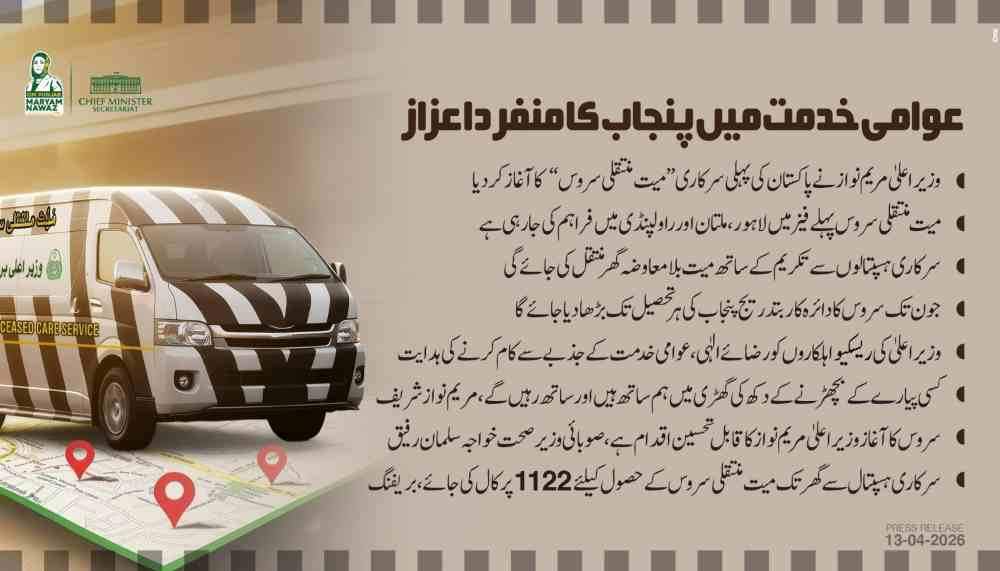
- Read More: Deceased Care Service Punjab | سرکاری ہسپتال سے گھر تک میت منتقلی سروس
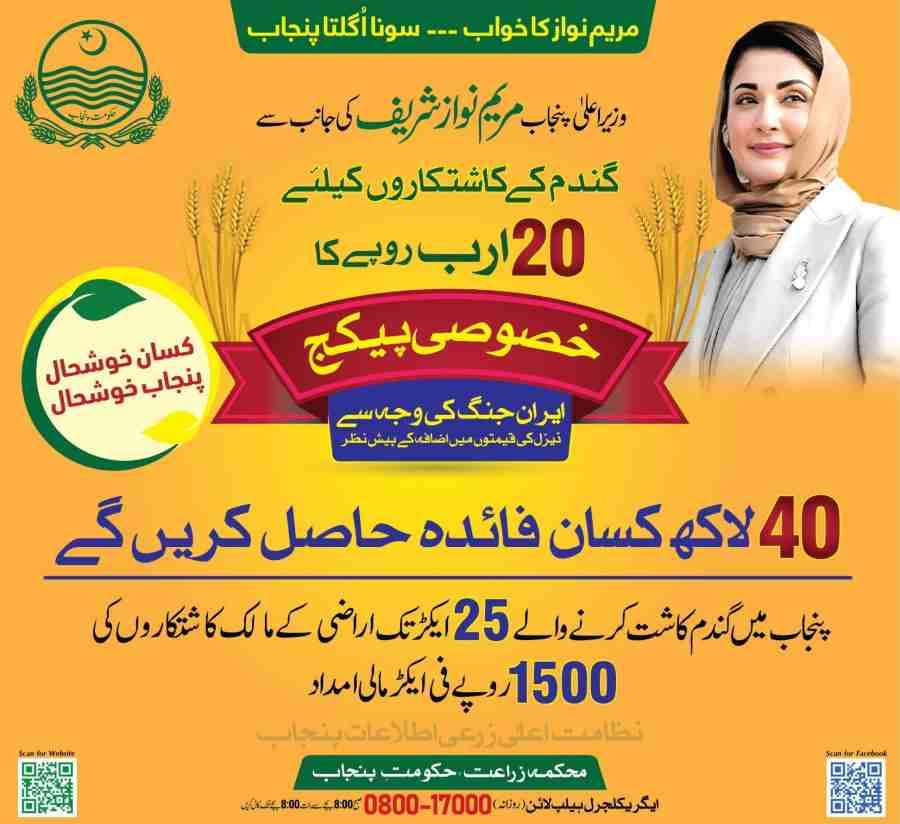
- Read More: Wheat Price In Pakistan | 100Kg Wheat Price In Pakistan
- Read More: 50 Kg Wheat Price In Pakistan Today -Gandum Rates Today
Maryam Nawaz All Scheme List – (Social Welfare Schemes)
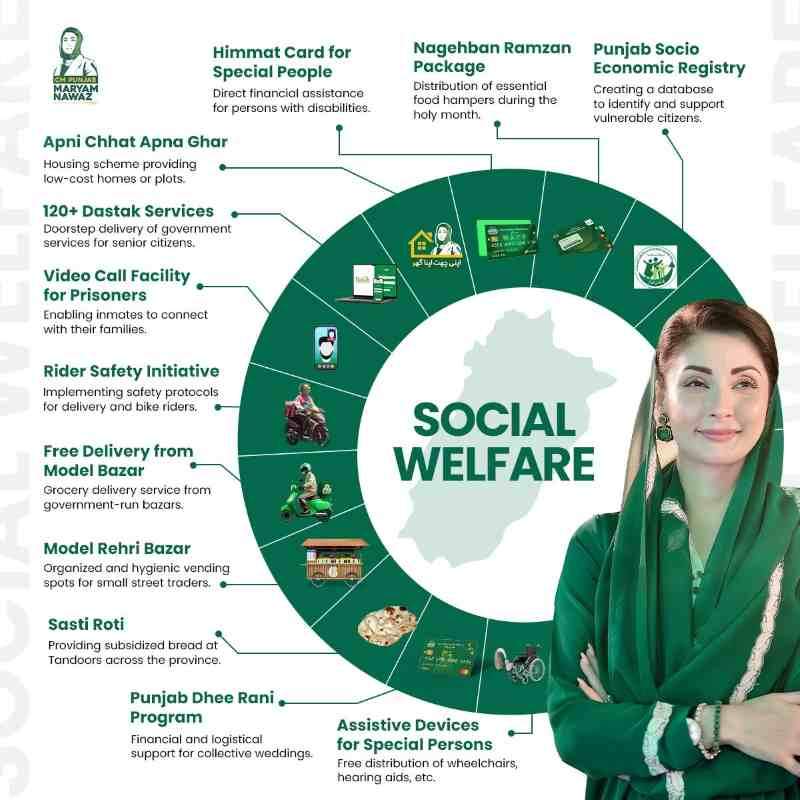
Table Of Contents
What Are All the Social Welfare Schemes Launched by Maryam Nawaz in Punjab?
The Punjab government under Chief Minister Maryam Nawaz has launched 15 major social welfare schemes covering housing, disability support, food security, marriage assistance, doorstep services, prisoner facilities, rider safety, and agricultural support. These programs operate through a centralized digital infrastructure anchored by the Punjab Socio-Economic Registry.
Complete Maryam Nawaz All Scheme List with Benefits and Eligibility
| Scheme Name | Target Beneficiaries | Key Benefit | Application Mode |
|---|---|---|---|
| Himmat Card | Persons with Disabilities | Rs10,500 quarterly + free travel | Online/Offline |
| Apni Chhat Apna Ghar | Low-income homeowners | Interest-free loan up to Rs1.5M | Online |
| Nigehban Ramzan Package | Low-income families | Rs10,000 cash + ration | SMS 8070/PSER |
| Punjab Dhee Rani Program | Brides from low-income families | Rs200,000 Salami Card + wedding expenses | Online/Offline |
| Rehmat Card | Widows and orphans | Rs25,000 financial assistance | Mobile app/web portal |
| 120+ Dastak Services | Senior citizens | Doorstep government services | Maryam Ki Dastak App |
| Assistive Devices Program | Special persons | Free wheelchairs, hearing aids | Social Welfare Office |
| Model Rehri Bazar | Street vendors | Organized vending spots with facilities | Local administration |
| Sasti Roti Scheme | General public | Subsidized roti at Rs4-5 | Walk-in at tandoors |
| Video Call for Prisoners | Inmates and families | Free video calls with prisoners | Prison authorities |
| Rider Safety Initiative | Delivery riders/bikers | Free safety kits and helmet distribution | Online registration |
| Free Delivery from Model Bazar | Senior citizens, disabled | Doorstep grocery delivery | Helpline/App |
| CM Ration Card Programme | Workers/laborers | Rs3,000 monthly subsidy | Bank account transfer |
| CM Student Bike Scheme | College/university students | Zero-interest bikes | bikes.punjab.gov.pk |
| CM Solar Panel Scheme | Low-electricity households | Free 1-3kW solar systems | cmsolarscheme.punjab.gov.pk |
| CM Kissan Card | Farmers | Subsidized agricultural loans | Agriculture department |
Read More: Gandum Rate in Pakistan – Govt Wheat Rate Per 40 kg
What is the Himmat Card for Special Persons and How to Apply?
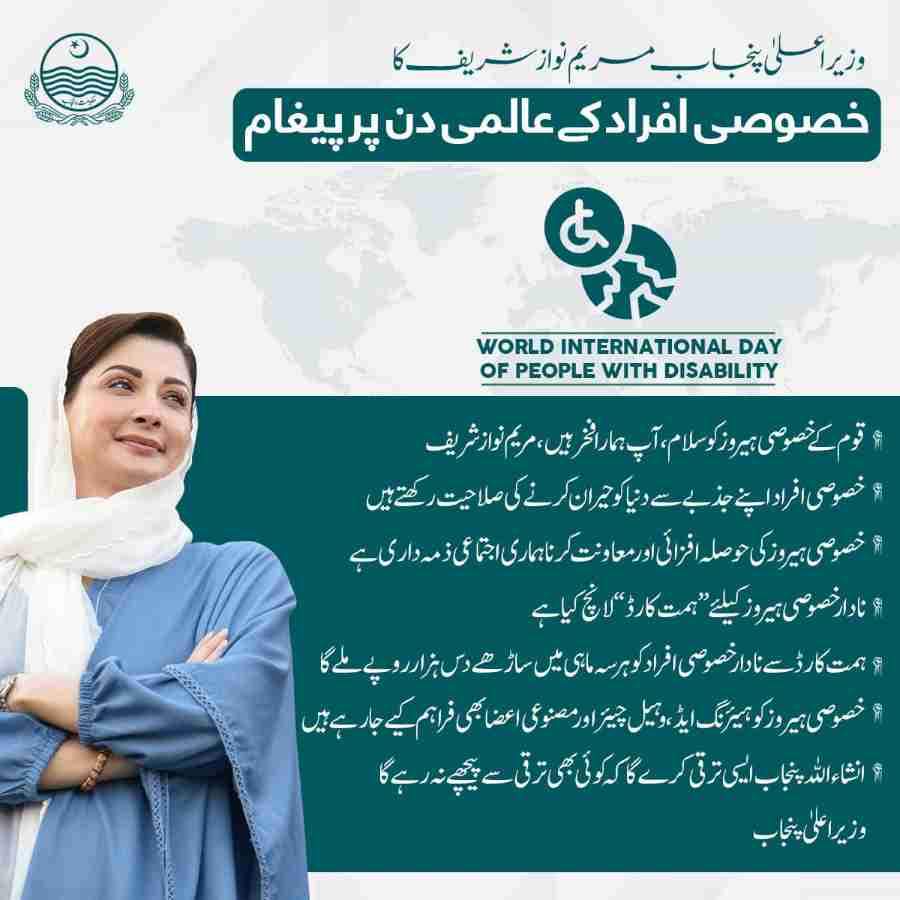
The Himmat Card is a specialized ATM/debit card issued to persons with disabilities registered with the Punjab government, providing quarterly financial assistance of Rs10,500, free travel on Orange Line Metro and Metro Bus services, and priority access to health, education, and skill development programs.
Who is eligible for the Himmat Card?
Four specific eligibility conditions determine Himmat Card qualification:
- Punjab Residency: Permanent resident of Punjab province with valid CNIC or B-Form for minors
- Disability Certification: NADRA-verified disability certificate issued by a government-recognized medical board
- PMT Score Requirement: Poverty Means Test score of 45 or below as per PSER/NSER data
- Employment Status: Declared not fit to work and not employed in any government or private job
What types of disabilities are covered under the Himmat Card?

The scheme covers seven categories of disabilities:
- Physical disabilities (mobility impairments)
- Visual impairments (blindness or low vision)
- Hearing impairments (deafness or hard of hearing)
- Intellectual or developmental disabilities
- Multiple disabilities
- Mental disabilities
- Speech impairments
What is the PMT score threshold and income condition for Himmat Card eligibility?
The government has set the PMT score at 45 or below for Himmat Card qualification. This score is calculated based on household income, assets, housing conditions, education levels, and employment status. Applicants already receiving financial support from BISP, Bait-ul-Maal, or other major government disability benefits are not eligible for the Himmat Card.
What financial assistance is given under Himmat Card?
The Himmat Card provides three types of financial and social benefits:
- Quarterly Stipend: Rs10,500 every three months directly transferred to the beneficiary’s ATM card
- Free Travel: Cardholders can travel free of cost on Orange Line Metro Train and Metro Bus services
- Health and Rehabilitation: Access to government health services, assistive devices, and rehabilitation programs
- Education Support: Scholarships and skill development opportunities for students with disabilities
What are the complete document requirements for Himmat Card registration?
Eight essential documents are required for Himmat Card application:
- Valid CNIC or B-Form (for minor children)
- NADRA-verified disability certificate
- Recent passport-sized photographs
- Proof of residence (domicile or utility bill)
- Income certificate (if required)
- Registered mobile number for verification
- PSER registration confirmation
- Bank account details for ATM card delivery
What is the Himmat Card online registration process?
The online application process follows these six steps:
- Visit the official Social Welfare Department or PSPA portal
- Create an account using your CNIC number
- Fill out the online form with accurate personal and disability details
- Upload scanned copies of all required documents
- Submit the application and receive confirmation via SMS
- Track application status using your CNIC number
What is the offline application process for the Himmat Card?
For citizens without internet access, the offline process includes:
- Visit the nearest Social Welfare Department office
- Request the physical application form
- Fill out the form and attach photocopies of required documents
- Submit the form to the designated officer for verification
- Receive an approval SMS once verification is complete
How to check application status of Himmat Card?
Applicants can check their Himmat Card status using three methods:
- Online Portal: Visit the PSPA portal and enter CNIC number
- SMS Service: Send CNIC to designated shortcode
- Helpline: Call the Social Welfare Department helpline for assistance
What is the latest update on the Himmat Card for Special Persons?
Phase 3 of the Himmat Card program has been launched, expanding coverage to more districts across Punjab. The program now serves approximately 65,000 persons with disabilities. Alongside the Himmat Card, the government has introduced the Minority Card Scheme 2026, providing Rs10,500 every three months to around 75,000 low-income minority households with PMT score of 45 or less.
What is the Apni Chhat Apna Ghar Scheme and What Are Its Eligibility Criteria?
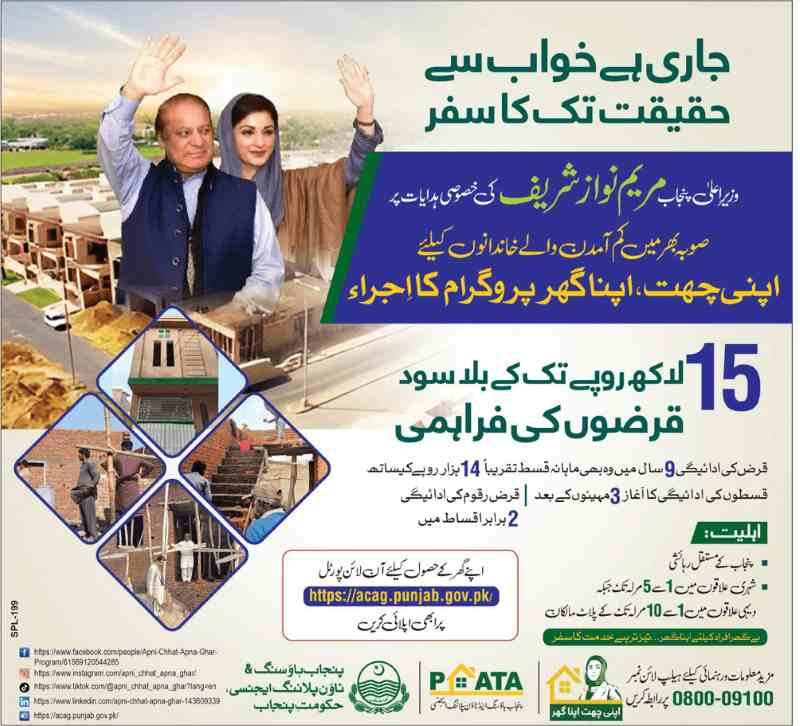
The Apni Chhat Apna Ghar Scheme is a government-backed housing finance initiative that provides interest-free loans of up to Rs1.5 million to low-income and lower-middle-income families who own a small plot of land but cannot afford construction costs, with the Punjab government covering approximately 60 percent of the total housing cost.
What is the core objective of the Apni Chhat Apna Ghar housing scheme?
Three primary objectives drive the Apni Chhat Apna Ghar Scheme:
- Reduce Homelessness: Enable families living in rented or unsafe homes to build their own houses
- Support Poor Families: Provide affordable housing solutions to working-class families
- Eliminate Bank Interest: Remove commercial bank involvement and interest charges completely
What is the eligibility criteria for Apni Chhat Apna Ghar scheme?
Seven eligibility conditions must be met for Apni Chhat Apna Ghar Scheme:
- Punjab Residency: Permanent resident of Punjab province
- Age Requirement: Minimum 18 years of age
- Land Ownership: Own up to 5 marla in urban areas or up to 10 marla in rural areas
- No Existing House: Applicant must not already own a constructed house
- Low/Middle Income: Must belong to low or lower-middle income household
- NSER Registration: Must be registered in National Socio-Economic Registry with PMT score of 60 or below
- Clean Record: No criminal record or history of bank loan default
Can women apply for Apni Chhat Apna Ghar scheme as primary applicants?
Yes, women applicants can apply independently for the Apni Chhat Apna Ghar scheme. The 2026 update specifically allows women to apply without requiring a male guardian as co-applicant. Widows, laborers, and low-income earners are given priority in the selection process. Joint family applicants are also clearly allowed under the updated eligibility rules.
What financial benefits does the Apni Chhat Apna Ghar scheme offer?
The scheme provides five distinct financial benefits:
- Interest-Free Loan: Complete elimination of markup or bank interest
- Loan Amount: Up to Rs1.5 million per eligible family
- Government Subsidy: Punjab government covers 60% of total housing cost
- Easy Installments: Monthly installments around Rs26,000 over five years
- Early Repayment Incentive: Discounts offered for clearing the loan before the term ends
How does the interest-free housing loan component work?
The loan is released in phases linked to construction progress. Each phase requires inspection approval before the next disbursement. The beneficiary contributes 40 percent of the total cost while the government covers 60 percent. There are no hidden charges, markup, or bank penalties. Repayment is made in easy monthly installments kept close to average rent levels.
How to apply for Apni Chhat Apna Ghar scheme online?
The online application process follows these eight steps:
- Visit the official Apni Chhat Apna Ghar portal
- Register using your CNIC number
- Create an account with your mobile number
- Fill out the online application form with family details
- Upload scanned copies of land ownership documents
- Submit NSER/PSER registration details
- Review all information before final submission
- Receive confirmation SMS with application tracking number
What is the official portal for Apni Chhat Apna Ghar scheme online apply?
Applications are submitted through the official ACAG portal managed by the Punjab government. The portal allows applicants to check eligibility, download forms, submit applications, and track status online. The entire process is free with no application fee.
What is the housing target under the Apni Chhat Apna Ghar scheme?
The government has increased the housing target to more than 160,000 houses planned across multiple districts of Punjab. Priority is given to high-population and low-income areas. Construction is being executed through three models: state land development, private housing scheme partnership, and interest-free construction loan model.
What is the difference between Apni Chhat and Apni Zameen Apna Ghar schemes?
The Apni Chhat Apna Ghar scheme focuses on families who already own land but cannot afford construction. The Apni Zameen Apna Ghar scheme, in contrast, provides both land and housing to landless families. The former is a construction loan program while the latter is a full housing provision scheme.
How to Get Free Delivery from Model Bazar and Sasti Roti in Punjab?
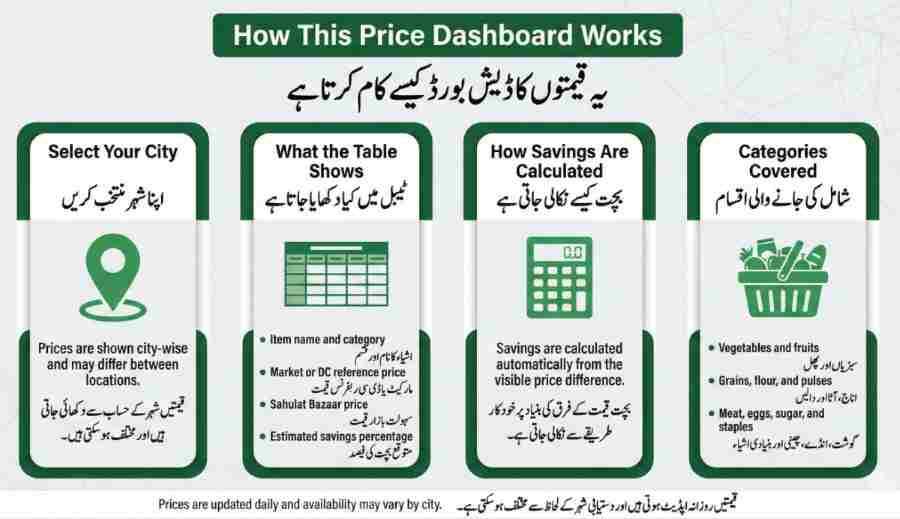
The Punjab government has launched the ‘Sahulat on the Go’ initiative providing free doorstep grocery delivery from government-run Model Bazars to senior citizens, persons with disabilities, and women, alongside the Sasti Roti scheme offering subsidized bread at Rs4-5 at designated tandoors across the province.
What is the ‘Sahulat on the Go’ initiative for free home delivery?
The free delivery service operates through a dedicated helpline and mobile application. Citizens can place orders for grocery items from their nearest Model Bazar, and items are delivered to their doorstep at no additional cost. Priority groups include senior citizens above 60 years, persons with disabilities, and women heads of households.
How to apply for free grocery delivery from Model Bazar?
Registration for free delivery requires:
- Call the designated Model Bazar helpline number
- Provide your CNIC number for verification
- Share your complete address and contact details
- Place your grocery order over the phone
- Receive delivery confirmation and estimated arrival time
Which priority groups are facilitated through the doorstep delivery service?
Four priority groups receive preferential access:
- Senior citizens (age 60 and above)
- Persons with disabilities
- Women who are heads of households
- Chronically ill patients with mobility restrictions
What is the Sasti Roti price and timing in Punjab?
The Sasti Roti scheme provides subsidized bread at Rs4-5 per roti at designated tandoors across all districts of Punjab. Timing typically follows breakfast hours (7 AM to 9 AM) and dinner hours (6 PM to 9 PM). The government has established a monitoring mechanism to ensure roti price compliance at all participating tandoors.
How has the CM Punjab Sasti Roti scheme provided relief during inflation?
The scheme has directly benefited low-income families who spend a significant portion of their daily income on bread. By fixing the roti price below market rates, the government has ensured that essential food remains affordable for vulnerable households. Price control teams conduct regular inspections to prevent overcharging.
What is the government’s mechanism for ensuring roti price compliance?
District administrations have established monitoring teams that:
- Conduct random inspections at tandoors during operating hours
- Fine violators who charge above the fixed price
- Display price lists prominently at each tandoor
- Register citizen complaints through helpline numbers
What is the Nigehban Ramzan Package and How to Get It?
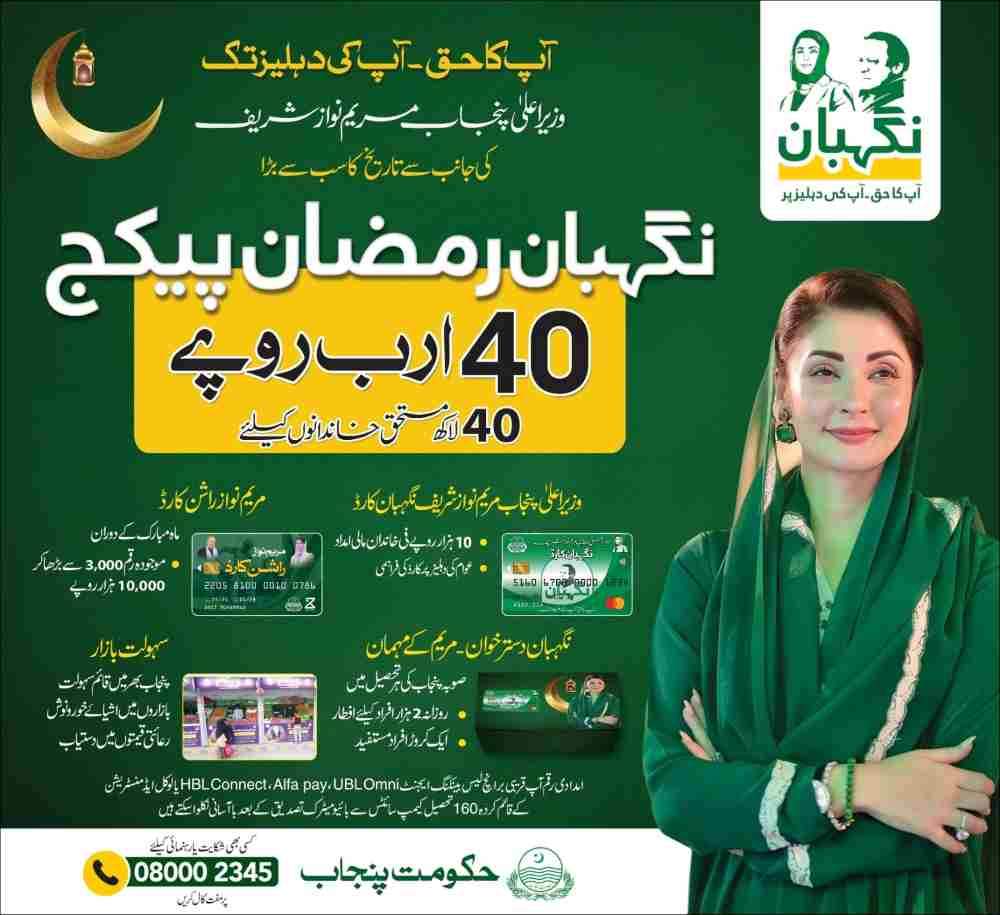
The Nigehban Ramzan Package 2026 is Punjab’s largest Ramzan relief initiative, providing financial assistance and ration support to 4.5 million families benefitting nearly 25 million individuals, with Rs10,000 distributed to 45,000 families under the ‘Maryam Ki Sunain’ initiative and Iftar served to 4 million people at 422 Nigahban Dastarkhwans across the province.
What benefits does the Nigehban Ramzan Package provide?
The package includes four major components:
- Financial Assistance: Rs10,000 cash distributed to 45,000 families
- Ration Support: Essential food hampers for low-income families
- Iftar Dastarkhwans: Free Iftar meals at 422 locations serving 4 million people
- Price Control: Stability in essential commodity prices with 550,000 daily shoppers at 75 Ramzan bazaars
How much cash relief is provided under the Nigehban Ramzan Package?
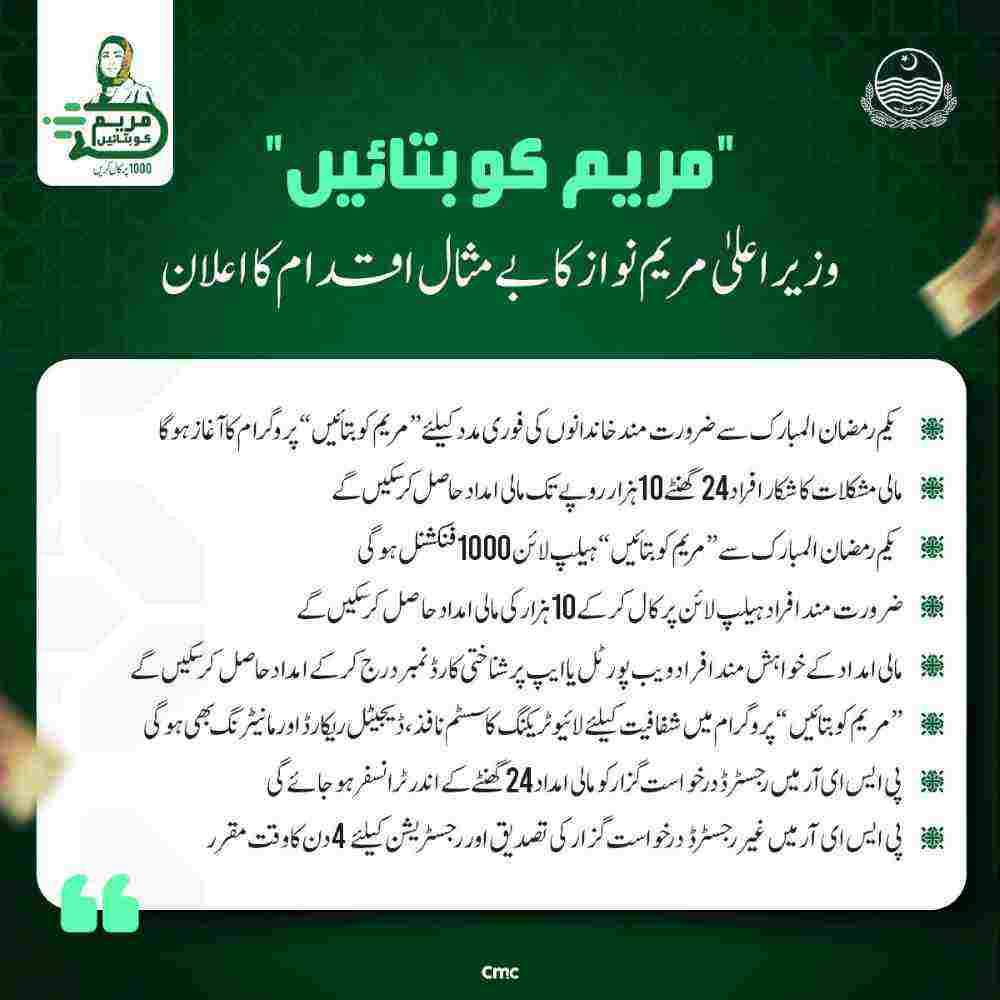
The ‘Maryam Ki Sunain’ initiative provides Rs10,000 per eligible family. Additionally, through the Minority Card initiative, over 157,000 Christian families received Rs10,000 each during the occasion of Lent, reflecting the government’s inclusive approach to welfare.
What is the total number of families benefitting from the Nigehban Ramzan Package?
The package reached approximately 4.5 million families, benefitting nearly 25 million individuals across Punjab. This makes it the largest Ramzan relief distribution in the province’s history, with doorstep delivery ensuring dignity and transparency.
What is the eligibility criteria for the Nigehban Ramzan Package?
Five eligibility conditions determine qualification:
- Punjab Residency: Permanent resident of Punjab province
- Income Threshold: Monthly household income of Rs45,000 or less
- PSER Registration: Must be registered in Punjab Socio-Economic Registry
- Low-Income Status: Belongs to financially struggling family
- One Card Per Household: Only one card issued per eligible family
How to register for Nigehban Ramzan Package via SMS 8070?
The SMS registration method is the fastest option:
- Open the SMS app on your mobile phone
- Type your 13-digit CNIC number without dashes
- Send the message to 8070
- Receive eligibility confirmation or update instructions via reply SMS
How to register through the PSER portal for the Ramzan package?
If your data is incomplete or outdated, update it online:
- Visit the official PSER portal at pser.punjab.gov.pk
- Log in using your CNIC and mobile number
- Complete or verify household survey details
- Ensure your address and mobile number are correct
- Submit for review and wait for verification
What is the distribution process for the Ramzan relief package?
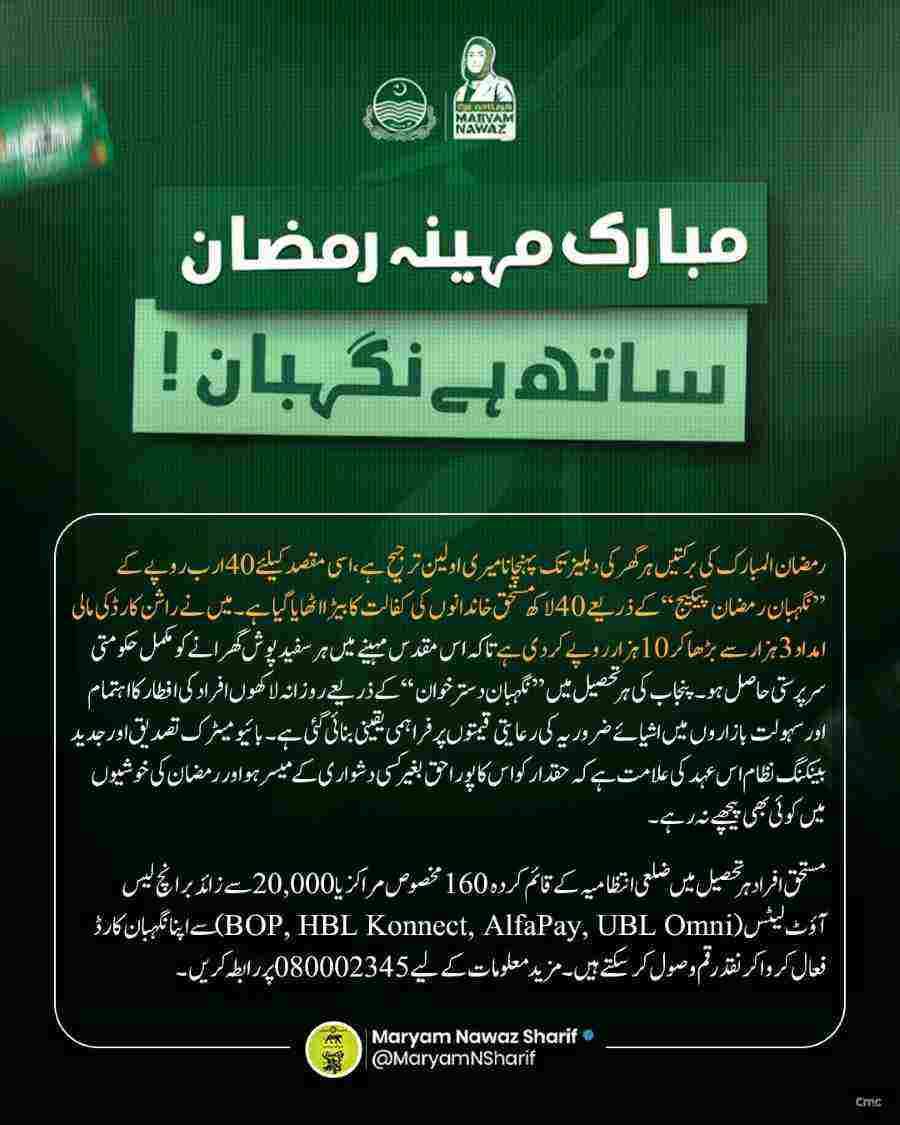
The entire registration and distribution process is fully digital, managed by PITB to ensure accountability at every step. Beneficiaries can visit 160 dedicated centers established by district administrations at every tehsil or more than 20,000 designated points. For information, the helpline 08000-2345 is available.
How Does 120+ Dastak Services Work for Senior Citizens?
The 120+ Dastak Services scheme, launched through the ‘Maryam Ki Dastak’ mobile application, provides doorstep delivery of government services to senior citizens aged 120 years and above, eliminating the need for repeated visits to government offices for essential documents and services.
What is the Maryam Ki Dastak App and how does it work?
The mobile application allows senior citizens to request government services from their homes. After downloading the app, users register using their CNIC number. A trained Dastak representative visits the citizen’s home, collects required documents, processes the application, and delivers the completed service or document back to the doorstep.
What are the doorstep services available through the Dastak program?
Seven services are currently available through the Dastak program:
- Birth certificate issuance
- Death certificate issuance
- Property document verification
- Pension disbursement assistance
- Health card registration
- Disability certificate processing
- Free medicines delivery for chronic diseases
How to book a Dastak representative for doorstep services?
Booking follows these steps:
- Download the Maryam Ki Dastak App from official app stores
- Register using your CNIC number
- Select the required service from the menu
- Schedule a convenient date and time for the visit
- Receive confirmation and representative details
- Provide documents during the home visit
What is the 120+ Dastak Services scheme for senior citizens specifically?
The scheme is specifically designed for citizens aged 120 years and above, recognizing that advanced age often brings mobility challenges that make visiting government offices difficult. The service is completely free for eligible senior citizens.
How to avail the Free Medicines Program for chronic diseases at your doorstep?
Senior citizens with chronic diseases can register for the Free Medicines Program through the Dastak app. After verification of the prescription and medical condition, medicines are delivered to the doorstep monthly. The program covers diabetes, hypertension, heart disease, and other chronic conditions.
What is the helpline number for the Dastak doorstep service?
A dedicated helpline operates for citizens who do not have smartphones or internet access. Callers provide their CNIC number and service request, and a representative is dispatched for home service within the designated timeframe.
What is the Punjab Dhee Rani Program and How to Register?
The Punjab Dhee Rani Program is a mass marriage initiative that has conducted 5,000 collective weddings across Punjab, with the Social Welfare Department bearing all wedding expenses and providing each bride with a Rs200,000 Salami Card as financial assistance, plus essential furniture and clothing gifts.
What benefits does the Punjab Dhee Rani Program provide?
The program provides six specific benefits:
- Salami Card: Rs200,000 financial assistance to each bride
- Wedding Expenses: All costs of the collective marriage ceremony borne by the government
- Meal Provision: Free meals for the bride, groom, and their close relatives
- Furniture Gift: Essential furniture items for the new household
- Clothing Gift: Necessary clothes for the bride and groom
- ATM Card Disbursement: Salami amount accessible through ATM card
Who bears the expenses for the collective marriage ceremonies?
The Social Welfare Department bears all wedding-related expenses, including venue arrangements, catering, decoration, and ceremony management. The department coordinates with district administrations to organize collective weddings at designated locations.
What is the financial assistance provided under the Dhee Rani Program?
Each bride receives a Rs200,000 Salami Card as a wedding gift from the Chief Minister. The card works like an ATM card, allowing the bride to withdraw funds as needed. Additionally, newly wed couples receive a Salaami worth Rs100,000 through ATM card in some phases, plus furniture and clothing.
What is the eligibility criteria for the Dhee Rani Program?
Four eligibility conditions must be met:
- Punjab Residency: Bride must be a permanent resident of Punjab
- Low-Income Family: Bride must belong to a low-income household
- Valid Identification: Bride must have valid CNIC or B-Form
- Religious Inclusion: Open to deserving families from all religious communities including Muslims, Hindus, and Christians
What is the age limit for the Punjab Dhee Rani Program?
The bride must meet the legal marriage age requirement of 18 years. There is no upper age limit, making the program accessible to widows and divorced women seeking remarriage as well.
How to register for the Punjab Dhee Rani Program?
Two registration methods are available:
- Online Portal: Visit cmp.punjab.gov.pk and fill out the registration form with complete family details
- In-Person: Visit the nearest Social Welfare and Bait-ul-Maal office for help with the application
- Deputy Director Office: Submit applications by hand at the office of the Deputy Director Social Welfare of the district concerned
What documents are required for registration in the Dhee Rani program?
Five essential documents are required:
- Bride’s CNIC or B-Form
- Guardian’s CNIC
- Proof of residence in Punjab
- Income certificate
- Marriage registration documents (if applicable)
How many collective marriages have been conducted under this scheme?
The program has completed 5,000 collective marriages across Punjab. Phase 1 conducted 1,960 marriages. Phase 2 conducted 3,040 marriages between February 3 and February 16. Registration for Phase 3 containing additional mass weddings has now begun, with the annual target increased from 3,000 to 5,000 couples.
What is the district-wise schedule for collective marriages?
Mass weddings have been organized across multiple districts including Faisalabad (150), Toba Tek Singh (70), Hafizabad (130), Mandi Bahauddin (130), Lahore (170), Narowal (100), Sialkot (100), Muzaffargarh (200), Layyah (370), Mianwali (250), Khushab (200), Sargodha (200), Bahawalnagar, Pakpattan, Rajanpur, and Rahim Yar Khan.
What is the helpline for the Dhee Rani Program?
A dedicated helpline 1312 has been established for providing guidance regarding the program. Applicants can call for information about registration, document requirements, and upcoming mass wedding events.
How to Get Assistive Devices for Special Persons in Punjab?
The Assistive Devices and Wheelchair Program provides free distribution of wheelchairs, hearing aids, crutches, walking sticks, and other mobility and sensory assistive devices to registered persons with disabilities through Social Welfare Department offices and designated distribution centers across Punjab districts.
What is the Assistive Devices and Wheelchair Program?
The program operates under the Social Welfare Department with the objective of improving mobility and quality of life for persons with disabilities. Eligible individuals receive devices free of cost after verification of their disability certification and PSER registration.
How to get a free wheelchair and hearing aid in Punjab?
The process follows these steps:
- Register with the Social Welfare Department as a person with disability
- Obtain a NADRA-verified disability certificate
- Complete PSER registration with disability information
- Visit the nearest Assistive Devices distribution center
- Submit application with CNIC and disability certificate
- Receive device after verification and approval
What types of assistive devices are distributed under this scheme?
Six categories of devices are available:
- Manual and motorized wheelchairs
- Digital hearing aids
- Crutches and walking sticks
- Prosthetic limbs and orthotic devices
- White canes for visually impaired persons
- Communication boards for speech-impaired persons
How many special persons have benefitted from the assistive devices program?
The program has distributed assistive devices to thousands of registered persons with disabilities across Punjab. The scheme operates alongside the Himmat Card program, ensuring that cardholders receive priority access to device distribution.
How to apply online for assistive devices through the government portal?
Online application requires:
- Visit the Social Welfare Department portal
- Log in using your CNIC number
- Select the required assistive device from the catalog
- Upload disability certificate and PSER registration proof
- Submit application and wait for approval notification
- Collect device from the nearest distribution center
What is the Model Rehri Bazar and How Can Vendors Register?
The Model Rehri Bazar is an organized vending initiative that provides hygienic, designated vending spots with proper facilities including clean water, electricity, waste disposal, and shelter to small street traders (rehri walas) who previously operated in unorganized, often unsanitary conditions.
What is the objective of the Model Rehri Bazar scheme?
Three objectives drive the Model Rehri Bazar initiative:
- Organized Vending: Replace unorganized street vending with structured, designated spots
- Hygiene Improvement: Ensure clean and sanitary conditions for food and goods vending
- Vendor Dignity: Provide legal recognition and proper facilities to small traders
What facilities are provided to vendors at a Model Rehri Bazar?
Eight facilities are provided at each Model Rehri Bazar:
- Designated vending spot with clear boundaries
- Clean drinking water access
- Electricity connection
- Waste disposal and garbage collection
- Shelter and shade from sun and rain
- Common seating area for customers
- Washroom facilities
- Security and lighting
How can street vendors register for a spot in a Model Rehri Bazar?
Vendors must follow this registration process:
- Visit the local municipal corporation or district administration office
- Submit application with CNIC copy and proof of existing vending activity
- Provide details of goods to be sold
- Pay nominal registration fee (if applicable)
- Receive allocated spot number after verification
Who manages the Model Rehri Bazar scheme?
The scheme is managed jointly by the local municipal corporation and district administration. The Social Welfare Department provides oversight for vendor welfare, while the Punjab Food Authority ensures hygiene standards are maintained.
How to Avail the Video Call Facility for Prisoners in Punjab?
The Video Call Facility for Prisoners allows inmates in Punjab jails to connect with their families through scheduled video calls, eliminating the need for family members to travel long distances for physical visitation and maintaining family bonds during incarceration.
How does the Video Call Facility for Prisoners work?
Prison authorities have established dedicated video calling booths within jail premises. Family members can schedule calls through designated channels. At the scheduled time, the prisoner is escorted to the video booth while the family connects from their location using a smartphone or computer with internet access.
How can families schedule a video call with an inmate?
Families follow these steps:
- Contact the jail superintendent’s office of the facility where the inmate is housed
- Provide the inmate’s name, CNIC number, and case details
- Schedule a preferred date and time slot
- Receive confirmation and connection instructions
- Connect using the provided link or application at the scheduled time
What are the timings and days for availing the video call service?
Video call facilities operate during designated visiting hours, typically from morning to evening on weekdays. Weekend and holiday schedules vary by facility. Each call is limited to a specified duration to ensure fair access for all inmates.
What are the new rules for prisoners’ PCO access in Punjab?
In addition to video calls, prisoners have access to PCO (Public Call Office) facilities for phone calls to family members. The government has expanded these services to improve prisoner welfare and maintain family connections, which research shows reduces recidivism rates.
What is the Rider Safety Initiative and Its Benefits for Delivery Boys?
The Rider Safety Initiative provides free safety kits including helmets, high-visibility jackets, and mobile phone holders to delivery riders and bikers across Punjab, alongside the Safe Basant initiative that offered free safety rod installation on one million motorcycles.
What is included in the safety kit for delivery riders?
Each safety kit contains four essential items:
- ISI-certified helmet with proper strapping
- High-visibility reflective jacket
- Mobile phone holder for navigation
- First aid kit for minor injuries
What is the Safe Basant initiative for one million bikers?
The Safe Basant initiative was launched to improve motorcycle safety across Punjab. The government offered free safety rod installation on motorcycles to prevent accidents caused by unstable phone mounting. One million bikers benefited from this initiative.
How can delivery riders register for the Rider Safety Initiative?
Registration follows these steps:
- Visit the designated traffic police or transport department office
- Provide delivery company employment proof or rider registration
- Submit CNIC copy and motorcycle registration details
- Receive safety kit after verification
- Attend a brief safety awareness session
What are the insurance benefits for delivery riders?
The scheme includes accidental insurance coverage for registered riders. In case of an accident during delivery hours, riders receive medical expense coverage and disability compensation based on the severity of injuries.
What is the Punjab Socio-Economic Registry (PSER) and Why is it Important?
The Punjab Socio-Economic Registry (PSER) is a centralized digital database that captures detailed household information including income, family size, housing conditions, employment status, health, education, and assets, serving as the single source of truth for eligibility verification across all social welfare schemes in Punjab.
What is the Punjab Socio-Economic Registry online registration process?
Online registration for PSER is available for families who have not yet been visited by survey teams. The process is simple and user-friendly:
- Visit the official portal at pser.punjab.gov.pk
- Enter your CNIC, mobile number, district, and tehsil
- Create an account and log in
- Complete the household survey form carefully
- Provide information on family members, CNICs, income sources, health status, education, and asset ownership
- Submit the form for verification
What is the helpline number for PSER registration?
The helpline 08000-2345 is available for citizens seeking assistance with PSER registration, updating information, or checking eligibility status.
What are the document and information requirements for the PSER survey?
Ten categories of information are collected in the PSER survey:
- Personal information: CNIC, date of birth, gender, relationship with family head
- Health and disability status: Chronic diseases, mental, visual, hearing, or mobility-related disabilities
- Education: Literacy level and highest degree attained
- Employment and income: Primary occupation, monthly income, bank account details
- Assets: Property ownership, livestock, vehicles
- Housing: Cooking fuel, water source, electricity connection, sanitation
- Agriculture: Land ownership, cultivation type, farm size
- Past aid: Previous government assistance received
- Disaster impact: Natural disaster damage or displacement
- Communication: Mobile phone and internet access
How many households are targeted under the PSER survey?
The PSER survey targets over 30 lakh households across Punjab. Survey teams equipped with digital tools including tablets and mobile applications conduct door-to-door data collection. Officers wear official green jackets and carry ID cards for verification.
What is the door-to-door survey process for PSER?
During the door-to-door visit, PSER teams:
- Scan CNICs of all adult household members
- Record family composition, income, and education
- Assess household facilities including electricity, water, sanitation, and cooking arrangements
- Enter all data digitally in real time for immediate verification
- Complete the process in approximately 20-30 minutes per household
What is the PMT score and how does it determine eligibility?
The Proxy Means Test (PMT) score is calculated based on household data including income, assets, housing conditions, education levels, and employment status. A lower PMT score indicates higher poverty levels. Most welfare schemes require a PMT score of 45 or 60 or below for eligibility. The score is automatically generated by the system after data submission.
Why is PSER registration mandatory for all social welfare schemes?
PSER registration is mandatory because:
- Single Registration: Families only need one verified PSER profile instead of applying separately for every new scheme
- Digital Verification: PSER links with CNIC records through NADRA verification
- Transparent Selection: Selection is based on verified data rather than manual lists or recommendations
- Fair Ranking: Households are ranked by need using objective criteria
- Reduced Favoritism: Human error and bias are eliminated through automated processing
Which schemes use PSER data for beneficiary selection?
All major social welfare schemes including Himmat Card, Apni Chhat Apna Ghar, Nigehban Ramzan Package, CM Ration Card, Rehmat Card, Dhee Rani Program, Assistive Devices Program, Student Bike Scheme, and Solar Panel Scheme use PSER data for eligibility verification and beneficiary selection.
What is the difference between BISP NSER and Punjab PSER?
BISP NSER (National Socio-Economic Registry) is a federal database managed by Benazir Income Support Programme for national-level welfare programs. Punjab PSER is a provincial database specifically for Punjab government schemes. While both collect similar household data, PSER is more detailed and Punjab-specific. Families should register in both databases to access all available schemes.
Maryam Nawaz Schemes vs Previous PML-N Schemes: What’s the Difference?
The Maryam Nawaz-led government has significantly scaled up financial allocations for social welfare compared to previous PML-N administrations, introduced technology-driven digital infrastructure including PSER and Maryam Ki Dastak, expanded scheme coverage to include new beneficiary categories, and implemented doorstep delivery of services that previously required in-person visits.
How do the budget allocations compare between the two administrations?
The current administration has increased social welfare spending substantially, with Rs1.7 billion allocated for the Dhee Rani Program alone and Rs22 billion transferred to workers under the Ration Card Programme. Previous administrations operated smaller-scale programs with lower per-beneficiary amounts.
What is the role of digitalization in the new schemes?
Digitalization under Maryam Nawaz includes:
- PSER Database: Centralized digital registry replacing manual beneficiary lists
- CNIC-Based Verification: NADRA integration eliminating document forgery
- SMS Services: 8070 shortcode for instant eligibility checking
- Online Portals: Self-service application submission and status tracking
- Mobile Apps: Maryam Ki Dastak for doorstep service requests
How has the eligibility criteria changed for key schemes?
Eligibility criteria have been relaxed in several schemes. The Apni Chhat Apna Ghar scheme now allows joint family applicants and women independent applicants. The Himmat Card PMT score threshold is 45, making more households eligible. The Student Bike Scheme removed parental guarantee requirements.
What is the elimination of the culture of repeated office visits?
The Maryam Nawaz administration has eliminated the culture of citizens having to visit government offices repeatedly through the ‘Maryam Ki Dastak’ program. Services that previously required multiple in-person visits are now delivered to doorsteps, reducing harassment, bribery opportunities, and time waste for citizens.
How to Apply Online for CM Punjab All Schemes: A Step-by-Step Master Guide
The Punjab government has unified the application process for most social welfare schemes through two central digital portals: the CM Punjab Scheme Portal for scheme-specific applications and the PSER portal for household registration that serves as the eligibility foundation for all schemes.
What is the CM Punjab all Scheme apply online login portal?
The official portal for CM Punjab all Scheme apply online login is accessible through the Punjab government’s flagship projects page. Applicants can access scheme-specific portals for:
- Himmat Card: Social Welfare Department portal
- Apni Chhat Apna Ghar: ACAG portal
- Student Bike Scheme: bikes.punjab.gov.pk
- Solar Panel Scheme: cmsolarscheme.punjab.gov.pk
- Dhee Rani Program: cmp.punjab.gov.pk
How to register on the CM Punjab Scheme portal using your CNIC?
Follow these steps for registration:
- Visit the official scheme portal
- Click on ‘Register’ or ‘Apply Online’
- Enter your 13-digit CNIC number
- Enter mobile number for OTP verification
- Complete the OTP verification process
- Create a password for your account
- Log in using CNIC and password
What is the official portal for CM Punjab all Scheme apply online login?
The central access point is punjab.gov.pk/flagship-projects, which provides links to all individual scheme portals. Each scheme has its own dedicated portal for specialized application processing.
How to check the status of your application for any government scheme?
Application status can be checked through three methods:
- Online Portal: Log in to the scheme portal and navigate to ‘Application Status’
- SMS Service: Send CNIC to the scheme-specific shortcode
- Helpline: Call the scheme’s dedicated helpline number
What are the common documents required for Maryam Nawaz schemes?
Nine documents are commonly required across schemes:
- Valid CNIC (original and copy)
- NADRA-verified disability certificate (for disability schemes)
- Proof of Punjab residency (domicile or utility bill)
- PSER registration confirmation
- Income certificate or PMT score printout
- Recent passport-sized photographs
- Registered mobile number
- Bank account details (for cash transfer schemes)
- Land ownership documents (for housing schemes)
What are the common reasons for application rejection and how to avoid them?
Seven common rejection reasons and prevention tips:
- Missing PSER Registration: Complete PSER registration before applying for any scheme
- Outdated CNIC: Ensure CNIC is valid and has no data entry errors
- Incorrect PMT Score: Verify PMT score through PSER before applying
- Duplicate Applications: Submit only one application per household
- Missing Documents: Attach all required documents in clear scanned copies
- Incorrect Mobile Number: Provide an active, registered mobile number
- Failure to Meet Income Criteria: Check scheme income thresholds before applying
What is the contact number for Maryam Nawaz welfare schemes complaints?
The central helpline for Maryam Nawaz welfare schemes complaints is 08000-2345. Additionally, each scheme has dedicated complaint handling through its portal. Citizens can also register complaints through the Punjab Chief Minister’s Complaint Cell.
What are the Latest Updates on Maryam Nawaz Social Welfare Schemes?
Recent updates include the launch of the Rehmat Card for widows and orphans, completion of the Nigehban Ramzan Package 2026 serving 4.5 million families, opening of Phase 3 Himmat Card registration, launch of Phase 2 Dhee Rani Program registration for 1,500 mass weddings, and announcement of new schemes including Free Livestock Program, Student Bike Scheme Phase 2, and Solar Panel Scheme.
What is the new CM Punjab Free Livestock Program for widows?
The Free Livestock Program provides cows or buffaloes to widows and rural women, enabling them to generate sustainable income through dairy production. The program includes training on animal husbandry, veterinary support, and linkage to milk collection centers for market access.
Who is eligible for the Free Livestock Program?
Eligible beneficiaries include widows registered with the Social Welfare Department, rural women from low-income households with PMT score below 45, and women who have completed PSER registration. Priority is given to households with no existing livestock assets.
How to apply for free livestock under this scheme?
Applications are submitted through the Livestock Department portal or at district livestock offices. Required documents include CNIC, widow certificate (if applicable), PSER registration confirmation, and proof of residence in a rural area.
What is the Rehmat Card Scheme for widows and orphans?
The Rehmat Card is a new 2026 initiative approved by Chief Minister Maryam Nawaz providing financial assistance of Rs25,000 to over 40,000 widows and orphaned children deprived of parental care. In its first phase, more than 40,000 deserving families are expected to benefit. The project was launched immediately after Eid.
How much financial assistance is provided under the Rehmat Card scheme?
Financial assistance of up to Rs100,000 is available under the Rehmat Card programme, with widows and orphaned children receiving Rs25,000 each. The scheme aims to help widowed women move towards self-employment and financial independence.
What is the registration process for the Rehmat Card Scheme?
Applications for the Rehmat Card can be submitted through four channels:
- Mobile application
- Web portal
- Call centre
- Zakat office
What are the new CM Punjab schemes for students?
Two major student schemes are currently active:
- CM Punjab Student Bike Scheme: Zero-interest electric and petrol bikes for students. One lakh electric bikes will be distributed with special priority for female students and those from low-income families. Application portal: bikes.punjab.gov.pk
- CM Punjab Free Laptop Scheme Phase 2: Distribution of laptops to meritorious students from low-income families. Registration opens periodically through the Higher Education Department portal.
What is the registration process for the CM Punjab Student Bike Scheme?
The application process includes:
- Visit the official website bikes.punjab.gov.pk
- Click on ‘Apply for CM Punjab Bike Scheme’
- Fill out the application form with personal and academic details
- Upload CNIC, student ID card, and enrollment proof
- Submit the application and note the tracking number
What are the new schemes for farmers in Punjab?
Three farmer-focused schemes are active:
- CM Kissan Card: Subsidized agricultural loans and farm inputs through digital card
- Green Tractor Scheme: Subsidized tractors for small and medium farmers
- CM Solarization Program for Agri Tubewells: Solar irrigation systems to reduce electricity costs
What is the CM Punjab Solar Panel Scheme and how to apply?
The Roshan Gharana Program (CM Punjab Free Solar Panel Scheme) provides free or subsidized solar systems to eligible households. Households using under 200 units of electricity get free 1-3kW systems. Application portal: cmsolarscheme.punjab.gov.pk. The scheme promotes renewable energy adoption and reduces electricity bills for low-income families.
What is the CM Punjab Ration Card Programme for workers?
The government has opened bank accounts for 1.2 million workers under the Ration Card Programme, with Rs22 billion transferred to beneficiaries. Registered workers receive a monthly subsidy of Rs3,000 directly into their bank accounts. The programme reflects the government’s commitment to worker welfare and has eliminated manual distribution systems, enhancing transparency.
Disclaimer
This article provides information based on publicly available government sources and official scheme announcements. Scheme details, eligibility criteria, and application processes may change at the discretion of the Punjab government. Readers are advised to verify current information through official government portals before applying.
Frequently Asked Questions (FAQs)
Q1: How to apply for Himmat Card for Special People in Punjab?
Apply online through the Social Welfare Department portal by creating an account with CNIC, uploading disability certificate and documents, and submitting the application. Offline applications are accepted at district Social Welfare offices.
Q2: What is the eligibility criteria for Apni Chhat Apna Ghar scheme?
Punjab residency, age 18+ years, land ownership (up to 5 marla urban or 10 marla rural), no existing constructed house, low-income status, NSER/PSER registration with PMT score 60 or below.
Q3: How can I get Sasti Roti in Punjab?
Visit any designated tandoor displaying the Sasti Roti scheme signboard during breakfast hours (7-9 AM) or dinner hours (6-9 PM). Each roti costs Rs4-5.
Q4: What benefits does Punjab Dhee Rani Program provide?
Rs200,000 Salami Card per bride, all wedding expenses covered by Social Welfare Department, free meals for bride, groom and relatives, essential furniture and clothing gifts.
Q5: How to register for free grocery delivery from Model Bazar?
Call the Model Bazar helpline, provide CNIC for verification, share address and contact details, place grocery order, receive delivery confirmation.
Q6: What is Nigehban Ramzan Package and how to get it?
Ramzan relief package providing Rs10,000 cash and ration support. Register via SMS to 8070 with CNIC or online through PSER portal.
Q7: Documents required for Himmat Card?
CNIC or B-Form, NADRA-verified disability certificate, passport-sized photographs, proof of residence, income certificate, registered mobile number, PSER registration, bank account details.
Q8: How much financial assistance is given under Himmat Card?
Rs10,500 every three months plus free travel on Orange Line Metro and Metro Bus services.
Q9: Punjab Socio Economic Registry online registration process?
Visit pser.punjab.gov.pk, enter CNIC and mobile number, create account, complete household survey form, submit for verification.
Q10: How to check application status of Maryam Nawaz schemes?
Log into the scheme portal, navigate to ‘Application Status’, or send CNIC to the scheme’s SMS shortcode, or call the scheme helpline.
Q11: Contact number for Maryam Nawaz welfare schemes complaints?
Central helpline: 08000-2345. Additionally, the Dhee Rani Program has dedicated helpline 1312.
Q12: Can women apply for Apni Chhat Apna Ghar scheme?
Yes, women can apply independently without requiring a male guardian as co-applicant. Widows, laborers, and low-income earners receive priority.
Q13: What is the latest update on Maryam Nawaz social welfare schemes?
Rehmat Card for widows/orphans launched, Nigehban Ramzan Package completed serving 4.5M families, Phase 3 Himmat Card registration open, Phase 2 Dhee Rani Program registration active.

Add a Comment