
The official wheat price in Pakistan for the 2026 procurement season is Rs 3,500 per 40 kilograms (one maund), as announced by the Punjab government under Chief Minister Maryam Nawaz Sharif.
Here is what you will learn from this definitive guide:
- The exact government support price and open market rates across all provinces.
- How the CM Punjab Kissan Card guarantees priority procurement and the 72-hour payment rule.
- Detailed city-wise wheat rates for Lahore, Karachi, Multan, Faisalabad, and Rawalpindi.
- The impact of free gunny bags, electronic warehouse receipts, and the public-private procurement model.
- A comparison with international wheat prices and a forecast for the coming months.
Key Takeaways
- Official Support Price Fixed: The government has set the wheat procurement price at Rs 3,500 per 40kg (maund), a 16.6% increase from the previous year’s rate.
- 72-Hour Digital Payment Guarantee: Farmers selling to registered centers receive payments directly in their bank accounts within 72 hours, eliminating middlemen delays.
- Free Gunny Bags and Kissan Card Priority: Registered farmers get 10 free gunny bags per acre, and procurement is prioritized for 900,000 Kissan Card holders under a Rs 6 billion relief package.
- Digital Reforms Enhance Transparency: The Electronic Warehouse Receipt (EWR) system and public-private partnership with 35 pre-qualified companies streamline procurement and provide free storage.
- Read More: 50 Kg Wheat Price In Pakistan Today -Gandum Rates Today
- Read More: Gandum Rate in Pakistan – Govt Wheat Rate Per 40 kg
- Read More: Today Wheat Price In Pakistan – Government Rate Per 40 Kg
- Read More: 40 kg Wheat Price In Pakistan Today (Wheat Rate per 40KG)
100 Kg Wheat Price In Pakistan Today -Gandum Rates Today

Table Of Contents
Introduction: Understanding the Wheat Price In Pakistan 2026 Landscape
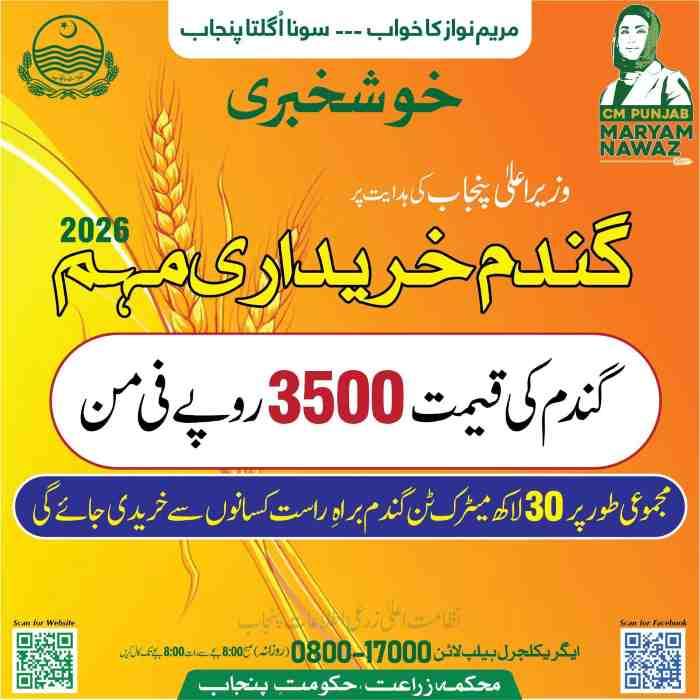
The wheat price in Pakistan for 2026 has been officially fixed at Rs 3,500 per 40 kilograms, marking a significant intervention by the government to stabilize the agricultural economy and support farmers. This rate applies to the procurement drive led by the Punjab government, with other provinces aligning their support prices to ensure national food security.
Why does this matter to you? Whether you are a farmer looking to sell your harvest, a consumer concerned about flour prices, or a market analyst tracking commodity trends, understanding the dynamics of the wheat price in Pakistan today is crucial. This guide breaks down every aspect of the 2026 wheat policy, from government procurement rates to open market fluctuations, and explains how initiatives like the Kissan Card and digital payments are reshaping the sector.
What is the Official Wheat Price In Pakistan 2026 Today (April 2026)?
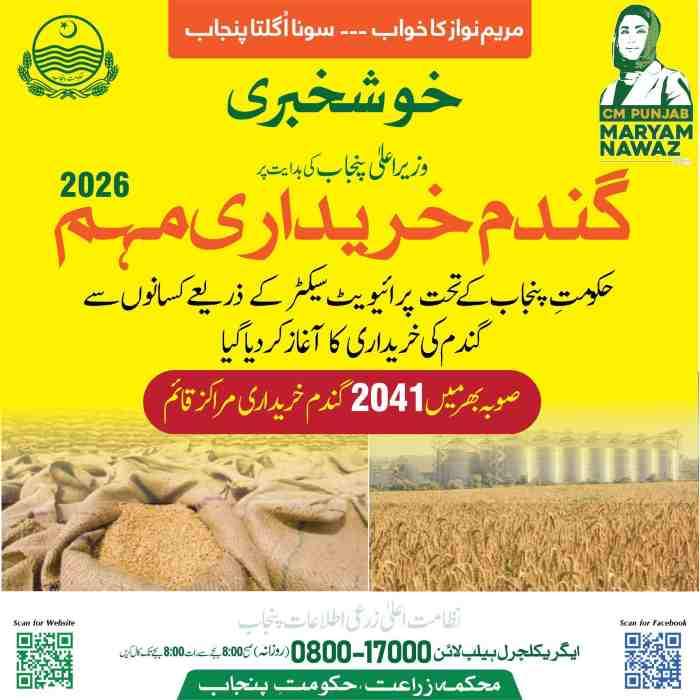
The official government support price for wheat in Punjab for 2026 is Rs 3,500 per 40kg (one maund), as announced on April 14, 2026, by Chief Minister Maryam Nawaz Sharif, with immediate commencement of procurement.
40 kg Wheat Price in Pakistan Today Punjab 2026
The confirmed rate for a 40kg bag in Lahore, Faisalabad, and Multan at all official procurement centers is exactly Rs 3,500. This rate is uniform across all districts of Punjab, including South Punjab, with no regional variation at government purchase points.
Key details of the 40kg wheat price:
- Lahore: Rs 3,500 per 40kg at all designated centers.
- Faisalabad: Rs 3,500 per 40kg with priority for Kissan Card holders.
- Multan: Rs 3,500 per 40kg, plus free gunny bags for registered farmers.
- South Punjab: Same support price applies in Rajanpur, Dera Ghazi Khan, and Bahawalpur.
1 kg Wheat Price in Pakistan Today (Retail vs. Wholesale)

The per-kilogram wheat price in the retail market typically ranges from Rs 90 to Rs 110, while the wholesale rate based on the official support price calculates to Rs 87.50 per kg (3,500 ÷ 40). The difference between retail and wholesale prices arises from transportation costs, storage fees, and middleman margins.
50 kg and 100 kg Wheat Price in Pakistan Today
Calculation based on the official Rs 3,500 per 40kg rate:
- 50 kg wheat price: Rs 4,375 (50/40 × 3,500)
- 100 kg wheat price: Rs 8,750 (100/40 × 3,500)
What is the current wheat rate in Multan Mandi (April 16, 2026)?
Multan Mandi is reporting the official procurement rate of Rs 3,500 per 40kg for government purchases. However, the open market rate in Multan fluctuates between Rs 3,480 and Rs 3,520 depending on wheat quality, moisture content, and transportation availability.
Today wheat rate in Punjab Pakistan per kg for open market sales

For open market sales outside the government procurement framework, the per kg wheat rate in Punjab ranges from Rs 85 to Rs 95. This lower rate reflects the absence of government subsidies and the influence of private millers who often negotiate lower prices.
Detailed Breakdown: Wheat Price In Pakistan Punjab (District Wise)
The wheat price in South Punjab open market currently ranges from Rs 3,450 to Rs 3,520 per 40kg, slightly below the government support price due to higher transportation costs from remote farming areas to procurement centers.
Wheat Price in Punjab Pakistan Today (Major Cities)
Today wheat rate in Punjab Pakistan Lahore:
At official procurement centers, Lahore reports a fixed rate of Rs 3,500 per 40kg. The open market rate in Lahore is approximately Rs 3,500 to Rs 3,550.
What is the current wheat rate in Faisalabad Mandi?
Faisalabad Mandi reports Rs 3,500 per 40kg for government procurement, with private mills offering Rs 3,480 to Rs 3,520.
What is the wheat rate in Sargodha Mandi today?
Sargodha Mandi, a major wheat-producing district, shows the support price of Rs 3,500 per 40kg for registered farmers, with open market rates around Rs 3,490.
Rawalpindi and Islamabad: Chakki Atta vs. Wheat Grain prices:
In Rawalpindi and Islamabad, wheat grain is priced at Rs 3,500 per 40kg at procurement centers, while Chakki Atta (stone-ground flour) ranges from Rs 2,400 to Rs 2,600 per 20kg bag.
How has the CM Punjab Kissan Card affected wheat prices?
The CM Punjab Kissan Card has directly stabilized wheat prices by ensuring priority procurement at the fixed rate of Rs 3,500 per 40kg for 900,000 registered farmers. Key impacts include:
The correlation between digital payments and rate stability:
Digital payments through the Kissan Card have reduced the influence of middlemen, who previously deducted Rs 200 to Rs 500 per bag. Farmers now receive the full Rs 3,500 directly in their accounts.
Priority procurement for 900,000 Kissan Card holders:
Kissan Card holders are given first access to procurement centers, with dedicated queues and faster processing. This priority system ensures that small farmers are not crowded out by large landholders.
Sindh and Karachi: Wheat Price In Pakistan Today (South Region)

The price of wheat in Karachi’s Jodia Bazar is approximately Rs 3,480 to Rs 3,550 per 40kg, slightly higher than the official support price due to transportation logistics from Punjab and the mixing of imported wheat.
40 kg wheat price in Pakistan today Sindh (Hyderabad & Sukkur)
In Hyderabad, the 40kg wheat price ranges from Rs 3,450 to Rs 3,500. Sukkur reports similar rates, with government procurement centers matching the Punjab support price where available.
Today wheat rate in pakistan per kg karachi for retail buyers
Retail buyers in Karachi pay between Rs 95 and Rs 110 per kg for wheat grain, depending on the quality and the seller.
Why Sindh’s wheat rate differs from Punjab’s Rs 3,500 benchmark
Sindh’s wheat rate differs from Punjab’s benchmark due to three main factors:
Impact of imported wheat on Karachi’s market stability:
Karachi relies partially on imported wheat, which costs approximately $280 to $300 per ton, translating to a local price higher than the Punjab support rate.
Government vs. Private mill rates in Sindh 2026:
Government procurement centers in Sindh attempt to match the Rs 3,500 rate, but private mills often offer Rs 3,400 to Rs 3,480, citing higher transportation and storage costs.
Government vs. Open Market: Why Wheat Prices Fluctuate in Pakistan in 2026
Wheat prices fluctuate in Pakistan in 2026 primarily due to the delayed arrival of free gunny bags, the 72-hour payment processing lag in rural digital banking, and the withholding of supply by farmers anticipating a price rise to Rs 4,000 later in the season.
What is the difference between government and open market wheat rates?
Quality differentials (moisture content, foreign matter):
Government procurement centers accept wheat with moisture content up to 13% and minimal foreign matter. Open market buyers often accept lower-quality grain, but at reduced rates.
The role of Arhtis (middlemen) in setting the open market rate:
Arhtis typically deduct Rs 200 to Rs 500 per 40kg bag for their services, including transportation, storage, and commission. This deduction is the primary reason open market rates fall below the government support price.
Is the wheat price in Pakistan expected to decrease in May 2026?
The wheat price is not expected to decrease in May 2026. Instead, analysts predict the open market rate may climb to Rs 3,800 by June as government procurement reaches its 3 million ton target and private millers compete for remaining stocks.
Impact of fuel prices on wheat transportation costs and retail rates
High diesel prices have increased freight costs by approximately 8% to 12% compared to the previous year. This increase directly affects open market rates in remote districts, where transportation adds Rs 50 to Rs 100 per 40kg bag.
The Rs 3,500 Support Price: Procurement Policy & The 72-Hour Payment Rule
The official wheat procurement rate in KPK is also aligned with the Rs 3,500 per 40kg benchmark, but the revolutionary change in Punjab is the mandatory 72-hour payment rule, requiring the government to transfer funds to a farmer’s account within three days of delivery.
How can farmers sell wheat to the Punjab government this year?
Step-by-step registration via the Punjab Agriculture Department portal:
- Visit the official Punjab Agriculture Department portal.
- Enter your CNIC number and verify your identity via biometric authentication.
- Upload your land record document showing ownership or tenancy rights.
- Register your mobile SIM (must be in your own name) for OTP verification.
- Receive your Kissan Card or registration number within 48 hours.
Required documents: CNIC, Land record, SIM ownership:
Farmers must present their original CNIC, a copy of their land record (Fard), and a mobile SIM registered in their name. Tenants require a verified tenancy agreement.
“72 Ghanton Mein Adaigi”: Understanding the payment timeline
The 72-hour payment rule ensures that farmers receive their money within three calendar days of delivering wheat to a procurement center. The payment is transferred directly to the bank account linked to the farmer’s CNIC via RAAST or IBFT.
What happens if the payment is delayed after 72 hours?
Farmers can report delays to the divisional Strategic Management Committee, which has the authority to resolve payment issues within 24 hours and impose penalties on defaulting procurement centers.
Free Bardana (Gunny Bags): The Rs 6 billion relief package
How many free bags per acre? (10 bags/acre limit):
Registered farmers receive 10 free gunny bags per acre from designated procurement centers. Each bag has a capacity of 40kg and is provided at zero cost under the Rs 6 billion relief package.
Electronic Warehouse Receipt (EWR) Policy and free storage
The Electronic Warehouse Receipt system allows farmers to store their wheat in certified government warehouses for up to four months free of charge. Farmers receive an electronic receipt that can be used as collateral for bank loans, enabling them to avoid distress sales immediately after harvest.
CM Maryam Nawaz’s Initiatives: Kissan Card, Tractors, and Wheat Price Stability
Chief Minister Maryam Nawaz has launched the “Work with Punjab” program, integrating the Kissan Card with wheat procurement, offering Green Tractors at 50% subsidy to 20,000 farmers, and digitizing the entire supply chain to ensure the official rate of Rs 3,500 reaches the farmer without deductions.
How does the Kissan Card ensure a guaranteed wheat price?
The Kissan Card guarantees a minimum support price of Rs 3,500 per 40kg by linking digital payments directly to verified farmer accounts. The system bypasses middlemen and ensures that 100% of the support price is credited to the farmer.
3500 Roze (Direct subsidy) mechanisms explained:
The term “3500 Roze” refers to the direct daily subsidy support embedded in the wheat procurement system. Farmers receive Rs 3,500 per 40kg as a base price, with additional subsidies for transportation and storage included in the package.
The “Green Tractor Scheme” and its impact on production costs
The Green Tractor Scheme has delivered 20,000 tractors to farmers, with a target of 30,000. Each tractor is provided at a 50% subsidy, significantly reducing the cost of land preparation, sowing, and harvesting. Lower production costs allow farmers to accept the Rs 3,500 support price without financial strain.
Procurement Target: 30 Lakh Metric Tons (3 Million Tonnes)
Why the government set a 3 million tonne procurement target:
The government set a 3 million tonne target to build strategic reserves sufficient for four months of national consumption, ensuring food security in case of supply disruptions or natural disasters.
Public-Private Partnership: Role of 11 prequalified companies
The public-private partnership model involves 35 prequalified domestic and international companies responsible for procuring wheat directly from farmers at the Rs 3,500 rate. This model reduces the government’s logistical burden and brings private sector efficiency to the procurement process.
Regional Mandi Rates (City Specific): Wheat Price In Pakistan Today Per 40kg
The most reliable daily sources for wheat rates are the Pakistan Bureau of Statistics (PBS) daily Sensitive Price Indicator (SPI) and the provincial food department official channels, which update rates for 17 major cities every 24 hours.
Today wheat rate in pakistan per kg Rawalpindi (Cantt & Sadar)
Rawalpindi reports a per kg wheat rate of Rs 87.50 at procurement centers and Rs 90 to Rs 95 in the open market. The Cantt area rates are slightly higher due to transportation costs.
Gandam rate today Punjab 2026 (Sheikhupura, Okara, Sahiwal)
Sheikhupura reports Rs 3,500 per 40kg at government centers. Okara and Sahiwal, both major wheat-producing districts, also adhere to the Rs 3,500 support price with active procurement operations.
Wheat price in Balochistan today (Quetta & Pishin)
Balochistan’s wheat price ranges from Rs 3,600 to Rs 3,800 per 40kg due to higher transportation costs from Punjab and limited local production. Quetta reports the highest rates in the province.
Wheat price per ton in Pakistan 2026 (Industrial rate)
Rs 87,500 per ton (Calculation based on 25 bags of 40kg):
Industrial buyers purchasing wheat by the ton pay Rs 87,500, calculated as 25 bags × Rs 3,500 per bag. This rate applies to flour mills and large-scale food processors.
Read More: Lost Documents Report Online (Punjab Police) | Loss Report – Step-By-Step
Flour Prices (Atta) Correlation: From Wheat Rate to 20kg Bag
The price of a 20kg flour bag (Atta) in Lahore today is approximately Rs 2,200 to Rs 2,350 for fine flour, while Chakki Atta (stone-ground) ranges from Rs 2,400 to Rs 2,600 depending on the brand and quality.
What is the price of Chakki Atta in Islamabad vs. Karachi?
Chakki Atta in Islamabad costs Rs 2,400 to Rs 2,600 per 20kg bag. In Karachi, the same quality Chakki Atta ranges from Rs 2,500 to Rs 2,700 due to higher transportation costs from Punjab mills.
Are there any subsidies available on wheat flour in 2026?
The government provides no direct subsidy on wheat flour to consumers. However, the Rs 3,500 support price for wheat grain indirectly subsidizes flour production by keeping raw material costs stable.
How much is the Bardana (gunny bag) fee for wheat procurement?
The zero-fee policy for registered farmers in 2026:
Registered farmers pay zero fee for gunny bags under the Rs 6 billion relief package. Each registered farmer receives 10 free bags per acre from designated procurement centers.
Why flour prices remain high even when wheat prices are stable
Flour prices remain high due to electricity costs for mills, labor wages, transportation fuel prices, and packaging expenses. These factors add Rs 800 to Rs 1,000 to the cost of a 20kg bag of flour beyond the raw wheat price.
Year-over-Year Comparison: Wheat Support Price in 2025 vs. 2026
The wheat support price in 2025 was Rs 3,000 per 40kg, meaning the 2026 price of Rs 3,500 represents a substantial 16.6% increase year-over-year, aimed at combating inflation and incentivizing higher sowing area.
Did the price increase cover inflation and input costs (DAP, Urea)?
The 16.6% price increase partially covers rising input costs. DAP fertilizer prices have increased by 12%, and Urea by 8%, while labor costs have risen by 10%. The net benefit to farmers is approximately 4% to 6% after accounting for input inflation.
Historical trend analysis (2020-2026)
Wheat support price history:
- 2020: Rs 1,650 per 40kg
- 2021: Rs 1,800 per 40kg
- 2022: Rs 2,200 per 40kg
- 2023: Rs 2,500 per 40kg
- 2024: Rs 2,800 per 40kg
- 2025: Rs 3,000 per 40kg
- 2026: Rs 3,500 per 40kg
What farmers are saying about the Rs 500 increase
Farmers have expressed confidence in the provincial government’s agricultural initiatives, with 88% of farmers reportedly satisfied with the Rs 500 increase and the accompanying relief measures.
International vs. Local: How Global Rates Affect Wheat Price In Pakistan
International wheat futures are trading at approximately $236 to $240 per ton, while Pakistan’s local price of Rs 3,500 per 40kg equates to roughly $290 per ton, making local prices competitive and reducing the need for expensive imports.
What is the price of imported wheat in Pakistan?
Imported wheat costs approximately $280 to $300 per ton, translating to Rs 3,800 to Rs 4,100 per 40kg after shipping, insurance, and port charges. This higher cost makes imported wheat less attractive than local procurement.
Does the government plan to export wheat in 2026?
The government’s primary focus for 2026 is building strategic reserves, not exports. However, work has started on formulating a policy for the export of wheat products if domestic reserves exceed requirements.
Impact of the Russia-Ukraine war on current Pakistani rates
The Russia-Ukraine war continues to affect global wheat supply, keeping international prices elevated above $230 per ton. This supports Pakistan’s local support price by making imports expensive.
Currency devaluation (PKR vs. USD) and its lag effect on wheat
PKR devaluation against the USD increases the cost of imported agricultural inputs like fertilizers and pesticides. This lag effect puts upward pressure on local wheat production costs, justifying the Rs 3,500 support price.
Quality, Storage, and Shortages: Addressing Farmer Concerns
There is no national shortage of wheat in April 2026. The government has already procured 1.5 million tons, with a target of 3 million tons. However, localized “artificial shortages” may appear if farmers withhold supply expecting the price to exceed Rs 3,500.
What is the price of high-quality seed wheat in Pakistan?
Approved seed varieties (Galaxy-13, Fakhr-e-Bhakkar) vs. commodity wheat:
High-quality seed wheat costs Rs 4,000 to Rs 5,000 per 40kg, significantly higher than commodity wheat. Approved varieties like Galaxy-13 and Fakhr-e-Bhakkar offer higher yields but require premium pricing.
Moisture content rules for selling at Rs 3,500
Government procurement centers accept wheat with moisture content up to 13%. Wheat exceeding this limit is rejected or purchased at a reduced rate, typically Rs 100 to Rs 200 less per 40kg.
How to avoid mold and infestation during storage
Free storage facilities in government-managed warehouses:
Farmers can use free storage facilities in government-managed warehouses for up to four months under the Electronic Warehouse Receipt policy. These facilities maintain proper temperature and humidity levels to prevent mold and infestation.
Actionable Guide: How to Sell Wheat at the Rs 3,500 Rate Today
Farmers can find the current wheat rate in their village by visiting the nearest procurement center or checking the CM Punjab Kissan Portal, where all authorized centers display the official rate of Rs 3,500 on digital boards.
Step 1: Registering your land and biometric verification
Visit the nearest Kissan Registration Center with your CNIC and land record. Complete biometric verification using the NADRA verification system. Receive your registration confirmation via SMS within 24 hours.
Step 2: Transporting your wheat (Freight subsidy options)
The government offers a freight subsidy of Rs 50 per 40kg bag for farmers located more than 20 kilometers from the nearest procurement center. This subsidy is credited directly to the farmer’s bank account.
Step 3: Weighing and moisture testing at the center
At the procurement center, your wheat is weighed on digital scales and tested for moisture content using electronic moisture meters. Results are displayed on a screen for transparency.
Step 4: Confirming the 40kg bag count
Count your filled bags in the presence of the procurement center officer. Each bag must weigh exactly 40kg. The officer issues a receipt confirming the number of bags delivered.
Step 5: Receiving the Rs 3,500 per 40kg via RAAST or IBFT
The payment of Rs 3,500 per 40kg is transferred to your linked bank account via RAAST or IBFT within 72 hours. You receive an SMS confirmation for each transaction.
Troubleshooting: What to do if the center offers Rs 3,400 instead:
Report any center offering less than Rs 3,500 to the divisional Strategic Management Committee immediately. The committee has the authority to suspend the center’s license and impose penalties.
Future Outlook: Will the Wheat Price In Pakistan Increase in May/June 2026?
Market analysts predict that the wheat price will likely remain at Rs 3,500 for registered sales, but the open market rate may climb to Rs 3,800 by June 2026 if the government meets its 3 million ton procurement target early and stops buying.
Factors that could trigger a price increase
Delayed monsoon season:
A delayed monsoon could reduce the next sowing season’s yield, pushing current prices higher as farmers and traders hoard stocks.
Reduction in Bardana (gunny bag) supply:
If the supply of free gunny bags is delayed or reduced, farmers may face storage shortages, forcing them to sell quickly and depressing prices.
Government intervention mechanisms to cap prices at Rs 4,000
The government has the authority to release strategic reserves into the market if prices exceed Rs 4,000 per 40kg. This intervention mechanism ensures that consumer flour prices remain stable.
Advice for farmers: Sell now at Rs 3,500 or wait?
Farmers with immediate cash needs should sell now at the guaranteed Rs 3,500 rate. Those with adequate storage can wait until June, when the open market rate may reach Rs 3,800. However, waiting carries the risk of quality deterioration and storage costs.
Frequently Asked Questions (FAQ)
What is the current wheat rate in Pakistan today?
The current official wheat procurement rate is Rs 3,500 per 40kg (maund) as of April 16, 2026.
How much is a 40kg bag of wheat in Sindh right now?
In Sindh, particularly Karachi and Hyderabad, a 40kg bag costs between Rs 3,480 and Rs 3,550 in the open market.
What is the price of a 20kg flour bag (Atta) in Lahore today?
A 20kg bag of fine flour costs approximately Rs 2,200 to Rs 2,350 in Lahore today.
How has the CM Punjab Kissan Card affected wheat prices?
The Kissan Card ensures direct payment of Rs 3,500 to farmers within 72 hours, eliminating middlemen deductions.
Is the government providing free gunny bags for wheat in 2026?
Yes, the Punjab government is providing 10 free gunny bags (Bardana) per acre to registered farmers.
What is the wheat rate in Sargodha Mandi today?
Sargodha Mandi is reporting the support price of Rs 3,500 per 40kg for government procurement.
Does the government plan to export wheat in 2026?
No, the primary focus for 2026 is building strategic reserves of 3 million tons, not exports.
What is the impact of fuel prices on wheat transportation costs?
High diesel prices have increased freight costs by 8%, causing open market rates in remote areas to exceed Rs 3,500.
What is the price of wheat per maund in Faisalabad today?
The price per maund (40kg) in Faisalabad is strictly Rs 3,500 at official procurement centers.
How much does a 50kg bag of wheat cost in the open market?
A 50kg bag costs approximately Rs 4,375 in the open market (50/40 × 3,500).

Add a Comment