
A Liquid Tree is an urban photobioreactor—a water-filled system containing microalgae that performs photosynthesis to absorb carbon dioxide and release oxygen, functioning like a traditional tree but with 10 to 50 times greater efficiency per unit volume. As cities worldwide grapple with rising air pollution, smog, and carbon emissions, Liquid Trees have emerged as a promising technological intervention that can be placed on concrete sidewalks, inside shopping malls, and in densely paved urban areas where traditional afforestation is structurally impossible.
What you will learn from this guide:
- What Liquid Trees are and how they differ from natural trees
- The science behind microalgae photosynthesis and photobioreactor technology
- The benefits and limitations of Liquid Trees for urban environments
- Details of the Punjab Liquid Tree project and its EPA certification
- How Liquid Trees compare to natural trees in cost, efficiency, and maintenance
- The future of this technology and whether it represents a genuine solution to urban air pollution
Key Takeaways
- Microalgae Efficiency: Liquid Trees use microalgae that are 10 to 50 times more efficient at photosynthesis than traditional trees, making them highly effective for carbon capture in urban settings.
- Complement Not Replacement: Liquid Trees are designed to complement, not replace, natural trees—they fill urban spaces where planting trees is not feasible.
- Punjab’s EPA-Certified Initiative: Pakistan’s first EPA-certified Liquid Tree, developed after testing over 100 microalgae species, is being expanded from Faisalabad to Lahore with installations planned in shopping malls and public spaces.
- Year-Round Operation: Unlike deciduous trees that become dormant in winter, Liquid Trees work continuously through smog season, making them valuable for cities with severe winter air pollution.
- Multifunctional Design: Beyond air purification, Liquid Trees serve as public benches with solar-powered USB charging ports and nighttime lighting.
- Read More: Parwaaz Card: What Is It, Eligibility, & How to Apply Online
- Read More: CM Punjab Parwaz Card – Apply Online
- Read More: Maryam Nawaz Loan Scheme: Get Rs. 10 Lakh Interest-Free Loan
- Read More: PSER Online Registration – Apply, Verify & Track
Liquid Trees: What They Are, Their Benefits, & How They Work?
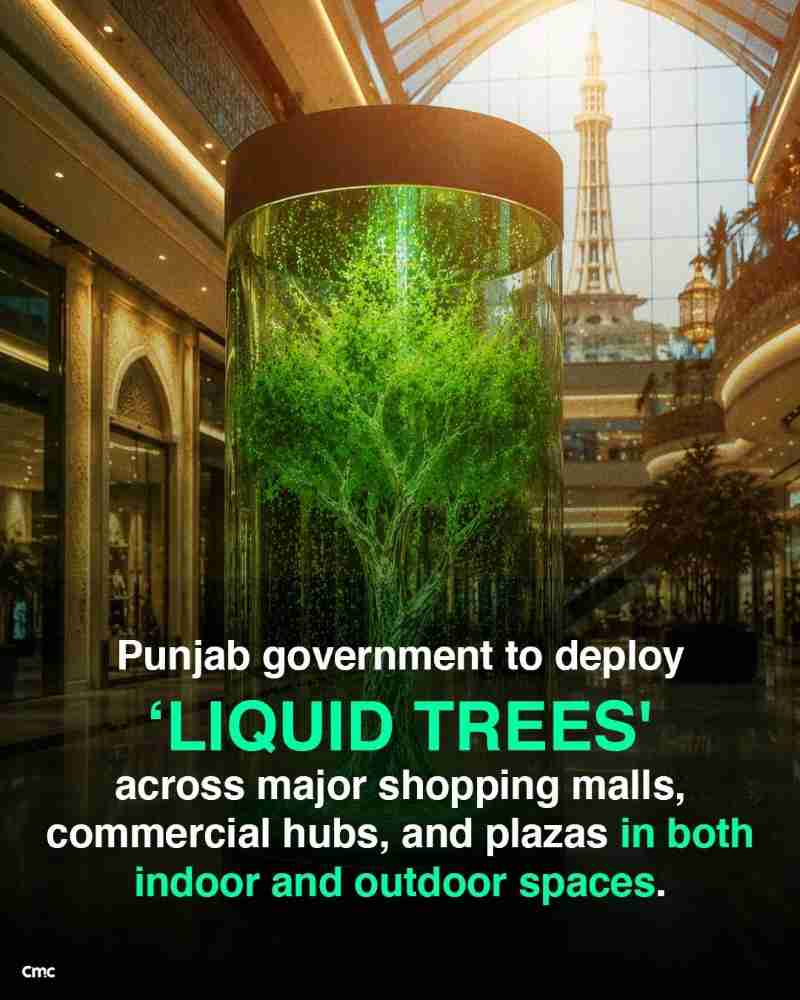
Table Of Contents
What Exactly Is a Liquid Tree?

A Liquid Tree is a glass or plexiglass tank filled with water and microalgae that captures carbon dioxide from the surrounding air and releases oxygen through photosynthesis. Instead of a traditional trunk, bark, and branches, it consists of a tank containing hundreds of liters of water mixed with microalgae and essential nutrients.
The key characteristics of a Liquid Tree include:
- A transparent tank that allows light penetration for photosynthesis
- Microalgae culture suspended in water
- Solar-powered pressure pump for air intake
- Bubble column for oxygen release
- Sensors and monitoring systems
- Integrated public furniture features
How Do Liquid Trees Differ from Natural Trees?
Liquid Trees and natural trees both perform photosynthesis to convert CO₂ into oxygen, but they differ significantly in several aspects.
| Feature | Liquid Tree | Natural Tree |
|---|---|---|
| Maturation Time | Instant upon installation | Years to decades |
| Space Required | Bench-sized footprint | Root and canopy space |
| Soil Requirement | None | Required |
| Photosynthetic Efficiency | 10-50× more efficient | Baseline |
| Year-Round Operation | Continuous operation | Seasonal dormancy |
| Ecosystem Services | Air purification only | Shade, habitat, cooling, soil stabilization |
Liquid Trees work instantly upon installation, require minimal space, can be placed on concrete, and are 10 to 50 times more efficient at capturing CO₂ per unit volume. However, Liquid Trees cannot provide shade, cool cities through evapotranspiration, support biodiversity, or prevent soil erosion.
What Is a Photobioreactor and How Is It Related to Liquid Trees?
A photobioreactor is a device that uses a light source to cultivate photosynthetic microorganisms like microalgae. Liquid Trees are essentially public-facing photobioreactors integrated into urban furniture. They harness the natural ability of microalgae to consume CO₂ and release oxygen through photosynthesis, but in a controlled, compact environment designed for urban deployment.
The key components of a photobioreactor include:
- Transparent vessel for light penetration
- Light source (natural sunlight or artificial)
- Nutrient supply system
- Temperature control
- pH monitoring
- Gas exchange system
Who Invented the Liquid Tree and Where Did It Originate?
The Liquid Tree was invented by researchers at the Institute for Multidisciplinary Research at the University of Belgrade, Serbia. The project, named LIQUID3, was designed to address Serbia’s severe air pollution problem, where a significant percentage of citizens breathe polluted air. The first prototype was deployed in Belgrade.
What Is the LIQUID3 Project and How Did It Inspire Global Liquid Tree Adoption?
The LIQUID3 project created the blueprint for what we now call Liquid Trees—a photobioreactor integrated into a public bench with solar panels, USB charging ports, and a night light. The project’s success inspired similar projects worldwide, including Pakistan’s EPA-certified Liquid Tree initiative and India’s first outdoor Liquid Tree in Noida.
The LIQUID3 prototype provided the first substantial dataset on oxygen generation capacity under real-world conditions and demonstrated the viability of microalgae-based air purification in urban settings.
Liquid Tree vs. Liquid 3: Is There a Difference?
“Liquid Tree” and “Liquid3” (also written as LIQUID3) are often used interchangeably, but there is a subtle distinction:
- LIQUID3 is the specific project name for the Serbian photobioreactor developed at the University of Belgrade
- “Liquid Tree” has become the generic term for any urban photobioreactor that uses microalgae to purify air, regardless of where it is deployed
In Pakistan, the government officially refers to it as the “EPA-certified Liquid Tree,” distinguishing it from the original Serbian project.
How Does a Liquid Tree Work?
A Liquid Tree works through a four-step process that mimics natural photosynthesis but at a significantly accelerated rate.
Step 1: Air Intake
A solar-powered pressure pump draws polluted urban air directly into the water tank. This ensures that the microalgae are constantly exposed to the surrounding air that needs purification.
Step 2: Carbon Dioxide Absorption
The microalgae in the water absorb carbon dioxide, nitrogen, and phosphorus from the air. Through a property called biosorption, they also passively filter out heavy metal contaminants by binding them to their complex chemical structure.
Step 3: Photosynthesis
Using natural sunlight or low-light artificial lamps, the microalgae perform photosynthesis. They convert carbon dioxide and water into oxygen and biomass, just like traditional trees, but at a rate 10 to 50 times more efficient.
Step 4: Oxygen Release
The system continually releases fresh oxygen back into the atmosphere through a bubble column. The entire process is monitored by an AI-based calculator that provides real-time data on carbon absorption and oxygen production.
What Role Do Microalgae Play in Liquid Tree Air Purification?
Microalgae are the engine of the Liquid Tree. These single-celled organisms perform photosynthesis at a rate 10 to 50 times more efficient than terrestrial plants. They absorb carbon dioxide, nitrogen, and phosphorus from the air and water, and through photosynthesis, convert these pollutants into oxygen and biomass.
Key properties of microalgae in air purification:
- Rapid Photosynthesis: Microalgae have a simple cell structure and rapid growth rates, making them highly efficient at converting CO₂ to oxygen
- Biosorption: They can passively filter out heavy metal contaminants by binding them to their complex chemical structure
- High CO₂ Tolerance: Some algal species can thrive in high CO₂ environments, making them ideal for polluted urban settings
While most terrestrial plants have a photosynthetic efficiency of 1-2%, microalgae range from 10-20%. Some algal species can double their biomass in as little as 3.5 hours during exponential growth.
What Species of Algae Are Used in Liquid Trees?
The specific algae species vary by location and are selected based on local environmental conditions and carbon sequestration capacity.
Serbian LIQUID3 Project:
- Uses native freshwater microalgae species
- Housed in a 600-liter tank
Pakistan’s Liquid Tree Project:
- Researchers collected over 100 species of microalgae from regions spanning Karachi to Khyber Pakhtunkhwa
- Over a seven-month period, they tested each species for carbon sequestration capacity and environmental performance
- The most effective algae species was identified in Sukkur, Sindh
- This strain was then cultivated with the support of Government College University (GCU) Faisalabad
Common Species Worldwide:
- Scenedesmus species
- Chlorella vulgaris
- Various native freshwater microalgae strains
How Does the AI Monitoring System in Punjab’s Liquid Tree Work?
The Punjab Liquid Tree is equipped with an artificial intelligence-based monitoring system that provides real-time data on:
- The amount of carbon dioxide being absorbed
- The volume of oxygen being released
- Overall system performance metrics
This enables continuous assessment of its environmental impact and allows officials to make data-driven decisions about deployment and optimization.
Do Liquid Trees Use Solar Power and Can They Operate at Night?
Yes, Liquid Trees are primarily powered by solar panels that supply renewable energy to operate the pumps and other utilities. The system gathers enough energy to power:
- Night light lamp
- Charging ports
- Temperature regulation system
While photosynthesis requires light, microalgae can continue basic metabolic functions in low-light conditions. However, optimal oxygen production occurs during daylight hours or under artificial grow lights if the system is installed indoors. The systems are designed to function in various light conditions, making them suitable for both indoor and outdoor installations.
How Much Carbon Dioxide Can a Liquid Tree Absorb?
A Liquid Tree can absorb significantly more CO₂ than a natural tree of similar footprint. Microalgae are 10 to 50 times more efficient at carbon capture than terrestrial plants.
Specific data on carbon capture capacity:
- A 250-liter reactor can absorb about 0.38 kg of CO₂ per year
- A unit using Scenedesmus microalgae captures approximately 50 kg of CO₂ annually
- Each kilogram of microalgae biomass removes about 1.83 kg of CO₂ from the atmosphere
How Much Oxygen Does One Liquid Tree Produce Daily?
While exact daily oxygen production varies based on factors like light exposure, temperature, and algae health, Liquid Trees are designed to match or exceed the oxygen output of mature trees:
- One unit can match the oxygen production of 200 square meters of lawn
- The LIQUID3 prototype in Belgrade provided the first substantial dataset on oxygen generation capacity under real-world conditions
- A single Liquid Tree can do the job of two 15-year-old trees
What Happens to the Dead Algae Inside a Liquid Tree?
As microalgae multiply and consume nutrients, they eventually die or are harvested. The dead algae (biomass) is removed periodically—typically every few weeks.
This biomass has multiple valuable uses:
- Fertilizer: Can be processed into high-quality natural fertilizer for agriculture
- Biofuel: Can be converted into renewable fuel sources
- Electricity Generation: Can be converted into electricity through solar-powered systems
- Animal Feed: Some strains can be used in aquaculture and livestock feed
The harvested biomass represents captured carbon that is removed from the atmosphere and sequestered in a usable form.
How Long Does the Algae Inside a Liquid Tree Last?
Microalgae can grow indefinitely with proper maintenance. As they multiply, the excess biomass is harvested, and the tank is refreshed with new water and minerals. The system is not a one-time use device but a continuous biological cycle.
In the LIQUID3 system, maintenance occurs once a month, where about 95% of the water is replaced with new water and minerals.
Do Liquid Trees Require Regular Maintenance or Water Changes?
Yes, Liquid Trees require regular maintenance, but it is relatively simple.
Maintenance tasks include:
- Biomass Harvesting: Periodic removal of excess algae every few weeks
- Water Replacement: About 95% of the water is replaced monthly
- Mineral Addition: New minerals are added with fresh water
- Nutrient Monitoring: Regular checking of nutrient levels and algae health
- Component Cleaning: Occasional cleaning of the tank and components
The system is designed for minimal, low-cost maintenance. According to the LIQUID3 creators, “It’s very simple and anyone can be trained to do it.”
Can Liquid Trees Operate in Winter and During Smog Season?
Yes, unlike deciduous trees that shed leaves and stop filtering air in winter, Liquid Trees work continuously throughout the year. They are not affected by seasonal changes.
Key advantages for winter and smog season:
- Continuous Operation: Microalgae continue photosynthesis even in cold weather
- Temperature Regulation: Systems include temperature control to sustain microalgae life in extreme climate conditions
- Year-Round Purification: Particularly valuable in cities like Lahore that experience severe winter smog
- No Dormancy Period: Unlike trees that become inactive, microalgae remain active
Can Liquid Trees Filter PM2.5 and PM10 Particulate Matter?
Yes, Liquid Trees help reduce particulate matter through multiple mechanisms.
How Liquid Trees filter particulate matter:
- Direct Absorption: Microalgae absorb pollutants including nitrogen, CO₂, and phosphorus directly from the air
- Biosorption: Microalgae bind heavy metal contaminants to their complex chemical structure
- Trapping: The system helps trap toxic particulate matter, heavy metals, and airborne allergens
- Dust Reduction: Microalgae help reduce dust particles and toxic gases in crowded cities
These properties make Liquid Trees particularly valuable in cities with high PM2.5 and PM10 levels.
What Are the Main Benefits of Liquid Trees in Urban Areas?
Liquid Trees offer numerous benefits for modern cities facing severe air pollution challenges.
Massive Carbon Efficiency
Microalgae are 10 to 50 times more efficient at photosynthesis than trees. This means a single Liquid Tree unit can match the CO₂-absorbing work of two 10-year-old mature trees or 200 square meters of lawn.
Instant Deployment
Unlike trees that take years to mature, microalgae can be deployed within weeks. A Liquid Tree works instantly upon installation, providing immediate air purification benefits.
Space Efficiency
Liquid Trees occupy the footprint of a small bench and can be placed on concrete, inside buildings, or in any space where traditional trees cannot grow.
Year-Round Operation
Unlike deciduous trees that shed leaves and stop filtering air in winter, Liquid Trees work continuously throughout the year, making them particularly valuable in cities like Lahore that experience severe winter smog.
Multifunctional Design
Beyond air purification, Liquid Trees serve as public benches with solar-powered USB charging ports and nighttime lighting.
Pollutant Filtration
Beyond greenhouse gases, the system helps trap toxic particulate matter, heavy metals, and airborne allergens common in urban smog.
Biomass Production
The harvested microalgae can be repurposed as nutrient-rich fertilizer for local plants or processed into biofuel, supporting a circular economy.
How Do Liquid Trees Combat Smog and Urban Air Pollution?
Liquid Trees combat smog through multiple mechanisms that work together to improve urban air quality.
Carbon Dioxide Removal
The primary function is absorbing CO₂ directly from the air. Microalgae consume carbon dioxide as part of their photosynthetic process, reducing the concentration of this greenhouse gas in the urban atmosphere.
Particulate Matter Filtration
Liquid Trees help reduce particulate matter, including PM2.5 and PM10 particles that are particularly harmful to human health. The microalgae trap these particles, removing them from the air.
Heavy Metal Biosorption
Through biosorption, microalgae bind heavy metal contaminants to their complex chemical structure, removing them from the air.
Toxic Gas Reduction
The system helps reduce nitrogen oxides and other toxic gases that contribute to smog formation.
Continuous Operation
Unlike trees that may struggle in highly polluted environments, microalgae can thrive in polluted conditions and continue purifying air throughout the year.
What Are the Environmental Benefits of Liquid Trees?
The environmental benefits of Liquid Trees extend beyond air purification:
Carbon Sequestration
Liquid Trees capture and sequester carbon in biomass that can be harvested, preventing it from remaining in the atmosphere.
Urban Heat Island Reduction
By converting solar energy into biomass instead of overheating surfaces, Liquid Trees help reduce the urban heat island effect.
Sustainable Fertilizer Production
The harvested biomass produces biofertilizer that can replace chemical fertilizers in agriculture.
Biofuel Potential
The algae biomass can be converted into renewable fuel sources.
Resource Efficiency
Liquid Trees require no land, soil, or water resources beyond the initial fill and periodic maintenance.
What Are the Social and Public Health Benefits of Liquid Trees?
Cleaner air directly translates to better public health outcomes:
Reduced Respiratory Illnesses
Lower levels of air pollution mean fewer cases of asthma, bronchitis, and other respiratory conditions.
Lower Cardiovascular Disease Rates
Air pollution is linked to cardiovascular disease. Reducing pollutants can decrease heart attack and stroke rates.
Enhanced Public Spaces
Liquid Trees enhance public spaces with seating, lighting, and charging facilities, making urban areas more inviting.
Environmental Awareness
Visible green technology raises awareness about environmental issues and demonstrates commitment to sustainability.
Educational Opportunities
Liquid Trees provide opportunities for public education about biotechnology, photosynthesis, and environmental science.
What Features Do Punjab Liquid Trees Offer Besides Air Filtration?
The Punjab Liquid Trees are designed as multifunctional urban furniture that serves multiple purposes.
Solar-Powered Operation
The systems run on renewable solar energy, making them sustainable and cost-effective.
Public Bench Seating
The structures double as modern street furniture, providing comfortable seating for the public.
USB Charging Ports
Solar-powered USB charging ports allow citizens to charge their mobile devices while using the public space.
Nighttime Glow Lighting
The systems include LED lighting that illuminates public spaces at night.
AI Monitoring Display
Real-time data on CO₂ absorption and oxygen production is displayed, educating the public about the system’s environmental impact.
How Does a Liquid Tree Compare to a Traditional Tree?
A Liquid Tree can match the CO₂-absorbing work of two 10-year-old mature trees or 200 square meters of lawn. One Liquid Tree can do the job of two 15-year-old trees. However, trees provide additional benefits like shade, cooling, habitat, and soil stabilization that Liquid Trees cannot replicate.
Liquid Tree vs. Natural Tree: Carbon Capture Comparison
Microalgae are 10 to 50 times more efficient at photosynthesis than trees. One species is up to 400 times more effective at harvesting CO₂ than trees. A single Liquid Tree unit can match the CO₂ capture of two 10-year-old trees or up to six mature trees.
Liquid Tree vs. Natural Tree: Space and Footprint Comparison
Liquid Trees occupy the footprint of a small bench and can be placed on concrete. Natural trees require soil, root space, and canopy space—often 10-50 square meters per tree. Liquid Trees can be deployed in spaces where trees cannot grow: sidewalks, plazas, shopping malls, and densely paved areas.
Liquid Tree vs. Natural Tree: Cost Comparison
Natural trees have lower upfront costs but require years to reach full effectiveness. Liquid Trees have higher upfront costs but work instantly.
| Cost Factor | Liquid Tree | Natural Tree |
|---|---|---|
| Upfront Cost | Higher | Lower |
| Installation Time | Immediate | Years to maturity |
| Ongoing Maintenance | Monthly water and nutrient replacement | Watering, pruning, disease management |
| Space Requirements | Minimal | Significant |
Liquid Tree vs. Natural Tree: Maintenance Comparison
Liquid Trees require monthly maintenance including water replacement and biomass harvesting. Natural trees require watering, pruning, disease management, leaf removal, and eventual removal if damaged or diseased.
Liquid Trees are resistant to pests and diseases but require technical maintenance. Trees are more familiar but can be surprisingly difficult to keep alive when artificially introduced in urban environments.
Liquid Tree vs. Natural Tree: Lifespan Comparison
Liquid Trees can operate indefinitely with proper maintenance, as microalgae grow continuously. Natural trees have lifespans ranging from decades to centuries, depending on species and conditions. However, Liquid Trees’ components (tanks, pumps, solar panels) have limited lifespans and will eventually need replacement.
What Can Natural Trees Do That Liquid Trees Cannot?
Natural trees provide a range of ecosystem services that Liquid Trees cannot replicate:
- Shade and cooling through evapotranspiration
- Biodiversity support and wildlife habitat
- Soil erosion prevention
- Water filtration
- Noise reduction
- Mental health and aesthetic benefits
- Carbon sequestration in wood that lasts for decades
- Community gathering spaces
What Can Liquid Trees Do That Natural Trees Cannot?
Liquid Trees offer unique advantages that natural trees cannot provide:
- Installation on concrete with no soil required
- Instant operation without waiting years to mature
- Year-round operation including winter months
- Survival in highly polluted environments
- Real-time air quality data provision
- Integration of technology like USB charging and lighting
- Compact footprint in dense urban areas
What Is the Punjab Liquid Tree Project?
The Punjab Liquid Tree Project is Pakistan’s first EPA-certified biotechnology initiative that uses microalgae-based photobioreactors to combat urban air pollution. Launched by Chief Minister Maryam Nawaz Sharif, the project represents a “scientific and effective solution” to combat rising CO₂ and smog levels in urban centers.
The system is designed as a bio-artificial tree that absorbs CO₂ and releases oxygen, with an AI-based monitoring system. The project marks a shift toward technology-driven environmental management in Pakistan.
Who Introduced Liquid Trees in Punjab?
Punjab Chief Minister Maryam Nawaz Sharif introduced the Liquid Tree project as part of her government’s “Eco-Friendly Punjab Vision.” She described it as “one of the most advanced scientific methods for addressing carbon emissions and smog in cities” and reaffirmed her commitment to making Punjab an environmentally sustainable province.
What Is the Status of the Punjab Liquid Tree Project?
The Punjab government has decided to expand the Liquid Tree project following successful testing. Pakistan’s first EPA-certified Liquid Tree is being relocated from Faisalabad to Lahore under the expansion plan. The successful trial will bring a significant change in the fight for environmental improvement in Punjab.
Where Are Liquid Trees Being Installed in Punjab?
In the first phase, Liquid Trees will be installed in major shopping malls in both indoor and outdoor settings.
Why Was Faisalabad Chosen for the Initial Liquid Tree Pilot?
Faisalabad was selected for the initial pilot because it is a major industrial city with significant air pollution challenges. The successful trial in Faisalabad demonstrated the technology’s effectiveness and led to the decision to expand the project. Government College University (GCU) Faisalabad played a crucial role in cultivating the selected algae strain.
How Was the Most Effective Algae Species for Pakistan Identified?
Researchers collected over 100 species of microalgae from across Pakistan, spanning from Karachi to Khyber. Over a seven-month period, they tested each species for carbon sequestration capacity and environmental performance. The most effective algae species was identified in Sukkur, Sindh. This strain was then cultivated with the support of GCU Faisalabad.
What Role Did Government College University Faisalabad Play?
GCU Faisalabad served as the key research partner in developing Pakistan’s Liquid Tree. The university helped cultivate the selected algae strain from Sukkur and participated in the seven-month testing and evaluation process. The collaboration reflects the creativity, expertise, and dedication of Punjab’s researchers and bioscientists.
What Is the EPA Certification and Why Is It Significant?
The Punjab Environmental Protection Agency (EPA) certified the Liquid Tree as Pakistan’s first EPA-approved bio-artificial tree. This certification is historically significant because it is the first technology to receive EPA certification since the agency’s establishment. The certification validates the system’s effectiveness and safety for public deployment.
How Does the Punjab Liquid Tree Project Fit into Broader Anti-Smog Efforts?
The Liquid Tree project is part of Punjab’s broader “Eco-Friendly Punjab Vision” to significantly cut urban pollution. Other initiatives include:
- Demolition of fat-melting units across the province
- Sealing of polluting facilities
- Plastic-free zones in major city markets
- Bans on plastic bags below 75 microns
- Green buffer zones around industrial areas
- Mandatory plantation drives
- Stricter controls on tree cutting
- AI-based monitoring system for the Liquid Trees
What Are the Limitations or Disadvantages of Liquid Trees?
Liquid Trees have several limitations that must be considered when evaluating their role in urban environmental strategies.
No Shade or Cooling
Liquid Trees cannot provide shade or cool cities through evapotranspiration, unlike natural trees.
No Biodiversity Support
Liquid Trees cannot support wildlife habitat or contribute to urban biodiversity.
No Soil Benefits
Liquid Trees cannot prevent soil erosion or improve soil health.
Maintenance Requirements
Liquid Trees require ongoing maintenance and infrastructure, including monthly water replacement and biomass harvesting.
Cost
Liquid Trees may be expensive to deploy at scale.
Algae Risks
Algae can emit toxins if not properly managed, requiring careful maintenance protocols.
Root Cause Issue
Liquid Trees do not address the root causes of pollution—they only treat the symptoms.
Opportunity Cost
Resources spent on Liquid Trees could potentially be used for more effective environmental solutions.
What Are the Criticisms of Liquid Tree Technology?
Critics raise several concerns about Liquid Trees:
Distraction Argument
Some argue that Liquid Trees are a distraction from real solutions like reducing emissions and planting real trees.
Cost-Effectiveness
Questions have been raised about whether the technology is cost-effective compared to other environmental interventions.
Motivation Concerns
Critics worry that Liquid Trees could demotivate people from planting natural trees.
“Fake” Perception
Social media critics have called them “fake” trees and questioned why resources aren’t spent on real environmental solutions.
Are Liquid Trees an Effective Solution or Just Greenwashing?
This is a matter of ongoing debate:
Supporters’ View:
Liquid Trees are a practical solution for urban areas where trees cannot grow. They provide immediate air purification and complement traditional environmental measures.
Critics’ View:
Liquid Trees are a technological fix that doesn’t address the root causes of pollution. They may divert attention and resources from more effective solutions.
Balanced View:
Liquid Trees are a useful complement to, not a replacement for, real trees and emissions reduction. They should be part of a comprehensive urban environmental strategy.
What Are the Environmental Concerns with Liquid Trees?
Environmental concerns with Liquid Trees include:
Algae Contamination
If systems are not properly maintained, algae cultures can become contaminated.
Chemical Use
Hazardous chemicals like chlorine may be needed to sterilize systems.
Manufacturing Impact
Energy and resources required for manufacturing and maintenance have environmental costs.
Biomass Disposal
Questions remain about whether biomass disposal creates new environmental problems.
Do Liquid Trees Cause Any Negative Environmental Impacts?
Potential negative environmental impacts include:
- Water consumption for the tank and maintenance
- Carbon footprint of manufacturing the equipment
- Risk of algae contamination if systems fail
- Opportunity cost of resources spent on other environmental solutions
Why Are Some People Skeptical About Liquid Trees?
Skepticism stems from several factors:
- Perception that Liquid Trees are “fake” or unnatural
- Concerns about cost-effectiveness
- Belief that resources would be better spent on planting real trees
- Questions about long-term sustainability
- Fear that Liquid Trees could become an excuse not to address pollution at its source
Can Liquid Trees Replace the Ecosystem Services of Natural Trees?
No. Natural trees provide shade, cooling, habitat, soil stabilization, water filtration, noise reduction, mental health benefits, and aesthetic value. Liquid Trees only provide air purification. They cannot replace the full range of ecosystem services that trees offer.
Are Liquid Trees a Sustainable Long-Term Solution?
The long-term sustainability of Liquid Trees depends on several factors:
- Cost-effectiveness of maintenance
- Environmental impact of manufacturing and disposal
- Availability of resources for ongoing operation
- Whether they genuinely complement rather than compete with real trees
The Future of Liquid Tree Technology
What Is the Future of Liquid Tree Technology in Pakistan?
The Punjab government plans to expand the Liquid Tree project across the province following successful implementation and performance evaluation. Units will be deployed in major shopping malls and indoor and outdoor public spaces. The government views this as a key step toward environmental improvement and adopting technology-driven solutions to environmental challenges.
Will Liquid Trees Be Deployed in Other Pakistani Cities?
Yes. Following the successful pilot in Faisalabad and expansion to Lahore, the government plans to expand the project across Punjab. Other major Pakistani cities facing severe air pollution may also adopt the technology.
How Could Liquid Tree Technology Evolve in the Coming Years?
Future developments could include:
Smaller Units
Smaller units for homes and offices could expand adoption.
Building Integration
Integration with building ventilation systems could improve indoor air quality.
Algae Optimization
More efficient algae strains through genetic optimization could increase carbon capture.
Improved Monitoring
Better AI monitoring and automation could reduce maintenance requirements.
Cost Reduction
Lower costs through mass production could make the technology more accessible.
Carbon Credits
Integration with carbon credit markets could provide financial incentives for deployment.
Technology Combinations
Combinations with other green technologies like vertical gardens and green roofs could create more comprehensive solutions.
Conclusion
Summary: What We’ve Learned About Liquid Trees
Liquid Trees are urban photobioreactors that use microalgae to capture CO₂ and release oxygen with 10 to 50 times the efficiency of natural trees. Originating from Serbia’s LIQUID3 project, the technology has spread to India and Pakistan, where the Punjab government has launched the country’s first EPA-certified Liquid Tree.
Key facts about Liquid Trees:
- They use microalgae that are 10-50× more efficient at photosynthesis than trees
- They work instantly upon installation
- They require minimal space and can be placed on concrete
- They operate year-round, including through winter smog season
- They require monthly maintenance and water replacement
- They produce valuable biomass that can be used as fertilizer or biofuel
- They serve as multifunctional urban furniture with seating and charging
Are Liquid Trees the Solution to Urban Air Pollution?
Liquid Trees are part of the solution, not the complete answer. They offer practical air purification in areas where trees cannot grow, work instantly, and operate year-round. However, they cannot replace the ecosystem services of natural trees, nor do they address the root causes of pollution.
The most effective approach combines:
- Liquid Trees for areas where trees cannot grow
- Natural tree planting wherever possible
- Emissions reduction at the source
- Broader environmental policies
Final Thoughts: Should Cities Invest in Liquid Trees?
Cities facing severe air pollution and space constraints should consider Liquid Trees as a complementary tool in their environmental strategy. However, investments should be balanced with natural tree planting, emissions reduction, and other proven environmental measures. Liquid Trees are not a magic bullet, but they represent an innovative use of biotechnology to address a pressing urban challenge.
Key Takeaways for Policymakers and Urban Planners
- Liquid Trees are 10-50× more efficient at CO₂ capture than trees
- They work in spaces where trees cannot grow
- They require monthly maintenance
- They are not replacements for natural trees
- They should complement, not compete with, other environmental measures
- EPA certification validates their effectiveness
- They offer additional public benefits like seating and phone charging
Disclaimer
The information provided in this guide is for educational and informational purposes only. The Liquid Tree technology is continuously evolving, and specific details about projects, costs, and deployment may change. Always consult official government sources and environmental experts for the most current information.
Frequently Asked Questions
What is the Punjab Liquid Tree project?
The Punjab Liquid Tree project is Pakistan’s first EPA-certified biotechnology initiative that uses microalgae-based photobioreactors to combat urban air pollution, launched by Chief Minister Maryam Nawaz Sharif as part of the “Eco-Friendly Punjab Vision.”
How do Liquid Trees combat smog in Lahore?
Liquid Trees combat smog by absorbing carbon dioxide, trapping PM2.5 and PM10 particulate matter, filtering heavy metals through biosorption, and releasing fresh oxygen continuously throughout the year, including winter smog season.
What is the price of a Liquid Tree in Pakistan?
Specific pricing for the Punjab Liquid Tree units has not been publicly disclosed, but the cost includes the tank, microalgae culture, solar panels, pump system, AI monitoring equipment, and installation.
How does a microalgae photobioreactor work?
A microalgae photobioreactor works by drawing air into a water tank where microalgae absorb CO₂ and pollutants, perform photosynthesis using light, and release oxygen back into the atmosphere through a bubble column.
Are Liquid Trees a permanent replacement for natural trees?
No, Liquid Trees are explicitly designed as a complement to, not a replacement for, natural trees. Their purpose is to fill urban areas where planting trees is not possible due to space constraints or high pollution.
How much oxygen does one Liquid Tree produce daily?
A single Liquid Tree unit can match the oxygen production of 200 square meters of lawn or two 10-year-old mature trees, though exact daily production varies based on light exposure, temperature, and algae health.
Do Liquid Trees use solar power?
Yes, Liquid Trees are primarily powered by solar panels that supply renewable energy to operate the pumps, night lighting, USB charging ports, and temperature regulation systems.
What species of algae is used in Pakistan’s Liquid Trees?
Pakistan’s Liquid Trees use a microalgae strain identified in Sukkur, Sindh, after researchers tested over 100 species from across Pakistan over seven months. The strain was cultivated with the support of GCU Faisalabad.

Add a Comment