
The CM Punjab QR Panic Button Initiative is a digital public safety system launched by the Punjab Safe Cities Authority that transforms any smartphone into an instant emergency response device through QR code scanning. This initiative integrates 12 safety features including live location sharing, video calls with police, and direct connection to Emergency Helpline 15, making it the most comprehensive digital security network deployed across any Pakistani province.
What you will learn from this guide:
- Step-by-step operation of the QR Panic Button from scan to police dispatch
- Complete list of installation locations across public transport, colleges, and religious sites
- Technical requirements and privacy protections built into the system
- Legal obligations for transport operators and rights for passengers
- Future expansion plans and integration with other safety initiatives
Key Takeaways
- Immediate Police Dispatch: Scanning the QR code and pressing the emergency button transmits your live GPS coordinates to the Safe City Control Room within seconds, with the nearest police unit dispatched directly to your location.
- Free for All Users: Transport operators pay nothing to obtain and display the QR code, and passengers pay nothing to scan and use the emergency features, making public safety accessible regardless of income.
- Automatic Vehicle Verification: Before your journey begins, scanning the QR code displays verified driver details and vehicle registration status, allowing you to confirm legitimacy before boarding.
- Virtual Women Police Station Integration: Alerts from women’s colleges and female passengers route directly to a dedicated digital policing unit, ensuring gender-sensitive emergency handling.
- 12 Integrated Safety Features: The system combines voice calls, video calls, live chat, trip sharing, family alerts, and automated record protection within a single QR code scan.
- Wider Expansion: The government recently announced the installation of an additional 1,500 panic buttons across police stations and prominent public spaces as part of the expanding Safe City network.
- Read More: Budget 2026-27: Major Expenditures, Tax Relief, & Revenue Target
- Read More: CM Punjab Rental E-Bike Service Scheme (For Lahore Region)
- Read More: CM Punjab Maryam Nawaz She Threads Program (PKR 15K/Month)
- Read More: Top 5 Free Liver Transplant Hospitals In Lahore
CM Punjab QR Panic Button Initiative: How It Works, Where It Is Installed
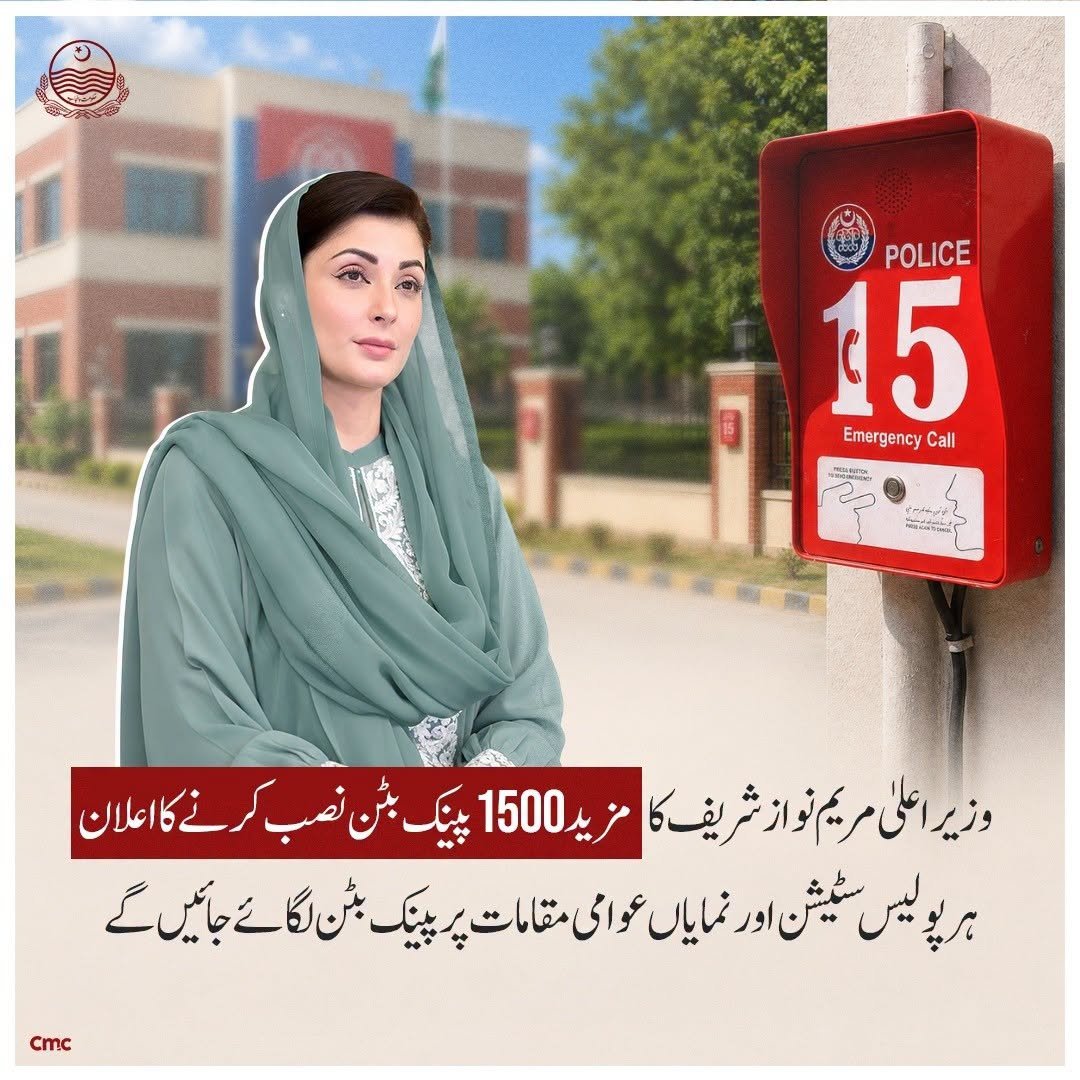
Table Of Contents
What Is the CM Punjab QR Panic Button Initiative and Why Was It Launched?
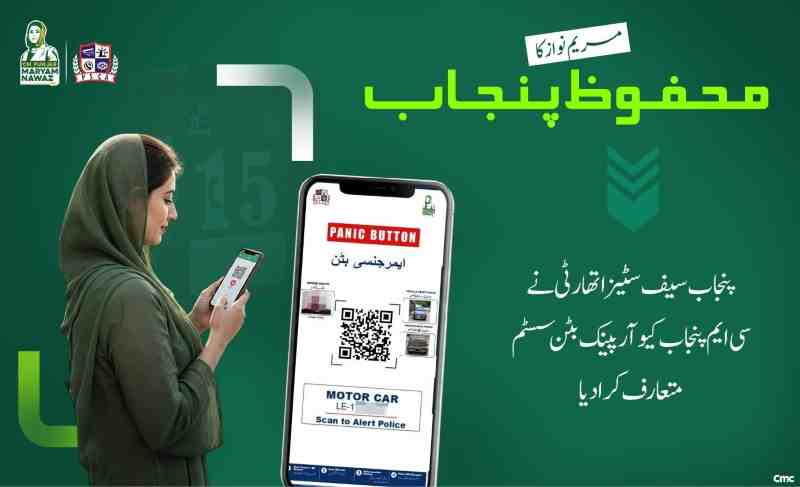
The CM Punjab QR Panic Button Initiative is a digital safety system deployed across public transport, educational institutions, and public venues that allows citizens to instantly summon police assistance by scanning a QR code with their smartphone. The system was launched under the direction of the Chief Minister to address rising concerns about passenger safety, particularly for women and students using public transport in urban and rural areas.
When was the CM Punjab QR Panic Button officially launched?
The system became operational across Lahore and multiple Punjab districts following a phased rollout that began with public transport vehicles at major transit hubs. Initial deployment focused on high-traffic areas including Liberty Chowk, where over 100 auto-rickshaws received the first QR code installations.
What is the primary goal of the QR Panic Button for passenger safety?
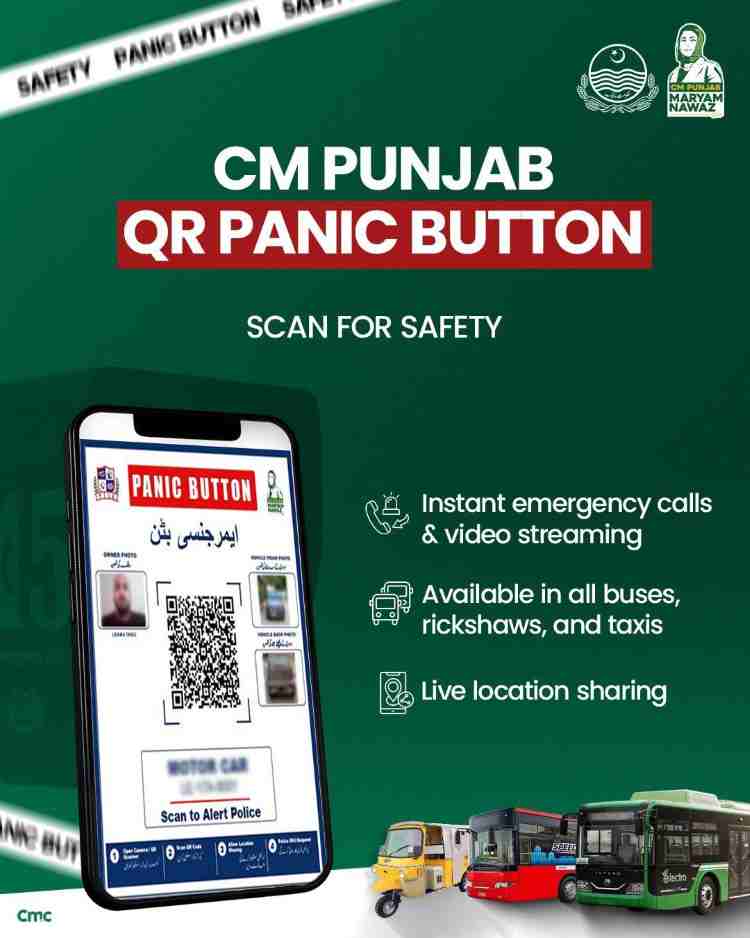
The primary goal is to reduce police response time during emergencies by eliminating the need for manual address description or phone number recollection. Passengers in distress can trigger an alert that automatically shares their exact location, vehicle details, and trip information with the Safe City Control Room within seconds of scanning.
Who is the governing body responsible for the Punjab Panic Button System?
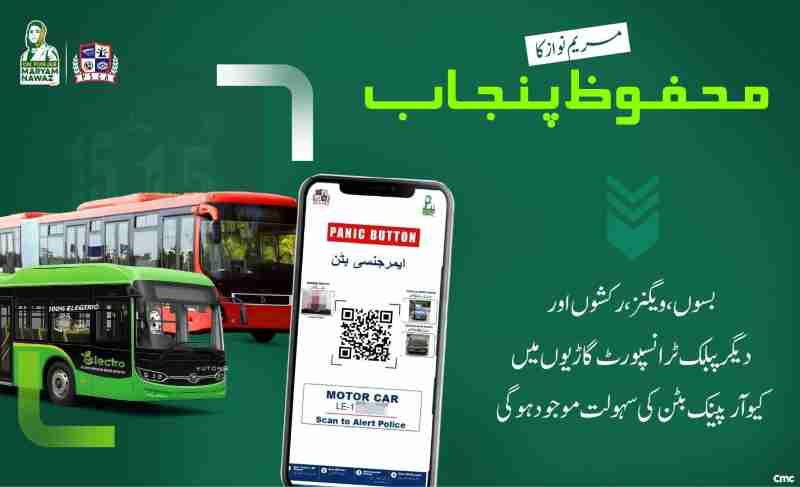
The Punjab Safe Cities Authority holds full responsibility for the QR Panic Button system, including technology development, control room operations, police coordination, and public awareness campaigns. The Authority operates the central command and control centre that receives and processes all panic alerts.
How does this initiative fit into the broader Safe Punjab vision?
The QR Panic Button serves as a foundational component of the Safe Punjab vision, which aims to create a connected safety ecosystem linking surveillance cameras, digital policing, and citizen reporting tools. The system complements existing Safe City cameras by adding citizen-initiated alerts to the automated monitoring network.
What specific security gaps in public transport does the QR code address?
The system directly addresses three critical security gaps: the inability to verify driver credentials before boarding, the absence of real-time location sharing with family during journeys, and the lack of immediate police alert mechanisms from inside moving vehicles.
How Does the CM Punjab QR Panic Button Work from Scan to Response?
The system works in three sequential phases: initial verification and trip sharing at journey start, emergency activation via scanning or pressing the button, and instant response where the Safe City Command and Control System dispatches the nearest police unit to the user’s live location. Each phase takes approximately three to five seconds to complete under normal network conditions.
What is the first step when I enter a public bus or rickshaw in Lahore?
The first step is locating the QR Panic Button sticker or placard displayed inside the vehicle, typically positioned on the back of the front seat, above the driver’s cabin, or near the passenger door. Once located, you open your smartphone camera and point it directly at the QR code.
How do I scan the CM Punjab QR Panic Button using my smartphone?
You scan the QR code using your smartphone’s built-in camera application, which automatically detects the code and opens a secure connection to the Punjab Safe Cities Authority verification page. No specialized scanning app is required for basic verification, though the Public Safety App enables additional features.
Which mobile app is required to scan the CM Punjab QR code?
The Public Safety App, available for both Android and iOS devices, is recommended for full feature access including live chat, video calling, and one-touch emergency activation. However, any standard QR code reader or smartphone camera can successfully scan the code for basic vehicle verification.
Do I need internet access to use the QR Panic Button on a moving vehicle?
Internet access is required for live features including real-time location sharing, video calls, and instant emergency chat. Basic vehicle verification and driver details may load with a slower connection, but the full emergency response system functions best with an active mobile data connection.
What happens after I successfully scan the QR Panic Button for the first time?
After the first successful scan, your smartphone displays a verification screen showing the vehicle’s registration number, the owner’s name, the registered driver’s information, and the vehicle’s fitness certificate status. A prominent emergency button remains visible on the screen throughout your journey.
What driver details are displayed when I scan the QR code inside the vehicle?
The display includes the driver’s name as registered with the transport authority, the driver’s license number, a photograph of the registered driver, and the driver’s contact information. You can immediately verify whether the person driving matches the registered driver details shown on screen.
Read More: Top 5 Free Kidney Transplant Hospitals In Lahore
How Do I Share My Trip Details with Family Using the QR Panic Button System?
After scanning the QR code, the system presents an option to share the scanned trip details and vehicle data with family members or trusted contacts, enabling them to track your journey in real time for proactive security. This feature transforms passive travel into actively monitored transit.
Does the QR Panic Button share my live trip details with my family automatically?
No automatic sharing occurs without your explicit consent. You must manually select the trip sharing option after each scan and choose which contacts receive the live location updates. Once activated, the system sends a secure link containing your real-time position and vehicle information.
How do I select which family members receive my live location updates?
The Public Safety App allows you to pre-save up to five trusted contacts who will receive trip sharing links. During the scanning process, you select from this saved list or manually enter a phone number for one-time sharing without saving the contact permanently.
What information is included in the live trip sharing notification?
The notification contains a live map showing your current location, the vehicle’s registration number, the driver’s name, your starting point and destination, and an estimated arrival time. Family members can refresh the map to see your updated position every few seconds.
Can I stop sharing my trip location after reaching my destination safely?
Yes, you can manually end location sharing through the Public Safety App by tapping the Stop Sharing button. The system also automatically terminates location sharing fifteen minutes after your scanned vehicle reaches your entered destination or when the trip duration exceeds a reasonable threshold.
Does the live trip sharing feature drain my smartphone battery quickly?
The feature uses continuous GPS tracking which consumes additional battery power. A typical one-hour trip with active sharing consumes approximately eight to twelve percent of a standard smartphone battery. Users with older devices should ensure sufficient charge before long journeys.
What Happens Immediately After I Press the CM Punjab Panic Button?
Upon activation, the system automatically transmits the user’s live location, latitude and longitude coordinates, and specific vehicle credentials directly to the Safe City Control Room, while simultaneously opening communication channels to Emergency Helpline 15. The entire data transmission completes within two seconds of button press.
How fast is the police response time after pressing the emergency button?
Response time varies by location, with Lahore averaging under ten minutes from alert receipt to police arrival. Rural areas and smaller cities may experience longer response times as the system continues to expand, but the control room dispatches the nearest available unit regardless of jurisdiction.
Does the Safe City Control Room receive my location automatically or manually?
Location transmission occurs automatically without any manual input from the user. The moment you press the emergency button, your smartphone’s GPS coordinates are bundled with the vehicle’s QR data and sent directly to control room operators who view your position on a digital map.
What three communication pathways are offered after emergency activation?
The system presents three communication options: a standard voice call connecting you directly to an Emergency 15 operator, a live chat window for text-based communication when speaking is unsafe, and a video call that allows operators to visually assess your situation without requiring you to speak.
Can I make a video call to the police through the QR Panic Button live feed?
Yes, the video call feature is fully integrated into the emergency response system. When you select the video option, the control room operator receives a live camera feed from your smartphone, allowing them to see your surroundings, the driver, any threatening individuals, and the vehicle interior.
How does the operator evaluate my situation during the emergency call?
Operators follow a structured assessment protocol that begins with determining whether you can speak freely. If you indicate that speaking is unsafe, the operator switches to text chat or continues listening to ambient sounds from your environment while tracking your location and dispatching police.
How Does the Safe City Control Room Track My Exact GPS Coordinates?
When the panic button is triggered, the Public Safety App or scanning interface uses your smartphone’s built-in GPS to capture precise latitude and longitude data, which is instantly transmitted to the PSCA control room alongside your vehicle’s unique QR identification information. This combined data packet creates a complete emergency profile that includes both your location and the vehicle’s verified credentials.
How accurate is the location tracking inside dense urban areas like Liberty Chowk?
Urban location accuracy typically ranges from five to fifteen meters when your smartphone has a clear view of the sky. In dense commercial areas with tall buildings, accuracy may decrease to twenty to thirty meters, which still provides sufficient precision for police to locate your specific vehicle or building.
What happens if my phone’s GPS signal is weak inside a public bus or wagon?
The system falls back to cellular tower triangulation and WiFi positioning when GPS signals are weak inside metal vehicle bodies. While less precise than GPS, this backup method still provides operators with a reliable location radius of approximately fifty to one hundred meters.
How does the system track my location if I am inside an Imambargah or college campus?
Fixed location QR Panic Buttons installed at Imambargahs and college campuses have pre-programmed geographic coordinates stored in the system. When you scan a fixed-location QR code, your emergency alert is immediately associated with that exact address rather than relying on your smartphone’s GPS.
Does the Safe City Control Room use surveillance cameras to verify my location?
Yes, control room operators have immediate access to Safe City surveillance cameras positioned throughout major urban areas. When your panic alert activates, operators automatically view camera feeds from the closest cameras to your reported location, allowing visual verification of the incident.
Can I Use the CM Punjab Panic Button Without an Internet or Mobile Connection?
The QR Panic Button requires an internet connection for real-time features like live location sharing and video calling, but basic emergency alerts and SMS-based notifications can function over standard cellular networks even without active mobile data. The system automatically detects your connection type and adjusts available features accordingly.
Does the QR Panic Button work in remote villages with poor network coverage?
Basic emergency functionality remains available even with minimal network coverage. The system attempts to send your alert through any available cellular channel, including older 2G networks that support only voice calls and text messages. Police response may be delayed in areas with extremely limited coverage.
Do I need a Pakistani SIM card to activate the emergency call?
The emergency call feature works with any active SIM card from a Pakistani mobile network operator. International roaming SIM cards may experience connectivity delays, but the system does not block emergency requests based on SIM origin as long as a Pakistani network connection exists.
How does the Public Safety App handle emergency registration without internet?
The app stores your emergency request locally when no internet connection is available and continuously attempts to transmit the alert as network conditions improve. Your phone displays a confirmation that the system is attempting to connect, and you receive notification once transmission succeeds.
How Does the QR Code Deactivate Automatically If a Vehicle Is Sold?
The authority has introduced an automated verification mechanism: when vehicle ownership records are updated in the transport database, the existing QR Panic Button is automatically deactivated, and a new operational code is issued only after the official registration records are fully updated. This prevents former owners from misusing outdated QR credentials.
What prevents the previous owner from misusing the old QR code after sale?
The automatic deactivation system immediately invalidates the old QR code in the central Safe City database. Any scan of the deactivated code displays a warning message indicating that the vehicle registration has changed and that the displayed information may be outdated.
How does the system link with Punjab transport department ownership records?
The QR Panic Button database synchronizes daily with the Punjab transport department’s central vehicle registration system. When ownership changes are recorded in the transport database, the synchronization process automatically flags the associated QR code for deactivation within twenty-four hours.
Can a driver register a new QR code before the ownership transfer is complete?
No, the system requires confirmed ownership transfer records before issuing a new QR code. This prevents situations where multiple parties claim ownership of the same vehicle or where outdated credentials remain active during legal disputes over vehicle possession.
Where Can I Find the QR Panic Buttons in Lahore and Across Punjab?
QR Panic Buttons are actively being installed across public transport vehicles including buses, wagons, rickshaws, and taxis; educational institutions focusing on women’s colleges and universities; religious sites including more than 4,500 Imambargahs; and fixed public locations with 122 points in Lahore plus 101 sites across other Punjab cities.
Where are the fixed panic buttons located in Punjab cities?
Fixed panic button locations include major bus terminals, railway stations, public parks, commercial market entrances, hospital waiting areas, and government office reception zones. Each fixed location features a prominently displayed QR code placard with instructions in Urdu and English.
Is the QR Panic Button available on all public buses in Punjab or only specific routes?
The rollout follows a phased approach, with all buses operating on high-traffic intra-city routes receiving priority installation. Rural and inter-city bus routes are currently being equipped, with full provincial coverage expected upon completion of the current installation phase.
Can I use the QR Panic Button inside an auto-rickshaw traveling in Lahore?
Yes, auto-rickshaws are a primary focus of the initiative. The initial deployment began with over 100 rickshaws at Liberty Chowk, and the mandate now requires all registered rickshaws operating in Lahore to display an active QR Panic Button inside the passenger cabin.
Are these QR codes installed inside religious places like Imambargahs?
Yes, for the first time in the country’s history, QR Panic Buttons are being installed at Imambargahs across Punjab. Over 4,500 sites have been geo-tagged, and scanning the QR code at any participating Imambargah displays the location’s security classification, administration details, and emergency contact information.
How Is the QR Panic Button Being Rolled Out in Women’s Colleges and Universities?
The installation in educational institutions began with 39 women’s colleges and universities in Lahore during the first phase, with the facility being extended phase-wise to more than 450 women’s colleges across the entire Punjab province, directly linked to the Virtual Women Police Station for immediate gender-sensitive response.
How does the system protect female students in colleges from harassment?
When a female student activates the panic button from a college campus, the alert routes directly to the Virtual Women Police Station rather than a general control room operator. Female police officers handle the emergency communication, and the response team includes trained personnel for gender-based incident management.
Are ride-hailing services like Uber and Indrive required to have this QR code?
Yes, the City Traffic Police have mandated that all online ride-hailing companies must install QR Panic Buttons, dashboard cameras, and GPS trackers in their registered vehicles. Non-compliant vehicles face penalties including fines and potential delisting from ride-hailing platforms.
How does the Virtual Women Police Station integration enhance campus safety?
The Virtual Women Police Station maintains direct communication channels with all participating colleges, allowing emergency responders to access campus security personnel and surveillance footage immediately upon panic button activation. The station also coordinates follow-up counseling and legal support for victims.
Can female students activate the panic button without using their mobile phones?
Fixed QR Panic Button placards are installed at strategic locations throughout each college campus, including near hostels, libraries, and isolated walkways. Students can scan these fixed codes using any smartphone, or they can use the Public Safety App’s one-touch emergency feature without scanning.
Are Ride-Hailing Services Like Uber, Careem, and Indrive Required to Install QR Panic Buttons?
Yes, the City Traffic Police Lahore has mandated that all online cab companies must install QR Panic Buttons, dashboard cameras, and GPS trackers in their vehicles within a stipulated timeframe, with strict penalties for non-compliance including fines and vehicle impoundment for repeat violations.
What is the deadline for ride-hailing companies to install QR Panic Buttons?
The phased compliance deadline requires all new vehicles registering with ride-hailing platforms to display QR Panic Buttons immediately upon registration. Existing fleet vehicles must complete installation within a defined grace period from the mandate announcement.
What penalties apply to vehicles failing to comply with the QR code mandate?
First-time violations result in a fine and a compliance notice requiring installation within seven days. Second violations within the same year trigger higher fines and temporary suspension from ride-hailing platforms. Continued non-compliance leads to permanent delisting and referral for legal proceedings.
Does the mandate apply to both luxury ride-hailing and budget services?
The mandate applies uniformly to all commercial passenger transport services operating through digital platforms, regardless of vehicle class or fare structure. Luxury sedans and economy hatchbacks face identical QR Panic Button requirements.
How Does the Punjab Safe Cities Authority Emergency Helpline 15 Integrate with QR Panic Button?
The QR Panic Button system is directly linked with Punjab Police emergency helpline 15 and the Safe Cities central command and control centre, allowing users to connect through voice calls, live chat, or video calls with a single touch. The integration eliminates the need to manually dial or remember emergency numbers during a crisis.
What happens when I call Emergency 15 after scanning the QR Panic Button?
When you make a voice call through the panic button interface, your caller ID and vehicle credentials are automatically transmitted to the Emergency 15 operator before they answer. The operator sees your name, your live location, the vehicle registration number, and the driver’s details on their screen before speaking with you.
What is the provincial average response time for emergency helpline 15 calls?
Emergency 15 calls routed through the QR Panic Button system receive priority handling, with average answer times under eight seconds. Police dispatch for verified emergencies occurs within thirty seconds of operator assessment, with units en route immediately thereafter.
How does the control room prioritize panic button alerts over standard phone calls?
The system automatically flags all QR Panic Button alerts as high-priority incidents in the control room queue. Standard phone calls continue to receive service, but panic alerts bypass any wait times and appear immediately on operator screens with urgent visual indicators.
How Does the Safe City Control Room Use Surveillance Cameras to Assess Emergencies?
Upon receiving a panic alert with live location data, control room operators immediately access nearby Safe City surveillance cameras to visually assess the situation, verify the emergency, and track the incident in real time before dispatching police units. This visual verification prevents unnecessary dispatches for false alarms.
How many Safe City cameras are monitoring Lahore’s transport routes?
The Safe City camera network covers all major transport corridors within Lahore, including every bus rapid transit station, major intersections, and commercial thoroughfares. Cameras are positioned to capture vehicle license plates and passenger loading zones at key transit points.
Can operators zoom in on specific vehicles or individuals during an emergency?
Yes, Safe City cameras feature optical zoom capabilities that allow operators to read vehicle license plates and distinguish individual facial features from distances exceeding one hundred meters. This zoom functionality enables operators to confirm the specific vehicle involved in an alert.
How does Automated Number Plate Recognition support panic button investigations?
Automated Number Plate Recognition cameras continuously scan passing vehicles and compare plates against databases including stolen vehicle records and outstanding warrant lists. When a panic alert activates, the system automatically retrieves all recent camera sightings of the suspect vehicle.
What Is the Police Response Protocol After Receiving a QR Panic Button Alert?
When an alert is received, the Safe City Control Room evaluates the situation via voice, video, or chat, verifies the live location and vehicle credentials, and then dispatches the nearest available police unit directly to the user’s coordinates while maintaining real-time communication with the affected individual.
How does the command-and-control network coordinate multi-agency responses?
The control room can simultaneously dispatch police, ambulance services, and traffic management units when an emergency requires multiple response types. A single operator manages all three dispatches from a unified interface, sharing location data across all responding agencies.
What is the role of the district police officer in emergency panic button responses?
Each district police officer maintains dedicated response teams trained specifically for QR Panic Button emergencies. These teams receive real-time updates from the control room and coordinate on-ground response with the central command centre.
How does the system ensure the nearest police unit is always dispatched?
The control room’s dispatch system tracks the live GPS location of all patrol vehicles across Punjab. When a panic alert arrives, the system automatically calculates distances from every patrol unit to the alert location and recommends the closest available vehicle for dispatch.
How Does the QR Panic Button Protect My Personal Data and Privacy?
The system employs encrypted data transmission for all location sharing, vehicle verification, and emergency communications, with strict access controls limiting data visibility to authorized Safe City Control Room personnel only during active emergencies. No passenger data is stored permanently or shared with third parties.
What data encryption standards are used for QR Panic Button communications?
All data transmitted between your smartphone and the Safe City Control Room uses bank-grade encryption protocols that prevent interception or decryption by unauthorized parties. This encryption applies to location data, chat messages, and video call streams equally.
How long does the PSCA retain my location data after an emergency is resolved?
Emergency-related data is retained for ninety days to support any subsequent investigations or legal proceedings. After ninety days without any related case filing, all location and communication data is automatically purged from the system.
What protections exist against misuse of my shared trip information by family members?
Trip sharing links expire automatically after the journey ends or after four hours, whichever comes first. Family members cannot access historical trip data or share the link with additional contacts. Each trip requires fresh consent and generates a new, unique sharing link.
How Does the System Prevent False Alarms and Prank Emergency Activations?
The system incorporates verification protocols where control room operators assess each emergency through voice, video, or chat before dispatching police, and repeated false activations from the same device or vehicle trigger automated warnings and potential blocking. This multi-layered verification protects police resources while ensuring genuine emergencies receive priority.
What penalties exist for individuals who deliberately trigger false panic alerts?
Deliberate false alarms constitute a legal offense under public safety regulations. First offenses result in formal warnings recorded against the individual’s CNIC. Repeat offenses may lead to fines, community service requirements, or referral for legal proceedings depending on severity and impact on emergency services.
How does the system distinguish between accidental and intentional button presses?
The system requires confirmation of emergency intent for all activations. After pressing the panic button, users must confirm their emergency by selecting from a list of incident types. Accidental presses can be canceled during this confirmation step without triggering a full police dispatch.
What is the verification process before police are dispatched to a location?
Operators first attempt two-way communication through the user’s preferred channel. If the user confirms an emergency, dispatch proceeds immediately. If the user cannot respond or indicates they cannot speak, operators attempt visual verification through nearby cameras before dispatching. Unconfirmed alerts receive a lower-priority response.
What Are the Legal Requirements for Public Transport Owners Regarding QR Panic Button Installation?
All public transport owners in Punjab are legally required to install the QR Panic Button in their vehicles as part of the safety mandate, with failure to comply resulting in penalties including fines, vehicle impoundment, and potential suspension of transport permits. The mandate applies uniformly across vehicle types and operating regions.
What specific laws mandate QR Panic Button installation for public transport?
The Punjab Transport Department’s safety regulations explicitly include QR Panic Button installation as a requirement for all public service vehicle fitness certifications. Vehicles cannot receive annual fitness clearance without an active, correctly displayed QR code.
Who is responsible for enforcing compliance among transport operators?
The City Traffic Police hold primary enforcement authority, conducting random vehicle inspections at transit hubs and during routine traffic stops. The Punjab Safe Cities Authority also monitors QR code scan data to identify vehicles with consistently zero scans, flagging these for inspection.
Can passengers refuse to board a vehicle that does not display the QR code?
Passengers have the right to refuse boarding any public transport vehicle that does not display a visible, legible QR Panic Button sticker. Transport operators cannot penalize passengers for exercising this right, and passengers may report refusals to the traffic police helpline.
How Can Public Transport Owners Get the QR Panic Button Installed in Their Vehicles?
Transport owners can obtain the QR Panic Button by downloading the Public Safety App from official stores, registering their vehicle details, and receiving a unique QR code that can be printed and displayed prominently inside the vehicle for passenger access. The entire registration process takes approximately ten minutes per vehicle.
Where can public transport owners register to get their unique QR code?
Registration occurs through the official Punjab Safe Cities Authority website or directly within the Public Safety App’s transport owner section. Both platforms offer step-by-step guidance in Urdu and English with verification requirements clearly explained.
Can commercial transport operators download the QR code for free at home?
Yes, the QR code generation is completely free of charge. Transport operators need only a smartphone or computer with internet access, their vehicle registration documents, and their valid driving license to complete the online registration process.
What is the step-by-step process for vehicle registration on the PSCA website?
First, create an account using your CNIC and mobile number. Second, enter your vehicle’s registration number and upload photos of the registration book. Third, verify your identity through a one-time password sent to your registered mobile number. Fourth, download the unique QR code generated for your vehicle. Fifth, print and display the QR code inside the passenger cabin.
What documents are required for successful QR Panic Button registration?
Required documents include a valid vehicle registration certificate, a valid fitness certificate for commercial vehicles, the driver’s valid driving license, and proof of insurance coverage. All documents must match the vehicle and owner information exactly as recorded in transport department systems.
What Should I Do If a Driver Refuses to Display the QR Panic Button in Their Vehicle?
Passengers should report any public transport vehicle without a visible QR Panic Button to the nearest traffic police officer, through the Emergency Helpline 15, or via the Public Safety App’s complaint feature, specifying the vehicle’s registration number and location. The system logs all complaints and prioritizes enforcement actions accordingly.
Can I refuse to board a vehicle that does not have a functioning QR Panic Button?
Yes, passengers have the legal right to refuse boarding without penalty. If a driver insists on taking passengers despite lacking a QR code, passengers may exit the vehicle and report the driver to traffic police without any obligation to pay for the uncompleted trip.
What is the legal penalty for drivers who fail to display the QR code?
Drivers operating public transport vehicles without displayed QR codes face fines that increase with each violation. The vehicle may also be impounded until compliance is demonstrated, and repeat violations can result in suspension of the driver’s commercial transport license.
How does the PSCA track and enforce QR code compliance across all vehicles?
The authority monitors scan data to identify vehicles that receive no passenger scans over extended periods. These vehicles are flagged for physical inspection, where officers verify whether the QR code is displayed, legible, and functional. Transport owners receive automated notifications before inspections occur.
Can Foreign Tourists Use the Punjab QR Panic Button System While Traveling?
Yes, foreign tourists can access the QR Panic Button system by downloading the Public Safety App or scanning the QR code directly with their smartphone camera, though basic voice call emergency features may require a functional cellular connection to a Pakistani mobile network. The system does not block users based on SIM card origin.
Do foreign tourists need a Pakistani SIM card to activate the emergency call?
Emergency calls through the panic button system work with any active cellular connection, including international roaming SIMs that connect to Pakistani networks. However, tourists using non-Pakistani SIMs may experience delays in location transmission due to roaming data restrictions.
Does the Public Safety App support international phone numbers for registration?
Yes, the registration system accepts international phone numbers with proper country codes. Verification messages are sent to the provided number, and emergency contacts can include numbers from any country for trip sharing features.
What languages are supported within the QR Panic Button user interface?
The interface is available in Urdu and English, with clear visual icons accompanying all text instructions. Emergency operators typically communicate in Urdu or English and can access translation services for other languages upon request.
What Are the Future Expansion Plans for the CM Punjab QR Panic Button Initiative?
The Punjab government plans to expand the system to cover all 450 women’s colleges across the province, extend QR Panic Buttons to all Imambargahs and religious sites, mandate installation for all ride-hailing services, and integrate the system with additional emergency response networks including fire services and rescue 1122.
How many additional women’s colleges will receive panic buttons in the next phase?
The next expansion phase targets all remaining women’s colleges across Punjab that have not yet received installations, bringing the total to 450 campuses. This phase prioritizes colleges in rural and remote districts where alternative safety resources are limited.
What is the target completion date for full provincial QR Panic Button coverage?
The authority aims to achieve full coverage across all public transport vehicles and fixed locations within Punjab within the current expansion timeline, though exact completion dates vary by region based on installation logistics and transport operator compliance rates.
Will the system eventually cover private schools and universities beyond women’s colleges?
Future expansion phases include private educational institutions, though implementation timelines are being developed in consultation with private school associations and university administrations. Security requirements and installation standards will remain consistent across public and private institutions.
How Does the QR Panic Button Integrate with Other Punjab Safety Initiatives?
The QR Panic Button works alongside the Women Safety App featuring live chat, the Pink Button system for immediate emergency response, Safe City surveillance cameras, and the digital vehicle fitness certificate system, creating a comprehensive safety ecosystem where each component reinforces the others.
What is the Pink Button system and how does it complement the QR Panic Button?
The Pink Button system provides one-touch emergency activation within the Public Safety App without requiring QR code scanning. While the QR Panic Button is designed for shared vehicles and public locations, the Pink Button is available anywhere you have your smartphone, making the two systems complementary rather than redundant.
How does the digital fitness certificate QR code differ from the panic button QR code?
Digital fitness certificate QR codes display vehicle roadworthiness information and are required for regulatory compliance. Panic Button QR codes display the same information but add emergency response features including live location sharing and police dispatch. Some vehicles display both codes for different purposes.
Can a single QR code serve both vehicle fitness verification and panic button functions?
No, the two QR codes serve distinct purposes and contain different data structures. Fitness certificate codes provide static vehicle information only, while panic button codes include dynamic emergency response features. Vehicles must display both codes where both requirements apply.
Frequently Asked Questions
Do I need internet access to use the QR Panic Button?
Yes, full features including live location sharing, video calls, and real-time chat require an active internet connection. Basic vehicle verification may work with limited connectivity, but emergency response features are optimized for connected devices.
Which mobile app is required to scan the CM Punjab QR code?
The Public Safety App is recommended for complete feature access, but any standard QR code reader or smartphone camera can successfully scan the code for basic vehicle verification and emergency call initiation.
Is the CM Punjab QR Panic Button system free to use?
Yes, the system is completely free for both transport operators who display the QR codes and passengers who scan them. No registration fees, subscription costs, or per-use charges apply.
What happens immediately after scanning the QR code?
Your smartphone displays verified vehicle registration details, driver information, and fitness certificate status. A prominent emergency button remains visible throughout your journey for instant police dispatch if needed.
Can I use the QR Panic Button inside an auto-rickshaw?
Yes, auto-rickshaws are a primary focus of the initiative, with installations beginning at Liberty Chowk and expanding across all registered rickshaws operating in Lahore and other Punjab cities.
How does the Safe City Control Room track my location?
The system uses your smartphone’s GPS to capture precise latitude and longitude coordinates, which are transmitted automatically when you activate the emergency button. Backup tracking uses cellular tower triangulation when GPS signals are weak.
Does the QR Panic Button share my live trip details with my family?
Only if you choose to activate the trip sharing feature after scanning. The system never shares your location automatically. You must select contacts and confirm sharing for each journey individually.
What kind of emergencies can I report using this system?
The system handles all emergency types including harassment, physical threats, medical emergencies, accidents, vehicle breakdowns, and any situation requiring police, ambulance, or rescue services.
Disclaimer
The information provided in this guide is based on official public communications and is intended for general informational purposes only. Emergency response times and feature availability may vary by location and network conditions. Citizens should always verify safety procedures directly with local authorities.

Add a Comment