
A single-window overview of Maryam Nawaz Sharif’s healthcare revolution in Punjab, covering 15+ flagship health schemes launched to provide free, accessible, and high-quality medical services to every citizen of Punjab. This guide explains what all the health schemes launched by Maryam Nawaz in Punjab are, how to apply for each, eligibility criteria, and step-by-step registration processes for programs like Free Medicine at Doorstep, Dialysis Card, CM Heart Surgery Program, Transplant Program, and more.
What readers are going to learn from this guide:
- Complete list and details of all 15+ Maryam Nawaz health schemes
- Step-by-step application process for each program
- Eligibility criteria and required documents for free treatment
- Official helplines, websites, and registration portals
- Latest statistics and success stories of patients benefited
Key Takeaways
- Punjab’s Healthcare Transformation: The provincial health budget has increased from Rs399 billion to Rs630 billion, enabling free treatment for millions.
- Universal Access Model: Programs like Clinic on Wheels operate without CNIC or income requirements, ensuring the most marginalized populations receive care.
- Life-Saving Results Achieved: Over 21 million patients have been treated, including 11,466 free heart surgeries for children and 1.5 million dialysis procedures.
- Digital Health Integration: Telemedicine, AI diagnostics, and home delivery systems are making healthcare accessible without visiting hospitals.
- Zero-Cost Critical Care: Organ transplants (kidney, liver, bone marrow), cancer treatment, and cardiac surgeries are provided completely free of charge.
- Read More: Maryam Nawaz All Scheme List – (Information Technology Programs)
- Read More: Maryam Nawaz All Scheme List – (Law & Order Initiatives)
- Read More: CM Punjab All Scheme List – (Environmental Initiatives List)
- Read More: Maryam Nawaz All Scheme List – (List of Agriculture Schemes)
Maryam Nawaz All Scheme List – (All Health Programs)
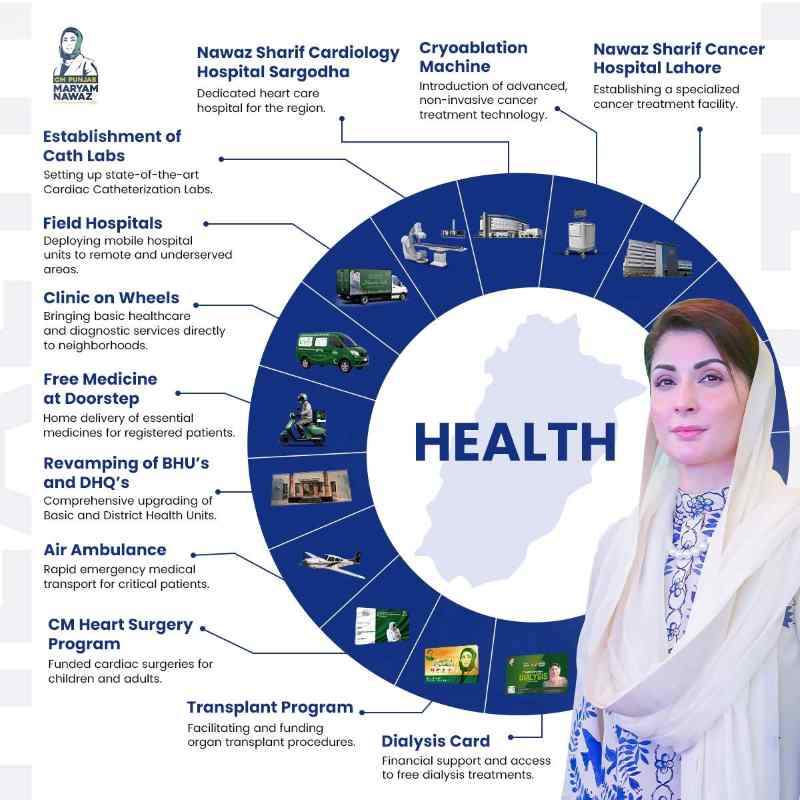
Table Of Contents
Why This Guide is Essential for Every Citizen of Punjab
Accessing government health schemes can be overwhelming due to multiple programs, varying eligibility criteria, and different registration processes. This guide serves as a single reference point for every health initiative launched under the leadership of Punjab Chief Minister Maryam Nawaz Sharif. Whether you need free heart surgery for your child, dialysis treatment for a kidney patient, or doorstep medicine delivery for a chronic condition, this article provides the exact steps to get help. The Punjab government has allocated unprecedented resources to healthcare, and knowing how to navigate these schemes ensures no eligible patient is left behind.
Understanding the Three Pillars of the Initiative: Accessibility, Financial Coverage, and Technological Innovation
The Maryam Nawaz health agenda rests on three foundational pillars. Accessibility means taking healthcare to people’s doorsteps through mobile clinics, field hospitals, and home delivery services. Financial Coverage ensures that no patient pays for life-saving treatments, with the government bearing full costs for dialysis, transplants, cardiac surgeries, and cancer care. Technological Innovation includes telemedicine platforms, AI-powered diagnostics, digital health records, and a province-wide medicine delivery tracking system. Together, these pillars have transformed Punjab’s public health landscape from a reactive system to a proactive, patient-centric model.
What are all the health schemes launched by Maryam Nawaz in Punjab? (Complete List)
The complete Maryam Nawaz all scheme list comprises 15 distinct health programs, each targeting specific healthcare needs across Punjab’s population.
Primary Care and Community Health Services:
- Clinic on Wheels (911 mobile health vans)
- Maryam Nawaz Health Clinics (network of BHUs)
- Field Hospitals (32 mobile hospital units)
- Community Health Inspectors Program (25,000 health workers)
Critical Care and Specialized Treatment:
- CM Heart Surgery Program (free pediatric and adult cardiac surgeries)
- CM Punjab Dialysis Card (free dialysis for kidney patients)
- CM Punjab Transplant Program (free liver, kidney, bone marrow, corneal, cochlear transplants)
- Nawaz Sharif Cancer Hospital Lahore (specialized cancer treatment)
- Nawaz Sharif Cardiology Hospital Sargodha (dedicated heart care)
Infrastructure and Emergency Services:
- Establishment of Cath Labs in district hospitals
- Air Ambulance Service (rapid emergency transport)
- Revamping of BHUs and DHQs (1,026+ facilities upgraded)
Preventive and Digital Health Initiatives:
- Free Medicine at Doorstep (home delivery for chronic diseases)
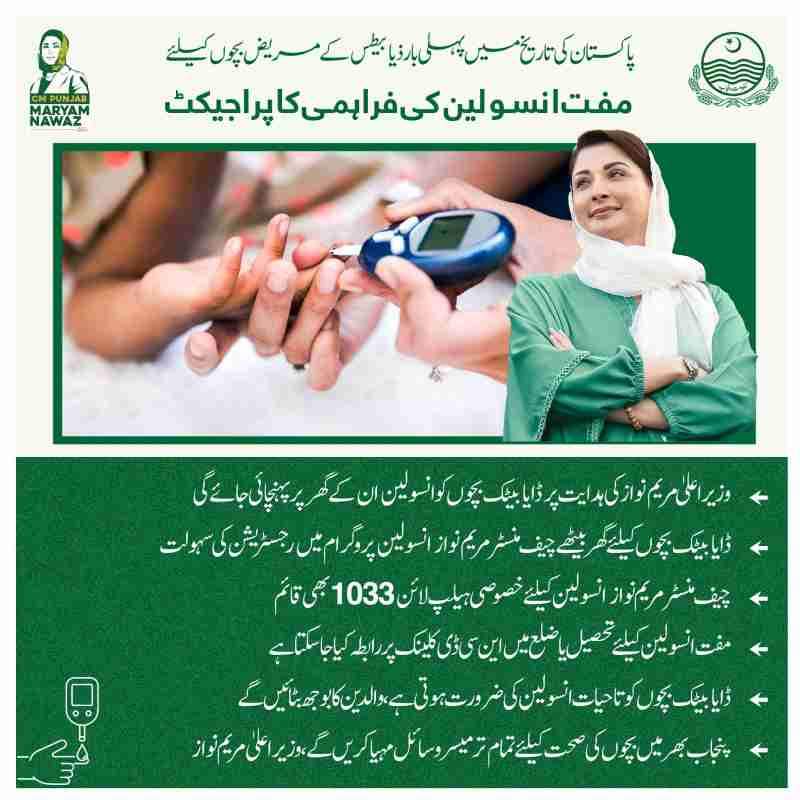
- Maryam Nawaz Insulin Program (free insulin for diabetic patients)
- Doorstep TB Medicine Delivery (TB elimination program)
Read More: Maryam Nawaz All Scheme List – (Social Welfare Schemes)
What is the Maryam Nawaz Health Clinic (Clinic on Wheels) Program?
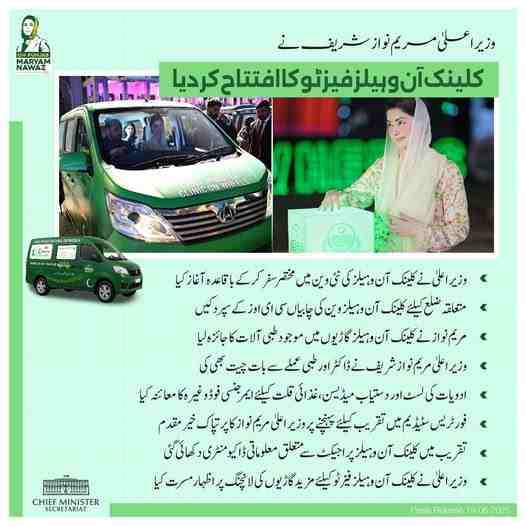
The Maryam Nawaz Health Clinic program, popularly known as “Clinic on Wheels,” is a mobile healthcare initiative delivering free medical services directly to underserved urban slums and rural areas. This program operates on a universal access model, meaning any resident of Punjab can receive treatment without any registration requirements, CNIC, or income verification.
The fleet consists of 911 high-tech mobile vans, some equipped with air-conditioning and miniature operating facilities. These vans provide essential medical equipment, including diagnostic tools, telemedicine capabilities, and facilities for minor procedures.
How the Clinic on Wheels operates:
- Daily consultations average 45,000 patients
- Services include OPD consultations, free medicines, basic lab tests, and maternal care
- Mobile units are stationed at specific locations on scheduled days
- No prior appointment or registration required
Total patients treated under Clinic on Wheels: 18.2 million
How many mobile clinics are operational in Punjab under this scheme?
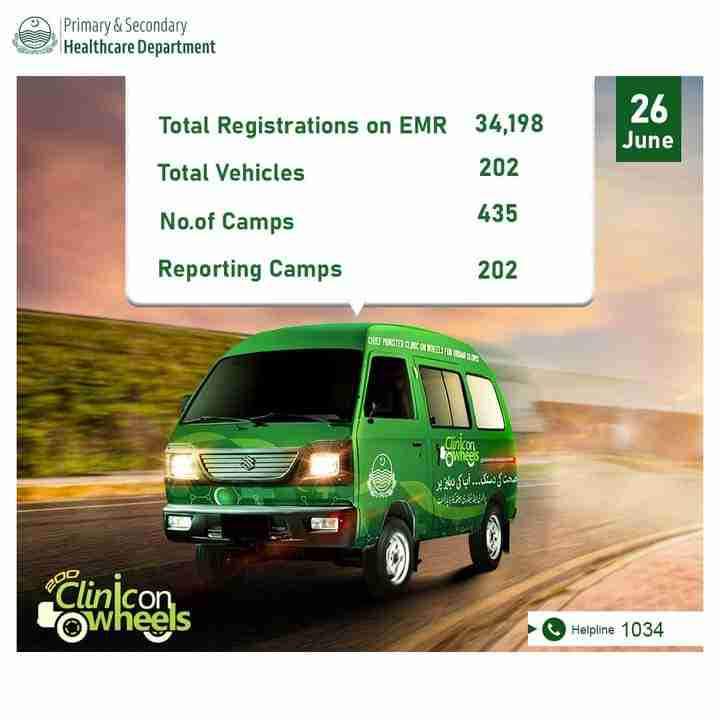
Currently, around 200 mobile clinics are active across the province, serving nearly 4 million people. These units are strategically deployed in areas with limited or no access to permanent healthcare facilities. The program has been expanded in phases, with Phase 1 covering major urban centers and Phase 2 extending to remote rural districts. Each mobile clinic is staffed with a qualified doctor, a nurse, a lady health visitor, and a dispenser.
What services are offered inside a Maryam Nawaz mobile health unit?
Services offered inside a mobile health unit include free OPD consultations, basic diagnostic tests (blood sugar, blood pressure, urine analysis), essential medicines, immunization for children, antenatal care for pregnant women, and health education. Advanced units are equipped with telemedicine facilities, allowing patients to consult with specialist doctors remotely. Ultrasound services have been provided to 7 million patients through these mobile units.
How can I locate a Clinic on Wheels schedule in my district?
To locate a Clinic on Wheels schedule, residents can check the Punjab Health Department website or contact the 1033 helpline. The schedule is also displayed at local union council offices and prominent public locations in each district. The mobile vans follow a fixed route plan, staying at each location for a full day before moving to the next designated spot.
Does the Clinic on Wheels program require a CNIC or prior registration for patients?
No, the Clinic on Wheels program operates on a universal access model with no CNIC requirement and no prior registration. Even homeless individuals and undocumented residents can receive free medical care without any documentation. This barrier-free approach ensures that the most marginalized populations are not excluded from essential healthcare services.
What is the difference between Phase 1, Phase 2, and Phase 3 of the program?
Phase 1 launched 245 mobile vans covering major cities. Phase 2 expanded the fleet to 911 vans with enhanced medical equipment and telemedicine capabilities. Phase 3 integrates digital health records and AI-powered diagnostics, linking each mobile unit to the central health information system for real-time patient tracking and medicine inventory management.
How are digital tracking and GPS used to monitor the 911 mobile units?
Each mobile unit is equipped with GPS tracking, allowing the central command center to monitor real-time locations, patient footfall, medicine stock levels, and staff attendance. Digital health records capture patient data, enabling continuity of care when patients visit different units. This system also generates daily reports on diseases patterns, helping health authorities respond to outbreaks promptly.
How to get free medicines delivered at home in Punjab? (Free Medicine at Doorstep)
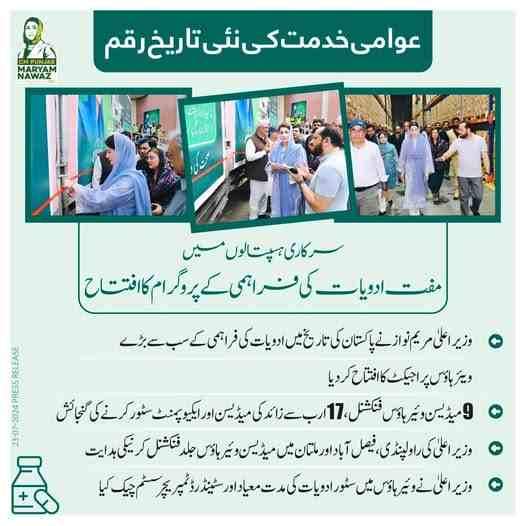
The Free Medicine at Doorstep program delivers essential medicines directly to registered patients’ homes, eliminating the need for repeated hospital visits. This initiative specifically targets patients with chronic conditions requiring long-term medication, including tuberculosis, hepatitis, heart disease, and diabetes.
Step-by-step registration process for Free Medicine at Doorstep:
- Visit the nearest Sahulat Markaz or DHQ hospital
- Provide medical records confirming diagnosis of an eligible condition
- Submit CNIC copy and proof of Punjab residency
- Complete the HMIS registration form
- Receive confirmation SMS with registration number
- Medicines are delivered every two months by courier partners
The registration process is designed to be simple and accessible to all Punjab residents.
What is the registration process for the Maryam Nawaz Free Medicine at Doorstep program?
Registration can be completed through three channels: the 1033 helpline, the HISDU mobile app, or by visiting any NCD Clinic, Maryam Nawaz Health Clinic, or DHQ/THQ hospital. At the healthcare facility, a patient registration officer will assist in completing the HMIS form. The entire process takes approximately 15 minutes, and patients receive a confirmation message within 24 hours.
Which specific chronic diseases qualify for doorstep delivery?
The following chronic diseases qualify for doorstep medicine delivery: tuberculosis (TB), hepatitis B and C, heart disease (including post-cardiac surgery medication), diabetes (insulin and oral medications), hypertension, asthma, and epilepsy. More than 30,000 patients have already received free home delivery of medicines, including insulin for diabetes.
What is the role of Sahulat Markaz and HMIS in the Free Medicine delivery system?
Sahulat Markaz serve as one-stop registration centers where patients can complete their enrollment for all health schemes. The HMIS (Health Management Information System) maintains digital records of every registered patient, tracks medicine consumption patterns, and generates automated delivery schedules. When medicine stocks are about to run out, the system triggers a new delivery order automatically every two months.
How the two-month automatic medicine delivery cycle works
The cycle begins with patient registration and initial medicine dispensing. After 45 days, the HMIS system generates a refill order. The courier partner collects medicines from the designated pharmacy and delivers them to the patient’s registered address. The patient receives an SMS notification one day before delivery. If the patient moves to a new address, they can update their information through the helpline or mobile app.
How to apply for CM Punjab Dialysis Card or get free dialysis treatment?
The CM Punjab Dialysis Card is a financial support mechanism providing free dialysis treatment to kidney patients. This program covers the full cost of dialysis procedures, including tests, medicines, and consumables.
Eligibility criteria for the Dialysis Card:
- Must be a permanent resident of Punjab (verified through NADRA records)
- Diagnosed with End-Stage Renal Disease (ESRD) requiring regular dialysis
- Belongs to a low-income household (verified through BISP/NSER database)
- No age restriction applies
What is the eligibility criteria for the Maryam Nawaz Dialysis Card?
Permanent residents of Punjab diagnosed with ESRD who belong to low-income households are eligible. The program specifically targets families that cannot manage dialysis costs on their own. There is no upper age limit, and children are equally eligible. Verification is done through the BISP/NSER database to ensure assistance reaches the most deserving patients.
Step-by-step guide: How to register for the CM Punjab Dialysis Card at a government hospital
- Visit the dialysis unit of any government hospital (DHQ, THQ, or teaching hospital)
- Bring original CNIC, proof of residency, and medical reports confirming ESRD
- Meet the hospital’s nephrologist for medical evaluation
- Complete the dialysis card application form at the hospital’s patient facilitation center
- Submit documents for verification
- Receive the dialysis card within 7-10 working days
How much financial coverage does a Dialysis Card provide?
The Dialysis Card provides comprehensive financial coverage up to a specified annual limit per patient. This includes the cost of dialysis procedures, pre-dialysis tests, post-dialysis medications, and management of dialysis-related complications. Patients can receive treatment at any empaneled hospital without making any out-of-pocket payments.
What documents are required for the Dialysis Card application?
Required documents include: original CNIC (with photocopy), proof of Punjab residency (domicile certificate or voter registration), medical reports confirming ESRD diagnosis (including serum creatinine and GFR values), hospital admission/discharge summary, and BISP/NSER score card (if available). Patients without BISP registration can still apply, but income verification will be done through alternative means.
How to check the status of my Dialysis Card application online?
Applicants can check their application status by visiting the official Punjab Health Department portal at health.punjab.gov.pk and navigating to the “Application Status” section. Enter the CNIC number and application tracking ID to view real-time status. Alternatively, send CNIC number via SMS to 8500 to receive an instant reply confirming eligibility and available balance.
Is the Dialysis Card valid for treatment at private hospitals in Punjab?
Yes, the Dialysis Card is valid at empaneled private hospitals that have agreements with the Punjab government. The list of empaneled hospitals is available on the health department website. Patients should confirm with their chosen private hospital that they accept the Dialysis Card before beginning treatment.
How to get free heart surgery under the CM Heart Surgery Program?
The CM Heart Surgery Program provides funded cardiac surgeries for both children and adults across Punjab. With a dedicated allocation of Rs3 billion, this initiative aims to clear long waiting lists for heart surgeries within a defined timeframe. The program operates through nine public and fifteen private cardiac institutions across the province.
How to register for free heart surgery:
- Call the dedicated helpline 0800-09009
- Provide patient details (name, CNIC, district, diagnosis)
- Receive referral to the nearest empaneled cardiac hospital
- Complete medical evaluation at the hospital
- Surgery is scheduled after approval
- Entire treatment is provided free of charge
How can I apply for the CM Maryam Nawaz Children’s Heart Surgery Program?
The Children’s Heart Surgery Program has a simplified process. Parents can visit any government hospital’s pediatric cardiology department or call 0800-09009. The child will be examined by a pediatric cardiologist. If surgery is recommended, the hospital submits the case for approval. Once approved, the surgery is scheduled within weeks. Under this program, 11,466 children have already received successful heart surgeries.
What is the age limit for children to qualify for free pediatric cardiac surgery?
The Children’s Heart Surgery Program covers children up to 18 years of age. There is no lower age limit; even infants with congenital heart defects are eligible. The program covers all types of congenital and acquired heart conditions requiring surgical intervention.
Which hospitals are empaneled under the CM Cardiac Surgery Programme?
The program operates through 24 cardiac institutions: 9 public hospitals including Punjab Institute of Cardiology, Rawalpindi Institute of Cardiology, Faisalabad Institute of Cardiology, and major teaching hospitals; and 15 private cardiac hospitals with agreements with the Punjab government.
How to register an adult for the free cardiac surgery initiative?
Adults requiring heart surgery can register through three methods: calling 0800-09009, visiting the cardiac surgery department of any DHQ hospital, or using the online portal at health.punjab.gov.pk. The helpline operates Monday to Saturday from 8 am to 11 pm. After registration, patients receive a referral to the nearest empaneled hospital for evaluation.
What is the difference between the Children’s Heart Surgery Card and the Special Initiative Card for adults?
The Children’s Heart Surgery Card is specifically for pediatric cardiac patients and is issued directly at participating hospitals. The Special Initiative Card for adults provides coverage up to Rs1 million per patient for cardiac surgeries and other specialized treatments. Adults can also receive coverage through the Sehat Sahulat Program which provides cashless treatment up to Rs10 lakh per family annually.
Does the scheme cover post-operative care and medications?
Yes, the CM Heart Surgery Program covers the complete treatment package including pre-operative diagnostics, the surgery itself, hospitalization costs, post-operative intensive care, follow-up consultations, and essential medications for the recovery period.
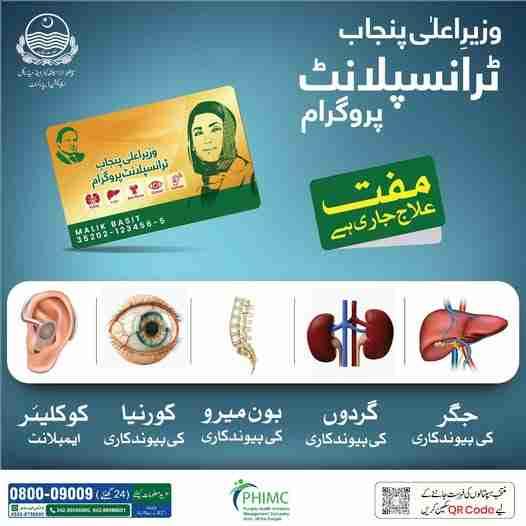
What is the CM Punjab Transplant Program and is it free?
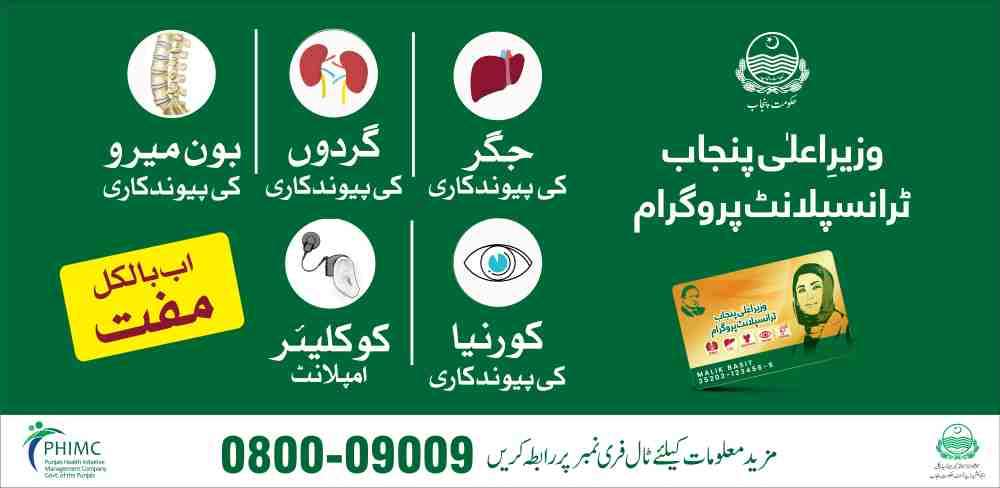
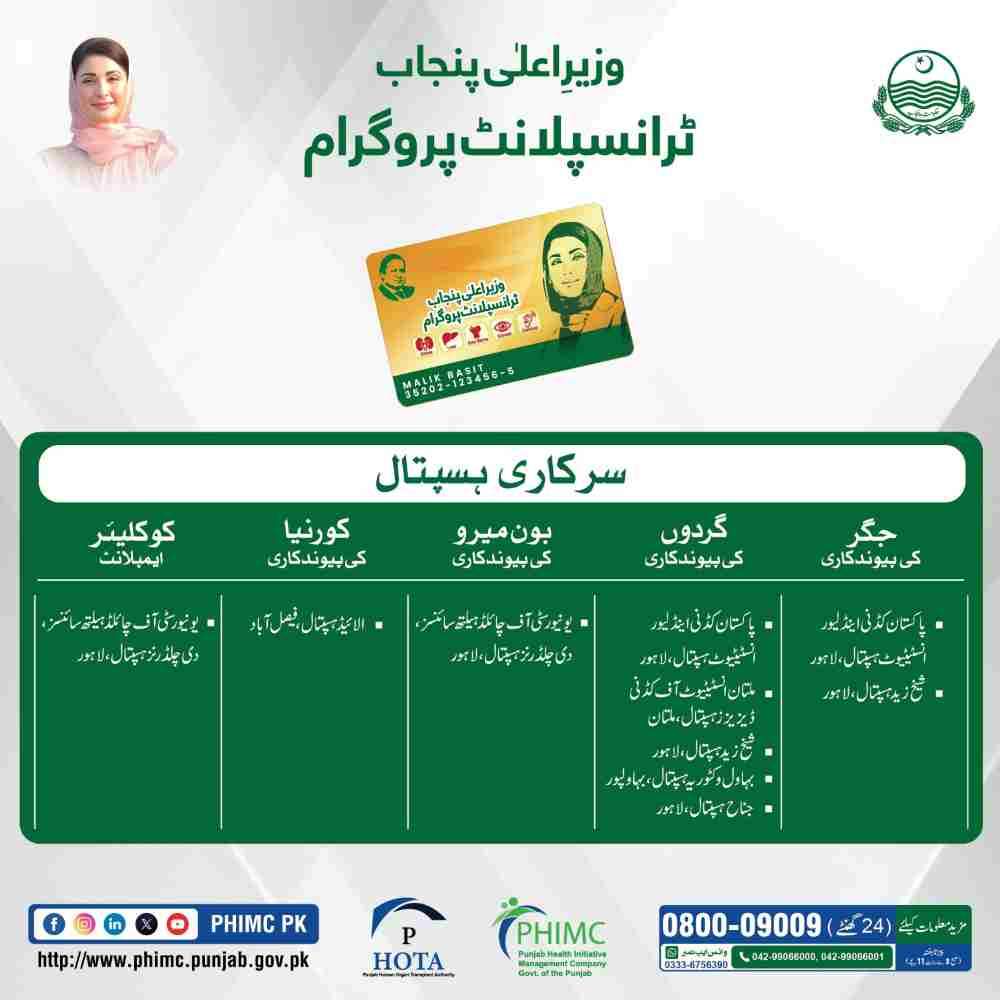
The CM Punjab Transplant Program facilitates and fully funds organ transplant procedures for eligible patients. This program covers kidney transplants, liver transplants, bone marrow transplants, corneal transplants, and cochlear implants. All procedures are provided completely free of charge, with the government bearing the full cost.
Transplant statistics to date:
- 799 kidney transplants
- 255 liver transplants (costing approximately Rs6.5 million each)
- 460 cochlear implants
- 32 corneal transplants
- 28 bone marrow transplants
How to register for the organ transplant program?
Registration for the transplant program begins at the hospital where the transplant will be performed. Patients must first be evaluated by a transplant surgeon at a PHOTA-registered hospital. If deemed suitable for transplant, the hospital submits the case to the CM Special Initiative for Transplant Program for approval. Once approved, the government covers all costs including surgery, hospitalization, immunosuppressant medications, and follow-up care.
What is the complete list of hospitals approved for transplants under Maryam Nawaz scheme?
Approved hospitals for transplants include public sector teaching hospitals such as Jinnah Hospital Lahore, Bahawalpur Victoria Hospital, Nishtar Hospital Multan, and private hospitals with PHOTA registration including PKLI Lahore. The complete list is maintained by the Punjab Health Initiative Management Company and is available on their official channels.
Does the transplant program cover Cochlear and Corneal transplants as well?
Yes, the program fully covers cochlear implants for hearing-impaired children and adults, as well as corneal transplants for patients with corneal blindness. These procedures are performed at empaneled hospitals with specialized ENT and ophthalmology departments.
How to get financial assistance for a liver transplant?
Patients requiring liver transplants can receive financial assistance through the CM Special Initiative. The government covers the full cost of approximately Rs6.5 million per transplant. To apply, patients must be evaluated at a PHOTA-regified hospital with a liver transplant program. The hospital’s transplant committee reviews each case and forwards it for government approval.
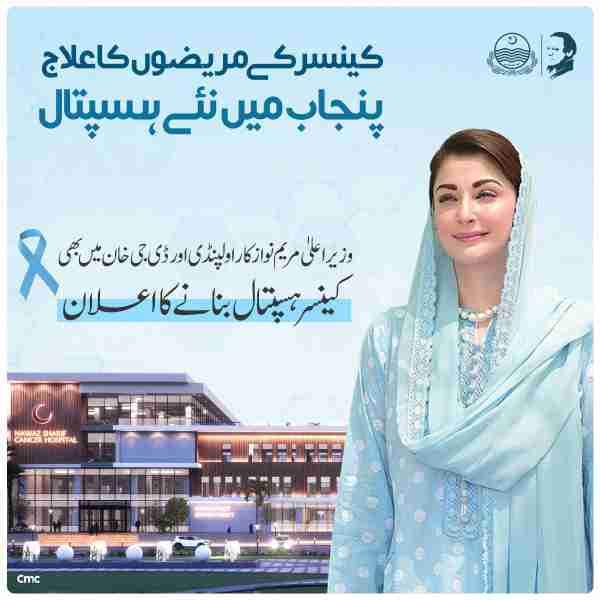
Where is Nawaz Sharif Cancer Hospital Lahore located & what are its facilities?
The Nawaz Sharif Institute of Cancer Treatment and Research is located in Lahore. This state-of-the-art cancer treatment facility represents Pakistan’s first specialized cancer institute with comprehensive oncology services under one roof. The hospital is designed to provide cutting-edge cancer care free of charge to patients.
Facilities available at the Cancer Hospital:
- Chemotherapy suites
- Radiation therapy bunkers
- Surgical oncology operating theaters
- Palliative care unit
- Pediatric oncology ward
- Cryoablation machine for non-invasive tumor treatment
- Advanced diagnostic imaging (MRI, CT scan, PET-CT)
When will the Nawaz Sharif Institute of Cancer Treatment and Research open?
The basement and ground floor of the institute have been completed. The Punjab Chief Minister has directed early completion of the project, with operations scheduled to begin shortly. Recruitment of doctors and professional staff has already started.
What is the Cryoablation Machine and where is this advanced cancer technology available?
The Cryoablation Machine is an advanced, non-invasive cancer treatment technology that destroys cancerous tumors by freezing them using extreme cold. This technology offers a less painful alternative to traditional surgery for certain types of tumors. The Nawaz Sharif Cancer Hospital Lahore is equipped with this technology, making it one of the few facilities in Pakistan offering cryoablation for cancer treatment.
Does the Cancer Hospital provide free treatment for cancer patients?
Yes, the Nawaz Sharif Institute of Cancer Treatment and Research provides completely free cancer treatment to patients. The government has allocated significant funds for cancer treatment, including Rs3 billion specifically for ablation procedures and advanced oncology services.
What treatment modalities are available at the Cancer Hospital?
Treatment modalities available include medical oncology (chemotherapy, targeted therapy, immunotherapy), radiation oncology (external beam radiation, brachytherapy), surgical oncology (tumor resections, minimally invasive surgeries), interventional radiology, pain and palliative care, and psychosocial support services.
Is the Cancer Hospital in Lahore open for patients from other provinces?
The cancer hospital primarily serves residents of Punjab. However, emergency cases and patients with rare conditions may be considered on a case-by-case basis through the hospital administration.
Is Nawaz Sharif Cardiology Hospital Sargodha open for patients?
The Nawaz Sharif Institute of Cardiology Sargodha is a dedicated heart care hospital serving the Sargodha Division and surrounding districts. The facility was inaugurated and has become operational, providing specialized cardiac care to patients who previously had to travel to larger cities for treatment.
Services available at the Cardiology Hospital:
- Outpatient Department (OPD)
- Emergency cardiac services
- General ward for cardiac patients
- Echocardiography (Echo)
- Exercise Tolerance Test (ETT)
- MRI and CT scanning
- Cardiac Catheterization Lab (Cath Lab)
- Operation Theatres for cardiac surgeries
What are the operational hours and services available at the Sargodha Cardiology Institute?
The OPD, Emergency, and General Ward are fully functional. Advanced facilities including Operation Theatres, MRI, and Cath Lab became operational shortly after the inauguration.
Does the hospital provide free ECG, ETT, Echo, and Holter monitoring tests?
Yes, all diagnostic cardiac tests including ECG, ETT, Echo, and Holter monitoring are provided free of charge to registered patients. Patients can access these services by visiting the hospital’s OPD and obtaining a referral from a cardiologist.
How to book an appointment with a cardiologist at the Nawaz Sharif Institute of Cardiology?
Appointments can be booked by visiting the hospital’s outpatient department directly. Patients should bring their CNIC and any previous medical records. Emergency cases are prioritized and seen immediately without prior appointment.
What is the Establishment of Cath Labs and where are they located?
The Establishment of Cath Labs initiative involves setting up state-of-the-art Cardiac Catheterization Laboratories across Punjab, bringing advanced cardiac care to district-level hospitals and reducing the burden on major tertiary hospitals in large cities.
Phase 1 districts with completed Cath Labs:
- DHQ Hospital Jhelum
- DHQ Hospital Jhang
- DHQ Hospital Mianwali
- DHQ Hospital Vehari
Phase 2 districts scheduled for Cath Labs:
- Bhakkar
- Chakwal
- Hafizabad
- Khanewal
- Mandi Bahauddin
- Rajanpur
- Toba Tek Singh
How many cardiac procedures have been performed in the new Cath Labs?
The newly established Cath Labs are performing both diagnostic angiographies and therapeutic angioplasties. The Punjab government has ensured that all procedures are provided free of charge to eligible patients holding Sehat Cards or registered under health schemes.
What is the average wait time for a cardiac procedure in a government Cath Lab?
With the expansion of Cath Labs to district hospitals, the average wait time for diagnostic angiography has reduced significantly. Previously, patients faced months-long waiting lists at tertiary hospitals. Now, patients can receive cardiac procedures within days at their district headquarters hospital.
What is the Air Ambulance service in Punjab & how to apply?
The Air Ambulance service is a rapid emergency medical transport system for critical patients requiring immediate transfer to specialized hospitals. This service dramatically reduces emergency response times and provides critical care during medical emergencies, accidents, and natural disasters.
How to book or request the Air Ambulance for emergency patient shifting in Punjab?
To request the Air Ambulance, contact the provincial health emergency helpline or the District Emergency Officer in your area. The request can be made by hospital staff, rescue services, or family members of the patient. The service is designed for critical cases where ground transportation would cause dangerous delays.
Which districts are currently covered by the Air Ambulance service?
The Air Ambulance service covers all districts of Punjab, with priority given to remote and underserved areas where access to tertiary care hospitals is limited. Hundreds of lives have already been saved through this service.
How many lives have been saved by the Air Ambulance service so far?
Hundreds of critical patients have been transported via Air Ambulance, with significant improvement in survival rates for trauma victims, cardiac emergencies, and high-risk obstetric cases requiring specialized care not available locally.
Which BHUs and DHQs have been revamped under Maryam Nawaz government?
The Revamping of BHUs and DHQs program involves comprehensive upgrading of Basic Health Units and District Headquarters hospitals across Punjab. This initiative has been implemented in multiple phases to ensure all healthcare facilities meet minimum service delivery standards.
Phase 1 upgrades: 1,026 Basic Health Units and 191 Rural Health Centres upgraded
Phase 2 upgrades: 433 Basic Health Units and 81 Rural Health Centres upgraded
Phase 3 upgrades: 895 additional health centres currently under revamping
What is the difference between a Basic Health Unit and a Maryam Nawaz Health Clinic?
Basic Health Units are government primary healthcare facilities serving rural populations. Maryam Nawaz Health Clinics are upgraded BHUs with enhanced infrastructure, additional staff, diagnostic equipment, and telemedicine connectivity. The distinction reflects the government’s commitment to upgrading existing facilities rather than creating parallel systems.
What new facilities are being added to the District Headquarters hospitals?
DHQs are receiving stroke management centers, upgraded emergency departments, modern diagnostic labs, digital X-ray machines, ultrasound equipment, and telemedicine hubs connecting to specialist doctors at tertiary hospitals.
Are there specific Stroke Management Centers being established in all DHQs?
Yes, the Chief Minister has directed authorities to establish dedicated stroke management centers in all district headquarters hospitals. These centers will be equipped with CT scanners, thrombolysis capabilities, and trained staff to provide rapid stroke treatment within the critical “golden hour.”
How to register for the Maryam Nawaz Health Insurance / Sehat Card?
The Sehat Sahulat Program provides cashless treatment coverage up to Rs10 lakh per family annually. All permanent residents of Punjab are eligible regardless of income or employment status.
How to check eligibility via SMS: Send your CNIC number to 8500 and receive an instant reply confirming eligibility status and available balance.
What is the CM Special Initiative Card for Cancer and Cardiac patients?
The CM Special Initiative Card is a supplementary card for patients requiring cancer treatment or cardiac surgeries. This card provides coverage beyond the standard Sehat Card limits for specialized procedures. Patients can receive treatment worth up to Rs1 million under this card.
What is the difference between Maryam Nawaz health card and Sehat Sahulat Card?
The Maryam Nawaz health card is the public-facing name for the Sehat Sahulat Program in Punjab. There is no functional difference; both terms refer to the same cashless health insurance scheme providing coverage up to Rs10 lakh per family annually at empaneled hospitals.
How to download the list of all health schemes by Maryam Nawaz in PDF format?
The complete list of all health schemes, along with application forms and eligibility criteria, is available for download from the Punjab Health Department’s official website at pshealthpunjab.gov.pk. Navigate to the “Schemes and Programs” section and click on the PDF download link.
What is the official website and helpline for Maryam Nawaz health schemes?
The official portal for Maryam Nawaz health schemes is mnhc.pshealthpunjab.gov.pk for clinic-related matters. The primary health department website is pshealthpunjab.gov.pk.
Important helpline numbers:
- General health schemes helpline: 1033
- CM Heart Surgery Program helpline: 0800-09009
- Secondary contact: 042-99066000 (Monday to Saturday, 8 am to 11 pm)
- SMS service for Sehat Card: 8500
What is the official portal for MNHC Phase 3 registration?
The official portal for Maryam Nawaz Health Clinic Phase 3 registration is mnhc.pshealthpunjab.gov.pk. This portal is used by healthcare providers and clinic operators for registration and management. Patients seeking services do not need to register on this portal.
How to use the HISDU mobile app for free insulin and medicine delivery?
The HISDU mobile app can be downloaded from official app stores. After installation, users create a profile using their CNIC and mobile number. Registered patients can request medicine refills, track delivery status, schedule appointments, and receive health reminders through the app.
What is the contact number for the general health schemes helpline?
The general helpline for all health schemes is 1033. This toll-free number operates 24/7 and provides information in Urdu and English. Callers can ask about eligibility, registration processes, document requirements, and complaint filing.
What are the latest updates for Maryam Nawaz health programs?
Latest developments in health programs:
- Community Health Inspectors program launched with 25,000 inspectors
- Doorstep TB medicine delivery announced on World TB Day
- Stroke management centers ordered for all DHQs
- Nursing degree seats increased in public hospitals
- 1,500 new doctors and 5,000 new nurses hired
Are there any new health schemes announced by Maryam Nawaz?
The government continues to expand existing programs. The latest additions include the Community Health Inspectors Program, Doorstep TB Medicine Delivery, and the expansion of Cath Labs to additional districts. The establishment of a 1,000-bed Children’s Hospital in Lahore has also been announced.
What is the progress on the Field Hospitals expansion plan?
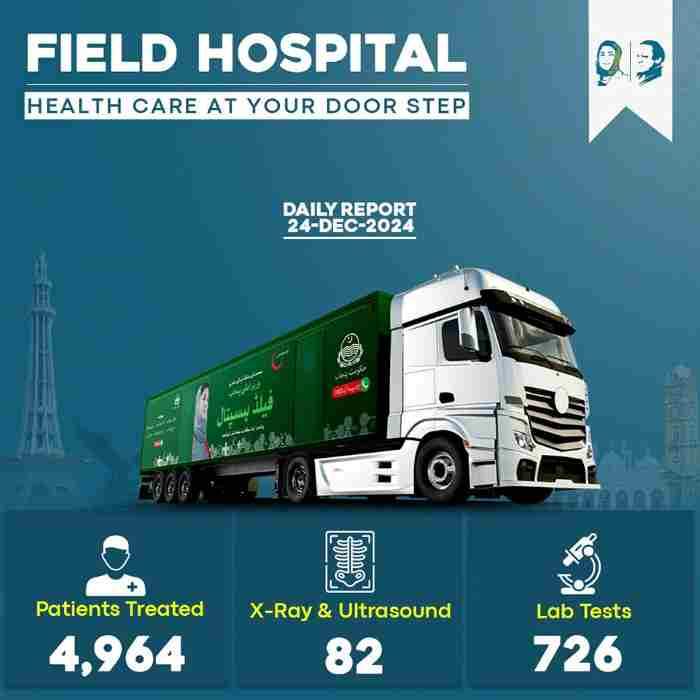
Field hospitals have already catered to around 2.8 million patients, conducting 448,468 laboratory tests and 170,772 X-rays and ultrasound examinations. The program currently operates 32 field hospitals (21 mobile healthcare units and 11 diagnostic investigation units) across all 36 districts of Punjab.
What are the future plans for Telemedicine and AI-based diagnostics in Punjab?
The government plans to launch a province-wide telemedicine system connecting all district hospitals to specialist doctors at tertiary care centers. AI-powered diagnostics for quick disease detection are being integrated into the health information system. A pilot project for AI-driven maternal health using portable ultrasound machines is planned for rural districts.
How many patients have benefited from Maryam Nawaz health programs?
Overall patient statistics:
- Clinic on Wheels: 18.2 million patients treated
- Field Hospitals: 2.8 million patients treated
- Total patients across all programs: Over 21 million
Cardiac surgery statistics:
- Children’s heart surgeries completed: 11,466
- Adult cardiac surgeries: Thousands more through new program
- Total successful heart surgeries: More than 11,000
Dialysis program statistics:
- Registered dialysis patients: 38,125
- Dialysis procedures performed: Over 1.5 million
Transplant program statistics:
- Kidney transplants: 799
- Liver transplants: 255
- Cochlear implants: 460
- Corneal transplants: 32
- Bone marrow transplants: 28
Frequently Asked Questions (FAQs)
Can children get free heart surgery under CM Heart Surgery Program?
Yes, the CM Children’s Heart Surgery Program specifically covers pediatric cardiac surgeries for children up to 18 years of age. Over 11,000 children have already received free heart surgeries under this initiative.
Can I apply for Maryam Nawaz health schemes online if I live in a rural area?
Yes, most schemes offer online registration through the health department website or mobile app. For schemes requiring in-person registration, the nearest Sahulat Markaz or DHQ hospital can assist rural residents.
What is the process to get free dialysis if I don’t have a CNIC?
Patients without CNIC can still receive dialysis treatment by visiting a government hospital and explaining their situation. The hospital administration can initiate the verification process through alternative documentation. Emergency dialysis is never denied due to missing documents.
Why was my application for the health card rejected and how to appeal?
Common reasons for rejection include incomplete documentation, incorrect CNIC information, or residency verification issues. To appeal, visit the District Health Office with original documents and the rejection letter. The appeal must be filed within 30 days of rejection.
Does Maryam Nawaz scheme cover cancer treatment completely?
Yes, the Nawaz Sharif Institute of Cancer Treatment and Research provides completely free cancer treatment including chemotherapy, radiation therapy, surgery, and advanced procedures like cryoablation.
How to check the status of my Dialysis Card application?
Send your CNIC number via SMS to 8500 to receive an instant status update. Alternatively, visit health.punjab.gov.pk and navigate to the Application Status section.
What is the difference between Maryam Nawaz health card and Sehat Sahulat Card?
There is no functional difference. Both refer to the same cashless health insurance program providing coverage up to Rs10 lakh per family annually at empaneled hospitals.
Disclaimer: This guide is for informational purposes only. Government health schemes may be updated or modified. Always verify information through official government channels and helplines before taking action based on this content.

Add a Comment