
Free kidney transplant services in Lahore are primarily offered through dedicated public sector institutes and private charity setups, heavily bolstered by the official Chief Minister Punjab Transplant Program. This healthcare initiative covers surgeries and post-operative care entirely free of cost for low-income residents through a structured government-funded mechanism managed by PHOTA.
What readers will learn from this definitive guide:
- Exact eligibility criteria for the CM Punjab Transplant Program and PHOTA registration steps.
- Complete cost breakdown of free vs paid kidney transplants in Lahore.
- Detailed profiles of the top 5 hospitals performing free transplants.
- Step-by-step legal donor approval process under PHOTA laws.
- Actionable application process, required documents, and waiting times.
Key Takeaways
- Government Fully Funds: The Punjab government has performed 799 free kidney transplants under the CM Special Transplant Programme, covering all surgical and pre-operative costs.
- PKLI Leads in Volume: PKLI has completed over 1,200 kidney transplants with a 98% success rate, offering 80% of patients free or heavily subsidized treatment.
- PHOTA Registration Mandatory: Every patient must register with PHOTA to access free transplant services at any paneled hospital.
- Only Blood Relatives Can Donate: Under strict PHOTA regulations, kidney donation is only permitted from parents, siblings, children, or spouse.
- One Year Free Immunotherapy: Post-transplant immunosuppressive medications are covered for 12 months through the government program.
- Read More: Top 5 Free Kidney Transplant Hospitals in Pakistan
- Read More: Free Medicines Program- At Your Doorstep (By CM Punjab Maryam Nawaz)
- Read More: Community Health Inspector (By Maryam Nawaz) | 50K Salary- Apply Online
- Read More: Maryam Nawaz Insulin Program | Free Insulin Scheme (By Insulin Card)
Top 5 Free Kidney Transplant Hospitals in Lahore
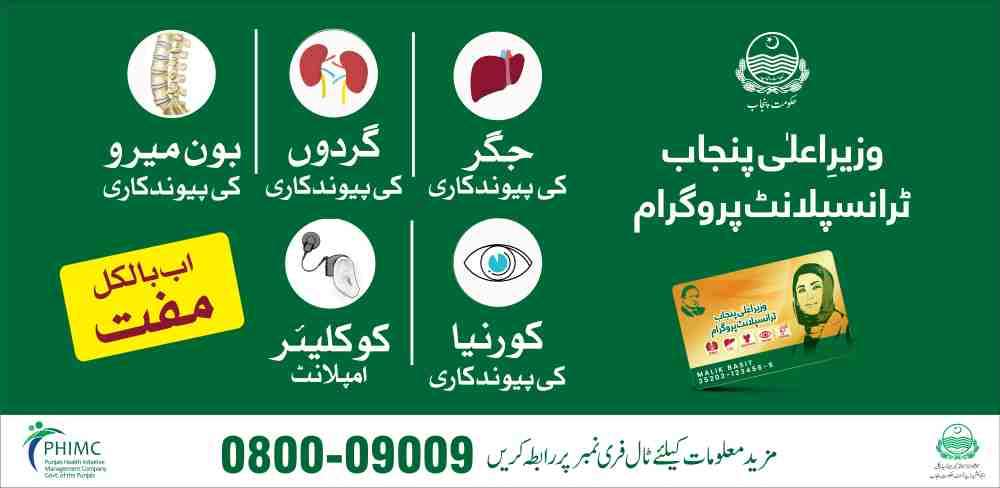
Table Of Contents
What Is The Current State Of Free Kidney Transplant Services In Lahore?
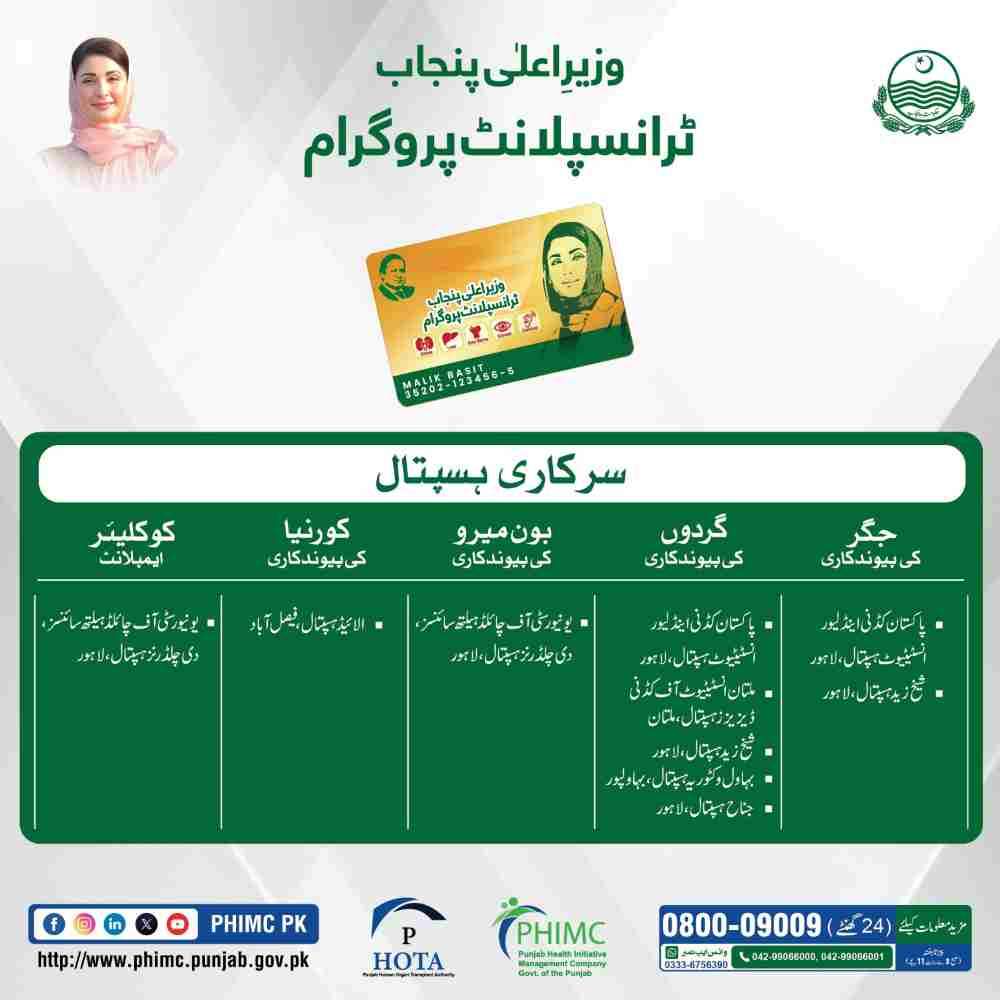
Free kidney transplant services in Lahore are now delivered through a hybrid public-private partnership model funded entirely by the Punjab government under the CM Special Transplant Programme. This initiative has transformed renal care accessibility for low-income families across the province.
How many free kidney transplants have been performed under the CM program?
The program has achieved remarkable volume. A total of 2,001 patients have registered under the CM Special Transplant Programme, with 1,574 successful transplants performed to date across all participating hospitals. The breakdown includes:
- 799 kidney transplants provided completely free of charge
- 255 liver transplants with government covering all expenses
- 460 cochlear implants for children with hearing impairments
- 32 corneal transplants and 28 bone marrow transplants
What dialysis support is available for patients awaiting transplant?
The dialysis programme has registered over 38,125 patients with more than 1.5 million dialysis sessions conducted across Punjab. This extensive infrastructure supports patients while they wait for transplant eligibility or donor matching.
Key features of the current service landscape:
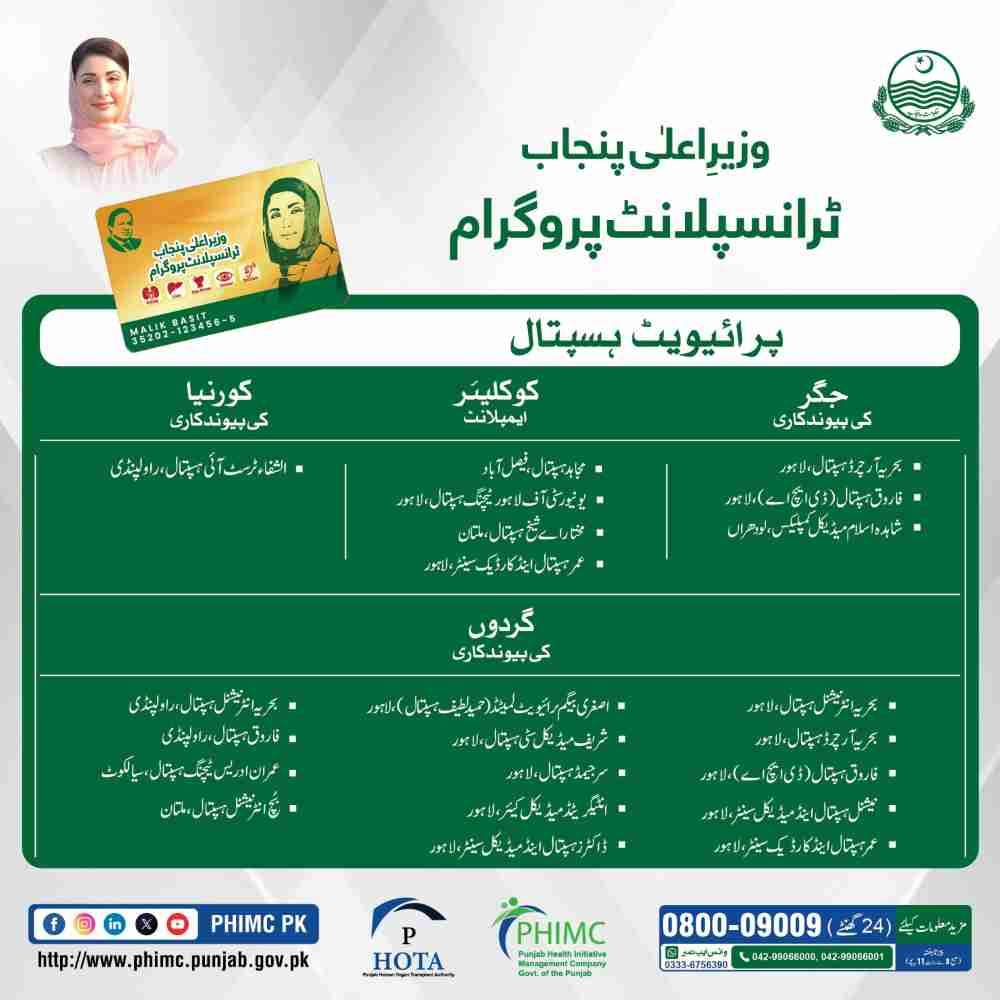
- Fourteen private hospitals designated for renal transplant procedures under the CM initiative
- 28 hospitals registered with PHOTA across Punjab for organ transplant procedures
- Toll-free helpline 09009-0800 for program information and registration guidance
- Government covers all expenses for liver and kidney transplants including pre-transplant workup
What has changed with the replacement of the Sehat Card?
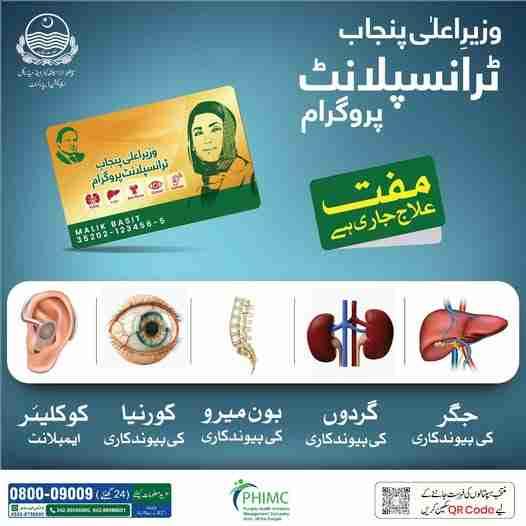
The Punjab government replaced the universal Sehat Card with specialized health cards for transplant patients. Under the new system, eligible low-income families receive a dedicated “Kidney and Liver Transplant Card” that covers the entire transplant journey from initial diagnosis to post-operative care. The previous Sehat Card had an annual limit of PKR 1 million, which was insufficient for a full transplant procedure. The new card has no upper limit for transplant-related expenses.
Who Is Eligible For A Free Kidney Transplant Under The Chief Minister Punjab Transplant Program?
Eligibility for a free kidney transplant in Lahore is determined by three primary factors: legal donor availability, financial need verification, and medical suitability for surgery. All three conditions must be met before PHOTA approval is granted.
Do you need to be a permanent resident of Punjab to qualify?
Yes, permanent residency in Punjab is a fundamental requirement. Patients must possess a valid CNIC with a Punjab address or provide proof of continuous residence in the province for at least three years. Non-residents of Punjab are generally not eligible for the CM Punjab Transplant Program but may access charitable free transplants at PKLI on a case-by-case basis.
Can overseas Pakistanis apply for the free transplant program in Lahore?
Overseas Pakistanis can apply only if they can produce a legal blood-related donor and complete the PHOTA registration process through a designated hospital. They must also provide proof of their Pakistani nationality and family ties to Punjab. However, priority is given to residents of Punjab due to limited government funding.
What are the income and financial criteria to be classified as a deserving patient?
The financial verification process evaluates household income, assets, and monthly expenses. Patients are classified as deserving if:
- Monthly household income is below PKR 50,000
- No ownership of luxury assets or multiple properties
- No capacity to afford private transplant costs ranging from PKR 1.5 to 3.5 million
- Family members are not government employees with comprehensive health coverage
Each hospital’s welfare committee conducts a home assessment or interviews family members to verify financial status.
What medical criteria must the recipient meet?
Medical eligibility requires a confirmed diagnosis of end-stage renal disease (ESRD) from a registered nephrologist. The patient must have no active infections, uncontrolled diabetes, or severe heart disease that would make surgery high-risk. A minimum life expectancy of two years post-transplant is also assessed by the hospital’s medical board.
How Does The PHOTA Registration Process Work For A Free Kidney Transplant?
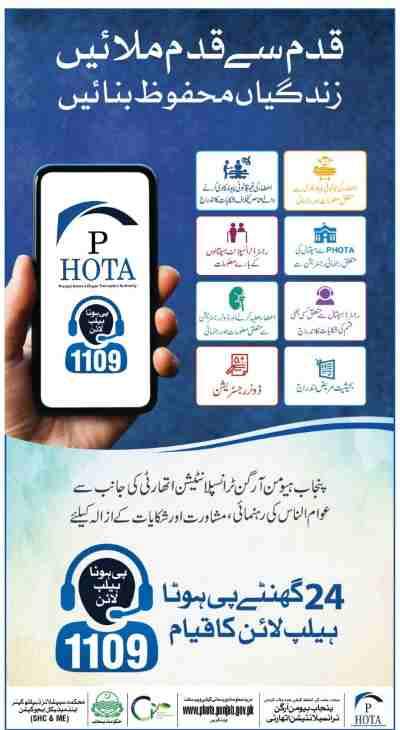
The PHOTA registration process follows a structured five-step workflow that begins at any government or paneled private hospital. Direct registration with PHOTA is not possible; all applications must be initiated through a hospital transplant coordinator.
Step 1: Initial consultation at a PHOTA-registered hospital
Visit the nephrology department of any approved hospital with your CNIC, medical reports confirming ESRD, and a potential blood-related donor. The hospital will assign a transplant coordinator who guides you through the entire process. Bring original documents and two sets of photocopies.
Step 2: Complete medical workup for recipient and donor
The hospital performs the following tests for both recipient and donor:
- Blood typing and crossmatch to determine compatibility
- Tissue typing (HLA matching) to reduce rejection risk
- Complete blood count, liver function tests, and viral screening
- Imaging studies including chest X-ray and abdominal ultrasound
- Donor-specific tests: CT angiography to map kidney vessels, renal function assessment, and psychological evaluation
This workup typically takes two to three weeks and is provided free of charge for eligible patients.
Step 3: Submit legal documents to the hospital welfare committee
Prepare and submit the following documents:
- Signed affidavit confirming no financial exchange for the donated kidney
- Family tree certificate proving blood relation between donor and recipient
- Consent forms signed by donor, recipient, and two witnesses
- Financial affidavit or income certificate for Zakat-based coverage
- CNICs and B-Form (for child recipients)
The welfare committee reviews the application within seven working days.
Step 4: Hospital forwards application to PHOTA for final approval
Once the hospital verifies medical and legal eligibility, the application is submitted to PHOTA along with the donor verification committee request. PHOTA schedules a hearing where both donor and recipient appear before a panel of doctors, legal experts, and social workers. The committee approves or rejects the application within 14 days.
Step 5: Surgery scheduling and fund allocation
After PHOTA approval, the hospital schedules the transplant surgery, typically within four to eight weeks. The CM Punjab Transplant Programme allocates funds directly to the hospital covering all surgical costs, ICU stay, room charges, and one year of immunosuppressive medications.
What is the toll-free helpline for registration assistance?
The Punjab Health Department operates a dedicated helpline at 09009-0800 for program information. Callers can inquire about:
- Nearest PHOTA-registered hospital offering free transplants
- Document checklist and application forms
- Status of pending applications
- Complaints regarding hospital or coordinator behavior
What Documents Are Required For A Free Kidney Transplant In Lahore?
The document package for a free kidney transplant application must be complete and verified. Missing or incorrect documents are the primary reason for application delays or rejections.
Essential identification documents
- Valid CNIC of both recipient and donor (original plus three photocopies)
- B-Form for child recipients under 18 years of age
- Passport-size photographs of recipient and donor (six each, white background)
- Family registration certificate from NADRA showing blood relation
Legal and financial documents
- Signed affidavit on judicial stamp paper (PKR 100 value) stating no money exchanged for kidney
- Income certificate from union council or employer verifying monthly earnings
- Affidavit of poverty for Zakat-based funding (attested by a magistrate)
- Hospital-specific consent forms available from the transplant coordinator
- Undertaking by both parties to follow PHOTA rules and post-transplant medication schedule
Medical documents
- Complete medical summary from a registered nephrologist confirming ESRD diagnosis
- Dialysis records for the last three months (if applicable)
- Blood group, crossmatch, and tissue typing reports from a PHOTA-approved lab
- Donor fitness certificate from a physician and psychiatrist
What Are The Key PHOTA Rules And Legal Requirements For A Free Kidney Transplant?
PHOTA regulations strictly prohibit commercial organ trade and mandate that all transplants occur between blood relatives. Violations carry severe penalties including imprisonment and fines.
Who can legally donate a kidney under PHOTA rules?
Only the following relatives are permitted to donate:
- Parents (mother or father) to their child
- Siblings (brothers or sisters) to each other
- Children (son or daughter) to their parent
- Spouse to husband or wife (requires additional legal scrutiny)
Donation from cousins, uncles, aunts, grandparents, or in-laws is not permitted under current PHOTA regulations.
What is the legal approval process for a donor?
The donor undergoes a three-stage legal approval process:
- Hospital evaluation committee reviews blood relation and medical fitness
- PHOTA donor verification committee interviews donor and recipient separately
- Judicial magistrate records statements to ensure no coercion or financial exchange
The entire legal process takes two to four weeks from application submission.
What happens if you do not have a family donor?
If no family donor is available, the patient cannot receive a legal kidney transplant in Pakistan. The only alternatives are:
- Continue lifelong dialysis (funded by the government under the dialysis programme)
- Explore cadaveric (deceased donor) transplants, but Pakistan has no active deceased donor program
- Seek treatment abroad, which is expensive and not recommended
Paid organ transplants are illegal and carry criminal liability for both parties.
How Much Does A Kidney Transplant Cost In Lahore If Not Free?
The private sector cost for a kidney transplant in Lahore ranges from PKR 1,500,000 to PKR 3,500,000 depending on hospital reputation, surgeon experience, and included services. Understanding this cost breakdown helps patients appreciate the value of government-funded free programs.
What is covered in a full-paying private package?
A standard private package (PKR 2,500,000 to 3,500,000) includes:
- Pre-transplant workup: blood tests, crossmatch, tissue typing, imaging (PKR 200,000)
- Donor evaluation: complete medical and psychological assessment (PKR 150,000)
- Surgical fees for recipient and donor (PKR 800,000 to 1,200,000)
- Hospital stay: 14 days for recipient, 5 days for donor (PKR 400,000)
- ICU care for three to five days (PKR 300,000)
- Immunosuppressive medications for first three months (PKR 200,000)
- Follow-up consultations and lab work for one year (PKR 150,000)
How does the free government program compare?
The CM Punjab Transplant Program covers every single item listed above at zero cost for eligible patients. Additionally, the government covers:
- Donor’s complete medical expenses including surgery and post-op care
- One year of immunosuppressive medications (Tacrolimus, Mycophenolate, Prednisolone)
- Emergency readmissions within 30 days of surgery
- Travel allowance for patients from remote districts of Punjab
Why is post-operative medication nearly as expensive as surgery?
Immunosuppressive drugs must be taken for life to prevent kidney rejection. Monthly medication costs range from PKR 15,000 to PKR 30,000. Over ten years, this totals PKR 1.8 to 3.6 million, which exceeds the surgery cost. The government’s one-year free medication provision saves patients approximately PKR 300,000 immediately.
What Is PKLI Lahore And Why Is It The Best Free Kidney Transplant Hospital In The City?
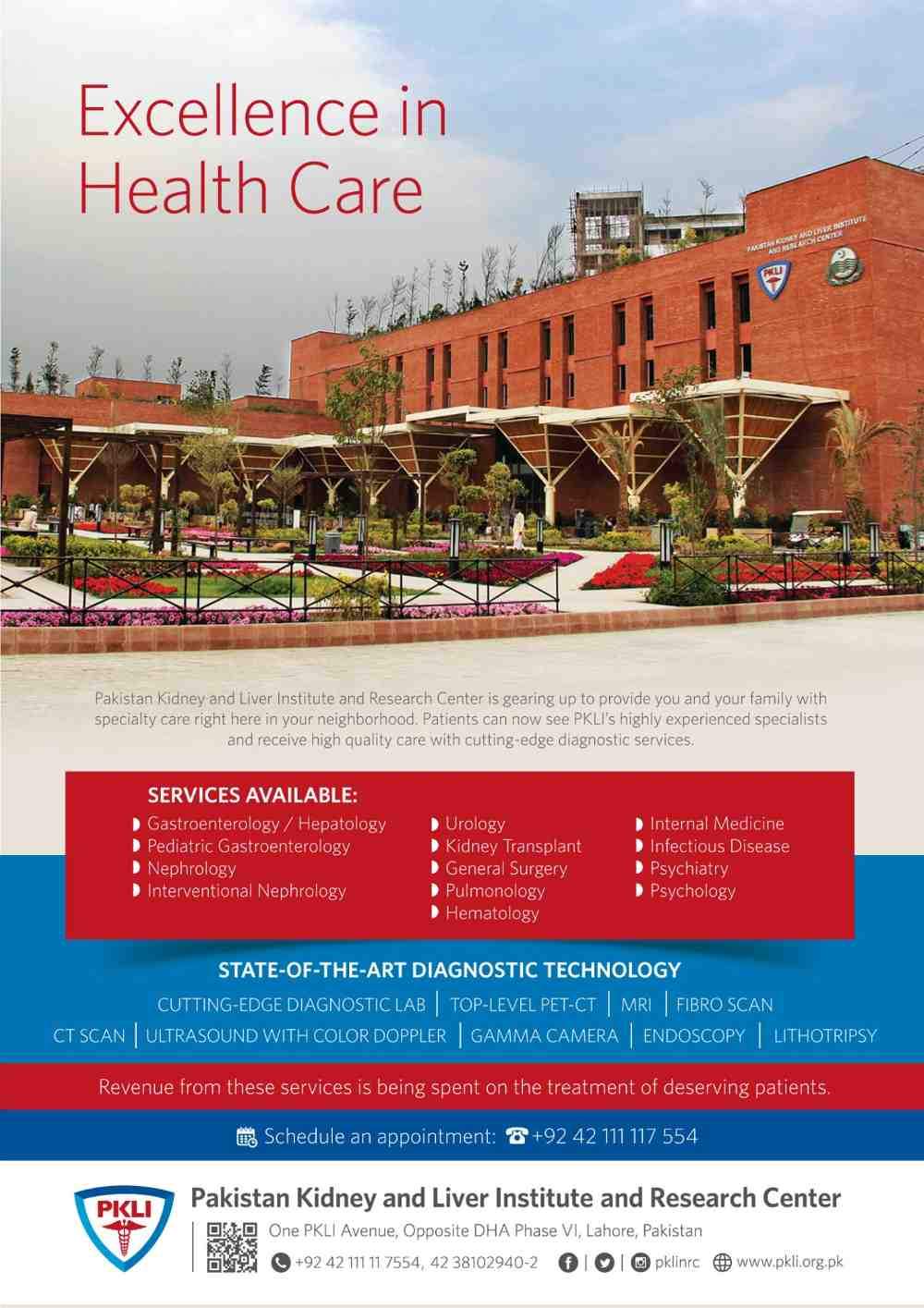
The Pakistan Kidney and Liver Institute and Research Centre (PKLI) is a state-of-the-art, purpose-built facility in DHA Phase 6, Lahore, designed exclusively for renal and hepatobiliary care. It operates as a charity project where 80% of patients receive free or heavily subsidized treatment funded through government grants, Zakat, and private donations.
How many free kidney transplants has PKLI performed?
PKLI has performed over 1,200 kidney transplants and more than 1,000 liver transplants since its inception. The hospital performs approximately 250 kidney transplants annually, with nearly 200 of those being completely free for deserving patients.
What is PKLI’s success rate for kidney transplants?
The PKLI kidney transplant team reports a 98% success rate at one year post-transplant. This rate is comparable to international benchmarks and superior to many private facilities in South Asia. Graft survival beyond three years exceeds 90%.
What services are completely free at PKLI?
Eligible patients receive zero-cost access to:
- Full transplant surgery including surgeon, anesthesia, and operation theatre fees
- Pre-transplant workup: all labs, crossmatch, imaging, and consultations
- ICU stay for up to seven days
- Private room accommodation for recipient (14 days) and donor (5 days)
- All medications during hospital admission
- One year of immunosuppressive drugs after discharge
- Follow-up outpatient visits for one year
Does PKLI provide free lifetime medicines after a kidney transplant?
No. PKLI provides free immunosuppressive medications for exactly one year post-transplant. After that, patients must purchase their own medications. However, PKLI’s social welfare department helps patients apply for long-term Zakat or Bait-ul-Maal funding to continue medications.
How does PKLI’s Zakat funding work?
PKLI accepts Zakat contributions from individuals and corporations, forming a dedicated welfare fund. The hospital uses this fund to provide:
- 30% subsidy for patients who can partially pay
- 100% free treatment for patients who cannot pay anything
- Emergency financial assistance for medication after the one-year government coverage ends
Patients are classified into three tiers based on a detailed socioeconomic assessment conducted by the hospital’s Zakat committee.
What is the waiting list time for a free transplant at PKLI?
The waiting time depends entirely on donor availability, not hospital capacity. Once a patient has a legally approved blood-related donor and complete PHOTA clearance, surgery is typically scheduled within four to six weeks. PKLI does not maintain a waiting list for donor-less patients because transplants cannot proceed without a donor.
PKLI Hospital Lahore address, contact number, and appointment process
- Address: Street 1, PKLI Avenue, DHA Phase 6, Lahore
- Contact number: Call the helpline 09009-0800 for appointment booking
- Appointment process: Visit the OPD registration counter between 8 AM and 2 PM. Bring CNIC and referral letter from a nephrologist. OPD fee is PKR 100 for general patients, free for registered transplant candidates.
How Does Shaikh Zayed Hospital Lahore Provide Free Kidney Transplants?
Shaikh Zayed Hospital (SZH) is a historic public-sector facility in Muslim Town, Lahore, recognized as a pioneer in kidney transplantation in Punjab. It has performed over 500 free kidney transplants since its transplant program began, operating under federal and provincial healthcare grants.
What is the success rate of kidney transplants at Shaikh Zayed Hospital?
The one-year graft survival rate at Shaikh Zayed Hospital is approximately 92%, with patient survival exceeding 95%. While slightly lower than PKLI’s 98%, these rates are still excellent for a public-sector hospital serving high-risk, low-income patients.
How to apply for a free kidney transplant at Shaikh Zayed Hospital
- Visit the Nephrology Department OPD (Monday to Thursday, 8 AM to 12 PM)
- Bring CNIC, medical reports confirming ESRD, and a potential blood-related donor
- The transplant coordinator will guide you through PHOTA registration
- All tests and procedures are free for patients referred through the CM program
Is the pre-transplant workup free at Shaikh Zayed Hospital?
Yes. All pre-transplant tests including blood typing, crossmatch, tissue typing, and imaging studies are performed free of charge at SZH’s in-house laboratory. The only minimal cost is the OPD registration fee of PKR 50 per visit.
Shaikh Zayed Hospital address and contact
- Address: Khayaban-e-Jamia Punjab, Block D, Muslim Town, Lahore
- Contact: Visit in person for appointments; no telephone registration system exists
Is Jinnah Hospital Lahore Still Doing Free Kidney Transplant Surgeries?
Yes, Jinnah Hospital Lahore has a fully operational free kidney transplant facility under the CM Punjab Transplant Program. The hospital’s Urology and Kidney Transplant Department executes regular free surgeries for underprivileged individuals.
Real case example from Jinnah Hospital
A 24-year-old medical graduate donated his kidney to his sister at Jinnah Hospital entirely free of cost. The surgery was performed by the hospital’s transplant team with all expenses covered by the CM program, including the donor’s post-operative care.
Who leads the transplant unit at Jinnah Hospital?
The transplant unit is led by senior urologists and transplant surgeons from the Urology Department. To contact the transplant coordinator, visit the Urology OPD on Tuesday or Thursday mornings.
How does Jinnah Hospital fund free transplants?
Funding comes from three sources:
- Government healthcare welfare funds under the CM Special Transplant Programme
- Local Zakat committees operated within the hospital
- Philanthropic donations from individuals and charities
Does Jinnah Hospital accept Zakat for transplant funding?
Yes. Jinnah Hospital maintains a Zakat fund that partially subsidizes transplant costs for patients who are not fully covered by the government program. Patients must apply to the hospital’s welfare committee with an affidavit of poverty.
Can You Get A Free Kidney Transplant At National Hospital DHA Lahore?
Yes, National Hospital & Medical Centre (NHMC) in DHA Phase 1, Lahore, is officially paneled under the public welfare banner. It actively performs 100% free kidney transplants for eligible low-income patients registered under the CM Punjab Transplant Program.
Is National Hospital DHA Lahore offering free kidney transplants to everyone?
No. Free transplants are only available to patients who have been registered through the CM Punjab Transplant Program and approved by PHOTA. Regular private patients at NHMC pay the full private rate of PKR 2.5 to 3.5 million.
What is the profile of the transplant team at National Hospital DHA?
The transplant team includes experienced urologists and transplant surgeons, with Dr. Rafiq Zaki serving as Director of the Sindh Institute of Urology and Transplantation (SIURT) affiliated services. The team has performed hundreds of successful transplants.
Are private rooms free for transplant patients at National Hospital Lahore?
Yes, within the limits of the government program. Transplant patients receive a private room for the duration of their hospital stay (typically 14 days for recipient, 5 days for donor). The room is single-occupancy with attached bathroom and basic amenities.
How does the hospital handle high-risk or complex cases under the free initiative?
Complex cases such as patients with previous transplants, high antibody levels, or comorbidities receive priority attention. The hospital has a dedicated high-dependency unit and access to plasmapheresis and advanced immunology support at no extra cost to the patient.
Is Bahria International Hospital Lahore Offering Free Kidney Transplants Through The CM Program?
Yes, Bahria International Hospital on Raiwind Road, Bahria Orchard, Lahore, is another elite private facility integrated into the provincial public health safety net. Through the dedicated LifeBridge Transplant Centre, eligible low-income patients receive cashless, completely free kidney transplants funded by the Punjab Government’s special initiative.
What is the LifeBridge Transplant program at Bahria International Hospital?
LifeBridge is a specialized transplant center within Bahria International Hospital that focuses exclusively on organ transplantation. It has extensive experience in both kidney and liver transplants, with a dedicated team of transplant coordinators, social workers, and legal advisors who handle all PHOTA paperwork.
How to get a free kidney transplant at Bahria International Hospital
- Contact the LifeBridge transplant coordinator directly through the hospital’s main line
- Request a financial assessment appointment with the welfare committee
- Bring all required documents (CNICs, medical reports, donor affidavit)
- Once PHOTA approval is obtained, surgery is scheduled within four to six weeks
What facilities are available for free patients at Bahria International Hospital?
Free patients receive access to:
- 100 inpatient beds exclusively for transplant patients
- Advanced ICUs with separate donor and recipient areas
- Two dedicated operation theaters for transplant surgeries
- 24/7 dialysis support
- Post-transplant outpatient clinic with transplant nephrologists
What Other Hospitals In Lahore Provide Free Or Subsidized Kidney Transplants?
Several other hospitals in Lahore have PHOTA approval and participate in the CM Punjab Transplant Program, though their transplant volumes vary significantly.
Lahore General Hospital
Dr. Aurangzeb Afzal leads the transplant unit at Lahore General Hospital. Free transplants are available for deserving patients, though the hospital performs fewer transplants annually compared to PKLI or Shaikh Zayed.
Farooq Hospital DHA
Farooq Hospital recently received provisional registration for bone marrow transplants. Kidney transplants at this facility may be covered under the CM program on a case-by-case basis, but patients should verify before initiating the workup.
Shalamar Hospital
Shalamar Hospital offers kidney transplant medicine but primarily on a non-profit, partially subsidized basis rather than completely free. Patients may receive Zakat-based assistance, but full free coverage is not guaranteed.
Akhtar Saeed Medical and Dental College Hospital
This facility has an active renal transplant program and comprehensive dialysis facilities. It participates in the CM program and can perform free transplants for eligible patients, though it is less well-known than the top five listed above.
Hospitals with PHOTA approval but not fully operational for free transplants
- Ittefaq Hospital and Evercare Hospital provide transplant follow-up but currently do not offer full free transplants
- SurgiMed Hospital has PHOTA approval but is not yet fully operational for free transplants
- Doctors Hospital Gujrat has received approval but is located outside Lahore
What Is The Legal Approval Process For A Kidney Donor In Lahore?
The legal approval process for a kidney donor in Lahore involves three distinct stages: medical evaluation, hospital committee review, and PHOTA donor verification. Each stage must be completed before surgery can be scheduled.
Step-by-step legal workflow for donor approval
- Medical clearance: Complete blood work, CT angiography, renal function assessment, and psychological evaluation at a PHOTA-approved lab.
- Hospital evaluation committee: A panel of doctors, social workers, and legal staff interviews donor and recipient separately to confirm blood relation and absence of financial coercion.
- PHOTA donor verification committee: A formal hearing where both parties appear before a magistrate, legal expert, and transplant surgeon. Statements are recorded and signed.
- Judicial approval: The magistrate issues a written order approving the transplant. This order is valid for three months.
What medical tests are required for a donor before legal approval?
The donor must undergo:
- Complete blood count, liver and kidney function tests
- Blood group, crossmatch, and HLA tissue typing
- CT angiography to map kidney arteries and veins (to plan surgery)
- Chest X-ray, ECG, and echocardiogram
- Psychiatric evaluation by a registered psychiatrist
Legal timeline: How long does it take from donor identification to transplantation?
The entire legal and medical approval process takes two to four weeks, assuming no complications or document deficiencies. Breakdown:
- Medical tests: 5 to 7 days
- Hospital committee review: 3 to 5 days
- PHOTA hearing scheduling: 7 to 14 days
- Judicial order issuance: 2 to 3 days
Does the Punjab government cover the donor’s medical expenses?
Yes. The donor’s evaluation, surgery, hospital stay, and post-operative care are fully covered under the CM Punjab Transplant Program. The donor does not pay any amount for their donation.
Does The Punjab Government Pay For The Recipient’s And Donor’s Post-Operative Care?
Yes, the Punjab government covers extensive post-operative care for both recipient and donor under the CM Special Transplant Programme. This coverage is a critical factor that distinguishes the free program from limited charity care.
What free immunotherapy is provided after surgery?
The government provides one full year of immunosuppressive medications, including:
- Tacrolimus (immunosuppressant)
- Mycophenolate mofetil (prevents rejection)
- Prednisolone (steroid anti-inflammatory)
- Antibiotics and antivirals for infection prevention
These medications are dispensed from the hospital pharmacy at no cost to the patient for 12 months following surgery.
Is ICU care included in the free kidney transplant programs?
Yes. The recipient typically spends three to five days in the ICU immediately after surgery. This includes:
- Continuous vital signs monitoring
- Intensive nursing care (1:1 or 1:2 nurse to patient ratio)
- Ventilator support if needed
- Dialysis support for delayed graft function
All ICU costs are fully covered.
Are follow-up consultations and lab work for the donor also free?
Yes. The donor receives:
- Five to seven days of hospital admission with full board
- Follow-up OPD consultations at 1 week, 1 month, 3 months, and 6 months post-donation
- Complete lab work to monitor kidney function at each visit
All of these services are covered at no cost.
Transition from inpatient care to outpatient maintenance
After discharge, patients continue receiving:
- Free OPD visits for one year (includes transplant nephrologist consultation)
- Free lab work for one year (includes creatinine, electrolytes, drug levels)
- Free medications for one year from the hospital pharmacy
After one year, patients transition to paying for their own medications unless they qualify for continued Zakat support.
How Long Is The Waiting List For A Free Kidney Transplant In Lahore?
The waiting period for a free kidney transplant in Lahore depends entirely on donor availability rather than hospital backlog. For living donor transplants, there is no waiting list for surgery once a donor is approved.
Why does waiting time depend on donor availability?
Unlike cadaveric transplant programs in Western countries, Pakistan performs almost exclusively living donor transplants. Therefore, the only variable is how quickly a patient can find a medically and legally suitable blood-related donor and complete the approval process. This typically takes two to four months from initial hospital visit to surgery.
Which public hospital in Lahore has the shortest wait time for transplants?
PKLI has the shortest wait time due to its dedicated transplant teams and streamlined PHOTA coordination. Once a donor is approved, surgery can be scheduled within four weeks. Jinnah Hospital and Shaikh Zayed Hospital typically require six to eight weeks due to higher patient volumes.
How PHOTA allocation works for patients without donors
PHOTA does not maintain a waiting list for donor-less patients because transplants cannot proceed without a donor. Patients without a family donor are advised to continue dialysis and periodically re-evaluate if a relative becomes available.
Can patients from other provinces get a free transplant in Lahore?
Inter-provincial patients are generally not eligible for the CM Punjab Transplant Program, which is funded by Punjab taxpayers. However, PKLI may accept patients from other provinces on a case-by-case basis through its charitable Zakat fund, subject to financial assessment and donor availability.
Can You Get A Free Kidney Transplant In Lahore Without A Family Donor?
No. Under strict PHOTA regulations, a living unrelated donor transplant is illegal and considered human trafficking. All free transplants in Lahore require a blood-related donor.
What is the legal reality for patients without a family donor?
The Transplantation of Human Organs and Tissues Act strictly prohibits:
- Commercial organ trade (buying or selling kidneys)
- Transplants from unrelated donors (friends, in-laws, distant relatives)
- Any financial compensation to the donor beyond legitimate medical expenses
Violations carry imprisonment of up to 10 years and fines.
Are cadaveric (deceased donor) transplants an option in Lahore?
Pakistan has no active deceased donor organ procurement program. While PHOTA has established a registry for deceased donations, no infrastructure exists for organ retrieval, preservation, or allocation. Therefore, cadaveric transplants are not currently available in Lahore.
What are the alternatives if no family donor exists?
The only legal alternatives are:
- Continue lifelong dialysis under the government dialysis programme
- Relocate to a country with legal unrelated donor transplants (not recommended due to high cost and legal risks)
- Wait for potential future changes in Pakistani transplant law
Paid transplants abroad or within Pakistan are illegal and criminal.
What Is The Success Rate Of Free Kidney Transplants At Government And Private Hospitals In Lahore?
Success rates for free kidney transplants in Lahore match or exceed those of paid private transplants due to standardized PHOTA protocols and experienced surgical teams at all approved centers.
PKLI success rate data
PKLI reports a 98% one-year graft survival rate and 99% patient survival rate. Three-year graft survival exceeds 90%. These figures are audited by PHOTA and comparable to leading international transplant centers.
Shaikh Zayed Hospital success rate
Shaikh Zayed Hospital reports a 92% one-year graft survival rate and 95% patient survival rate. The slightly lower rate reflects the hospital’s acceptance of higher-risk patients with comorbidities.
How Lahore’s free transplant results compare to paid transplants
Free transplants at government hospitals and paneled private hospitals achieve results equivalent to paid private transplants. The key success factors are:
- Standardized pre-transplant workup across all PHOTA centers
- Experienced transplant surgeons who also perform private surgeries
- Mandatory one-year immunosuppressive coverage
- Regular PHOTA audits of outcomes
The success rate is determined more by donor-recipient matching and post-op medication adherence than by hospital payment status.
Frequently Asked Questions (FAQs)
Are kidney transplants completely free at PKLI Lahore?
Yes, for 80% of financially deserving patients. PKLI offers completely free kidney transplants to patients who qualify through the hospital’s Zakat committee or CM Punjab Transplant Program. The remaining 20% of patients pay a subsidized rate of 30% to 50% of the actual cost.
Can a private hospital like Bahria International do free kidney transplants?
Yes, through the CM Punjab Transplant Program. Private hospitals such as Bahria International Hospital and National Hospital DHA are paneled under the program and perform completely free kidney transplants for eligible low-income patients. Regular private patients at these hospitals pay full private rates.
Is the pre-transplant workup free at Shaikh Zayed Hospital?
Yes. All pre-transplant tests including blood typing, crossmatch, tissue typing, and imaging studies are performed free of charge at Shaikh Zayed Hospital. The only cost is the OPD registration fee of PKR 50 per visit.
Does PKLI provide free lifetime medicines after a kidney transplant?
No. PKLI provides free immunosuppressive medications for exactly one year post-transplant. After that, patients must purchase their own medications or apply for continued Zakat support through the hospital’s welfare department.
Is ICU care included in the free kidney transplant programs?
Yes. The recipient’s ICU stay (typically three to five days) is fully covered under the CM Punjab Transplant Program at all paneled hospitals. This includes monitoring, nursing care, and any necessary interventions.
Can a non-resident of Punjab get a free transplant in Lahore?
Generally no. The CM Punjab Transplant Program is funded by Punjab taxpayers and prioritizes permanent residents of Punjab. However, PKLI may accept non-resident patients on a charitable basis through its Zakat fund, subject to donor availability and financial assessment.
Does the Punjab government pay for the donor’s medical expenses?
Yes. The donor’s complete evaluation, surgery, hospital stay, and post-operative care are fully covered under the CM Punjab Transplant Program. The donor pays nothing for their donation.
How long is the waiting list for a free kidney transplant in Lahore?
There is no waiting list for surgery once a blood-related donor is approved. The entire process from initial hospital visit to surgery takes two to four months. The primary variable is how quickly the donor completes medical and legal approval.
What are the PHOTA rules for getting a free kidney transplant?
The donor must be a blood relative (parent, sibling, child, or spouse). Commercial organ trade is strictly illegal. Both donor and recipient must appear before a PHOTA verification committee. A judicial magistrate must approve the transplant. No financial exchange is permitted.
What documents are required for a free kidney transplant in Pakistan?
Valid CNICs of recipient and donor, B-Form for child recipients, family tree certificate, signed affidavit of no financial exchange, income certificate, financial affidavit for Zakat, and hospital-specific consent forms.
Disclaimer: This article provides general information about free kidney transplant services in Lahore. Patients should verify current policies, eligibility criteria, and hospital participation directly with PHOTA or the respective hospital transplant coordinator, as government programs may change. This content does not constitute medical advice.

Add a Comment