
Fertilizer companies in Pakistan form the backbone of the nation’s agricultural output and food security, supplying essential crop nutrients like Urea and DAP to millions of farmers. This definitive guide provides a data-driven ranking of the top 10 fertilizer companies in Pakistan based on market capitalisation, production capacity, PSX performance, and historical data as of early 2026.
- Urea Market Share Leaders: FFC leads with a 58% market share, followed by Engro and Fatima.
- DAP Production: FFBL is the sole domestic DAP producer, covering 45% of national demand.
- Gas Price Impact: Uniform tariff proposals are reshaping competitive dynamics.
- Future Projects: The Thar coal-to-fertiliser project promises energy independence.
Key Takeaways
- Dominant Leader FFC: Fauji Fertilizer Company controls nearly 60% of the urea market after merging with FFBL.
- Energy-Efficient Innovation: Engro’s EnVen plant is Pakistan’s most efficient, consuming the least gas per ton of urea.
- Sarsabz Brand Strength: Fatima Fertilizer ranks third, with strong positioning in CAN and NP segments.
- Sole DAP Manufacturer: FFBL remains the only local DAP producer, a critical national asset.
- Imports Fill Gaps: Pakistan still imports half its DAP needs despite domestic production.
- Read More: Top 10 Pesticides Companies In Pakistan – (No. 1 To 10)
- Read More: Single Super Phosphate (SSP) – 50 Kg Price In Pakistan
- Read More: DAP Price In Pakistan (DAP 50KG) – FFC, Sona, Engro DAP
- Read More: Canola Seed Price In Pakistan (2Kg, 5Kg, 40Kg) – All Variants
Top 10 Fertilizer Companies in Pakistan – (No. 1 to 10)

Table Of Contents
Who Leads the Market? Unpacking the Ranking Criteria for Top Fertilizer Companies in Pakistan
The criteria used to rank fertilizer companies in Pakistan determine the accuracy and usefulness of any “top 10” list. A robust ranking system must move beyond simple name recognition and incorporate quantitative metrics that reflect true market power and economic contribution.
The primary ranking metrics include annual production capacity (specifically for Urea and DAP), market capitalisation on the PSX, net sales revenue, market share percentage, and total asset value. For 2026, additional weight is given to companies with backward integration into energy (gas feedstock security) and those with the largest dealer networks serving Punjab and Sindh.
Market capitalisation reflects investor confidence and the company’s long-term viability, while production capacity directly correlates with a company’s ability to meet national food security demands. Together, these two metrics provide the most objective measure of a company’s scale and influence. The latest data shows the listed fertiliser sector posted a net profit of Rs141.1 billion in calendar year 2025, up 10% from the previous year.
Fertilizer production in Pakistan is heavily dependent on natural gas as feedstock. Companies with secured, long-term gas contracts or those operating the most energy-efficient plants (like Engro’s EnVen facility) achieve higher margins and stability, elevating their ranking. In 2026, government policies on uniform gas tariffs and direct farmer subsidies are reshaping competitive dynamics among producers.
The total annual production capacity of the Pakistani fertilizer industry stands at approximately 7 million tons of urea and 1.7 million tons of DAP, NP, and NPK fertilizers. Urea accounts for roughly 70% of this capacity, making nitrogenous fertilizers the backbone of the sector.
Fauji Fertilizer Company (FFC): The Undisputed Leader Among Top 10 Fertilizer Companies in Pakistan
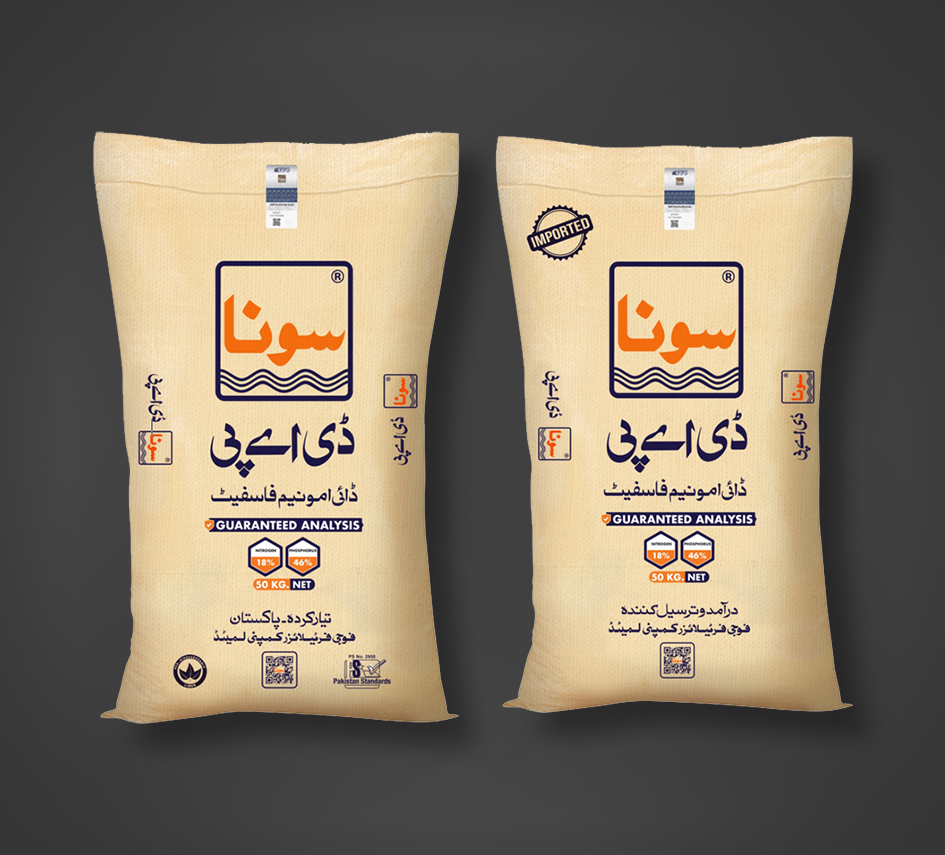
Fauji Fertilizer Company (FFC) is the largest fertilizer producer in Pakistan. Following its merger with FFBL, FFC has secured the 1st position in the Pakistan Stock Exchange (PSX) Top 25 Companies list for 13 consecutive years and now holds approximately 43% to 49% of the national urea market and 63% to 69% of the DAP market.
Who owns Fauji Fertilizer Company (FFC)?
FFC was incorporated in 1978 as a joint venture between the Fauji Foundation and a Danish firm. Today, the Fauji Foundation remains the majority shareholder, further solidifying its stake in 2026 through strategic share acquisitions, holding over 44% of the company.
How many fertilizer manufacturing units does FFC have?
FFC operates four major manufacturing plants. Plant I and Plant II are located at Goth Machhi in Rahim Yar Khan. Plant III is situated at Mirpur Mathelo in Ghotki, Sindh. Plant IV, located at Port Qasim, was added through the merger with FFBL and contributes significantly to DAP production.
What is the difference between FFC Sona Urea and Engro Urea?
FFC markets its flagship product under the “Sona” brand, including Sona Urea and Sona DAP. As of April 2026, FFC Sona Urea is priced at approximately PKR 4,286 per 50kg bag, while Engro Urea is priced higher at PKR 4,436, reflecting different branding and market positioning strategies.
Which fertilizer company has the highest market share in Pakistan?
FFC commands the highest overall market share in Pakistan’s fertilizer sector. In the first quarter of calendar year 2026, FFC solidified its market leadership with a dominant 58% market share, driven by a remarkable 51% year-over-year surge in urea off-take.
Is FFC bigger than Engro Fertilizers?
Yes, FFC is significantly larger than Engro Fertilizers in terms of both market capitalisation and production capacity. FFC’s market cap leads the sector at approximately PKR 640 billion, while Engro Fertilizers surpassed the $1 billion milestone. FFC’s consolidated turnover reached ~PKR 374 billion in CY24 following the FFBL merger.
What products does FFC offer beyond Sona Urea and Sona DAP?
Beyond urea and DAP, FFC manufactures Sulphate of Potash (SOP), Boron fertilizers, Zinc fertilizers, and Muriate of Potash (MOP). The company also produces industrial chemicals and power through its subsidiary, FFC Energy Limited (FFCEL).
Engro Fertilizers Limited: The Innovation Powerhouse in the Top 10 Fertilizer Companies in Pakistan
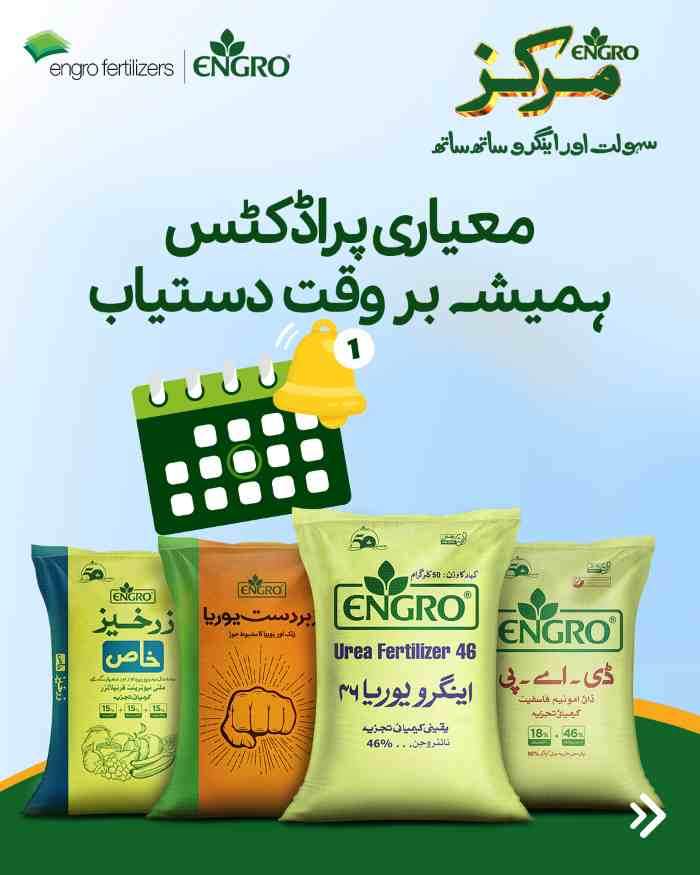
Engro Fertilizers Limited (PSX: EFERT) is Pakistan’s premier manufacturer of crop nutrition solutions, commanding approximately 31% to 35% of the national urea market. It operates the country’s most energy-efficient urea production facility and is a key exporter of fertilizers.
Who is the CEO of Engro Fertilizers?
In March 2026, Engro Fertilizers announced the resignation of its Chief Executive Officer, Mr. Ali Rathore. Mr. Rathore continues to serve during his notice period to ensure a structured leadership transition.
Where is Engro Fertilizers’ manufacturing plant located?
Engro’s primary manufacturing facility is located in Daharki, Sindh. This site is home to the EnVen plant, established in 2011 with an investment of $1.1 billion. The EnVen plant has an annual production capacity of 1.3 million tons of urea and holds the distinction of being the most energy-efficient fertilizer plant in Pakistan, boasting the lowest gas consumption per ton of urea produced.
Which company produces the “Zarkhez” brand?
Engro Fertilizers produces the “Zarkhez” brand of potash fertilizers. The Zarkhez product line includes Zarkhez Plus (SOP), Zarkhez Khaas, and MOP variants. These specialized potash fertilizers are crucial for balanced crop nutrition and are part of Engro’s expanding specialty fertilizers segment.
What are the main competitors of Engro Fertilizers?
Engro’s primary competitors include Fauji Fertilizer Company (FFC) and Fatima Fertilizer Company. In the NPK and specialty fertilizer segment, Engro competes with IFFCO Pakistan and imported brands. The rivalry is particularly intense as all three companies operate modern, large-scale plants and vie for market share in Punjab’s agricultural heartland.
What is Engro Fertilizers’ export strategy for 2026?
Engro Fertilizers has established itself as a key exporter from Pakistan. The company contributes over 5 million tons of urea to the agricultural economy and leverages its energy-efficient production to compete in regional markets. However, exports remain subject to domestic demand fulfillment and government policies on gas pricing.
Fatima Fertilizer Company Limited: The Sarsabz Brand Leader in the Top 10 Fertilizer Companies in Pakistan
Fatima Fertilizer Company Limited is a leading manufacturer specializing in Urea, Calcium Ammonium Nitrate (CAN), and Nitro Phosphate (NP) under the flagship “Sarsabz” brand. The company is known for its farmer-centric approach and women empowerment initiatives in agriculture.
Which company produces Sarsabz Fertilizer?
Fatima Fertilizer Company produces all Sarsabz-branded fertilizers. The Sarsabz product portfolio includes Sarsabz Urea, Sarsabz Calcium Ammonium Nitrate (CAN), Sarsabz Nitro Phosphate (NP), and Sarsabz NPK.
Read More: Pumpkin Seed Price In Pakistan (Per Kg) – Uses & Benefits
Where are Fatima Fertilizer’s production facilities located?
Fatima Fertilizer operates fully integrated production facilities strategically positioned in Sheikhupura and Sadiqabad. These facilities produce intermediate products like Ammonia and Nitric Acid before converting them into final fertilizers. The Sadiqabad plant has an annual capacity of 500,000 MT of urea, 420,000 MT of CAN, and 360,000 MT of NP.
What is the current ranking of Fatima Fertilizer among the top 10 fertilizer companies in Pakistan?
Fatima Fertilizer consistently ranks as the third-largest fertilizer producer in Pakistan. The company is a major player in the CAN and NP segments, which are essential for specific crop nutrition requirements. As of early 2026, Fatima held the highest urea inventory levels among producers, indicating significant production capacity.
What is the Sarsabz Tabeer initiative?
Launched in 2022, Sarsabz Tabeer is Fatima Fertilizer’s flagship women empowerment programme designed to integrate rural women’s voices into Pakistan’s agricultural narrative. In March 2026, the company launched the “Sarsabz Tabeer: Seeds of Change” campaign, paying tribute to the countless rural women whose labor sustains Pakistan’s agricultural economy.
Which fertilizer company produces Calcium Ammonium Nitrate (CAN) in Pakistan?
Fatima Fertilizer is the primary producer of CAN fertilizer in Pakistan under its Sarsabz brand. CAN is a preferred nitrogen source for crops requiring slow-release nitrogen and is particularly popular for wheat and vegetable cultivation. Pak-Arab Fertilizers also produces CAN, making them the two main suppliers of this specialized product.
Fauji Fertilizer Bin Qasim Limited (FFBL): The Sole DAP Manufacturer in Pakistan
Fauji Fertilizer Bin Qasim Limited (FFBL) is the only local manufacturer of Di-Ammonium Phosphate (DAP) in Pakistan. While now merged into FFC’s broader operations for consolidated reporting, FFBL remains a distinct brand and a critical component of Pakistan’s fertilizer supply chain, meeting 45% of the country’s DAP demand.
Who is the only producer of DAP in Pakistan?
FFBL is the sole domestic producer of DAP in Pakistan. The company’s manufacturing complex at Port Qasim has a nameplate capacity of approximately 670,000 t/a of DAP and 2.6 million t/a of urea. This unique position makes FFBL strategically vital for national food security and reduces dependency on costly DAP imports.
What brands does FFBL market under the SONA label?
FFBL produces and markets fertilizers under the SONA brand, including SONA DAP (Di-Ammonium Phosphate) and SONA Urea (Granular). SONA DAP is a concentrated phosphatic fertilizer essential for root proliferation and energy reactions in plants.
How did the FFC and FFBL merger affect the fertilizer market?
The merger of FFC and FFBL, finalized in 2024, created a consolidated giant controlling the vast majority of Pakistan’s urea and DAP markets. The merger expanded FFC’s urea market share to approximately 49% and DAP share to approximately 63%. FFC’s turnover notably enhanced to ~PKR 374 billion in CY24.
What is the production capacity of FFBL’s Port Qasim plant?
The Port Qasim plant (now Plant IV of FFC) has a capacity of producing 551,000 MT of Urea and 650,000 MT of DAP. This facility is the backbone of Pakistan’s DAP self-sufficiency and represents a major national strategic asset.
Is DAP imported in Pakistan despite FFBL’s production?
Yes, Pakistan still imports approximately half of its DAP requirements despite FFBL’s domestic production. The annual production capacity of DAP in Pakistan is 450,000 tons, while national consumption ranges between 1.2 and 1.5 million tons, necessitating significant imports.
Dawood Hercules Corporation (Now Engro Holding): The Investment Giant Behind the Top 10 Fertilizer Companies in Pakistan
Dawood Hercules Corporation (DH Corp) is a Pakistani investment holding company with diversified holdings in Energy and Foods. In December 2024, the company changed its name to Engro Holding Limited. DH Corp is the parent entity that holds a significant strategic shareholding in Engro Fertilizers, making it a key player in the sector.
Is Dawood Hercules still considered a fertilizer company?
While Engro Holding (formerly Dawood Hercules) is primarily an investment holding company, it is included in the top 10 due to its controlling interest in Engro Fertilizers. The fertilizer segment of Engro Holding remains its most valuable asset, generating the majority of its investment returns.
What is the ownership structure of Engro Fertilizers?
Engro Holding Limited (formerly Dawood Hercules Corporation) holds a 37% ownership of associated company Engro Corporation Limited, which in turn controls Engro Fertilizers. This layered ownership structure places Dawood Hercules as the ultimate parent and strategic decision-maker for one of Pakistan’s largest industrial groups.
What other sectors does Dawood Hercules invest in besides fertilizer?
Beyond fertilizers, Dawood Hercules (now Engro Holding) holds a 14% stake in The Hub Power Company Limited (Hubco), Pakistan’s largest private power producer. The group also has investments in digital and technology services, coal mining, and food businesses.
Pak-Arab Fertilizers Limited: The Multan-Based Producer in the Top 10 Fertilizer Companies in Pakistan
Pak-Arab Fertilizers Limited is a trusted manufacturer based in Multan, producing a range of chemical fertilizers including Urea, CAN, and NP. The company’s facility is one of the largest fertilizer complexes in Pakistan, playing a crucial role in serving the agricultural needs of southern Punjab.
What is the production capacity of Pak-Arab Fertilizers?
Pak-Arab Fertilizers operates a large-scale complex with annual production capacity of 90,000 tons of Urea, 450,000 tons of Calcium Ammonium Nitrate (CAN), 305,000 tons of Nitrophosphate (NP), and 847,000 tons of multi-product fertilizers. The company is one of the only two producers of CAN in Pakistan.
Is Pak-Arab Fertilizers a private or government company?
Pak-Arab Fertilizers originated as a public sector entity under the National Fertilizer Corporation (NFC). However, following privatization initiatives in the fertilizer sector, the company now operates with significant private sector participation while maintaining strong ties to government agricultural policies.
What role does Pak-Arab play in national food security?
Pak-Arab’s strategic location in Multan makes it a critical supplier to the cotton and wheat belts of southern Punjab. The company’s production of NP (Nitro Phosphate) provides farmers with a balanced fertilizer option that combines nitrogen and phosphorus, improving crop yields while reducing soil degradation.
Agritech Limited: The Mianwali and Haripur Producer Among Top 10 Fertilizer Companies in Pakistan
Agritech Limited is a prominent industrial producer focused on Urea and Granular Single Super Phosphate (GSSP) production. The company operates two production units located in Mianwali (Punjab) and Haripur (Khyber Pakhtunkhwa). Agritech’s operations are closely watched as an indicator of energy security in the fertilizer sector.
Is Agritech Limited still operational in Pakistan in 2026?
Yes, Agritech Limited remains operational. However, the company experienced a temporary suspension of operations in March 2026 due to disruption of RLNG supply. Operations resumed on March 13, 2026, following the restoration of gas supply by Sui Northern Gas Pipelines Limited (SNGP). The company also completed scheduled Annual Turnaround (ATA) maintenance from January 27 to February 16, 2026.
Where are Agritech Limited’s manufacturing plants located?
Agritech owns and operates a urea manufacturing plant in Mianwali, Punjab province, and a Granulated Single Super Phosphate (GSSP) manufacturing facility in Haripur Hazara, Khyber Pakhtunkhwa (KPK) province. This geographical diversification allows Agritech to serve multiple agricultural regions.
What products does Agritech Limited manufacture?
Agritech Limited manufactures and sells urea fertilizer and Granulated Single Super Phosphate (GSSP). GSSP is a phosphatic fertilizer particularly valued for its affordability and effectiveness in improving root development in wheat and cotton crops.
IFFCO Pakistan: The Multinational Supplier in the Top 10 Fertilizer Companies in Pakistan
IFFCO Pakistan is a leading supplier and importer of DAP fertilizers and specialized crop nutrients. As the Pakistani subsidiary of an international cooperative, the company brings international manufacturing standards and supply chain expertise to the local market.
Are there any multinational fertilizer companies operating in Pakistan?
Yes, IFFCO Pakistan is a prominent multinational fertilizer company operating in Pakistan. While primarily known for importing and distributing DAP, the company also produces a wide range of products locally, including urea, DAP, NP, and NPK fertilizers, through state-of-the-art manufacturing facilities that meet international standards.
What is IFFCO’s role in Pakistan’s DAP supply chain?
IFFCO plays a critical role in bridging the gap between domestic DAP production and national demand. With local production meeting only about half of Pakistan’s DAP requirements, IFFCO’s import operations ensure consistent supply during peak sowing seasons, particularly for Kharif and Rabi crops.
Does IFFCO manufacture fertilizers locally in Pakistan?
Yes, IFFCO Pakistan operates manufacturing facilities within the country. The company’s local production capabilities allow it to offer competitively priced fertilizers and respond quickly to seasonal demand fluctuations. The company produces a range of products, including urea, DAP, NP, and NPK fertilizers.
National Fertilizer Marketing Limited (NFML): The State-Owned Distributor in the Top 10 Fertilizer Companies in Pakistan
National Fertilizer Marketing Limited (NFML) is a state-owned entity responsible for managing the distribution of imported fertilizers across a nationwide network to ensure price stability. NFML was established in 1976 as a subsidiary of the National Fertilizer Corporation (NFC) and operates under the administrative control of the Ministry of Industries and Production, Government of Pakistan.
What is the role of National Fertilizer Marketing Limited (NFML)?
NFML is responsible for the supply of imported urea in requisite areas at government-notified prices. The organization arranges efficient transport and storage through its dealer network and manages six bulk storage facilities with a combined capacity of 115,000 metric tonnes. NFML has also enhanced its temporary storage network from 34 to 45 stores.
Is NFML a private or government company?
NFML is a Public Limited Company (unlisted) that functions under the administrative control of the Ministry of Industries & Production, Government of Pakistan. It remains a government entity despite broader privatization trends in the fertilizer sector.
How does NFML stabilize fertilizer prices in Pakistan?
NFML intervenes in the market by releasing imported urea at government-notified prices, countering hoarding and artificial price inflation by private traders. The organization’s nationwide distribution network ensures that remote areas receive fertilizer at fair prices, particularly during peak demand seasons like Kharif and Rabi.
Sitara Chemical Industries: The Chemical Supplier in the Top 10 Fertilizer Companies in Pakistan
Sitara Chemical Industries Limited produces and supplies various basic chemicals for textile and fertilizer industries. While primarily known for chlor-alkali products, the company is a significant contributor to the agricultural chemical and fertilizer supply chain in Pakistan, making it a worthy inclusion in the top 10.
How does Sitara Chemical support the fertilizer industry?
Sitara Chemical produces essential industrial chemicals that serve as inputs for fertilizer manufacturing. The company’s product portfolio includes caustic soda liquid, caustic soda flakes, sodium hypochlorite, hydrochloric acid, liquid chlorine, bleaching powder, and hydrated lime. These chemicals are critical for various stages of fertilizer production and water treatment in agricultural applications.
Where is Sitara Chemical Industries headquartered?
The company was incorporated in 1981 and is headquartered in Faisalabad, Pakistan, the industrial heart of Punjab province. Sitara Group of Industries is one of Pakistan’s leading and most diversified industrial conglomerates, with significant operations across multiple sectors.
What is Sitara Chemical’s market position in 2026?
Sitara Chemical Industries remains a stable, mid-tier player in Pakistan’s industrial landscape. The company’s consistent performance in basic chemicals production ensures a steady supply of critical inputs to the fertilizer sector, even during periods of energy disruption or raw material shortages.
What Are the Top 3 Fertilizer Brands in Pakistan for Wheat and Cotton Crops?
The top 3 fertilizer brands in Pakistan for major crops are Sona (FFC), Engro Urea (Engro Fertilizers), and Sarsabz (Fatima Fertilizer). For DAP, the leading brand is Sona DAP (FFC/FFBL). These brands dominate because of their consistent quality, nationwide availability, and strong farmer loyalty built over decades.
For wheat crops, the most highly rated brands include Engro Urea (known for its high nitrogen content and consistent granulation), Sarsabz CAN (preferred for its slow-release nitrogen properties that match wheat growth cycles), and Sona DAP (essential for root establishment in early wheat growth stages).
Cotton farmers in Pakistan prefer Sarsabz NP for balanced nitrogen and phosphorus nutrition during boll formation. Engro’s Zarkhez Plus (SOP) is increasingly popular for potassium supplementation, which improves cotton fiber quality and disease resistance.
Farmers generally perceive Engro Urea as having superior granulation and lower caking tendency, making it easier to handle and apply. Sona Urea is valued for its competitive pricing and widespread availability through FFC’s extensive distribution network. Both brands are considered high-quality, with farmer preference often driven by local dealer relationships and seasonal pricing.
What is the Financial Performance of Listed Fertilizer Companies in Pakistan for 2026?
Pakistan’s listed fertilizer sector posted a net profit of Rs141.1 billion in calendar year 2025, up 10% compared to the previous year. This growth was driven primarily by higher urea off-take, improved other income, and lower other charges. For 2026, early indicators suggest continued profitability, though subject to gas price fluctuations.
Fauji Fertilizer Company (FFC) has secured the 1st position in the Pakistan Stock Exchange (PSX) Top 25 Companies list for 13 consecutive years. Other fertilizer companies frequently appearing in the top 25 include Engro Fertilizers (EFERT) and Fauji Fertilizer Bin Qasim (FFBL).
Fauji Fertilizer Company (FFC) is recognized for offering some of the best dividends in the sector. Financial analysts have set a target price of Rs490 for June 2026 for FFC, implying a potential total return of 22%, encompassing a projected dividend yield of 10% for 2026. Engro Fertilizers also offers competitive dividend yields above 6%.
As of April 17, 2026, Engro Fertilizers (EFERT) trades at PKR 212.10 on the Pakistan Stock Exchange, with a 52-week range of PKR 145.25 – 263.30. FFC’s market capitalization leads the sector at approximately PKR 640 billion, reinforcing its position as the sector’s flagship stock.
How Do Gas Prices and Energy Costs Affect the Ranking of Fertilizer Companies in Pakistan?
Gas prices are the single most significant operational cost for fertilizer companies in Pakistan, accounting for 30–40% of input costs for producing key grains. Companies with the most energy-efficient plants or secured long-term gas contracts achieve higher profitability and stability, directly improving their ranking.
Escalating tensions in the Middle East have disrupted global fertiliser supply chains and pushed international urea prices to $740-750 per tonne. International urea prices have risen from about $482 per tonne to nearly $720 per tonne, while ammonia prices have increased by around 24% to nearly $600 per tonne. These global shocks expose vulnerabilities in import-dependent markets like Pakistan.
The Prime Minister has directed authorities to introduce uniform gas tariffs for fertiliser plants and is considering ending subsidised gas supplies to the industry. A proposal to extend direct financial support to farmers through the Benazir Income Support Programme (BISP) is being evaluated as an alternative to industrial gas subsidies.
Engro Fertilizers’ EnVen plant in Daharki is the most energy-efficient fertilizer plant in Pakistan, boasting the lowest gas consumption per ton of urea. This efficiency gives Engro a significant cost advantage over competitors, particularly during periods of rising gas prices or supply constraints.
Which Fertilizer Company Has the Largest Distribution Network in Punjab?
FFC’s Marketing Group operates the largest fertilizer marketing network in Pakistan, marketing nearly 3.5 million metric tonnes of fertilizer per annum. The network includes thousands of dealers across Punjab, with particularly strong coverage in major agricultural districts including Sahiwal, Sargodha, Bahawalpur, and Multan.
Engro Fertilizers has established Markaz Centres in Muridke, Bahawalpur, Sargodha, and Sahiwal. These centres ensure timely availability of high-quality fertilizers at official prices. The government has also asked Engro to expand its distribution reach, particularly in remote rural areas, and align its supply schedules with the agricultural calendar to avoid shortages during peak sowing periods.
Provincial governments coordinate with manufacturers and distributors to ensure uninterrupted supply chains. The distribution channel for Urea and DAP involves the private sector, dealer network, and provincial governments. Government oversight includes measures to prevent hoarding and artificial price inflation.
The government has taken proactive steps to ensure a stable supply of fertilizers across the country, despite challenges in the regional market. All fertiliser manufacturing plants are operational, with uninterrupted gas supply ensuring smooth operation and continuous production. A 500,000-tonne fertiliser buffer stock has been maintained for Kharif season.
Which Pakistani Fertilizer Company Produces the Most Urea?
FFC produces the most urea among all Pakistani fertilizer companies. Following the merger with FFBL, FFC’s combined urea production capacity exceeds 2.8 million tons annually. The company’s Plant I at Goth Machhi alone achieved a remarkable production of 867,180 Metric Tons in a recent period, exceeding budgeted targets.
Pakistan’s total urea production capacity is approximately 7 million tons annually. Through efficient resource utilisation and coordination, the sector continues to ensure steady production and nationwide supply. However, Pakistan may face a urea shortfall of up to 500,000 tonnes during the Rabi 2026–27 season, according to recent government projections.
FFC, in partnership with the government of Sindh and a Chinese firm, is in discussion to set up a fertiliser plant at the Thar coal field to produce fertiliser from coal. This Coal-to-Fertiliser (C2F) flagship project is described as a “game changer” and will produce 717 thousand tonnes per year of surplus CO2 for downstream industrial use.
Who Are the Main Competitors of Engro Fertilizers in the NPK Segment?
Engro Fertilizers competes primarily with imported NPK brands and local producers like Fatima Fertilizer in the NPK segment. The NPK market in Pakistan witnessed a 16.86% import growth rate from 2023 to 2024, with a compound annual growth rate of 12.66% from 2020 to 2024, indicating growing competition from international suppliers.
Engro Fertilizers leads the NPK segment with its comprehensive product portfolio, including Engro NP Plus, Engro Zorawar, Engro Zarkhez, Engro Zarkhez Plus, Engro Zarkhez Khaas, and Engro Phos Power. The company’s ability to offer both straight and specialty NPK formulations gives it a competitive edge.
NPK fertilizers contain all three primary macronutrients (Nitrogen, Phosphorus, and Potassium) in a single granule, providing balanced nutrition in one application. Straight fertilizers like Urea (N only) or DAP (N and P only) target specific nutrient deficiencies. NPK products are gaining popularity among progressive farmers seeking to maximize yields through balanced crop nutrition.
For Kharif (2026-27), the subsidy rate for nitrogen (N) has been hiked to Rs 47.32/kg (10% increase), while the subsidy for phosphorus (P) has been hiked to Rs 52.76/kg (21% increase). Subsidies on P&K fertilizers including DAP and NPKS grades are provided based on approved rates to ensure smooth availability at affordable prices.
Which Company Exports Fertilizer from Pakistan to Other Countries?
Engro Fertilizers is the most prominent exporter of fertilizer from Pakistan. The company has close to five decades of operations as a world-class business, contributing over 5 million tons of urea to the local agricultural economy in the last 5 years while also maintaining an active export program.
Urea is the primary fertilizer export from Pakistan. The country’s position as a natural gas-producing nation gives it a comparative advantage in urea production. However, exports are carefully managed to ensure domestic food security, with priority given to local market needs before international sales are permitted.
Pakistani fertilizers, particularly urea, are exported to regional markets including Afghanistan, Sri Lanka, and East African countries. The recent Hormuz crisis and Middle East trade disruptions have created opportunities for Pakistani exporters to fill supply gaps in these markets.
Yes, Pakistan is a net importer of fertilizers, particularly for DAP and potash-based products. While the country is largely self-sufficient in urea production, approximately half of DAP demand is met through imports. The annual production capacity of DAP is 450,000 Tons, while national consumption is significantly higher.
What Is the Future Outlook for the Top 10 Fertilizer Companies in Pakistan?
The future outlook for the top 10 fertilizer companies in Pakistan is cautiously optimistic, driven by projected increases in urea demand during Kharif 2026 due to improved farm economics. However, companies face challenges from global supply chain disruptions, gas price volatility, and potential urea shortages projected for Rabi 2026–27.
Key growth drivers include government support for food security, rising global fertilizer prices that benefit local producers, expansion of coal-to-fertilizer projects reducing gas dependency, and increasing farmer awareness of balanced crop nutrition. The sector’s net profit reached Rs141.1 billion in 2025, indicating strong fundamentals.
Major risks include gas supply disruptions (as experienced by Agritech Limited in March 2026), global price volatility from the Middle East conflict, potential urea shortages during peak seasons, and regulatory changes in subsidy structures. The Hormuz fertilizer shock continues to threaten global food security and regional supply chains.
Engro Fertilizers completed the largest-ever maintenance of its EnVen Plant with a $50 million investment. FFC is advancing Shariah compliance and eyeing energy diversification through coal gasification. The Thar Coal-to-Fertiliser project represents the most significant technological leap, promising to reduce Pakistan’s dependency on imported gas for fertilizer production.
How to Use This List of Top 10 Fertilizer Companies in Pakistan for Business and Investment Decisions
This list of top 10 fertilizer companies in Pakistan serves multiple purposes for different stakeholders. For farmers, it identifies reliable sources of high-quality crop nutrition. For investors, it highlights companies with strong market positions and dividend histories. For policymakers, it identifies critical players in national food security.
Farmers should consider proximity to dealers, product availability, and seasonal pricing when choosing between FFC Sona Urea, Engro Urea, or Sarsabz Urea. All three are high-quality products, but local dealer relationships and timing of availability often determine the best choice for individual farmers.
FFC offers the most stable dividend yield and market leadership, while Engro Fertilizers provides growth potential through export markets and specialty products. Fatima Fertilizer offers exposure to the growing CAN and NP segments. Investors should monitor gas pricing policies and global DAP prices when making decisions.
The Pakistan Stock Exchange (PSX) website provides annual reports and financial disclosures for all listed fertilizer companies. The National Fertilizer Development Centre (NFDC) publishes monthly off-take data and inventory reports. Industry-specific publications like PPI News Agency and Trade Chronicle offer regular sector analysis.
Frequently Asked Questions About the Top 10 Fertilizer Companies in Pakistan
Which is the largest fertilizer company in Pakistan?
Fauji Fertilizer Company (FFC) is the largest fertilizer company in Pakistan, holding approximately 43% to 49% of the national urea market and 63% to 69% of the DAP market following its merger with FFBL.
What are the top 3 fertilizer brands in Pakistan?
The top 3 fertilizer brands in Pakistan are Sona (FFC), Engro Urea (Engro Fertilizers), and Sarsabz (Fatima Fertilizer).
Who owns Fauji Fertilizer Company (FFC)?
FFC was incorporated as a joint venture between the Fauji Foundation and a Danish firm. The Fauji Foundation remains the majority shareholder, holding over 44% of the company.
Is Engro Fertilizers bigger than FFC?
No, FFC is significantly larger than Engro Fertilizers in both market capitalisation (PKR 640 billion vs. $1 billion) and production capacity.
Which fertilizer company has the highest market share in Pakistan?
FFC commands the highest market share, with a 58% market share in the first quarter of CY26, driven by a 51% year-over-year surge in urea off-take.
What is the current ranking of Fatima Fertilizer?
Fatima Fertilizer consistently ranks as the third-largest fertilizer producer in Pakistan, with significant production capacity in Urea, CAN, and NP.
Which Pakistani fertilizer company produces the most Urea?
FFC produces the most urea, with combined production capacity exceeding 2.8 million tons annually following the FFBL merger.
Who is the only producer of DAP in Pakistan?
FFBL (now part of FFC) is the only local manufacturer of Di-Ammonium Phosphate (DAP) in Pakistan, meeting 45% of the country’s DAP demand.
Which companies are listed on the Pakistan Stock Exchange (PSX) top 25?
FFC has secured the 1st position in the PSX Top 25 Companies list for 13 consecutive years. EFERT and FFBL are also consistently ranked among the top performers.
Is Agritech Limited still operational in Pakistan?
Yes, Agritech Limited remains operational. The company resumed operations on March 13, 2026, following the restoration of gas supply after a temporary suspension.
What is the difference between FFC Sona Urea and Engro Urea?
FFC Sona Urea is priced at approximately PKR 4,286 per bag, while Engro Urea is priced at PKR 4,436 per bag. Farmer preferences vary based on granulation quality and local dealer relationships.
Which company produces Sarsabz Fertilizer?
Fatima Fertilizer Company produces all Sarsabz-branded fertilizers, including Sarsabz Urea, CAN, NP, and NPK.
Who are the main competitors of Engro Fertilizers?
Engro’s main competitors include Fauji Fertilizer Company (FFC) and Fatima Fertilizer Company, particularly in the urea and specialty fertilizer segments.
Which fertilizer company offers the best dividends to investors?
FFC is recognized for offering some of the best dividends, with a projected dividend yield of 10% for 2026.
Is Pak-Arab Fertilizers a private or government company?
Pak-Arab Fertilizers originated as a public sector entity but now operates with significant private sector participation following privatization initiatives.
What is the role of National Fertilizer Marketing Limited (NFML)?
NFML is a state-owned entity responsible for managing the distribution of imported fertilizers at government-notified prices to ensure price stability nationwide.
Which fertilizer companies in Pakistan are part of the Fauji Foundation?
FFC and FFBL are the primary fertilizer companies under the Fauji Foundation umbrella. The Foundation holds over 44% of FFC following recent share acquisitions.
Who is the CEO of Engro Fertilizers?
Ali Rathore resigned as CEO in March 2026 but continues to serve during his notice period to ensure a structured leadership transition.
Which company produces Calcium Ammonium Nitrate (CAN) in Pakistan?
Fatima Fertilizer and Pak-Arab Fertilizers are the primary producers of CAN fertilizer in Pakistan.
Are there any multinational fertilizer companies operating in Pakistan?
Yes, IFFCO Pakistan is a prominent multinational fertilizer company operating in Pakistan with local manufacturing facilities and import operations.
Which fertilizer plant is the most technologically advanced in Pakistan?
Engro Fertilizers’ EnVen plant in Daharki is the most technologically advanced, featuring the lowest gas consumption per ton of urea and the largest single-train urea plant globally at the time of its establishment.
How many fertilizer manufacturing units does FFC have?
FFC operates four major manufacturing plants located at Goth Machhi (Plants I & II), Mirpur Mathelo (Plant III), and Port Qasim (Plant IV).
Which company is the leader in the NPK fertilizer segment?
Engro Fertilizers leads the NPK segment with its comprehensive product portfolio including Engro NP Plus, Zorawar, Zarkhez, and Phos Power.
What are the top-rated fertilizer brands for wheat crops in Pakistan?
For wheat crops, the most highly rated brands include Engro Urea, Sarsabz CAN, and Sona DAP, each serving specific nutritional needs during the wheat growth cycle.
Which company exports fertilizer from Pakistan to other countries?
Engro Fertilizers is the most prominent exporter of fertilizer from Pakistan, leveraging its energy-efficient production to compete in regional markets.
How do gas prices affect the ranking of Pakistani fertilizer companies?
Gas prices are the single most significant operational cost, accounting for 30–40% of input costs. Companies with the most energy-efficient plants or secured long-term gas contracts achieve higher profitability and stability, directly improving their ranking.
Which fertilizer company has the largest distribution network in Punjab?
FFC’s Marketing Group operates the largest fertilizer marketing network in Pakistan, marketing nearly 3.5 million metric tonnes of fertilizer per annum.
Is Dawood Hercules still considered a fertilizer company?
While primarily an investment holding company now renamed Engro Holding, it is included in the top 10 due to its controlling interest in Engro Fertilizers.
Which company produces the “Zarkhez” brand?
Engro Fertilizers produces the Zarkhez brand of potash fertilizers, including Zarkhez Plus (SOP) and Zarkhez Khaas.
What is the total production capacity of the Pakistani fertilizer industry?
Pakistan’s fertilizer industry maintains an annual production capacity of approximately 7 million tons of urea and 1.7 million tons of DAP, NP, and NPK fertilizers.
Disclaimer: The information provided in this article is for general informational and educational purposes only. It does not constitute financial, investment, or professional advice. Readers are advised to conduct their own research and consult with qualified professionals before making any investment or business decisions.

Add a Comment