
Are you ready to partner with the Punjab Education Foundation to transform a public school but overwhelmed by where to start with the PEF Phase 3 online apply process? The Punjab Education Foundation has officially launched Phase 3 of the Public School Reorganization Program (PSRP) as of February 24, 2026, opening a transformative opportunity for educators, entrepreneurs, and organizations to manage government schools across Punjab. This definitive guide provides everything you need to successfully navigate the PEF Phase 3 online apply 2026 process, from checking the district-wise school list to submitting your application before the final deadline.
Key Takeaways
- Application Deadline Confirmed: The PEF Phase 3 online apply last date is April 7, 2026, with no extensions announced for this cycle.
- Education Requirements Strict: One group member must hold a Master’s degree (16 years), another must specialize in IT or Natural Sciences, and all must have at least a Bachelor’s degree.
- Fee Structure Varies by Applicant: Individual groups pay PKR 20,000 for up to seven school choices, while organizations pay PKR 100,000 regardless of school selections.
- Residency Rule Enforced: All applicants must reside in the same Tehsil where the applied school is located, verified through domicile and address proofs.
- Age Limit Firm at 40: Maximum age for all group members is 40 years at the time of application, with no relaxation currently announced.
- Document Preparation Critical: Police Character Certificates for all members, attested degrees, and affidavits must be scanned and ready before starting the online form.
- Read More: Shahbaz Sharif Ramzan Package (Registration PKR 13000)
- Read More: Maryam Nawaz Ramzan Package Registration [Apply Online]
- Read More: Maryam Nawaz 10000 Ramzan Package [Apply Online]
PEF Phase 3 Online Apply | School List, Last Date to Apply

Table Of Contents
What is PEF Phase 3 and Why is it a Landmark Opportunity in 2026?
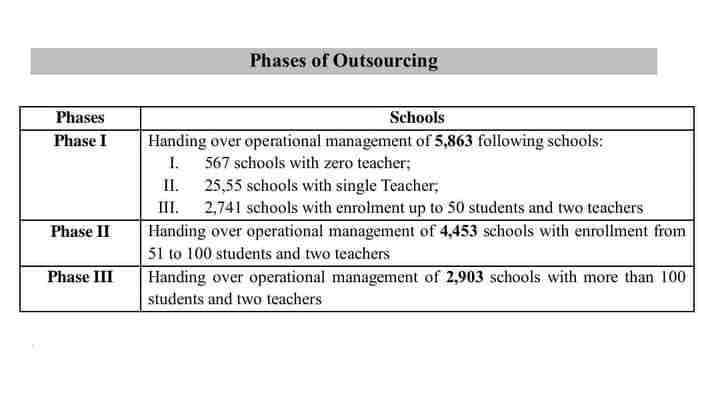
PEF Phase 3 refers to the current expansion wave of the Public School Reorganization Program (PSRP) initiated by the Punjab Education Foundation (PEF) on February 24, 2026. This phase involves the outsourcing of approximately 2,903 public schools to private partners through a transparent, merit-based online application system. The fundamental objective remains improving educational standards through public-private partnerships while extending quality education to deserving children at their doorsteps.
Opportunity
The 2026 phase represents a landmark opportunity because it covers the most extensive geographical spread since the program’s inception, including schools from all 40+ districts of Punjab. Unlike previous phases that targeted specific regions, Phase 3 includes major urban centers like Lahore, Rawalpindi, and Faisalabad alongside remote districts such as Taunsa Sharif, Kot Addu, and Murree. This comprehensive coverage means applicants from virtually any part of Punjab can find a school within their Tehsil.
Punjab Education Foundation

The Punjab Education Foundation operates under the PEF Act of 1991 and was restructured under Act-XII of 2004 specifically to promote education through private sector encouragement. Phase 3 embodies this mandate by transferring school management to qualified individuals and organizations while the Foundation continues providing financial support, academic oversight, and quality assurance mechanisms. For partners, this means gaining access to existing school infrastructure, enrolled students, and government recognition without the massive capital investment required to establish a new private school.
What makes 2026 particularly significant is the streamlined digital infrastructure now supporting the application process. The PEFSIS (PEF School Information System) portal has been upgraded to handle higher traffic, generate Challan forms instantly, and provide real-time application status tracking. This technological enhancement reduces paperwork, minimizes errors, and ensures transparency throughout the selection procedure.
PEF Phase 3
Furthermore, Phase 3 introduces refined partner selection criteria based on lessons learned from earlier phases. The emphasis on specialized qualifications in IT and Natural Sciences reflects the modern educational demands and the government’s focus on STEM education. Partners selected in this phase will benefit from established subsidy mechanisms, free textbook provisions, and capacity development programs that have evolved through years of implementation experience.
The scale of approximately 2,903 schools targeted for outsourcing means thousands of deserving students will gain access to improved educational facilities. For successful applicants, this translates into a socially impactful venture with financial sustainability through per-pupil subsidies, performance-based incentives, and the satisfaction of contributing to national educational development.
Latest Updates: Official School List and Critical Dates for PEF Phase 3 2026

When Was the Official PEF Phase 3 School List Published?
The Punjab Education Foundation published the official district-wise list of schools for PSRP Phase 3 on February 24, 2026. This publication date marks the official commencement of the application cycle and provides prospective partners with approximately six weeks to review available schools, prepare documentation, and submit their applications through the online portal.
Where Can I Access the PEF Phase 3 School List PDF Download 2026?
The complete PEF Phase 3 school list PDF download is available exclusively through the official PEF website portal at the dedicated PSRP registration section. Applicants must visit the official domain, navigate to the PSRP Phase 3 section, and select their district from the dropdown menu to view schools allocated to their Tehsil. The system displays school names, locations, enrollment figures, and basic infrastructure details to help applicants make informed choices.
PSRP Phase 3 School List PDF Urdu: Why the Urdu Version Matters
The PSRP Phase 3 school list PDF Urdu version serves applicants who prefer reviewing information in their native language and ensures complete transparency for local communities. This Urdu version contains identical information to the English list but presents school names, district headings, and important notes in Urdu script, making it accessible to a broader audience including local education enthusiasts who may not be fluent in English technical terms.
Which Districts Feature in the PEF Phase 3 School List 2026?
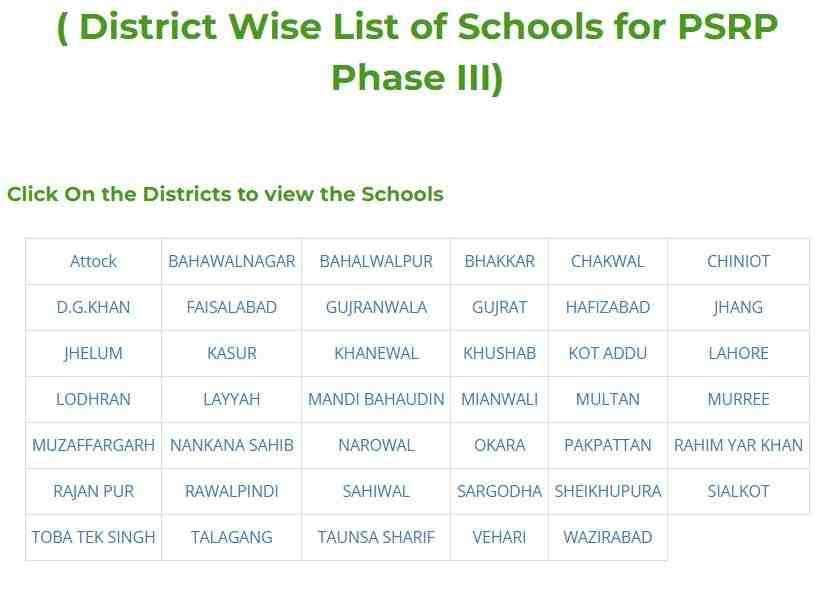
You can check the list of schools at this link: https://www.pef.edu.pk/Publications/PSRPSchoolsList.
The PEF Phase 3 school list 2026 encompasses schools from every administrative district of Punjab, ensuring equal opportunity across the province. Major districts included are:
Northern Punjab: Attock, Rawalpindi, Chakwal, Jhelum, Murree, Talagang
Central Punjab: Lahore, Faisalabad, Gujranwala, Sialkot, Gujrat, Sheikhupura, Nankana Sahib, Narowal, Hafizabad, Mandi Bahauddin
Southern Punjab: Multan, Bahawalpur, Bahawalnagar, D.G. Khan, Rahim Yar Khan, Muzaffargarh, Layyah, Rajanpur, Lodhran, Vehari, Khanewal, Pakpattan, Okara, Sahiwal
Western Punjab: Bhakkar, Khushab, Mianwali, Jhang, Chiniot, Sargodha
Peripheral Districts: Kasur, Toba Tek Singh, Wazirabad, Kot Addu, Taunsa Sharif
What is the PEF Phase 3 Online Apply Last Date for 2026?
The PEF Phase 3 online apply last date has been firmly set as April 7, 2026. This deadline applies to all applicants regardless of category, whether applying as individual groups, NGOs, educational networks, or Ed-Tech firms. The system automatically closes at midnight on the specified date, and no applications submitted after this cutoff receive consideration.
When Will the PEF Phase 3 Result Be Announced?
While the exact PEF Phase 3 result date depends on the volume of applications received and the scrutiny process duration, historical patterns suggest results typically publish 45 to 60 days after the application deadline. Applicants should regularly monitor the official PEF portal and their registered email accounts for announcements regarding the PEF Phase 3 result and subsequent interview or verification schedules.
PEF Phase 3 Eligibility Criteria 2026: Complete Requirements Explained
What is the Minimum Education Required for PEF Phase 3 Applicants in 2026?
The education requirements for PEF Phase 3 applicants follow a tiered structure designed to ensure both academic leadership and subject-specific expertise within the partner group. Understanding these requirements precisely prevents automatic disqualification during the initial scrutiny phase.
Is a Master’s Degree Mandatory or Optional for the Group Leader?
A Master’s degree (MA/MSc/BS, representing 16 years of education) is mandatory for at least one member of the applying group. This requirement ensures the partner group possesses advanced academic understanding necessary for school leadership, curriculum oversight, and liaison with education department officials. The Master’s degree holder typically serves as the primary contact person for PEF communications and assumes overall responsibility for academic standards.
Why is a Degree in IT or Natural Sciences Required for One Group Member?
Phase 3 mandates that at least one participant holds a degree in Natural Sciences (Physics, Chemistry, Biology, Mathematics) or Information Technology/Computer Science. This specialization requirement reflects the government’s priority on strengthening STEM education in public schools. The IT or Science partner will lead efforts to improve science laboratory utilization, computer literacy programs, and modern teaching methodologies in their allocated school.
Is a B.Ed Certificate Required for Phase 3 Teaching Positions?
A B.Ed certificate is not mandatory for PEF Phase 3 partner eligibility, although it significantly strengthens an application. The program recognizes that partners may hire qualified teaching staff after assuming school management. However, applicants possessing B.Ed or M.Ed qualifications receive additional consideration during merit list preparation, as their professional training indicates readiness to handle educational challenges.
Age Limit for PEF Phase 3: Can I Apply if I am Over 40 Years Old?
The maximum age for all participants in PEF Phase 3 is strictly capped at 40 years at the time of application submission. This uniform age limit applies to every member of the group, with no exceptions or relaxations currently announced for any category including retired teachers or government servants. Age verification occurs through CNIC records, and any applicant found exceeding the limit faces immediate disqualification regardless of other qualifications.
Residency Requirements: Do I Have to Reside in the Same Tehsil as the School?
Yes, all applicants must reside in the same Tehsil where the applied school is located. This residency requirement ensures partners remain physically accessible to the school community, education department officials, and PEF monitoring teams. Proof of residence includes domicile certificates, permanent address on CNIC, and additional utility bills or tenancy agreements if applicable. Applicants applying for schools outside their declared Tehsil of residence face automatic rejection during document verification.
Group Application Rules: Can One Person Manage a School Alone, or is a Team Needed?
Phase 3 explicitly requires group applications comprising three individuals to ensure shared responsibility and collective oversight. The group structure provides built-in succession planning, distributed workload, and diverse expertise. Single individuals cannot apply, as the program philosophy emphasizes collaborative school management. The three members collectively meet the educational qualifications, specialization requirements, and operational responsibilities.
Who Cannot Apply? Government Employees, Blacklisted Partners, and PEF Employees
Several categories face explicit disqualification from PEF Phase 3 participation. Current government employees in any department, whether regular, contract, or daily wage basis, cannot apply. Former PEF partners appearing on the official “blacklist” due to previous contract violations or poor performance are ineligible. All PEF employees, including their spouses and dependents, cannot participate. Applicants with criminal records or those providing false information face permanent debarment from future phases.
Is There a Requirement for Teaching Experience in the Education Field?
Teaching experience is not mandatory for eligibility but serves as a significant differentiating factor during merit list preparation. Applicants with documented experience in educational institutions, whether as teachers, administrators, or education project managers, receive preference over candidates with identical academic qualifications but no practical exposure. Experience certificates should clearly mention duration, role, and institution details with official letterheads and stamps.
Understanding the Police Character Certificate: A Mandatory Document for All Partners
Every group member must obtain and submit a Police Character Certificate (also called certificate of no criminal record) from their respective district police authorities. This certificate confirms the applicant has no criminal convictions or pending cases involving moral turpitude, financial fraud, or violence. The certificate must be recent, typically issued within six months of the application date, and uploaded in scanned format during the online submission process.
The Complete PEF Phase 3 School List 2026: District-Wise Breakdown
How to Check the List of Schools Included in PEF Phase 3?
Checking the list of schools included in PEF Phase 3 requires accessing the official PEF portal and navigating to the PSRP Phase 3 section. The system provides an interactive interface where applicants select their district from a dropdown menu and view all available schools within that district. Each school entry displays essential information including school name, location, current enrollment, available facilities, and distance from nearest landmarks.
Official PEF Phase 3 School List PDF Download 2026: Direct Access Method
For applicants preferring offline review, the official PEF Phase 3 school list PDF download option generates a comprehensive document containing all participating schools. This PDF download consolidates district-wise data into searchable format, enabling applicants to compare schools across multiple districts and make informed selections before logging into the application portal. The PDF includes Urdu and English versions to accommodate language preferences.
PSRP Phase 3 School List PDF Urdu: Download and Understand the Official Document
The PSRP Phase 3 school list PDF Urdu version follows the same structure as its English counterpart but presents all information in Urdu script. This version proves particularly useful for applicants in rural areas, community members wishing to verify school inclusion, and partners who prefer documentation in national language. The Urdu list maintains exact data accuracy and serves as an official reference document.
District-Wise Breakdown of Schools for PSRP Phase III
Schools in North Punjab: Attock, Rawalpindi, Chakwal, Jhelum, Murree
North Punjab districts feature schools in varied geographical settings from urban Rawalpindi to hilly Murree and rural Attock. Applicants in this region find schools ranging from well-established urban institutions with substantial enrollment to smaller rural schools serving scattered populations. The terrain considerations matter for partners choosing schools in Murree and nearby hilly areas, where accessibility during monsoon and winter seasons requires planning.
Schools in Central Punjab: Lahore, Faisalabad, Gujranwala, Sialkot, Gujrat
Central Punjab hosts the highest concentration of schools in Phase 3, particularly in metropolitan Lahore and industrial Faisalabad. Schools in these districts typically have larger enrollment figures, better infrastructure, and proximity to urban facilities. However, competition for these schools is expected to be intense given their accessibility and development potential. Applicants targeting Central Punjab must prepare stronger applications highlighting their capacity to handle larger institutions.
Schools in South Punjab: Multan, Bahawalpur, D.G. Khan, Rahim Yar Khan, Muzaffargarh
South Punjab districts offer significant opportunities for partners committed to educational development in underserved regions. Schools here serve communities with historically lower educational indicators, meaning partners can create substantial social impact while accessing PEF subsidies. The geographical spread includes both urban Multan and remote areas of Rajanpur and Muzaffargarh, providing choices for applicants with different capacity levels and preferences.
Complete List of All Participating Districts
Beyond the major divisions, Phase 3 includes schools in Bhakkar, Khushab, Mianwali, Layyah, Pakpattan, Okara, Sahiwal, Khanewal, Lodhran, Vehari, Bahawalnagar, Nankana Sahib, Narowal, Hafizabad, Mandi Bahauddin, Chiniot, Toba Tek Singh, Kasur, Sheikhupura, Wazirabad, Kot Addu, Taunsa Sharif, and Talagang. This comprehensive coverage ensures every Tehsil in Punjab has representation in the program.
How to Select Your Preferred Schools During the PEF Phase 3 Online Apply?
During the online application, individual applicants can select up to seven preferred schools, listed in order of priority. The selection mechanism requires applicants to view available schools in their Tehsil, mark choices based on personal assessment, and rank them numerically. Organizations applying under the NGO/Network category can select unlimited schools within their chosen district but must demonstrate capacity to manage multiple institutions simultaneously.
Can I Change Schools After Submitting My PEF Phase 3 Application?
Once submitted, the application freezes and school selections cannot be modified. Applicants must therefore carefully review their choices before final submission. The system provides preview functionality allowing applicants to verify all selections before clicking the final submit button. Any changes after submission require contacting PEF support, but modifications are rarely permitted except in cases of proven technical errors on the portal.
PEF Phase 3 Online Apply 2026: Complete Step-by-Step Process
Where is the Official Portal for PEF Phase 3 Online Apply?
The official portal for PEF Phase 3 online apply is hosted on the Punjab Education Foundation domain under the PSRP section. Applicants must access the dedicated registration page specifically created for Phase 3, as previous phase portals remain inactive for new registrations. The URL structure follows standard government website patterns, and applicants should verify they are on the authentic pef.edu.pk domain before entering any personal information.
How to Register and Create an Account on the PSRP Portal
Registration begins with creating an individual account using a valid CNIC number and active mobile phone number. The system sends verification codes via SMS to confirm mobile ownership. Each CNIC can register only once, preventing duplicate applications. After verification, applicants set a secure password and receive registration confirmation via email and SMS. The account dashboard becomes the central point for all application activities.
Step 1: Navigating the PEFSIS System for Phase 3 Applications
PEFSIS (PEF School Information System) serves as the backend infrastructure for Phase 3 applications. After login, applicants navigate to the PSRP Phase 3 section where the system displays current announcements, available schools, and application forms. The interface guides users through each step sequentially, preventing skipped sections or incomplete submissions. First-time users should explore the demo options if available before starting actual application.
Step 2: How to Select Schools from the PEF Phase 3 School List
School selection involves browsing the interactive district-wise list, viewing school details, and adding preferred institutions to the application cart. The system displays vital statistics for each school including current enrollment, building condition, available facilities, and distance from nearest PEF office. Applicants can shortlist multiple schools and arrange them in priority order before finalizing selections. The system warns if selected schools lie outside the applicant’s declared Tehsil.
Step 3: Filling Out the Online Application Form Correctly
The online application form collects comprehensive information about all three group members including personal details, educational qualifications, professional experience, and contact information. Accuracy at this stage proves critical because the system automatically validates data against NADRA records and educational databases. Any discrepancy between entered information and official records triggers flags requiring manual verification and potentially delaying application processing.
Step 4: How to Generate the Challan Form for the Registration Fee
After completing the application form, the system generates a unique Challan form containing applicant details, application reference number, and exact fee amount based on applicant category. This Challan must be printed and presented at any designated bank branch for payment. The system records the Challan generation date and time, and applicants should complete payment before the deadline to ensure application validity.
Step 5: Uploading Scanned Documents (CNIC, Degrees, Police Certificate)
Document upload requires scanned copies of all required documents meeting specified format and size restrictions. Accepted formats include PDF and JPEG, with maximum file size typically limited to 2MB per document. Required uploads include CNICs of all members, educational degrees and transcripts, Police Character Certificates, experience certificates (if applicable), domicile copies, and passport-sized photographs. Poor quality scans or incomplete documents result in rejection during scrutiny.
How to Verify if Your Documents are Successfully Uploaded?
After upload completion, applicants should preview each document within the system to verify readability and completeness. The portal provides thumbnail views and options to re-upload if originals appear unclear. Successful uploads receive green checkmarks, while any missing or problematic documents display warnings. The final submission button remains inactive until all required documents upload successfully.
Common Mistakes to Avoid During the PEF Phase 3 Online Application
Common application mistakes include selecting schools outside declared Tehsil, uploading expired CNICs, providing mismatched educational details, submitting unclear document scans, and delaying fee payment until after the deadline. Applicants should also avoid last-minute submissions when system traffic peaks, as heavy load may cause timeouts or slow processing. Completing application at least one week before deadline allows buffer for resolving unexpected issues.
PEF Phase 3 Fee Structure, Payment, and Required Documents
What is the PEF Phase 3 Application Fee for 2026?
The PEF Phase 3 application fee varies significantly based on applicant category, reflecting different administrative processing requirements and organizational capacities.
Fee for Individual Groups and Private Owners
Individual groups comprising three persons and private owners applying for single school management pay PKR 20,000 per application. This fee covers processing for up to seven school selections and includes document scrutiny, background verification, and preliminary evaluation costs. The fee remains non-refundable regardless of application outcome.
Fee for NGOs, Ed-Tech Firms, and Educational Networks
NGOs, educational networks, and Ed-Tech firms applying for multiple schools pay PKR 100,000 per application. This higher fee reflects the extensive due diligence required for organizational applicants, including legal status verification, financial background checks, and capacity assessment for managing multiple institutions. The fee applies regardless of how many schools the organization selects within its chosen district.
Fee for PEIMA Licensees and Other Categories
PEIMA (Private Educational Institutions Management Association) licensees pay PKR 20,000, aligning with individual applicant rates. Other structural associations and categories as defined in Terms of Reference (TOR) may pay up to PKR 50,000 depending on their legal structure and application scope. Applicants should verify their exact category before generating Challan to ensure correct fee payment.
Do I Need to Pay a Registration Fee? Is it Refundable?
Yes, registration fee payment is mandatory for application validation. No applications proceed to scrutiny without confirmed fee receipt reflected in the PEFSIS system. The fee is strictly non-refundable, irrespective of whether the application succeeds, fails, or the applicant withdraws. This policy covers administrative costs incurred during processing and discourages frivolous applications.
How to Pay the PEF Phase 3 Fee via Challan Form
Fee payment requires taking the printed Challan form to any designated bank branch and depositing the exact amount in cash or via bank transfer. The bank provides a stamped receipt and computerized payment record that automatically updates the PEFSIS portal within 24 to 48 hours. Applicants should preserve the bank receipt until final result announcement as proof of payment in case of system discrepancies.
What is the Amount of Security Bond That a Partner Must Provide?
Selected partners must provide a security bond after acceptance but before signing the final agreement. The bond amount varies based on school category and size, typically ranging from PKR 50,000 to PKR 200,000. This bond safeguards PEF interests by ensuring partners fulfill contractual obligations, maintain school standards, and complete the agreed tenure. The bond returns after successful contract completion, subject to deductions for any violations.
Document Checklist for PEF Phase 3 Application
- CNIC (All Group Members): Clear scanned copies of Computerized National Identity Cards for all three applicants, showing current addresses and expiry dates beyond application deadline.
- Academic Degrees: Complete educational documents from Matriculation to highest degree, including detailed transcripts and provisional certificates where final degrees pending.
- Experience Certificates: Documented proof of relevant educational experience on official letterheads with contact details for verification.
- Police Character Certificates: Recent certificates from District Police authorities confirming no criminal record.
- Domicile Certificate: Official domicile document confirming Tehsil of residence matches applied school location.
- Affidavit on Stamp Paper: Sworn declaration stating non-government employment, no criminal record, and accuracy of provided information.
- Passport Photographs: Recent photographs with white background meeting passport specifications.
- Additional Documents for Organizations: Registration certificates, articles of association, audited accounts, and board resolutions authorizing application.
PEF Phase 3 Selection Process and Result 2026
What Happens After the PEF Phase 3 Last Date?
After the PEF Phase 3 last date, the system locks all applications and begins the scrutiny process. This multi-stage evaluation examines each application for completeness, eligibility compliance, and documentation authenticity. Shortlisted applicants proceed to further evaluation stages while those with deficiencies receive rejection notifications specifying reasons.
Will There Be a Written Test or Interview for PEF Phase 3 Candidates?
Phase 3 selection may include written tests and interviews depending on application volumes and district-specific requirements. Written tests typically assess basic teaching aptitude, education policy knowledge, and management skills. Interviews evaluate communication abilities, motivation levels, and practical understanding of school operations. Both stages carry weight in final merit list preparation.
How Does the Document Verification Process Work for PSRP Phase 3?
Document verification involves physical verification of all uploaded documents by designated PEF officials. Shortlisted applicants must present original documents at specified centers for comparison with uploaded copies. Verification officials check CNIC details against NADRA records, educational documents against university databases, and experience certificates through employer contacts. Any discrepancies between uploaded copies and original documents lead to immediate disqualification.
How to Check the PEF Phase 3 Result 2026 Online?
PEF Phase 3 result 2026 publishes on the official PEF portal under the results section. Applicants log in using their registered credentials and view individual result status. The result display indicates selection status, allocated school (if successful), and further instructions for acceptance and agreement signing. SMS and email notifications also inform applicants about result publication.
What is the PEF Phase 3 Merit List and How is it Prepared?
The PEF Phase 3 merit list ranks applicants based on composite scores from eligibility criteria, academic qualifications, experience, test performance, and interview ratings. Higher qualifications, relevant experience, and superior test scores contribute to higher merit positions. School allocation follows merit list order, with top-ranked applicants receiving their preferred schools subject to availability.
Financial Management and Partner Responsibilities in PEF Phase 3
How Much Does PEF Pay Per Pupil in Phase 3?
PEF pays per pupil subsidy amounts determined through annual agreements and revised periodically based on inflation and policy considerations. The subsidy covers operational costs including teacher salaries, learning materials, and administrative expenses. Exact per-pupil rates vary by school level (primary, middle, high) and location, with rural schools typically receiving higher rates to compensate for accessibility challenges.
How are Subsidies Paid to Partners?
Subsidies disburse through quarterly payments directly to partner bank accounts after verification of student enrollment and attendance. Payment release requires submission of attendance reports, financial statements, and compliance certificates. First payments typically release after successful school handover and initial enrollment verification.
Does the Partner Have the Right to Charge Fees From Students in Phase 3?
PEF partners cannot charge any tuition or admission fees from students, as the program guarantees free quality education. Any fee collection violates partnership terms and triggers contract termination. However, schools may collect nominal charges for extracurricular activities, examination fees, or specific materials with prior PEF approval.
Who Pays for Electricity Bills, Repairs, and Maintenance in Phase 3 Schools?
Partners bear responsibility for utility bills including electricity, gas, and water charges. Routine maintenance and minor repairs also fall under partner obligations. Major structural repairs and capital improvements may qualify for PEF support subject to prior approval and budget availability. Partners must maintain proper accounts of all expenditures for audit purposes.
Does PEF Provide Free Textbooks and Learning Materials for Phase 3 Schools?
PEF provides free textbooks to all enrolled students through its partnership with Punjab Curriculum and Textbook Board. Additional learning materials including teaching guides, science equipment, and computer hardware may be provided through special programs or project-based funding. Partners should maintain proper records of all received materials.
Will the Government Continue to Pay Teacher Salaries in Outsourced Schools?
Under the PSRP model, existing government teachers typically transfer to other schools, and partners recruit their own teaching staff. Partner salaries, including teacher compensation, come from PEF subsidies and any permissible income sources. Partners have autonomy in teacher recruitment subject to qualification requirements and salary standards.
What is the Minimum Number of Students Required in the School After Handover?
Partners must maintain minimum enrollment levels specified in their agreements, typically based on school capacity and historical enrollment trends. Falling below minimum enrollment triggers performance improvement plans and may affect subsidy calculations. Partners should implement enrollment drives and community engagement to maintain or increase student numbers.
Understanding the Role of the School Education Department (SED) in Phase 3
The School Education Department collaborates with PEF in monitoring academic standards, conducting inspections, and ensuring alignment with government education policies. SED officials participate in partner selection, school handover processes, and periodic reviews. Partners must maintain positive relationships with SED and cooperate during inspections and data collection exercises.
Legal, Contractual, and Performance Management in PEF Phase 3
What is the Duration of the Contract for PEF Phase 3 Partners?
PEF Phase 3 partnership contracts typically span three to five years, subject to annual performance reviews and renewal conditions. Initial contracts often include probationary periods during which PEF closely monitors performance before confirming long-term partnership. Successful partners may qualify for contract extensions or additional schools in future phases.
Can a Contract be Terminated Early?
Contract termination may occur for various reasons including persistent underperformance, financial irregularities, enrollment decline, violation of free education policy, or criminal proceedings against partners. Termination procedures follow contractual notice periods and opportunity for explanation, but serious violations may trigger immediate termination.
What Happens if a School Doesn’t Perform Well During the Year?
Underperforming schools receive improvement notices, technical support, and specified timelines for corrective action. Continued underperformance triggers subsidy reductions, increased monitoring, and eventual contract termination. PEF maintains performance dashboards tracking academic results, enrollment trends, and financial compliance for all partner schools.
Does the Partner Have to Follow the Government’s Academic Calendar?
Partners must strictly follow government-prescribed academic calendars including vacation schedules, examination periods, and holiday observances. Deviations require prior PEF approval and must not disadvantage students. Academic calendar compliance features prominently in monitoring reports.
What is the Process for School Inspections and Monitoring by PEF?
PEF conducts announced and unannounced inspections throughout the year using standardized checklists covering academic quality, infrastructure maintenance, financial records, and student satisfaction. Inspection reports contribute to annual performance ratings and subsidy decisions. Partners should maintain organized records and ensure school readiness for inspections.
Understanding the Rights and Obligations of a PEF Partner
Partners enjoy rights including subsidy receipt, operational autonomy within policy framework, access to PEF capacity development programs, and recognition as education service providers. Obligations include maintaining educational standards, ensuring free access, submitting regular reports, cooperating with monitoring, and upholding ethical practices. Successful partnerships balance these rights and obligations for mutual benefit.
Frequently Asked Questions (FAQs) About PEF Phase 3
Is PEF Phase 3 Apply Online 2026 Different from PSRP Phase 2?
Yes, PEF Phase 3 apply online 2026 differs from PSRP Phase 2 in its expanded district coverage, updated eligibility criteria emphasizing STEM qualifications, revised fee structure, and enhanced digital application portal. Phase 3 also incorporates lessons learned from previous phases to streamline processes and improve partner selection.
Can I Get the PEF Phase 3 School List 2026 in Urdu?
The PEF Phase 3 school list 2026 is available in both English and Urdu on the official portal. The PSRP Phase 3 school list PDF Urdu version provides identical information in national language for applicants preferring Urdu documentation.
What is PEF PSRP Phase 3? A Simple Definition
PEF PSRP Phase 3 is the Punjab Education Foundation’s third phase of the Public School Reorganization Program, through which government schools are handed over to private partners for management while PEF provides funding, oversight, and quality assurance to ensure free quality education.
How Can I Find Out the Status of My PEF Phase 3 Application?
Application status can be checked by logging into the PEFSIS portal using registered credentials and navigating to the application status section. The system displays current stage including submission confirmation, scrutiny progress, shortlisting status, and final result.
I Am a Government Employee. Can My Spouse Apply for Phase 3?
Government employees themselves cannot apply, but their spouses may apply if they meet all eligibility criteria independently and are not government employees. The application must be in the spouse’s name with their own qualifications, and the government employee cannot be involved in school management.
Is There Any Relaxation in the Upper Age Limit for Retired Teachers?
Currently, no age relaxation has been announced for retired teachers or any other category. The 40-year maximum age applies uniformly to all group members regardless of previous experience or retired status.
What Documents are Needed to Attest the PEF Phase 3 Online Form?
Document attestation requirements include attested copies of CNICs, educational degrees, and Police Character Certificates by a Grade 17 government officer or notary public. Attestation must be recent and include officer’s stamp, signature, and official contact details for verification.
Conclusion
Summarizing the PEF Phase 3 2026 Opportunity
PEF Phase 3 represents a transformative opportunity for qualified individuals and organizations to contribute to educational development while accessing government support and infrastructure. The program’s scale, covering approximately 2,903 schools across all Punjab districts, ensures broad participation possibilities for applicants meeting eligibility criteria.
Final Checklist Before You Hit Submit on Your PEF Phase 3 Online Apply
Before final submission, verify that all group members meet education and age requirements, selected schools lie within your Tehsil, all documents are scanned clearly and completely, fee payment completes before deadline, and application preview shows accurate information.
Contact Information and Helpline for PEF Support
For technical issues or clarification, contact the PEF helpline through numbers published on the official website or visit the nearest PEF regional office. Support is available during working hours throughout the application period.
Disclaimer
This guide provides comprehensive information about PEF Phase 3 based on official announcements and published documents. Applicants should verify all details on the official PEF website and refer to original notifications for legally binding information.
Frequently Asked Questions (FAQs)
What is the last date for PEF Phase 3 online apply?
The PEF Phase 3 online apply last date is April 7, 2026. Applications submitted after this date will not be accepted under any circumstances.
Can I apply for PEF Phase 3 if I don’t have a Master’s degree?
You can apply only if your group includes at least one member with a Master’s degree. The other two members must have at least Bachelor’s degrees.
How much is the PEF Phase 3 application fee for individuals?
Individual groups pay PKR 20,000 for up to seven school selections. This fee is non-refundable regardless of application outcome.
Where can I download the PEF Phase 3 school list PDF?
The PEF Phase 3 school list PDF download is available on the official PEF portal under the PSRP Phase 3 section, with options for both English and Urdu versions.
Is teaching experience mandatory for PEF Phase 3 eligibility?
Teaching experience is not mandatory but significantly strengthens your application and improves merit list ranking.
Can government employees apply for PEF Phase 3?
Government employees are not eligible to apply, either as individuals or as group members, under any circumstances.
What happens if my selected school already has low enrollment?
You must work to increase enrollment through community engagement and quality improvements. Sustained low enrollment may affect subsidies and contract renewal.

Add a Comment