
The search for financial stability after the loss of a spouse or parent can feel overwhelming, leaving many widows and orphans in Punjab uncertain about where to turn for support. The CM Punjab Rehmat Card is the government’s definitive answer to this crisis, a landmark social protection initiative designed to provide direct, substantial financial assistance to these vulnerable groups. This comprehensive guide will walk you through every detail of the scheme, ensuring you understand exactly who qualifies, how to apply, and when you can expect to receive the funds.
Key Takeaways
- One-Time Grant, Not Monthly: The Rehmat Card provides a substantial one-time financial grant of Rs. 100,000 for widows and Rs. 25,000 per orphan, not a recurring monthly stipend.
- Multiple Application Channels: You can apply online via a web portal, through a mobile app, by visiting a Zakat & Ushr Department office, or by calling a dedicated helpline.
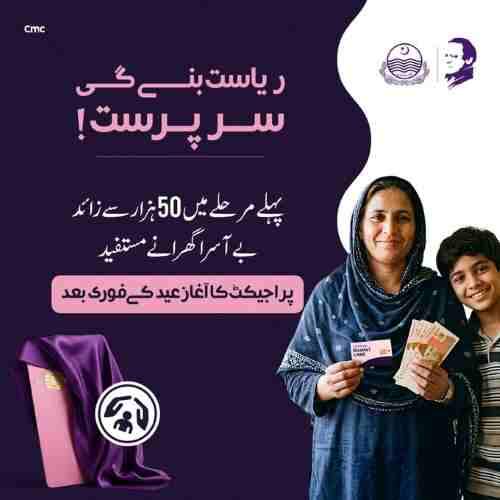
- Post-Eid-ul-Fitr Launch: The scheme was approved on March 5, 2026, and the official registration drive will commence immediately after Eid-ul-Fitr 2026.
- Digital Verification is Key: Your application will undergo biometric verification through NADRA and field checks to ensure transparency and that aid reaches only the deserving.
- Targeting 40,000+ Families: The first phase of the program aims to benefit over 40,000 deserving families across the Punjab province.
- Read More: PEF Phase 3 School List PDF Download (All Punjab District Wise)
- Read More: PEF Phase 3 Online Apply | School List, Last Date to Apply
- Read More: Shahbaz Sharif Ramzan Package (Registration PKR 13000)
- Read More: Maryam Nawaz 10000 Ramzan Package [Apply Online]
CM Punjab Rehmat Card (Apply Now) | 25K to 1 Lakh For Widow & orphans
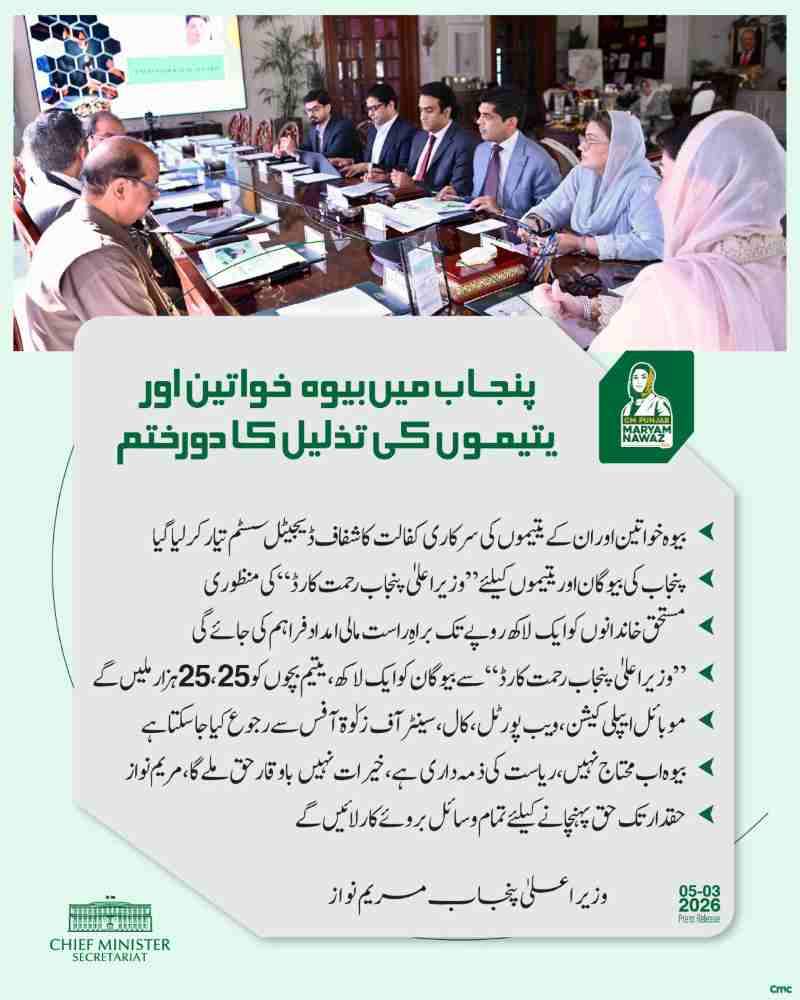
Table Of Contents
What is the CM Punjab Rehmat Card Scheme and Why Was It Launched?
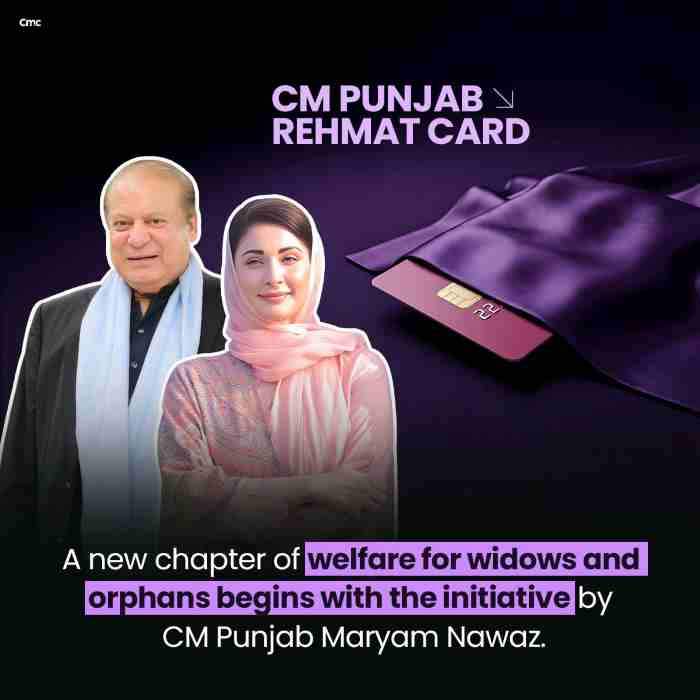
The CM Punjab Rehmat Card is a pioneering social welfare initiative approved by the Punjab government to provide direct financial assistance to widows and orphans, ensuring they are not left helpless and can live with dignity. The scheme represents a fundamental shift in how the state views its responsibility towards its most vulnerable citizens, moving from the concept of charity to one of rightful aid.
The program was formally approved by Chief Minister Maryam Nawaz during a special meeting focused on enhancing social protection for underprivileged segments of society. This initiative is not just about handing out money; it is a structured, transparent, and digitally-enabled system designed to empower families and foster financial independence.
Read More: CM Punjab Transplant Program (Free Liver, Kidney, & Heart Transplant)
Official Definition of the Rehmat Card
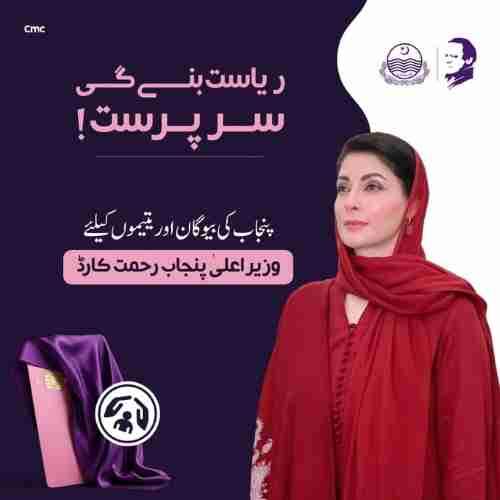
Officially, the CM Punjab Rehmat Card is a government-issued entitlement card that enables eligible widows and orphans to receive a substantial one-time financial grant. It is part of a broader vision to create a welfare state, or “Riyasat-e-Rehmat,” where the government acts as the guardian, or “Sarbaraah,” for those who have lost their primary earners.
The card itself functions as a key to accessing these funds, often through ATM-enabled banking channels, ensuring that the aid is delivered securely and directly to the beneficiaries without interference from middlemen.
Announcement and Approval Date
The scheme received its official approval on March 5, 2026, marking a significant milestone in Punjab’s social protection landscape. During a high-level meeting chaired by the Chief Minister, the final details of the program were solidified, including the financial packages, eligibility criteria, and the technological framework for transparent disbursement.
The approval came with clear directives to prepare the digital infrastructure, including the mobile application and web portal, to ensure a seamless launch immediately after Eid-ul-Fitr 2026.
The Vision of CM Maryam Nawaz: From “Be-sahara” to “Sarbaraah”
The driving philosophy behind the CM Punjab Rehmat Card is to transform the state’s role from a passive observer to an active guardian. The term “Rehmat” itself signifies compassion and mercy, core tenets of the initiative.
“No More Helpless”: The Core Philosophy Behind the Scheme
For decades, widows and orphans have often been referred to as “be-sahara” (helpless), dependent on the inconsistent charity of relatives or society. The new vision, as articulated by the Chief Minister, is to eliminate this helplessness.
The state is stepping in to declare that these individuals are no longer alone; they have a guardian in the form of the government. This is not about giving alms but about providing a “ba-izaat haq” (respectful right) that empowers them to stand on their own feet and potentially start small businesses or secure their immediate future.
How is the Rehmat Card Different from the Himmat Card or Khidmat Card?
Punjab has launched several social welfare cards in recent years, and it is crucial to distinguish between them to understand which scheme applies to your specific circumstances.
Rehmat Card vs. Himmat Card
The CM Punjab Himmat Card is specifically designed for persons with disabilities. It provides financial assistance to help cover the costs associated with medical care, rehabilitation, and assistive devices. In contrast, the Rehmat Card is exclusively for widows and orphans who have lost their family’s breadwinner. The target demographic is completely different, addressing distinct vulnerabilities.
Rehmat Card vs. CM Punjab Khidmat Card
The CM Punjab Khidmat Card is a more generalized social protection card aimed at providing financial support to low-income families across various categories.
While there may be some overlap in terms of income criteria, the Rehmat Card is a specialized, targeted intervention for a specific group: widows and orphans. It is designed to address their unique needs with a tailored financial package.
Rehmat Card vs. Minority Card
The CM Punjab Minority Card is a dedicated program for deserving families from minority communities, providing them with financial assistance. The Rehmat Card, on the other hand, is universal and inclusive. It is open to all widows and orphans residing in Punjab, regardless of their religion or community, ensuring that no one is left behind based on their faith.
Why Focus on Widows and Orphans? The Socio-Economic Rationale
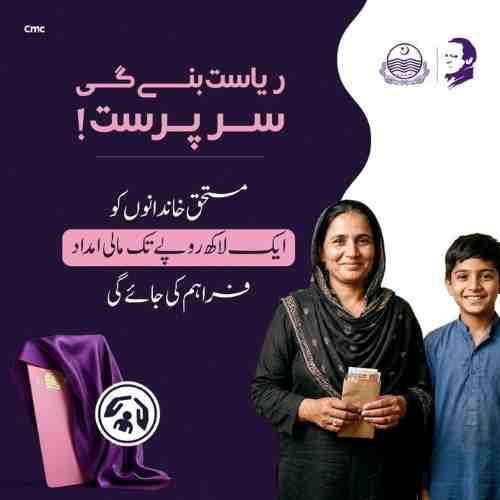
The focus on widows and orphans stems from their extreme vulnerability in a society where the family unit is the primary source of economic and social security. The loss of a husband or father often plunges a family into poverty, cutting off their primary source of income and leaving them without a safety net.
Women, in particular, may face barriers to entering the workforce due to lack of education, skills, or societal norms, while children are at risk of being pulled out of school to work. This scheme is a direct intervention to break this cycle of poverty, providing a capital base that can be used for sustainable livelihoods, such as starting a small home-based business, or for the education and marriage of daughters.
Is the Rehmat Card a Monthly Stipend or a One-Time Payment?
This is a critical distinction to understand. The CM Punjab Rehmat Card provides a one-time financial grant, not a recurring monthly stipend. The widow receives Rs. 100,000, and each eligible orphan receives Rs. 25,000.
The intention is to provide a substantial lump sum that can act as seed money for self-employment, cover large immediate expenses, or serve as a financial cushion to stabilize the family’s situation. It is designed for empowerment and capital injection rather than ongoing subsistence.
Which Government Department is Managing the Rehmat Card?
The primary department responsible for the implementation and management of the CM Punjab Rehmat Card is the Punjab Zakat and Ushr Department. They are the nodal agency for identifying beneficiaries, managing the registration process at their district offices, and overseeing the verification process.
However, the scheme is a collaborative effort, involving the Punjab Social Protection Authority (PSPA) for policy oversight, NADRA for biometric verification, and partner banks for the disbursement of funds through the ATM-enabled cards.
CM Punjab Rehmat Card Amount: How Much Money Will You Receive?
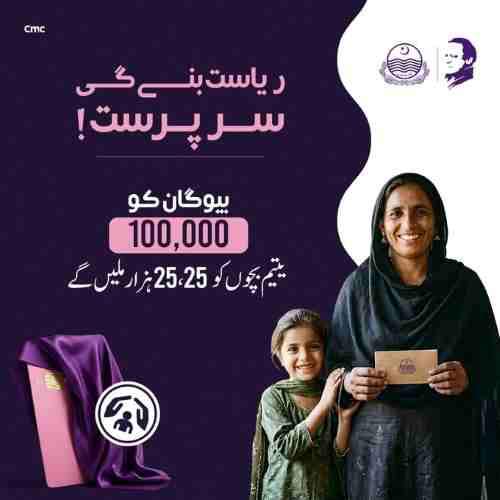
Understanding the exact financial benefits is the most common question for potential applicants. The CM Punjab Rehmat Card amount is structured to provide meaningful support to the entire family unit, recognizing the different needs of widows and their dependent children. The amounts were set after careful consideration to ensure they provide a significant boost to a family’s financial standing, potentially enabling them to invest in income-generating activities or secure their immediate future.
Financial Aid Breakdown: Widows, Orphans, and Family Max Limits
The financial assistance is calculated on a per-person basis, meaning a family with more orphans will receive a higher total grant. This ensures that the aid is proportionate to the family’s size and needs.
How Much Money Does a Widow Get?
Under the CM Punjab Rehmat Card scheme, an eligible widow will receive a one-time financial grant of Rs. 100,000. This amount is intended to provide her with a significant capital base. It can be used for a variety of purposes, such as starting a small home-based business (like tailoring, embroidery, or a small kiryana store), paying off urgent debts, or making necessary home improvements. The goal is to give her the means to generate a sustainable income and regain control over her economic future.
How Much Financial Aid is Provided for Each Orphan?
Each eligible orphaned child in the family will receive a financial grant of Rs. 25,000. This amount is specifically allocated for their welfare, which can include expenses related to their education, healthcare, nutrition, and clothing. The government recognizes that the cost of raising a child is significant, and this grant is designed to alleviate the financial burden on the widowed mother, ensuring the children’s needs are not neglected.
What is the Maximum Total Grant a Family Can Receive?
The maximum total grant a family can receive depends on the number of eligible orphans living with the widow. For example:
- A widow with one orphan receives: Rs. 100,000 + Rs. 25,000 = Rs. 125,000.
- A widow with two orphans receives: Rs. 100,000 + Rs. 50,000 = Rs. 150,000.
- A widow with three orphans receives: Rs. 100,000 + Rs. 75,000 = Rs. 175,000.
There is no official upper limit mentioned in the initial documentation, meaning a widow with multiple children will receive the cumulative amount for all verified orphans. This ensures larger families receive proportionally more support.
Is the Rehmat Card Amount a Loan or a Free Grant?
The CM Punjab Rehmat Card amount is a free grant, not a loan. Beneficiaries are not required to pay this money back to the government. It is a social welfare disbursement funded by the provincial treasury and the Zakat fund, designed to provide financial relief and empowerment without creating any future debt liability for the recipient. This is a critical point that distinguishes it from microfinance schemes.
Will the Money Be Transferred to a Bank Account or an ATM Card?
The money will be disbursed through a physical, ATM-enabled Rehmat Card. This card functions like a standard debit card and is linked to a special government account opened for the beneficiary. Once approved and verified, the card will be issued, and the funds will be loaded onto it. The beneficiary can then withdraw the cash in installments or as a lump sum from any ATM belonging to the designated partner banks. This method ensures transparency, reduces the risk of corruption, and gives the beneficiary direct control over their money.
Are There Any Service Charges or Deductions on the Payment?
There are no service charges or deductions on the CM Punjab Rehmat Card amount. The full entitled sum will be loaded onto the card. However, standard bank ATM transaction fees may apply if the beneficiary withdraws money from an ATM of a bank other than the issuing bank, after any free transaction limit is exhausted. Beneficiaries are advised to use ATMs of the bank that issued the card to avoid any potential small charges.
When Will the First Phase Payments Be Released?
Payments for the first phase of the CM Punjab Rehmat Card are scheduled to begin shortly after the formal launch of the scheme, which is planned for immediately after Eid-ul-Fitr 2026. The government aims to start disbursing funds to the first batch of verified and approved beneficiaries within weeks of the registration drive concluding for the initial phase. The exact date will be communicated through official channels, SMS notifications, and media announcements.
Who Qualifies for the CM Punjab Rehmat Card? Complete Eligibility Criteria Explained
Understanding the precise eligibility requirements for the CM Punjab Rehmat Card is essential before beginning the application process. The government has established clear criteria to ensure that assistance reaches the most deserving widows and orphans while preventing fraud and duplication of benefits. Meeting all these conditions is mandatory for successful enrollment in the program.
Residency Requirements: Proving Your Connection to Punjab
- Applicants must be permanent residents of Punjab province with verifiable proof
- Valid Computerized National Identity Card showing a Punjab address serves as primary proof
- Alternative documentation includes domicile certificates, permanent residence certificates, or longstanding utility bills
- Temporary residents or individuals living in other provinces are not eligible
- Families displaced from other provinces but now permanently settled in Punjab must provide proof of continuous residence
- Overseas Pakistanis with families in Punjab may have family members apply, but the widow herself must reside in Punjab
- Verification teams conduct physical address confirmation during field visits
Widow-Specific Eligibility Conditions
- Applicant must be a woman whose husband is deceased and not remarried
- Death certificate of the husband is absolutely mandatory documentation
- No upper age limit exists, meaning elderly widows are fully eligible
- Widows of government employees are generally disqualified due to pension and gratuity benefits
- The widow must not herself be a government employee receiving regular salary
- Remarried widows are ineligible as they have established new family structures
- Widows must have custody of or be responsible for their orphaned children
Orphan Eligibility Parameters
- An orphan is defined as a child who has lost their father
- Children may still have their living mother who serves as the primary applicant
- Each eligible orphan receives Rs.25,000 in addition to the widow’s grant
- Age limits are expected to follow standard dependent definitions, likely up to 18 years
- Children pursuing higher education may have extended eligibility, pending official guidelines
- B-Forms (Child Registration Certificates) are mandatory for every orphan child
- Children must be residing with and dependent upon the widowed mother
Income and Poverty Criteria Thresholds
- Total monthly household income must be less than Rs.50,000
- Proxy Means Test score from NADRA or BISP surveys should be 45 or lower
- Families with slightly higher PMT scores but demonstrated extreme poverty may be considered
- Income from all sources including the widow’s work, family support, and any benefits counts toward the total
- Ownership of significant assets may disqualify applicants regardless of reported income
- Families receiving other major government grants may face scrutiny for benefit duplication
- Self-declaration affidavits regarding income are subject to verification
Disqualifications and Exclusion Criteria
- Government employees and their widows are generally ineligible
- Families already receiving substantial benefits from other Punjab government programs
- Widows who have remarried and established new households
- Non-residents of Punjab province regardless of family connections
- Applicants with incomplete or fraudulent documentation
- Individuals who fail biometric verification or field inspection
- Families with undisclosed income sources that exceed the threshold
Minority Community Inclusion
The CM Punjab Rehmat Card program embraces religious inclusivity, with minorities fully eligible to apply. Key points for minority applicants include:
- No discrimination based on religion or community membership
- Same documentation requirements apply to all applicants
- Zakat funding sources may be supplemented by general revenue for non-Muslim beneficiaries
- Dedicated minority welfare programs exist separately but do not preclude Rehmat Card eligibility
- Union Council recommendations can support applications from remote minority communities
How Much Financial Assistance Does the CM Punjab Rehmat Card Provide?
The financial package under the CM Punjab Rehmat Card represents one of the most generous social protection interventions in Pakistan’s history, carefully calibrated to provide meaningful support that can transform family circumstances rather than merely offering temporary relief.
Detailed Breakdown of Grant Amounts
- Widows receive a one-time grant of Rs.100,000
- Each eligible orphan receives Rs.25,000
- A family with one orphan receives total assistance of Rs.125,000
- A family with two orphans receives total assistance of Rs.150,000
- A family with three orphans receives total assistance of Rs.175,000
- A family with four orphans receives total assistance of Rs.200,000
- No upper limit on the number of orphans eligible within one family
One-Time Payment Versus Monthly Stipend Distinction
Understanding the nature of the payment is crucial for financial planning:
- The grant is a single lump-sum payment, not a recurring monthly allowance
- Funds are loaded onto the card entirely at issuance
- Beneficiaries can withdraw money in multiple installments as needed
- The design supports capital investment and empowerment rather than ongoing subsistence
- Families requiring continuous support may be referred to other social protection programs
- Financial literacy guidance may be provided to maximize the impact of the lump sum
Strategic Uses for the Grant Amount
Beneficiaries can maximize the impact of their assistance through thoughtful allocation:
- Micro-enterprise startup: Rs.100,000 can establish small home-based businesses like tailoring, embroidery, poultry farming, or small kiryana stores
- Children’s education: Funds can cover school fees, uniforms, books, and tutoring for multiple years
- Healthcare investment: Purchase of essential medications, medical equipment, or health insurance
- Housing improvements: Basic home repairs, water connections, or sanitation facilities
- Debt elimination: Paying off high-interest loans from informal lenders
- Skills training: Enrollment in vocational training programs for sustainable income generation
- Marriage provision: Saving for daughters’ future marriage expenses
Comparison with Other Social Protection Programs
- BISP Kafaalat: Provides quarterly stipends of approximately Rs.9,000, significantly smaller than the Rehmat Card lump sum
- CM Punjab Himmat Card: Offers assistance for persons with disabilities, amount varies by disability category
- Zakat regular payments: Typically provide smaller, recurring amounts through local committees
- Emergency cash programs: Usually offer one-time amounts of Rs.10,000 to Rs.20,000 during crises
- Microfinance loans: Require repayment with interest, unlike the free Rehmat Card grant
- International comparison: Pakistani programs remain modest compared to developed nation benefits but represent significant progress
Economic Multiplier Effects of the Program
When 40,000 families receive substantial lump-sum payments in the first phase, the economic ripple effects extend throughout Punjab’s economy:
- Increased demand for local goods and services from small businesses
- Stimulation of home-based enterprise development
- Reduced reliance on expensive informal credit
- Improved educational outcomes leading to higher future earning potential
- Decreased healthcare costs through preventive care access
- Enhanced social stability through reduced economic desperation
- Community-level economic activity as beneficiaries purchase from local markets
Inflation Protection and Future Adjustments
The government has indicated that grant amounts may be reviewed periodically to account for:
- Inflation and erosion of purchasing power over time
- Expansion of program scope based on first-phase success
- Additional funding allocations in future provincial budgets
- Feedback from beneficiaries regarding adequacy of support
- Economic growth and increased government revenues
- Successful demonstration of program impact on poverty reduction
What Documents Are Required for CM Punjab Rehmat Card Registration?
Proper documentation forms the foundation of a successful application for the CM Punjab Rehmat Card. The verification process relies entirely on authentic, government-issued documents that establish identity, relationship, residency, and eligibility.
Primary Identification Documents
- Widow’s Computerized National Identity Card: Valid, original CNIC with Punjab address
- Deceased husband’s CNIC copy: Helps verify family tree and marital relationship
- Children’s B-Forms: Mandatory for every orphan child claiming the Rs.25,000 grant
- Adult orphans’ CNICs: Required for children who have reached age 18
- Guardian’s CNIC: If grandmother or other relative applies for orphans
Critical Relationship and Status Documents
- Husband’s death certificate: Official computerized certificate from Union Council
- Parents’ death certificates: Required if both parents deceased and guardian applies
- Nikahnama (marriage certificate): May be requested to verify marital relationship
- Guardianship certificates: Legal documentation if applying for orphans without mother
- Divorce documents: Not applicable for this scheme but may clarify status if questions arise
Residency Proof Documentation
- Domicile certificate: Official proof of permanent residence in Punjab
- Utility bills: Recent electricity, gas, or water bills in applicant’s name
- Rental agreement: Along with landlord’s CNIC copy if residing in rented property
- Union Council residence certificate: Alternative proof for rural areas
- Permanent residence certificate: Issued by local revenue authorities
Income and Poverty Verification Documents
- Income affidavit: Self-declaration of monthly household income
- Union Council income certificate: Official verification from local authorities
- BISP NSER data: PMT score information from National Socio-Economic Registry
- Employment verification: If widow works, employer certificate showing salary
- Pension documentation: If applicable, showing any survivor benefits received
Special Situation Documentation
- Disabled family members: Medical certificates if any family member has disability
- Educational enrollment: School certificates for older children to verify dependent status
- Medical records: For families with serious illness requiring ongoing care
- Police reports: In cases of unnatural death where death certificate may be delayed
- Court orders: For custody or guardianship in complex family situations
Document Preparation Checklist
Before visiting the application center or starting online registration:
- Gather all original documents in a secure folder
- Make multiple photocopies of every document
- Self-attest each photocopy with signature and date
- Organize documents by category for easy access
- Verify that all names are spelled consistently across documents
- Check expiration dates on CNICs and renew if necessary
- Ensure mobile number is active and registered in applicant’s name
- Prepare passport-sized photographs (4-6 copies)
Common Documentation Mistakes That Cause Rejection
- Submitting expired or cancelled CNICs
- Providing B-Forms with discrepancies in child’s name or parentage
- Missing death certificate or submitting uncertified copy
- Address mismatches between CNIC and other documents
- Illegible photocopies that cannot be verified
- Incomplete applications missing required documents
- Failure to self-attest copies as required
What to Do When Documents Are Missing or Lost
- Lost CNIC: File complaint with NADRA, obtain duplicate immediately
- Lost death certificate: Visit Union Council where death registered for duplicate
- Missing B-Form: Contact local NADRA office for replacement
- Expired documents: Renew before applying to avoid rejection
- Damaged documents: Obtain replacements from issuing authorities
- Name discrepancies: Secure affidavit explaining variations with supporting evidence
How to Apply for the CM Punjab Rehmat Card: Complete Step-by-Step Registration Guide
The government has established multiple application channels for the CM Punjab Rehmat Card to ensure accessibility for all eligible persons, regardless of their technological literacy or geographic location. Understanding each method allows applicants to choose the most convenient option.
Method One: Online Registration Through Official Web Portal
The digital application pathway offers convenience and speed for those comfortable with internet technology.
Step-by-Step Online Process:
- Wait for the official launch announcement after Eid-ul-Fitr 2026
- Visit the official CM Punjab Rehmat Card website when activated
- Locate and click the “New Registration” or “Apply Now” button
- Enter your 13-digit CNIC number without dashes
- Receive one-time password on mobile number registered with NADRA
- Enter OTP to verify your identity and proceed
- Complete the online application form with personal details
- Provide information about deceased husband and dependent children
- Upload scanned copies or clear photographs of all required documents
- Review all information for accuracy before final submission
- Submit application and immediately note the tracking number
- Save or print confirmation page for future reference
Method Two: Mobile Application Registration
The dedicated mobile app brings registration capability directly to smartphones.
Mobile Application Advantages:
- User-friendly interface designed for mobile screens
- Camera integration for direct document photograph capture
- Push notifications for application status updates
- Offline draft saving for completion when internet available
- Built-in help guides and tutorial videos
- Language options including Urdu for better comprehension
- Biometric verification capability through phone sensors
Download and Installation Process:
- Access Google Play Store or Apple App Store after official launch
- Search for “CM Punjab Rehmat Card” or “Go Punjab” app
- Verify the app is from official government developer account
- Download and install on your smartphone
- Open app and grant necessary permissions (camera, storage, location)
- Follow registration prompts identical to web portal process
Method Three: In-Person Registration at Zakat and Ushr Department Offices
Traditional applicants can receive face-to-face assistance at government offices.
Finding Your Nearest Registration Center:
- Visit official Zakat and Ushr Department website for office list
- Contact local Union Council for nearest center information
- Visit Deputy Commissioner office for departmental directions
- Use Google Maps to search “Zakat Office near me”
- Ask at local e-Khidmat Markaz for registration point locations
In-Person Application Process:
- Visit center during working hours with all original documents and photocopies
- Approach help desk or designated Rehmat Card counter
- Request application form and any guidance needed
- Complete form manually using black ink with clear handwriting
- Attach self-attested photocopies of all required documents
- Submit form and documents to designated official
- Provide biometric verification (fingerprint scanning) at the counter
- Receive manual receipt or token number as proof of submission
- Note expected timeline for verification and follow-up
Method Four: Registration Through Dedicated Call Center
The telephone helpline provides information and application assistance.
Call Center Services:
- Scheme information and eligibility guidance
- Nearest registration center location assistance
- Application status inquiries
- Complaint registration and issue resolution
- Document requirement clarification
- Technical support for online application issues
- Fraud reporting and scam prevention guidance
The official helpline number will be widely publicized through:
- Government news channels and press releases
- Official social media accounts
- Television and radio announcements
- Newspaper advertisements
- Union Council notice boards
- Mosque announcements in local communities
Registration Timeline and Important Dates
- Scheme approval date: March 5, 2026
- Official launch and registration opening: Immediately after Eid-ul-Fitr 2026
- Phase 1 registration window: Expected to remain open for several weeks
- Phase 1 beneficiary target: Over 40,000 deserving families
- Subsequent phases: Planned based on first-phase success and funding availability
- Last date announcement: Will be clearly communicated through all official channels
Tips for Successful Application Submission
- Apply as early as possible within the registration window
- Double-check all information for accuracy before submission
- Ensure mobile number provided is active and in your name
- Keep copies of everything submitted for your records
- Note your application tracking number in multiple places
- Be patient during peak traffic times immediately after launch
- Never pay anyone for application assistance or processing
- Report any suspicious individuals demanding money for registration
How Does the Verification Process Work for CM Punjab Rehmat Card Applications?
The verification system for the CM Punjab Rehmat Card employs multiple layers of scrutiny to ensure that only genuinely deserving families receive assistance while preventing fraud and duplication.
Stage One: Initial Document Scrutiny
- Submitted applications undergo preliminary review for completeness
- Missing or illegible documents trigger requests for resubmission
- Basic eligibility checks verify applicant meets category requirements
- Duplicate applications from same CNIC are flagged for review
- Automated systems check for obvious errors or inconsistencies
Stage Two: NADRA Biometric and Document Verification
- All CNICs and B-Forms are electronically verified against NADRA database
- Fingerprint biometrics match applicant identity to CNIC record
- Family tree verification confirms relationship between widow, deceased husband, and children
- Death certificate details cross-checked with NADRA death records
- Address verification confirms Punjab residency
- Photograph matching ensures applicant is genuine
Stage Three: PMT Score and Income Assessment
- Proxy Means Test scores retrieved from BISP NSER database
- Household income evaluated against Rs.50,000 threshold
- Asset ownership checks through available data sources
- Cross-verification with other social protection program databases
- Self-declared income compared with available indicators
- Scoring system prioritizes most deserving cases
Stage Four: Field Verification Visit
- Physical visit to applicant’s residence by verification team
- Confirmation of actual residence at provided address
- Visual assessment of living conditions and household composition
- Interview with applicant and family members
- Verification of children’s presence and status
- Photographs taken for records
- Neighbors may be consulted for additional verification
Stage Five: Final Approval and Beneficiary List Compilation
- All verification reports consolidated for review
- Approval committee evaluates borderline cases
- Final beneficiary list approved for card issuance
- Rejected applicants notified with reasons
- Appeal mechanism available for disputed rejections
- Waitlist created for potential inclusion in later phases
How to Check Your Application Status
Successful applicants can monitor their progress through:
- Online portal: Enter CNIC or tracking number on official website
- Mobile application: Status check feature within the app
- SMS service: Send CNIC to designated short code for automated response
- Call center: Speak with representative for status inquiry
- Zakat office visit: In-person inquiry at local office
Status Message Meanings:
- Submitted: Application received, awaiting initial review
- Under Document Verification: NADRA verification in progress
- Field Verification Scheduled: Team assigned for home visit
- Approved: All checks passed, card being prepared
- Rejected: Application did not meet criteria, reason provided
- Awaiting Documents: Additional documentation requested
Common Reasons for Application Rejection
- Incomplete or missing required documents
- Income exceeding prescribed threshold
- PMT score above allowable limit
- Failed biometric verification
- Address verification unsuccessful
- Duplicate benefits from other programs
- Government employment status
- Non-residency in Punjab
- Fraudulent or forged documents
- Application submitted after deadline
Appeals Process for Rejected Applications
If you believe your rejection was incorrect:
- Visit the Zakat office where you originally applied
- Request written explanation for rejection
- Gather additional documentation addressing the rejection reason
- Submit formal written appeal with supporting evidence
- Request reconsideration or re-verification if warranted
- Follow up regularly on appeal status
- Escalate to higher authorities if appeal ignored
How Will Beneficiaries Receive and Use the CM Punjab Rehmat Card?
Once applications are approved, beneficiaries enter the final phase of receiving and accessing their financial assistance through the CM Punjab Rehmat Card.
Approval Notification Methods
- SMS alert: Official message sent to registered mobile number
- Portal status update: Application status changes to “Approved”
- Newspaper lists: Beneficiary names published in local newspapers
- Union Council notice: Local authorities post beneficiary lists
- Mosque announcements: Community-level notifications in some areas
Card Collection Process
- Notification SMS specifies collection location and date
- Beneficiary must visit designated center in person
- Original CNIC required for identity verification
- Biometric confirmation at collection point
- Card handed over along with instruction pamphlet
- PIN mailed separately or set at ATM upon first use
- Beneficiary signs acknowledgment of receipt
Card Collection Locations
- Zakat and Ushr Department office where application submitted
- Designated partner bank branches
- e-Khidmat Markaz in each tehsil
- Mobile camps in remote areas
- Union Council offices in some districts
Card Features and Functionality
- ATM-enabled debit card from partner bank
- Linked to government-initiated account in beneficiary’s name
- Contains loaded grant amount (widow amount plus orphan amounts)
- Valid for withdrawals at any ATM of partner bank network
- May function at POS terminals for direct purchases
- Includes standard security features like chip and PIN
- Shows beneficiary name and program branding
How to Activate Your Card and Set PIN
- Visit any ATM of the issuing bank
- Insert card and follow on-screen instructions
- Select language preference
- Create new 4-digit PIN (avoid obvious combinations)
- Confirm PIN by entering again
- Complete activation transaction
- Test with small withdrawal to confirm functionality
- Memorize PIN, never share with anyone
Withdrawing Money from ATMs
- Locate nearest ATM of issuing bank (free transactions)
- Insert card and select language
- Enter PIN confidentially
- Select “Cash Withdrawal” option
- Choose account type (usually Current or Savings)
- Enter withdrawal amount
- Collect cash and count before leaving
- Decide whether to print receipt
- Take card back before leaving ATM
Managing Funds Wisely
Financial experts recommend strategies for maximizing grant impact:
- Withdraw only needed amounts, leave balance in account
- Create simple budget for how funds will be used
- Prioritize investments that generate ongoing income
- Avoid pressure from relatives requesting loans or gifts
- Consider opening separate savings account for long-term portion
- Seek financial literacy resources if available
- Document all expenditures for personal tracking
Lost or Stolen Card Procedures
If your card is lost or stolen:
- Immediately contact bank helpline to block card
- Report loss to nearest police station for documentation
- Visit issuing bank branch with CNIC and police report
- Request duplicate card issuance
- Pay any applicable nominal replacement fee
- Set new PIN upon receiving replacement card
- Monitor account for unauthorized transactions
ATM Transaction Problems and Solutions
Common ATM issues and resolutions:
- Card retained by machine: Contact bank immediately, note ATM location and time
- Money deducted but not dispensed: File complaint with bank, provide transaction details
- Incorrect balance shown: Check again after 24 hours, contact bank if persists
- Forgot PIN: Request PIN reset at bank branch with CNIC
- Card declined: Verify funds available, check card expiration date
- Machine out of service: Try another ATM or return later
What Is the Complete Timeline for CM Punjab Rehmat Card Implementation?
Understanding the program timeline helps applicants plan accordingly and manage expectations about when they might receive assistance.
Key Milestone Dates
- March 5, 2026: Formal scheme approval by Chief Minister Maryam Nawaz
- March-April 2026: Preparatory phase including IT infrastructure development
- Immediately after Eid-ul-Fitr 2026: Official launch and registration commencement
- Eid-ul-Fitr 2026 date: Varies according to lunar calendar, typically April or May
- Phase 1 registration period: Approximately 4-6 weeks after launch
- Verification phase: 4-8 weeks following registration closure
- First beneficiary payments: Within weeks of verification completion
- Phase 2 planning: Following evaluation of Phase 1 results
Phase 1 Coverage Details
- Target beneficiaries: Over 40,000 deserving families across Punjab
- Geographic distribution: All districts included based on poverty data
- Selection priority: Families with lowest PMT scores and greatest need
- Budget allocation: Significant provincial funds dedicated to first phase
- Monitoring mechanisms: Real-time tracking of disbursement and feedback
Factors Affecting Individual Timelines
Several variables influence how quickly individual applicants receive their cards:
- Application submission date within the registration window
- Completeness and accuracy of submitted documentation
- Speed of NADRA verification response
- Availability of field verification teams in your area
- Volume of applications in your district
- Any complications or additional document requests
- Bank partner capacity for card issuance
What to Do If You Miss the Phase 1 Deadline
If you are unable to apply during Phase 1:
- Monitor official announcements for Phase 2 dates
- Prepare all documents in advance for next phase
- Check if your Union Council will conduct registration camps
- Follow official social media for updates
- Register interest at local Zakat office for notifications
- Consider applying through alternative channels in next phase
Frequently Asked Questions About CM Punjab Rehmat Card
Can widows receiving BISP payments also apply for the Rehmat Card?
Yes, receiving BISP stipends does not automatically disqualify widows from Rehmat Card eligibility. The BISP NSER data provides PMT scores that help determine poverty level, which may actually support the application. However, families receiving other major provincial grants may face scrutiny to prevent excessive benefit duplication.
What happens to the orphan grant if the widow has no children?
If a widow has no dependent children, she receives only her personal Rs.100,000 grant. The orphan component applies only to families with eligible orphaned children. Childless widows remain fully eligible for the widow portion of the assistance.
Are widows whose husbands died recently eligible, or is there a waiting period?
There is no specified waiting period after the husband’s death. As long as the death certificate is official and the widow meets all other criteria, recent deaths do not disqualify applicants. However, the death must be registered with the Union Council for official documentation.
Can families with disabled members receive additional assistance through this scheme?
The Rehmat Card provides standard amounts regardless of disability status. However, families with disabled members may qualify separately for the CM Punjab Himmat Card. It is advisable to apply for all applicable programs, ensuring proper disclosure to prevent duplication issues.
How are funds protected from inflation if beneficiaries don’t withdraw immediately?
Funds loaded onto the card remain in a government-initiated bank account. While these accounts typically do not earn significant interest, the principal amount remains secure. Beneficiaries concerned about inflation should consider investing portions in income-generating activities rather than leaving all funds idle.
What recourse exists if a field verification team demands payment or favors?
Field verification teams are strictly prohibited from accepting any payments or favors from applicants. If any team member demands money, applicants should:
- Refuse to pay
- Note the team members’ names and vehicle number
- Immediately report the incident to the District Zakat Officer
- Call the official helpline to register complaint
- Provide written statement to anti-corruption authorities
Can widows apply if their husband died overseas and the death certificate is foreign?
Foreign death certificates must be attested by the Pakistani embassy in the country where death occurred and verified by the Ministry of Foreign Affairs in Pakistan. Additionally, NADRA must update records to reflect the death. This process can take time, so applicants should begin early.
Is there any provision for widows whose husbands are missing but not confirmed dead?
The scheme specifically requires death certificates, meaning missing persons cases where death is not legally established do not qualify. Families of missing persons may need to pursue legal declarations of death through courts before becoming eligible for such programs.
How does the government prevent wealthy individuals from fraudulently claiming benefits?
Multiple verification layers prevent fraud:
- NADRA biometric verification ensures identity authenticity
- PMT scores and income data identify wealthy households
- Cross-referencing with tax records and asset databases
- Field visits observe living conditions
- Community feedback mechanisms allow neighbors to report fraudulent claims
- Strict penalties for false declarations including legal action
What support exists for widows who need help understanding the application process?
The government has arranged multiple support mechanisms:
- Help desks at all Zakat offices with trained staff
- Union Council officials available for guidance
- Dedicated helpline with Urdu-speaking operators
- Instructional videos on official website and social media
- Community awareness sessions in rural areas
- Mosques and community centers as information points
Conclusion
The CM Punjab Rehmat Card represents a watershed moment in Pakistan’s social protection landscape, offering unprecedented financial support to widows and orphans while acknowledging the profound connection between economic security and health outcomes. By providing Rs.100,000 to widows and Rs.25,000 to each orphan, the program enables vulnerable families to access healthcare, improve nutrition, invest in income-generating activities, and restore their sense of dignity and hope for the future. The comprehensive verification system, multiple application channels, and transparent digital disbursement mechanism ensure that assistance reaches the truly deserving while preventing fraud and exploitation.
For eligible families, the path forward is clear: gather required documents, await the official post-Eid launch, and apply through the most convenient channel. The government’s commitment to “Riyasat-e-Rehmat” means that widows and orphans are no longer helpless individuals dependent on charity but rightful recipients of state support designed to empower rather than merely sustain. This program, if successfully implemented, will not only transform individual lives but also demonstrate the profound impact that thoughtful, adequately funded social protection can have on public health and community well-being across Punjab.
Frequently Asked Questions
What is the PMT score and why does it matter for Rehmat Card eligibility?
The Proxy Means Test score is a poverty measurement tool used by BISP and NADRA that calculates household socioeconomic status based on assets, housing conditions, education, and other indicators. A lower PMT score indicates greater poverty, and applicants typically need a score of 45 or below to qualify for the Rehmat Card.
Can widows apply if their children are over 18 but still dependent due to education?
Official age limits for orphans have not been definitively announced, but programs typically consider children up to 18 years or those still in higher education as dependents. When the official portal launches, specific guidance on student eligibility beyond 18 will be provided.
How long does the entire verification process typically take?
The complete verification process from application submission to card receipt may take 6-12 weeks depending on application volume, document completeness, NADRA response times, and field verification team availability in your area. Applicants should apply early and monitor status regularly.
What should widows do if they receive messages asking for money to expedite their application?
Any message or person demanding money for application processing, verification, or card issuance is engaging in fraud. The entire Rehmat Card process is completely free. Recipients should report such incidents immediately to the official helpline and local police.
Are widows eligible if their husband was not the sole earner and they already work?
Working widows are eligible as long as their total household income remains below the Rs.50,000 monthly threshold. The program aims to support families struggling financially regardless of whether the widow has some income, though higher earners will be disqualified.
Can the Rehmat Card be used for healthcare expenses at private hospitals?
Yes, if the card functions as a standard debit card and funds are withdrawn, beneficiaries can use the money for any purpose including private healthcare. However, for maximum impact, families should consider using funds strategically rather than depleting them on non-essential expenses.
What happens to the orphan grant if some children are from a previous marriage?
All children legally recognized as dependents of the deceased husband are eligible, regardless of whether they are from the current marriage or a previous one. Proper documentation establishing relationship to the deceased is essential in such cases.
Is there any provision for widows whose CNIC address differs from current residence?
If a widow has moved but not updated her CNIC, she must provide additional proof of current residence such as utility bills or rental agreement. Field verification will occur at the current address, so accurate residence information is essential.
How are disputes resolved if two different families claim the same orphan?
NADRA’s family tree data serves as the authoritative source for determining legal relationships. In complex custody situations, court orders establishing legal guardianship may be required before benefits can be released to the appropriate caregiver.
Can beneficiaries receive the money in installments rather than all at once?
The full amount is loaded onto the card at once, but beneficiaries control withdrawal timing. They can withdraw small amounts as needed rather than taking the entire sum immediately, effectively creating their own installment plan through disciplined ATM usage.

Add a Comment