
The Virtual Women Police Station (VWPS) is Pakistan’s first fully digital policing platform, launched by the Punjab Safe Cities Authority under the “Meri Awaz, Maryam Nawaz” initiative, providing a secure 24/7 channel for women to report harassment, domestic violence, and file FIRs without visiting a physical police station.
What you will learn from this guide:
- How to instantly report harassment using the 15 helpline and Women Safety App
- Step-by-step process for anonymous FIR registration and case tracking
- Real-life success stories and impact statistics of the VWPS
- All official contact methods including WhatsApp and video call
- Rights, protections, and support services available for every woman
Key Takeaways
- 24/7 Digital Access: Women can reach VWPS anytime via 15 helpline (press 2), WhatsApp, or the Women Safety App without visiting a police station.
- Anonymous Reporting Option: Complaints can be filed without revealing name or address, encouraging more women to speak up against abuse.
- Over 935,281 Cases Facilitated: The VWPS has received hundreds of thousands of complaints, with thousands of formal FIRs registered and arrests made.
- Complete Legal Lifecycle Support: From immediate response to FIR registration, investigation, trial guidance, and post-case follow-up.
- Globally Recognized Initiative: Shortlisted for the UN-backed WSIS Prize 2026, marking Pakistan’s leadership in digital safety for women.
- Read More: Property Transfer Procedure In Pakistan (New Updated)
- Read More: Maryam Nawaz All Scheme List – (Women Empowerment Initiatives)
- Read More: Maryam Nawaz All Scheme List – (Education Schemes List)
- Read More: Maryam Nawaz All Scheme List – (All Health Programs)
Virtual Women Police Station (VWPS) – Launch FIR, & Report Harassment Online
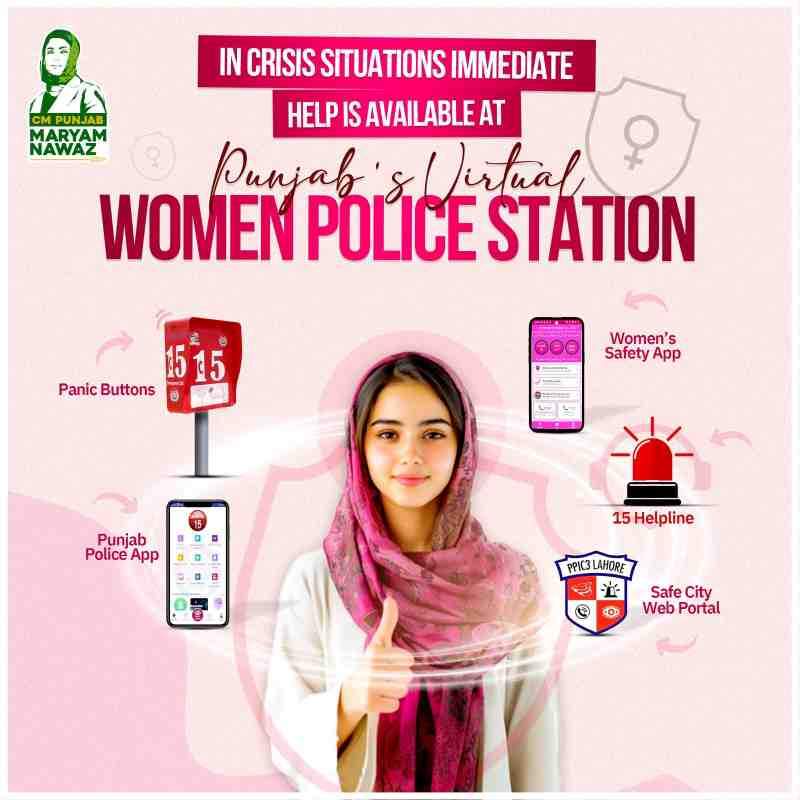
Table Of Contents
What is the Virtual Women Police Station (VWPS) and Why Was It Created?

The Virtual Women Police Station (VWPS) is a digital policing platform launched by the Punjab Safe Cities Authority (PSCA) under the direct supervision of the Chief Minister of Punjab. It was created to eliminate the physical, social, and psychological barriers that prevent women from reporting crimes. Many women hesitate to visit traditional police stations due to fear, stigma, lack of female officers, or concerns about confidentiality. The VWPS removes these obstacles by bringing police services directly to women through their mobile phones and computers.
The platform operates under the brand name “Meri Awaz, Maryam Nawaz” (My Voice, Maryam Nawaz), symbolizing a direct and compassionate channel for women to seek help. The name itself communicates that every woman’s voice matters and will be heard by the highest levels of government. The VWPS is not just a helpline; it is a complete virtual police station capable of registering First Information Reports (FIRs), dispatching field officers, and following cases through to trial.
Key reasons for the creation of VWPS:
- Fear of Judgment: Many women fear being blamed or shamed at physical police stations.
- Lack of Privacy: Traditional stations often lack private spaces for sensitive conversations.
- Limited Female Staff: Not all stations have female officers to handle cases appropriately.
- Geographic Barriers: Women in remote areas or with mobility issues cannot easily reach police stations.
- Time Constraints: Working women and mothers cannot afford long hours at a police station.
The VWPS addresses all these issues by offering confidential, remote, and immediate access to female police officers who are specially trained to handle sensitive cases. The platform is available to every woman in Punjab, regardless of her location or social status, making justice truly accessible for all.
The “Meri Awaz, Maryam Nawaz” Brand and Vision
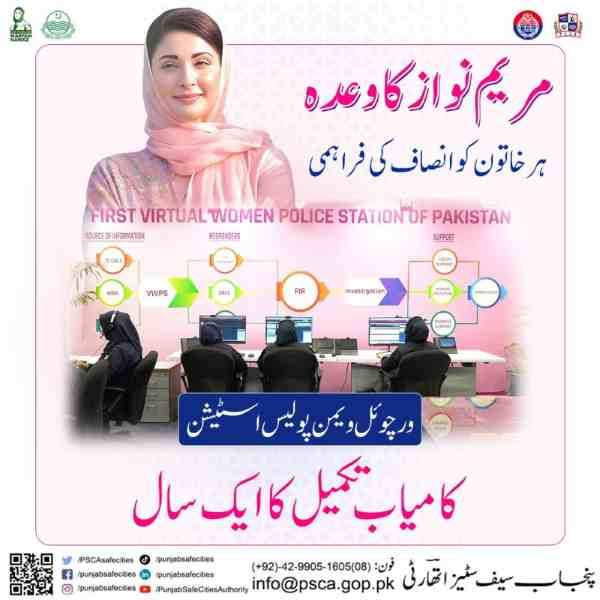
The branding “Meri Awaz, Maryam Nawaz” carries deep symbolic meaning. It represents a personal commitment from the Chief Minister to prioritize women’s safety and empowerment. The phrase translates to “My Voice, Maryam Nawaz,” positioning the Chief Minister as a protector and advocate for every woman who speaks up.
The vision behind this brand is to create a society where no woman remains silent out of fear. The VWPS is one of several initiatives launched under the Maryam Nawaz All Women Empowerment Initiatives, which also includes free Wi-Fi spots, vocational training programs, and legal aid services. The brand aims to normalize reporting of gender-based violence and to shift cultural attitudes that blame victims.
How VWPS Transforms Traditional Policing into Digital, Accessible Justice
Traditional policing requires physical presence, paperwork, and face-to-face interaction with officers who may not be trained in gender sensitivity. The VWPS transforms this model completely through digital channels. Women can now file complaints from their homes using their smartphones, without ever stepping foot inside a police station.
The transformation includes:
- Digital FIR Registration: Complaints are recorded electronically and immediately entered into the police system.
- Remote Evidence Submission: Photos, videos, and screenshots can be shared via WhatsApp or the app.
- Real-Time Tracking: Every complaint receives a unique e-tag number for online tracking.
- Virtual Case Management: Officers maintain continuous contact through calls, messages, and video conferences.
This digital transformation has significantly increased reporting rates, particularly for domestic violence and harassment cases that were previously underreported.
Read More: Maryam Nawaz All Scheme List – (Information Technology Programs)
Key Statistics at a Glance: Over 935,281 Cases Facilitated
The impact of the VWPS is evident in its numbers. Since its launch, the platform has facilitated over 935,281 cases, providing timely support and assistance to women across Punjab. This figure includes complaints, guidance requests, and formal FIR registrations.
Breakdown of key statistics:
- Complaints Received: Over 555,459 complaints in a single year
- Cases Resolved: 505,101 cases successfully resolved through reconciliation or legal action
- FIRs Registered: Thousands of formal FIRs have been registered based on women’s complaints
- Helpline Volume: The 15 helpline handles over 15 million calls annually across all services
- Arrests Made: Numerous arrests have been made based on VWPS reports, including domestic violence and harassment cases
These numbers demonstrate that the VWPS is not merely a symbolic initiative but a fully functional police station that delivers tangible results.
Understanding the Difference: VWPS vs. Traditional Physical Police Stations
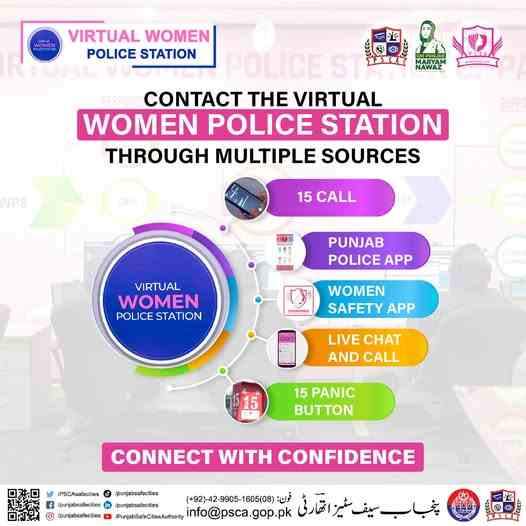
While traditional police stations remain operational, the VWPS offers distinct advantages that make it the preferred choice for many women. Understanding these differences helps women choose the right channel for their situation.
| Feature | Virtual Women Police Station | Traditional Police Station |
|---|---|---|
| Physical Presence Required | No | Yes |
| 24/7 Availability | Yes | Limited hours |
| Anonymous Reporting | Yes | No |
| Female Officers Only | Yes | Mixed |
| Remote Evidence Submission | Yes (photos, videos) | No |
| Real-Time Case Tracking | Yes (online portal) | Manual follow-up required |
| Privacy Level | High (private communication) | Variable |
The VWPS is ideal for initial reporting, anonymous tips, and non-emergency guidance. Traditional stations are still available for women who prefer in-person interaction or need to submit physical evidence.
What is the Official Emergency Helpline Number for the Virtual Women Police Station?

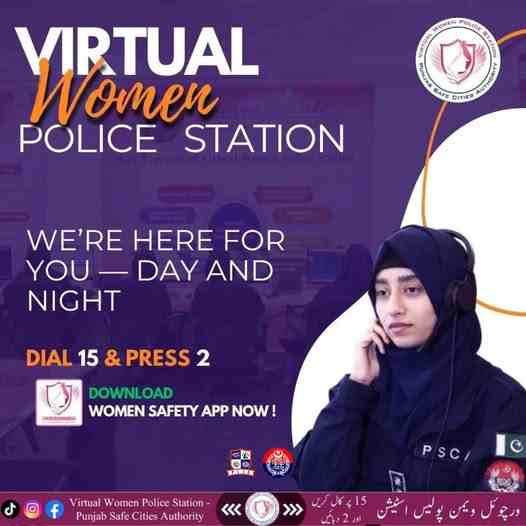
The official emergency helpline number for the Virtual Women Police Station is Dial 15 and press 2. This two-step process connects the caller directly to a trained female police officer at the VWPS. The number is toll-free and available from any phone, including landlines and mobile phones, across Punjab.
When a woman dials 15, she reaches the central police helpline. The interactive voice response (IVR) system then presents options. Pressing 2 immediately routes the call to the VWPS desk, where a female officer answers. This system ensures that women do not have to explain their situation to multiple people or navigate complex menus.
Alternative contact methods include:
- WhatsApp: 03070000015 for voice, video, and text messaging
- Women Safety App: Live chat and video call features
- PSCA Public Safety App: Available on iOS and Android
- Web Portal: Online complaint submission through the PSCA website
The 15 helpline is the fastest way to get immediate police assistance. For non-emergency situations, women can use the app or WhatsApp to file complaints without urgency.
Does the 15 Helpline Use an IVR System to Route Calls to VWPS?
Yes, the 15 helpline uses an interactive voice response (IVR) system to efficiently route calls to the appropriate department. When a woman dials 15, the IVR system announces the available options. Pressing 2 is the dedicated command for the Virtual Women Police Station.
The IVR system is designed to be simple and intuitive. The prompts are delivered in Urdu and English to ensure accessibility for all callers. The entire process takes less than ten seconds, minimizing wait time during emergencies.
What Happens After You Dial 15 and Press 2?
After dialing 15 and pressing 2, the call is automatically transferred to a VWPS female officer. The officer will identify herself and ask for basic information about the situation. The caller is not required to provide her name or address if she wishes to remain anonymous, although this may limit the police’s ability to take immediate action.
The officer will assess the severity of the situation:
- Immediate Danger: The officer will dispatch police to the caller’s location using real-time location data.
- Non-Emergency: The officer will guide the caller through the complaint filing process.
- Counseling Need: The caller may be referred to the 1043 helpline for psychological support.
After the call, the complaint is logged into the system, and the caller receives a confirmation message with an e-tag number for tracking.
Is the Helpline Available 24/7?
Yes, the 15 helpline with the VWPS option is available 24 hours a day, 7 days a week, 365 days a year. The VWPS operates in three rotating shifts, each staffed by trained female police officers and IT support personnel. This round-the-clock availability ensures that women can seek help at any time, whether it is 3:00 PM or 3:00 AM.
The night shift is particularly important because domestic violence often escalates during late hours when families are together and tensions run high. Women trapped in abusive homes can wait until the abuser is asleep to make a discreet call for help.
Case Study: How a Single Call to 15 and Press 2 Led to the Arrest of an Accused
In Toba Tek Singh, a woman suffering from prolonged domestic violence called 15 and pressed 2 to reach the VWPS. She reported that her husband had subjected her to physical abuse over several months, and the situation was escalating dangerously. The VWPS officer recorded the complaint, registered an FIR, and dispatched local police to the woman’s location. The husband was arrested within hours of the call.
This case demonstrates the speed and effectiveness of the VWPS. The woman did not have to visit a police station, file paperwork, or wait for days. A single phone call initiated a complete legal process that led to the arrest of the accused. Cases like this have been reported from multiple districts across Punjab, including Lahore, Multan, and Faisalabad.
How Can I Report Harassment Online Without Visiting a Police Station?
VWPS offers four primary digital channels to report harassment: the 15 helpline (press 2), the Women Safety App, the Punjab Police mobile app, and the Safe City web portal. All four channels are free, confidential, and available 24/7. Women can choose the channel that best suits their comfort level and the urgency of the situation.
Each channel has specific strengths:
- 15 Helpline: Best for immediate emergencies and real-time voice communication.
- Women Safety App: Best for text-based reporting, live chat, and video calls.
- WhatsApp (03070000015): Best for sending photos, videos, and screenshots as evidence.
- Web Portal: Best for detailed complaints that require typing or document uploads.
Women do not need to visit a police station at any stage of the reporting process. Everything from initial complaint to FIR registration and case follow-up can be done remotely. However, in cases requiring physical evidence collection or forensic examination, the VWPS may arrange for a female officer to visit the woman’s home.
What is the Step-by-Step Process for Reporting a Crime on the VWPS Web Portal?
The VWPS web portal provides a structured interface for filing detailed complaints. Follow these steps to report a crime online:
- Access the Portal: Open the official PSCA feedback portal using any web browser on a computer or smartphone.
- Select Complaint Type: Choose from categories such as harassment, domestic violence, cybercrime, child abuse, or other.
- Fill in Incident Details: Provide the date, time, and location of the incident. Be as specific as possible.
- Describe the Incident: Write a clear description of what happened. Include names of perpetrators and witnesses if known.
- Upload Evidence: Attach photos, videos, screenshots, or documents that support the complaint.
- Submit Contact Information: Provide a mobile number and optional email address for follow-up. Anonymous submissions are possible by leaving name fields blank.
- Receive Confirmation: After submission, a confirmation message with an e-tag number is sent via SMS or WhatsApp.
- Track Progress: Use the e-tag number to log into the tracking portal and check the status of the complaint.
The entire process takes approximately 10 to 15 minutes for a detailed complaint. Simpler complaints can be submitted in under five minutes.
How to Use Live Chat for Immediate Text-Based Reporting
The Women Safety App includes a live chat feature that allows women to text with a VWPS representative in real time. This feature is ideal for situations where speaking aloud is not safe, such as when the abuser is nearby. The live chat is staffed 24/7 by female officers who can guide the user through the reporting process.
To use live chat:
- Download the Women Safety App from the Google Play Store or Apple App Store.
- Register using your mobile number (one-time password verification).
- Navigate to the live chat section.
- Type your message and send it to initiate a conversation.
- Share photos or videos directly within the chat if needed.
The live chat is not recommended for immediate emergencies because typing takes longer than speaking. In emergency situations, dialing 15 and pressing 2 is always faster.
How to Initiate a Video Call with a Female Police Officer for Real-Time Reporting
The Women Safety App also supports video calling, allowing women to show their environment and injuries directly to a VWPS officer. Video calls provide visual evidence that can be captured as screenshots or recordings for the case file. The feature is particularly useful for domestic violence situations where injuries need to be documented.
To initiate a video call:
- Open the Women Safety App and log in.
- Tap the video call icon on the home screen.
- Wait for a VWPS officer to accept the call.
- Show your surroundings and any visible injuries as directed by the officer.
- Follow the officer’s guidance on next steps.
The video call feature requires a stable internet connection. For users with poor connectivity, the voice call option via 15 helpline is more reliable.
Can I Report Incidents on Behalf of Someone Else?
Yes, the VWPS allows family members, friends, or concerned citizens to report incidents on behalf of a woman who may be unable to report herself. This includes cases involving minors, elderly women, or women with disabilities. The reporter can provide the victim’s information and describe the situation.
However, the VWPS will need to verify the victim’s identity and consent before taking formal action. In cases where the victim is in immediate danger, police will be dispatched to her location regardless of consent. Anonymous reporting on behalf of others is also permitted.
Can I File a Complaint Anonymously Through the Virtual Women Police Station?
Yes, the VWPS platform is specifically designed to allow women to share their problems with complete privacy. Women are not required to share their name or address if they wish to remain anonymous. This feature is critical for encouraging victims who fear retaliation, social stigma, or family pressure to come forward.
Anonymous complaints can be filed through any channel: the 15 helpline, the Women Safety App, WhatsApp, or the web portal. When filing anonymously, the VWPS officer will still record the complaint and investigate if sufficient details are provided. However, anonymous complaints may have limitations in terms of police action because the identity of the victim cannot be verified.
What Level of Anonymity is Guaranteed When Filing an Anonymous Report?
The VWPS guarantees that personally identifiable information will not be shared with any third party without the complainant’s consent. When a woman chooses to report anonymously, the system does not record her name, CNIC number, or home address. Her phone number may still be visible to the system for follow-up purposes, but this information is kept confidential within the VWPS.
The VWPS follows strict data protection protocols to ensure anonymity:
- End-to-End Encryption: All communications are encrypted.
- Access Restriction: Only authorized VWPS officers can view complaint details.
- No Third-Party Sharing: Information is never shared with external organizations.
- Secure Servers: All data is stored on secure government servers.
Women should understand that complete anonymity may limit the police’s ability to take action. For example, an anonymous report of domestic violence cannot lead to an arrest because the victim’s identity is needed to file charges.
Will My Anonymity Affect the Police’s Ability to Investigate the Case?
Yes, anonymity can affect the investigation. The police need to know the identity of the victim to file an FIR, issue summons, or make arrests. Without a verified victim, the case may be classified as a “general complaint” rather than a criminal case.
However, anonymous reports serve an important purpose. They allow women to test the system, seek guidance, and gather evidence before deciding to reveal their identity. The VWPS encourages women to start with anonymous reporting if they are unsure, and then reveal their identity once they feel safe and confident.
How Does VWPS Balance the Need for Anonymity with the Legal Requirements of an FIR?
An FIR is a legal document that requires the complainant’s identity to be recorded. The VWPS cannot register an anonymous FIR. However, the VWPS can guide an anonymous complainant through the process of deciding to file a formal FIR. The officer can explain the legal implications, answer questions, and provide emotional support.
If the woman later decides to file an FIR, the VWPS can convert the anonymous complaint into a formal case. The woman’s identity will then be recorded, but all previous communications remain confidential. This two-stage process—anonymous reporting followed by formal FIR—is designed to build trust and encourage women to take the final step toward justice.
Real Story: How Anonymity Encouraged a Woman to Report Harassment
A woman in Lahore experienced workplace harassment but feared losing her job if she reported it. She used the Women Safety App’s live chat feature anonymously to describe the situation. The VWPS officer provided legal guidance and explained her rights under workplace harassment laws. After several anonymous conversations, the woman felt empowered to reveal her identity and file a formal complaint. The VWPS then registered an FIR, and the perpetrator was investigated.
This story illustrates the power of anonymous reporting as a gateway to formal justice. Without the anonymity option, this woman might never have come forward at all.
How Do I Register an FIR Digitally via the Virtual Women Police Station?
To register an FIR digitally, a woman can call 15 and press 2 or use the app’s video call feature. A female officer will guide her through the process, ask for details of the incident, and enter the information into the official police system. Upon filing, the complainant receives a WhatsApp notification with an e-tag number for tracking.
The digital FIR process mirrors the traditional FIR process but without the physical paperwork. The same legal standards apply. The FIR is a formal document that initiates a criminal investigation. Once registered, the police are legally obligated to investigate and take appropriate action.
Steps for digital FIR registration:
- Contact VWPS via helpline, app, or WhatsApp.
- Request to file an FIR (not just a general complaint).
- Provide a detailed statement of the incident.
- Share any available evidence (photos, videos, witness names).
- Receive confirmation and an e-tag number.
- The FIR is sent to the relevant police station for investigation.
- The complainant receives updates as the case progresses.
The entire process can be completed within 30 to 60 minutes, depending on the complexity of the case.
What is the Difference Between an Online Complaint and a Formal FIR?
An online complaint is an informal report that alerts the VWPS to an issue but does not carry legal weight. A formal FIR (First Information Report) is a legally binding document that compels the police to investigate and take action. The key differences are:
| Aspect | Online Complaint | Formal FIR |
|---|---|---|
| Legal Status | Informal | Legally binding |
| Police Obligation | No obligation to investigate | Mandatory investigation |
| Court Admissibility | Not admissible as evidence | Admissible in court |
| Arrest Authority | Police cannot arrest based on complaint | Police can arrest based on FIR |
| Anonymity Possible | Yes | No |
Women should understand this distinction. For serious crimes like assault, rape, or domestic violence, filing a formal FIR is essential for achieving justice.
Can I Download a Copy of the Digitally Registered FIR for My Records?
Yes, after an FIR is digitally registered, the complainant receives a download link via WhatsApp or SMS. She can download the FIR as a PDF file for her personal records. The digital FIR is legally equivalent to a paper FIR and can be presented in court if needed.
The VWPS also maintains a permanent digital record of every FIR. Complainants can access their FIR at any time by logging into the tracking portal with their e-tag number.
How Does the Post-FIR Follow-Up Service Work for Digital FIRs?
The VWPS does not stop at FIR registration. The platform offers a comprehensive post-FIR follow-up service to ensure that cases progress through the legal system. After an FIR is registered, the VWPS officer remains in contact with the complainant to provide updates, answer questions, and coordinate with the investigating officer.
Post-FIR services include:
- Legal Consultation: Explaining court procedures and legal rights.
- Case Progress Updates: Informing the complainant about investigation milestones.
- Appointment Coordination: Arranging meetings with investigation officers.
- Trial Support: Guiding the complainant through the court process.
- Safety Checks: Regular calls to ensure the complainant’s safety.
This continuous support is unique to the VWPS. Traditional police stations rarely offer post-FIR follow-up, leaving victims to navigate the complex legal system alone.
What is the Difference Between the 15 Helpline and the 1043 Helpline for Women?
The 15 helpline is a dedicated emergency number for immediate police response, while 1043 is the Punjab Women’s Toll-Free Helpline for non-emergency counseling, legal advice, and socio-economic support. Both numbers are important, but they serve different purposes.
| Feature | 15 Helpline (Press 2) | 1043 Helpline |
|---|---|---|
| Purpose | Emergency police response | Counseling and guidance |
| Response Type | Dispatch police, register FIR | Provide information, referrals |
| Availability | 24/7 | Business hours |
| Staff | Police officers | Counselors, social workers |
| Best For | Immediate danger, crimes in progress | Legal questions, emotional support |
Which Helpline Should I Call for Immediate Danger?
Call 15 and press 2 for any situation involving immediate danger, such as an ongoing assault, domestic violence escalation, or street harassment. The VWPS will dispatch police to your location immediately.
Which Helpline Should I Call for Emotional Support and Legal Guidance?
Call 1043 for questions about legal rights, referrals to shelters, psychological counseling, or socio-economic support. The 1043 helpline is staffed by trained counselors who can provide non-police assistance.
Are the 15 and 1043 Helplines Integrated?
Yes, the two helplines work together. If a woman calls 1043 and the situation escalates into an emergency, the 1043 counselor can transfer the call directly to the VWPS or call 15 on the woman’s behalf. This integration ensures seamless support regardless of which number the woman dials first.
What Types of Crimes Can Be Reported at the Virtual Women Police Station?
Women can report a wide range of crimes including domestic violence, harassment (street, workplace, or online), cybercrime, child abuse, acid attacks, rape, and even attempted murder. The VWPS is equipped to handle all crimes that affect women, regardless of severity.
Domestic Violence
Domestic violence includes physical, emotional, psychological, and economic abuse by a family member, typically a spouse. The VWPS treats domestic violence as a serious crime. Women can report ongoing abuse, past incidents, or even threats of future violence.
Types of domestic violence handled:
- Physical assault (hitting, slapping, pushing)
- Emotional abuse (insults, threats, isolation)
- Economic abuse (withholding money, preventing work)
- Forced confinement (locking in a room)
Street Harassment
Street harassment includes unwanted comments, gestures, following, or physical contact in public spaces. Women can report harassment by unknown individuals, even if they do not know the perpetrator’s name. The VWPS will document the incident and, if sufficient evidence exists, attempt to identify the harasser using CCTV footage.
Workplace Harassment
Workplace harassment includes unwanted sexual advances, discriminatory comments, or hostile work environments. The VWPS coordinates with the relevant authorities to investigate workplace complaints. Women can file complaints against colleagues, supervisors, or even clients.
Cybercrime and Online Threats
Cybercrime is one of the fastest-growing categories of reports. Women can report:
- Online harassment (threatening messages, doxxing)
- Revenge porn (non-consensual sharing of intimate images)
- Identity theft (fake profiles using the woman’s photos)
- Cyberstalking (persistent unwanted online contact)
The VWPS works with cybercrime units to trace IP addresses and identify anonymous perpetrators.
Child Abuse
Women can report child abuse on behalf of a minor, including physical abuse, sexual abuse, or neglect. The VWPS treats child abuse reports with the highest priority and will immediately involve child protection services.
Acid Attacks and Attempted Murder
Acid attacks and attempted murder are among the most severe crimes reported to the VWPS. The platform has a specific protocol for these cases:
- Immediate dispatch of police and medical services
- Preservation of forensic evidence
- Priority FIR registration
- Coordination with specialized investigation units
Rape and Sexual Assault
Rape and sexual assault reports are handled with extreme sensitivity. The VWPS ensures that the complainant speaks only with female officers and is provided with medical and psychological support. The complainant’s identity is kept confidential throughout the process.
What Should I Do If I Am Facing Domestic Violence Right Now?
If you are in immediate danger, call 15 immediately and press 2. If it is safe to do so, open the Women Safety App and use the SOS button or live chat to share your location and situation with the VWPS. Do not wait. Do not hope that the violence will stop on its own. Every minute counts in domestic violence situations.
Step-by-step immediate action plan:
- Get to a Safe Space: If possible, move to a room with a lock or an exit.
- Dial 15 and Press 2: Do this even if you cannot speak aloud. The operator can hear what is happening.
- Use the SOS Button: If you have the app installed, press the SOS button to send an automatic alert with your location.
- Do Not Provoke: Avoid confronting the abuser while waiting for help. Your safety is the priority.
- Follow Police Instructions: When police arrive, cooperate fully. Tell them everything.
Case Study: How VWPS Saved a Woman from Being Burned Alive
A woman in Multan called the VWPS after her husband doused her with kerosene and threatened to set her on fire. She managed to lock herself in a bathroom and call 15. The VWPS officer stayed on the line, keeping the woman calm while dispatching police to her location. Police arrived within minutes, arrested the husband, and rescued the woman. She received medical treatment for minor burns and was placed in a shelter. The husband was charged with attempted murder.
Will VWPS Dispatch a Female Police Officer to My Home?
Yes, whenever possible, the VWPS dispatches female police officers to the location. However, in remote areas or during night shifts, male officers may be dispatched. In such cases, the VWPS will ensure that a female officer is available by phone to support the complainant throughout the police interaction.
What Immediate Actions Does VWPS Take to Ensure Your Safety?
Upon receiving a domestic violence report, the VWPS takes the following actions:
- Location Tracking: The caller’s location is identified using mobile network data or app GPS.
- Police Dispatch: The nearest police patrol is sent to the location.
- Ambulance Request: If injuries are reported, an ambulance is dispatched.
- Protective Order: The VWPS can request a protective order from a magistrate to keep the abuser away.
- Shelter Arrangement: If the woman cannot safely return home, the VWPS arranges placement in a women’s shelter.
Is the Virtual Women Police Station Available 24/7 for Emergency Assistance?
Yes, the VWPS is a 24/7 digital service, staffed by highly trained, IT-graduate female police officers working in three rotating shifts to ensure round-the-clock coverage. The platform never closes. Whether it is a public holiday, a weekend, or the middle of the night, VWPS officers are always available to answer calls and respond to messages.
What Are the Response Times for the VWPS During Day vs. Night Hours?
Response times are consistent across all shifts. Calls to 15 and press 2 are answered within an average of 15 seconds. Live chat messages receive a response within 1 minute. Video calls are answered within 30 seconds. The VWPS maintains the same staffing levels during day and night shifts to ensure no reduction in service quality.
How Does the 24/7 Availability of VWPS Benefit Working Women?
Working women often cannot visit police stations during business hours due to job commitments. The 24/7 availability of VWPS allows them to report crimes after work, during lunch breaks, or even during work hours without taking time off. A woman can discreetly file a complaint from her office computer or phone without anyone knowing.
Does the VWPS Have a Dedicated Team for Night-Shift Emergencies?
Yes, the night shift team is specially trained to handle the unique challenges of nighttime emergencies. Domestic violence often escalates at night when families are together and alcohol consumption may be a factor. The night shift team is experienced in calming distressed callers and coordinating with police patrols in low-light conditions.
Is There a Live Chat Feature for Reporting Non-Emergency Situations?
Yes, the Women Safety App and the PSCA Public Safety App feature a live chat function that allows women to text with a VWPS representative for non-emergency reporting or to seek information. Live chat is ideal for situations where speaking aloud is not safe or when the woman prefers writing over speaking.
When is it Appropriate to Use Live Chat vs. Calling 15?
Use live chat for:
- Asking legal questions
- Seeking general information about the VWPS
- Reporting incidents that happened in the past
- Situations where speaking aloud would alert the abuser
Call 15 and press 2 for:
- Ongoing emergencies
- Immediate danger situations
- Cases requiring police dispatch
- Situations where typing would be too slow
How Does the Live Chat Feature Ensure User Privacy and Data Security?
All live chat conversations are encrypted end-to-end. The chat logs are stored on secure servers with access restricted to authorized VWPS officers. Users are not required to provide their real names. Chat sessions can be conducted entirely anonymously. The VWPS does not share chat transcripts with any third party without the user’s explicit consent.
Can I Send Photos, Videos, or Screenshots as Evidence Through Live Chat?
Yes, the live chat feature supports media sharing. Users can send photos of injuries, screenshots of threatening messages, or videos of abusive behavior directly within the chat. These media files become part of the complaint record and can be used as evidence in court.
What Are the Official Contact Methods for the Punjab Women Safety App?
You can search for “Punjab Police – Women Safety App” on the Google Play Store or “PSCA – Public Safety” on the Apple App Store to download the application. Both versions are free and available worldwide.
Is the Women Safety App Available for Both Android and iOS?
Yes, the Women Safety App is available for both Android and iOS devices. The Android version can be downloaded from the Google Play Store. The iOS version is available on the Apple App Store. Both versions offer identical features, including SOS alerts, live chat, video calling, and location sharing.
What Are the Key Features of the Women Safety App?
The Women Safety App includes the following features:
- SOS Panic Button: One-tap alert sends location to police and emergency contacts.
- Live Chat: Real-time text communication with VWPS officers.
- Video Call: Face-to-face interaction with female officers.
- Safe Journey Planner: Plan routes through well-lit, monitored areas.
- Mark Safe/Unsafe Locations: Community-sourced safety ratings for public places.
- Emergency Contact List: Pre-programmed numbers for police, ambulance, and family.
- Evidence Upload: Send photos and videos directly to the VWPS.
- Case Tracking: Check the status of filed complaints.
How Do I Set Up My Profile and Emergency Contacts on the App?
After downloading and installing the app, follow these steps:
- Open the app and tap “Register.”
- Enter your mobile number and verify with the one-time password sent via SMS.
- Create a profile with your name (optional for anonymous use).
- Add emergency contacts (family members or friends) from your phone’s contact list.
- Enable location permissions so the app can share your location during emergencies.
- Test the SOS button to ensure it works correctly.
The entire setup process takes less than five minutes.
Are There Panic Buttons Installed in Public Places for Women’s Safety in Punjab?
Yes, as part of the Safe City project, panic buttons have been installed at various public locations across Punjab, including universities, parks, markets, and bus stops. These physical panic buttons are connected directly to the PSCA command center. When pressed, they trigger an immediate police response and activate nearby CCTV cameras.
How Do I Use the Panic Button Feature on the Women Safety App?
The app’s virtual panic button is located on the home screen. To use it:
- Open the Women Safety App.
- Tap the large red SOS button.
- The app automatically sends an alert to the VWPS with your real-time GPS location.
- The app also sends SMS alerts to your pre-programmed emergency contacts.
- The VWPS will call you back within seconds to assess the situation.
The panic button works even if your phone screen is locked. Some Android phones allow you to trigger the SOS by pressing the power button multiple times.
What Happens When a Panic Button is Pressed?
When a panic button is pressed (either physical or virtual):
- The VWPS command center receives an immediate alert.
- The user’s location is displayed on a map.
- CCTV cameras in the area are focused on the location.
- The nearest police patrol is dispatched.
- The user receives a confirmation call from a VWPS officer.
- Emergency contacts are notified via SMS.
Does the Panic Button Automatically Notify My Emergency Contacts?
Yes, when you press the panic button, the app sends automated SMS messages to all pre-programmed emergency contacts. The message includes your current location and a request for assistance. This feature ensures that your family and friends are aware of your situation even if you cannot call them directly.
How Can I Use Video Calls to Speak with a Female Police Officer at VWPS?
The PSCA Public Safety App allows you to initiate a video call with a female officer at the VWPS, providing a face-to-face interaction for reporting sensitive issues from the safety of your home. Video calls are particularly useful for cases where visual evidence is important, such as visible injuries or the condition of a living space.
Is the Video Call Feature Available for All Types of Crimes?
Yes, the video call feature is available for all types of crimes. However, for emergency situations involving immediate danger, calling 15 and pressing 2 is faster and more reliable than initiating a video call through the app, which requires a stable internet connection.
How Does VWPS Use Video Calls for Real-Time Evidence Gathering?
During a video call, the VWPS officer can:
- Observe injuries and direct the user to capture specific angles.
- Record the video call (with the user’s consent) as evidence.
- Guide the user through documenting the scene of the incident.
- Assess the user’s emotional state and provide immediate support.
- Dispatch police to the location visible in the video.
Can I Request a Video Call if I Have a Hearing or Speech Impairment?
Yes, the VWPS supports sign language video calls for women with hearing or speech impairments. The app includes a specific option for sign language calls, which connects the user to a VWPS officer trained in sign language. This service has already helped rescue a mute girl from domestic violence in Rawalpindi.
Case Study: How a Video Call Helped Secure a Domestic Violence Arrest
A woman in Toba Tek Singh used the video call feature to show a VWPS officer the bruises on her arms and face. The officer recorded the video call and used it as evidence to register an FIR. The video evidence was so compelling that the court issued an arrest warrant within 24 hours. The husband was arrested and charged with assault.
How Do I Track the Progress of My Online Complaint with the VWPS?
After your complaint is registered, you will receive a WhatsApp notification with an e-tag number. You can then log in to the official PSCA feedback portal to check the real-time status of your complaint. The tracking system is available 24/7 and provides updates at every stage of the case.
What Information is Available on the Online Complaint Tracking Portal?
The tracking portal provides the following information:
- Current status of the complaint (pending review, under investigation, resolved, FIR registered)
- Name of the investigating officer
- Date of last update
- Next scheduled action (e.g., court hearing date)
- Downloadable copies of FIR and other documents
How Long Does It Typically Take to Get a Status Update?
Initial status updates are provided within 24 hours of complaint submission. Subsequent updates are provided every 7 days or whenever there is significant progress in the case. For urgent cases, updates may be provided more frequently.
What Should I Do if the Status of My Complaint Has Not Changed for a Long Time?
If the status has not changed for more than 14 days, contact the VWPS again via the helpline or live chat. Provide your e-tag number and request an update. The VWPS will follow up with the investigating officer and provide you with a reason for the delay.
Is There a Fee for Using the Virtual Women Police Station Services?
No, all services provided by the Virtual Women Police Station, including helpline calls, app usage, web portal access, FIR registration, and case follow-up, are completely free of charge for all women. The VWPS is a government-funded public service. No woman should ever pay anything to report a crime or seek help.
Are There Any Hidden Costs for Using the Video Call or Live Chat Features?
No. The video call and live chat features are free. However, standard mobile data charges from your cellular provider may apply if you are not connected to Wi-Fi. The VWPS does not charge any fees.
Do I Need to Have a Paid Internet or Cellular Plan to Use the VWPS Services?
Calls to 15 are free from any phone, even without a cellular plan. The Women Safety App requires an internet connection (Wi-Fi or mobile data) to function. However, the app is designed to use minimal data, so even a basic data plan is sufficient.
What Should I Do if Someone Demands a Bribe or Fee for VWPS Assistance?
No VWPS officer or police officer is authorized to demand any payment for VWPS services. If anyone asks for money, report the incident immediately to the VWPS helpline. The individual will be investigated and prosecuted.
How Does the Virtual Women Police Station Ensure My Data Privacy and Confidentiality?
The PSCA employs strict data protection protocols, including end-to-end encryption for communications, secure servers for data storage, and restricted access to sensitive information, ensuring that your identity and case details remain confidential. The VWPS follows government-mandated data protection standards.
Does VWPS Share My Personal Information with Third Parties Without My Consent?
No. The VWPS does not share any personal information with third parties without the explicit consent of the complainant. The only exception is when required by a court order or for the purpose of investigating a crime (e.g., sharing evidence with the prosecution).
How Long Does VWPS Retain My Complaint and Case Data?
Complaint data is retained for a minimum of seven years after the case is closed, in compliance with legal record-keeping requirements. After seven years, the data may be archived or deleted. Users can request earlier deletion of their data, subject to legal restrictions.
Can I Request That My Data Be Deleted from the VWPS Database?
Yes, you can request deletion of your personal data by contacting the VWPS helpline and providing your e-tag number. However, if your case resulted in a formal FIR, the FIR is a legal document that cannot be deleted. Only ancillary data (such as chat logs) can be deleted.
Who Are the Officers Handling Cases at the Virtual Women Police Station?
The VWPS is managed by a specialized team of highly trained, IT-graduate female police officers who are experts in handling sensitive cases, ensuring a supportive and empathetic environment for complainants. All officers undergo extensive training in gender sensitivity, trauma-informed communication, and digital evidence handling.
What Kind of Specialized Training Do VWPS Officers Undergo?
VWPS officers complete a comprehensive training program that includes:
- Legal Training: Understanding of Pakistani criminal law, specifically laws related to women’s protection.
- Digital Skills: Use of the VWPS software platform, evidence handling, and cybersecurity.
- Psychological First Aid: Techniques for calming distressed callers and trauma survivors.
- Sign Language: Basic sign language for communicating with hearing-impaired women.
- Crisis Negotiation: De-escalation techniques for volatile situations.
Are the VWPS Officers Empowered to Register FIRs and Authorize Arrests?
Yes, VWPS officers have the same legal authority as officers at physical police stations. They can register FIRs, authorize arrests, and direct field officers to take action. The only difference is that VWPS officers work remotely, coordinating with field units to execute their orders.
What is the Role of the VWPS Team in Coordinating with Field Police Units?
When a VWPS officer receives a report that requires physical police presence, she contacts the nearest police patrol unit via the centralized dispatch system. She provides the location, description of the situation, and any relevant evidence. The field unit then responds to the scene while the VWPS officer remains on the line with the complainant.
Does the Virtual Women Police Station Provide Legal or Psychological Counseling?
While the primary focus is on immediate police response and FIR registration, VWPS provides legal guidance through the legal process and can refer women to partner organizations for specialized psychological counseling and socio-economic support, often via the 1043 helpline.
What Kind of Legal Guidance Does VWPS Offer to Complainants?
VWPS officers can explain:
- The process of filing an FIR and what happens next.
- The rights of victims under Pakistani law.
- The expected timeline for investigation and trial.
- Options for protective orders and shelter placement.
- How to prepare for court appearances.
Can I Request a Referral for a Female Therapist or Psychologist Through VWPS?
Yes. While VWPS officers are not trained therapists, they can refer women to the 1043 helpline, which has trained counselors available. The 1043 counselors can provide ongoing psychological support, either over the phone or through in-person referrals to partner organizations.
Does VWPS Have Victim Support Officers to Assist Throughout the Legal Process?
Yes. Each complainant is assigned a dedicated VWPS officer who serves as her point of contact throughout the case. This officer provides regular updates, answers questions, and ensures that the complainant is not lost in the system. The victim support officer remains with the case from initial report through trial and resolution.
What is the Success Rate and Impact of Case Resolutions at the VWPS?
The VWPS has demonstrated remarkable effectiveness. Since its launch, it has received over 935,281 complaints, successfully resolving a vast majority of them while registering thousands as formal FIRs. The platform has significantly increased reporting rates for gender-based violence.
Detailed performance metrics:
- Total Cases Facilitated: Over 935,281
- Annual Complaints Received: 555,459
- Annual Cases Resolved: 505,101
- FIRs Registered: Thousands across Punjab
- Arrests Made: Numerous, including high-profile domestic violence cases
- Helpline Volume: Over 15 million calls to 15 helpline annually
How Many Cases Has VWPS Resolved Since Its Launch?
The VWPS has resolved over 505,101 cases in a single year alone. Resolved cases include those where mutual reconciliation was achieved, where the complainant chose not to proceed after receiving counseling, or where the issue was resolved through police intervention without formal charges.
What is the Conviction Rate for FIRs Registered Through the VWPS?
While conviction rates vary by case type and jurisdiction, the VWPS has contributed to several successful prosecutions. The platform’s emphasis on evidence collection (through video calls, photo uploads, and chat logs) strengthens the prosecution’s case. Early data suggests that cases filed through VWPS have higher conviction rates than those filed through traditional channels, largely due to the quality of digital evidence collected.
How Has VWPS Increased Reporting of Domestic Violence?
A Notre Dame analysis found that the VWPS has led to a measurable increase in the number of gender-based violence cases progressing to a formal FIR. The analysis showed that the VWPS has increased domestic violence reporting by approximately 23 additional reports per month per field office. This increase is attributed to the anonymity and convenience of digital reporting.
Can I Use WhatsApp to Contact the Virtual Women Police Station?
Yes, women can also contact the VWPS via WhatsApp at the dedicated number 03070000015 for voice, video calls, and chat, in addition to the helpline and app. The WhatsApp channel offers the same services as the app, including evidence sharing.
Is the VWPS WhatsApp Number Operational 24/7 Like the Helpline?
Yes, the WhatsApp number is monitored 24/7 by VWPS officers. Messages sent outside of business hours will be answered as soon as an officer becomes available. For immediate emergencies, calling 15 and pressing 2 is faster than sending a WhatsApp message.
Can I Send Photos and Videos as Evidence Through the WhatsApp Number?
Yes. WhatsApp supports sending photos, videos, and documents. Women can send evidence directly to the VWPS via WhatsApp. The VWPS officer will log the evidence and include it in the case file.
Is My WhatsApp Communication with VWPS Encrypted and Private?
WhatsApp uses end-to-end encryption for all communications. This means that only you and the VWPS officer can read your messages. However, WhatsApp itself is a third-party platform. For the highest level of privacy, the Women Safety App is recommended because it is managed directly by the PSCA.
How Can Overseas Pakistanis Use the VWPS Portal to Report Crimes Back Home?
Overseas Pakistanis can use the VWPS web portal or the Women Safety App from anywhere in the world to file a complaint or report a crime affecting a family member in Punjab, without needing to be physically present in Pakistan. The platform is accessible globally.
What Types of Crimes Can Overseas Pakistanis Report Through VWPS?
Overseas Pakistanis can report any crime that affects a woman in Punjab, including:
- Domestic violence against a mother, sister, or daughter.
- Harassment or threats against family members.
- Property disputes with criminal elements.
- Missing persons reports.
- Any other crime that requires police intervention.
Do Overseas Pakistanis Need a VPN or Special Access to Use the VWPS Portal?
No. The VWPS web portal and app are accessible worldwide without a VPN. However, users in countries with internet restrictions may need to use a VPN. The VWPS does not block any international IP addresses.
Can an Overseas Pakistani Be the Primary Complainant in an FIR Registered by VWPS?
Yes, an overseas Pakistani can be the primary complainant. However, the FIR will be registered in the name of the overseas Pakistani. The VWPS will need to verify the complainant’s identity through a video call or other means. The overseas Pakistani may also need to provide a statement via video link for the investigation.
What Are the Working Hours and Locations of Physical Women Police Stations in Punjab?
In addition to the VWPS, physical Women Police Stations, such as the one at Chauburji in Lahore, operate during standard business hours and are designated spaces where women can file complaints in person with female staff.
What is the Address and Contact Number of the Women Police Station at Chauburji, Lahore?
The Women Police Station at Chauburji is located near the Chauburji intersection in Lahore. The station operates from 8:00 AM to 8:00 PM daily. Women can visit the station in person to file complaints or seek guidance.
How Do I Find the Nearest Physical Women Police Station to My Home?
To find the nearest physical Women Police Station, call 15 and press 2. The VWPS officer can look up the address of the nearest station and provide directions. Alternatively, the PSCA Public Safety App includes a feature that maps nearby police stations.
What Services Are Only Available at a Physical Station vs. the VWPS?
Most services available at physical stations are also available through the VWPS. However, the following may require a physical visit:
- Submission of physical evidence (e.g., blood-stained clothing).
- In-person identification of a suspect.
- Court appearances (mandatory).
- Collection of original documents.
What Documents or Information Do I Need to File an E-Complaint with the VWPS?
To file an e-complaint, you will need your CNIC number, a valid mobile number, details of the incident (date, time, location), and any available evidence such as photos, videos, or witness information. Anonymous complaints can be filed without personal ID.
What Information Should I Gather Before Calling the VWPS Helpline?
Before calling, gather:
- The date and time of the incident.
- The exact location (street address, landmark).
- The name or description of the perpetrator.
- Any witness names and contact information.
- Photos or videos of injuries or the scene.
- Screenshots of threatening messages.
Having this information ready will make the call faster and more effective.
Do I Need a Computer or Can I File a Complaint Using Only a Basic Phone?
You can file a complaint using any phone that can make calls. Dial 15 and press 2. You do not need a smartphone or internet connection. For women with basic phones, the voice call option is always available.
What Should I Do if I Don’t Have Any Evidence to Support My Complaint?
Lack of evidence does not prevent you from filing a complaint. The VWPS will still register your complaint. The police investigation can uncover evidence. In many cases, the perpetrator confesses when confronted, or witnesses come forward. Do not let lack of evidence stop you from reporting.
What Happens After I Submit a Complaint on the VWPS Web Portal?
After submission, the complaint is reviewed by a VWPS officer. You will receive a confirmation via WhatsApp or SMS with an e-tag number. The officer may contact you for further details, and if the case is serious, they will initiate the process of dispatching field police or registering an FIR.
How Quickly Does the VWPS Typically Respond to a Web Portal Complaint?
Initial acknowledgment is sent within minutes. A VWPS officer will typically contact the complainant within 4 to 8 hours for non-emergency complaints. For emergency complaints, the response is immediate.
What is the Role of the VWPS Officer After the Complaint is Submitted?
After submission, the VWPS officer:
- Reviews the complaint for completeness.
- Contacts the complainant to verify details.
- Classifies the complaint (general inquiry, counseling needed, or criminal case).
- For criminal cases, initiates FIR registration.
- For counseling cases, refers to 1043 helpline.
- Monitors the case until resolution.
Can I Withdraw My Complaint After Submitting It on the Web Portal?
Yes, you can withdraw your complaint at any time by contacting the VWPS and providing your e-tag number. However, if an FIR has already been registered, the police may continue the investigation regardless of your withdrawal, because a crime is considered an offense against the state.
How Do I Download and Set Up the Women Safety App on My Phone?
To download, go to the Google Play Store or Apple App Store, search for “Punjab Police – Women Safety App” or “PSCA – Public Safety”, install the app, and then register using your mobile number and create a profile with your emergency contacts.
What Permissions Does the Women Safety App Require and Why?
The app requests the following permissions:
- Location: To share your location during emergencies.
- Camera: For video calls and taking photos of evidence.
- Microphone: For voice calls and audio recording.
- Storage: To save photos and videos submitted as evidence.
- Contacts: To add emergency contacts to the SOS list.
All permissions are optional except location permission for the SOS feature.
How Do I Add My Family Members as Emergency Contacts in the App?
To add emergency contacts:
- Open the app and go to Settings.
- Select “Emergency Contacts.”
- Tap “Add Contact.”
- Choose a contact from your phone’s address book.
- Assign a priority level (primary, secondary).
- Save the contact list.
You can add up to five emergency contacts.
Can I Use the App Without an Internet Connection?
The app requires an internet connection for live chat, video calls, and SOS alerts. However, the app can store complaints offline and submit them when an internet connection becomes available. For true emergencies without internet, calling 15 and pressing 2 is the better option.
Step-by-Step Guide: How to Activate the SOS Button on the App
- Open the Women Safety App.
- Go to Settings.
- Select “SOS Settings.”
- Enable “SOS Button Active.”
- Choose your preferred activation method (on-screen button or power button press).
- Test the SOS button by tapping it once (the app will ask for confirmation before sending an alert).
Once activated, the SOS button is always available on the home screen.
Does the Virtual Women Police Station Assist with Court Trials and Investigations?
Yes, the VWPS provides continuous support through the entire legal process, including post-FIR follow-up, legal consultation, arranging conference calls with investigation officers, and guiding complainants through court proceedings.
How Does VWPS Prepare a Woman for Testifying in Court?
VWPS officers can:
- Explain court procedures and what to expect.
- Arrange a practice session where the woman answers mock questions.
- Provide written summaries of her statement for review.
- Accompany her to court (virtually or in person if possible).
- Coordinate with the prosecution to ensure her testimony is heard.
Can VWPS Officers Accompany a Woman to Court for Moral Support?
While VWPS officers are not typically present in the courtroom, they can arrange for a victim support officer from the local police station to accompany the woman. The VWPS officer remains available by phone throughout the court proceedings.
What Happens if the Accused Tries to Intimidate the Victim Before or During the Trial?
If the accused or anyone associated with the accused tries to intimidate the victim, she should report it immediately to the VWPS. The VWPS will request a protective order from the court and may arrange for police protection. Intimidation of a witness is a separate criminal offense.
Can I Mark a Specific Location as “Unsafe” on the App to Alert Other Women?
Yes, the Women Safety App includes a community-sourced safety feature that allows users to mark specific locations as safe or unsafe based on their experiences, providing real-time intelligence to other women in the area.
How Does the “Unsafe Location” Feature Contribute to Collective Women’s Safety?
When multiple women mark a location as unsafe, the app flags it on the map. Other women can see these flags and choose alternate routes. The VWPS also receives aggregated data on unsafe locations and can increase police patrols in those areas.
Can I View a Map of All Marked Unsafe Locations in My City?
Yes. The app includes a map view that displays all marked safe and unsafe locations. The map is color-coded: green for safe locations, red for unsafe locations, and yellow for locations with mixed reports.
How Does VWPS Verify the Accuracy of User-Marked Unsafe Locations?
The VWPS does not automatically verify each user mark. However, if a location receives multiple unsafe marks, the VWPS investigates by reviewing CCTV footage, conducting patrols, and speaking with local residents. Verified unsafe locations may trigger increased police presence.
What is the Women Protection Cell Punjab and How Does It Differ from VWPS?
The Women Protection Cell is a broader entity focused on prevention and legal aid, while the VWPS is a dedicated digital police station focused on immediate response, reporting, and FIR registration.
| Feature | VWPS | Women Protection Cell |
|---|---|---|
| Primary Function | Police response and FIR registration | Legal aid and prevention |
| Reporting Channel | 15 helpline, app, WhatsApp | 1043 helpline |
| Police Authority | Yes | No |
| Counseling Services | Referral only | Direct counseling |
| Legal Aid | Basic guidance | Comprehensive legal representation |
What is the Contact Number for the Women Protection Cell Punjab?
The Women Protection Cell can be reached at the 1043 helpline. This number is toll-free and staffed by trained counselors.
Which Department Manages the Women Protection Cell vs. the VWPS?
The VWPS is managed by the Punjab Safe Cities Authority (PSCA), which falls under the Punjab Police. The Women Protection Cell is managed by the Punjab Social Welfare Department. Both entities coordinate closely to ensure seamless support for women.
How Can I Apply for Jobs at the Virtual Women Police Station (VWPS Careers)?
Job openings for positions at the VWPS, including female police officers, IT staff, and support personnel, are advertised on the official PSCA website under the “Careers” section.
What are the Eligibility Criteria for a VWPS Officer Position?
Eligibility criteria typically include:
- Bachelor’s degree (for officer positions).
- IT proficiency (for digital roles).
- Passing a physical fitness test (for police officer roles).
- Clean criminal record.
- Pakistani citizenship.
Do I Need to Have an IT Background to Work at the VWPS?
IT background is required for technical roles such as system administrators and IT support staff. For police officer roles, basic computer literacy is required, but advanced IT skills are not mandatory. Training is provided.
What is the Selection Process for VWPS Jobs?
The selection process generally includes:
- Written examination (for officer roles).
- Physical fitness test (for police roles).
- Interview panel.
- Background verification.
- Medical examination.
Are There Internship Opportunities for Students at the VWPS?
Yes, the PSCA offers internship programs for university students, particularly those studying criminal justice, IT, or women’s studies. Internships are advertised on the PSCA website.
Can I Use the VWPS to Report Acid Attacks or Attempted Murder Online?
Yes, the VWPS is fully equipped to handle reports of the most severe crimes, including acid attacks and attempted murder. In such cases, immediate police and rescue services are dispatched to the victim’s location.
What is the Immediate Protocol Followed by VWPS for an Acid Attack Report?
Upon receiving an acid attack report:
- The VWPS dispatches police and an ambulance simultaneously.
- The victim is advised to rinse the affected area with water (if safe to do so).
- The VWPS contacts a specialized hospital for burn treatment.
- The crime scene is secured for forensic evidence collection.
- A dedicated team begins searching for the perpetrator.
How Does VWPS Preserve Forensic Evidence in Cases of Attempted Murder?
The VWPS instructs the complainant not to touch anything at the scene. The responding officers are trained to collect forensic evidence such as fingerprints, DNA samples, and weapon residue. Video call recordings may also be used as evidence.
How Do I Use the PSCA Public Safety App for Other Services Besides VWPS?
The PSCA Public Safety app is an all-in-one platform that allows you to also file complaints with the Virtual Center for Child Safety (VCCS), pay e-challans, find blood donors, report missing persons, and locate nearby police stations.
How to File a Child Safety Report Using the VCCS Feature in the App
To file a child safety report:
- Open the PSCA Public Safety App.
- Select “Child Safety” from the menu.
- Choose “Report Child Abuse” or “Report Missing Child.”
- Fill in the child’s details and the incident description.
- Upload any photos or videos.
- Submit the report.
The VCCS will respond within minutes.
Can I Use the App to Report a Lost or Found Child?
Yes. The app includes a “Mera Pyara” (My Beloved) service specifically for lost and found children. Users can report a missing child or upload photos of a found child. The PSCA will cross-reference reports and reunite children with families.
How to Pay My Traffic E-Challan Through the PSCA Public Safety App
To pay an e-challan:
- Open the app and select “E-Challan.”
- Enter your vehicle registration number.
- View outstanding challans.
- Select the challan to pay.
- Choose payment method (credit card, bank transfer, or mobile wallet).
- Receive a payment confirmation receipt.
How to Register as a Blood Donor in the App’s Blood Donor Network
To register as a blood donor:
- Open the app and select “Blood Donor.”
- Tap “Register as Donor.”
- Enter your blood type, contact information, and location.
- Set your availability preferences.
- Submit registration.
Hospitals and blood banks can contact registered donors when blood is needed.
Is the Virtual Women Police Station Accessible for Women with Disabilities?
Yes, the PSCA Public Safety App includes specific accessibility support, such as sign language video calls for hearing-impaired citizens, to ensure effective communication with support staff.
How Does a Hearing-Impaired Woman Initiate a Sign Language Video Call with VWPS?
Hearing-impaired women can select the “Sign Language Call” option in the app. This connects them to a VWPS officer trained in Pakistani Sign Language. The call uses video so both parties can see each other’s signs.
Is the VWPS Web Portal Compatible with Screen Reader Software for Visually Impaired Users?
Yes, the VWPS web portal is designed to be compatible with standard screen reader software. All text fields are properly labeled, and the navigation is keyboard-accessible.
Are the VWPS Helpline and App Services Available in Braille or Other Accessible Formats?
The VWPS does not currently offer Braille materials. However, the 15 helpline is fully accessible by voice, and the app supports voice commands on compatible devices.
What Training Do VWPS Officers Receive to Assist Women with Disabilities?
VWPS officers receive training on:
- Communicating with women who have hearing or speech impairments.
- Using sign language for basic communication.
- Understanding the needs of women with mobility impairments.
- Referring women with disabilities to specialized support services.
What is the Official Web Portal URL for the Virtual Women Police Station?
The official web portal for complaint management and tracking is the PSCA feedback portal. For general information and other services, the main PSCA website is also available.
Can I File a Complete FIR Through the Web Portal Without Using the App?
Yes, the web portal supports complete FIR filing. Users can fill out the FIR form, upload evidence, and submit the FIR without ever using the mobile app. The process is identical to the app-based process.
How Do I Log In to the Portal Using My E-Tag Number?
To log in:
- Go to the PSCA feedback portal.
- Enter your e-tag number in the login field.
- Enter the password sent to you via SMS or WhatsApp.
- Click “Login.”
- View your complaint status and details.
Is the Portal Mobile-Friendly and Easy to Navigate on a Smartphone?
Yes, the portal is responsive and works on smartphones, tablets, and computers. The interface is simplified for mobile users, with large buttons and clear text.
What Should I Do If I Forget My Portal Login Credentials?
If you forget your password, click “Forgot Password” on the login page. Enter your e-tag number or registered mobile number. A new password will be sent via SMS. If you forget your e-tag number, contact the VWPS helpline to retrieve it.
What Are the Social Media Channels of the Virtual Women Police Station?
You can follow VWPS on Instagram and Facebook at the official VWPS accounts, on Twitter at the official VWPS Twitter handle, and on YouTube for updates and awareness campaigns.
How Can I Use Social Media to Report a Crime to VWPS?
Social media should not be used for emergency reporting. For emergencies, always call 15 and press 2. For non-emergency inquiries, you can send a direct message on Instagram or Facebook. However, the response may not be immediate.
Does VWPS Respond to Direct Messages on Instagram or Facebook?
Yes, the VWPS social media team monitors direct messages and responds during business hours. For faster response, use the official helpline or app.
What Type of Safety Awareness Content Does VWPS Share on Social Media?
The VWPS social media channels share:
- Safety tips for women.
- Information about new features and updates.
- Success stories (anonymized).
- Awareness campaigns on domestic violence and harassment.
- Contact information and reporting guidelines.
How Can I Report a Fake or Impersonating VWPS Social Media Account?
If you encounter a fake account impersonating the VWPS, report it to the platform immediately and notify the official VWPS via the helpline. Do not share any personal information with fake accounts.
What is the Login Process for the VWPS Portal and App?
To log in to the VWPS portal, use the username and password provided at the time of complaint registration. For the Women Safety App, you log in using your registered mobile number and a one-time password (OTP) sent via SMS.
What is the VWPS Login URL for the Complaint Tracking Portal?
The complaint tracking portal can be accessed via the official PSCA feedback portal. Users should bookmark this address for future access.
How Do I Reset My Password If I Forget It?
To reset your password:
- On the login page, click “Forgot Password.”
- Enter your registered mobile number or e-tag number.
- An OTP will be sent via SMS.
- Enter the OTP on the website.
- Create a new password.
- Log in with the new password.
Can I Use the Same Login Credentials for the App and the Web Portal?
No, the app and web portal use separate authentication systems. The app uses OTP-based login, while the web portal uses a password. You will need to set up both separately.
What Should I Do If I Am Unable to Log In to My Account?
If you cannot log in, try:
- Restarting your device.
- Clearing your browser cache or app data.
- Resetting your password.
- Contacting the VWPS helpline for assistance.
Who is Neha Rajpoot and What is Her Role in the VWPS Team?
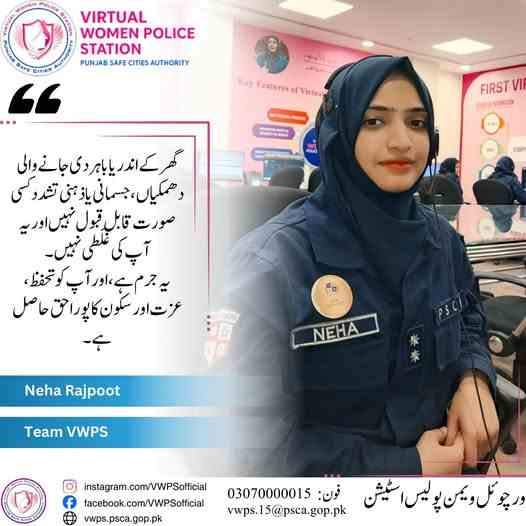
Neha Rajpoot is a prominent team member at the Virtual Women Police Station, often featured in awareness materials and campaigns to humanize the service and encourage women to come forward for help.
What is the Significance of Having Public-Facing Representatives Like Neha Rajpoot?
Having a named, visible representative makes the VWPS feel more approachable. Women who see Neha Rajpoot in awareness materials know that there is a real person—a woman like them—on the other end of the line. This human connection builds trust and encourages reporting.
How Can I Contact Neha Rajpoot or Other VWPS Team Members for Help?
All VWPS team members, including Neha Rajpoot, can be reached through the official VWPS channels: 15 helpline (press 2), WhatsApp, or the Women Safety App. There is no need to request a specific officer; all VWPS officers are equally trained and capable.
What Other Public Figures Are Associated with the VWPS Awareness Campaigns?
The Chief Minister of Punjab is the most prominent figure associated with the VWPS, having inaugurated the service under the “Meri Awaz, Maryam Nawaz” brand. Various celebrities and social media influencers have also participated in awareness campaigns.
How Does the VWPS Use Personal Stories to Build Trust with the Community?
The VWPS shares anonymized success stories through social media and public events. These stories highlight real women who used the VWPS to escape abuse, get justice, or find safety. By sharing these stories (without revealing identities), the VWPS demonstrates that the system works and encourages other women to come forward.
Conclusion: Why the Virtual Women Police Station is a Landmark for Women’s Safety in Pakistan
The Virtual Women Police Station is more than a helpline or an app. It is a fundamental reimagining of how policing can serve women. By removing physical, social, and psychological barriers, the VWPS has empowered hundreds of thousands of women to speak up, report crimes, and seek justice. The platform’s success—measured in over 935,281 cases facilitated, thousands of FIRs registered, and numerous lives saved—proves that digital policing works.
How VWPS is Shifting Social Norms Around Reporting Gender-Based Violence
The VWPS is gradually changing the cultural narrative around reporting abuse. When women see that they can report anonymously, without shame, and without visiting a police station, they are more likely to take that first step. Each successful case reinforces the message that abuse is not acceptable and that justice is possible. Over time, this shift in social norms will lead to a society where violence against women is no longer tolerated.
The Future of VWPS: Integration with AI, Cyber Crime Unit, and Online Safety Act
The VWPS continues to evolve. Future developments include:
- AI-Powered Triage: Artificial intelligence to automatically classify complaints and prioritize urgent cases.
- Deeper Cybercrime Integration: Direct linkage with cybercrime units for faster tracing of online harassers.
- Expanded Legal Aid: In-app legal document generation for protective orders.
- Multilingual Support: Expansion to more regional languages.
- Offline Capabilities: Enhanced functionality for users with limited internet access.
These advancements will make the VWPS even more effective and accessible.
A Call to Action: Download the App, Share the Number, and Know Your Rights
Every woman in Punjab should download the Women Safety App today. Every woman should memorize the number 15 and know to press 2. Every woman should share this information with her sisters, daughters, friends, and colleagues. Knowing your rights and knowing how to access help are the first steps toward safety.
Final Message of Hope and Empowerment from the VWPS Team
The VWPS team’s message to every woman is clear: You are not alone. Your voice matters. Your safety matters. The VWPS is here for you—day and night, online and always. Do not suffer in silence. Do not believe that you deserve abuse. Reach out. Speak up. The Virtual Women Police Station is your partner in justice.
Disclaimer
This guide provides general information about the Virtual Women Police Station and is not legal advice. For specific legal guidance, consult a qualified attorney or contact the VWPS directly.
Frequently Asked Questions (FAQs)
What is the Virtual Women Police Station (VWPS)?
The Virtual Women Police Station is Pakistan’s first digital policing platform, launched by the Punjab Safe Cities Authority, allowing women to report crimes, register FIRs, and seek assistance online without visiting a physical police station.
How can I report harassment online without visiting a police station?
You can report harassment by calling 15 and pressing 2, using the Women Safety App’s live chat or video call feature, sending a WhatsApp message to 03070000015, or submitting a complaint through the PSCA web portal.
Can I file a complaint anonymously through the VWPS?
Yes, women can file complaints anonymously without revealing their name or address. However, anonymous complaints cannot be converted into formal FIRs without identity verification.
What is the difference between the 15 helpline and the 1043 helpline?
The 15 helpline is for emergency police response (press 2 for VWPS). The 1043 helpline is for non-emergency counseling, legal advice, and socio-economic support.
Is the Virtual Women Police Station available 24/7?
Yes, the VWPS operates 24 hours a day, 7 days a week, with female officers working in three rotating shifts.
Do I need to pay to use VWPS services?
No, all VWPS services are completely free for all women.
Can overseas Pakistanis report crimes through the VWPS?
Yes, overseas Pakistanis can use the web portal or app to report crimes affecting their family members in Punjab.

Add a Comment