
The Deceased Care Service Punjab, officially launched by Chief Minister Maryam Nawaz Sharif, is Pakistan’s first government-run, completely free funeral transport program that shifts deceased individuals from government hospitals to their homes.
In this comprehensive guide, you will learn:
- How to book the free ambulance by calling 1122 or visiting a hospital desk.
- The exact eligibility criteria and required documents (death certificate, CNICs).
- Which cities currently offer the service and the plan to cover every tehsil in Punjab.
- What to do if any staff member asks for payment or a tip.
- The role of the smart management system in ensuring transparency and accountability.
Key Takeaways
- Free and Dignified Transport: The service provides 100% free transportation of the deceased from government hospitals to their homes, with strict orders against accepting any money or tips.
- Simple Access: Families can request the service 24/7 by dialing 1122 or by visiting dedicated facilitation desks at government hospitals in Lahore, Rawalpindi, and Multan.
- Province-Wide Expansion: The Punjab government is expanding the service to every tehsil by June, with dedicated ambulances deployed at the sub-district level.
- No Hidden Costs: The service includes free inter-city transport within Punjab and is monitored through a smart management system to ensure efficiency and prevent exploitation.
- Emotional Support Included: Staff are trained to provide counseling and emotional support to grieving families, recognizing the human dimension of the service.
- Read More: Wheat Price In Pakistan | 100Kg Wheat Price In Pakistan
- Read More: 50 Kg Wheat Price In Pakistan Today -Gandum Rates Today
- Read More: Gandum Rate in Pakistan – Govt Wheat Rate Per 40 kg
- Read More: Today Wheat Price In Pakistan – Government Rate Per 40 Kg
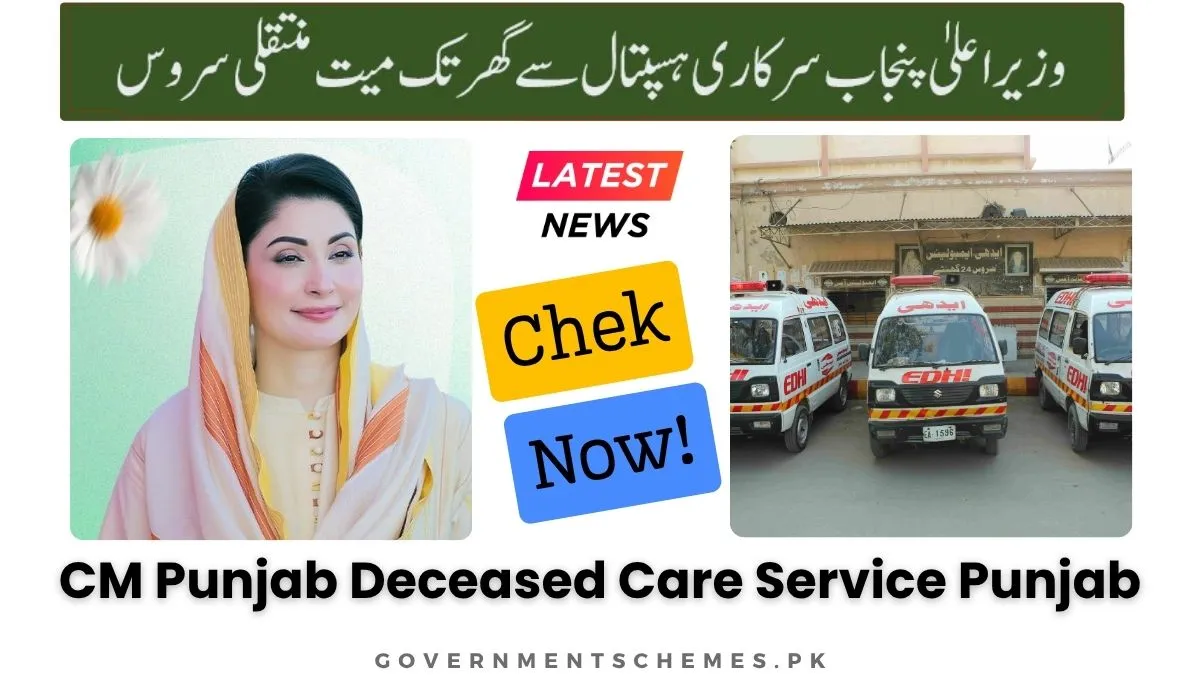
Deceased Care Service Punjab | CM Punjab Maryam Nawaz Free Deceased Care Service
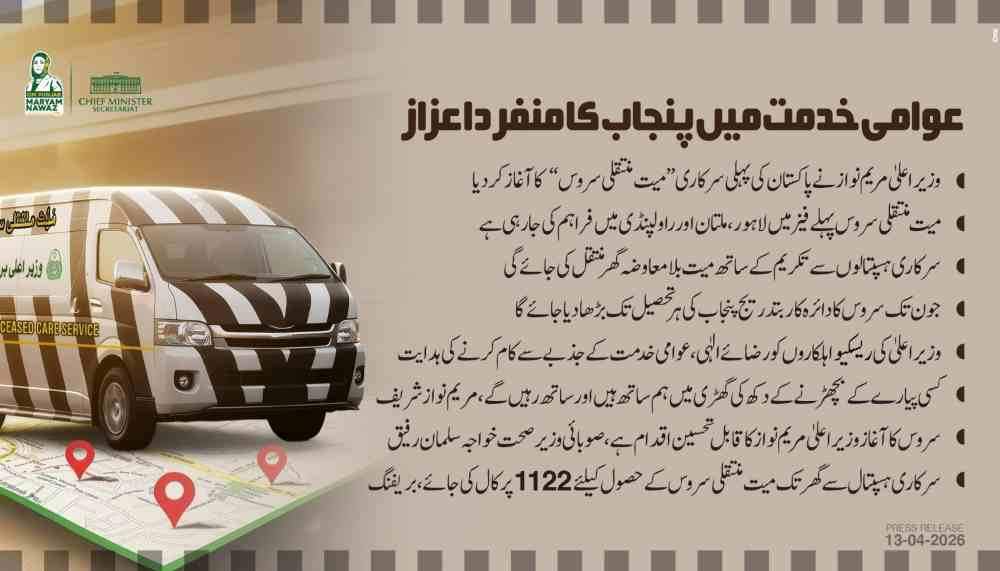
Table Of Contents
Introduction: What is the CM Punjab Deceased Care Service and Why Was It Launched?
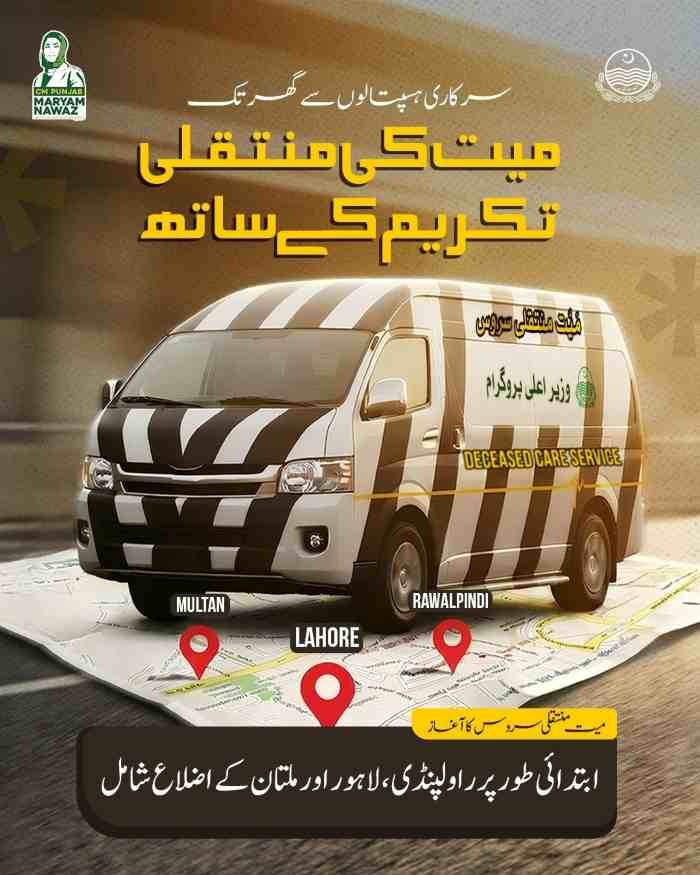
The CM Punjab Deceased Care Service, also known as the Mayyat Transfer Service, is a landmark initiative providing free, dignified ambulance transport for deceased individuals from government hospitals to their homes. For years, private transporters exploited grieving families by charging excessive fares, leaving bereaved relatives to negotiate the price of bringing their loved ones home. This service eliminates that injustice entirely.
The program is a cornerstone of “compassionate governance” championed by Chief Minister Maryam Nawaz Sharif. She has explicitly instructed Rescue 1122 personnel to refuse any payment, even if offered voluntarily, stating: “In the moment of grief of losing a loved one, we are with you and will remain with you.” The service launched on April 13, marking the first government-run funeral transport program in Pakistan’s history.
1. What is the CM Punjab Deceased Care Service (Deceased Transportation Service)?
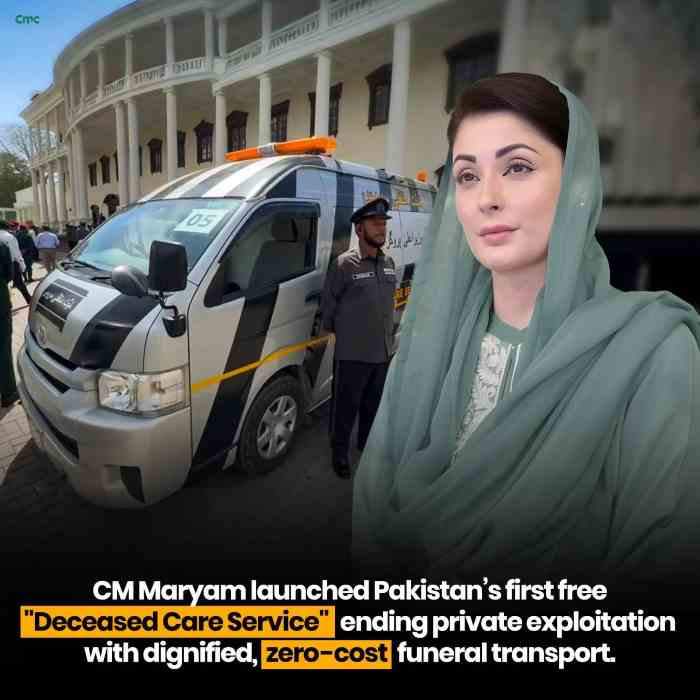
The CM Punjab Deceased Care Service is Pakistan’s first government-run funeral transport system that provides dignified, free-of-cost transportation of deceased individuals from government hospitals to their homes. It operates through Rescue 1122, Punjab’s trusted emergency service authority, and is designed to end the financial exploitation of bereaved families by private ambulance operators.
Core Mission and Operational Philosophy
- End Exploitation: The service directly addresses the unregulated market where private transporters charged excessive fares, often doubling prices when families were most vulnerable.
- Compassionate Governance: The initiative reflects a shift toward empathetic public service, with staff directed to provide emotional support and counseling alongside logistics.
- State Support: The government covers all costs, including fuel, vehicle maintenance, and staff salaries, ensuring families face no financial burden.
Key Features of the Service
- Zero Cost: The service is entirely free, with no registration fees, distance charges, or hidden costs.
- 24/7 Availability: Trained uniformed drivers are available round the clock at dedicated hospital counters and through the 1122 helpline.
- Specialized Vehicles: Purpose-built mortuary vans, not standard ambulances, are used to ensure respectful handling of the deceased.
- Smart Monitoring: All operations are tracked through a digital dispatch and management system to ensure transparency and efficiency.
Official Launch and Guiding Principles
The service was inaugurated by CM Maryam Nawaz Sharif, who personally handed over vehicle keys to authorities in Lahore, Multan, and Rawalpindi. She directed staff to work with a spirit of public service and to refuse any payment. Health Minister Khawaja Salman Rafique termed the initiative a commendable step toward sharing the grief of citizens. Rescue 1122 Director General Dr. Rizwan Naseer confirmed that the system also facilitates transfers to hospital morgues when required.
Who inaugurated the Deceased Care Service in Punjab?
Chief Minister Maryam Nawaz Sharif inaugurated the Deceased Care Service in Punjab during a ceremony held in Lahore. She handed over the keys of specialized vehicles to Rescue 1122 authorities for the pilot cities of Lahore, Rawalpindi, and Multan.
Inauguration Event Details
- Date and Location: The launch ceremony took place in Lahore, where the CM inspected the dedicated funeral transport fleet.
- Personnel Interaction: She met with Rescue personnel, appreciated their services, and directed them to perform duties with devotion.
- Official Statements: Health Minister Khawaja Salman Rafique was present and termed the initiative a major relief measure for citizens.
- Fleet Inspection: The CM personally inspected the vehicles to ensure they met standards for dignified transport.
CM’s Directives at Launch
- No Payment Policy: She strictly instructed that rescue personnel must not accept any money, even if offered by families.
- Emotional Support: She directed staff to provide counseling and comfort to grieving families.
- Expansion Commitment: She announced that the service would be extended to every tehsil by June, with dedicated ambulances in each sub-district.
Read More: 40 kg Wheat Price In Pakistan Today (Wheat Rate per 40KG)
Is the Deceased Care Service available for non-Muslim citizens in Punjab?
Yes, the Deceased Care Service is a universal public service available to all citizens of Punjab, including non-Muslims, without any discrimination based on religion. The government has designed the initiative to serve every resident regardless of faith, income, or social status.
Inclusive Service Policies
- Equal Access: Non-Muslim families follow the same simple process—dialing 1122 or visiting a hospital help desk—to request the service.
- Respect for Religious Protocols: Staff are trained to handle all deceased individuals with dignity, respecting the specific funeral and burial rites of different communities.
- Same Documentation: The required documents (hospital death certificate, CNIC of deceased, CNIC of applicant) are identical for all citizens.
- Graveyard Transport: While primarily designed for home transport, the service can accommodate requests for direct transport to cemeteries or crematoriums based on family needs.
CM’s Inclusive Vision
Maryam Nawaz has explicitly stated that the service is for “every citizen of Punjab” without any distinction. The initiative is built on the principle that the state stands with all its people during difficult times, regardless of their religious background.
How is this service different from the regular Rescue 1122 ambulance?
The Deceased Care Service uses specialized mortuary vans designed for dignified body transport, unlike regular Rescue 1122 ambulances which are equipped for live patient emergency care. This distinction ensures that the specific needs of funeral transport are met with respect and efficiency.
Key Differences
- Purpose: Regular ambulances are for medical emergencies and transporting living patients to hospitals. Deceased Care vehicles are specifically for funeral transport.
- Vehicle Equipment: Deceased Care vehicles are outfitted as mortuary vans, not standard emergency ambulances.
- Staff Training: Personnel receive specialized training in respectful handling of deceased individuals and bereavement counseling.
- Emotional Support: Unlike regular ambulance staff, Deceased Care personnel are directed to provide emotional support and basic counseling.
- Booking Method: Both services share the same helpline (1122), but the Deceased Care Service is specifically flagged for funeral transport requests.
- Hospital Counters: Dedicated facilitation desks for the Deceased Care Service are set up at government hospitals, separate from regular emergency counters.
- Cost Policy: Both services are free, but the Deceased Care Service has a strict no-tip policy explicitly enforced by the CM.
What is the “Smart Management System” used for this service?
The Smart Management System is a digital dispatch and tracking platform that monitors all deceased transport operations in real-time to ensure transparency, efficiency, and timely service delivery. This technological backbone is critical to the service’s accountability and performance.
System Capabilities
- Real-Time Vehicle Tracking: The system tracks van allocation, routes, and status to avoid delays and optimize response times.
- Transparency Mechanism: Every transport request is logged digitally, creating an auditable trail that prevents unauthorized charges or service denials.
- Dispatch Coordination: The system intelligently assigns the nearest available mortuary van to each request, minimizing wait times.
- Performance Monitoring: Authorities can monitor response times, service completion rates, and staff behavior through the system.
- Data Analytics: The system collects data on service usage patterns, helping the government plan future expansion and resource allocation.
- Accountability Tool: Any complaints or irregularities can be investigated by reviewing system logs and tracking data.
Integration and Public Benefit
The smart management system is integrated into Rescue 1122’s existing emergency response infrastructure. It signals a commitment to accountability alongside compassion, ensuring that families receive timely, respectful service without exploitation.
2. Is the Deceased Care Service Really Free of Cost?
Yes, the CM Punjab Deceased Care Service is 100% free of cost, with Chief Minister Maryam Nawaz issuing strict orders that no money or tips should be accepted from grieving families under any circumstances. This zero-payment policy is enforced from the highest level of government.
The No-Cost Guarantee
- Zero Payment Policy: Families do not need to pay for the ambulance, fuel, driver services, or any associated fees.
- CM’s Explicit Instruction: “Rescue personnel should not accept any payment even if offered by the bereaved families.”
- No “Chai-Pani” or Tips: The CM specifically addressed the common practice of unofficial tipping, forbidding it entirely.
- Free Inter-City Transport: The service also provides free transportation of deceased individuals from one city to another within Punjab.
- No Hidden Charges: There are no registration fees, documentation fees, or distance-based charges.
- Private Ambulance Regulation: The government is simultaneously working to regulate private ambulance services and fix standardized rates to prevent overcharging.
Why Free Matters
For lower-income families, the cost of private transport (often ranging from Rs 5,000 to Rs 15,000 or more) was a cruelty compounded by tragedy. The free service removes this financial burden entirely, allowing families to grieve without additional stress.
Should I pay any “chai-pani” or tips to the ambulance driver?
No, you should not pay any “chai-pani” or tips to the ambulance driver or any staff member, as the Chief Minister has strictly forbidden staff from accepting any form of payment. This policy is non-negotiable and actively enforced.
CM’s Directive and Staff Accountability
- No Exceptions: The policy applies to all staff, including drivers, helpers, and hospital desk personnel.
- What to Do If Asked: If any staff member requests money, refuse politely and immediately report the incident.
- Reporting Hotline: Families can call the CM Complaint Cell helpline to report any demands for payment.
- Online Complaint: Complaints can also be filed through the Punjab CM Complaint mobile app or website.
- Staff Discipline: Drivers and staff who violate the no-payment policy face disciplinary action.
Service Guarantee
The free nature of the service is guaranteed by the government. Families should never feel obligated to pay anything, and any request for payment should be treated as a violation of official policy.
How do I complain if the ambulance staff asks for money?
You can file a complaint immediately by calling the Punjab CM Complaint Cell helpline (toll-free) or using the CM Complaint mobile app available on Android and iOS. The government has established clear channels for reporting violations.
Step-by-Step Complaint Process
- Gather Information: Note the ambulance number, date, time, and location of the incident.
- Call the Helpline: Dial the 24/7 toll-free helpline and provide the details.
- Use the Mobile App: Download the “Punjab CM Complaint Cell” app from Google Play or App Store.
- Online Portal: Register your complaint online at the official CM complaint website.
- Track Your Complaint: Obtain a reference number to track the status of your complaint.
Alternative Reporting Options
- District Emergency Officer: Complaints can be submitted directly to the District Emergency Officer.
- Hospital Facilitation Desk: Report the issue at the hospital’s dedicated counter.
- Punjab Connect Portal: Residents can also file grievances through the Punjab Connect portal.
- Anonymous Reporting: Complaints can be filed anonymously if families prefer not to share their identity.
- Escalation: If the initial complaint is not resolved, families can approach the Punjab Ombudsman’s office.
The government has committed to investigating all complaints and taking disciplinary action against violators. Families should feel empowered to report any irregularities.
3. Which Cities in Punjab Currently Have the Deceased Care Service?
As of the latest update, the Deceased Care Service is operational in three major cities of Punjab: Lahore, Multan, and Rawalpindi, under the first phase of the initiative. These pilot cities serve as the launchpad for a province-wide expansion.
Phase 1 Coverage
- Cities Covered: Lahore, Rawalpindi, and Multan.
- Launch Date: The service simultaneously launched in all three cities.
- Coverage Within Cities: In the first phase, the service operates within city limits of Lahore, Rawalpindi, and Multan.
- Hospital Coverage: All government hospitals within these cities have access to the service through dedicated desks.
- Rescue 1122 Integration: The service is delivered through Rescue 1122 infrastructure in each city.
City-Specific Details
- Rawalpindi: The service was officially launched in Rawalpindi district with vehicles provided to Rescue 1122. The first transport documented was from the Rawalpindi Institute of Cardiology.
- Multan: The service is fully active at government hospitals in Multan, including Nishtar Hospital.
- Lahore: Major government hospitals, including Mayo Hospital, Services Hospital, and Jinnah Hospital, have dedicated desks.
Verification Tip
Families should confirm with hospital staff at the facilitation desk that the service is available before making arrangements. While the service is operational, confirming availability ensures a smooth process.
How many dedicated ambulances are available for this service in Lahore?
While the exact fleet size for each city is dynamic and subject to expansion, each major city in the first phase has received a dedicated fleet of specialized mortuary vehicles from the Chief Minister. The fleet is designed to meet the needs of each city’s population and hospital density.
Fleet Allocation and Deployment
- Tehsil-Level Deployment: The expansion plan ensures at least one dedicated ambulance in every tehsil across Punjab by June.
- City Allocation: Lahore, being the provincial capital, has received a proportionally larger fleet to serve its multiple government hospitals.
- 24/7 Availability: Ambulances are stationed at designated points and are available round the clock through the dispatch system.
- Backup Vehicles: The system includes backup vehicles to ensure service continuity during maintenance or high demand.
- Future Expansion: Phase 2 will incorporate private ambulances to augment the fleet and facilitate transport to other cities.
- Smart Dispatch: The smart management system ensures optimal allocation of available vehicles across the city.
Does the service provide a coffin (taboot) or just transportation?
The core service focuses on providing dignified transportation of the deceased using specialized mortuary vans; families should confirm with their local facilitation desk whether coffin/taboot is provided or needs to be arranged separately. The primary government commitment is free, respectful transport.
What the Service Includes
- Primary Service: Free, dignified transport from hospital to home using specially equipped vehicles.
- Variation by Location: Some reports indicate the service may include basic amenities, but this can vary by city and hospital.
- Family Responsibility: Families should be prepared to arrange their own coffin/taboot according to their customs and preferences.
- Dignity Protocols: Staff are trained to handle the deceased with respect regardless of whether a coffin is used.
- Religious Considerations: Different communities have different requirements for funeral preparation, and families should clarify their needs when booking.
Action Tip
When booking, explicitly ask the hospital help desk: “Does the service provide a coffin, or should our family arrange one?” This ensures there are no surprises during an already difficult time.
4. How Can I Call the Free Ambulance for a Dead Body in Punjab?
You can call the free deceased care ambulance by dialing the Rescue 1122 helpline (1122) from any phone, 24 hours a day, 7 days a week. This simple, memorable number connects you directly to the dispatch center.
Step-by-Step Calling Process
- Simple Dialing: No special codes or prefixes are needed — just dial 1122.
- What to Say: Clearly state “Deceased Care Service” or “Funeral Transport Service” to ensure proper routing.
- Information to Provide: Be ready to share the hospital name, your location, the deceased’s name, and your contact number.
- Language Support: Operators can assist in Urdu, Punjabi, and English.
- Response Time: The ambulance is dispatched immediately after call verification.
- No Advance Booking: The service is designed for immediate response upon death, not pre-booking.
- Who Can Call: Any family member, hospital staff, or even a friend can make the call on behalf of the family.
- Free Call: The call to 1122 is free from all major mobile networks in Pakistan.
Which phone number should I dial for the Punjab Deceased Care Service?
The single helpline number for the Punjab Deceased Care Service is 1122, which connects you to the Rescue 1122 emergency service dispatch center. This number is already trusted by millions for emergency response.
Helpline Details
- 1122 Overview: This is the Punjab Emergency Service helpline, known for its reliability.
- Dedicated Service Flag: When you call, specifically request the “Deceased Care Service” or “Funeral Transport Service.”
- Alternative Contact: Families can also visit the dedicated facilitation desk at any government hospital to request the service in person.
- No Separate Number: The government has not launched a separate number to keep the process simple and memorable.
- 24/7 Availability: The helpline is staffed around the clock, 365 days a year.
- Mobile Accessibility: 1122 works from all mobile networks (Jazz, Zong, Telenor, Ufone) and landlines.
- Emergency Services Integration: The same dispatch center handles all Rescue 1122 services, so operators are trained to route funeral transport requests appropriately.
Is the Deceased Care Service available 24/7?
Yes, the Deceased Care Service is available 24 hours a day, 7 days a week, 365 days a year, including all public holidays and weekends. Death does not follow business hours, and this service ensures families are never left stranded.
Round-the-Clock Availability
- Staffing: Trained uniformed drivers and support staff are available at all times.
- No Time Restrictions: Families can call 1122 at any hour — midnight, early morning, or during peak daytime.
- Holiday Coverage: The service operates normally on Eid, Christmas, Diwali, and all other public holidays.
- No Appointment Needed: Unlike some government services, no advance booking is required or possible.
- Immediate Response: The dispatch system is designed to respond immediately to calls at any time.
- Hospital Desk Hours: While the hospital help desks may have specific operating hours, the 1122 helpline is always available.
How long does it take for the ambulance to arrive at the hospital?
Response times vary based on location, traffic conditions, and ambulance availability, but the smart management system is designed to dispatch the nearest available vehicle to minimize wait times. Families can expect transparency and communication throughout the process.
Typical Response Ranges
- In Major Cities: In Lahore, Multan, and Rawalpindi, ambulances typically arrive within 15–45 minutes.
- Factors Affecting Time: Distance from the ambulance depot, time of day (rush hour vs. late night), and current demand.
- Real-Time Tracking: The smart management system tracks van allocation, routes, and status to avoid delays.
- Hospital Location: Hospitals in central areas may have faster response times than those in outer zones.
- Tehsil Expansion Impact: As more ambulances are deployed across tehsils, response times will improve significantly.
- What to Do If Delayed: If the ambulance does not arrive within a reasonable time, call 1122 again for a status update.
- Emergency Coordination: Hospital staff can also assist by following up with Rescue 1122 dispatch.
- Transparency: Families can ask the dispatch operator for an estimated arrival time when booking.
Is the 1122 Deceased Care Service available in rural areas of Punjab?
As of the current phase, the service is primarily operational in urban centers (Lahore, Multan, Rawalpindi), but the government has committed to expanding it to every tehsil — including rural areas — by June. This expansion will bring the service to millions of rural residents.
Current and Future Rural Coverage
- Current Rural Coverage: Limited; rural families may need to travel to the nearest government hospital in a pilot city to access the service.
- Tehsil Expansion Plan: A dedicated ambulance will be deployed in each tehsil across Punjab.
- Timeline: The expansion is scheduled for completion by June.
- Rural Implementation: Each tehsil headquarters will have at least one dedicated mortuary van stationed.
- District-Level Rollout: The expansion will proceed district by district, with priority to larger tehsils.
- Rural Families’ Current Option: If death occurs at a government hospital in Lahore, Multan, or Rawalpindi, rural residents can use the service to transport the body to their rural home.
- Future Vision: The goal is to ensure that no citizen of Punjab, regardless of location, pays for funeral transport.
5. What Documents Are Required to Use the CM Deceased Care Service?
To use the CM Deceased Care Service, you will need the hospital-issued death certificate and the Computerized National Identity Cards (CNICs) of both the deceased and the applicant requesting the service. The process is designed to be simple, avoiding bureaucratic hurdles during moments of grief.
Required Documents
- Death Certificate: The hospital’s official death certificate is the primary document required to verify the death.
- Deceased’s CNIC: Required to confirm the deceased’s residency in Punjab and identity.
- Applicant’s CNIC: The family member requesting the service must provide their valid CNIC for verification.
- No Additional Paperwork: The process avoids unnecessary documentation.
- Verification Purpose: Documents are used only to verify identity and residency, not for any fee assessment.
- Hospital Death Registration: The death must be properly registered with the hospital before the service can be requested.
- Digital Verification: The smart management system may allow digital verification in some hospitals.
- No Income Proof: The service is universal, so no income certificates or proof of poverty are required.
- Residency Requirement: The deceased must be a resident of Punjab, typically verified through the CNIC address.
Do I need to show the deceased person’s CNIC to get the ambulance?
Yes, you will likely need to present the deceased person’s CNIC (or a copy) to verify residency in Punjab and complete the service request documentation. The CNIC serves as proof of Punjab residency.
CNIC Requirements and Alternatives
- Primary Purpose: The CNIC proves that the deceased was a resident of Punjab, which is the service’s coverage area.
- Hospital Requirement: Hospitals require the CNIC for death registration and certification anyway.
- Alternative Documents: If the CNIC is not immediately available, the hospital’s death certificate may suffice, but families should provide the CNIC as soon as possible.
- Digital CNIC: NADRA’s digital verification system may allow hospitals to verify CNIC information electronically.
- Applicant’s CNIC: The family member requesting the service also needs to present their own CNIC.
- No Photocopy Fees: Hospitals cannot charge for photocopying documents related to this service.
- Lost CNIC: If the deceased’s CNIC is lost, families should obtain a death certificate and work with hospital staff for verification alternatives.
- Proactive Tip: Keep a copy of elderly family members’ CNICs accessible for emergency situations.
Is there an app to track the Deceased Care ambulance?
While there is no dedicated consumer-facing app specifically for this service yet, the smart management system enables Rescue 1122 dispatchers to track ambulances in real-time, and families can call 1122 for status updates. The government may launch a public-facing app as the service expands.
Current Tracking Options
- Phone Updates: Families can call 1122 back and request a status update on their ambulance’s location and estimated arrival.
- Dispatcher Visibility: Dispatch operators can see all active ambulances on their screens with real-time location data.
- Future App Possibility: The government may launch a public-facing app as the service expands to all tehsils.
- SMS Notifications: Some users have reported receiving SMS updates when the ambulance is dispatched and when it arrives.
- Smart Management System: The backend system tracks van allocation, routes, and status to avoid delays.
- Transparency Benefit: The tracking system allows authorities to monitor performance and hold staff accountable.
- Hospital Desk Checks: Hospital staff at the facilitation desk may be able to check the status on the hospital’s system.
- No Need for Separate App: The 1122 helpline remains the simplest way to get real-time updates.
6. Can I Use This Service to Move a Body from a Private Hospital?
Currently, the Deceased Care Service is specifically designed for transporting deceased individuals from government (public sector) hospitals to their homes, not from private hospitals. This is the defined scope of the first phase.
Current Limitation and Future Plans
- Government Hospital Coverage: The service covers only deaths occurring at government hospitals in the pilot cities.
- Private Hospital Deaths: Families whose loved ones die at private hospitals must arrange their own transport or use private ambulance services.
- Future Expansion: The Health Minister has indicated that private ambulances may be arranged in the second phase to facilitate body transfers.
- Morgue Transfers: The service can also transport bodies from hospital morgues when immediate home transport is not possible.
- Private Hospital Exception: If a patient dies at a private hospital but is transferred to a government hospital for official procedures, the service may be applicable — families should check with the facilitation desk.
- Advocacy Tip: Families who believe this service should extend to private hospitals can file suggestions through the CM Complaint Cell.
- Current Best Practice: For private hospital deaths, ask the hospital about their ambulance services and associated costs.
Is this service available for transportation between different cities?
Yes, the Deceased Care Service provides free transportation of deceased individuals from one city to another within Punjab when required. Families can request transport from a government hospital in one city to a home in another city within Punjab.
Inter-City Transport Details
- Coverage: Families can request transport from a government hospital in one city to a home in another city within Punjab.
- No Additional Charges: The service remains completely free even for long-distance inter-city transfers.
- Example Scenario: A death at a government hospital in Lahore can be transported to the family home in a rural tehsil of Punjab.
- Distance Limit: There is no specified distance limit for free transport within Punjab.
- Vehicle Availability: The smart dispatch system will allocate vehicles capable of longer journeys for inter-city requests.
- Current Phase: Inter-city transport is available from the three pilot cities (Lahore, Multan, Rawalpindi) to any location in Punjab.
- Expansion Impact: As more tehsils get dedicated ambulances, inter-city transport will become more efficient.
- Booking Tip: When calling 1122, explicitly mention that inter-city transport is required so the dispatcher can allocate an appropriate vehicle.
- Documentation: The same documents (death certificate, CNICs) are required for inter-city transport.
7. What is the Role of the Facilitation Desks at Government Hospitals?
Dedicated facilitation desks (help counters) are set up in every government hospital to provide families with a physical location to request the Deceased Care Service, receive guidance, and coordinate transport. These desks are staffed by trained personnel and operate as one-stop service points.
Facilitation Desk Functions
- One-Stop Service Point: Families can visit the desk instead of calling 1122 if they prefer in-person assistance.
- Staffed by Trained Personnel: Uniformed staff are available at these desks to assist families.
- Document Assistance: Desk staff help families ensure all required documents (death certificate, CNICs) are in order.
- Coordination with Dispatch: Desk staff can directly coordinate with the smart dispatch system to request an ambulance.
- Emotional Support: Staff are directed to provide counseling and comfort to grieving families.
- Information Provision: Desks provide information about service availability, expected wait times, and transport procedures.
- Complaint Handling: Families can report issues or file complaints directly at the desk.
- 24/7 Availability: Desks are staffed round the clock in major hospitals.
- Hospital Integration: The desks are integrated into the hospital’s administration, ensuring smooth coordination with morgue staff.
- Expansion: As the service expands to all tehsils, every government hospital will have such a desk.
8. Can I Use the Deceased Care Service If the Person Died at Home Instead of a Hospital?
The Deceased Care Service is currently designed for deaths occurring at government hospitals, not for home deaths, as the service specifically transports from hospital to home. Families dealing with home deaths need to follow a different procedure.
Service Scope for Home Deaths
- Primary Scope: The initiative explicitly states “from government hospitals to their homes” as the operational scope.
- Home Death Procedure: For home deaths, families should contact their local union council for death registration and arrange private transport.
- Hospital Admission Requirement: The deceased must have been admitted to or died at a government hospital to qualify.
- Possible Exception: If the body is brought to a government hospital for official death certification, families may request the service from the hospital morgue.
- Verification: Hospital staff will verify that the death occurred at the hospital before approving service.
- Future Consideration: As the service expands, the government may consider extending it to home deaths.
- Current Alternative: Rescue 1122 regular ambulances are not designed for deceased transport from homes.
- Best Practice: For terminally ill patients at home, families should discuss end-of-life plans with local healthcare providers.
Can the ambulance take the body to a graveyard or only to a home?
While the primary purpose is hospital-to-home transport, the service can accommodate requests for direct transport to graveyards or cemeteries based on family needs. Clear communication when booking is essential.
Flexibility and Guidelines
- Primary Destination: The service is officially described as hospital-to-home transport.
- Family Flexibility: If the family wishes to proceed directly to the graveyard after receiving the body, staff may accommodate the request.
- Discuss in Advance: When booking, clearly state the final destination to ensure the ambulance route is planned accordingly.
- No Additional Charges: Even if the destination is a graveyard instead of home, the service remains free.
- Religious Considerations: Staff are trained to respect the funeral and burial customs of all communities.
- Morgue Alternative: The service can also transport bodies to hospital morgues when immediate transport is not possible.
- Multiple Stops: Families should confirm whether multiple stops (e.g., home for funeral prayers then graveyard) are permitted.
- Clear Communication: The key is to communicate your needs clearly when booking the service.
9. Does the Service Provide Bathing (Ghusal) Facilities for the Deceased?
The Deceased Care Service focuses on transportation and does not include bathing (ghusal) or other funeral preparation services as part of its core offering. Families are responsible for arranging these rites according to their religious and cultural practices.
What the Service Includes and Excludes
- Transportation Focus: The primary and explicit purpose of the service is dignified transport from hospital to home.
- Funeral Preparation: Families are responsible for arranging ghusal, kafan (shroud), and other funeral rites.
- Hospital Assistance: Some government hospitals may have basic facilities for funeral preparation; families should inquire at the hospital.
- What Staff Can Do: Rescue personnel can provide emotional support and basic assistance but are not trained for ritual bathing.
- Community Support: Families may wish to contact local mosque committees or community organizations for help with funeral preparations.
- No Extra Cost: Even if ghusal facilities are available at the hospital, the transport service remains free.
- Clarification Tip: When calling 1122 or visiting the desk, ask specifically about what services are included to avoid misunderstandings.
10. Will the Deceased Care Service Expand to All Tehsils of Punjab by June?
Yes, the Punjab government has committed to expanding the Deceased Care Service to every tehsil across Punjab by June, with a dedicated ambulance to be provided in each tehsil. This expansion will bring the service to rural and remote areas.
Expansion Plan Details
- Official Announcement: CM Maryam Nawaz made this commitment during the launch ceremony.
- Tehsil Count: Punjab has dozens of tehsils spread across urban centers and remote rural districts.
- One Ambulance Per Tehsil: At least one dedicated mortuary van will be stationed in each tehsil headquarters.
- Expansion Timeline: The expansion will be gradual, rolling out district by district through June.
- Current Status: The service is operational in Lahore, Multan, and Rawalpindi pilot cities.
- Phase 2 Plan: Private ambulances will be arranged in the second phase to further augment capacity.
- Rural Impact: This expansion will finally bring the service to rural families who currently have limited access.
- Monitoring: The smart management system will oversee the expansion to ensure quality and transparency.
Is there a limit on the distance the ambulance will travel for free?
There is no specified distance limit for free transport within Punjab, as the service is designed to provide free inter-city and intra-city transportation without distance-based charges. The government covers all fuel and maintenance costs.
Distance Policy
- Punjab-Wide Coverage: The free service covers transport anywhere within the geographical boundaries of Punjab province.
- No Per-Kilometer Fees: Unlike private operators who charge by distance, the government service has no distance-based pricing.
- Inter-City Example: A body can be transported from a hospital in Lahore to a home in a remote southern Punjab tehsil at no cost.
- Fuel Costs Borne by Government: All fuel and vehicle maintenance costs are covered by the provincial government.
- Provincial Border Limitation: The service does not currently extend to other provinces (Sindh, KPK, Balochistan).
- What If Destination Is Outside Punjab: Families would need to arrange transport beyond the provincial border privately.
- Documentation Impact: Distance does not affect documentation requirements.
- Transparency: The no-distance-limit policy ensures that rural and remote families are not disadvantaged.
11. Can Family Members Sit in the Ambulance with the Deceased?
Family members can typically accompany the deceased in the ambulance, but families should confirm this with the dispatch operator or hospital desk when booking the service. The vehicle’s capacity may vary.
Accommodation and Guidelines
- Standard Practice: Most deceased transport services allow at least one or two family members to ride along.
- Vehicle Capacity: Mortuary vans have limited passenger space compared to regular ambulances.
- Safety Considerations: The primary compartment is designed for the deceased; family seating may be limited.
- Confirm in Advance: When calling 1122, ask explicitly: “Can a family member ride in the ambulance?”
- Alternative Arrangement: If the ambulance cannot accommodate family members, families may need to arrange separate transport.
- Driver Discretion: In some cases, the driver may allow family members based on vehicle capacity and circumstances.
- Emotional Support: Having a family member present during transport can be comforting, and staff are generally accommodating.
- No Additional Charge: Even if family members ride along, the service remains free.
- Religious Considerations: For some communities, having a same-gender family member accompany the deceased may be important — families should communicate this need.
12. How Is the Government Regulating Private Ambulance Services Alongside This Initiative?
In addition to launching the free government service, the Punjab government has agreed in principle to regulate private ambulance services and fix standardized rates to prevent overcharging of grieving families. This dual approach addresses both the immediate need and the long-term market structure.
Regulatory Measures
- Dual Approach: The government is simultaneously providing a free public option and regulating the private market.
- Rate Standardization: Proposals to introduce standardized rates for private ambulance operators were reviewed.
- Prevention of Exploitation: The goal is to stop private transporters from charging excessive fares.
- Current Exploitation: Private operators often set their own prices, exploiting families at their most vulnerable.
- Complaint Mechanism for Private Services: Families overcharged by private ambulances can also file complaints through the CM Complaint Cell.
- Regulatory Framework: The government is developing a comprehensive plan to register and monitor private ambulance services.
- Second Phase Integration: Private ambulances may be arranged in the second phase to augment the government fleet.
- Transparency Requirement: Regulated private services will be required to display fixed rates and obtain proper licensing.
- Market Impact: The free government service is expected to drive down private rates as families now have an alternative.
- Implementation Timeline: Regulatory measures are being developed alongside the expansion of the government service.
13. What Emotional Counseling and Support Does the Service Provide?
The Deceased Care Service includes emotional support and basic counseling for grieving families, with CM Maryam Nawaz specifically instructing staff to provide comfort and counseling to families dealing with loss. The service recognizes that the state’s role extends beyond logistics.
Emotional Support Components
- Beyond Logistics: The service acknowledges that the state’s role extends well beyond transportation logistics.
- Staff Training: Rescue personnel receive training in compassionate communication and basic bereavement support.
- CM’s Directive: “In the painful moment of losing a loved one, we are with you and will remain with you.”
- On-Site Support: Staff are directed to offer words of comfort and emotional support at the hospital and during transport.
- Spiritual Dimension: The CM directed staff to work with a “spirit of seeking God’s pleasure.”
- Dignity Focus: The entire service is built on the principle of dignified handling of both the deceased and the family.
- No Professional Therapy: While staff provide basic emotional support, the service does not replace professional grief counseling.
- Referral Information: Staff can provide information about professional grief counseling services if needed.
- Complaint Feedback Loop: Families who feel staff were insensitive can file complaints, helping improve service quality.
14. Conclusion: Why the Deceased Care Service Is a Landmark Initiative for Punjab
The Deceased Care Service represents Pakistan’s first government-run funeral transport program, setting a precedent for compassionate governance. It directly addresses a long-standing injustice where grieving families were exploited by private transporters at their most vulnerable moment.
Key Achievements and Future Outlook
- Completely Free: The service has no hidden charges, no tips, and no distance-based fees — a strict policy enforced by the Chief Minister.
- Easy Access: Families can access the service 24/7 by dialing 1122 or visiting hospital help desks — simple, immediate, and dignified.
- Transparency: The smart management system ensures transparency, accountability, and efficient dispatch through real-time tracking.
- Province-Wide Reach: With expansion to every tehsil by June, the service will reach millions of Punjabis in both urban and rural areas.
- Emotional Support: Beyond logistics, the service provides emotional support and counseling, recognizing the human dimension of grief.
- Private Sector Regulation: The government is also regulating private ambulance services to fix standardized rates, protecting families even when they choose private options.
- A Model for Pakistan: The service proves that the state can and should stand with citizens in their most difficult moments, turning compassionate intent into tangible action.
For families in Lahore, Multan, and Rawalpindi today — and across Punjab by June — this service ensures that the final journey home is dignified, respectful, and free.
Frequently Asked Questions (FAQs)
Q1: What is the CM Punjab Deceased Care Service?
A free government-run service providing dignified transportation of deceased individuals from government hospitals to their homes. It is Pakistan’s first initiative of its kind.
Q2: How can I call the free ambulance for a dead body in Punjab?
Dial Rescue 1122 helpline at 1122 and ask for the “Deceased Care Service” or “Funeral Transport Service.” You can also visit the dedicated hospital desk.
Q3: Is the Deceased Care Service available 24/7?
Yes, it is available 24 hours a day, 7 days a week, 365 days a year, including all public holidays.
Q4: Is the dead body transportation service really free of cost?
Yes, it is 100% free. The Chief Minister has issued strict orders that no money or tips should be accepted from grieving families.
Q5: Which cities in Punjab currently have the Deceased Care Service?
Currently Lahore, Multan, and Rawalpindi, with expansion to all tehsils by June.
Q6: How long does it take for the ambulance to arrive?
Typically 15–45 minutes depending on location, traffic, and demand. The smart management system dispatches the nearest available vehicle.
Q7: Can I use this service to move a body from a private hospital?
Currently only from government hospitals, though future phases may include private hospital coverage.
Q8: Is the service available for transportation between different cities?
Yes, free inter-city transport within Punjab is included with no distance limits.
Q9: What documents are required?
The hospital death certificate and CNICs of both the deceased and the applicant.
Q10: Should I pay any “chai-pani” or tips?
No. Staff are strictly forbidden from accepting any payment under any circumstances.
Disclaimer
This article provides general information about the Deceased Care Service Punjab based on official announcements and public reports. Service details, operational cities, and expansion timelines are subject to change by the Government of Punjab. Readers are advised to confirm current service availability by calling 1122 or visiting the nearest government hospital facilitation desk.

Add a Comment