
The Government of Punjab, under the leadership of Chief Minister Maryam Nawaz Sharif, has launched a historic wave of social welfare programs designed to provide direct relief, financial empowerment, and sustainable livelihoods to millions of citizens across the province. From interest-free housing loans to cash assistance for persons with disabilities, these initiatives represent a fundamental shift toward digital, transparent, and citizen-centric governance.
What you will learn from this guide:
- Complete eligibility criteria for each of the Top 10 CM Punjab Social Welfare Programs, including income limits and required documents
- Step-by-step instructions to apply online through official government portals without involving agents or paying any fees
- How the Punjab Socio-Economic Registry (PSER) works as the gateway to most schemes and why completing it is your first step
Key Takeaways
- One Registry to Rule Them All: The Punjab Socio-Economic Registry (PSER) is the foundational database for nearly all CM Punjab schemes. Complete your PSER registration first to become visible for multiple programs automatically.
- Digital Verification is Mandatory: All programs now use NADRA-verified data and biometric systems. Ensure your CNIC is valid and your mobile SIM is registered in your own name to receive OTPs and updates.
- No Agents, No Fees: Every application process described in this guide is completely free. Agents promising guaranteed approval are scammers attempting to exploit deserving citizens.
- Multiple Programs, Single Eligibility: Many schemes share common eligibility criteria such as Punjab residency, low PMT score, and valid CNIC. Meeting these basic requirements makes you eligible for several benefits simultaneously.
- Read More: Working Women Hostel Scheme: Eligibility, How to Apply Online
- Read More: Day Care Center in Lahore (List & Helpline by CM Punjab)
- Read More: Nawaz Sharif Cancer Hospital Lahore (Helpline & Key Details)
Top 10 Social Welfare Programs by CM Punjab (Eligibiliy+Apply Online)

Table Of Contents
What is the Official CM Punjab Scheme Portal for All Welfare Programs?
There is no single website where you can apply for all CM Punjab schemes simultaneously, but the Punjab Socio-Economic Registry (PSER) at pser.punjab.gov.pk serves as the master gateway. Most programs draw applicant data directly from this centralized database, making PSER registration the essential first step toward accessing multiple welfare benefits.
Navigating the CM Punjab Social Welfare Ecosystem

Is there a single website to apply for all CM Punjab schemes?
No, but the Punjab government has created an integrated digital ecosystem where different programs operate through dedicated portals while sharing a common data backbone. Each scheme has its own official website designed for specific purposes. For example, acag.punjab.gov.pk handles the Apni Chhat Apna Ghar housing scheme, bikes.punjab.gov.pk manages the bike scheme, and cmsolarscheme.punjab.gov.pk processes solar panel applications. However, all these portals verify applicant information against the PSER database, which means your eligibility is determined by the data you provide during PSER registration.
The role of the CM Punjab Social Welfare Department & Bait-ul-Maal
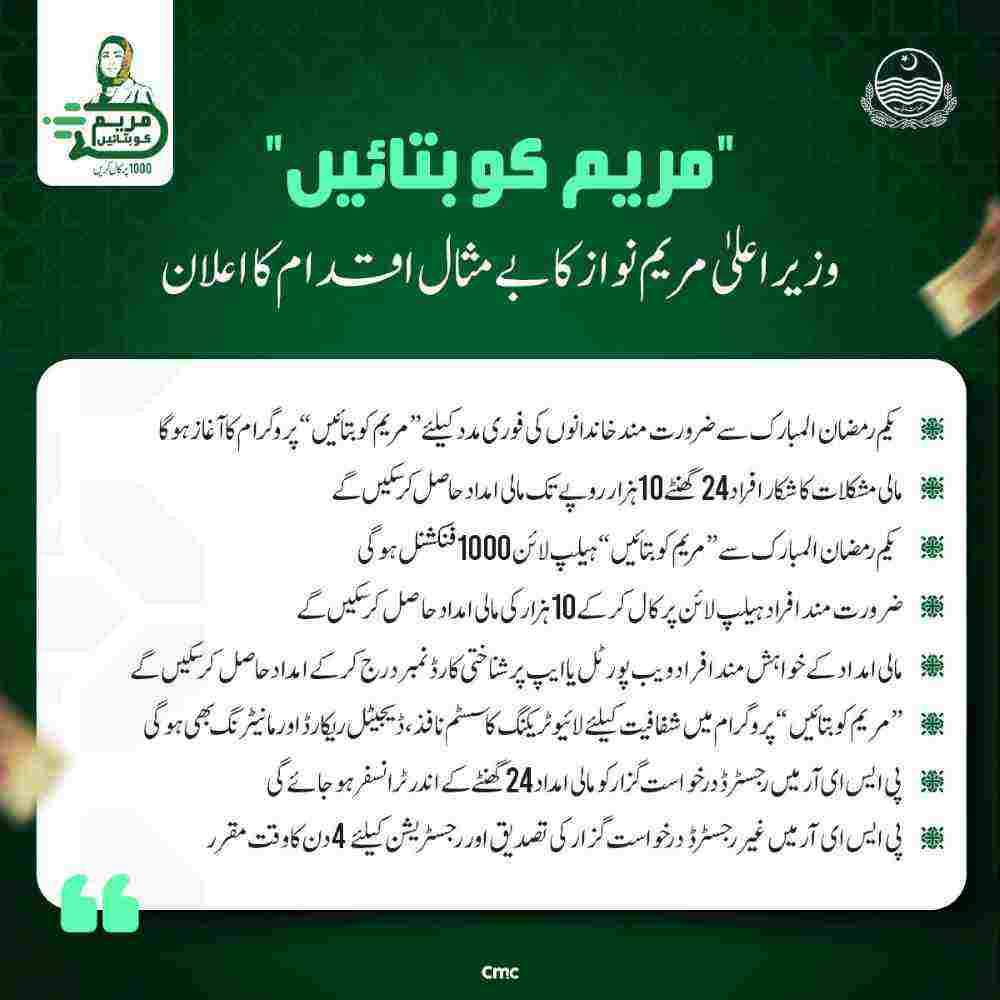
The CM Punjab Social Welfare Department and Bait-ul-Maal serve as the implementing arms for several key initiatives including the Himmat Card for persons with disabilities and the Dhee Rani Program for marriage assistance. These departments maintain district-level offices across Punjab where citizens without internet access can receive application assistance. The department also conducts door-to-door verification for programs requiring physical inspection and maintains disability certification boards that issue verified disability certificates required for the Himmat Card.
How does the “Maryam Ke Dastak” app simplify access to government services?

The Maryam Ke Dastak app represents a revolutionary step in citizen-government interaction by bringing numerous government services directly to smartphones. Citizens can use this app to apply for welfare schemes, track application status, schedule home visits for document verification, and receive real-time notifications about new programs for which they may be eligible. The app eliminates the need to visit government offices repeatedly and provides a single interface to interact with multiple departments simultaneously.
Understanding the 1312 Helpline: Your single point of contact
The Punjab government has established a centralized helpline 1312 operating seven days a week to address citizen queries about all social welfare programs. Trained operators provide information about eligibility criteria, application procedures, document requirements, and payment status. The helpline also accepts complaints about application delays, agent fraud, or technical issues with online portals. Citizens can call from any network to receive guidance in Urdu, English, or regional languages.
Why is the Punjab Socio-Economic Registry (PSER) the First Step for Every Applicant?
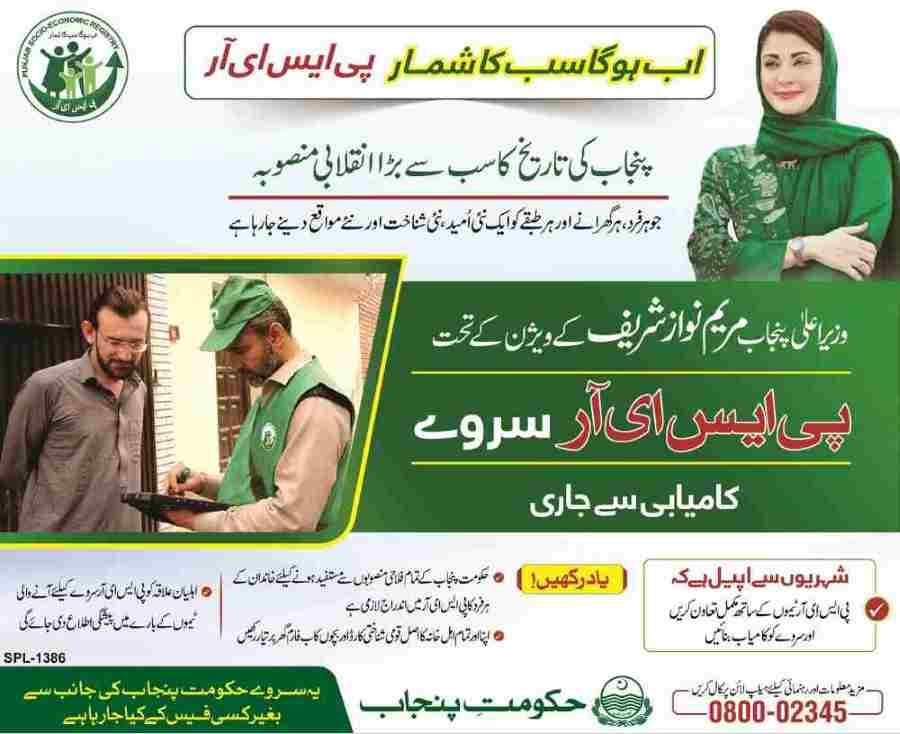
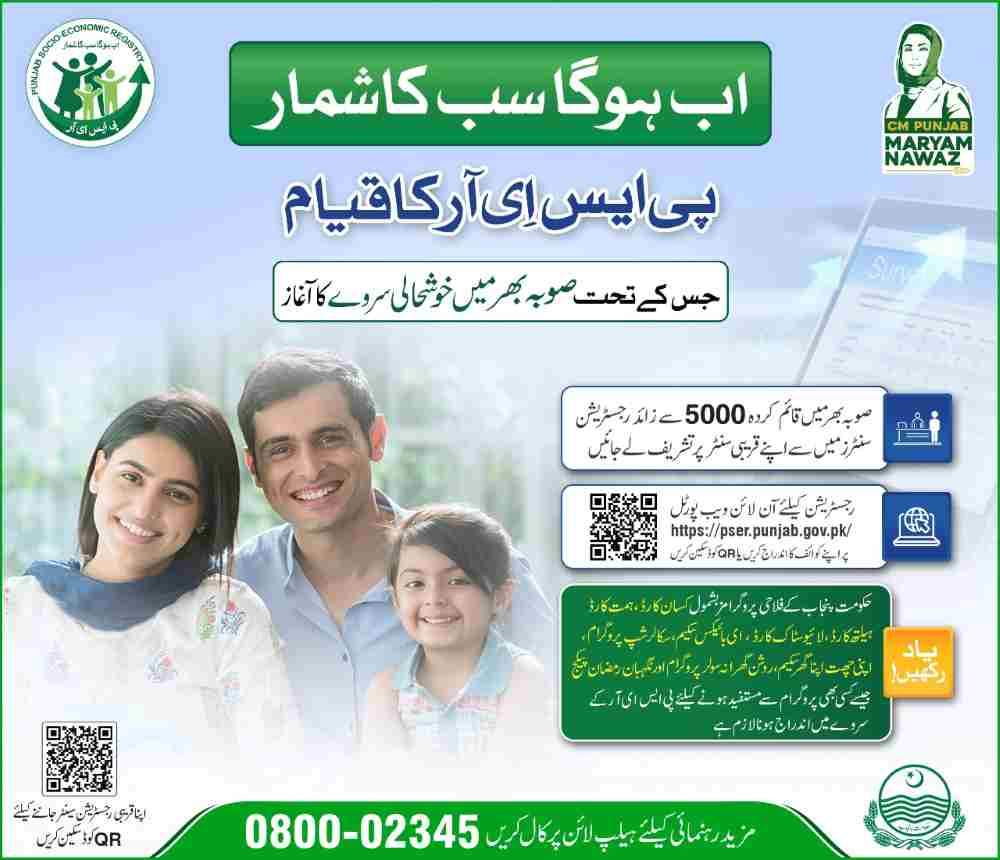
The Punjab Socio-Economic Registry (PSER) is a comprehensive household survey that collects detailed socioeconomic data from families across the province to create a transparent, verifiable database of potential beneficiaries. Without completing PSER registration, your application for most CM Punjab schemes will be automatically rejected regardless of how well you meet the eligibility criteria.
What is the Punjab Socio-Economic Registry (PSER) Survey?
The PSER survey is a door-to-door data collection initiative that captures information about family composition, housing conditions, education levels, employment status, asset ownership, and monthly income and expenses. This data is processed through a Poverty Means Testing (PMT) formula that generates a numerical score indicating the household’s economic status. Lower PMT scores indicate higher levels of poverty and greater eligibility for welfare programs.
How is PSER different from the federal 8171 (BISP) program?
While both programs collect socioeconomic data, they serve different purposes and operate independently:
| Feature | PSER (Punjab) | BISP 8171 (Federal) |
|---|---|---|
| Jurisdiction | Punjab Province only | All Pakistan |
| Administering Body | Government of Punjab | Federal Government |
| Primary Use | Provincial scheme eligibility | Federal cash transfers |
| Data Collection Method | Door-to-door + self-registration | Door-to-door survey |
| Update Frequency | Continuous | Periodic |
| Scheme Access | Apni Chhat Apna Ghar, Himmat Card, etc. | Kafaalat, Nashonuma, etc. |
Citizens should complete both registrations separately to ensure they do not miss benefits from either provincial or federal programs.
Step-by-step: How to complete your PSER online registration at home
Completing PSER registration from home requires following these steps precisely:
- Visit pser.punjab.gov.pk using any smartphone, tablet, or computer with internet access
- Click on the “New Registration” button prominently displayed on the homepage
- Enter your 13-digit CNIC number without spaces and your mobile number registered in your name
- Provide the OTP sent to your mobile number to verify your identity
- Complete the household survey form covering family members, income sources, expenses, asset ownership, and housing conditions
- Review all entered information carefully before final submission
- Note your application tracking number for future reference and status checks
What to do if you miss online registration? Understanding the door-to-door verification process
For citizens unable to complete online registration due to lack of internet access, digital illiteracy, or technical difficulties, the government has deployed field teams conducting door-to-door surveys across all districts. These teams, easily identifiable through official government identification cards and branded vests, visit households to collect data manually. Citizens can also visit their nearest Union Council office, Tehsil headquarters, or District Social Welfare Office to request registration assistance from designated government officials.
What information is collected during the PSER survey?
The PSER survey collects comprehensive household data across multiple categories:
- Family Composition: Names, CNIC numbers, ages, relationships, education levels, and occupation of all family members
- Housing Conditions: Ownership status, number of rooms, construction material, access to electricity, gas, and water
- Income Sources: Salaries, business income, agricultural income, remittances, and any government transfers
- Asset Ownership: Land, livestock, vehicles, agricultural machinery, and household appliances
- Monthly Expenses: Food, utilities, education, healthcare, transportation, and debt repayments
- Vulnerability Indicators: Disability status, chronic illness, orphanhood, widowhood, or elderly family members
Why is your PMT score important for schemes like CM Punjab Apni Chhat Apna Ghar?
The Poverty Means Testing (PMT) score calculated from your PSER data serves as the primary eligibility filter for most welfare programs. This algorithmically generated score ranges from 0 to 100, with lower scores indicating greater poverty. Programs like Apni Chhat Apna Ghar specify maximum PMT score cutoffs that applicants must meet to qualify. For instance, housing schemes typically require PMT scores below 40 or 45, while scholarship programs may allow slightly higher scores. Checking your PMT score after PSER registration helps you understand which programs you qualify for before applying.
Top 10 CM Punjab Social Welfare Programs: Eligibility + Online Application Guide
This section provides complete, program-specific information for each of the ten most significant social welfare initiatives launched by the Punjab government, enabling you to identify suitable programs and apply correctly.
1. Apni Chhat Apna Ghar (Housing Scheme): How to Apply for the Interest-Free Loan?
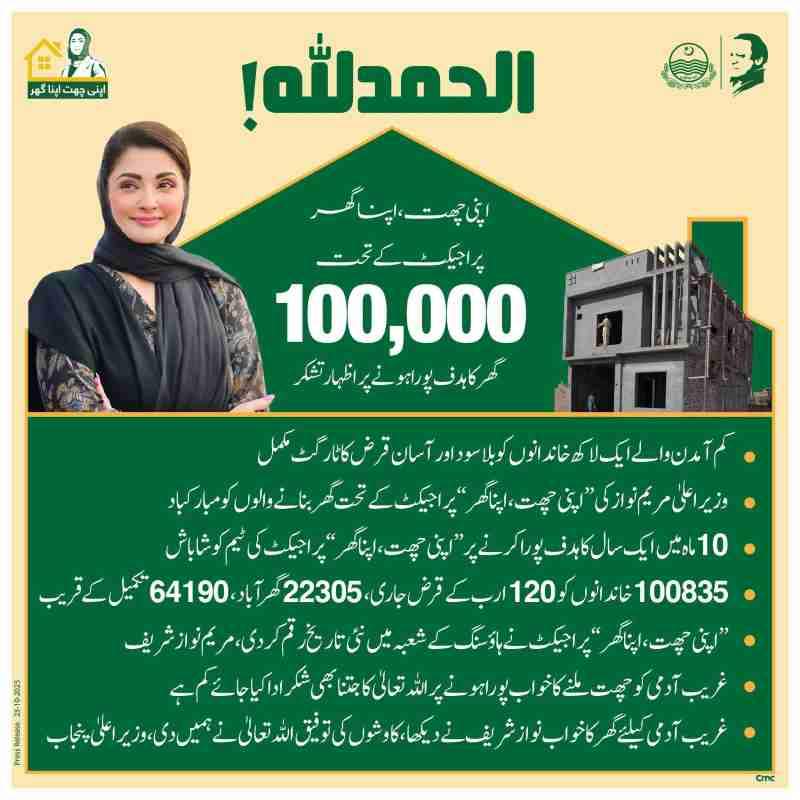
The CM Punjab Apni Chhat Apna Ghar program provides interest-free loans up to Rs. 1.5 million for the construction of new homes or completion of incomplete houses, targeting low-income families who own residential plots but lack financial resources to build.
What is the objective of the CM Punjab Apni Chhat Apna Ghar Scheme?
The primary objective is enabling homeless or inadequately housed families to construct permanent, safe, and dignified living spaces through interest-free financing, thereby addressing Punjab’s housing deficit and promoting asset creation among low-income households.
Who is eligible for the Apni Chhat Apna Ghar program?
Eligibility requires meeting all following conditions simultaneously:
- Punjab domicile with permanent residence in any district of the province
- Age between 18 and 55 years at the time of application
- Family monthly income below Rs. 60,000 from all sources combined
- PMT score below 45 as determined through PSER data
- Ownership of a residential plot (minimum 3 marlas, maximum 10 marlas) with clear title
- No prior ownership of any house or built property anywhere in Pakistan
- No previous government loan or subsidy for housing purposes
Can government employees apply for this housing scheme?
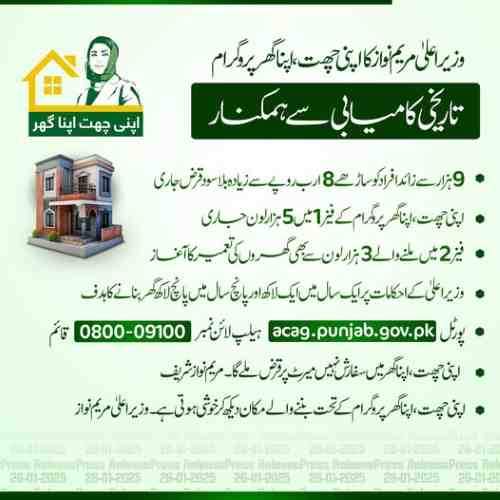
Yes, government employees are eligible to apply provided they meet the income criteria and have not previously availed any government housing subsidy or loan. However, preference in selection is given to non-government applicants and daily wage workers during the balloting process.
What is the income limit and PMT score requirement for the ACAG scheme?
The program strictly enforces an upper income limit of Rs. 60,000 per month verified through salary slips, business records, or employer certificates. Additionally, applicants must have a PMT score below 45 calculated from PSER data. Both conditions must be satisfied simultaneously; meeting only one does not qualify.
Complete list of required documents for the Apni Chhat Apna Ghar application
Applicants must prepare the following documents before starting the online application:
- Computerized National Identity Card (CNIC) of applicant and all adult family members
- Family Registration Certificate (FRC) issued by NADRA
- Punjab domicile certificate of applicant
- Proof of monthly income (salary slips for employees, business accounts for self-employed)
- Property documents proving ownership of residential plot (fard, registry deed, or allotment letter)
- Non-ownership affidavit sworn before a notary public declaring no other house ownership
- Recent passport-sized photograph of applicant
- Valid mobile number registered in applicant’s name for OTP verification
- PSER registration number and PMT score printout
How to apply online for Phase 2 on the official ACAG portal (acag.punjab.gov.pk)
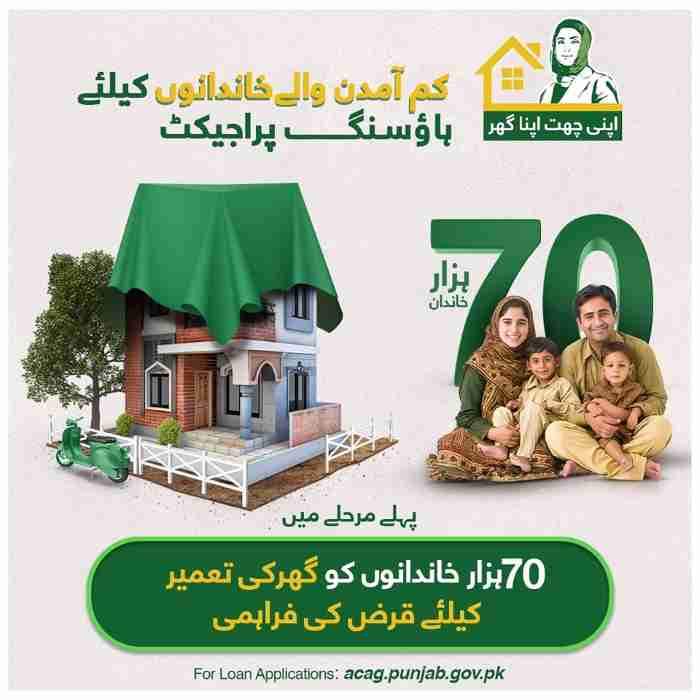
The online application process follows a structured sequence requiring careful attention:
- Visit acag.punjab.gov.pk and click on “New Application” or “Apply Now”
- Enter your CNIC number and mobile number to receive verification code
- Complete the application form with personal details, family composition, income information, and property specifics
- Upload scanned copies of all required documents in PDF or image format (file size limits apply)
- Review the prefilled PSER data and confirm its accuracy
- Submit the application and immediately note the generated application tracking ID
- Download or print the application receipt for future reference
What happens after you submit the application? (From screening to loan disbursement)
Post-submission processing follows multiple stages requiring patience:
- Initial Screening: Automated verification of CNIC, PSER data, and basic eligibility within 7-10 days
- Document Verification: Manual review of uploaded documents by designated officers for authenticity
- Physical Verification: Field visit to applicant’s residence and plot location to confirm living conditions and property existence
- Balloting: Random computerized selection of qualified applicants due to high application volume
- Loan Agreement: Selected applicants sign formal agreements at designated bank branches
- Disbursement: Loan amounts transferred in installments tied to construction progress verified through inspections
What is the last date to apply for the Apni Chhat Apna Ghar scheme?
The program operates in phases with specific application windows announced through official media channels. Phase 1 applications closed after receiving over 1.3 million submissions. Phase 2 dates are announced through newspapers, television, the official ACAG portal, and SMS alerts to registered users. Interested citizens should regularly check the portal and complete PSER registration to receive notifications.
2. CM Punjab Himmat Card: How Much Stipend Do Disabled Persons Receive?
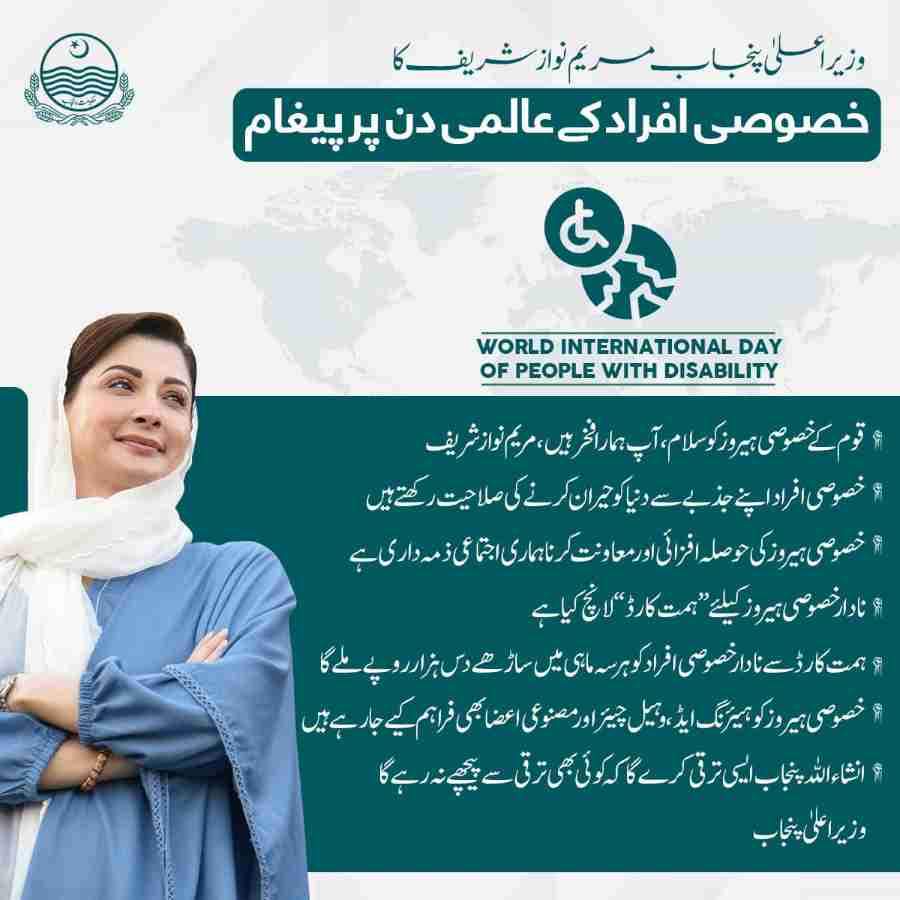
The Himmat Card program provides quarterly cash assistance to persons with disabilities registered with the Punjab Social Welfare Department, enabling them to meet healthcare, nutritional, and mobility needs while promoting social inclusion.
What is the CM Punjab Himmat Card and who launched it?
The Himmat Card is a specialized debit card loaded with quarterly financial assistance for registered persons with disabilities, launched by Chief Minister Maryam Nawaz Sharif as part of the government’s commitment to protect vulnerable segments. The card functions at any ATM and can be used for purchases at registered merchants.
How much financial aid is provided under the Himmat Card?
Eligible beneficiaries receive Rs. 10,500 per quarter, equivalent to Rs. 3,500 per month, credited directly to their Himmat Cards. This amount supplements the federal disability benefits and is exclusive to Punjab residents. Payments are synchronized with quarterly disbursement cycles.
Who is eligible for the Himmat Card?

Eligibility requires meeting all specified conditions:
- Permanent residence in any Punjab district with valid domicile
- Certified disability of at least 50% as determined by a government medical board
- Valid disability certificate issued by the Punjab Social Welfare Department
- Age between 18 and 60 years (exceptions for certain disability types)
- Family monthly income below Rs. 50,000 from all sources
- Valid CNIC with current address in Punjab
- Registration in the PSER database with verified disability information
What is the age limit and quota for women under the Himmat Card?
The program maintains an 18 to 60 years age range for general applicants, with exceptions for certain disability categories. A mandatory 30% quota is reserved for women with disabilities to ensure gender equity in benefit distribution. Women applicants meeting eligibility criteria receive priority processing.
How can disabled persons register for the Himmat Card?
Registration follows a structured offline process requiring personal presence:
- Obtain a disability certificate from a government hospital medical board after clinical assessment
- Visit the nearest District Social Welfare Office with CNIC, disability certificate, and proof of residence
- Complete the registration form with assistance from designated staff
- Undergo biometric verification and photograph capture
- Receive acknowledgment slip with expected card issuance timeline
- Collect Himmat Card from designated bank branch upon SMS notification
How to check your Himmat Card payment status online via the DPMIS portal?
Beneficiaries can check payment status through the DPMIS portal:
- Visit the official DPMIS portal link provided on the Social Welfare Department website
- Enter your 13-digit CNIC number without spaces
- Enter the captcha code displayed on screen
- Click “Submit” or “Check Status”
- View current payment status, last transaction date, and next expected payment
- Download or print status report for record keeping
What other benefits does the Himmat Card offer besides cash?
Beyond quarterly stipends, cardholders access additional benefits:
- Free healthcare at designated government hospitals through special counters
- Priority in government job applications under the disabled quota
- Free skill training and vocational rehabilitation programs
- Travel concessions on public transport in certain districts
- Exemption from various government fees and taxes
- Access to assistive devices through special distribution camps
3. CM Punjab Honhaar Scholarship Phase 2: What is the Monthly Stipend for Students?
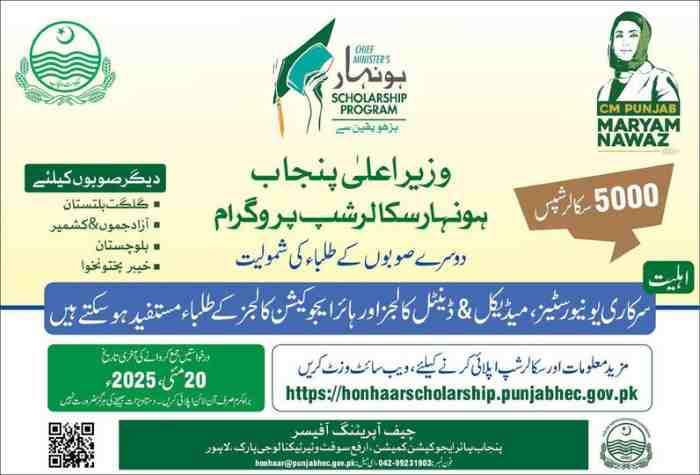
The Honhaar Scholarship Program provides financial support to academically talented students from low-income families, covering tuition fees and providing monthly stipends to enable continued education at college and university levels.
What is the CM Punjab Honhaar Scholarship Program?
This merit-cum-need based scholarship covers full tuition fees and provides monthly stipends to students enrolled in public sector colleges, universities, and technical institutes across Punjab, removing financial barriers to higher education.
Are private university students eligible for the CM Punjab Laptop Scheme or Honhaar Scholarship?
The Honhaar Scholarship primarily targets students enrolled in public sector institutions including government colleges, public universities, and TEVTA training institutes. Private university students are generally not eligible unless specific partnership programs are announced separately. The CM Punjab Laptop Scheme operates independently with different eligibility criteria.
What is the eligibility criteria for the Honhaar Scholarship?
Eligibility requires meeting academic and financial conditions:
- Punjab domicile with permanent residence in any district
- Enrollment in a public sector college, university, or TEVTA institute
- Minimum 70% marks or equivalent CGPA in the most recent annual examination
- Family monthly income below Rs. 60,000 from all sources
- Valid PSER registration with verified income information
- No other government scholarship currently being availed
- Regular student status with no disciplinary issues
Is the Honhaar Scholarship available for MS and PhD students?

Yes, the program covers students at all levels including intermediate, bachelor’s, master’s, MS, and PhD programs. However, separate quotas and stipend amounts apply for different education levels. Postgraduate students receive higher stipends compared to undergraduate scholars.
How to apply online for the CM Punjab Honhaar Scholarship Phase 2?
The online application process operates through the dedicated scholarship portal:
- Visit the official Honhaar Scholarship website provided by the Higher Education Department
- Click “New Registration” and enter CNIC and mobile number for verification
- Complete the application form with personal details, academic record, and family information
- Upload scanned copies of educational certificates, CNIC, domicile, and income proof
- Verify that PSER data is correctly linked to your application
- Submit the application and note the generated tracking ID
- Regularly check the portal for merit list announcements
What documents are needed for the scholarship application?
Applicants must prepare and upload:
- Matric and intermediate certificates (for undergraduate applicants)
- Bachelor’s degree and mark sheets (for postgraduate applicants)
- CNIC of applicant and father/guardian
- Punjab domicile certificate
- Family monthly income certificate from employer or NADRA
- Recent passport-sized photograph
- Proof of current enrollment in recognized institution
- PSER registration certificate or acknowledgment slip
How will the stipend be disbursed to selected students?
Selected students receive stipends through direct bank transfers to accounts opened in their names. The scholarship covers:
- Full tuition fees paid directly to educational institutions
- Monthly stipend deposited to student bank accounts for living expenses
- Book allowance at the start of each academic year
- Research support for postgraduate students as applicable
4. CM Punjab E-Bike Scheme: Can Students Get a Petrol Bike or Just Electric?
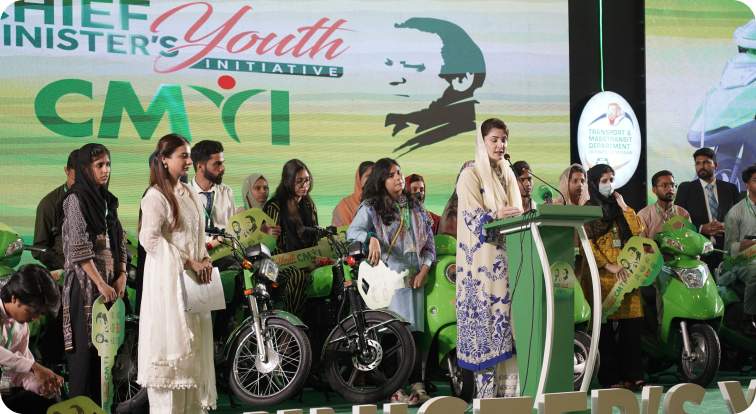
The CM Punjab E-Bike Scheme provides subsidized electric and petrol motorcycles to students, promoting affordable transportation while encouraging environmentally friendly mobility options across the province.
What is the CM Punjab E-Bike Scheme?
This scheme offers 20,000 e-bikes and 20,000 petrol bikes to students through a transparent balloting process, with the government providing substantial subsidies on each vehicle to make student transportation affordable and reliable.
Who is eligible for the CM Punjab E-Bike Scheme for students?
Eligibility requires:
- Enrollment in a recognized college or university in Punjab
- Regular student status with minimum 70% attendance
- Valid student ID card and institutional verification
- Punjab domicile with permanent residence
- Age between 18 and 25 years
- Valid learner’s permit or driving license
- No previous government vehicle subsidy
How much financial support is provided under the scheme?
The government provides Rs. 100,000 in two installments toward bike purchase:
- First installment of Rs. 50,000 upon selection and bike delivery
- Second installment of Rs. 50,000 after completing 6,000 km within specified period tracked through mobile app
- Students pay remaining cost through easy monthly installments
What is the process to apply and receive the subsidy?
The application process follows these steps:
- Visit bikes.punjab.gov.pk and complete online registration
- Enter educational details, CNIC, and mobile number for verification
- Upload scanned copies of student ID, CNIC, and domicile
- Complete institutional verification through college/university portal
- Participate in computerized balloting upon application closing
- Receive selection notification via SMS and email
- Visit designated dealership for biometric verification and bike delivery
Why do you need to cover 6,000 km to get the full subsidy?
The distance requirement ensures that subsidized bikes are actually used for educational commuting rather than being resold or misused. Students install the Green Credit App on their smartphones, which tracks mileage through GPS technology. Completing 6,000 km within the specified timeframe triggers the second subsidy installment, promoting genuine usage.
5. CM Punjab Free Solar Panel Scheme: Who is Eligible for 1kW System?
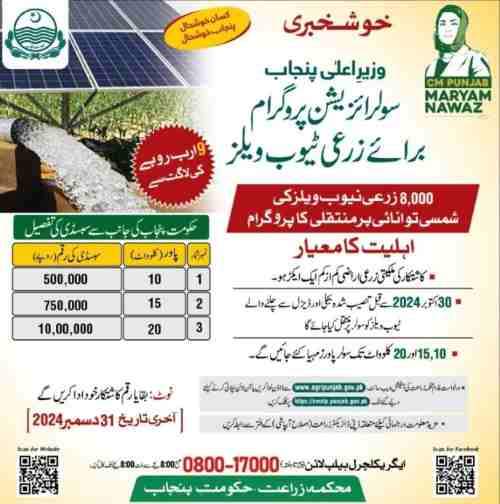
The Free Solar Panel Scheme provides complete 1kW solar systems to low-income households consuming minimal electricity, reducing their energy bills and promoting renewable energy adoption across Punjab.
What is the objective of the CM Punjab Free Solar Panel Scheme?
The scheme aims to provide relief from rising electricity costs to poor households while contributing to Pakistan’s renewable energy targets and reducing strain on the national grid during peak summer months.
Who is eligible for the 1kW Solar System?
Eligibility targets households meeting specific consumption patterns:
- Average monthly electricity consumption below 200 units (for general eligibility)
- Average monthly consumption between 200-300 units (for subsidized purchase option)
- Valid electricity connection in applicant’s name
- Punjab residence with verified PSER registration
- No previous government solar subsidy availed
- Owned house (not rented) with suitable roof space for panel installation
How to apply for the Free Solar Panel Scheme via SMS (8800) or online portal?
Two application methods are available:
SMS Method:
- Open messaging app on registered mobile number
- Type your 13-digit CNIC number without spaces
- Send to 8800
- Wait for confirmation SMS with application tracking number
Online Method:
- Visit cmsolarscheme.punjab.gov.pk
- Click “New Application” and enter CNIC and mobile number
- Complete the application form with electricity bill details
- Upload copy of recent electricity bill and CNIC
- Submit and note application tracking number
What is the balloting process for the solar scheme?
Due to high demand exceeding available systems, selection occurs through computerized transparent balloting:
- All verified eligible applications enter the lottery system
- Balloting conducted live with media and civil society representatives present
- Selected applicants receive SMS and portal notifications
- Physical verification conducted at selected applicants’ residences
- Solar systems installed by government-approved contractors free of cost
- Installation completion confirmed through beneficiary signature
6. CM Punjab Kissan & Livestock Card: How Do Farmers Get Interest-Free Loans?
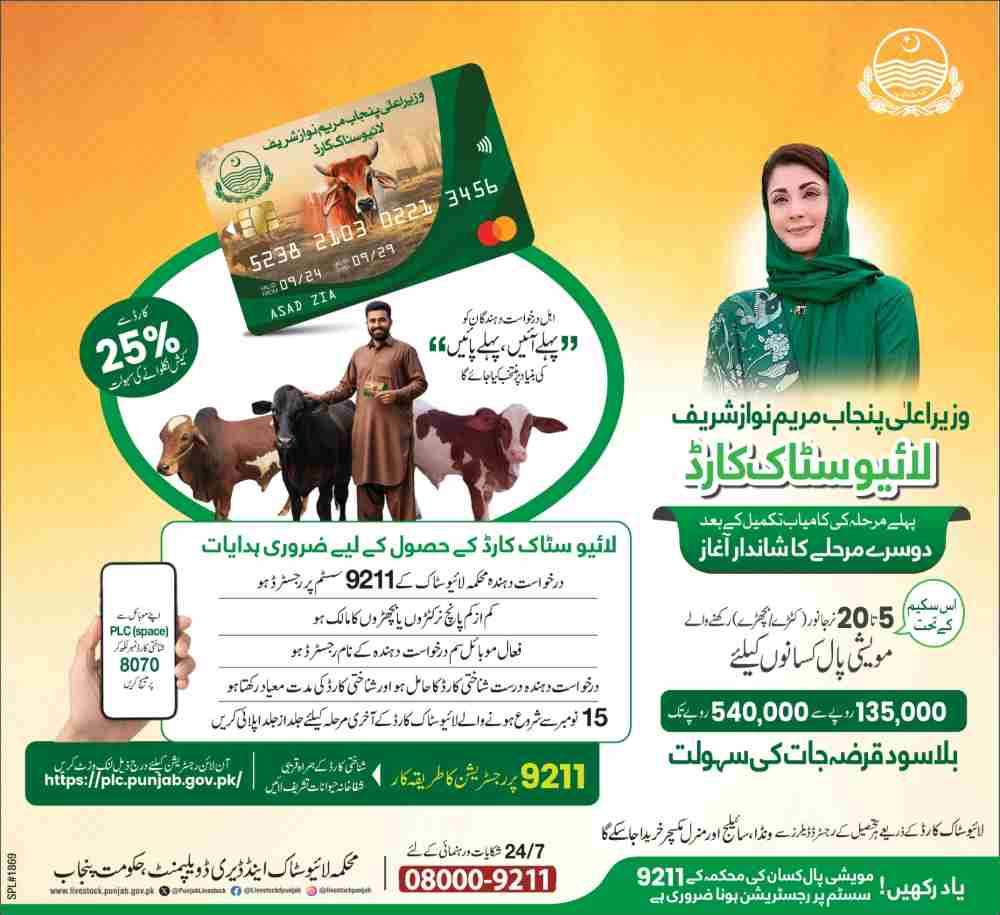
The Kissan Card and Livestock Card programs provide interest-free agricultural loans to small farmers and livestock owners, enabling purchase of inputs, seeds, fertilizers, and animal feed without falling into debt traps.
What is the CM Punjab Kissan Card and how does it benefit farmers?
The Kissan Card is a biometric debit card linked to an interest-free credit line for small farmers, allowing cashless purchase of agricultural inputs from registered dealers. Benefits include zero interest, instant credit at point of sale, and reduced dependence on expensive informal loans.
How do farmers apply for interest-free loans through the Kissan Card?
Application requires:
- Registration with Punjab Land Record Authority for verified land ownership
- PSER completion with accurate agricultural information
- Visit nearest Bank of Punjab branch with CNIC and land records
- Complete loan application with assistance from bank staff
- Biometric verification and card issuance upon approval
- Card activation and immediate usability at registered dealers
How do I get a Punjab Livestock Card for my dairy farm?
The Livestock Card serves dairy farmers and livestock owners:
- Register animals with Punjab Livestock Department for verified ownership
- Complete PSER with livestock holding information
- Visit designated Bank of Punjab branch
- Submit application with animal registration certificates
- Receive card after verification and approval
- Use card for interest-free purchase of animal feed, medicines, and veterinary services
What is the loan limit under the Kissan Card?
Loan limits vary by landholding size and crop type:
- Small farmers (up to 5 acres): Up to Rs. 75,000 per season
- Medium farmers (5-12.5 acres): Up to Rs. 150,000 per season
- Livestock owners: Up to Rs. 100,000 based on animal count
- Limits reset each season upon repayment
What is the last date to apply for the Kissan Card?
The program operates on a rolling basis with continuous application acceptance. However, seasonal deadlines apply for specific crop cycles. Farmers should apply at least two months before the sowing season to ensure card activation before input purchase requirements arise.
7. Punjab Dhee Rani Program: How Much Financial Aid for Weddings?
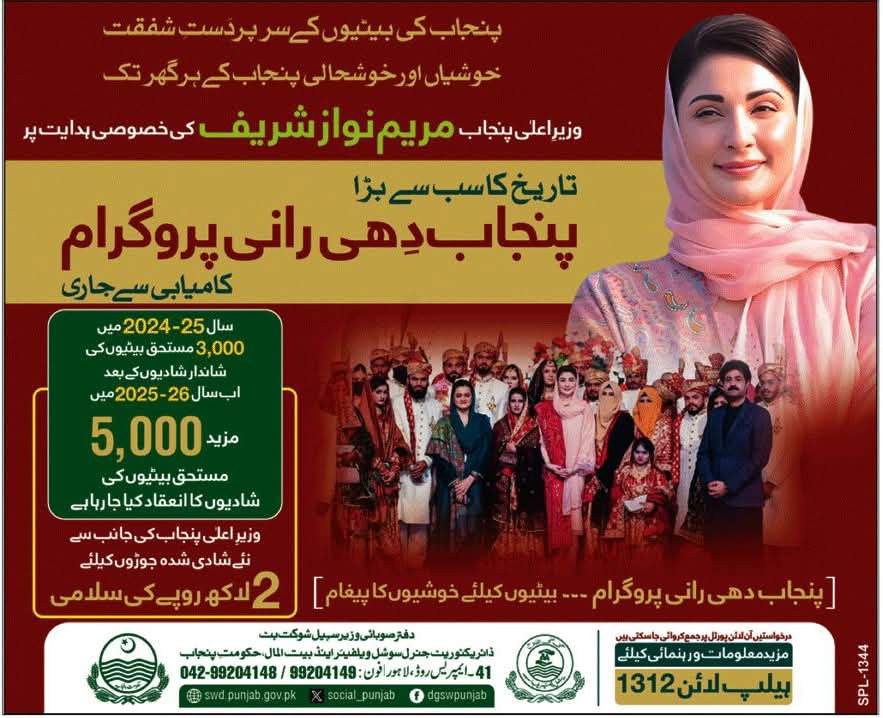
The Dhee Rani Program provides comprehensive wedding assistance to families unable to afford marriage expenses for their daughters, including cash grants, bridal items, and ceremony support.
What is the Punjab Dhee Rani collective marriage program?
This program organizes dignified collective marriage ceremonies for deserving couples, providing complete wedding packages including cash assistance, bridal dresses, jewelry sets, household items, and catering for limited family guests.
Who is eligible for the CM Punjab Dhee Rani Program?
Eligibility targets the most vulnerable families:
- Punjab domicile with permanent residence
- Family monthly income below Rs. 30,000 from all sources
- Daughter aged 18 years or above
- Father deceased, disabled, or unable to afford marriage expenses
- No previous marriage for the daughter
- Verified through PSER and local community verification
How much financial assistance is provided to couples under this scheme?
Each couple receives comprehensive assistance valued at approximately Rs. 200,000:
- Cash grant of Rs. 100,000 deposited in bride’s bank account
- Complete bridal dress and jewelry set
- Household items including bed set, kitchen utensils, and basic furniture
- Catering arrangements for limited family guests at collective ceremony
- Transportation arrangements for bride and family
What is the income limit for the Dhee Rani program?
The program strictly enforces a maximum family income limit of Rs. 30,000 per month verified through multiple sources including PSER data, employer verification, and neighborhood inquiries. Applicants exceeding this limit are disqualified regardless of other factors.
How can widows or deserving families apply for this program?
Application process:
- Visit nearest Social Welfare Department office or Union Council
- Submit application with daughter’s CNIC, father’s death certificate (if applicable), and income proof
- Complete verification interview with social welfare officer
- Provide details of proposed groom (if arranged)
- Await selection for upcoming collective marriage event
- Participate in pre-marriage briefing and documentation session upon selection
8. Nigehban Ramzan/Ration Package: How to Check Your CNIC Eligibility?
The Nigehban Ramzan Relief Package provides free ration bags to deserving families during the holy month of Ramzan, ensuring food security and enabling dignified observance of religious practices.
What was the CM Punjab Nigehban Ramzan Relief Package?
This special seasonal program distributed free ration bags containing essential food items including flour, rice, sugar, cooking oil, pulses, and dates to deserving families throughout Ramzan. Distribution occurred through designated points across all districts.
How do I verify my CNIC for the Ramzan Nigehban Relief Package?
Eligibility verification for seasonal packages:
- Send CNIC number to specified short code (varies by package)
- Receive confirmation SMS indicating eligibility status
- Visit designated distribution point with original CNIC
- Complete biometric verification at distribution center
- Receive ration bag upon successful verification
How can I track my Nigehban Card payment status?
For ongoing programs, beneficiaries track status:
- Visit official portal link provided on SMS or government website
- Enter 13-digit CNIC number without spaces
- Enter captcha code for security verification
- View current status, last transaction, and next scheduled payment
- Report discrepancies through helpline 1312
9. CM Punjab Minority Card: Who is Eligible and How to Apply?
The CM Punjab Minority Card provides financial assistance to deserving families from minority communities, ensuring inclusive welfare coverage and protecting vulnerable religious minorities.
What is the CM Punjab Minority Card?
This specialized welfare card provides quarterly cash assistance to low-income families belonging to officially notified minority communities including Christians, Hindus, Sikhs, Ahmadis, and others, recognizing their specific vulnerabilities and promoting social inclusion.
What benefits does the Minority Card provide?
Cardholders receive:
- Quarterly cash assistance of Rs. 10,500 credited directly to card
- Priority access to other welfare programs
- Assistance with religious ceremonies and festivals
- Support for education of minority community children
- Healthcare access at designated facilities
What is the application process for minority communities?
Application requires:
- PSER completion with accurate minority status information
- Visit District Social Welfare Office with CNIC and proof of community membership
- Complete Minority Card application with assistance from designated officer
- Undergo biometric verification and photograph capture
- Receive card upon approval and SMS notification
- Activate card at nearest designated bank ATM
10. CM Punjab Internship Program: How Do Students Register?
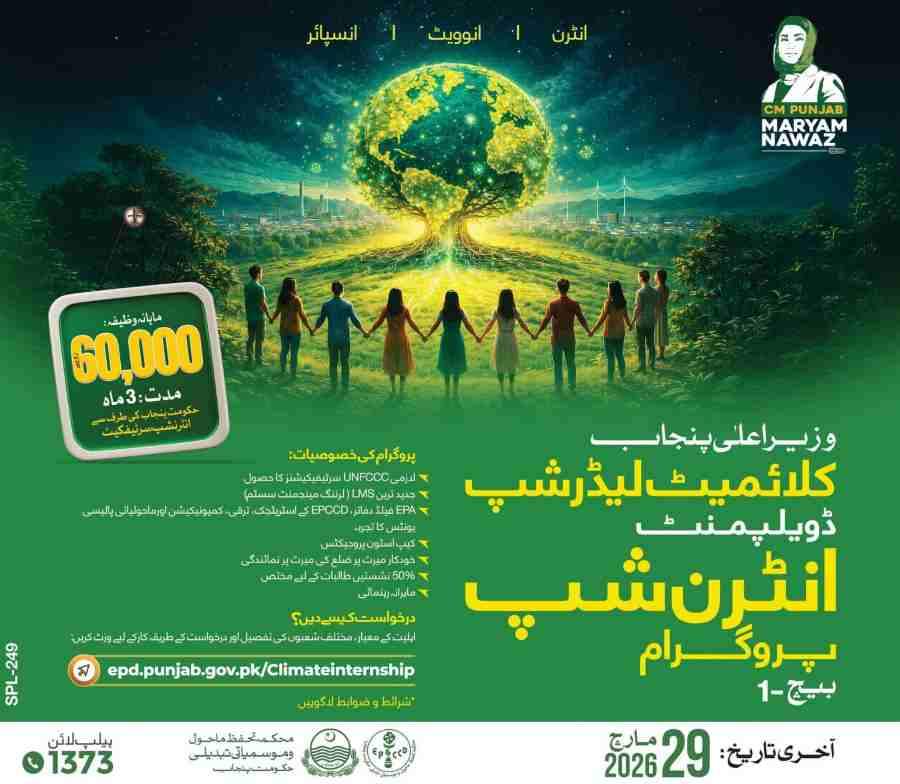
The CM Punjab Internship Program provides paid internship opportunities to fresh graduates in government departments and private sector organizations, enabling skill development and employability enhancement.
What is the CM Punjab Internship Program?
This program offers six-month paid internships to recently graduated students, placing them in government departments, autonomous bodies, and partner private organizations for practical work experience and professional skill development.
Who can apply for the internship?
Eligibility requires:
- Punjab domicile with permanent residence
- Bachelor’s or master’s degree from recognized institution
- Graduation within last two years
- Maximum age 25 years
- Minimum 60% marks or equivalent CGPA
- No current employment or previous internship under this program
- Valid PSER registration
How to register for the CM Punjab Internship Program online?
Online registration process:
- Visit official internship portal announced through newspapers and websites
- Click “New Registration” and enter CNIC for verification
- Complete profile with educational details, skills, and preferred placement areas
- Upload scanned copies of degrees, CNIC, domicile, and photograph
- Submit application and note tracking number
- Appear for skill assessment tests if shortlisted
- Receive placement offer upon selection
How to Apply for CM Punjab Schemes if You Don’t Have Internet Access?
The Punjab government ensures that digital exclusion does not prevent deserving citizens from accessing welfare benefits through multiple alternative channels.
Role of the “Maryam Ke Dastak” mobile app in citizen facilitation
Even for users with limited internet access, the Maryam Ke Dastak app offers simplified interfaces with Urdu language support, voice guidance, and minimal data requirements. Family members or neighbors with smartphones can assist elderly or illiterate citizens in completing applications through this user-friendly platform.
Locating your nearest Social Welfare Department (DG Social Welfare Punjab) office
Every district in Punjab has a Directorate of Social Welfare office located at the district headquarters. Citizens can locate their nearest office through:
- Calling helpline 1312 for address and contact information
- Asking at their local Union Council office for referral
- Visiting the nearest Tehsil complex for departmental directories
- Asking local councilors or community leaders for guidance
What is the process for door-to-door verification by field teams?
Government field teams regularly conduct door-to-door verification drives:
- Teams arrive in specific neighborhoods announced through local mosques and community announcements
- Officials display government identification cards and wear branded vests
- Households provide CNIC and answer survey questions
- Data entered directly into tablets with real-time upload
- Households receive acknowledgment SMS with reference number
What are the Common Documents Required for Most CM Punjab Schemes?
Understanding the universal documentation requirements simplifies preparation for multiple scheme applications.
The Universal Checklist: CNIC, Domicile, and Income Proof
Every application requires these three core documents:
- CNIC: Valid computerized national identity card with current address
- Domicile: Punjab domicile certificate issued by relevant authority
- Income Proof: Salary slips, employer certificate, business accounts, or NADRA income certificate
Why is your NADRA Family Registration Certificate (FRC) important?
The FRC provides verified family composition data including spouse and children details, preventing fraudulent claims and ensuring benefits reach entire families. Most programs require FRC to verify family size and relationships.
How to get a Disability Certificate from the Social Welfare Department?
Disability certification requires:
- Visit nearest government teaching hospital with CNIC and photographs
- Obtain referral to medical board from Out Patient Department
- Appear before specialized medical board comprising three doctors
- Undergo clinical assessment and disability percentage determination
- Receive disability certificate within specified timeframe
- Register certificate with Social Welfare Department for benefit eligibility
Understanding the Non-Ownership Affidavit for housing schemes
The non-ownership affidavit is a sworn legal declaration that applicant and family members do not own any house or built property anywhere in Pakistan. This affidavit, executed before a notary public or magistrate, prevents individuals with existing housing from claiming benefits meant for the homeless.
How to Check Your Application Status and Track Payments?
Multiple channels exist for monitoring application progress and payment receipt after successful selection.
Tracking Your Apni Chhat Apna Ghar Application by CNIC
Applicants track housing scheme status:
- Visit acag.punjab.gov.pk and click “Check Status”
- Enter CNIC number and application tracking ID
- View current processing stage and any pending requirements
- Download status report for record keeping
Checking Himmat Card Payment via the DPMIS Portal
Himmat Card beneficiaries:
- Access DPMIS portal through Social Welfare Department website
- Enter CNIC and captcha code
- View payment history, current balance, and next expected credit date
- Report non-receipt through portal complaint mechanism
Using the 8171 Web Portal for BISP and related schemes
Federal program beneficiaries:
- Visit 8171.bisp.gov.pk
- Enter CNIC and captcha code
- View eligibility status for various federal programs
- Access complaint registration and tracking
What is the helpline number for Punjab Social Welfare schemes?
The unified helpline 1312 operates daily 8 AM to 8 PM for all scheme-related queries, complaints, and guidance. Citizens can call from any network without charges.
Frequently Asked Questions (FAQs) About CM Punjab Social Welfare Programs
How can I check my eligibility for the CM Punjab Himmat Card online?
Visit the Social Welfare Department portal, enter your CNIC, and view your eligibility status based on PSER data and disability certification records. The system displays whether you meet all criteria and if any documents are pending.
What is the official website to apply for the Apni Chhat Apna Ghar scheme?
The official application portal is acag.punjab.gov.pk. No other website is authorized to accept applications. Beware of fraudulent websites模仿 the official portal.
Can widows apply for the Punjab Livestock Card?
Yes, widows owning livestock are eligible to apply provided they meet the income criteria and possess verified animal ownership records. Special quotas may apply for women applicants.
Are government employees eligible for the Apni Chhat Apna Ghar program?
Yes, government employees earning below Rs. 60,000 monthly and meeting all other criteria are eligible, although preference in balloting is given to non-government applicants.
How do I register for the Punjab Socio-Economic Registry (PSER)?
Visit pser.punjab.gov.pk, click New Registration, enter CNIC and mobile number, complete the OTP verification, and fill the household survey form accurately.
Is there an online portal for the CM Punjab Free Solar Panel Scheme?
Yes, visit cmsolarscheme.punjab.gov.pk for online applications, or send your CNIC to 8800 via SMS for simplified registration.
What is the monthly installment for the CM Punjab Petrol Bike Scheme?
Selected students pay approximately Rs. 5,000 to Rs. 7,000 monthly depending on bike model and loan tenure, with the government subsidy covering a significant portion.
Can students from other provinces studying in Punjab apply for E-Bikes?
No, the scheme requires Punjab domicile. Students from other provinces enrolled in Punjab institutions are not eligible unless they possess valid Punjab domicile certificates.
Where can I find the PSER registration centers in Lahore?
PSER registration centers operate at all Union Council offices, Tehsil offices, and District Social Welfare Office located near Data Darbar. Additional mobile registration camps are announced periodically.
Conclusion: Your Path to Benefiting from CM Punjab Schemes
The Top 10 CM Punjab Social Welfare Programs represent an unprecedented commitment to citizen welfare, covering housing, health, education, transportation, agriculture, and social protection. By completing your PSER registration first and then applying for specific schemes matching your profile, you position yourself to receive maximum benefits from these transformative initiatives.
Every application process is designed to be transparent, digital, and completely free. Avoid agents promising guaranteed approvals, as they only seek to exploit your trust. Use the official portals, the 1312 helpline, and the Maryam Ke Dastak app to navigate your welfare journey independently.
Bookmark this guide, share it with family and friends who may benefit, and take the first step today by completing your PSER registration. Your pathway to government support begins with that single, simple action.
Disclaimer: This guide provides comprehensive information about Punjab government welfare programs based on publicly available official sources. Scheme details, eligibility criteria, and application processes may change periodically. Always verify current information through official government portals and the 1312 helpline before applying.
Frequently Asked Questions (FAQs)
How do I apply for the CM Punjab Laptop Scheme?
The CM Punjab Laptop Scheme application process is announced through the Higher Education Department website when new phases are launched. Students meeting merit criteria receive notifications through their institutions.
What is the income limit for the Punjab Dhee Rani collective marriage program?
The program requires family monthly income below Rs. 30,000 verified through multiple sources including PSER data, employer verification, and community inquiries.
Can I apply for a 1kW Solar System if I use 300 units of electricity?
Households consuming 200-300 units monthly may qualify for subsidized purchase rather than free installation. Send your CNIC to 8800 or visit the portal to check specific eligibility.
Is the Honhaar Scholarship available for MS and PhD students?
Yes, postgraduate students including MS and PhD scholars are eligible with higher stipend amounts compared to undergraduate students.
How do I get a Punjab Livestock Card for my dairy farm?
Visit the nearest Bank of Punjab branch with your animal registration certificates, CNIC, and PSER number to complete the Livestock Card application.
How do I verify my CNIC for the Ramzan Nigehban Relief Package?
Send your CNIC number to the short code announced during Ramzan package launches. You will receive an SMS confirming eligibility and distribution center details.
What is the process for the CM Punjab Cancer Treatment Card?
Cancer patients should visit the nearest teaching hospital oncology department for registration and referral to the program, which provides financial assistance for treatment costs.

Add a Comment