
The holy month of Ramzan brings with it the blessing of togetherness, but for millions of Pakistani families, it also brings the anxiety of managing kitchen expenses amid soaring inflation. If you are wondering how to check your Ramzan Package online using your CNIC through SMS codes like 9999 and 8070, you have arrived at the right place. This definitive guide will walk you through every single step of the process, from understanding who qualifies for the Rs. 13,000 federal relief to registering for Maryam Nawaz’s Rs. 10,000 Nigehban scheme, ensuring you receive your entitled aid with dignity and without falling for scams.
Key Takeaways
- Federal vs Provincial Distinction: The 9999 SMS code is for the Prime Minister’s federal Rs.13,000 relief package, while 8070 is dedicated to Punjab’s Maryam Nawaz Nigehban program offering Rs.10,000 cash or ration bags.
- Eligibility Is Automated: Your qualification is determined automatically by your PMT score and NSER data; government employees and active taxpayers are strictly ineligible for all packages.
- Biometric Verification Is Mandatory: You must complete thumb verification at the time of collection, whether receiving cash from a bank or a ration bag at your doorstep.
- Registration Is Completely Free: No agent, no website, and no individual can charge you any fee for registration or eligibility checking—report anyone demanding money immediately.
- SIM Registration Matters Most: The mobile number you use to send your CNIC to 9999 or 8070 must be registered in your exact name as per NADRA records, or your request will be rejected automatically.
- Read More: Prime Minister Ramzan Package | 9999 Official Portal (For PKR 13K)
- Read More: How To Apply For CM Punjab Ramzan Nigehban Card (Get 10000)
- Read More: How To Get Rs10,000 Through Nigehban Ramzan Package
- Read More: How to Activate Ramzan Nigehban Card (& Withdraw 10000)
Ramzan Package 2026: Federal & Provincial Programs
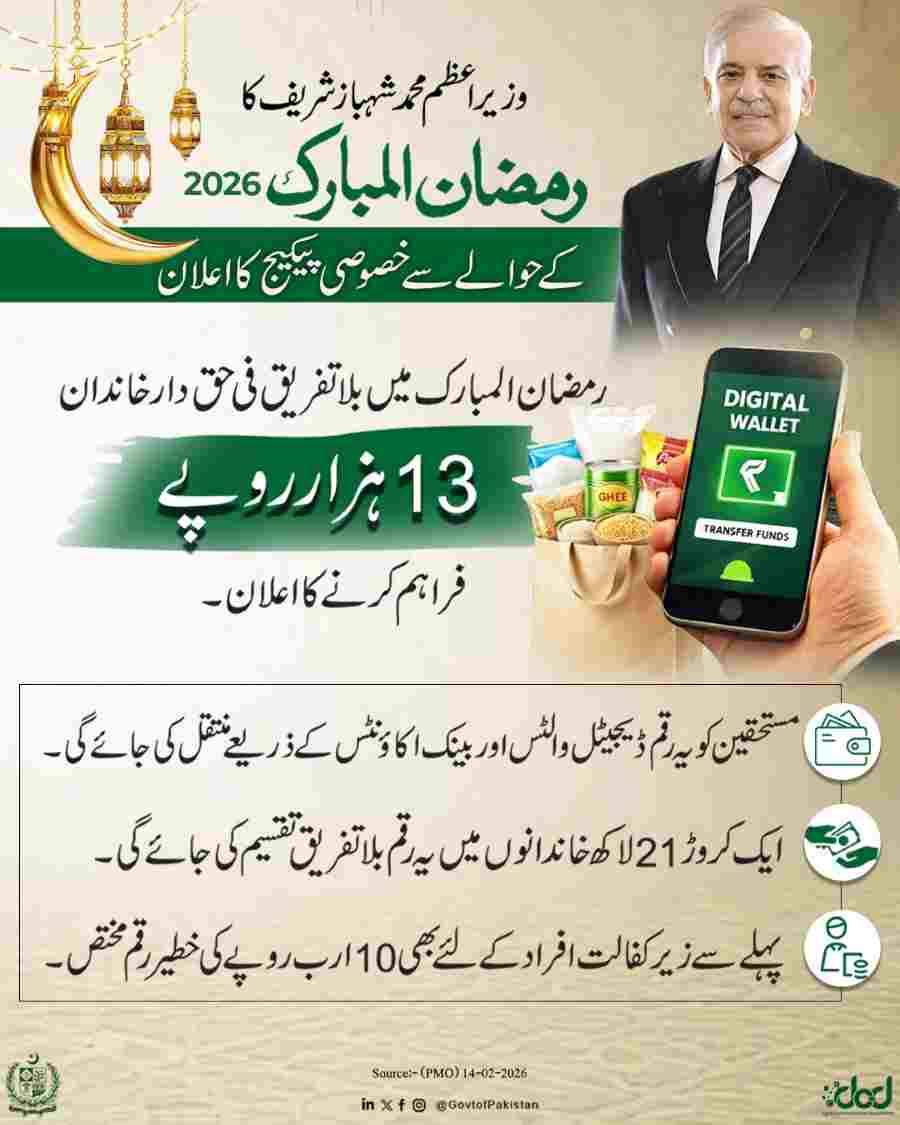
Table Of Contents
What exactly is the Ramzan Package 2026 and who is launching it?
The Ramzan Package 2026 is a multi-faceted relief initiative launched by both the federal and provincial governments of Pakistan to provide financial and food assistance to low-income families during the holy month of Ramzan. The core objective is to ensure that deserving households can observe the month with dignity, without the burden of inflated prices of essential commodities like flour, sugar, ghee, and pulses.
At the federal level, the Prime Minister’s Ramzan Relief Package is being executed under the supervision of the Ministry of Poverty Alleviation and Social Safety, in close coordination with the Benazir Income Support Programme (BISP) and the National Database and Registration Authority (NADRA). This package primarily uses the National Socio-Economic Registry (NSER) database to identify eligible families through their Poverty Means Testing (PMT) scores.
Simultaneously, provincial governments have launched their own parallel initiatives. The Government of Punjab, under Chief Minister Maryam Nawaz, has rolled out the Nigehban Ramzan Package, which is accessible via the Punjab Socio-Economic Registry (PSER) portal. The Sindh government has also announced a relief package for its residents, accessible through its dedicated portal. This layered approach ensures that coverage extends to all four provinces, Azad Jammu Kashmir, and Gilgit Baltistan, although the exact amount and mode of disbursement may vary by region.
Maryam Nawaz 10000 Scheme (How To get 10000)
To receive a payment in the amount of 10,000 rupees , after confirming your registration via SMS (from number 8070 ) or PSER portal , use one of the following methods:1. Biometric verification (BOP/Agents)This is the most common method. You need:
- Visit your nearest payment pick-up point or authorized banking agent ( Bank of Punjab , HBL Connect or UBL Omni ).
- Present your original CNIC (identity card).
- Pass fingerprint verification .
- Get cash on the spot.
2. Withdrawal via ATMIf you have been issued a
Nigehban Card or
Himmat Card :
- Insert your card into a Bank of Punjab (BOP) or partner bank ATM.
- Enter your secret PIN code.
- Select the cash withdrawal option.
3. Mobile wallets (JazzCash / Easypaisa)
- You will receive an SMS with a transaction code.
- With this code and original CNIC, visit any JazzCash or Easypaisa outlet to withdraw cash.
Maryam Nawaz Ramzan Relief Package
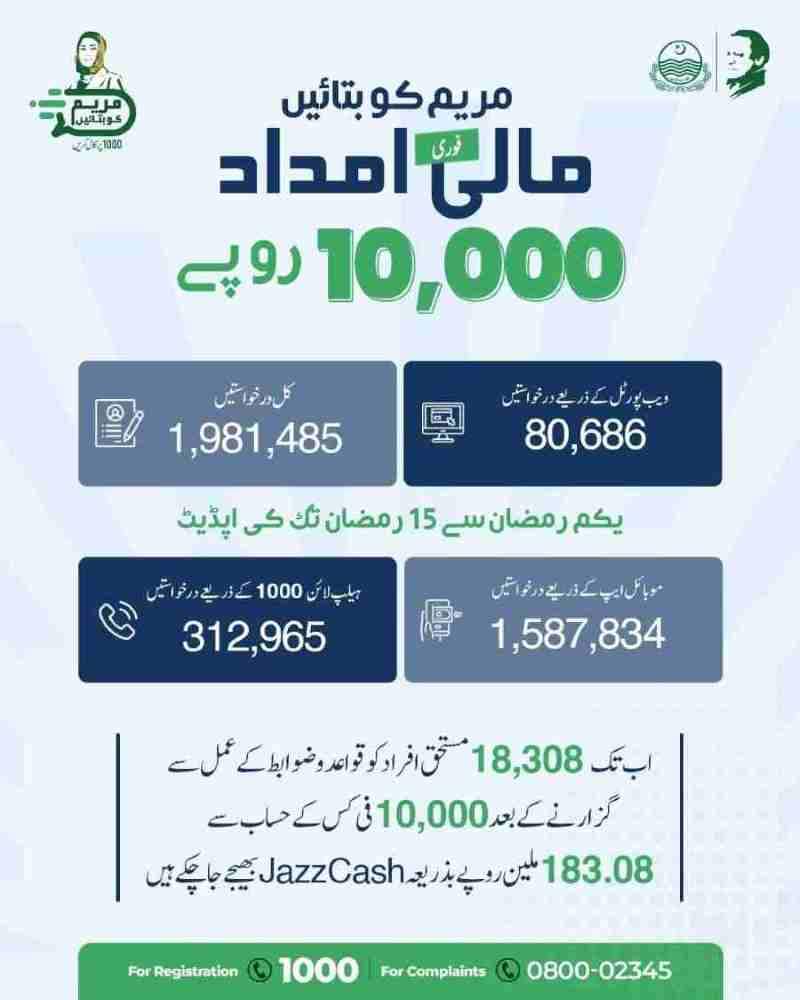
This update shows the progress of the Rs. 10,000 cash distribution during the first half of Ramadan.
1. How People Applied
- Total Applications: Almost 2 million (1,981,485) people have applied.
- Door-to-Door: 80,686 applications were collected via door-to-door visits.
2. How They Registered (1st to 15th Ramadan)
- Via Tehsil Offices (Code 1000): 312,965 applications.
- Via Mobile App: The most popular method with 1.58 million applications.
3. Money Distribution
- Beneficiaries So Far: 18,308 deserving people have received the money.
- Amount: Each person got Rs. 10,000.
- Total Paid: Rs. 183.08 million has been sent so far.
- Payment Method: Money was transferred through JazzCash.
4. Helpline Numbers
- For Registration: 1000
- For Complaints: 0800-02345
What is the difference between the PM’s Rs.13,000 Package and Maryam Nawaz’s Rs.10,000 Scheme?
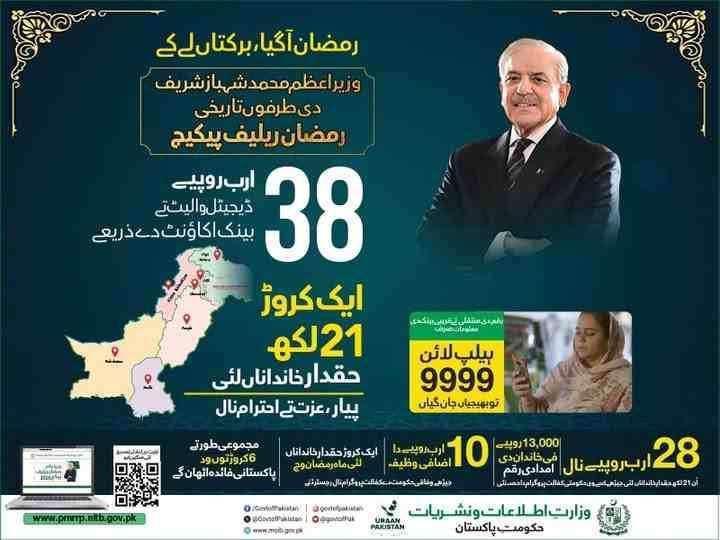
The primary difference lies in the funding source, target beneficiaries, and the mode of disbursement. The Prime Minister’s Rs.13,000 package is a federal initiative aimed at supporting low-income families across the entire country, including Balochistan, KPK, Sindh, and the federal territories. This amount was increased from the previous Rs.5,000 per family to provide more substantial relief amidst rising inflation. The Rs.38 billion fund is distributed through digital wallets, bank transfers, and branchless banking agents to ensure transparency and eliminate the need for beneficiaries to stand in long queues.
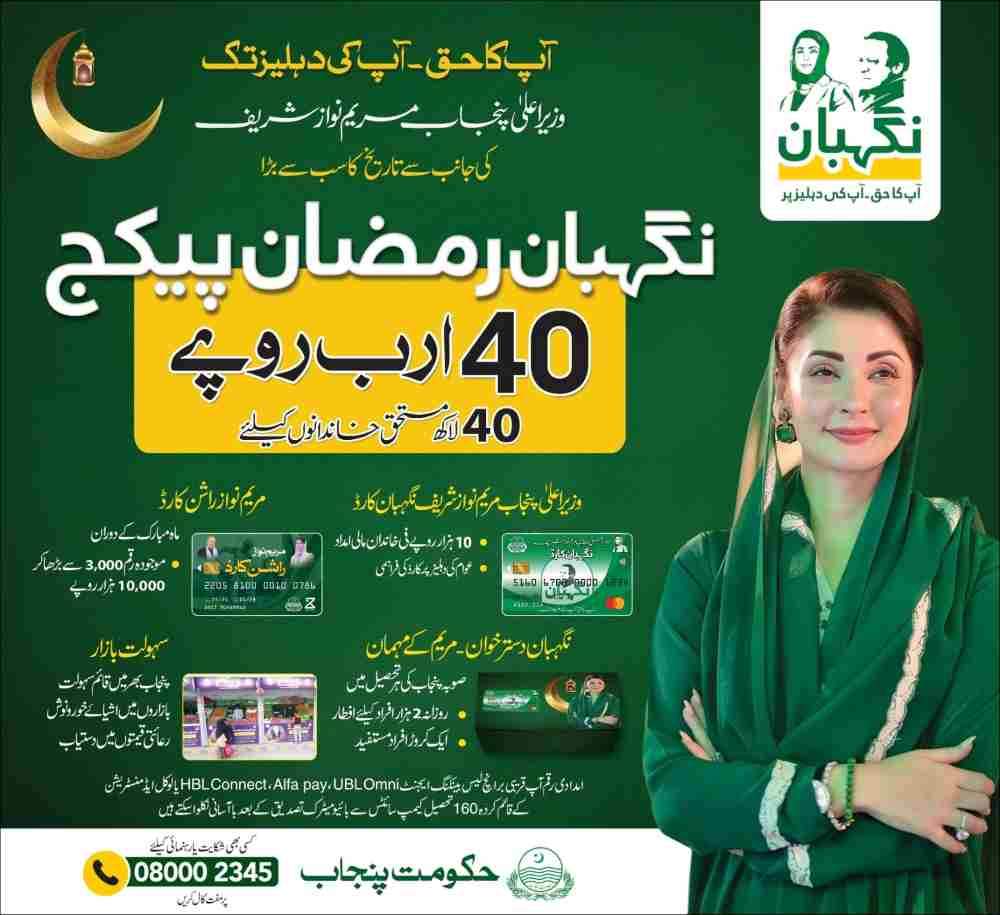
On the other hand, Maryam Nawaz’s Rs.10,000 scheme, officially part of the Nigehban Ramzan Program, is exclusively for residents of Punjab province. This package offers eligible families a choice between receiving a cash grant of Rs.10,000 or a free ration bag delivered to their doorstep. The ration bag typically contains essential items: 10 kg of flour (atta), 2 kg of sugar, 2 kg of ghee or oil, 2 kg of rice, and 1 kg of chickpeas (chana). While the federal package relies heavily on BISP data, the Punjab program uses the PSER database, which requires a separate household survey for registration.
Is the Ramzan Package available for residents of Sindh and KPK?
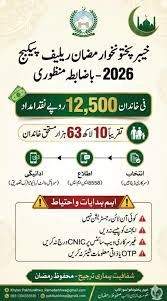
Yes, the Ramzan Package is absolutely available for residents of Sindh and Khyber Pakhtunkhwa (KPK), though the channels and amounts may differ from the Punjab model. For the federal Prime Minister’s package, residents of all provinces are eligible to check their status by sending their CNIC to 9999. If their data exists in the NSER or BISP databases and they meet the poverty criteria, they will receive the Rs.13,000 cash grant through digital means.
Specifically for Sindh, the provincial government has launched its own Sindh Ramzan Relief Package, which provides a cash grant of Rs.5,000 to low-income families in the province. Residents can register for this by sending their CNIC to 8070 or by visiting the official Sindh relief website at relief.sindh.gov.pk. Similarly, the KPK government often announces its own supplementary package, which may include additional cash support or ration on top of the federal grant. For residents of Balochistan, AJK, and Gilgit-Baltistan, the federal package via 9999 is the primary channel, ensuring nationwide coverage.
Eligibility Criteria: Who Can Apply for the Ramzan Package?
Who is eligible for the Rs.13,000 PM Ramzan Relief Package? (Federal)
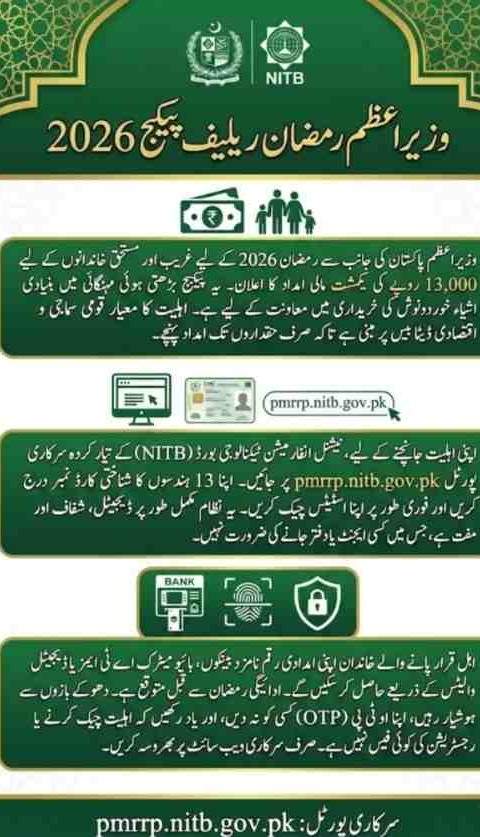
Eligibility for the federal Rs.13,000 PM Ramzan Relief Package is determined through a data-driven, automated system that cross-references your CNIC with multiple government databases. You are likely eligible if you belong to a low-income household, possess a valid and active CNIC, and are registered in the National Socio-Economic Registry (NSER) with a Poverty Means Testing (PMT) score that falls below the government-defined threshold. The system specifically targets families who are not active taxpayers and are not employed by the government.
Being a beneficiary of the Benazir Income Support Programme (BISP) Kafalat scheme significantly increases your chances, as these households have already undergone rigorous verification for poverty. The government has announced that over 12.1 million families across the country will benefit from this package. The eligibility check is instant: you send your CNIC to 9999, and the system replies with either “Eligible,” “Under Verification,” or “Not Eligible,” based on your real-time data match.
What is the maximum monthly income allowed to qualify for the Nigehban Package? (Punjab)
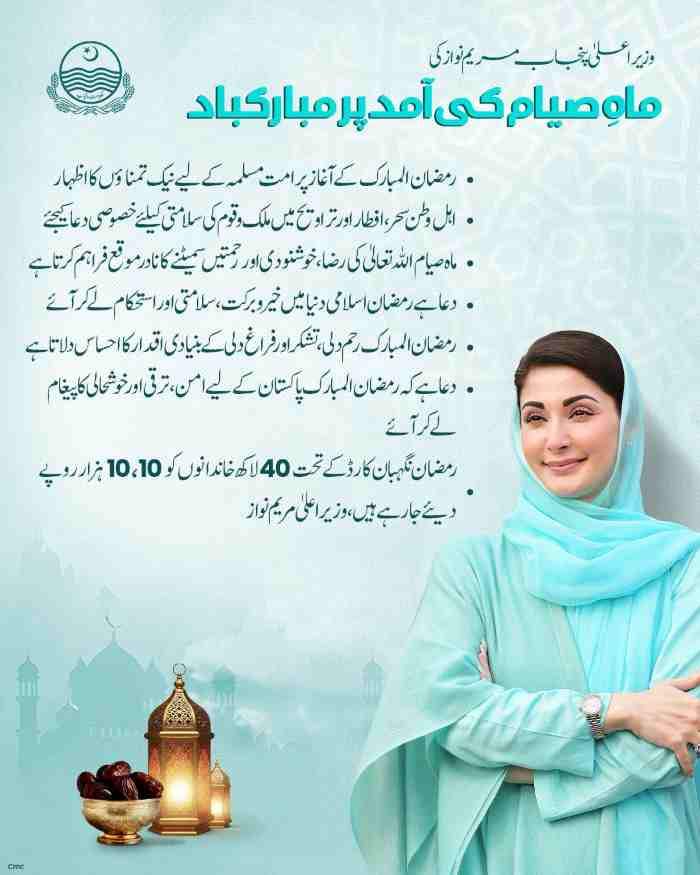
For the Maryam Nawaz Nigehban Package in Punjab, the government has set a clear monthly income threshold to ensure the aid reaches the most deserving households. Your monthly household income must generally be less than Rs.45,000 to Rs.60,000 to qualify. This income criterion is a primary filter used by the Punjab Socio-Economic Registry (PSER) during the survey and verification process.
Officials have stated that data collection for the scheme is over 94% complete, and families earning below Rs.45,000 are being prioritized. This threshold ensures that daily wage earners, laborers, and small-scale farmers who have been hit hardest by inflation are covered. It is important to note that simply having a low income is not enough; your household must also be registered in the PSER database. If you haven’t completed the PSER survey, you must do so at pser.punjab.gov.pk before you can be considered for the package.
Are BISP beneficiaries automatically eligible for the Ramzan package?
Yes, in the vast majority of cases, being an existing beneficiary of the Benazir Income Support Programme (BISP) Kafalat scheme automatically makes you eligible for the Ramzan package without requiring any fresh application. Since BISP beneficiaries have already been vetted through a comprehensive poverty survey and have a verified PMT score, their data is considered pre-qualified for most relief initiatives.
For the federal Rs.13,000 package, BISP-registered women are at the forefront of the disbursement strategy. The government has allocated Rs.10 billion specifically to provide extra financial support to the 10 million families already registered under the Kafalat program. These families will receive the Rs.13,000 directly into their BISP-linked digital wallets or bank accounts. Similarly, in Punjab, BISP beneficiaries are often automatically included in the Nigehban program’s lists, though it is always recommended to send your CNIC to 8070 to confirm your status.
Can government employees apply for the 2026 Ramzan subsidy?
No, government employees are strictly and explicitly disqualified from applying for or receiving any form of Ramzan subsidy or relief package, whether federal or provincial. The program is designed with the specific intent of targeting non-government, low-income households who are not on the regular payroll of the state.
The verification system is linked to NADRA and the civil service database, so if your CNIC is associated with a government job, the system will automatically flag you as ineligible when you send your CNIC to 9999 or 8070. This policy ensures that the limited resources are reserved for the private sector laborers, daily wagers, and unemployed individuals who genuinely need the support to afford basic necessities during Ramzan.
What is a “PMT Score,” and how does it affect my eligibility?
The PMT Score, or Poverty Means Testing score, is a proxy means test score calculated by NADRA and BISP to determine the socio-economic status of a household. It is a statistical number derived from a detailed survey that collects data on various household indicators, including the number of family members, education levels, types of housing, ownership of assets (like refrigerators, motorcycles, or agricultural land), and monthly utility consumption.
A lower PMT score indicates a higher level of poverty and vulnerability. Therefore, if your household has a very low PMT score, your chances of being eligible for the Ramzan package are significantly higher. This score is the cornerstone of the NSER database. When you send your CNIC to 9999, the system instantly checks your PMT score against the threshold set for the program. If your score is above the threshold (indicating you are relatively better off), you will be marked ineligible.
Can I apply if I own a motorcycle but not a car?
Yes, owning a motorcycle generally does not disqualify you from applying for or receiving the Ramzan package. The asset threshold used by the government distinguishes between necessities and luxuries. A motorcycle is widely considered a necessity for daily wage earners, laborers, and lower-middle-class families to commute to work, especially in areas with limited public transport.
In contrast, ownership of a car—particularly a recent model—or an agricultural tractor is a common disqualifying factor. The system analyzes your overall asset portfolio and consumption patterns. If you own a car with a high engine capacity or have recently registered a new vehicle, the system may flag you as having sufficient resources. However, a single motorcycle, especially an older, locally assembled model, is unlikely to raise a red flag.
Are widows and disabled persons given priority in the 2026 scheme?
Absolutely. Both the federal and provincial governments have explicitly stated that widows, disabled individuals, and families headed by orphans are given high priority and are often placed on a fast-track verification list for the Ramzan scheme. These groups are considered the most vulnerable segments of society, and special quotas have been allocated to ensure they are not left out.
The data for widows and disabled persons is often already flagged in the NADRA and BISP databases. If you fall into either category, your PMT score calculation may also include weighting factors that recognize your increased vulnerability. When you check your status via SMS, you are more likely to receive an “Eligible” response, provided your other household data meets the basic criteria.
Can I qualify if a family member is living abroad?
Usually, no. If an immediate family member—such as a spouse, son, or daughter—is living abroad, the system often flags the household as having access to foreign remittances and thus potentially more financial resources. This typically leads to disqualification from poverty relief programs.
The NADRA database tracks information related to family members who have emigrated or traveled abroad for work or settlement. If the system detects a family member with a valid visa or residency status in another country, it raises a red flag during the eligibility verification. The logic is that such households have an additional source of income (remittances) that other low-income families do not, making them less of a priority for domestic welfare schemes.
How to Check Eligibility and Register: Step-by-Step Guides
How do I check my Ramzan package status using my CNIC?
Checking your Ramzan package status using your CNIC is a straightforward, two-step process designed to be accessible even to those without internet access. The primary method is to use the official SMS codes designated for your province or the federal program.
Simply open the messaging app on your mobile phone. Type your 13-digit CNIC number exactly as it appears on your card, without any dashes or spaces. For example, if your CNIC is 12345-1234567-8, you would type 1234512345678. Send this message to the relevant code: 9999 for the federal Prime Minister’s package, or 8070 for the Punjab Nigehban program or the Sindh package. Within a few minutes, you will receive a reply message informing you of your eligibility status: “Eligible,” “Under Verification,” or “Not Eligible.”
What is the official SMS code for the PM Ramzan Relief Package? (9999)
The official and exclusive SMS code for the federal Prime Minister’s Ramzan Relief Package 2026 is 9999. This short code is managed by the Government of Pakistan in collaboration with all major mobile network operators to ensure seamless access for citizens across the country.
You must send your 13-digit CNIC number (without dashes) to 9999 to check your eligibility for the Rs.13,000 cash grant. This service is completely free and works on all networks, including Jazz, Telenor, Zong, and Ufone. The system will reply with your status. If you are eligible, it may also provide instructions on when and how you will receive the payment through your digital wallet or designated bank branch.
How do I register for the Maryam Nawaz Nigehban Card via 8070?
To register for the Maryam Nawaz Nigehban Card and the associated Rs.10,000 relief program, you need to use the SMS code 8070. This is the official short code for the Punjab government’s initiative.
Open your messaging app and type your 13-digit CNIC number without any dashes. Send this message to 8070. The system will instantly process your request against the PSER database. You will receive a reply confirming your eligibility status. If the message says “Eligible” (or “Mubarak ho”), you are on the list to receive the Rs.10,000 cash or the free ration bag. If it says “Record Not Found,” you will need to register yourself on the PSER portal at pser.punjab.gov.pk by completing the household survey to be considered for future installments.
9999 online check 13000 cnic pakistan ramzan package: How does it work?
The process behind the “9999 online check” is a sophisticated data verification mechanism. When you send your CNIC to 9999, your message is received by a centralized server managed by the National Information Technology Board (NITB) in collaboration with NADRA and BISP. The server automatically extracts your CNIC number and runs it against multiple databases.
First, it checks your SIM ownership to ensure the mobile number is registered in your name. Next, it cross-references your CNIC with the NSER database to retrieve your PMT score and household data. It then checks for disqualifying flags, such as government employment, active taxpayer status, or ownership of assets like cars. Based on this real-time analysis, the system generates a response—Eligible, Under Verification, or Not Eligible—and sends it back to your phone within seconds.
What is the official website for the Prime Minister’s Ramzan Relief portal?
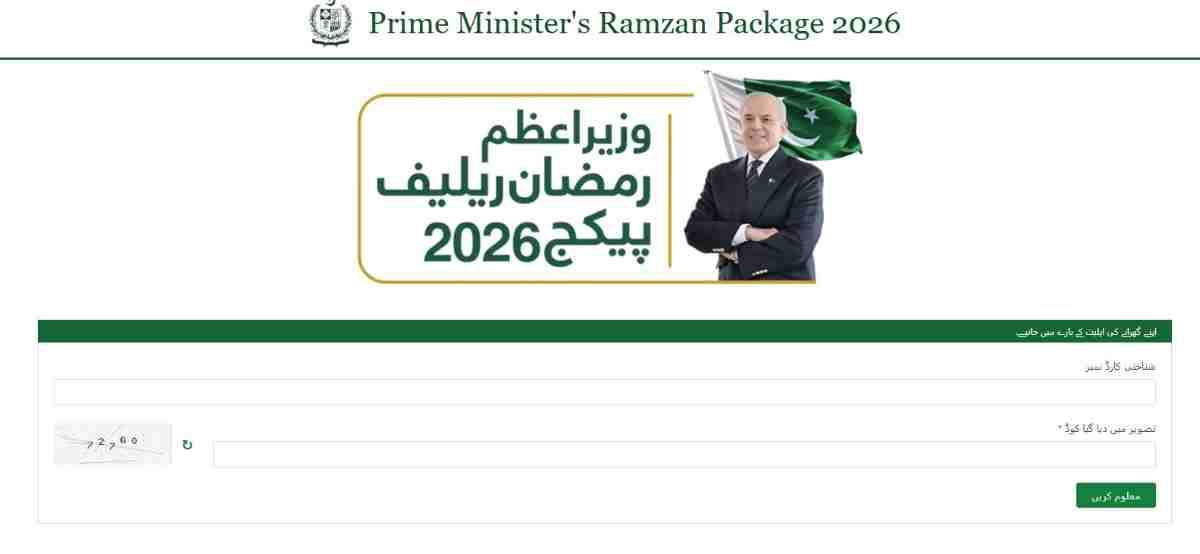
The official web portal for the Prime Minister’s Ramzan Relief Package is pmrrp.nitb.gov.pk. This website, managed by the National Information Technology Board (NITB), serves as the central online hub for beneficiaries to check their status, find information about the program, and access helpline details.
On the portal, you can enter your 13-digit CNIC number to view your eligibility status without using SMS. The website also provides detailed guidelines on payment schedules, lists of partner banks (such as HBL, Bank Alfalah, and Bank of Punjab), and answers to frequently asked questions. It is a valuable resource for those with internet access who prefer a visual interface over SMS.
How can I update my record in the Punjab Socio-Economic Registry (PSER)?
If you live in Punjab and your SMS to 8070 returns “Not Eligible” or “Record Not Found,” it means your household data is missing from the PSER database. To update your record, you must visit the official PSER portal at pser.punjab.gov.pk and complete the online registration process.
First, create an account on the portal using your CNIC and mobile number. You will receive a verification code via SMS. Once logged in, you must fill out a detailed household survey. This includes information about all family members, their CNIC or B-Form numbers, educational status, profession, assets owned, and monthly expenses. Be completely honest in your answers, as the data is verified. After submitting the survey, your information will be processed, and if you meet the criteria, you will be added to the list for the Ramzan package or other future welfare programs.
Is there any fee for registering for the Ramzan relief program?
No, there is absolutely no fee for registering, checking eligibility, or receiving funds for any official Ramzan relief program. The registration process via SMS to 9999 or 8070 is free of charge, and the online portals do not require any payment.
You must be extremely cautious and aware of scammers. Fraudsters often approach vulnerable individuals, claiming they can “process” their registration or “guarantee” eligibility in exchange for money. These are all scams. The government’s system is fully automated and transparent; no agent, middleman, or third-party website can influence your eligibility. If anyone asks you for money to help with the Ramzan package, report them immediately to the helpline at 0800-02345.
Can I check my eligibility without the internet? (Offline Methods)
Yes, you can absolutely check your eligibility without the internet. The primary and most accessible method is the SMS service. You only need a basic mobile phone with a working SIM card that is registered in your name.
Simply send your CNIC to 9999 (for the federal package) or 8070 (for Punjab/Sindh). You do not need a smartphone, mobile data, or Wi-Fi. This offline method was designed specifically to include the millions of Pakistanis, particularly in rural areas, who may not have reliable internet access. Additionally, you can visit your nearest NADRA center, Union Council office, or designated registration camp where staff can manually check your status in the system.
How do I apply for the Sindh Ramzan Relief Package?
To apply for the Sindh Ramzan Relief Package, residents of Sindh province can use a similar SMS mechanism or an online portal. The official SMS code for the Sindh package is also 8070. Send your 13-digit CNIC number (without dashes) to 8070 to check your eligibility for the Rs.5,000 cash grant announced by the Sindh government.
Alternatively, you can visit the official Sindh relief website at relief.sindh.gov.pk. The portal allows you to enter your CNIC and verify your status online. The Sindh package targets low-income families who may not be covered by the federal BISP program, ensuring broader coverage within the province.
Understanding Your Eligibility Status and Common Problems
Why am I marked “Ineligible” if my income is low?
Receiving an “Ineligible” message despite having a low income can be frustrating, but it is usually due to specific data mismatches or undisclosed assets in your official records. The most common reason is a SIM card mismatch. The system verifies that the mobile number you are using to send the SMS is registered in your name with NADRA. If you are using a SIM registered to your father, brother, or a friend, your request will be rejected automatically.
Other common reasons include high utility bills. Even if your cash income is low, if your recent electricity bills show high consumption (for example, over Rs.15,000 per month), the system assumes you have a better living standard and flags you as ineligible. Outdated NADRA records are another culprit; if you are married but your CNIC still shows your father’s address or your marital status as single, the system may not recognize you as the head of a separate household. Finally, asset ownership—owning a car, tractor, or having a family member who recently traveled abroad—can also trigger an ineligible status, as these are seen as signs of sufficient resources.
What should I do if I don’t receive a reply from 8070 or 9999?
If you send your CNIC to 8070 or 9999 and do not receive any reply, do not panic. There are several troubleshooting steps you can take. First, wait for 24 to 48 hours. The system can sometimes be overloaded, especially during peak times when millions of people are checking their status simultaneously. Your request is in a queue and will be processed.
If you still haven’t received a reply after two days, double-check that you sent the CNIC correctly. It must be 13 digits with no spaces, no dashes, and no extra text. Next, ensure you are using a SIM that is registered in your own name. You can check this by visiting your mobile network operator’s customer service center. Finally, try sending the SMS from a different phone. If the problem persists, visit your nearest BISP or PSER office with your CNIC, or call the official helpline (0800-02345 for Punjab) to have your status checked manually.
How do I recover my tracking ID if I lose it after registering?
For most of these programs, your CNIC is your tracking ID. The system is designed to be simple, so you do not need to remember a separate complex number. When you check your status via SMS or the web portal, you only ever need your CNIC.
However, if you received a confirmation SMS with a specific token or tracking number, it is best to keep that message saved in your inbox. Do not delete it. If you accidentally delete it, do not worry. You can simply send your CNIC again to 8070 or 9999. The system will recognize you and reply with your current status. If you are visiting a help desk, bringing your original CNIC is sufficient; the staff can look up your details directly in the database without needing a separate tracking ID.
Receiving Your Relief: Cash, Ration, and Collection Details
How much cash will I receive from the federal Ramzan package? (Rs.5,000 vs. Rs.13,000)
The federal government has announced two tiers of cash assistance under the Prime Minister’s Ramzan Relief Package. The primary and most widely publicized amount is Rs.13,000 per family, which will be distributed to over 12.1 million deserving households across the country. This increased amount reflects the government’s commitment to providing meaningful relief amidst historic inflation levels.
The confusion between Rs.5,000 and Rs.13,000 stems from the fact that the program was expanded. Initially, a Rs.5,000 digital cash support was announced for BISP-registered families through JazzCash and Easypaisa. Subsequently, the Prime Minister directed that the amount be enhanced to Rs.13,000 per family for a broader set of beneficiaries. In essence, if you are eligible, you should expect to receive Rs.13,000, unless you are part of a specific pilot or early tranche where the Rs.5,000 figure was mentioned. The disbursement is being handled through digital wallets and partner banks to ensure transparency.
Will I receive cash or a ration bag? (Nigehban Rashan Bag)
Under the Punjab government’s Nigehban program, eligible families have the option of receiving either cash or a ration bag, depending on the government’s distribution plan for their specific area. In many rural and village areas, the government has promised a door-to-door delivery system for the Nigehban Rashan Bag to ensure families receive essential food items directly without needing to travel.
In urban centers and cities, the program may lean towards providing the Rs.10,000 cash grant, which families can withdraw from designated bank branches or ATMs. The cash option gives families the flexibility to purchase items according to their specific needs and preferences. When you receive your eligibility confirmation via 8070, the message may specify whether you are slated to receive cash or the ration bag. If it is a ration bag, a government-designated delivery team will contact you for doorstep delivery.
What food items are included in the Nigehban Rashan Bag?
The Nigehban Rashan Bag is carefully curated to include the essential kitchen staples that every Pakistani household needs during Ramzan to prepare sehri and iftar. The standard ration bag contains the following items:
- 10 kg of Flour (Atta): The primary staple for making rotis and bread.
- 2 kg of Sugar: Essential for sweetening tea and making traditional desserts.
- 2 kg of Ghee or Cooking Oil: Used for frying and everyday cooking.
- 2 kg of Rice: A key ingredient for biryani, pulao, and other rice-based dishes.
- 1 kg of Chickpeas (Daal Chana): A protein-rich staple, often used in chana chaat and other dishes.
This package is designed to cover the basic carbohydrate, fat, and protein needs of a family for a significant part of the month, providing substantial relief from market price hikes.
Where can I withdraw the Rs.10,000 or Rs.13,000 cash grant?
You can withdraw your cash grant from a variety of official channels to ensure maximum accessibility. The government has partnered with a network of banks and branchless banking agents across the country. For the Punjab Rs.10,000 grant, designated Bank of Punjab (BoP) branches are primary collection points. You can also visit HBL Konnect, UBL Omni, or Bank Alfalah agents.
For the federal Rs.13,000 package, the government is heavily promoting digital wallets. If you have a JazzCash or Easypaisa account linked to your CNIC and mobile number, the money will be transferred directly into that wallet. You can then withdraw it from any affiliated retailer or ATM that supports these platforms. If you do not have a digital wallet, you will be directed to a specific partner bank branch near your locality where you can complete biometric verification and collect the cash.
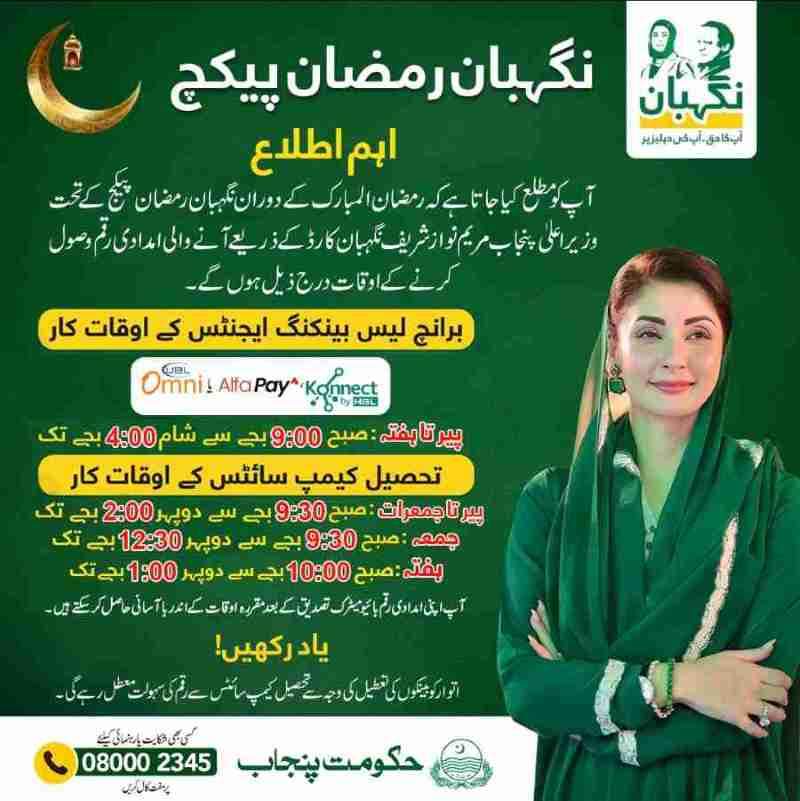
What are the branchless banking timings to receive the Rs.10,000?
To ensure smooth and organized disbursement, the government has issued specific timings for cash collection through branchless banking agents and retail shops. You should adhere to the following schedule to avoid wasted trips:
- Monday to Thursday: 9:00 AM to 4:00 PM
- Friday: 9:30 AM to 12:30 PM (due to Friday prayers)
- Saturday: 10:00 AM to 1:00 PM
If you are collecting cash from an ATM using a debit card linked to your digital wallet, you can do so 24 hours a day, 7 days a week. However, for over-the-counter transactions at agent locations, it is best to visit during the timings mentioned above, especially earlier in the day to avoid crowds.
Will the ration bag be delivered to my home, or do I need to collect it?
For the Punjab Nigehban package, the government has made a significant commitment to door-to-door delivery, particularly for residents of rural areas, villages, and remote districts. Specially designated delivery teams, armed with official lists and verification devices, will visit the homes of eligible beneficiaries. They will scan your CNIC for biometric verification and hand over the ration bag on the spot. You do not need to travel or pay anything.
In some larger cities, the delivery model may differ. The government might establish designated collection centers or union council offices where you can go to pick up your ration bag. Alternatively, you might be offered the cash grant instead. The confirmation SMS you receive from 8070 will likely contain specific instructions on whether to expect a home delivery or where to go for collection.
Is biometric (thumb) verification required to receive the relief?
Yes, biometric verification is mandatory and non-negotiable for receiving the relief, whether you are collecting cash from a bank, withdrawing from an agent, or receiving a ration bag at your home. This step is crucial to ensure that the aid reaches the exact person it is intended for and to prevent fraud, duplication, and theft by middlemen.
When you go to collect your cash or when the delivery team arrives, you will be asked to place your thumb on a biometric verification device. This device instantly matches your fingerprint with the data stored on your CNIC chip and the government’s database. Only when the verification is successful will the transaction be completed and the cash or bag handed over.
What documents do I need to bring to the payment center?
To ensure a smooth and successful transaction at the payment center, you must carry the following documents with you:
- Original CNIC: This is the most important document. It must be valid and not expired. A photocopy will not be accepted.
- Confirmation SMS: Keep the SMS you received from 8070 or 9999 confirming your eligibility. While the agent can look you up by CNIC, having the SMS serves as proof and speeds up the process.
- Registered Mobile Phone: Bring the same mobile phone that you used to send the SMS. In some cases, the agent may need to send a verification code to that number to complete the transaction.
Troubleshooting, Complaints, and Important Information
What should I do if my biometric verification fails?
Biometric verification failure is a common issue, especially for the elderly, manual laborers, or those whose fingerprints have worn down due to age or hard work. If your thumbprint fails repeatedly at the payment center, do not lose hope. First, ask the agent to try your other thumbs or fingers, as sometimes one fingerprint is clearer than the others.
If all attempts fail, you will need to visit your nearest NADRA registration center to get your fingerprints re-verified and updated in the system. NADRA can issue a fresh verification slip. As a temporary measure for the Ramzan package, the government has instructed payment centers to allow a manual verification process in case of persistent biometric failure. A bank officer or a designated government official can manually verify your identity by checking your CNIC and your face against their records and authorize the payment, though this may take slightly longer.
How can I file a complaint if the delivery team asks for money?
If any delivery team member, bank agent, or government official asks you for money—whether as a “fee,” “bribe,” or “processing charge”—to release your cash or ration bag, you must report them immediately. The delivery of this relief is 100% free, and any demand for money is illegal and a form of corruption.
You can file a complaint through the following official channels:
- Punjab Helpline: Call 0800-02345 to report any issues related to the Nigehban package.
- Sindh Helpline: Call 0800-78686 for complaints regarding the Sindh package.
- SMS Complaint: You can also send a detailed complaint SMS to 8070 explaining the issue, including the name and location of the person who demanded money.
The government has zero tolerance for corruption in this program, and strict action will be taken against offenders.
When will the distribution of the 2026 Ramzan package start?
Distribution of the Ramzan package typically begins 10 to 15 days before the start of the holy month of Ramzan. For the year 2026, with Ramzan commencing in late February, the distribution schedule was officially kicked off in mid-to-late February. The Prime Minister formally launched the Rs.38 billion package in a high-level meeting, directing that disbursements begin immediately.
Reports indicate that within the first week of Ramzan, a significant percentage of eligible individuals had already received their assistance. The government is utilizing a real-time dashboard to monitor payments and ensure that the remaining beneficiaries are covered as quickly as possible. If you are eligible, you should receive your payment or ration within the first two weeks of Ramzan. If you haven’t received anything by the middle of the month, it is advisable to re-check your status or file a complaint.
What is the deadline for 2026 Ramzan package registration?
While the SMS checking service (sending CNIC to 9999 or 8070) remains active throughout Ramadan, the window for fresh registration or updating data in systems like the PSER typically has an earlier cutoff. For example, the Sindh government had noted a registration deadline of February 7, 2026, for their provincial package, to allow time for data processing before distribution began.
It is a general rule of thumb that you should complete your registration or data verification as early as possible. If you are not registered in the PSER or NSER databases, doing so after distributions have already started may mean you miss this cycle. However, updating your record ensures you are in the system for any subsequent tranches of relief or future welfare programs.
Is there an official app for the Ramzan Package?
No, there is currently no official government mobile application for the public to register for or check the Ramzan Package. The government has explicitly stated that the only official methods for checking eligibility are the SMS codes (9999 and 8070) and the official web portals (pmrrp.nitb.gov.pk and pser.punjab.gov.pk).
You are strongly advised to avoid downloading any third-party apps from the Google Play Store or Apple App Store that claim to offer Ramzan Package registration. These are often fake apps designed to steal your personal information or CNIC data. Stick to the official channels to keep your information safe.
Frequently Asked Questions (FAQs)
Can I apply for my parents?
Yes, you can apply on behalf of your parents, but you must use their mobile phone and their CNIC. The process requires sending the SMS from a SIM card that is registered in your parent’s name to ensure the system can verify the mobile owner against the CNIC holder.
I received the package last year. Do I need to register again?
Yes, you generally need to check your status again each year. Eligibility is re-evaluated annually based on updated data, including new utility bills, changes in asset ownership, and updated NADRA records. Do not assume last year’s eligibility guarantees this year’s inclusion.
My CNIC is expired. Can I still apply?
No, you cannot apply with an expired CNIC. You must have a valid, renewed CNIC to be eligible for any government relief package. Visit your nearest NADRA center to get your CNIC renewed before attempting to check your status.
What is the 8171 code for?
The code 8171 is traditionally associated with the Ehsaas Program and the Benazir Income Support Programme (BISP). You can send your CNIC to 8171 to check your eligibility for BISP Kafalat payments and other associated social welfare programs. Sometimes, information about the Ramzan package may also be accessible through this code, but 9999 and 8070 are the dedicated codes for this specific relief effort.
What if my mobile SIM is not in my name?
You must get your SIM verified and transferred to your own name immediately. The government’s verification system cross-checks the SIM owner with the CNIC used. If they do not match, your eligibility request will be automatically rejected. Visit your mobile network operator’s franchise with your CNIC to regularize your SIM.
Can students or unmarried individuals apply?
Eligibility is based on household income and poverty score, not marital status. If a student or unmarried individual is the head of a low-income household (for example, an orphan), they can apply using their own CNIC. However, if they are living with parents who are the primary earners, the parents should apply as the head of the family.
How will I know if I am getting cash or a ration bag?
The confirmation SMS you receive from 8070 or 9999 will usually specify the type of assistance you are approved for. You can also check the status on the official web portals by entering your CNIC, where the mode of disbursement (cash or ration) will be displayed.
Is there a helpline for technical issues?
Yes, for technical issues related to the federal package, you can seek help through the 9999 helpline. For Punjab-specific issues, the helpline is 0800-02345. For Sindh, you can call 0800-78686.

Add a Comment