
You have found your dream home. The location is perfect, the price feels reasonable, and the seller seems trustworthy. You hand over a hefty advance payment, only to discover months later that the property never belonged to the seller at all. This devastating scenario plays out thousands of times annually across Pakistan, wiping out lifetimes of savings in moments. Property fraud remains one of the most underreported yet financially crippling crimes affecting Pakistani families.
The good news is that technology has created an unbreakable shield against such deception. Property verification online by CNIC has transformed real estate transactions from blind hope into data-backed certainty. This guide walks through every available verification method, official government portal, mobile application, fee structure, and step-by-step process for Punjab, Sindh, Khyber Pakhtunkhwa, Balochistan, Islamabad, and private housing schemes. By the final section, you will possess complete knowledge to verify any property thoroughly before committing a single rupee.
Key Takeaways
- Government portals are now legally mandatory for property verification across all provinces, with digitally generated documents holding full evidentiary weight in courts and banks.
- Private housing societies maintain separate record systems that cannot be accessed through provincial land portals, requiring direct verification from society head offices.
- Verification fees vary significantly by province and document type, ranging from free basic viewing to PKR 3,500 for urgent certified copies in Punjab.
- CNIC must be properly linked to land records through completed mutation processes; absence during search indicates incomplete ownership transfer.
- Legal disputes and encumbrances appear clearly on digitally generated Fards, including court stay orders, mortgages, and pending taxes.
- Overseas Pakistanis can verify properties remotely from anywhere in the world, with recent Sindh reforms enabling embassy-based biometric registration.
- Mobile applications exist but require extreme caution, with only official government apps recommended for sensitive ownership verification.
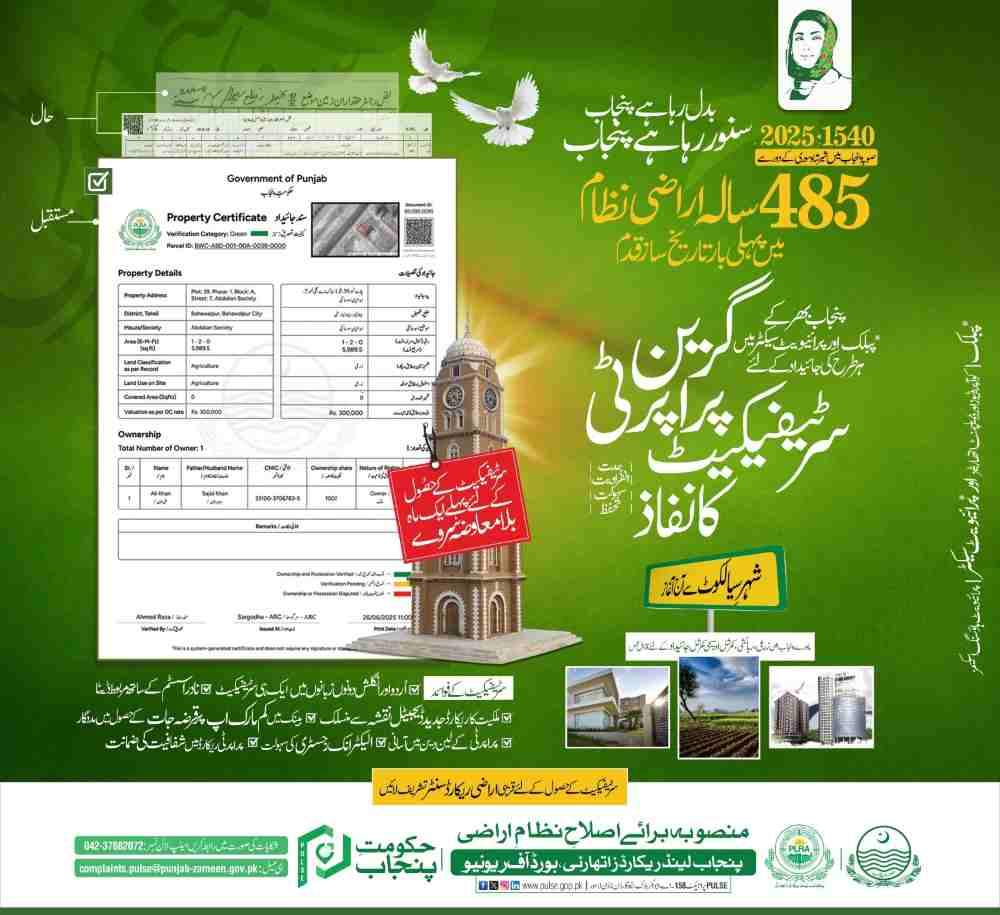
- Read More: Green Property Certificate: How to Apply Online (Fee & Benefits)
- Read More: Honhaar Jawan Program (Free IT Courses, Laptops, & Solar Panels)
- Read More: Honhaar Scholarship Phase 2 (Merit List) | Apply Online
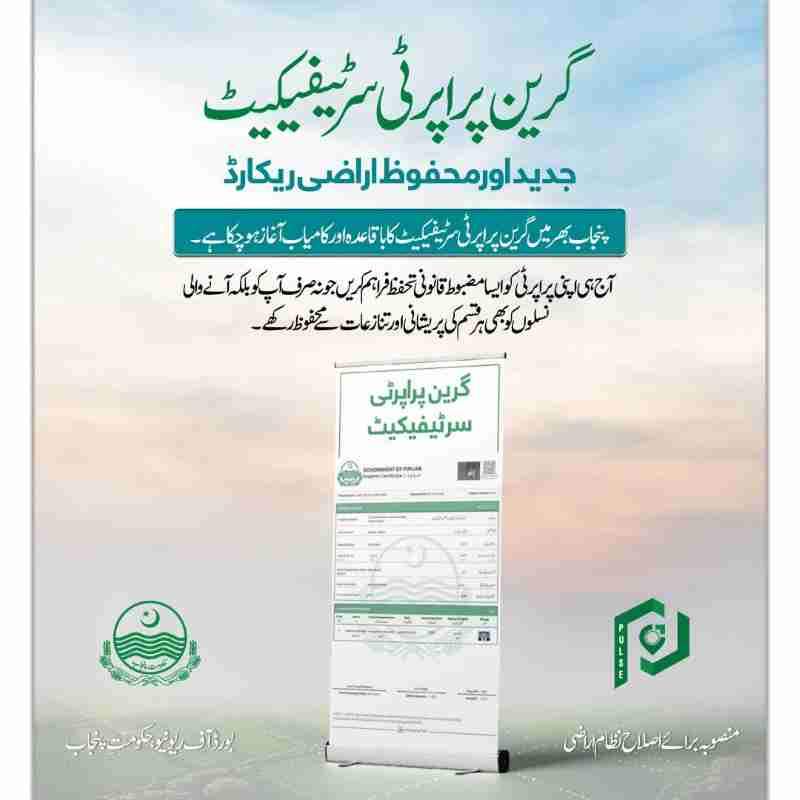
Green Property Certificate: How to Apply Online (Fee & Benefits)

Table Of Contents
Why Has Online Property Verification Become Essential in Pakistan?

The transition from handwritten patwari records to digitized land databases represents the most transformative reform in Pakistani real estate history. Before digitization, buyers relied entirely on handwritten Fards that could be forged, tampered with, or simply lost during critical transactions. Property fraudsters exploited this opacity through multiple sophisticated schemes.
Common fraud methods that digital verification prevents:
- Selling the same property to multiple unsuspecting buyers
- Forging ownership documents using fake patwari stamps
- Disposing of inherited property without legal succession rights
- Mortgaging property multiple times to different financial institutions
- Encroaching on government land and selling it as private property
Digital verification eliminates these risks through multiple integrated security layers. NADRA’s biometric database connects directly with provincial land revenue systems, creating an unbreakable cryptographic link between a person’s identity and their registered property holdings. When you perform property verification online by CNIC, the system cross-references the entered ID number against millions of digitized land records within seconds.
The financial consequences of skipping verification are severe and well-documented:
- Real estate experts estimate that unverified transactions carry a 30 to 40 percent higher risk of legal challenges
- Banks now universally refuse mortgage financing without digitally verified ownership documents
- Courts increasingly demand printouts from official portals as primary evidence in property disputes
- Title insurance remains unavailable in Pakistan, making verification the only protection mechanism
Different property categories require distinct verification approaches:
| Property Type | Verification Method | Key Identifiers |
|---|---|---|
| Agricultural land | Provincial land portal | Khasra numbers, crop details |
| Urban residential | Provincial land portal | Plot numbers, construction status |
| Commercial property | Provincial land portal + local municipality | Shop numbers, business registration |
| Apartment units | Building approval records + provincial portal | Flat numbers, floor details |
| Private society plots | Society head office | File numbers, allotment letters |
Understanding these distinctions prevents wasted time and incorrect searches that could miss critical ownership information.
How Does Property Verification by CNIC Actually Work?
The technical infrastructure behind CNIC-based property searches combines NADRA’s civil registration database with provincial land revenue systems operating across Pakistan. When you enter a 13-digit CNIC number into any official portal, the system initiates a secure query across millions of digitized land records in milliseconds.
The verification process involves three distinct database layers:
- Layer one: The system verifies that the entered CNIC number is valid, active, and properly registered in NADRA records
- Layer two: The system searches for that CNIC number in the ownership fields of every land record within the selected district, tehsil, and mauza
- Layer three: The system retrieves associated property details including complete ownership history, property measurements, and any registered legal encumbrances
What specific information appears on screen during verification:
- Owner’s complete name exactly as registered with NADRA, eliminating name spelling discrepancies
- Total land area measured in standard Pakistani units (kanal, marla, acre, square feet)
- Property identifiers including Khewat number, Khatoni number, and Khasra number
- Classification of land usage indicating residential, commercial, agricultural, or mixed status
- Date of the most recent mutation showing when current ownership was established
- Complete chain of previous owners through historical mutation records
- Registered encumbrances such as mortgages, court stay orders, or pending taxes
The system reveals ownership history through sequential mutation records. Every time property transfers from one owner to another through sale, inheritance, or gift, the transaction generates a permanent mutation entry showing:
- Names of previous owners
- Exact transfer dates
- Nature of transfer transaction
- Registration numbers of sale deeds
- Identity of witnesses and registered deed writers
This historical trail proves invaluable when investigating disputed ownership claims or verifying that the current seller actually acquired the property through legitimate means.
Digital verification documents carry full legal weight under Pakistani law. Provincial land records authorities have enacted specific legislation confirming that digitally generated Fards and certified copies are admissible as primary evidence in all courts, revenue offices, and financial institutions. No additional stamping or manual certification is required for legal purposes.
Read More: E Bike Scheme Pakistan Apply Online (By Sindh & Punjab Govt)
Punjab Land Record Online Check by CNIC: Complete Step-by-Step Process
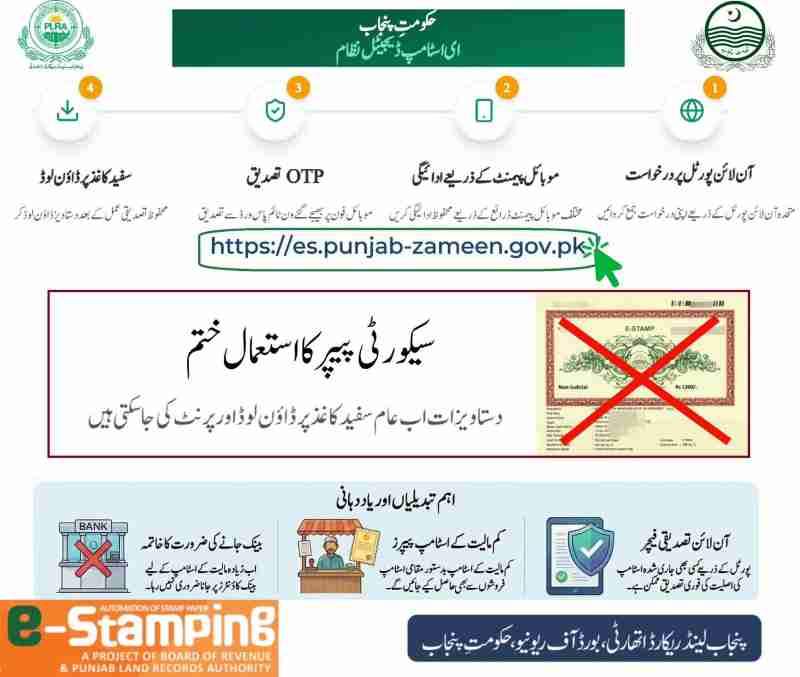
Punjab leads Pakistan in land record digitization through the Punjab Land Records Authority, operating the most comprehensive and user-friendly online verification system available. The PLRA portal processes millions of verification requests monthly from buyers, sellers, banks, and legal professionals.
Which official websites should you use for Punjab property verification:
- punjab-zameen.gov.pk serves as the primary public access portal
- rod.pulse.gop.pk provides the Record of Deeds portal for registered documents
- fard.punjab-zameen.gov.pk offers direct Fard generation access
Warning about fake websites: Numerous third-party websites mimic official portals while charging excessive fees or collecting personal data. Always verify you are on a government domain ending with .gov.pk before entering sensitive CNIC information.
Step-by-step process to obtain e-Fard online using CNIC:
- Step one: Open your browser and navigate to the official ROD portal at rod.pulse.gop.pk
- Step two: Select your district from the dropdown menu of all Punjab districts
- Step three: Select your tehsil from the district-specific dropdown menu
- Step four: Select your mauza from the tehsil-specific dropdown menu
- Step five: Choose the “Search by CNIC” option from available search methods
- Step six: Enter the complete 13-digit CNIC number without any dashes or spaces
- Step seven: Complete the OTP verification sent to the mobile number registered with the CNIC
- Step eight: Review all displayed property records associated with that CNIC
- Step nine: Select the specific property you wish to verify
- Step ten: Click generate Fard and choose download or print options
Alternative search methods when CNIC search fails:
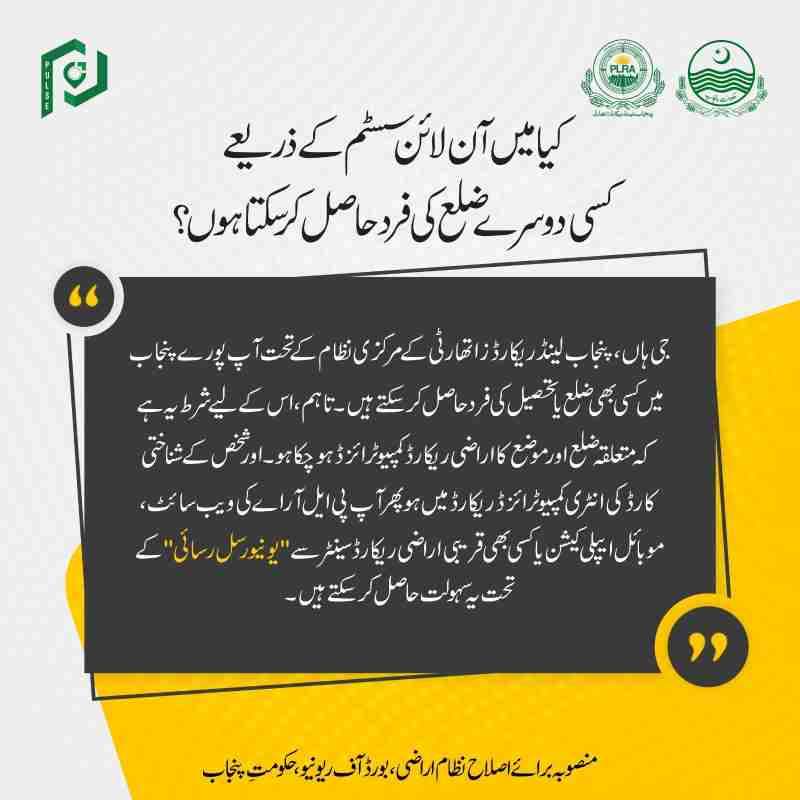
- Search by Khewat number if you know the specific land account number
- Search by Khasra number for agricultural land verification
- Search by property address for urban properties
- Search by previous owner name if mutation completion is suspected
LRMIS Punjab verification process explained: The Land Records Management Information System represents the older digitization platform, now fully integrated into the PLRA and ROD portals. Searching through LRMIS interfaces automatically redirects to the current unified system.
Punjab verification fees structure for 2026-2027:

- Basic viewing of property records without downloading: completely free
- Standard Fard issuance and download: PKR 800 per document
- Certified copy of registered sale deed: PKR 1,300 per document
- Urgent Fard processing within 24 hours: PKR 3,500 per document
- Urgent mutation verification: PKR 3,500 per request
- Verification reports for banks and financial institutions: PKR 600 per report
- E-registration fee for new property registrations: 0.1 percent of property value with PKR 3,300 minimum
Rural area land record verification through PLRA: The ROD portal covers most rural districts across Punjab. If your specific mauza does not appear in the dropdown menu, that area may not yet be fully digitized. In such cases, physical visits to the local Arazi Record Center become necessary.
Arazi Record Center visit procedure for non-digitized records:
- Locate your nearest ARC through the PLRA website directory
- Visit during working hours with original CNIC and property documents
- Obtain a token number from the entrance counter
- Complete NADRA biometric verification at the designated counter
- Submit a written application for record verification
- Pay applicable manual verification fees
- Receive verified documents within specified processing time
Sindh Property Verification by CNIC Through Sindh Zameen Portal

The Sindh Board of Revenue operates the Sindh Zameen portal, providing comprehensive land record access for all districts across the province. Recent reforms have significantly enhanced the system’s capabilities, particularly for overseas Pakistanis.
Sindh Zameen portal features and capabilities:
- Access to Village Forms 7-A and 7-B showing complete ownership details
- Search functionality by CNIC number, owner name, or property identifiers
- Downloadable certified copies of land records
- Integration with e-stamping system for document registration
- Mobile-responsive design for smartphone access
Step-by-step Sindh property verification process:
- Visit the official Sindh Zameen portal at sindhzameen.gos.pk
- Select your district from the province-wide dropdown menu
- Select your taluka or union council from the district-specific options
- Choose the “Search by CNIC” verification method
- Enter the complete 13-digit CNIC number without dashes
- Complete the security verification prompt
- View all property records associated with that CNIC
- Click on specific properties to view detailed ownership information
- Download forms as PDF files for permanent records
- Print copies for transaction documentation
Information visible in Sindh verification results:

- Owner name as registered in land revenue records
- Father or husband name for complete identification
- Village or deh name where property is located
- Survey number and plot identification details
- Total land area with measurement units
- Classification of land use
- Crop details for agricultural properties
- Mutation history showing previous ownership transfers
- Any registered encumbrances or legal restrictions
Overseas Pakistanis property verification and registration in Sindh: The Sindh Registration Amendment Bill 2025 introduced groundbreaking reforms enabling remote property transactions. Overseas Pakistanis can now complete sale deeds at Pakistani embassies using NADRA-linked biometric verification systems, completely eliminating the need for physical appearance in Karachi or other Sindh cities.
The embassy-based verification process works as follows:
- Schedule an appointment at the nearest Pakistani embassy or consulate
- Present original CNIC or NICOP and property documents
- Complete biometric verification through embassy NADRA terminals
- Sign sale deed documents in the presence of embassy witnesses
- Pay applicable fees through embassy payment systems
- Receive registered documents through postal or courier service
E-stamping and CNIC-based issuance system: Sindh has fully integrated e-stamping with NADRA databases, allowing CNIC-based issuance of stamp paper. This integration prevents stamp paper forgery by ensuring each stamp paper is uniquely linked to a specific person and transaction.
Sindh verification fees and charges:
- Basic record viewing through the portal: completely free
- Download of Village Form 7-A or 7-B: PKR 500 per document
- Certified copy of land record: PKR 1,000 per document
- E-stamp paper issuance: value-based fees starting from PKR 100
- Urgent processing requests: PKR 2,500 per document
Islamabad Property Verification Through CDA Online Portal
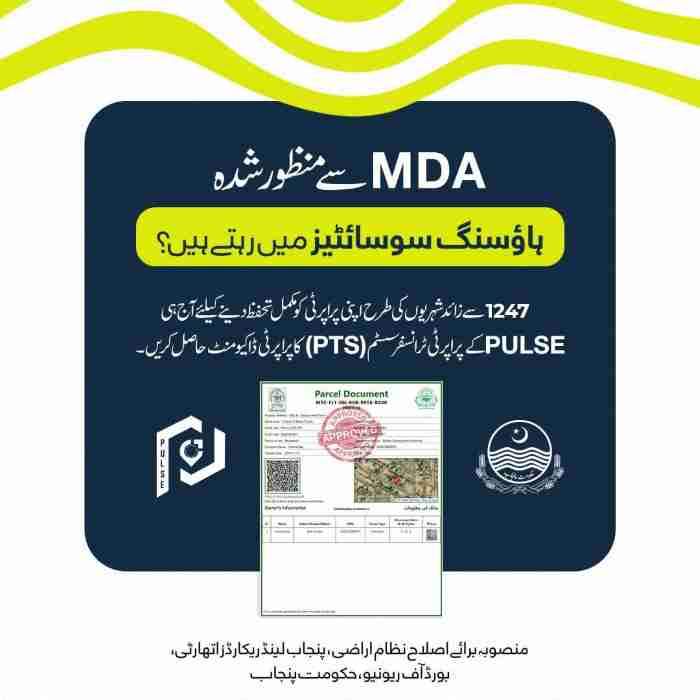
The Capital Development Authority manages land records for federal government sectors in Islamabad, operating a dedicated online verification system for properties within CDA-controlled areas.
CDA online property verification portal features:
- Initial Property Verification Service for basic ownership confirmation
- Complete Fard generation for verified properties
- Integration with CDA’s new digital processing workflow
- Real-time application tracking for property transactions
- Cashless payment system for all fees and charges
Latest CDA digital system update February 2026: The CDA launched a comprehensive digital property processing system for Sector D-12, replacing traditional manual file systems with complete online workflows. This new system enables:
- Online application submission for property transfers
- Real-time tracking of application status
- Digital payment of all applicable fees
- Electronic generation of ownership documents
- Automated notifications at each processing stage
Step-by-step CDA property verification process:
- Visit the CDA online verification portal at cda.gov.pk/verification
- Select the “Initial Property Verification Service” option
- Enter the property sector and plot number
- Enter the owner CNIC number for verification
- Complete the online security verification prompt
- View property status including ownership details
- Check for any registered dues or encumbrances
- Download verification certificate for transaction purposes
Private housing societies in Islamabad verification requirements: Properties in private schemes including Bahria Town, DHA Islamabad, and other approved housing societies cannot be verified through the CDA portal. These societies maintain independent record systems requiring separate verification procedures.
Private society verification process:
- Visit the society’s official website or head office
- Locate the Transfer and Record section
- Submit a written application for property verification
- Provide the property file number and owner CNIC
- Pay applicable society verification fees
- Receive official verification letter or No Demand Certificate
- Verify the document’s authenticity through society contact numbers
CDA verification fees structure:
- Basic property status check: PKR 200 per request
- Detailed ownership verification certificate: PKR 500 per document
- Complete Fard generation: PKR 800 per document
- Urgent verification requests: PKR 1,500 per document
- No Demand Certificate issuance: PKR 1,000 per certificate
Khyber Pakhtunkhwa Land Record Verification by CNIC
The Khyber Pakhtunkhwa government operates the Land Records Management Information System KP, providing online access to land records across all settled districts of the province.
LRMIS-KP portal features and capabilities:
- CNIC-based ownership search functionality
- Property number search for specific plot verification
- Survey number search for agricultural land
- Complete mutation history display
- Downloadable certified copies of land records
Step-by-step KPK property verification process:
- Navigate to the official LRMIS-KP portal at lrmis.kp.gov.pk
- Select your district from the province-wide dropdown menu
- Select your tehsil from district-specific options
- Choose your preferred search method CNIC, property number, or survey number
- Enter the 13-digit CNIC number if using CNIC search
- Complete the security verification prompt
- View all property records associated with the search criteria
- Click on individual properties for detailed ownership information
- Download or print records as needed
- Save PDF copies for future reference
Information displayed in KPK verification results:
- Owner name and parentage
- Property classification and land use
- Total area with measurement units
- Khasra number and Khewat number
- Mutation history with dates and transaction types
- Current status including any legal restrictions
- Revenue collection details for agricultural land
KPK verification fees and charges:
- Basic record viewing through portal: free
- Standard Fard download: PKR 500 per document
- Certified copy of land record: PKR 1,000 per document
- Mutation history report: PKR 800 per report
- Urgent processing requests: PKR 2,000 per document
Balochistan Land Record Verification Current Status
Balochistan continues progressing toward complete land record digitization, with several districts now accessible through online portals while others still require manual verification.
Districts currently available for online verification:
- Quetta
- Pishin
- Killa Abdullah
- Chagai
- Nushki
- Mastung
- Kalat
- Khuzdar
Balochistan online verification process:
- Visit the Balochistan Board of Revenue portal at bor.balochistan.gov.pk
- Select your district from available options
- Choose tehsil and mauza from dropdown menus
- Select CNIC search method
- Enter complete CNIC number without dashes
- View available property records
- Download verification documents
Manual verification procedure for non-digitized districts:
- Visit the local patwari or tehsildar office in the property location
- Submit a written application for property verification
- Provide CNIC copies and property details
- Pay applicable manual verification fees
- Receive handwritten Fard with official stamps
- Verify document authenticity with revenue officials
Balochistan verification fees structure:
- Online record viewing: free
- Online document download: PKR 300 per document
- Manual Fard issuance: PKR 500 to PKR 1,000 depending on district
- Certified copies: PKR 800 per document
Private Housing Societies DHA, Bahria Town Property Verification Guide
Private housing schemes operate independently from provincial land record systems, maintaining their own property databases and transfer procedures. Understanding this distinction prevents wasted time searching government portals for society properties.
Why private societies maintain separate record systems:
- Societies were developed on private agricultural land converted through legal channels
- Provincial revenue records show original land ownership, not subdivided plots
- Societies maintain internal file systems for member records
- Transfer approvals require society board consent
- Dues and maintenance charges are society-specific
Defense Housing Authority DHA property verification process:
- Visit the specific DHA city website DHA Karachi, DHA Lahore, DHA Islamabad, DHA Multan, DHA Gujranwala
- Navigate to the Transfer and Record section
- Locate the property verification or plot status option
- Enter the plot number, sector, and phase details
- Enter the owner CNIC number for verification
- Pay applicable verification fees online
- Receive verification letter showing ownership status
- Check for any outstanding dues or charges
- Verify No Demand Certificate if planning purchase
Bahria Town property verification steps:
- Visit the official Bahria Town website for your city
- Access the customer portal or verification section
- Enter property file number and owner CNIC
- View complete ownership details
- Check for any pending payments or dues
- Download official verification certificate
- Contact the Bahria Town head office for confirmation
Other private societies verification methods:
- Visit the society’s official website
- Locate management office contact information
- Submit written verification request with CNIC copy
- Pay society-specific verification fees
- Receive official verification letter on society letterhead
- Verify letter authenticity through phone confirmation
Red flags to watch in private society verifications:
- Verification letters without official stamps or letterheads
- Requests to pay verification fees to individual accounts
- Reluctance to provide written verification
- Claims that provincial portals show society records
- Pressure to complete transactions without verification
- Discrepancies between file number and society records
Property Ownership History and Legal Disputes Online Verification

Thorough due diligence requires more than confirming current ownership. Understanding property history and identifying potential legal disputes prevents costly surprises after purchase.
Tracing property ownership history through online portals:
- Access the relevant provincial land portal
- Search for the property using Khewat or Khasra numbers
- Locate the mutation history section
- Review all previous mutation entries chronologically
- Note names of previous owners and transfer dates
- Identify any gaps in mutation records
- Verify that all transfers followed proper legal channels
How legal disputes appear on digital Fards:
- Court stay orders display as specific entries in encumbrance section
- Active litigation appears with case numbers and court names
- Pending inheritance cases show as incomplete mutations
- Mortgage entries indicate bank liens on property
- Government acquisition notifications appear as special entries
- Tax default status displays with pending amounts
Checking court records for property disputes:
- Visit the official website of the relevant district court
- Navigate to the case status or cause list section
- Search using property owner name
- Search using property address or identifiers
- Review all pending cases involving the property or owner
- Note case numbers, parties involved, and current status
- Consult with a property lawyer for complex cases
Property tax verification through CNIC:
- Visit the excise and taxation department website for relevant district
- Enter owner CNIC number in tax search portal
- View all properties registered for tax under that CNIC
- Check tax payment history and current status
- Verify no pending tax dues exist
- Download tax clearance certificate for transaction records
- Ensure tax challan authenticity through department verification
Troubleshooting When Property Records Do Not Appear by CNIC
Many property owners experience frustration when their CNIC search returns no results despite owning land. Understanding the reasons behind this problem helps resolve verification issues efficiently.
Common reasons for CNIC search failure:
- Mutation was never completed after property purchase
- Previous owner never transferred record to buyer name
- Property is registered under old CNIC format or different ID
- Name spelling in land record differs from NADRA record
- Property located in area not yet fully digitized
- Searching in wrong district, tehsil, or mauza
- Technical glitch in portal database
- Property owned jointly but CNIC not listed first
How to verify if mutation was completed:
- Search property using Khewat number instead of CNIC
- Review current Fard to see owner name listed
- Check mutation history for recent transfer entries
- Consult with local patwari or ARC staff
- Request copy of original sale deed to verify registration
Step-by-step process to get CNIC entered in land record:
- Gather original property documents including sale deed and previous Fards
- Visit the local Arazi Record Center for your district
- Obtain token number from entrance counter
- Complete NADRA biometric verification at designated terminal
- Submit application for CNIC update in CLRMIS
- Provide copies of all property documents
- Pay applicable update fees
- Receive acknowledgment slip with processing date
- Wait for system update confirmation
- Verify online after processing to confirm entry
Documents required for CNIC update in land record:
- Original CNIC and multiple copies
- Original sale deed or transfer document
- Previous Fard showing property details
- Mutation deed if available
- Death certificate for inherited property
- Succession certificate for inheritance cases
- Affidavit explaining ownership transfer
What to do when online verification remains unavailable:
- Visit the local patwari office in property location
- Request manual Fard from revenue staff
- Verify manual document authenticity through stamps and signatures
- Cross-check information with neighboring property owners
- Consult with local property dealers familiar with area
- Consider hiring a lawyer for title verification
- Document all manual verification steps for legal protection
Mobile Applications for Property Verification in Pakistan
Smartphone applications offer convenient access to land records, but users must exercise extreme caution when choosing which apps to trust with sensitive CNIC information.
Official Punjab Land Records Authority mobile options:
- PLRA official app available through Google Play Store
- Pulse ROD mobile interface accessible through browsers
- Punjab Zameen mobile website optimized for smartphones
- All official apps require OTP verification for security
Features of official PLRA mobile access:
- CNIC-based property search functionality
- Fard viewing and download options
- Mutation status checking
- District and tehsil selection interfaces
- Secure OTP authentication system
- Print and share capabilities for verified documents
Warning about third-party verification apps:
- Numerous unofficial apps claim to offer property verification
- These apps may collect and misuse personal CNIC data
- Third-party apps often charge inflated fees
- Verification results from unofficial sources lack legal validity
- Some apps install malware or spyware on devices
- Data entered into unofficial apps may be sold to marketers
How to identify legitimate verification apps:
- Check developer name matches government authority
- Verify app permissions do not request unnecessary access
- Confirm app links to official .gov.pk websites
- Read user reviews carefully for red flags
- Check app download numbers and ratings
- Verify app through official government announcements
- When uncertain, use mobile browsers instead of apps
Safe mobile verification practices:
- Always use official government portals through browsers
- Never save CNIC numbers in third-party apps
- Clear browser cache after each verification session
- Use secure internet connections
- Log out completely after finishing searches
- Avoid using public WiFi for sensitive verifications
- Enable two-factor authentication where available
Overseas Pakistanis Complete Property Verification Guide
Non-resident Pakistanis face unique challenges in property transactions but benefit from increasingly accessible online verification systems designed specifically for remote access.
Global accessibility of provincial verification portals:
- All provincial portals operate 24/7 worldwide
- No VPN required for accessing government websites
- Mobile responsive design works on international devices
- English language options available on most portals
- International payment methods accepted for fees
Complete remote verification process from abroad:
- Ensure stable internet connection with adequate speed
- Visit the relevant provincial portal for property location
- Complete the CNIC or NICOP entry process
- Wait for OTP verification on registered international mobile number
- Navigate through district and tehsil selections
- Review all property records thoroughly
- Download and save PDF copies of all documents
- Print copies for transaction records
- Share verified documents with family or lawyers in Pakistan
Sindh embassy-based registration breakthrough:
- Sindh government now accepts biometric verification at embassies
- Overseas Pakistanis can complete sale deeds without traveling
- Embassy staff verify identity through NADRA terminals
- Signed documents carry full legal validity
- Registration certificates couriered to overseas addresses
- Process reduces transaction time from months to weeks
Power of attorney management for overseas Pakistanis:
- Prepare PoA document with clear property verification authority
- Visit Pakistani embassy for PoA attestation
- Ensure PoA specifically mentions property verification rights
- Send attested PoA to trusted family member in Pakistan
- Verify that PoA is properly registered with relevant authorities
- Maintain communication with attorney during verification process
Challenges overseas Pakistanis face and solutions:
| Challenge | Solution |
|---|---|
| Time zone differences | Use 24/7 portal access, plan calls during Pakistan business hours |
| Language barriers | Use English portal options, hire bilingual assistants |
| Document courier delays | Use reliable international courier services, maintain digital copies |
| Payment difficulties | Use international credit cards, maintain Pakistan bank account |
| Fraud risk | Never share CNIC with third parties, use only official portals |
| Legal complexity | Hire reputable property lawyer in Pakistan |
Property Verification Fees Complete Breakdown 2026-2027
Understanding the complete fee structure across provinces helps budget appropriately for property transactions and avoids unexpected charges during verification.
Punjab verification fees detailed table:
| Service Type | Fee Amount |
|---|---|
| Basic record viewing | Free |
| Standard Fard download | PKR 800 |
| Certified deed copy | PKR 1,300 |
| Urgent Fard 24 hours | PKR 3,500 |
| Urgent mutation verification | PKR 3,500 |
| Bank verification report | PKR 600 |
| E-registration fee | 0.1 percent value |
Sindh verification fees structure:
| Service Type | Fee Amount |
|---|---|
| Basic portal viewing | Free |
| Form 7-A or 7-B download | PKR 500 |
| Certified record copy | PKR 1,000 |
| Urgent processing | PKR 2,500 |
| E-stamp paper | Value-based |
KPK verification fees overview:
| Service Type | Fee Amount |
|---|---|
| Online viewing | Free |
| Standard Fard | PKR 500 |
| Certified copy | PKR 1,000 |
| Mutation history | PKR 800 |
| Urgent requests | PKR 2,000 |
Islamabad CDA verification fees:
| Service Type | Fee Amount |
|---|---|
| Basic status check | PKR 200 |
| Detailed verification | PKR 500 |
| Complete Fard | PKR 800 |
| Urgent verification | PKR 1,500 |
| No Demand Certificate | PKR 1,000 |
Private societies verification fees:
| Society Type | Fee Range |
|---|---|
| DHA societies | PKR 1,000 to PKR 3,000 |
| Bahria Town | PKR 1,500 to PKR 2,500 |
| Other approved societies | PKR 500 to PKR 2,000 |
Payment methods accepted across portals:
- Credit cards Visa, Mastercard, American Express
- Debit cards with online payment enabled
- Mobile banking applications
- Bank transfers through 1Link
- JazzCash and Easypaisa wallets
- Over-the-counter bank deposits
- Online payment gateway integrations
Common Myths and Misconceptions About Property Verification
Misinformation about property verification leads to costly mistakes. Understanding the truth behind common myths protects buyers from fraud and wasted effort.
Myth one: Private society properties appear in provincial land records
Truth: Provincial portals only show original agricultural land ownership, not subdivided society plots. Society properties require separate verification through society head offices.
Myth two: Verbal confirmation from neighbors confirms ownership
Truth: Neighbors rarely have access to official records and cannot verify legal ownership. Only official portal verification provides legal certainty.
Myth three: Old Fard papers are sufficient for verification
Truth: Fards become outdated immediately after any transaction. Only digitally generated Fards from official portals reflect current ownership status.
Myth four: CNIC search works for all properties automatically
Truth: CNIC must be specifically entered in land records through completed mutation. Absence during search indicates incomplete transfer process.
Myth five: Online verification costs thousands of rupees
Truth: Basic viewing is free on all portals. Even certified copies cost only hundreds, not thousands, of rupees.
Myth six: Property verification guarantees dispute-free ownership
Truth: Verification shows current recorded status but cannot predict future disputes. Additional legal due diligence remains necessary.
Myth seven: Overseas Pakistanis cannot verify properties remotely
Truth: All portals operate globally. Recent reforms even allow embassy-based registration without traveling to Pakistan.
Myth eight: Mobile apps are safer than browser access
Truth: Official browser access through government portals offers better security than third-party apps that may misuse data.
Future of Property Verification Technology in Pakistan
Pakistan’s land record systems continue evolving rapidly, with several technological advancements expected in coming years that will further simplify verification and enhance security.
Blockchain integration plans:
- Punjab government exploring blockchain for tamper-proof records
- Distributed ledger technology would prevent unauthorized modifications
- Complete transaction history permanently recorded and verifiable
- Smart contracts could automate property transfers
- International investors gain confidence through immutable records
Artificial intelligence applications:
- AI-powered fraud detection algorithms identify suspicious transactions
- Automated document verification reduces human error
- Pattern recognition identifies potential ownership disputes
- Chatbots provide 24/7 verification assistance
- Predictive analytics flag high-risk properties
Biometric verification expansion:
- Fingerprint verification at all ARC centers
- Facial recognition for remote identity confirmation
- Iris scanning for high-value transactions
- Integration with all provincial portals
- Elimination of identity fraud in property deals
Unified national land record database:
- Federal government working on single national portal
- All provincial records accessible through one interface
- Standardized search methods across all provinces
- Consolidated ownership history for properties anywhere in Pakistan
- Simplified verification for multi-province property owners
Mobile application improvements:
- Official government apps with enhanced security
- Biometric login replacing OTP verification
- Offline access to previously viewed records
- Push notifications for property status changes
- Document wallet for storing verified records
- Direct sharing with banks and lawyers
Smart contract implementation:
- Automated transfer execution when conditions met
- Reduced need for intermediaries
- Lower transaction costs
- Faster completion times
- Reduced fraud opportunities
- Transparent fee structures
Complete Property Verification Checklist Before Purchase
Use this comprehensive checklist before finalizing any property transaction to ensure complete due diligence and legal protection.
Pre-verification preparation:
- Obtain complete property details including district, tehsil, mauza
- Collect Khewat number, Khasra number, and plot number
- Get seller complete name and exact CNIC number
- Request copy of previous Fard if available
- Identify property type agricultural, residential, commercial, society
Online portal verification steps completed:
- Provincial portal search by CNIC completed
- Provincial portal search by Khewat number completed
- Provincial portal search by Khasra number completed
- Current Fard downloaded and reviewed
- Mutation history examined for complete chain
- Encumbrance section checked for legal issues
- Owner name verified against seller identity
- Property measurements confirmed against documents
Private society verification steps if applicable:
- Society head office contacted for verification
- Official verification letter received
- No Demand Certificate obtained
- Dues status checked and cleared
- File number verified against society records
- Transfer restrictions confirmed none active
- Society approval for transfer verified
Legal due diligence completed:
- Court records checked for pending cases
- Tax records verified for clearance
- Previous owner disputes investigated
- Neighboring property owners consulted
- Local patwari consulted for area knowledge
- Property lawyer reviewed all documents
- Sale deed drafted with all necessary clauses
Physical verification performed:
- Property site visited in person
- Boundaries confirmed against records
- Construction status verified if applicable
- Possession status confirmed vacant or occupied
- Access roads and utilities verified
- Encroachment checks completed
- Photographs taken for documentation
Documentation prepared:
- Verified Fard printed and saved digitally
- Verification certificates collected
- CNIC copies of all parties ready
- Sale deed drafted and reviewed
- Payment terms clearly documented
- Witness arrangements confirmed
- Registration fees calculated and ready
Conclusion
Property verification online by CNIC has transformed real estate transactions in Pakistan from high-risk gambles into secure, data-backed investments. The days of relying on handwritten Fards and verbal assurances are over. Provincial portals in Punjab, Sindh, KPK, and Islamabad provide instant access to complete ownership records, mutation histories, and legal encumbrance details. Private society properties require separate verification through head offices, but the process remains straightforward when properly understood.

Add a Comment