
The five leading institutions providing completely free kidney transplants in Pakistan are the Sindh Institute of Urology and Transplantation (SIUT) in Karachi, the Pakistan Kidney and Liver Institute (PKLI) in Lahore, Jinnah Hospital Lahore under the Punjab government initiative, the Multan Institute of Kidney Diseases (MIKD), and Bahria International Hospitals participating in the CM Punjab Transplant Program. These hospitals operate under different funding models including government support, philanthropic donations, and trust-based healthcare systems.
What readers are going to learn from this guide:
- The complete list of the top 5 hospitals offering free kidney transplants across Pakistan
- Step-by-step eligibility criteria and registration process for each hospital
- The difference between government-funded programs like CM Punjab Transplant Initiative
- Actual success rates, waiting periods, and post-transplant medication coverage
- How to apply, required documents, and contact details for immediate assistance
Key Takeaways
- Five Leading Hospitals Identified: SIUT Karachi, PKLI Lahore, Jinnah Hospital Lahore, MIKD Multan, and Bahria International Hospitals are the primary institutions offering completely free kidney transplants in Pakistan.
- Government Programs Expanding Access: The CM Punjab Transplant Program has already facilitated over 799 free kidney transplants, with the government spending approximately Rs6.5 million per liver transplant and providing comprehensive coverage.
- Post-Transplant Medication Matters: Lifelong immunosuppressant drugs are provided free at SIUT and for one year under the CM Punjab program, significantly reducing long-term financial burden.
- Registration is Mandatory: PHOTA registration is a legal requirement for all transplant patients in Punjab, and without it, patients cannot receive free transplants under government programs.
- Read More: Free Medicines Program- At Your Doorstep (By CM Punjab Maryam Nawaz)
- Read More: Community Health Inspector (By Maryam Nawaz) | 50K Salary- Apply Online
- Read More: Maryam Nawaz Insulin Program | Free Insulin Scheme (By Insulin Card)
Top 5 Free Kidney Transplant Hospitals in Pakistan
Table Of Contents
What Are the Top 5 Free Kidney Transplant Hospitals in Pakistan in 2026?
The five leading institutions providing completely free kidney transplants in Pakistan are the Sindh Institute of Urology and Transplantation (SIUT) in Karachi, the Pakistan Kidney and Liver Institute (PKLI) in Lahore, Jinnah Hospital Lahore under the Punjab government initiative, the Multan Institute of Kidney Diseases (MIKD), and Bahria International Hospitals participating in the CM Punjab Transplant Program. These hospitals operate under different funding models including government support, philanthropic donations, and trust-based healthcare systems.
Essential comparison of all five hospitals:
| Hospital | Location | Free Coverage | Success Rate | Key Feature |
|---|---|---|---|---|
| SIUT Karachi | Karachi | 100% free including lifelong medicines | Over 90% | Largest free transplant center in Asia |
| PKLI Lahore | Lahore | 80% patients free, others subsidized | Over 90% | Robotic surgery available |
| Jinnah Hospital Lahore | Lahore | 100% free under CM program | New program | First transplant completed January 2026 |
| MIKD Multan | Multan | 100% free (Punjab government funded) | 100 transplants milestone | Government-supported regional center |
| Bahria International Hospitals | Lahore, Rawalpindi | Free under CM program eligibility | Empaneled by PHIMC | Private hospital with public funding |
Why is SIUT Karachi the Gold Standard for Free Kidney Transplants?

SIUT Karachi is the gold standard for free kidney transplants because it has provided completely free, high-quality urology and transplantation services to over 35 million patients for more than five decades, operating on a unique philanthropic funding model with no government financial support. The institute firmly believes in the philosophy that no one should die only because they cannot afford to live, and this principle drives every aspect of their operations.
Core features that make SIUT exceptional:
- Complete financial coverage: All services from diagnosis to discharge and lifelong follow-up are provided at no cost to patients
- Massive scale: Thousands of kidney transplants have been performed, with the institute performing multiple transplants weekly
- Lifelong medication: Patients receive free immunosuppressant drugs for their entire life after transplant, not just a limited period
- Advanced technology: The institute offers robotic surgery, CT/MRI diagnostics, lithotripsy, and specialized cancer treatment
- Dialysis access: Extensive dialysis facilities with modern equipment meeting international standards
- Expanding reach: A new donation drive-through facility launched at SIUT Trust Hospital on Sharea Faisal makes donating easier
- Future-ready campus: The former Regent Plaza building is being developed into a comprehensive clinical and research center
Key statistics demonstrating SIUT’s impact:
- Over 35 million patients have received free medical care
- Thousands of successful kidney transplants performed to date
- Multiple dialysis beds operating daily under experienced nephrologists
- New lithotripsy unit with Swiss-made STORZ MEDICAL SLX-F2 FD21 ESWL machine
- Expected to handle up to 12 procedures daily for kidney stone treatment
The SIUT model relies entirely on public donations and philanthropy, which has proven sustainable for over fifty years. Patients from all over Pakistan, and even from other countries, seek treatment at SIUT because of its reputation for excellence and its unwavering commitment to free healthcare.
How Does PKLI Lahore Offer Free Kidney Transplants to 80% of Patients?
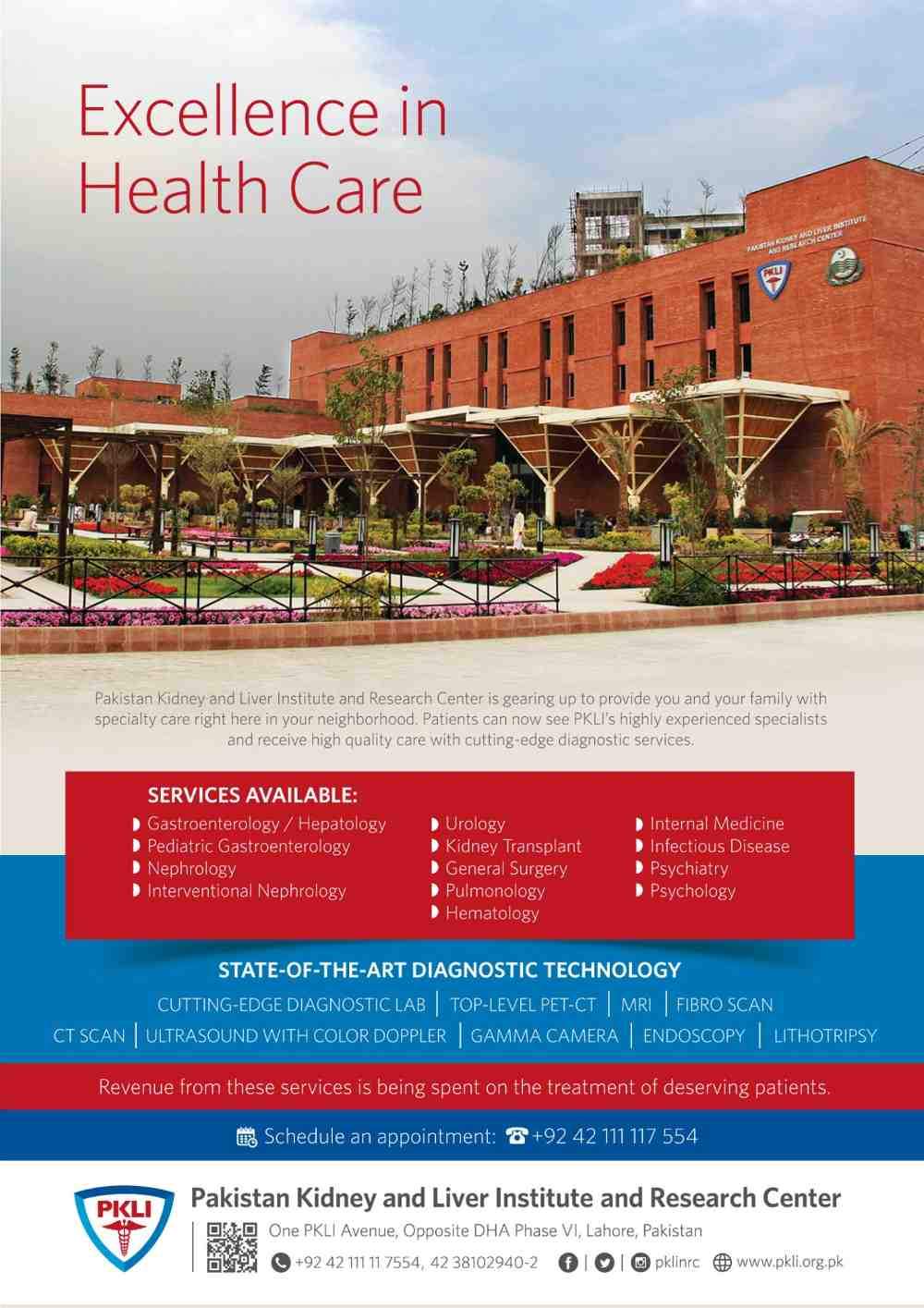
PKLI Lahore offers free kidney transplants to nearly 80 percent of deserving kidney and liver patients through a combination of government support, philanthropic donations, and a financial screening system that identifies patients who genuinely cannot afford treatment. The institute has spent approximately PKR 17 billion to support patient care and continues to provide either completely free or highly subsidized treatment to those in need.
How PKLI determines free treatment eligibility:
- Financial screening process: A structured assessment tool evaluates household income, assets, and family size
- 80% threshold: Nearly four out of five patients receive treatment completely free of charge
- Subsidized rates for others: Patients who can partially pay receive treatment at significantly reduced costs compared to market rates
- Zakat and donations: Philanthropic contributions help fund free treatments for the most vulnerable patients
- Government support: The Punjab government backs the institute’s mission to serve underprivileged patients
PKLI’s impressive transplant milestones:
- Over 1,200 kidney transplants successfully completed
- More than 1,000 liver transplants performed
- 16 bone marrow transplants conducted
- Approximately 14,500 surgical procedures completed
- Over 500 successful robotic surgeries performed
- 500 surgical procedures performed in the last year alone
Advanced technology at PKLI:
- Robotic surgeries introduced for kidney, liver, and other complex procedures
- State-of-the-art healthcare facilities meeting international medical standards
- 24/7 emergency services available
- Future projects include PKLI University and Pakistan’s first advanced biobank research facility
- Deceased donor transplant program in development
- Medical tourism promotion initiatives underway
For those who can afford to pay, the treatment cost remains much lower than in other countries, at about Rs6 million for a complete transplant package. However, the vast majority of patients receive treatment completely free through the institute’s generous funding model and the leadership of Chief Minister Maryam Nawaz Sharif, under whom major healthcare reforms are being introduced across Punjab.
Is Jinnah Hospital Lahore Actually Offering Free Kidney Transplants?
Yes, Jinnah Hospital Lahore has formally begun offering free kidney transplant services under the Punjab government initiative, with the first successful operation performed on a 23-year-old patient named Irfan from Dera Ghazi Khan who received a kidney donated by his aunt, and both patient and donor are recovering well. The hospital received its transplant license from the Punjab Healthcare Commission, marking a significant milestone in expanding free transplant access in the province.
Key details about Jinnah Hospital’s transplant program:
- First transplant date: The inaugural free kidney transplant was performed as a major step forward under the Chief Minister’s vision
- Recipient outcome: The 23-year-old patient showed rapid improvement following the surgery
- Donor safety: The aunt who donated the kidney is also recovering satisfactorily
- Hospital recognition: Punjab Health Minister Khawaja Salman Rafiq congratulated the doctors on the successful operation
- Free surgeries commitment: The Punjab government has confirmed that free surgeries are being provided at this facility
What this means for patients in Lahore:
- Jinnah Hospital is currently the only government teaching hospital in Punjab offering kidney transplant services
- Patients from across Punjab, including remote areas like Dera Ghazi Khan, can now access free transplants
- The program fills a significant gap in healthcare access for underprivileged patients who previously had limited options
- The hospital operates under the Punjab government’s broader free healthcare initiative
Background and significance:
Prior to this launch, government teaching hospitals in Punjab had limited transplant services, leaving a significant gap in healthcare access. The specialized healthcare department had effectively ended the only option for free kidney transplants in the province at one point, making Jinnah Hospital’s new program critically important. With this initiative, patients from all over Punjab can now receive life-saving transplants without bearing the enormous financial burden that typically accompanies such procedures.
The success of this program depends on continued government support and the hospital’s ability to scale up operations to meet the enormous demand from patients across the province. The Punjab Health Minister has expressed commitment to expanding these services further.
Read More: CM Punjab Climate Internship Program (PKR 60K Apply Online)
What Makes the Multan Institute of Kidney Diseases (MIKD) a Leading Free Transplant Center?
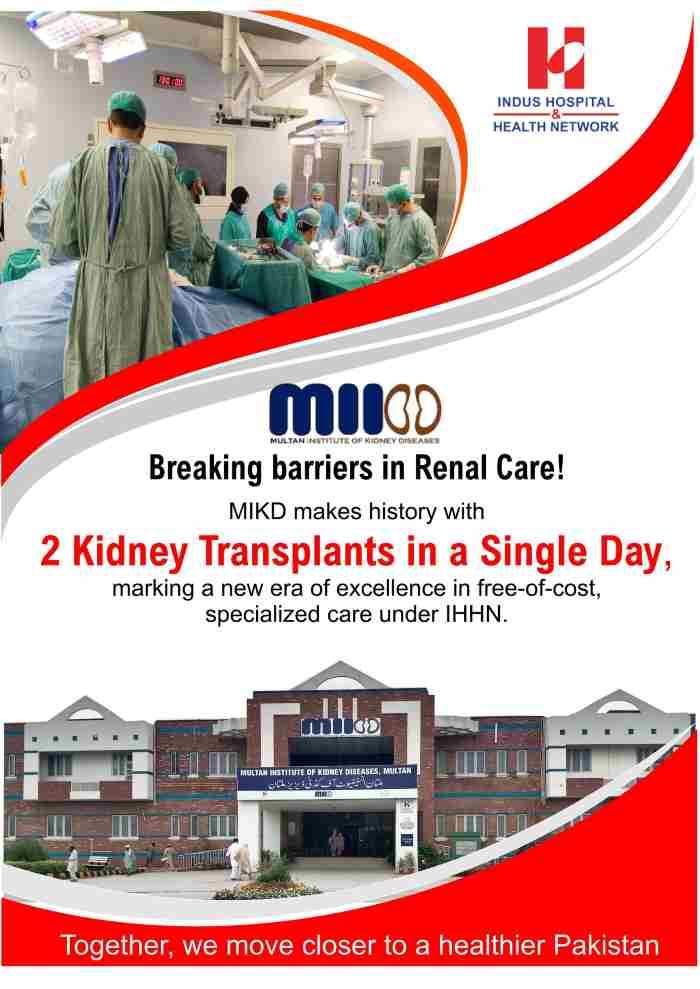
The Multan Institute of Kidney Diseases (MIKD) has established itself as a leading free transplant center by achieving a major milestone of 100 free renal transplants, with all procedures performed entirely free of cost under full financial support from the Government of Punjab, bringing hope to patients suffering from end-stage renal disease. The institute continues to expand its services, with 67 successful kidney transplants recorded at another milestone point, demonstrating consistent growth.
MIKD’s achievements and capabilities:
- 100th transplant milestone: Celebrated on April 8 with recognition from the dedicated transplant team and hospital leadership
- 67 successful transplants: Another significant milestone marking a series of triumphs in renal transplantation
- Two transplants in one day: A remarkable achievement demonstrating the institute’s growing capacity and efficiency
- State-of-the-art facilities: Free-of-cost, modern kidney transplantation services meeting quality standards
- Government-backed funding: Complete financial support from the Government of Punjab ensures no patient pays
Patient outcomes at MIKD:
- Successful recipients report that life after a kidney transplant is not only normal but also free from the constraints of dialysis
- Patients can return to work, family life, and regular activities after recovery
- The quality of life improves dramatically compared to being on long-term dialysis
- The institute plays a vital role in addressing Pakistan’s growing burden of renal failure
Regional importance:
- Serves patients from Multan and surrounding districts in southern Punjab
- Reduces the need for patients to travel to Lahore or Karachi for transplant services
- Provides specialized kidney care in an underserved region of the province
- Operates as part of the Indus Hospital & Health Network, ensuring quality standards
MIKD represents the Punjab government’s strategy of decentralizing transplant services to make them accessible to patients in all regions of the province. Rather than forcing all patients to travel to Lahore, the government has invested in regional centers like MIKD to serve local populations, reducing travel costs and making follow-up care more convenient for patients and their families.
Does Bahria International Hospital Provide Free Transplants Under the CM Program?
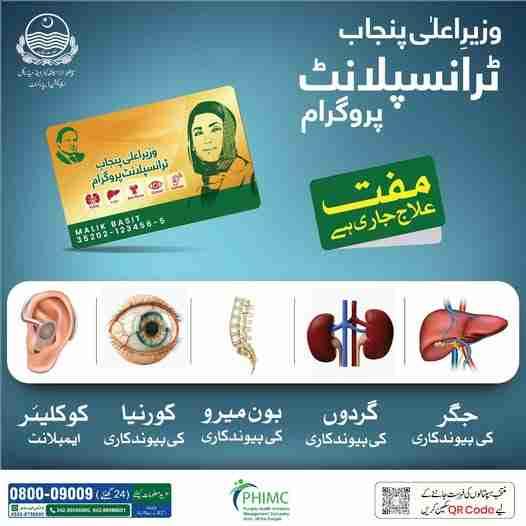
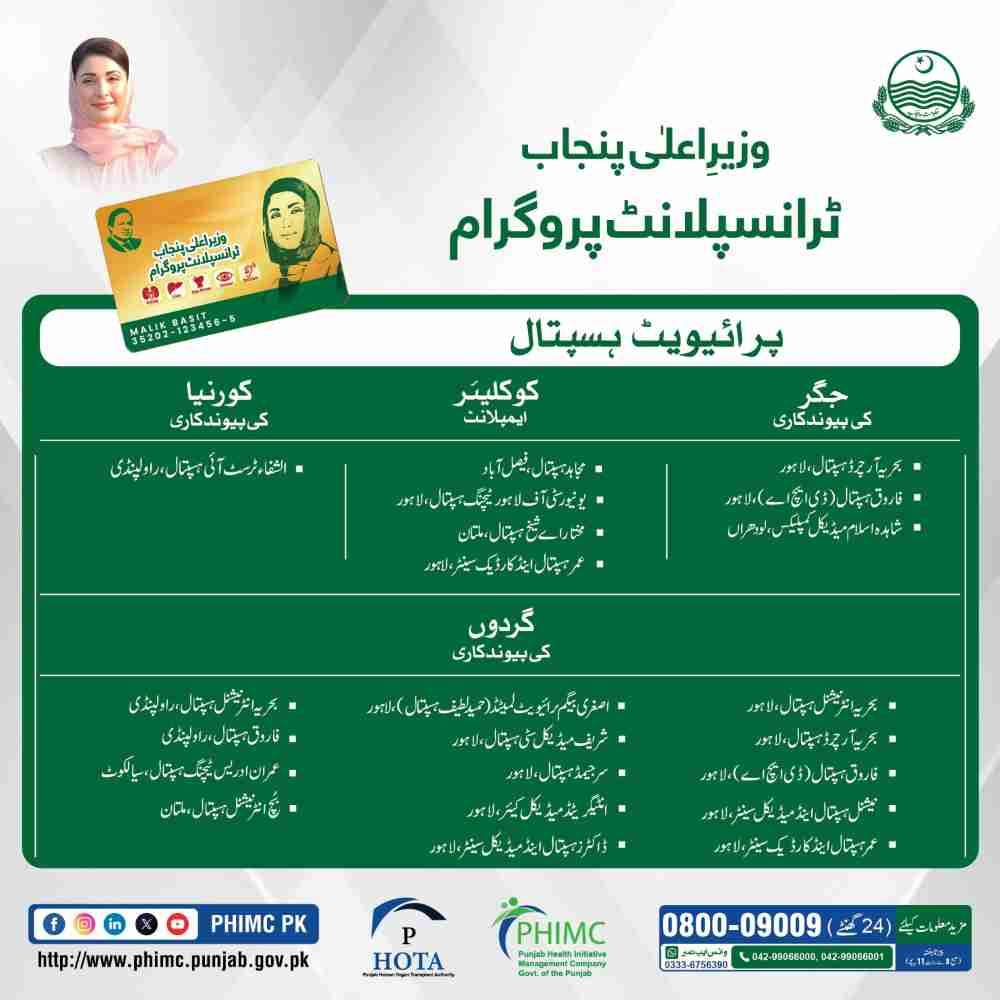
Yes, Bahria International Hospitals in Lahore and Rawalpindi are empaneled under the Chief Minister’s Special Initiative for Transplant Program (CMSITP) to provide free, life-saving organ transplant services to eligible patients who meet the program’s criteria and have registered with PHOTA. As private hospitals participating in the government’s free transplant initiative, they offer high-quality transplant services at no cost to qualifying patients.
How Bahria International Hospitals participate:
- Empaneled status: The hospitals are officially listed as approved facilities under CMSITP
- Government funding: The Punjab government covers the complete cost of transplants for eligible patients
- Private hospital quality: Patients receive care in private hospital settings with modern amenities
- Dual location: Services available at both Lahore and Rawalpindi campuses
- Full transplant coverage: Includes pre-transplant evaluation, surgery, and post-operative care
Eligibility requirements for Bahria International Hospitals:
- Patient must be registered with PHOTA (Punjab Human Organ Transplantation Authority)
- Must meet the financial criteria established by the CM Punjab Transplant Program
- Requires a legal donor (usually a family member) registered with PHOTA
- Medical certification from a specialist confirming the need for transplant
- Punjab residency status as defined by program guidelines
Advantages of receiving a free transplant at Bahria International Hospitals:
- Private hospital environment with shorter waiting times compared to public hospitals
- Access to modern medical equipment and facilities
- Experienced transplant teams following international protocols
- Convenient locations in Lahore and Rawalpindi for patients from northern Punjab and Islamabad
- Government-funded quality care without the financial burden
Patients interested in receiving a free transplant at Bahria International Hospitals should first register with PHOTA and then contact the hospital’s transplant coordinator for further guidance on the application process and documentation requirements.
Government Programs Enabling Free Transplants (Beyond the Top 5)
What is the CM Punjab Free Transplant Program and Who Qualifies?
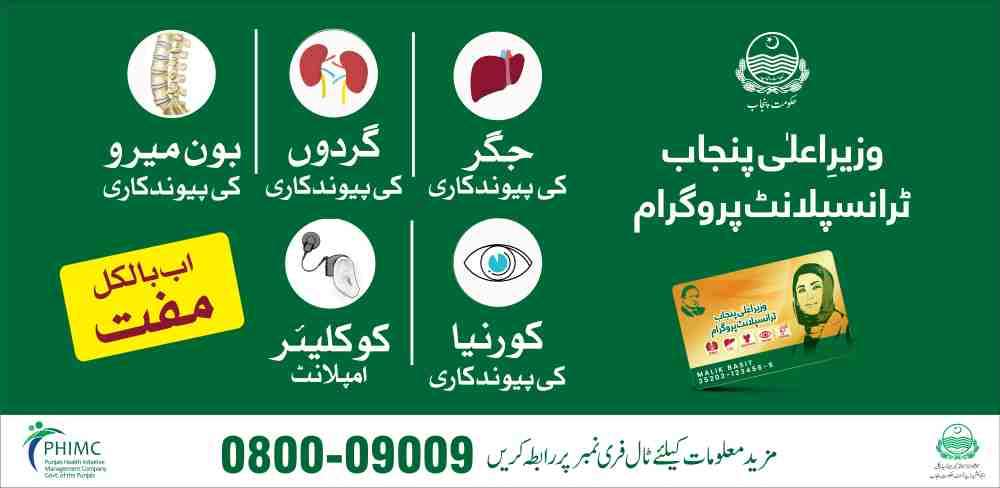
The CM Punjab Free Transplant Program, officially known as the Chief Minister’s Special Initiative for Transplant Program (CMSITP), is a landmark healthcare initiative launched by the Punjab government under Chief Minister Maryam Nawaz Sharif to provide completely free kidney, liver, bone marrow, corneal, and cochlear implant transplants to underprivileged residents of Punjab who cannot afford these life-saving procedures. The program is implemented by the Punjab Health Initiative Management Company (PHIMC), which oversees the financial and administrative aspects, ensuring transparency and efficiency in service delivery.
Program coverage details:
| Procedure Type | Coverage | Government Cost |
|---|---|---|
| Kidney Transplant | 100% free | Up to Rs2 million per patient |
| Liver Transplant | 100% free | Approximately Rs6.5 million per surgery |
| Bone Marrow Transplant | 100% free | Fully covered |
| Corneal Transplant | 100% free | Fully covered |
| Cochlear Implant | 100% free | Fully covered |
Program performance statistics (as of latest data):
- 2,001 patients registered under the CM Special Transplant Programme
- 1,574 successful transplants performed to date
- 799 kidney transplants completed free of charge
- 255 liver transplants performed with government spending of approximately Rs6.5 million each
- 460 cochlear implants successfully completed
- 32 corneal transplants performed
- 28 bone marrow transplants completed
Who qualifies for the CM Punjab Transplant Program:
- Residency requirement: Must be a resident of Punjab province with valid proof of residency
- Financial criteria: Must be classified as financially struggling or underprivileged based on government assessment
- Medical need: Must be certified by a specialist as requiring an organ transplant
- Legal donor requirement: Must have a legal donor (usually a family member) registered with PHOTA
- Age consideration: Generally applicants between 18 and 60 years are eligible, with children considered for specific treatments
Post-transplant medication coverage:
- One year of free immunosuppressant medicines for kidney and liver transplant recipients
- Medicines provided at no cost for twelve months following the procedure
- This significantly reduces the financial burden during the critical first year of recovery
Key features of the program:
- The program is distinct from the Sehat Sahulat Program (Health Card), operating as a targeted initiative specifically for complex transplant procedures
- Medical services are delivered through a network of accredited public and private hospitals
- A 24/7 toll-free helpline (0800-09009) is available for information and assistance
- The program fills a critical gap by covering procedures that may have separate coverage limits under standard health cards
Other free healthcare initiatives in Punjab:
- Children’s heart surgery program: 16,625 children registered, over 11,000 successful heart surgeries performed
- Dialysis program: 38,125 patients registered, over 1.5 million dialysis sessions conducted
- Free cancer, stroke, and cardiac treatment schemes approved with annual budget of Rs13 billion
- Free diagnosis and surgical facilities for cancer patients
- Free cardiac surgery program with Rs3 billion annual allocation
How Can I Register for the CM Punjab Free Transplant Program via PHOTA?
To register for the CM Punjab Free Transplant Program, patients must first register with the Punjab Human Organ Transplantation Authority (PHOTA), which is the mandatory regulatory body responsible for ensuring all organ transplants in Punjab are ethical, legal, and safe, and without this registration, a patient cannot legally receive a transplant under the program. The registration process involves medical evaluation, documentation submission, and verification by PHOTA authorities before the patient can be referred to an empaneled hospital.
Step-by-step registration process:
- Initial medical evaluation: Consult with a specialist who confirms the medical need for a kidney transplant
- Donor identification: Identify a legal donor (usually a close family member) willing to donate
- Documentation gathering: Collect all required documents including CNIC, proof of residence, income certificate, and medical reports
- PHOTA application submission: Submit the completed application form along with all supporting documents to PHOTA
- Verification process: PHOTA reviews the application to ensure compliance with ethical and legal standards
- Approval and hospital referral: Once approved, PHOTA refers the patient to an empaneled hospital for the transplant procedure
Required documents for PHOTA registration:
- Valid CNIC (Computerized National Identity Card) of patient and donor
- Proof of Punjab residency (domicile certificate or other government-issued document)
- Income certificate or proof of financial status
- Medical reports from a certified specialist confirming organ failure
- Donor consent documents as required by PHOTA regulations
- Family tree or relationship proof between patient and donor
Important notes about PHOTA registration:
- Registration is absolutely mandatory; no transplant can proceed without PHOTA approval
- The authority approves registrations for kidney, liver, bone marrow, and cornea transplants
- PHOTA also oversees the renewal of registrations for various government and private hospitals
- The authority takes strict action against illegal organ transplants in Punjab
- PHOTA has approved budgets and continues to expand its oversight capabilities
Hospitals empaneled under CMSITP:
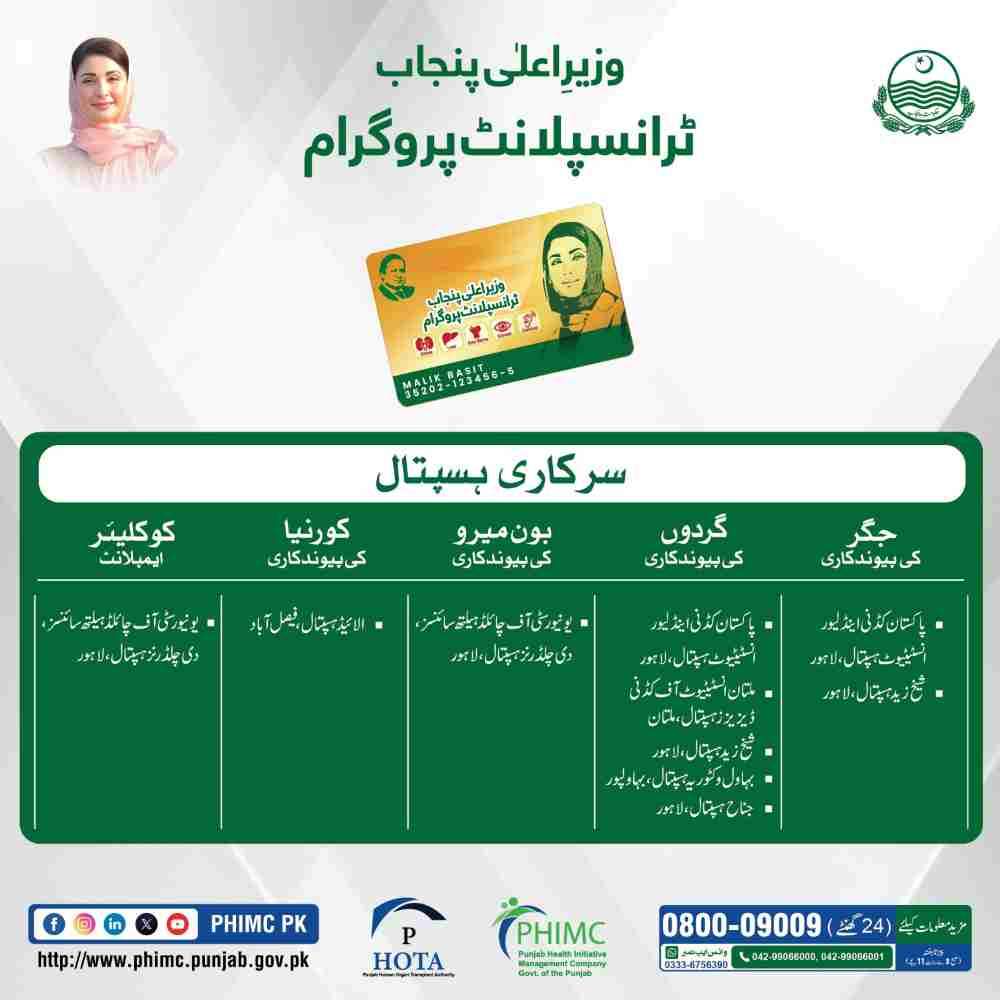
Public and private hospitals meeting stringent quality standards are empaneled by PHIMC to provide free transplant services. These include government teaching hospitals like Jinnah Hospital Lahore, specialized institutes like PKLI, and private hospitals like Bahria International Hospitals that have met the program’s requirements.
Patients seeking more information can call the 24/7 toll-free helpline at 0800-09009 for guidance on the registration process and to verify the current list of empaneled hospitals.
Does the Sehat Insaf Card Cover Kidney Transplant Costs?
The Sehat Insaf Card (now known as the Sehat Sahulat Program) provides health insurance coverage for a wide range of medical conditions and treatments, but the CM Punjab Transplant Program is a distinct, special initiative that specifically covers the complete cost of kidney transplants and other complex transplant procedures, and for many patients, this program fills a critical gap by providing for procedures that may have separate coverage limits under the standard card. The two programs operate in parallel, with the transplant initiative offering more comprehensive coverage specifically for transplant procedures.
Key differences between Sehat Card and CM Transplant Program:
| Feature | Sehat Sahulat Card | CM Transplant Program |
|---|---|---|
| Coverage scope | Wide range of medical conditions | Targeted transplant procedures only |
| Funding model | Insurance-based | Direct government funding |
| Coverage limit | Per-family annual limit | Complete procedure cost covered |
| Medication coverage | Varies by condition | One year free immunosuppressants for transplants |
What the Sehat Card does cover:
- Hospitalization expenses for various medical conditions
- Surgical procedures across multiple specialties
- Emergency medical services
- Diagnostic tests and treatments as per insurance policy
What the CM Transplant Program covers that Sehat Card may not fully cover:
- Complete kidney transplant procedure without co-payments or deductibles
- Full pre-transplant evaluation and testing
- One year of free immunosuppressant medication after transplant
- Procedures that may exceed standard health card coverage limits
Regional expansion of health cards:
- Sehat Sahulat Card of Zone-III has been launched in Peshawar
- Coverage extends to patients in Peshawar, Charsadda, Swabi, Nowshera, Mardan, and Haripur
- Southern districts are also receiving health cards as part of ongoing expansion
- Patients should verify their specific coverage with the program helpline
Patients who are unsure whether their transplant costs will be covered should contact both the Sehat Sahulat Program helpline and the CM Transplant Program helpline (0800-09009) to understand their specific coverage options and ensure they access the appropriate program for their needs.
Can Patients from Sindh Get Free Kidney Transplants in Punjab?
Patients from Sindh generally cannot get free kidney transplants under Punjab government programs like the CM Punjab Transplant Program because these initiatives are specifically funded by the Punjab government for residents of Punjab province, but patients from Sindh can absolutely receive completely free transplants at SIUT Karachi, which operates independently of provincial government restrictions and treats patients from all over Pakistan regardless of their province of origin. SIUT’s model is based on need, not residency, making it the primary option for Sindh residents requiring free transplants.
Options for Sindh residents seeking free transplants:
| Hospital | Eligibility for Sindh Residents | Coverage Type |
|---|---|---|
| SIUT Karachi | Full eligibility | 100% free including lifelong medicines |
| PKLI Lahore | Limited (may require out-of-province approval) | 80% free for needy, regardless of province |
| CM Punjab Program | Generally not eligible | Punjab residents only |
Why SIUT is the best option for Sindh patients:
- SIUT serves patients from all provinces without discrimination
- The institute has a philosophy of providing quality healthcare with dignity, free of charge, and without discrimination
- Over 35 million patients have been treated regardless of their origin
- Sindh patients do not need to prove Punjab residency or meet provincial criteria
- Transportation and accommodation costs may apply, but medical treatment is completely free
Can Sindh patients access PKLI Lahore?
While PKLI primarily serves patients from across Pakistan, including those from other provinces, priority may be given to Punjab residents under certain funding streams. However, the institute’s mission to serve deserving patients regardless of origin means Sindh residents with genuine financial need may still qualify for free treatment at PKLI, subject to available funding and the institute’s financial screening process.
Recommendation for Sindh patients:
Sindh residents requiring a free kidney transplant should first approach SIUT Karachi, as it is geographically closer and has no provincial restrictions. If SIUT is not an option for any reason, patients should contact PKLI Lahore directly to inquire about out-of-province patient eligibility and funding availability under their 80% free treatment policy.
Eligibility, Registration, and Documentation
What Are the Eligibility Criteria for a Free Kidney Transplant in Pakistan?
The eligibility criteria for a free kidney transplant in Pakistan vary by hospital and program, but generally include a confirmed medical diagnosis of end-stage renal disease requiring transplantation, the presence of a legal donor (usually a close family member), financial need as determined by the hospital’s screening process or government program criteria, and valid identification documents proving residency in the relevant province for government-funded programs. Each institution applies its own specific requirements, so patients must understand the criteria for their chosen hospital.
General eligibility requirements across all programs:
- Medical necessity: Confirmed diagnosis of irreversible kidney failure requiring transplantation
- Legal donor availability: A donor who is a close relative (parent, sibling, child, spouse) and willing to donate
- Donor health: The donor must be medically fit for donation with no contraindications
- PHOTA compliance: For transplants in Punjab, registration with PHOTA is mandatory
- Financial assessment: Most programs require proof of financial inability to pay for the transplant
Hospital-specific eligibility criteria:
| Hospital | Financial Criteria | Donor Requirement | Residency | Age Limit |
|---|---|---|---|---|
| SIUT Karachi | No income threshold, need-based | Family donor preferred | No restriction | No strict limit |
| PKLI Lahore | Financial screening tool | Family donor required | Pakistan-wide | Clinical judgment |
| Jinnah Hospital Lahore | Under CM program criteria | Legal donor with PHOTA | Punjab resident | 18-60 years |
| MIKD Multan | Government-funded, need-based | Family donor required | Punjab resident | 18-60 years |
| Bahria International | CM program criteria | Legal donor with PHOTA | Punjab resident | 18-60 years |
What disqualifies a patient from receiving a free transplant:
- Ability to afford treatment independently (determined by financial screening)
- Absence of a legal donor willing to donate
- Medical contraindications making transplant too risky
- Incomplete documentation or failure to meet residency requirements (for government programs)
- Failure to register with PHOTA for transplants in Punjab
The financial screening process explained:
Most free transplant programs use a structured assessment tool to evaluate a patient’s financial situation. This tool considers household income, number of dependents, assets owned, existing medical expenses, and other relevant factors. The assessment determines whether the patient qualifies for completely free treatment or, in some cases like PKLI, a subsidized rate. Patients are expected to provide accurate information, and false declarations can result in disqualification.
What is the Age Limit for Receiving a Free Kidney Transplant in Pakistan?
Generally, patients between 18 and 60 years are eligible for free kidney transplants under most government programs in Pakistan, with children considered for specific treatments like cochlear or cornea transplants, but SIUT Karachi has no strict age limit and evaluates each patient individually based on clinical condition rather than chronological age. Older patients can receive transplants if they are medically fit and have no contraindications to surgery or immunosuppression.
Age limits by hospital and program:
| Institution/Program | Lower Age Limit | Upper Age Limit | Special Considerations |
|---|---|---|---|
| SIUT Karachi | No strict limit | No strict limit | Case-by-case clinical evaluation |
| PKLI Lahore | Clinical judgment | Clinical judgment | Fitness more important than age |
| CM Punjab Program | 18 years | 60 years | Children considered for specific treatments |
| Jinnah Hospital Lahore | 18 years | 60 years | Under CM program guidelines |
| MIKD Multan | 18 years | 60 years | Under CM program guidelines |
Why age limits exist in government programs:
Government-funded programs establish age limits to ensure efficient use of limited resources and to focus on patients who are most likely to have successful outcomes. Younger patients typically have fewer comorbidities, better healing capacity, and longer potential benefit from the transplant. However, these limits are not absolute, and exceptions may be made on a case-by-case basis.
When age is not a barrier:
- At SIUT, age is not a barrier; the institute treats patients of all ages based on medical need
- Medically fit older adults with no significant heart, lung, or other organ disease may still qualify
- Children with kidney failure can receive transplants if they have suitable donors
- The clinical team’s assessment of overall health matters more than age alone
The importance of clinical fitness:
Regardless of age, patients must be medically fit to undergo major surgery and tolerate lifelong immunosuppressive medications. Conditions such as active infections, uncontrolled diabetes, severe heart disease, or active cancer may disqualify a patient regardless of age. The transplant team conducts a thorough pre-transplant evaluation to assess fitness for surgery and long-term survival.
Can a Non-Relative Donate a Kidney for a Free Transplant in Pakistan?
A non-relative can donate a kidney for a transplant in Pakistan only under very strict conditions regulated by PHOTA, which requires proof of an emotional attachment such as a long-standing relationship (like a spouse or close friend) and approval from the transplant authority, and the donation must be completely altruistic with no financial transaction involved. Unrelated donors face more scrutiny to prevent organ trafficking, and the process requires additional documentation and approvals.
Types of donors recognized in Pakistan:
| Donor Type | Relationship | PHOTA Approval | Additional Requirements |
|---|---|---|---|
| Immediate family | Parent, child, sibling | Standard process | Proof of relationship |
| Extended family | Grandparent, aunt, uncle, cousin | Enhanced scrutiny | Family tree documentation |
| Spouse | Husband or wife | Enhanced scrutiny | Marriage certificate |
| Emotional attachment | Close friend, long-term relationship | Intensive scrutiny | Proof of relationship duration |
| Stranger | No prior relationship | Generally not approved | Organ trafficking concerns |
The legal framework for transplants in Pakistan:
The Transplantation of Human Organs and Tissues Act regulates all organ transplants in Pakistan to prevent commercial dealing in organs. Under this act, only near relatives (parents, siblings, children, spouse) can donate without special permission. Donations from individuals who are not near relatives require prior approval from the evaluation committee, which must be satisfied that the donation is voluntary and based on genuine emotional attachment.
Requirements for non-relative donor approval:
- Documented proof of relationship or emotional attachment spanning years
- Affidavits from both donor and recipient confirming voluntary donation
- Approval from PHOTA’s evaluation committee
- Independent witness statements attesting to the relationship
- No evidence of financial consideration or coercion
Why non-relative donation is restricted:
The restrictions on non-relative donation exist to prevent organ trafficking and exploitation of vulnerable individuals. Pakistan has experienced issues with illegal organ trade in the past, and PHOTA actively works to prevent such practices. The authority takes strict action against illegal organ transplants, including canceling hospital registrations and pursuing criminal charges against those involved.
Recommendation for patients without family donors:
Patients without suitable family donors should explore all options within their extended family first. If no family donor is available, they should consult with their chosen hospital’s transplant coordinator about the possibility of an emotionally related donor. The process requires patience and thorough documentation, but altruistic donations from genuinely attached non-relatives can be approved when proper procedures are followed.
What Documents Are Required for a Free Transplant Application at PKLI and SIUT?
The documents required for a free transplant application at PKLI include CNIC copies of patient and donor, proof of income and financial status, medical reports from a certified nephrologist confirming end-stage renal disease, donor evaluation reports, and a completed financial assessment form, while SIUT requires CNIC copies, medical records, and a referral letter from a nephrologist, but the institute’s streamlined process relies more on direct patient interviews than extensive paperwork. Both institutions prioritize medical need over documentation complexity.
PKLI required documents checklist:
| Document Category | Specific Documents Required |
|---|---|
| Patient identification | Valid CNIC (original and copies), recent photographs |
| Donor identification | Valid CNIC, proof of relationship to patient |
| Financial documentation | Income certificate, proof of assets, utility bills, family size declaration |
| Medical documentation | Complete medical history, dialysis records, lab reports, imaging studies |
| Donor medical documentation | Complete health assessment, blood type matching, crossmatch reports |
| Legal documentation | PHOTA registration (for Punjab residents), donor consent forms |
SIUT required documents checklist:
| Document Category | Specific Documents Required |
|---|---|
| Patient identification | CNIC or B-Form for children, proof of address |
| Donor identification | CNIC, proof of relationship (family tree or marriage certificate) |
| Medical referral | Referral letter from a nephrologist confirming need for transplant |
| Medical records | Available medical history and test results (as much as possible) |
| Financial documentation | No formal requirement; financial assessment done through interview |
How to prepare your documents for application:
- Make multiple sets of photocopies of all original documents
- Keep originals available for verification at the hospital
- Organize documents in a logical order for easy presentation
- Obtain translations of any documents not in Urdu or English
- Complete all forms honestly and thoroughly
The importance of accurate documentation:
Inaccurate or incomplete documentation can delay the application process significantly. Hospitals and government programs use these documents to verify identity, establish eligibility, and prevent fraud. Patients should take time to ensure all information is correct and all required documents are included before submitting their application.
What to do if you lack certain documents:
Patients who lack standard documentation, such as those without formal CNICs or income certificates, should contact the hospital’s patient services department for guidance. Both PKLI and SIUT have experience helping patients from marginalized backgrounds access services, and alternative forms of verification may be accepted in exceptional circumstances.
How Long is the Waiting List for Free Kidney Transplants at SIUT vs. PKLI?
The waiting list for free kidney transplants at SIUT can extend from several months to over a year depending on blood group compatibility, donor availability, and the volume of patients awaiting transplantation, while at PKLI the waiting period is generally shorter due to the institute’s higher transplant volume and more recent establishment, but both hospitals prioritize patients with suitable living donors over those on the deceased donor waiting list. Patients with family donors typically wait less time than those without donors.
Comparison of waiting times:
| Hospital | With Living Donor | Without Donor (Deceased Donor List) | Factors Affecting Wait |
|---|---|---|---|
| SIUT Karachi | 3-6 months | 12-24+ months | Blood group, patient priority, transplant volume |
| PKLI Lahore | 2-4 months | Limited deceased donor program | Donor availability, surgical scheduling |
| CM Punjab Program | Depends on hospital | Not applicable (living donor required) | Registration completion, hospital capacity |
Why living donors reduce waiting time:
Patients who have a willing and medically suitable living family donor can proceed with transplantation much faster than those waiting for a deceased donor organ. The living donor evaluation can be completed in weeks, and surgery can be scheduled once all approvals are obtained. This is why both SIUT and PKLI strongly encourage patients to identify potential family donors early in their treatment journey.
The deceased donor waiting list explained:
Patients without living donors must rely on deceased donor organs, which are extremely scarce in Pakistan. The deceased donor transplant program is still developing, with PKLI working on launching a formal deceased donor transplant program. Until this program expands significantly, patients without living donors face very long waiting times and may need to continue dialysis indefinitely.
How blood group affects waiting time:
- Blood group O: Longest waiting time (can donate to anyone but can only receive from O)
- Blood group A: Moderate waiting time
- Blood group B: Moderate waiting time
- Blood group AB: Shortest waiting time (can receive from any blood group)
Tips for reducing waiting time:
- Identify potential family donors as early as possible
- Complete all medical evaluations and documentation before applying
- Ensure both patient and donor are medically optimized for surgery
- Follow up regularly with the hospital’s transplant coordinator
- Consider multiple hospitals if feasible (apply to both SIUT and PKLI if location permits)
Are Foreign Patients Eligible for Free Transplants in Pakistan?
Foreign patients are generally not eligible for free transplants under government-funded programs like the CM Punjab Transplant Program, which are specifically designed for Pakistani citizens and residents of Punjab, but foreign patients can receive transplants at SIUT Karachi on a case-by-case basis with the understanding that priority is given to Pakistani patients, and any treatment provided to foreign nationals may require payment or special arrangements. Each hospital has its own policy regarding international patients.
Eligibility by hospital for foreign patients:
| Hospital | Foreign Patient Eligibility | Cost Arrangement |
|---|---|---|
| SIUT Karachi | Case-by-case basis | May require payment or donation |
| PKLI Lahore | Limited, priority to Pakistanis | Typically paid treatment |
| CM Punjab Program | Not eligible | Pakistani citizens only |
| Jinnah Hospital Lahore | Not eligible | Pakistani citizens only |
Why free programs are restricted to Pakistani citizens:
Government-funded healthcare programs are financed by Pakistani taxpayers and are intended to serve the Pakistani population. Extending these benefits to foreign nationals would divert resources away from Pakistani citizens who are the intended beneficiaries of these programs. Additionally, legal and regulatory frameworks governing these programs typically specify citizenship or residency requirements.
Options for foreign patients seeking transplants in Pakistan:
- Contact SIUT directly to inquire about treatment possibilities and any associated costs
- Explore paid transplant options at private hospitals like PKLI (subsidized rates may still apply)
- Check if their home country has a reciprocal healthcare agreement with Pakistan
- Consider fundraising or seeking support from international charitable organizations
What foreign patients should know before traveling:
Foreign patients should not assume they will receive free treatment and should confirm all costs and arrangements before traveling to Pakistan. The transplant process requires multiple visits for evaluation, donor testing, and surgery, which can take several months. Patients should also ensure they have appropriate visas, travel insurance, and arrangements for post-transplant follow-up care in their home country.
Financial Breakdown: Costs, Subsidies, and Zakat
How Much Does a Kidney Transplant Cost in Pakistan If Not Done for Free?
A kidney transplant in Pakistan costs between Rs1.4 million to Rs3 million for the complete procedure including pre-transplant evaluation, surgery, hospital stay, and initial follow-up care, with PKLI offering treatment at about Rs6 million for paying patients which is still significantly lower than international rates, and private hospitals charging even higher amounts depending on the facility and surgeon’s fees. These costs do not include lifelong immunosuppressant medications, which add significant ongoing expense.
Breakdown of kidney transplant costs in Pakistan:
| Cost Component | Estimated Range (Rs) | Notes |
|---|---|---|
| Pre-transplant evaluation | 150,000 – 300,000 | Donor and recipient testing, crossmatching |
| Surgery and hospital stay | 800,000 – 1,500,000 | Operating room, anesthesia, 2-3 week stay |
| Surgeon and medical team fees | 200,000 – 500,000 | Transplant surgeon, nephrologist, anesthesiologist |
| Diagnostic and lab work | 100,000 – 200,000 | Pre and post-surgery tests |
| Medications (initial) | 100,000 – 300,000 | Immunosuppressants for first few months |
| Follow-up care (first year) | 100,000 – 200,000 | Regular check-ups, lab monitoring |
| Total estimated cost | 1,450,000 – 3,000,000 | Excludes lifelong medication |
Comparison of costs across hospitals:
| Hospital | Cost for Paying Patients | Subsidized Rates Available |
|---|---|---|
| PKLI Lahore | Approximately Rs6 million | Yes, for qualifying patients |
| Private hospitals | Rs3 million+ | Limited |
| International rates | Rs10-50 million | Not applicable |
Why PKLI’s Rs6 million figure appears higher:
The Rs6 million figure quoted for PKLI represents the full commercial rate that international patients or wealthy individuals might pay, but this rate is still substantially lower than the Rs10-50 million typically charged for kidney transplants in countries like the United States, United Kingdom, or Singapore. Most Pakistani patients at PKLI pay significantly less or nothing at all due to the institute’s 80% free treatment policy.
Hidden costs to consider:
- Travel expenses for multiple hospital visits
- Accommodation for the patient’s family during hospitalization
- Lost wages during recovery period
- Additional medications not covered by hospital packages
- Treatment for potential complications or rejection episodes
The financial burden without free programs:
For the average Pakistani family earning Rs30,000-50,000 per month, a kidney transplant costing Rs2 million represents 40-60 months of full income, which is impossible for most families to afford. This is why free transplant programs are literally life-saving for the vast majority of patients who would otherwise have no access to transplantation and would die from kidney failure while on dialysis.
Is the Medicine After a Kidney Transplant Also Free in Pakistan (Immunosuppressants)?
The medicine after a kidney transplant is completely free for patients treated at SIUT Karachi for their entire lifetime, while under the CM Punjab Transplant Program, patients receive free immunosuppressant medicines for one year following the transplant, after which they must arrange for their own medications or seek additional support from charitable organizations or hospital assistance programs. PKLI may provide free medications to patients who received free transplants, depending on available funding and individual circumstances.
Immunosuppressant medication coverage by hospital:
| Hospital/Program | Medication Coverage | Duration | Typical Monthly Cost If Not Covered |
|---|---|---|---|
| SIUT Karachi | 100% free | Lifelong | Rs15,000 – 30,000 |
| CM Punjab Program | Free | 1 year post-transplant | Rs15,000 – 30,000 |
| PKLI Lahore | Case-by-case | Variable | Rs15,000 – 30,000 |
| Other government hospitals | Limited | Variable | Rs15,000 – 30,000 |
Why immunosuppressants are essential:
Immunosuppressant medications prevent the recipient’s immune system from attacking and rejecting the transplanted kidney. These medications must be taken daily for the rest of the patient’s life, without exception. Missing doses can trigger rejection episodes that may lead to permanent kidney damage or complete loss of the transplanted organ. The cost of these medications represents a significant ongoing financial burden for transplant recipients.
Common immunosuppressant medications used in Pakistan:
- Tacrolimus (primary calcineurin inhibitor)
- Mycophenolate mofetil (antiproliferative agent)
- Prednisolone (corticosteroid)
- Cyclosporine (alternative calcineurin inhibitor)
- Sirolimus (mTOR inhibitor, used in specific cases)
What patients should do about long-term medication costs:
- SIUT patients: No action needed; medications provided automatically
- CM Punjab Program patients: Plan for medication expenses after the first year
- PKLI patients: Discuss medication coverage during financial screening
- All patients: Register with hospital patient assistance programs for potential support
Alternatives for patients who cannot afford medications:
- Apply for Zakat assistance through hospital Zakat committees
- Seek support from charitable organizations focused on kidney patients
- Request generic versions of medications which are more affordable
- Inquire about pharmaceutical company patient assistance programs
- Work with hospital social workers to identify additional resources
The high cost of lifelong immunosuppressants is often overlooked when patients consider transplant options. While the surgery itself may be free, patients and their families must understand the long-term financial commitment required to maintain the transplanted kidney’s function.
How Does PKLI’s 30% Subsidy or Zakat Funding Work for Needy Patients?
PKLI’s financial assistance system operates on a sliding scale where approximately 80% of deserving patients receive completely free treatment, while the remaining 20% may receive subsidized rates of up to 30% or more off the standard commercial rate, with the specific subsidy amount determined by a structured financial screening tool that evaluates household income, assets, family size, and other socioeconomic factors. The institute has spent around PKR 17 billion to date supporting patient care through a combination of government funding, philanthropic donations, and Zakat collections.
How PKLI determines financial assistance level:
| Patient Category | Estimated Income Level | Assistance Provided | Out-of-Pocket Cost |
|---|---|---|---|
| Extremely needy | Below poverty line | 100% free | Zero |
| Very needy | Low income, multiple dependents | 100% free | Zero |
| Moderately needy | Lower-middle income | 70-80% subsidy | 20-30% of standard rate |
| Borderline | Middle income | 30-50% subsidy | 50-70% of standard rate |
| Affluent | High income | No subsidy | Full commercial rate (~Rs6 million) |
The financial screening tool explained:
PKLI uses a structured questionnaire and verification process to assess a patient’s financial situation. The tool considers:
- Monthly household income from all sources
- Number of family members dependent on that income
- Ownership of assets (house, land, vehicles, businesses)
- Existing debts and financial obligations
- Previous medical expenses incurred
- Employment status and stability
How Zakat funding works at PKLI:
- Zakat collections are maintained in a separate fund designated for patient assistance
- Eligible patients (Muslims meeting Zakat criteria) can apply for Zakat support
- Zakat funds are distributed according to Islamic principles to the most deserving recipients
- Patients do not need to repay Zakat assistance
- The Zakat committee reviews applications and determines distribution amounts
What patients need to know about applying for PKLI assistance:
- Complete the financial assessment form honestly and thoroughly
- Provide all requested documentation (income certificates, utility bills, etc.)
- Be prepared for verification interviews with the financial screening team
- Understand that assistance levels are based on objective criteria, not negotiation
- Reapply if financial circumstances change (loss of income, new expenses)
The source of PKLI’s funding:
PKLI’s ability to provide free and subsidized care comes from multiple sources:
- Government of Punjab support and allocations
- Philanthropic donations from individuals and corporations
- Zakat collections during Ramadan and throughout the year
- Income from paying patients that cross-subsidizes free care
- The institute’s own financial reserves and investment income
Patients should not hesitate to apply for assistance even if they are unsure about their eligibility. PKLI’s mission is to serve deserving patients, and the financial screening process is designed to identify those who genuinely need help, not to exclude them.
Does the Punjab Government Cover Post-Transplant Medication for One Year?
Yes, the Punjab government provides one year of free post-transplant immunosuppressant medicines for kidney and liver transplant recipients under the CM Punjab Transplant Program, ensuring that patients receive essential medications at no cost for the critical first twelve months following their procedure when the risk of rejection is highest and medication adherence is most crucial. This coverage includes all standard immunosuppressant drugs prescribed by the transplant team.
Details of the one-year medication coverage:
| Coverage Aspect | Details |
|---|---|
| Duration | 12 months from the date of transplant |
| Medications covered | All prescribed immunosuppressant drugs (tacrolimus, mycophenolate, prednisolone, etc.) |
| Who provides | Punjab government through the CM Special Transplant Programme |
| How to access | Through the hospital where transplant was performed |
| Cost to patient | Zero |
Why one year of coverage is significant:
The first year after transplant is the most critical period for graft survival. During this time, medication doses are adjusted frequently based on blood levels, and patients are monitored closely for signs of rejection or side effects. The cost of immunosuppressants during this period can exceed Rs200,000-300,000, which would be impossible for many families to afford. The government’s coverage removes this barrier and gives patients the best possible chance of a successful outcome.
What happens after one year:
After the first year, patients must arrange for their own medications. Options include:
- Purchasing medications from hospital pharmacies (may have negotiated rates)
- Seeking generic versions which are more affordable
- Applying for Zakat or charitable assistance
- Inquiring about continued assistance from the hospital’s patient support programs
Medications specifically covered under the program:
- All immunosuppressant drugs prescribed as part of the post-transplant regimen
- Anti-hypertensive medications if needed for blood pressure control
- Basic supportive medications as determined by the transplant team
Medications typically not covered:
- Medications for unrelated medical conditions
- Over-the-counter drugs
- Supplements and vitamins
How to access the medication benefit:
Patients receiving a transplant under the CM Punjab Program should confirm with their hospital’s transplant coordinator how to access the free medications. Typically, medications are dispensed from the hospital pharmacy or through an affiliated pharmacy network. Patients may need to show their transplant registration documents and prescription to receive the free medications.
The one-year medication coverage represents a significant investment by the Punjab government and has greatly improved outcomes for transplant recipients who would otherwise struggle to afford essential immunosuppressants.
Success Rates and Patient Outcomes
What is the Success Rate of Free Kidney Transplants in Pakistan (SIUT & PKLI Data)?
The success rate of free kidney transplants in Pakistan at leading institutions like SIUT and PKLI exceeds 90% for the first year post-transplant, with long-term graft survival rates comparable to international standards, meaning that over 90 out of every 100 patients who receive a transplant at these centers have a functioning kidney one year after surgery. These rates are achieved despite the financial constraints of providing free care, demonstrating that quality is not compromised by the absence of patient payments.
Success rate comparison by hospital:
| Hospital | 1-Year Graft Survival | 5-Year Graft Survival | Notes |
|---|---|---|---|
| SIUT Karachi | Over 90% | Over 80% | Decades of experience, large patient volume |
| PKLI Lahore | Over 90% | Data accumulating | Newer institute with modern protocols |
| International average | 85-95% | 70-85% | Varies by center and patient population |
What “success rate” actually means:
Success rate in transplant medicine refers to graft survival, meaning the transplanted kidney continues to function without requiring a return to dialysis. A successful transplant is one where the patient is alive and the kidney is working at a level that eliminates or significantly reduces the need for dialysis. Death with a functioning kidney is counted as a graft loss in most statistics, as the kidney is no longer in a living recipient.
Factors that influence transplant success:
- Donor-recipient matching: Better HLA matching leads to lower rejection rates
- Age of recipient: Younger patients generally have better outcomes
- Cause of kidney failure: Some diseases have higher recurrence rates
- Medication adherence: Taking immunosuppressants exactly as prescribed is critical
- Quality of follow-up care: Regular monitoring catches problems early
- Donor health: Kidneys from healthy donors function better and last longer
How Pakistan’s success rates compare globally:
Pakistan’s leading transplant centers achieve success rates that are comparable to or better than many international centers, despite having fewer resources. This is attributed to high surgical volumes, experienced transplant teams, and careful patient selection. Patients who receive transplants at SIUT and PKLI can expect outcomes similar to what they would receive in developed countries.
What patients should understand about success rate statistics:
Success rates are population averages and do not predict any individual patient’s outcome. A patient’s personal success depends on their specific medical condition, donor compatibility, and ability to adhere to post-transplant care requirements. Patients should discuss their individual prognosis with their transplant team rather than relying solely on published statistics.
Which Hospital is Better for a Kidney Transplant: PKLI or SIUT?
Neither PKLI nor SIUT is universally “better” for a kidney transplant, as each hospital has distinct strengths, and the choice depends on the patient’s location, specific medical needs, donor availability, and personal preferences, with SIUT offering decades of experience and a completely free lifelong medication model, while PKLI offers newer facilities, robotic surgery options, and potentially shorter waiting times for patients with living donors. Both institutions achieve excellent success rates and provide high-quality care.
Comparative analysis: SIUT vs. PKLI
| Factor | SIUT Karachi | PKLI Lahore |
|---|---|---|
| Location | Karachi (Sindh) | Lahore (Punjab) |
| Years of experience | 50+ years | ~10 years |
| Total kidney transplants | Thousands | 1,200+ |
| Free medication coverage | Lifelong | Variable, depends on funding |
| Robotic surgery available | Yes | Yes (newer program) |
| Waiting time with donor | 3-6 months | 2-4 months |
| PHOTA requirement | Not applicable | Yes for Punjab residents |
| Patient volume | Very high | High |
When to choose SIUT:
- You live in Sindh or southern Pakistan and travel to Lahore is difficult
- You want the security of lifelong free immunosuppressant medications
- You prefer an institution with five decades of proven experience
- You have no PHOTA registration and prefer a simpler registration process
- You value the philanthropic model that has served millions of patients
When to choose PKLI:
- You live in Punjab or northern Pakistan and travel to Karachi is difficult
- You have a living donor and want potentially shorter waiting times
- You are interested in robotic surgery options for potentially faster recovery
- You can complete PHOTA registration and meet Punjab government requirements
- You prefer a newer facility with modern infrastructure
What patients should do:
Patients who live roughly equidistant between Karachi and Lahore should consider applying to both hospitals simultaneously. Having applications at multiple centers increases the chances of receiving a transplant sooner. Patients should be honest about their applications and inform both hospitals if they accept an offer from one institution.
The bottom line:
Both SIUT and PKLI are world-class institutions providing free, high-quality kidney transplants to Pakistani patients. The choice between them should be based on practical factors like location, travel costs, family support networks near the hospital, and specific medical needs. Neither hospital is objectively better than the other, and patients can feel confident choosing either institution.
How Long is the Recovery Period After a Free Kidney Transplant in Pakistan?
The recovery period after a free kidney transplant in Pakistan typically involves a hospital stay of 2 to 3 weeks followed by 2 to 3 months of careful recovery at home, with most patients able to return to normal activities including work within 3 to 6 months after surgery, although individual recovery times vary significantly based on age, overall health, and any complications that may arise. The transplant team provides detailed recovery guidelines and follow-up schedules to ensure optimal outcomes.
Recovery timeline after kidney transplant:
| Time Period | Activities and Restrictions | Medical Follow-up |
|---|---|---|
| Hospital stay (2-3 weeks) | Bed rest initially, gradual mobilization, wound care | Daily monitoring, medication adjustment |
| Weeks 1-4 post-discharge | Light activities only, no heavy lifting, frequent rest | Weekly clinic visits, blood tests |
| Months 1-3 | Gradual return to normal activities, avoid crowds and sick contacts | Bi-weekly to monthly visits |
| Months 3-6 | Most patients return to work or school | Monthly to quarterly visits |
| Beyond 6 months | Normal activities, avoid contact sports | Quarterly to semi-annual visits |
What happens during the hospital stay:
- Immediate post-operative monitoring in a specialized transplant unit
- Daily blood tests to check kidney function and medication levels
- Gradual introduction of oral medications as IV medications are tapered
- Physical therapy to maintain muscle strength and prevent complications
- Education about medications, signs of rejection, and lifestyle modifications
Factors that affect recovery time:
- Patient age: Younger patients generally recover faster
- Pre-transplant health: Patients who were healthier before transplant recover more quickly
- Donor kidney quality: Well-matched, high-quality kidneys function better immediately
- Complications: Infections, rejection episodes, or surgical complications prolong recovery
- Medication tolerance: Some patients have more side effects from immunosuppressants
What patients can do to speed recovery:
- Take all medications exactly as prescribed without missing doses
- Attend all follow-up appointments and blood tests
- Maintain good nutrition with guidance from the transplant dietitian
- Stay hydrated and avoid dehydration
- Report any signs of infection or rejection immediately
- Gradually increase activity levels as advised by the medical team
Returning to work after transplant:
Patients with desk jobs may return to work as early as 8-12 weeks after transplant, while those with physically demanding jobs may need 4-6 months before returning. Patients should discuss specific return-to-work timelines with their transplant team based on their individual recovery progress and job requirements.
What is Life Like After a Kidney Transplant in Pakistan (Patient Testimonials)?
Life after a kidney transplant in Pakistan is transformative for most patients, with successful recipients reporting that they can return to normal activities, work, and family life without the constraints of dialysis, and many describe feeling “reborn” with energy levels they had not experienced in years due to kidney failure. The improvement in quality of life is dramatic, as patients no longer spend hours each week attached to dialysis machines and are free from the dietary and fluid restrictions that dialysis imposes.
Common patient-reported improvements after transplant:
| Aspect of Life | Before Transplant (On Dialysis) | After Successful Transplant |
|---|---|---|
| Energy level | Low, constant fatigue | Normal, improved significantly |
| Diet | Strict restrictions on fluids, potassium, phosphorus | Normal diet with some healthy guidelines |
| Travel | Requires dialysis arrangements | Free to travel with medication |
| Work | Often unable to work full-time | Can return to employment |
| Sleep | Often disrupted by dialysis schedule | Normal sleep patterns |
| Mental health | Depression and anxiety common | Improved mood and outlook |
Patient testimonial themes from MIKD recipients:
Successful recipients of transplants at Multan Institute of Kidney Diseases have highlighted that life after a kidney transplant is not only normal but also free from the constraints of dialysis. Patients report being able to eat previously restricted foods, travel without planning around dialysis sessions, and spend quality time with family without the exhaustion that characterized their pre-transplant lives.
What patients should expect after transplant:
- First few months: Frequent clinic visits, medication adjustments, careful monitoring
- After six months: More normal routine with less frequent follow-up
- Long-term: Daily medications for life, regular check-ups, but otherwise normal life
Challenges after transplant:
While quality of life improves dramatically, transplant recipients face ongoing challenges:
- Taking multiple medications daily at precise times
- Managing medication side effects (weight gain, tremors, increased infection risk)
- Avoiding sick contacts and practicing good hygiene
- Coping with the financial burden of medications after free coverage ends
- Dealing with the emotional stress of potential rejection
The psychological transformation:
Many patients describe the psychological shift from being a “sick patient” to being a “healthy person with a medical condition” as profound. The freedom from dialysis schedules, the ability to drink water without restriction, and the return of normal energy levels contribute to improved mental health and life satisfaction.
What patients wish they had known before transplant:
- Recovery takes time and patience; don’t expect to feel normal immediately
- The medication schedule is demanding but becomes routine
- Follow-up care is as important as the surgery itself
- Having family support during recovery makes a tremendous difference
- Life after transplant is wonderful but requires lifelong vigilance
Regional Access: Islamabad, Peshawar, and Balochistan
Are There Any Free Kidney Transplant Hospitals in Islamabad or Rawalpindi?
Free kidney transplant services in Islamabad and Rawalpindi are primarily available through Bahria International Hospital Rawalpindi under the CM Punjab Transplant Program for eligible patients, and through the Pakistan Kidney and Liver Institute (PKLI) which serves patients from the twin cities region, although PKLI’s main campus is in Lahore, the institute accepts patients from across Pakistan including Islamabad and Rawalpindi. There is currently no government hospital in Islamabad itself that performs free kidney transplants, so patients must travel to Rawalpindi or Lahore for treatment.
Options for patients in Islamabad and Rawalpindi:
| Hospital | Location | Free Coverage Eligibility | Notes |
|---|---|---|---|
| Bahria International Hospital | Rawalpindi | Under CM Punjab Program | Must register with PHOTA |
| PKLI Lahore | Lahore | 80% patients free | Travel required from twin cities |
| Shifa International Hospital | Islamabad | Not free (paid treatment) | Commercial rates apply |
Why there are no free transplant hospitals in Islamabad:
Islamabad is a federal territory, while major healthcare funding for transplant programs comes from provincial governments (Punjab and Sindh). The federal government does not currently operate a free kidney transplant program at any hospital in the capital. Patients residing in Islamabad who need free transplants must access Punjab government programs through hospitals in Rawalpindi or Lahore, or travel to SIUT in Karachi.
How Islamabad residents can access free transplants:
- Register with PHOTA (Punjab Human Organ Transplantation Authority) as the first step
- Apply for the CM Punjab Transplant Program through the helpline (0800-09009)
- Request referral to Bahria International Hospital Rawalpindi for the transplant procedure
- Alternatively, travel to PKLI Lahore or Jinnah Hospital Lahore for the procedure
Transportation and accommodation considerations:
Patients from Islamabad requiring transplants at Lahore or Rawalpindi hospitals should plan for:
- Travel costs for pre-transplant evaluation appointments (multiple visits required)
- Accommodation for the patient’s family during the 2-3 week hospital stay
- Transportation for follow-up visits after discharge (weekly initially, then monthly)
What about Shifa International Hospital?
Shifa International Hospital in Islamabad has transplant capabilities but does not offer free transplants under any government program. Patients who can afford to pay may receive treatment at Shifa, but those seeking free transplants should focus on the CM Punjab Program and its empaneled hospitals rather than Shifa International.
Does Shifa International Hospital in Islamabad Offer Free Transplants?
Shifa International Hospital in Islamabad does not offer free kidney transplants under any government program or charitable initiative, as the hospital operates on a commercial healthcare model, and patients seeking treatment at Shifa should expect to pay standard private hospital rates for transplant services which can exceed Rs3 million for the complete procedure. Patients seeking free transplants should not consider Shifa International as an option.
Why Shifa International does not offer free transplants:
- Shifa is a private, for-profit hospital with no government funding for transplant services
- The hospital is not empaneled under the CM Punjab Transplant Program
- There is no charitable trust or Zakat program at Shifa specifically for free transplants
- The hospital’s business model focuses on paying patients and insurance-based care
What Shifa International does offer:
| Service | Availability | Cost |
|---|---|---|
| Kidney transplant evaluation | Yes | Private consultation fees apply |
| Kidney transplant surgery | Yes, for paying patients | Rs3 million+ |
| Post-transplant care | Yes | Ongoing consultation and medication costs |
| Dialysis services | Yes | Per-session charges apply |
Alternative for patients in Islamabad:
Patients in Islamabad who need free transplants should focus on the CM Punjab Transplant Program and its empaneled hospitals, particularly Bahria International Hospital Rawalpindi which is geographically closest to Islamabad. Registration with PHOTA is the mandatory first step, followed by contact with the program helpline at 0800-09009.
What about insurance coverage at Shifa:
Patients with comprehensive health insurance that covers organ transplantation may receive treatment at Shifa International with insurance covering some or all of the costs. However, this is not “free” in the sense of government-funded or charitable care, as the insurance premiums are paid by the patient or their employer.
Recommendation for patients considering Shifa:
Patients who can afford private treatment or have insurance coverage may consider Shifa International for transplant services. Patients who cannot afford private treatment should not waste time pursuing Shifa and should instead focus their efforts on registering with PHOTA and applying to the CM Punjab Transplant Program.
Are There Free Kidney Transplant Facilities in Peshawar (Khyber Teaching Hospital)?
As of current information, Khyber Teaching Hospital in Peshawar does not have an established free kidney transplant program, and patients from Khyber Pakhtunkhwa province seeking free kidney transplants generally need to travel to Punjab or Sindh for treatment, although the Sehat Sahulat Card (Health Card) program in KP provides coverage for various medical treatments and may cover some transplant-related expenses for eligible residents. The transplant infrastructure in Khyber Pakhtunkhwa remains underdeveloped compared to Punjab and Sindh.
Current situation in Khyber Pakhtunkhwa:
| Facility | Free Transplant Availability | Notes |
|---|---|---|
| Khyber Teaching Hospital | Not established | No active transplant program |
| Other government hospitals in KP | Generally not available | Limited transplant infrastructure |
| Private hospitals in Peshawar | Paid treatment only | Commercial rates apply |
Options for KP residents needing free transplants:
- Apply to SIUT Karachi: No provincial restrictions, completely free for all patients
- Apply to PKLI Lahore: May accept KP residents based on need and funding availability
- Use Sehat Sahulat Card: Check coverage for transplant-related expenses
- Contact CM Punjab Program: Generally restricted to Punjab residents
The Sehat Sahulat Card in KP:
The Sehat Sahulat Card of Zone-III has been launched in Peshawar, with coverage extending to patients in Peshawar, Charsadda, Swabi, Nowshera, Mardan, and Haripur. The Chief Minister has stated that southern districts will also receive health cards. Patients should verify whether the card covers kidney transplant procedures and to what extent.
What KP patients should do:
- First, confirm coverage under the Sehat Sahulat Card for transplant procedures
- If coverage is insufficient, apply to SIUT Karachi as the most accessible free option from KP
- Consider PKLI Lahore as a secondary option
- Work with local nephrologists to complete pre-transplant evaluation before traveling
The need for transplant infrastructure in KP:
Khyber Pakhtunkhwa currently lacks the specialized transplant infrastructure found in Punjab and Sindh, forcing patients to travel long distances for life-saving treatment. Advocacy for establishing transplant programs at major teaching hospitals in Peshawar continues, but patients currently cannot rely on local options for free kidney transplants.
Legal and Ethical Framework (PHOTA)
What is PHOTA and Why is Registration with PHOTA Mandatory for a Free Transplant?
PHOTA (Punjab Human Organ Transplantation Authority) is the regulatory body established by the Punjab government to oversee all organ transplantation activities in the province, ensuring that every transplant is ethical, legal, and safe, and registration with PHOTA is mandatory for any patient seeking a free transplant under the CM Punjab Transplant Program because without this registration, the transplant cannot legally proceed. PHOTA’s primary mission is to prevent organ trafficking and commercial dealings in human organs.
What PHOTA does:
| Function | Description |
|---|---|
| Registration | Approves patients and donors for transplantation |
| Verification | Confirms relationships between donors and recipients |
| Oversight | Monitors transplant activities at registered hospitals |
| Enforcement | Takes action against illegal transplants and organ trafficking |
| Approval | Authorizes hospital registrations and renewals for transplant services |
Why PHOTA registration is mandatory:
- Legal requirement: The Transplantation of Human Organs and Tissues Act requires regulatory approval for all transplants
- Prevention of organ trade: PHOTA ensures no financial transaction is involved in organ donation
- Ethical compliance: Verifies that donations are voluntary and based on genuine relationships
- Patient safety: Ensures both donor and recipient meet medical and legal requirements
- Program access: Without PHOTA registration, patients cannot access CM Punjab Program benefits
The PHOTA registration process:
- Patient and donor submit applications with required documentation
- PHOTA verifies identities, relationships, and medical necessity
- The authority may conduct interviews to confirm voluntary donation
- Upon approval, PHOTA issues registration certificates
- The transplant can then proceed at a PHOTA-registered hospital
Consequences of not registering with PHOTA:
- The transplant cannot be performed legally at any hospital in Punjab
- Patients cannot receive free transplant benefits under government programs
- Hospitals performing unregistered transplants face legal action
- Medical professionals involved may lose their licenses
- Criminal charges may be filed for violating organ transplant laws
PHOTA’s role in preventing illegal transplants:
PHOTA actively works to identify and shut down illegal transplant operations. The authority has approved registrations for various government and private hospitals for kidney, liver, and cornea transplantation while taking strict action against unauthorized facilities. The authority has also approved budget estimates and continues to expand its oversight capabilities.
What patients need to know about PHOTA:
PHOTA registration is not difficult or expensive, but it does require patience and complete documentation. Patients should start the registration process early, as verification can take several weeks. The registration process protects both donors and recipients and ensures the transplant is conducted ethically and safely.
Is There Strict Action Against Illegal Organ Transplants in Punjab?
Yes, the Punjab government through PHOTA takes strict action against illegal organ transplants in Punjab, including canceling hospital registrations, pursuing criminal charges against medical professionals involved in unauthorized transplants, and actively monitoring transplant activities to prevent organ trafficking and exploitation of vulnerable individuals. The Health Minister has confirmed that strict action is underway against illegal organ transplants in the province.
Types of enforcement actions taken:
| Violation | Enforcement Action |
|---|---|
| Unregistered transplant | Hospital registration cancelled, criminal charges filed |
| Commercial organ trade | Arrests, prosecution under Transplantation Act |
| Fake documentation | Legal action against patients and donors involved |
| Unapproved donor relationships | Transplant halted, investigation initiated |
How PHOTA detects illegal transplants:
- Review of all transplant applications and documentation
- Verification interviews with donors and recipients
- Cross-checking relationships and medical records
- Monitoring of hospitals and transplant centers
- Investigation of complaints and whistleblower reports
Consequences for medical professionals:
- License suspension or revocation
- Fines and penalties under the Transplantation Act
- Criminal prosecution leading to imprisonment
- Loss of hospital privileges and professional standing
Consequences for hospitals:
- Cancellation of transplant registration
- Loss of ability to perform any transplants
- Legal action against hospital administration
- Public disclosure of violations
What this means for patients:
Patients who attempt to circumvent the legal process by using unregistered donors or paying for organs face serious legal consequences. The government treats organ trafficking as a serious crime, and patients found to have participated in illegal transplants may face prosecution, in addition to the medical risks of receiving organs from questionable sources.
The importance of following legal channels:
Patients should only seek transplants through registered hospitals with PHOTA-approved donors. While the registration process may seem cumbersome, it exists to protect patients and donors from exploitation and to ensure that transplants are performed safely and ethically. Attempting to bypass the system puts everyone at risk of legal action and poor medical outcomes.
The Future of Free Transplants in Pakistan (2026 and Beyond)
Is the Free Kidney Transplant Hospital Network Expanding to Other Cities?
Yes, the free kidney transplant hospital network is actively expanding to other cities in Pakistan, with the Punjab government’s CM Transplant Program already empaneling hospitals in multiple locations including Lahore, Rawalpindi, and Multan, and plans for further expansion as the program’s success continues to demonstrate the feasibility of providing free transplants at regional centers rather than concentrating services in only one or two cities. SIUT is also expanding with a new campus in Larkana, bringing free transplant services to northern Sindh.
Current expansion initiatives:
| Location | Current Status | Future Plans |
|---|---|---|
| Multan | MIKD fully operational, 100+ transplants | Expand capacity |
| Larkana | SIUT secured 10 acres for new campus | New facility under development |
| Rawalpindi | Bahria International empaneled | Continue service delivery |
| Lahore | Multiple centers (PKLI, Jinnah, Bahria) | Further capacity expansion |
| Other cities | Under consideration | Potential new empaneled hospitals |
The CM Transplant Program’s role in expansion:
The CM Punjab Transplant Program has created a framework where both public and private hospitals can be empaneled to provide free transplants. This public-private partnership model allows the government to leverage private sector infrastructure and expertise while funding the procedures. As more hospitals meet the program’s quality standards, the network will expand further.
PKLI’s future initiatives:
PKLI is working on several future initiatives that will expand access to free transplants:
- PKLI University: Training the next generation of transplant professionals
- Advanced biobank research facility: Pakistan’s first, supporting transplant research
- Medical tourism promotion: Attracting international patients to generate revenue
- Deceased donor transplant program: Expanding options for patients without living donors
What this means for patients:
The expansion of free transplant services to more cities means that patients no longer need to travel as far for treatment. A patient in southern Punjab can now be treated at MIKD Multan instead of traveling to Lahore. A patient in northern Sindh will soon have access to SIUT’s Larkana campus. This decentralization reduces travel costs, keeps families together during treatment, and makes follow-up care more convenient.
Are SIUT-Style Free Treatment Centers Coming to Punjab and KP?
While no exact replica of the SIUT model has been established in Punjab or Khyber Pakhtunkhwa, the Punjab government’s CM Transplant Program represents a different approach to achieving the same goal of free transplants, using government funding rather than philanthropic donations as the primary funding source, and this model could potentially be replicated in KP as the province’s health infrastructure develops. The PKLI model in Lahore, which combines government support with philanthropic donations, is perhaps the closest equivalent to SIUT in Punjab.
Comparison of funding models:
| Feature | SIUT Model | CM Punjab Program | PKLI Model |
|---|---|---|---|
| Primary funding | Philanthropic donations | Government budget | Mixed (govt + donations) |
| Geographic focus | Sindh (with national reach) | Punjab | Punjab |
| Free medication | Lifelong | 1 year | Variable |
| Patient volume | Very high | Growing rapidly | High |
Why SIUT’s model is difficult to replicate:
SIUT’s success is built on five decades of trust-building with the public, a strong philanthropic network, and a unique organizational culture that prioritizes free care above all else. Replicating this exact model requires not just funding but also time to build similar public trust and donation networks.
What Punjab has instead:
Punjab has chosen a different path to free transplants: direct government funding through the CM Transplant Program. This approach has the advantage of being scalable and predictable, as the government can allocate specific budgets each year. The program has already performed over 1,500 transplants, demonstrating that government-funded free transplants can work effectively even without the philanthropic model.
The potential for KP:
As KP continues to develop its healthcare infrastructure and the Sehat Sahulat Card program expands, there is potential for the province to establish its own free transplant program, whether modeled on SIUT’s philanthropic approach, Punjab’s government-funded approach, or a hybrid model. Patients in KP currently rely on SIUT and Punjab programs, but local options may develop over time.
What patients should watch for:
Patients should monitor announcements from the KP health department regarding transplant services. The expansion of health card coverage and potential new transplant programs will be announced through official channels. For now, patients needing free transplants should access existing options at SIUT or through the CM Punjab Program if eligible.
Frequently Asked Questions
Which hospital provides 100% free kidney transplants in Pakistan?
SIUT Karachi provides 100% free kidney transplants including all pre-transplant evaluation, surgery, hospital stay, and lifelong immunosuppressant medications. PKLI Lahore provides free transplants to approximately 80% of its deserving patients, while Jinnah Hospital Lahore, MIKD Multan, and Bahria International Hospitals provide free transplants under the CM Punjab Transplant Program for eligible patients.
Is SIUT Karachi completely free for kidney transplants?
Yes, SIUT Karachi is completely free for kidney transplants, including all medical services from initial diagnosis through surgery and lifelong follow-up care, as well as all immunosuppressant medications for the patient’s entire life. The institute operates on a philanthropic funding model and has provided free care to over 35 million patients over five decades.
How can I register for the CM Punjab Free Transplant Program?
To register for the CM Punjab Free Transplant Program, patients must first register with PHOTA (Punjab Human Organ Transplantation Authority), complete a medical evaluation confirming the need for transplant, identify a legal donor, and then contact the program helpline at 0800-09009 for further guidance on application procedures and empaneled hospital selection.
Does PKLI Lahore offer free kidney transplants to everyone?
No, PKLI Lahore does not offer free kidney transplants to everyone. The institute provides free treatment to nearly 80 percent of deserving kidney and liver patients based on a financial screening process that evaluates household income, assets, and family size. The remaining patients may receive subsidized rates or pay full commercial rates.
What are the eligibility criteria for a free kidney transplant in Pakistan?
The eligibility criteria for a free kidney transplant in Pakistan include confirmed medical diagnosis of end-stage renal disease, availability of a legal donor (usually a family member), financial need as determined by the hospital’s screening process or government program criteria, and valid identification documents proving residency for government-funded programs in Punjab.
Is the medicine after a kidney transplant also free in Pakistan?
Yes, medicine after a kidney transplant is free for patients treated at SIUT Karachi for their entire lifetime, while patients under the CM Punjab Transplant Program receive free immunosuppressant medications for one year post-transplant. PKLI may provide free medications to patients who received free transplants, depending on available funding.
Which hospital is better for a kidney transplant: PKLI or SIUT?
Neither hospital is universally better. SIUT offers decades of experience and lifelong free medications, while PKLI offers newer facilities, robotic surgery options, and potentially shorter waiting times. The choice depends on the patient’s location, specific medical needs, and personal preferences. Both achieve success rates exceeding 90%.

Add a Comment