
When a life-threatening organ failure is diagnosed, the cost of a transplant, often running into millions of rupees, can feel like a death sentence for a low-income family. The CM Punjab Transplant Program, officially the Chief Minister’s Special Initiative for Transplant Program (CMSITP), was launched to dismantle this financial barrier, offering completely free, high-quality organ transplants to the deserving residents of Punjab. This definitive guide provides every detail on the CM Punjab Transplant Program, from eligibility and registration to the full list of empaneled hospitals and the latest statistics, ensuring you have all the information needed to access this life-changing initiative.
Key Takeaways
- Five Free Transplants: The program fully covers Kidney, Liver, Bone Marrow, Corneal, and Cochlear implant procedures, with costs reaching up to Rs. 2 million per patient.
- Mandatory PHOTA Registration: Every patient must register with the Punjab Human Organ Transplantation Authority (PHOTA) to ensure the transplant is ethical, legal, and safe.
- Post-Transplant Medication: To ensure full recovery, the government provides one year of free post-treatment medication for liver and kidney transplant recipients.
- Impressive Performance: As of early 2026, the program has successfully performed over 1,000 transplants, giving thousands of patients a new lease on life.
- Easy Access Helpline: For immediate assistance and guidance, citizens can call the 24/7 toll-free helpline at 0800-09009.
- Read More: PEF Phase 3 Online Apply | School List, Last Date to Apply
- Read More: Shahbaz Sharif Ramzan Package (Registration PKR 13000)
- Read More: Maryam Nawaz 10000 Ramzan Package [Apply Online]
CM Punjab Transplant Program (Free Liver, Kidney, & Heart Transplant)
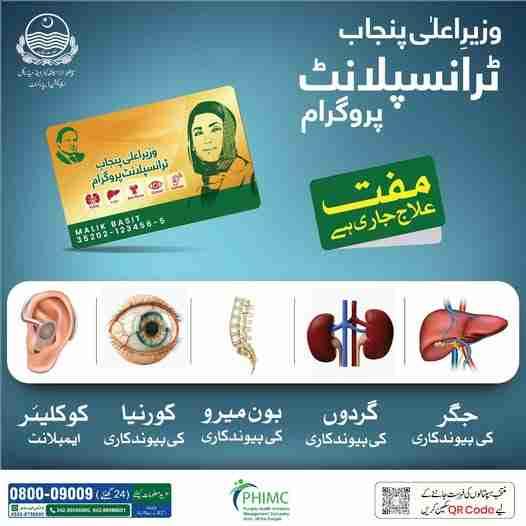
Table Of Contents
What is the CM Punjab Transplant Program? Understanding the Basics
The CM Punjab Transplant Program is a landmark healthcare initiative by the Government of Punjab, led by Chief Minister Maryam Nawaz Sharif, designed to provide free, life-saving organ transplant surgeries to underprivileged patients. It represents a fundamental shift in healthcare policy, acknowledging that complex and expensive medical procedures should be accessible to all citizens, not just the wealthy.
The CM Punjab Transplant Program is implemented by the Punjab Health Initiative Management Company (PHIMC) , which oversees the financial and administrative aspects, ensuring transparency and efficiency. Medical services are delivered through a network of accredited public and private hospitals, all meeting stringent quality standards.
When was the CM Punjab Transplant Program launched?
The CM Punjab Transplant Program was officially launched in February as a flagship project of the Punjab government. This initiative was born from the urgent need to address the high mortality rates caused by organ failure among low-income populations who previously had no means to afford such treatments. Since its inception, the program has rapidly expanded its reach and capabilities.
Who launched this free transplant initiative in Punjab?
This free transplant initiative in Punjab was launched by the Chief Minister of Punjab, Maryam Nawaz Sharif. It stands as a cornerstone of her vision for a “Healthy Punjab,” demonstrating a strong political will to invest in public health infrastructure and provide social welfare to the most vulnerable segments of society. The Chief Minister’s direct patronage ensures the program receives the highest priority and resources.
Is the transplant program part of the Sehat Sahulat (Health Card) program?
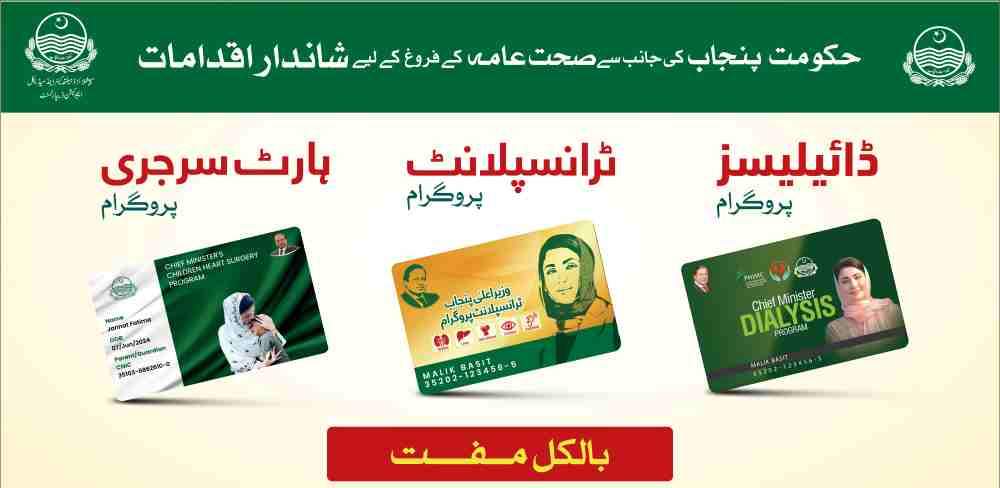
While both are monumental health initiatives by the Punjab government, the CM Punjab Transplant Program is a distinct, special initiative that operates alongside the Sehat Sahulat Program (Health Card). The Sehat Card provides health insurance coverage for a wide range of medical conditions and treatments. In contrast, the CMSITP is a targeted, fully government-funded program specifically designed to cover the complete cost of five high-complexity transplant procedures, which may have separate coverage limits under the standard Sehat Card. For many patients, this program fills a critical gap by providing for procedures that are often prohibitively expensive.
What is the role of PHIMC in the CM Punjab Transplant Program?
The Punjab Health Initiative Management Company (PHIMC) plays a pivotal role as the primary implementing and management partner for the CM Punjab Transplant Program. PHIMC is responsible for:
- Empanelment of Hospitals: Vetting and accrediting both public and private hospitals to ensure they meet the technical requirements for performing transplants.
- Financial Management: Handling the disbursement of funds to hospitals for the surgeries and post-operative care, ensuring a cashless experience for the patient.
- Data Management: Maintaining a centralized database of registered patients, their medical progress, and program outcomes.
- Monitoring & Evaluation: Tracking the performance of empaneled hospitals to ensure quality of care and adherence to program protocols.
What is PHOTA and why is it crucial for this program?
The Punjab Human Organ Transplantation Authority (PHOTA) is the regulatory backbone of the entire transplant process. Its role is absolutely crucial because it ensures that every transplant performed under the program is ethical, legal, and medically justified. PHOTA’s key responsibilities include:
- Recipient and Donor Registration: Maintaining a confidential registry of all potential recipients and living donors.
- Ethical Clearance: Verifying the relationship between donor and recipient to prevent any form of illegal organ trade or coercion, as mandated by the Transplantation of Human Organs and Tissues Act.
- Issuing No-Objection Certificates: Providing formal approval for transplant procedures after a thorough review of medical and legal documentation.
- Oversight of Empaneled Centers: Inspecting and authorizing hospitals to perform transplants, ensuring they have the necessary infrastructure and medical expertise. Without mandatory PHOTA registration, a patient cannot legally receive a transplant under this program.
CM Punjab Transplant Program Hospital List
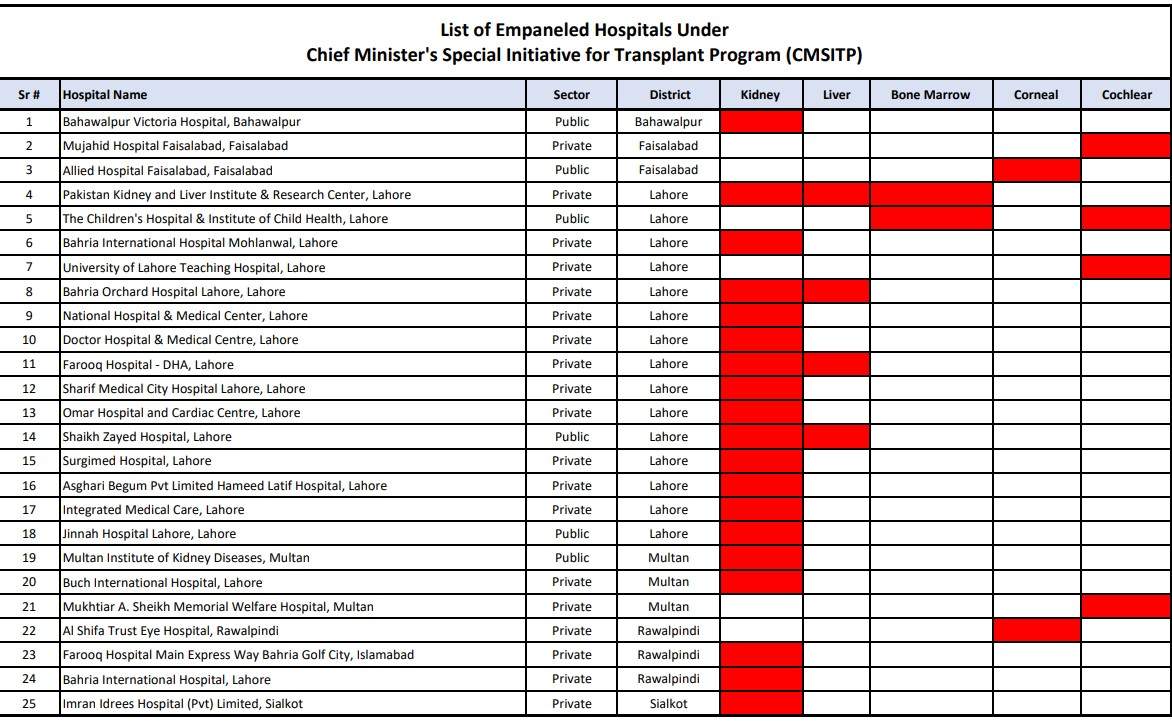
| Hospital Name | Sector | District | Kidney | Liver | Bone Marrow | Corneal | Cochlear |
|---|---|---|---|---|---|---|---|
| Bahawalpur Victoria Hospital | Public | Bahawalpur | Yes | No | No | No | No |
| Mujahid Hospital Faisalabad | Private | Faisalabad | No | No | No | Yes | Yes |
| Allied Hospital Faisalabad | Public | Faisalabad | No | No | Yes | No | No |
| Pakistan Kidney and Liver Institute & Research Center | Private | Lahore | Yes | Yes | Yes | No | No |
| The Children’s Hospital & Institute of Child Health | Public | Lahore | No | No | Yes | Yes | Yes |
| Bahria International Hospital Mohlanwal | Private | Lahore | Yes | No | No | No | No |
| University of Lahore Teaching Hospital | Private | Lahore | No | No | No | Yes | Yes |
| Bahria Orchard Hospital Lahore | Private | Lahore | Yes | Yes | No | No | No |
| National Hospital & Medical Center | Private | Lahore | Yes | No | No | No | No |
| Doctor Hospital & Medical Centre | Private | Lahore | Yes | No | No | No | No |
| Farooq Hospital – DHA | Private | Lahore | Yes | Yes | No | No | No |
| Sharif Medical City Hospital Lahore | Private | Lahore | Yes | No | No | No | No |
| Omar Hospital and Cardiac Centre | Private | Lahore | Yes | No | No | No | No |
| Shaikh Zayed Hospital | Public | Lahore | Yes | Yes | No | No | No |
| Surgimed Hospital | Private | Lahore | Yes | No | No | No | No |
| Asghari Begum Pvt Limited Hameed Latif Hospital | Private | Lahore | Yes | No | No | No | No |
| Integrated Medical Care | Private | Lahore | Yes | No | No | No | No |
| Jinnah Hospital Lahore | Public | Lahore | Yes | No | No | No | No |
| Multan Institute of Kidney Diseases | Public | Multan | Yes | No | No | No | No |
| Buch International Hospital | Private | Multan | Yes | No | No | No | Yes |
| Mukhtiar A. Sheikh Memorial Welfare Hospital | Private | Multan | No | No | No | Yes | Yes |
| Al Shifa Trust Eye Hospital | Private | Rawalpindi | No | No | No | Yes | No |
| Farooq Hospital Main Express Way Bahria Golf City | Private | Rawalpindi | Yes | No | No | No | No |
| Bahria International Hospital | Private | Rawalpindi | Yes | No | No | No | No |
| Imran Idrees Hospital (Pvt) Limited | Private | Sialkot | Yes | No | No | No | No |
Public / Government Hospitals Empaneled Under CM Punjab Transplant Program
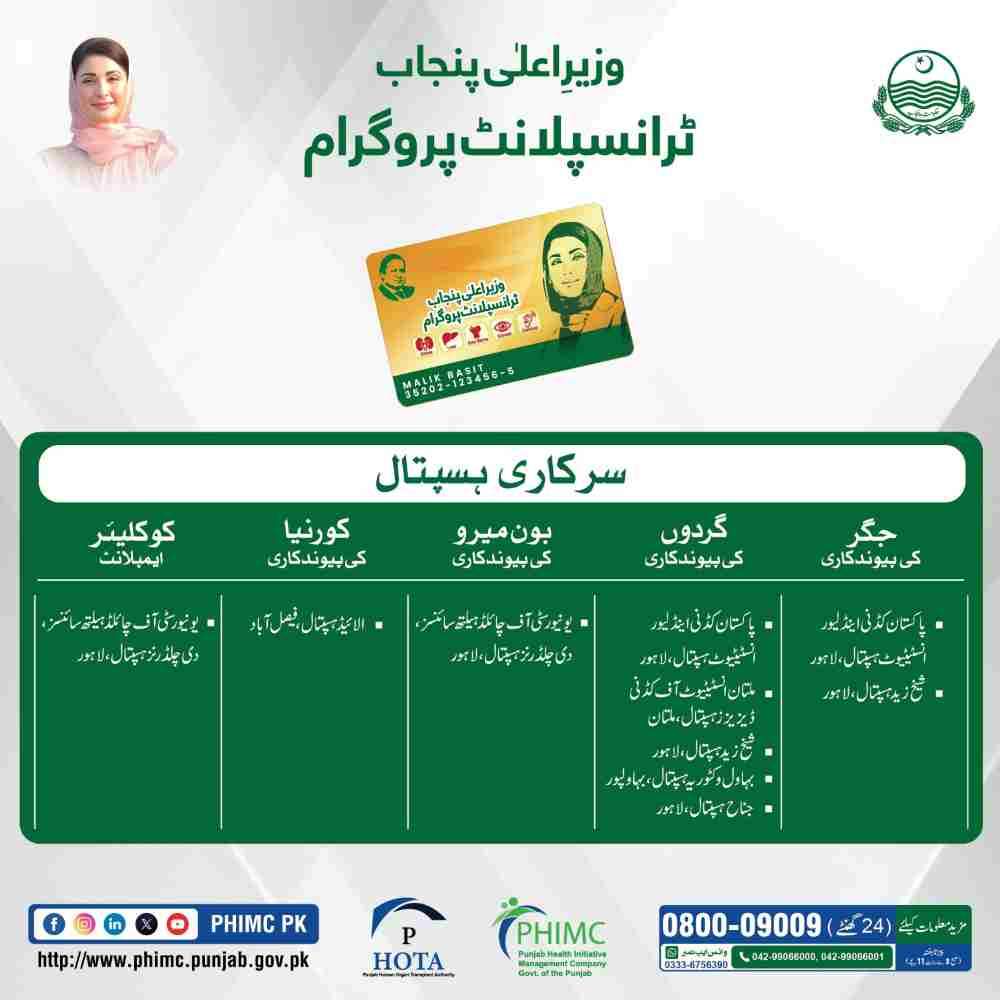
| Hospital Name | District | Kidney | Liver | Bone Marrow | Corneal | Cochlear |
|---|---|---|---|---|---|---|
| Bahawalpur Victoria Hospital, Bahawalpur | Bahawalpur | Yes | No | No | No | No |
| Allied Hospital Faisalabad | Faisalabad | No | No | Yes | No | No |
| The Children’s Hospital & Institute of Child Health, Lahore | Lahore | No | No | Yes | Yes | Yes |
| Shaikh Zayed Hospital, Lahore | Lahore | Yes | Yes | No | No | No |
| Jinnah Hospital Lahore | Lahore | Yes | No | No | No | No |
| Multan Institute of Kidney Diseases | Multan | Yes | No | No | No | No |
Total Public Hospitals: 6 Key Observation: Public hospitals tend to focus more on kidney, bone marrow, corneal, and cochlear procedures, with strong pediatric and specialized institute presence (e.g., Children’s Hospital Lahore and Shaikh Zayed).
Private Hospitals Empaneled Under CM Punjab Transplant Program
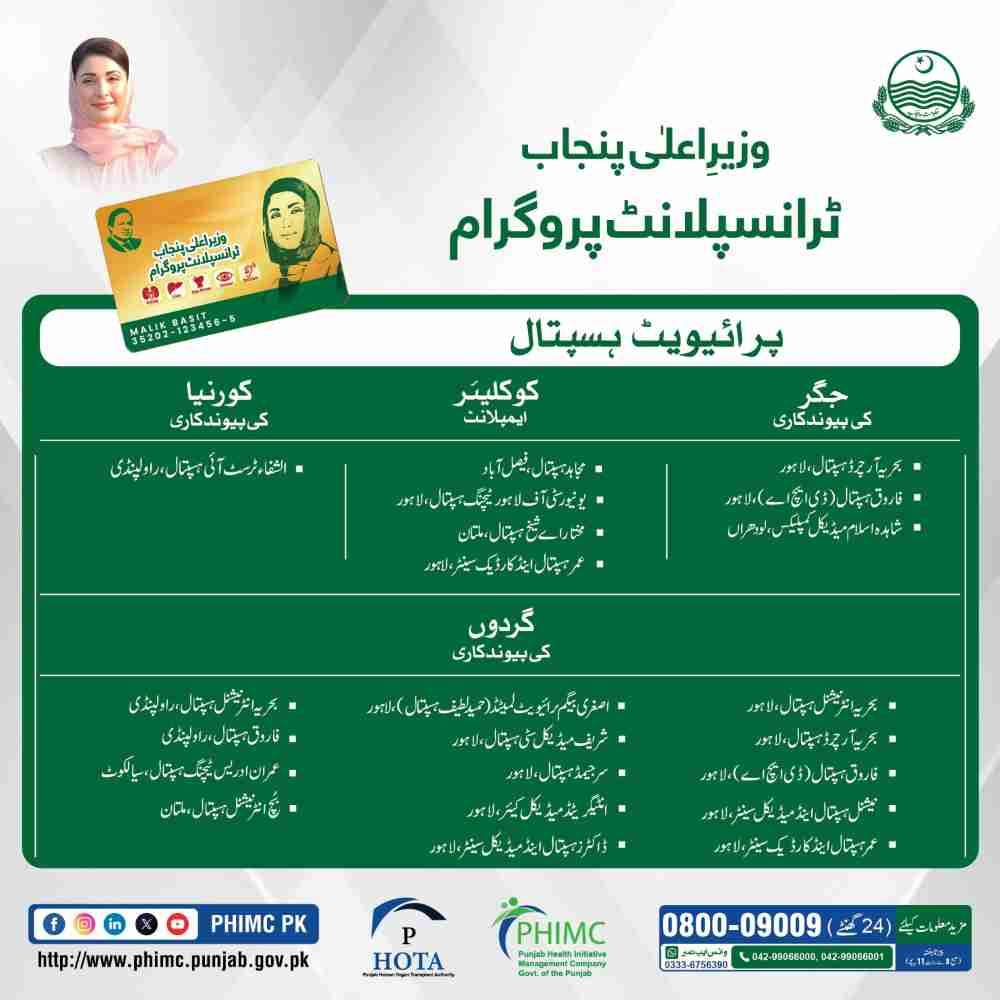
| Hospital Name | District | Kidney | Liver | Bone Marrow | Corneal | Cochlear |
|---|---|---|---|---|---|---|
| Mujahid Hospital Faisalabad | Faisalabad | No | No | No | Yes | Yes |
| Pakistan Kidney and Liver Institute & Research Center, Lahore | Lahore | Yes | Yes | Yes | No | No |
| Bahria International Hospital Mohlanwal, Lahore | Lahore | Yes | No | No | No | No |
| University of Lahore Teaching Hospital, Lahore | Lahore | No | No | No | Yes | Yes |
| Bahria Orchard Hospital Lahore | Lahore | Yes | Yes | No | No | No |
| National Hospital & Medical Center, Lahore | Lahore | Yes | No | No | No | No |
| Doctor Hospital & Medical Centre, Lahore | Lahore | Yes | No | No | No | No |
| Farooq Hospital – DHA, Lahore | Lahore | Yes | Yes | No | No | No |
| Sharif Medical City Hospital Lahore | Lahore | Yes | No | No | No | No |
| Omar Hospital and Cardiac Centre, Lahore | Lahore | Yes | No | No | No | No |
| Surgimed Hospital, Lahore | Lahore | Yes | No | No | No | No |
| Asghari Begum Pvt Limited Hameed Latif Hospital | Lahore | Yes | No | No | No | No |
| Integrated Medical Care, Lahore | Lahore | Yes | No | No | No | No |
| Buch International Hospital | Multan | Yes | No | No | No | Yes |
| Mukhtiar A. Sheikh Memorial Welfare Hospital | Multan | No | No | No | Yes | Yes |
| Al Shifa Trust Eye Hospital | Rawalpindi | No | No | No | Yes | No |
| Farooq Hospital Main Express Way Bahria Golf City | Rawalpindi | Yes | No | No | No | No |
| Bahria International Hospital | Rawalpindi | Yes | No | No | No | No |
| Imran Idrees Hospital (Pvt) Limited | Sialkot | Yes | No | No | No | No |
Total Private Hospitals: 19 Key Observation: Private hospitals dominate the list (especially in Lahore), providing the majority of kidney, liver, corneal, and cochlear services. This public-private partnership significantly expands capacity and geographic reach under the free transplant scheme.
Which Transplants Are Free? A Detailed Look at the Five Covered Procedures
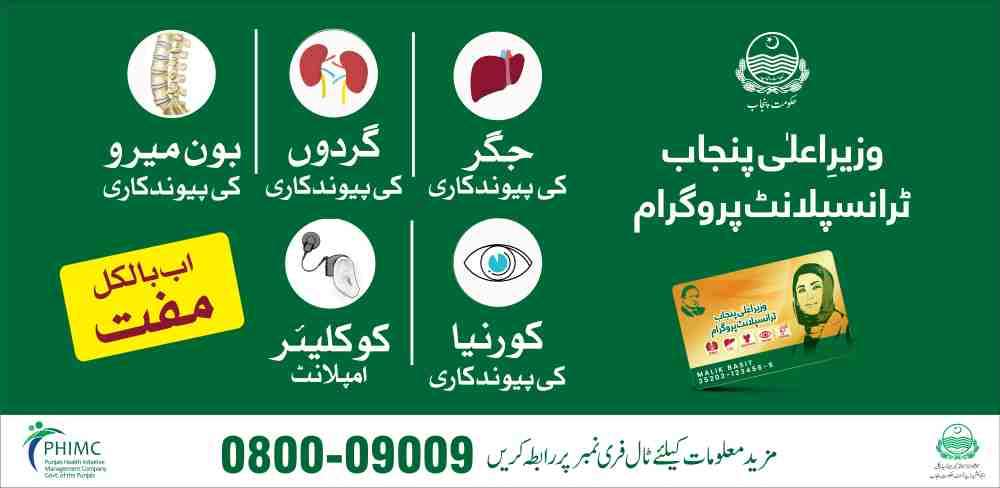
The CM Punjab Transplant Program covers five critical, high-cost transplant procedures. This comprehensive coverage is designed to address some of the most prevalent and life-threatening health conditions in the province. The government bears the complete cost of these procedures, which can reach up to Rs. 2 million per patient, including all pre-surgery screenings, the transplant surgery itself, and the hospital stay.
Which five transplant procedures are covered for free under the CM Punjab Program?
The five life-saving procedures covered entirely free of cost under the Chief Minister’s Special Initiative for Transplant Program are:
- Kidney Transplant: For patients with end-stage renal disease.
- Liver Transplant: For patients suffering from irreversible liver failure.
- Bone Marrow Transplant: For patients with blood cancers like leukemia and other hematological disorders.
- Corneal Transplant: To restore vision in patients with corneal blindness.
- Cochlear Implants: Specifically for children born with profound hearing loss to enable them to hear.
Free Kidney Transplant in Pakistan: A Detailed Look
Kidney disease is a massive public health issue in Pakistan, with millions affected and thousands progressing to end-stage renal disease each year. For these patients, a kidney transplant is not just the best treatment option; it is the only hope for a normal life, freeing them from the grueling routine of lifelong dialysis.
How does the program help patients with end-stage renal disease?
For a patient diagnosed with kidney failure, the CM Punjab Transplant program becomes their primary hope. The program covers the entire process, from initial evaluation to the transplant surgery and post-operative follow-up. This includes the cost of the nephrectomy (donor kidney removal) and the transplant surgery for the recipient. This initiative effectively removes the financial barrier that previously forced countless patients into a life of dependency on dialysis or, tragically, an early death.
What is the process for getting a free kidney transplant under this initiative?
The process begins at an empaneled hospital with a specialized nephrologist. The medical team confirms the diagnosis and assesses the patient’s candidacy for a transplant. Simultaneously, a potential living donor—usually a close relative—comes forward. Both the recipient and donor undergo a rigorous medical and legal workup. This includes:
- Medical Evaluation: Comprehensive testing to ensure both are fit for surgery and that the donor’s health won’t be compromised.
- Legal Registration: Both parties must register with PHOTA. The relationship is verified, and a legal undertaking is signed to ensure the donation is purely voluntary.
- Transplant Surgery: Once PHOTA issues its no-objection certificate, the transplant is scheduled and performed at the empaneled hospital, with all costs covered by the government.
Free Liver Transplant in Pakistan: A New Hope for Hepatitis Patients
Pakistan has one of the highest burdens of hepatitis in the world, with millions suffering from Hepatitis B and C. These chronic infections are a leading cause of liver cirrhosis and, ultimately, end-stage liver disease or liver cancer. A liver transplant is the only definitive cure for liver failure.
Addressing the high prevalence of Hepatitis and liver failure in Punjab.
The inclusion of free liver transplants directly targets this public health crisis. By offering this service for free, the government is acknowledging that liver failure, often a consequence of widespread and untreated hepatitis, is a preventable and treatable condition. The program offers a second chance at life to patients who would otherwise face a certain death.
How does the CM Punjab program cover the full cost of a liver transplant?
Liver transplantation is one of the most complex surgical procedures, requiring a multi-disciplinary team and immense resources. The program’s coverage includes the staggering costs associated with:
- The transplant surgery itself, which can last 8-12 hours.
- Intensive care unit (ICU) stay for both recipient and donor (in case of living donor transplant).
- The cost of immunosuppressive medications, which are crucial for preventing organ rejection.
- The one year of free post-treatment medication ensures that patients do not fall into poverty trying to afford these essential drugs after their life-saving surgery.
Free Bone Marrow Transplant in Pakistan: A Cure for Blood Cancer
Every year, thousands of Pakistanis, particularly children, are diagnosed with blood cancers like leukemia, as well as other life-threatening blood disorders such as aplastic anemia and thalassemia major. For many of these patients, a bone marrow transplant—also known as a hematopoietic stem cell transplant—is the only potential cure.
Is bone marrow transplant for blood cancer covered? A lifeline for leukemia and thalassemia patients.
Yes, absolutely. The CM Punjab Transplant Program recognizes the urgent need and includes bone marrow transplants as one of its five core offerings. This provides an incredible lifeline for families who previously faced the impossible choice of watching their loved ones suffer or selling everything they owned to afford treatment at a handful of private hospitals. The program covers the complete procedure, including the search for a matching donor, the harvesting of stem cells, the conditioning chemotherapy, and the transplant itself.
Does the program cover bone marrow transplants for blood cancer?
Yes, it covers bone marrow transplants specifically for blood cancer and other related hematological (blood) disorders. This includes conditions like leukemia, lymphoma, and severe thalassemia. By making this procedure accessible, the program offers a chance at a complete cure for diseases that were once considered a death sentence for the poor.
Free Corneal Transplant in Pakistan: Restoring the Gift of Sight
Corneal diseases are a major cause of blindness in Pakistan, affecting hundreds of thousands of people. The cornea is the transparent front part of the eye, and when it becomes scarred or diseased due to infection, injury, or genetic conditions, it leads to vision loss. A corneal transplant, where the damaged cornea is replaced with healthy donor tissue, can restore full vision.
Are corneal transplants available for patients with vision loss?
Yes, corneal transplants are fully available under the CM Punjab Transplant Program for patients suffering from corneal blindness. The program covers the cost of the surgery, the precious donor tissue (procured through eye banks), and all pre- and post-operative care. This initiative has the power to restore sight and independence to thousands of individuals, allowing them to return to work, care for their families, and live with dignity.
How does the program help patients regain their vision?
The process begins with a thorough examination by an ophthalmologist at an empaneled hospital like the Al Shifa Trust Eye Hospital in Rawalpindi. If a patient is deemed a suitable candidate for a corneal transplant, their information is registered. The hospital coordinates with an eye bank to procure a healthy, screened cornea from a deceased donor. Once the tissue is available, the transplant surgery is performed, replacing the scarred cornea and allowing light to once again enter the eye properly.
Free Cochlear Implant in Pakistan: A New World of Sound for Deaf Children
Hearing loss, especially when present from birth (congenital), can severely impact a child’s ability to develop speech and language. For children with profound sensorineural hearing loss who do not benefit from traditional hearing aids, a cochlear implant is a revolutionary electronic device that bypasses damaged parts of the inner ear and directly stimulates the auditory nerve, creating a sensation of hearing.
Is there an age limit for children receiving cochlear implants?
Yes, there is a critical age limit for cochlear implants because they are most effective when provided during the crucial window for language development. Under the CM Punjab Transplant Program, cochlear implants are primarily provided to children under a certain age, typically up to 5 or 6 years old. Early implantation allows the child’s brain to learn to interpret the new sound signals, enabling them to develop spoken language naturally alongside their hearing peers.
What specific support is provided for deaf children under this initiative?
The support for a deaf child under this program is comprehensive and goes far beyond just the surgery. It typically includes:
- Pre-Implant Assessment: A full audiological and medical evaluation to confirm candidacy.
- The Implant Surgery: The surgical procedure to place the internal device under the skin.
- The External Processor: Providing the external sound processor that the child wears behind their ear.
- Post-Implant Therapy: Perhaps most importantly, the program covers or facilitates intensive auditory-verbal therapy, which teaches the child and their family how to use the new sound to develop listening and spoken language skills. This holistic approach ensures the device translates into a real-life ability to hear and communicate.
Who is Eligible? Complete Eligibility and Registration Criteria
Understanding the eligibility criteria is the first and most crucial step for any patient hoping to benefit from the CM Punjab Transplant Program. The program is designed to be a safety net for the most vulnerable, and therefore has clear requirements regarding residency, financial status, and medical need.
Who is eligible to receive a free transplant under this program?
Eligibility for the CM Punjab Transplant Program is based on a combination of residency, financial need, and medical necessity. The primary beneficiaries are underprivileged, deserving residents of the Punjab province who are diagnosed with a medical condition requiring one of the five covered transplant procedures and who cannot afford the treatment on their own.
What is the residency requirement for the CM Punjab Transplant Program?
The program is specifically for permanent residents of Punjab. This is verified through the applicant’s Computerized National Identity Card (CNIC). The CNIC must show a permanent address within the geographical boundaries of the Punjab province. For children, their B-Form or parent’s CNIC with a Punjab address serves as proof of residency.
Is there an age limit for the CM Punjab Transplant Program?
While there isn’t a strict, one-size-fits-all age limit across all procedures, age is considered in the context of medical suitability. For most solid organ transplants (kidney and liver), patients are generally between 18 and 60 years old, though exceptions can be made based on the patient’s overall health and fitness for surgery. For children requiring cochlear implants, age is a critical factor, with the program focusing on early intervention, typically up to 5 or 6 years of age, to maximize speech and language development.
Can residents from provinces other than Punjab apply for this program?
The CM Punjab Transplant Program is a provincial initiative, funded by the taxpayers of Punjab. Therefore, its primary mandate is to serve the residents of Punjab. While the program has garnered attention nationwide, applicants from other provinces like Sindh, Khyber Pakhtunkhwa, or Balochistan are generally not eligible, as they are covered by their respective provincial health initiatives. Patients from other provinces should explore similar programs or health cards available in their own region.
Why is registration with PHOTA mandatory?
Registration with the Punjab Human Organ Transplantation Authority (PHOTA) is not merely a formality; it is a mandatory legal and ethical requirement for every transplant performed in Punjab. PHOTA’s role is to protect patients and donors from illegal and unethical practices, such as organ trafficking. By registering all recipients and living donors, PHOTA creates a transparent and auditable record. This process confirms the legitimate medical need, verifies the relationship between donor and recipient to prevent coercion, and ensures that the transplanting hospital is authorized to perform the procedure. A transplant cannot legally proceed without PHOTA’s clearance.
What is the financial limit or cost covered per patient?
The CM Punjab Transplant Program covers the complete cost of the transplant procedure for eligible patients. The total financial coverage can reach up to approximately Rs. 2 million per patient. This comprehensive package includes all expenses related to the transplant: pre-transplant diagnostic workups and screenings, the surgery itself, the cost of hospital stay (including ICU), and for liver and kidney recipients, one year of essential post-transplant immunosuppressive medication. This ensures that the patient and their family face no out-of-pocket expenses for the core treatment.
How to Apply: A Step-by-Step Registration Guide
Navigating the application process for a free transplant can seem daunting, but it is designed to be a structured and clear pathway. The key is to follow the steps in order, starting with a medical consultation and ending with formal registration with the relevant authorities.
How do I register for the CM Punjab Transplant Program?
The registration process is not a single online form but a multi-step journey that begins at a hospital. The first and most important step is to visit a doctor at an empaneled hospital. You cannot register for the program directly from home; the medical diagnosis and referral are the essential entry points. The hospital’s social welfare or patient affairs department will then guide you through the subsequent paperwork and PHOTA registration.
How to do online registration for CM Punjab Transplant Program?
While the initial medical evaluation is in-person, parts of the process, particularly the mandatory PHOTA registration, have online components. The pathway is as follows:
- Visit an Empaneled Hospital: Go to the outpatient department (OPD) of a hospital on the official list, such as the Pakistan Kidney and Liver Institute (PKLI) in Lahore or Jinnah Hospital. Consult with the relevant specialist (e.g., a nephrologist for kidney issues).
- Medical Confirmation: The doctor will review your medical history and conduct tests to confirm you are a candidate for a transplant.
- PHOTA Online Registration: Once the hospital confirms your medical need, their staff will help you register on the official PHOTA online portal. You will need to create a profile, upload scanned copies of required documents, and submit the application for ethical review.
- Program Enrollment: After PHOTA issues its approval, the hospital will formally enroll you in the CMSITP, and your surgery will be scheduled. The entire process is managed by the hospital’s administration in coordination with PHIMC.
What documents are required for the application process?
Having the correct documents ready is essential for a smooth registration process. You will typically need to provide:
- For the Patient (Recipient):
- CNIC (Computerized National Identity Card): A clear copy of the patient’s CNIC. For children, their B-Form is required.
- Proof of Punjab Residency: CNIC with a permanent Punjab address is the primary proof. A domicile certificate may also be requested.
- Medical Reports: All relevant medical records, including diagnostic test results, biopsy reports, and a detailed referral letter from a specialist doctor clearly indicating the need for a transplant.
- Photographs: Recent passport-sized photographs.
- Income/Financial Proof: Documents to demonstrate financial need, such as a low-income certificate from a union council, or proof of being a beneficiary of another social welfare program like the Benazir Income Support Programme (BISP).
- For the Living Donor (if applicable, e.g., for kidney/liver):
- CNIC: A clear copy of the donor’s CNIC.
- Family Registration Certificate (FRC): Issued by NADRA, this certificate is crucial to legally prove the relationship between the donor and recipient (e.g., parent, sibling, child) as required by PHOTA.
- Medical Fitness Reports: Comprehensive medical reports confirming the donor is healthy and fit to donate without significant risk to their own health.
PHOTA Punjab Patient Registration: What is the process?
PHOTA Punjab patient registration is the critical step where the ethical and legal viability of the transplant is verified. The process is initiated by the hospital after the medical workup is complete. The hospital submits a dossier for both the recipient and the donor to the PHOTA online portal. This dossier includes all the medical reports, the FRC, and CNIC copies. A PHOTA medical board then reviews the case. If everything is in order and the donation is deemed voluntary and ethical, PHOTA issues a No-Objection Certificate. This certificate is the final green light that allows the transplant surgery to proceed legally. You can check your registration status by contacting the hospital or potentially through a future portal on the official PHOTA website.
How can I check my eligibility status online or via SMS?
Currently, the most reliable way to check your eligibility status is by staying in close contact with the social welfare office at the empaneled hospital where you registered. They are your primary point of contact for updates on your application’s progress through the PHIMC and PHOTA systems. Official helpline numbers, like 0800-09009, can also provide general guidance and information on your application status. As the program’s digital infrastructure evolves, an online portal or SMS service for checking eligibility may be introduced.
What should I do if my CNIC shows me as “ineligible”?
If your CNIC shows as “ineligible,” it could be due to a few common reasons. First, double-check that your CNIC’s permanent address is correctly listed as a district in Punjab. Second, ensure that your information has been entered correctly in the registration system at the hospital. Third, ineligibility can sometimes be linked to previous coverage under other programs or a data mismatch. Your first step should be to contact the hospital where you registered. Their patient support staff can investigate the specific reason and guide you on how to rectify the issue, which may involve providing additional documentation or updating your information with NADRA.
Where to Get Treatment? The Complete List of Empaneled Hospitals
The CM Punjab Transplant Program is delivered through a carefully selected network of both public and private hospitals, known as “empaneled hospitals.” These hospitals have been rigorously vetted and accredited by PHIMC and PHOTA to ensure they possess the necessary infrastructure, specialized medical teams, and ethical standards to perform complex transplant surgeries.
CM Punjab Transplant Program hospital list: Where are the empaneled hospitals across Punjab?
Empaneled hospitals are strategically located across major cities in Punjab to ensure geographic accessibility for patients from all districts. These include:
- Lahore: The majority of specialized centers are located here, including public sector giants and top-tier private hospitals.
- Rawalpindi: Several key hospitals serve the northern region of the province.
- Multan & Faisalabad: Major centers in southern and central Punjab.
- Bahawalpur, Sialkot, and others: The network is expanding to include more cities.
Is this program only for government hospitals, or are private hospitals included?
The program is a prime example of a successful public-private partnership. Both government (public sector) and private hospitals are included to maximize the program’s capacity and offer patients a range of high-quality options. This collaboration leverages the extensive reach of public institutions like Jinnah Hospital with the specialized infrastructure of private centers like the Pakistan Kidney and Liver Institute (PKLI) and Shifa International Hospital. This ensures that the program has enough beds, surgeons, and facilities to meet the high demand.
Which hospitals in Lahore are empaneled for liver and kidney transplants?
Lahore is the primary hub for transplant services under the program. Some of the key empaneled hospitals in Lahore include:
- Pakistan Kidney and Liver Institute (PKLI) & Research Center: A state-of-the-art, specialized facility dedicated to hepatology and urology/nephrology.
- Shaikh Zayed Hospital, Lahore: A major public sector teaching hospital with established liver and kidney transplant programs.
- Jinnah Hospital Lahore: One of the largest public hospitals in the province, offering comprehensive transplant services.
- The Children’s Hospital & Institute of Child Health, Lahore: The premier center for pediatric transplants, including bone marrow and cochlear implants.
- Services Hospital, Lahore: Another key public sector institution.
- Prominent Private Hospitals: Including Sharif Medical City, Farooq Hospital (DHA), Omar Hospital & Cardiac Centre, Doctors Hospital, and Bahria International Hospital, all of which are empaneled to provide services.
List of Empaneled Hospitals in Rawalpindi
For patients in the Potohar region, several top hospitals in Rawalpindi are part of the network:
- Al Shifa Trust Eye Hospital, Rawalpindi: A renowned specialty hospital for corneal transplants.
- Farooq Hospital (Main Express Way Bahria Golf City, Islamabad/Rawalpindi): A major private facility providing multi-organ transplant services.
- Bahria International Hospital, Rawalpindi: Another key private sector partner.
- Holy Family Hospital, Rawalpindi: A major public sector hospital involved in the program.
List of Empaneled Hospitals in Multan, Faisalabad, and Bahawalpur
The program’s reach extends to southern and central Punjab through these key institutions:
- Multan:
- Multan Institute of Kidney Diseases (MIKD): A specialized public sector hospital dedicated to nephrology and kidney transplants.
- Nishtar Hospital, Multan: The largest public sector teaching hospital in South Punjab, offering multiple transplant services.
- Bakhtawar Amin Memorial Trust Hospital, Multan: A major private, philanthropic hospital.
- Faisalabad:
- Allied Hospital, Faisalabad: A key public sector teaching hospital.
- Mujahid Hospital, Faisalabad: A private sector partner.
- Bahawalpur:
- Bahawalpur Victoria Hospital, Bahawalpur: The main public sector hospital in the region.
Can I choose a private hospital for my transplant surgery?
Yes, patients generally have the choice to be treated at any empaneled hospital, subject to availability and medical suitability. If you are registered at a public hospital but wish to be treated at a private empaneled hospital, you can discuss this with your case manager. However, the final decision may depend on the specific hospital’s capacity, the complexity of your case, and the program’s policies to ensure equitable distribution of patients. The goal is to provide choice while ensuring all hospitals operate efficiently.
How does the government ensure the quality of these surgeries?
Quality assurance is a cornerstone of the CMSITP, managed through a multi-layered system. PHIMC is responsible for the initial and ongoing empanelment of hospitals, meaning they conduct regular audits and inspections to ensure hospitals maintain the required infrastructure, staff qualifications, and patient care standards. PHOTA adds another layer of oversight by reviewing every single transplant case for ethical and medical appropriateness. Furthermore, hospitals are required to report outcomes and data to PHIMC, allowing for continuous monitoring of success rates and identification of areas for improvement. This system ensures that free treatment does not come at the cost of quality.
Financial Support, Medication, and Post-Transplant Care
A transplant is not just a single surgery; it is the beginning of a lifelong journey of care. The CM Punjab Transplant Program recognizes this and provides extensive support beyond the operating room to ensure the long-term success of the transplant and the patient’s well-being.
What is the total financial limit or cost covered per patient?
The financial coverage provided by the CM Punjab Transplant Program is comprehensive, designed to eliminate all financial barriers to treatment. While the exact cost can vary based on the complexity of the procedure and the patient’s specific needs, the government has set a substantial upper limit to ensure full coverage. The total financial coverage for a transplant can reach up to Rs. 2 million per patient. This cap is sufficient to cover all major expenses, including pre-transplant workups, the surgery itself, ICU stay, and post-operative care within the hospital.
Who pays for the surgery and hospital stay of a living organ donor?
The program’s coverage extends to the living donor as well, recognizing that their health and safety are paramount. All medical expenses related to the donor’s evaluation, surgery, and hospital stay are fully covered by the government. This includes the cost of the donor nephrectomy (for kidney donation) or hepatectomy (for liver donation), their pre-operative testing, and their post-operative recovery in the hospital. This ensures that a person who selflessly comes forward to save a life does not incur any financial burden for their act of kindness.
Does the government provide financial compensation to organ donors?
No, the government does not provide financial compensation to organ donors. This is a critical ethical principle upheld by both Pakistani law and the program’s policies. The Transplantation of Human Organs and Tissues Act strictly prohibits the buying and selling of human organs. Organ donation must be a purely altruistic act, motivated by a desire to save a life, not for financial gain. PHOTA’s rigorous verification process is specifically designed to prevent any form of commercial transaction. The program covers all medical expenses for the donor, but no cash payment is made for the organ itself.
Are post-transplant medicines provided for free?
Yes, providing free post-transplant medicines is a vital component of the CM Punjab Transplant Program. The government understands that the cost of lifelong immunosuppressive medication, which is essential to prevent the body from rejecting the new organ, can be a crippling long-term expense for poor families. To address this, the program includes free medication as a core benefit, specifically for liver and kidney transplant recipients.
For how long does the government provide free follow-up medication?
For eligible liver and kidney transplant recipients, the government provides free post-treatment medication for a period of one year following the transplant. This one-year supply of critical drugs, including immunosuppressants like Tacrolimus and Cyclosporine, is provided to ensure a smooth and successful recovery during the most critical period when the risk of rejection is highest. This initiative is designed to give patients a strong, healthy start to their new life without the immediate financial pressure of buying expensive medicines.
Does the program cover the cost of diagnostic tests and pre-surgery screenings?
Absolutely. The program’s coverage is holistic and begins from the moment a patient is identified as a potential candidate. All necessary diagnostic tests and pre-surgery screenings are fully covered. This includes, but is not limited to, blood work, advanced imaging such as CT scans and MRIs, tissue typing (HLA typing), cardiac evaluations, and psychological assessments for both the recipient and donor. By covering these upfront costs, the program removes another significant financial hurdle that often prevents patients from even beginning the transplant process.
Program Impact, Statistics, and Latest Updates
Since its launch, the CM Punjab Transplant Program has made remarkable strides in transforming the lives of thousands of patients. The statistics not only demonstrate the scale of the operation but also its profound human impact, giving a tangible measure of hope restored.
How many successful transplants have been performed since the program’s launch?
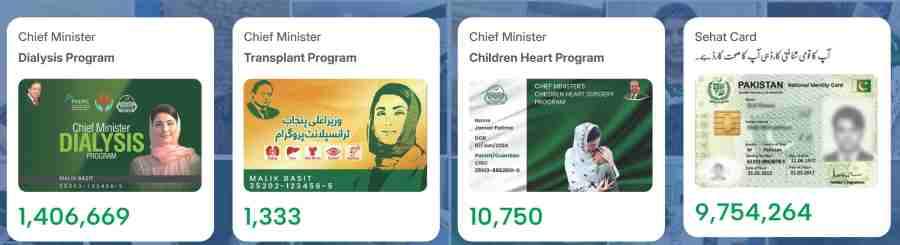
The program has achieved significant milestones since its inception. According to the latest available data, the CM Punjab Transplant Program has successfully performed over 1,300 transplants. This number is a powerful testament to the program’s operational efficiency and the dedication of the medical teams involved. It represents over one thousand families who have been saved from the brink of despair. The breakdown of these procedures highlights the program’s comprehensive nature:
- Renal (Kidney) Transplants: The largest number, with over 700 successful procedures.
- Cochlear Implants: Hundreds of deaf children have been given the gift of hearing, with nearly 400 implants performed.
- Liver Transplants: Over 200 patients have received a new lease on life.
- Corneal Transplants: Sight has been restored to dozens of individuals.
- Bone Marrow Transplants: A growing number of patients with blood cancer have received this life-saving cure.
CM Punjab Transplant Program update: Latest news on performance milestones.
The program continues to expand its capacity and reach. Recent updates indicate a steady acceleration in the number of transplants being performed as more hospitals come online and processes become more streamlined. The government is actively working to onboard more private hospitals into the network to further reduce waiting times. There is also a continued focus on public awareness campaigns to ensure that eligible patients in even the most remote villages of Punjab are aware of this opportunity and know how to access it.
Breakthrough in pediatric care: Number of cochlear implants and bone marrow transplants performed for children.
One of the most heartwarming successes of the program is in the field of pediatric care. The CM Punjab Transplant Program has become a beacon of hope for children with congenital deafness and life-threatening blood disorders. The program has facilitated hundreds of cochlear implants, allowing children born deaf to hear for the first time and develop speech. Furthermore, it has provided a curative option for children with thalassemia and leukemia through bone marrow transplants, saving them from a lifetime of blood transfusions or a grim prognosis. These numbers are more than statistics; they are stories of children being given a chance at a normal, healthy life.
Success stories: How the program has transformed lives across Punjab and beyond.
Behind every number is a human story of resilience and renewed hope. There is the story of a young daily-wage laborer from a village near Multan who received a free kidney transplant and can now work again to support his family. There is the story of a mother from Lahore who donated a portion of her liver to her infant child, with all expenses covered, saving her baby’s life. And there is the story of a profoundly deaf little girl from Rawalpindi who, after receiving a cochlear implant, spoke her first words. These success stories, shared in local media and hospital brochures, are the true measure of the program’s success, showcasing its power to restore not just organs, but entire futures.
Frequently Asked Questions (FAQs) and Troubleshooting
This section addresses the most common questions and concerns that patients and their families have about the CM Punjab Transplant Program, providing clear and direct answers to help navigate the system.
What is the official toll-free helpline number for information?
The official, 24/7 toll-free helpline number for the CM Punjab Transplant Program is 0800-09009. You can call this number from anywhere in Punjab to get information about the program, eligibility criteria, the registration process, and the list of empaneled hospitals. It is a dedicated resource for public guidance.
What is the CM Punjab Transplant Card?
The CM Punjab Transplant Card is a official identification card issued to patients who have been registered and approved for a transplant under the program. It serves as proof of enrollment and facilitates cashless treatment at any empaneled hospital. The card contains the patient’s basic information and a unique identification number, which hospital staff use to verify coverage and bill the government directly for services. It is the key that unlocks free treatment.
How can I find the full list of empaneled private hospitals?
The most up-to-date and complete list of empaneled hospitals, including all private sector partners, is available from official sources. You can obtain it by:
- Calling the Helpline: The operator at 0800-09009 can provide you with the list or guide you to the official website.
- Visiting the Official PHIMC Website: The Punjab Health Initiative Management Company (PHIMC) maintains a current list on its official website,
phimc.punjab.gov.pk. - Visiting the PHOTA Website: The Punjab Human Organ Transplantation Authority (PHOTA) also publishes a list of authorized transplant centers on its website,
phota.punjab.gov.pk. - Inquiring at any Government Hospital: Staff at major government hospitals usually have access to the full empaneled list.
Are outpatient department (OPD) visits covered by the program?
While the program’s primary focus is on covering the high-cost transplant procedure itself, the initial consultations and diagnostic tests required to determine eligibility are part of the covered process. Once a patient is enrolled and their case is approved, all related medical expenses, including necessary follow-up OPD visits post-transplant, are covered. However, for general OPD visits unrelated to the transplant or for conditions not covered by the program, patients may need to rely on other health coverage like the Sehat Card.
What is the difference between the CM Punjab Dialysis Card and the Transplant Program?
This is a common point of confusion. The CM Punjab Dialysis Card is a separate initiative that provides free dialysis sessions to patients with kidney failure. It is a life-sustaining measure for those awaiting a transplant or those who are not candidates for one. The CM Punjab Transplant Program, on the other hand, is a curative program. It provides a one-time, comprehensive surgical solution—the transplant itself—which can free a patient from the need for lifelong dialysis. A patient with kidney failure could potentially benefit from both programs: receiving free dialysis through the Dialysis Card while they are on the waiting list for a free kidney transplant under the CMSITP.
What medical conditions or treatments are excluded from this coverage?
The CM Punjab Transplant Program is specifically designed to cover the five listed transplant procedures. Therefore, it does not cover treatments or surgeries for other medical conditions. Common exclusions include:
- Treatment for heart disease (bypass surgery, angioplasty).
- Cancer treatments other than bone marrow transplant for blood cancers.
- General medical or surgical procedures not related to the five covered transplants.
- Treatments for accidents or trauma.
It is important to understand that this program is a highly specialized initiative and not a replacement for comprehensive health insurance like the Sehat Card, which covers a much wider range of illnesses.
How to apply for the CM Punjab Dialysis Card?
The application process for the CM Punjab Dialysis Card is distinct from the Transplant Program. To apply for the Dialysis Card, a patient with kidney failure should visit the nearest empaneled dialysis center or a major government hospital. The hospital’s dialysis unit or patient facilitation center will guide you through the registration process, which typically involves verifying your CNIC, medical reports confirming the need for dialysis, and proof of residency. Once approved, you are issued a Dialysis Card that allows you to receive free dialysis sessions at an empaneled center near you.
Conclusion: A Healthy Punjab, A Prosperous Punjab
The CM Punjab Transplant Program stands as a monumental achievement in Pakistan’s healthcare history. It is a powerful testament to what visionary leadership and dedicated implementation can achieve, transforming a landscape where life-saving treatment was a privilege of the few into one where it is a right of the deserving. By removing the prohibitive cost of complex transplants, the program has not only saved thousands of lives but has also restored dignity and hope to countless families across the province. It is a living embodiment of the principle that a society’s true strength is measured by how it cares for its most vulnerable members.
This initiative is more than just a medical scheme; it is a cornerstone in building a healthier, more prosperous, and equitable Punjab. It sends a clear message that the government is an active partner in the well-being of its citizens. For every patient suffering in silence, for every family selling their possessions in a desperate bid to save a loved one, this program is the answer.
Call to Action: If you or someone you know is suffering from kidney failure, liver disease, blood cancer, corneal blindness, or if you know a deaf child who could benefit from a cochlear implant, do not lose hope. Your path to a new life begins with a single step. Gather your essential documents, including your CNIC and medical reports, and visit the nearest empaneled hospital on the list. Speak to a doctor and ask about the CM Punjab Transplant Program. For any questions or guidance, call the toll-free helpline at 0800-09009. The opportunity for a free, life-saving transplant is real, and it is here for you.
Frequently Asked Questions (FAQs)
1. What is the CM Punjab Transplant Program?
It is a government initiative providing completely free organ transplants—including kidney, liver, bone marrow, corneal, and cochlear implants—to deserving, low-income residents of Punjab.
2. Who is eligible for a free transplant under this program?
Permanent residents of Punjab who have a verified medical need for one of the covered transplants and cannot afford the treatment are eligible. Registration with PHOTA is mandatory.
3. How do I register for the CM Punjab Transplant Program?
You cannot register online directly. You must first visit a doctor at an empaneled hospital. After medical confirmation, the hospital staff will guide you through the PHOTA registration and program enrollment.
4. Which hospitals are empaneled under the program?
The program includes a mix of public and private hospitals across Punjab, such as PKLI, Jinnah Hospital, Shaikh Zayed Hospital in Lahore; Al Shifa in Rawalpindi; Nishtar in Multan; and many others. The full list is on the PHIMC website.
5. What is the helpline number for the CM Punjab Transplant Program?
The official 24/7 toll-free helpline number is 0800-09009. You can call for information on eligibility, registration, and empaneled hospitals.
6. Are post-transplant medicines provided for free?
Yes, for liver and kidney transplant recipients, the government provides free post-treatment medication for one year to ensure a successful recovery and prevent organ rejection.
7. Can I get a transplant from a private hospital for free?
Yes, if you are eligible and registered, you can receive treatment at any private hospital that is empaneled under the program, at no cost to you.

Add a Comment