
The 9999 Web Portal and SMS service is the official digital gateway for the Prime Minister’s Ramzan Relief Package 2026, enabling Pakistani citizens to check their eligibility for financial assistance of up to Rs. 13,000 through a simple CNIC verification. This comprehensive guide explains everything you need to know about the 9999 online check process, eligibility requirements, payment collection methods, and how this federal initiative differs from provincial programs like the Punjab Nigehban Card offering Rs. 10,000.
What you will learn in this guide:
- How to perform the 9999 online check using both SMS and web portal methods
- Complete eligibility criteria for the PM Ramzan Package and Punjab Nigehban program
- Step-by-step instructions for receiving your Rs. 13,000 or Rs. 10,000 payment
- Clear differences between 9999, 8171, and 8070 shortcodes
- Troubleshooting solutions for common errors like “CNIC not found” or no SMS reply
- Security guidelines to protect yourself from scams and fraudulent agents
Key Takeaways
- One Simple CNIC Check: Send your 13-digit CNIC to 9999 to instantly verify eligibility for federal Rs. 13,000 assistance—no forms, fees, or agents required.
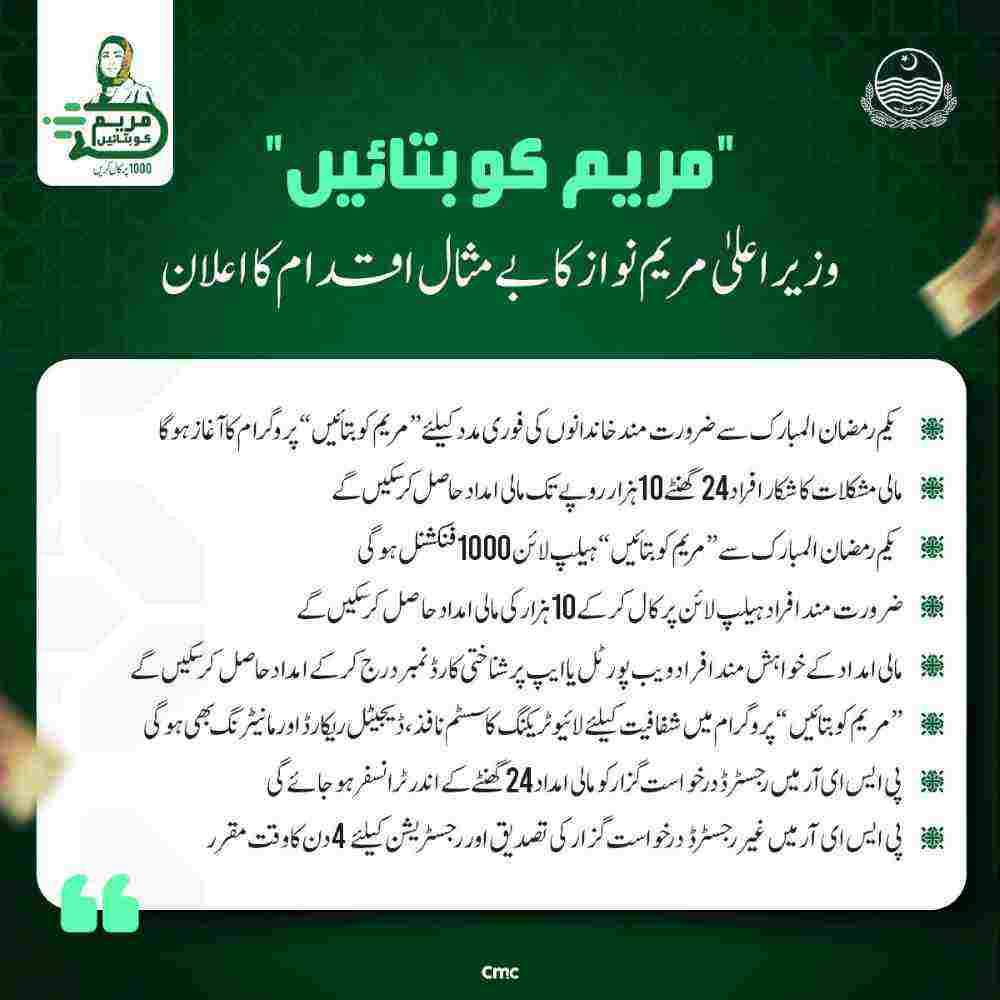
- Two Separate Programs: The Rs. 10,000 amount is exclusively for Punjab’s Nigehban Card program (check via 8070), while the federal 9999 package provides Rs. 13,000 nationwide.
- Digital Wallet Delivery: Approved beneficiaries receive funds directly in JazzCash, Easypaisa, or other digital wallets—no standing in long queues at banks.
- Beware of Scams: The 9999 SMS service is completely free; anyone demanding payment for registration or faster processing is committing fraud.
- Biometric Verification Required: To withdraw cash, ensure your SIM is registered in your name and your mobile wallet account has completed biometric verification.
- Read More: Maryam Nawaz Eidi Scheme (Get PKR 5000/-) | Apply Online
- Read More: Maryam Nawaz 10000 Ramzan Package [Apply Online]
- Read More: Shahbaz Sharif Ramzan Package (Registration PKR 13000)
- Read More: 9999 Ramzan Package Check Online | Nigehban Ramzan Package
9999 Web Portal | 9999 Online Check 10000 (PM Ramzan Package)
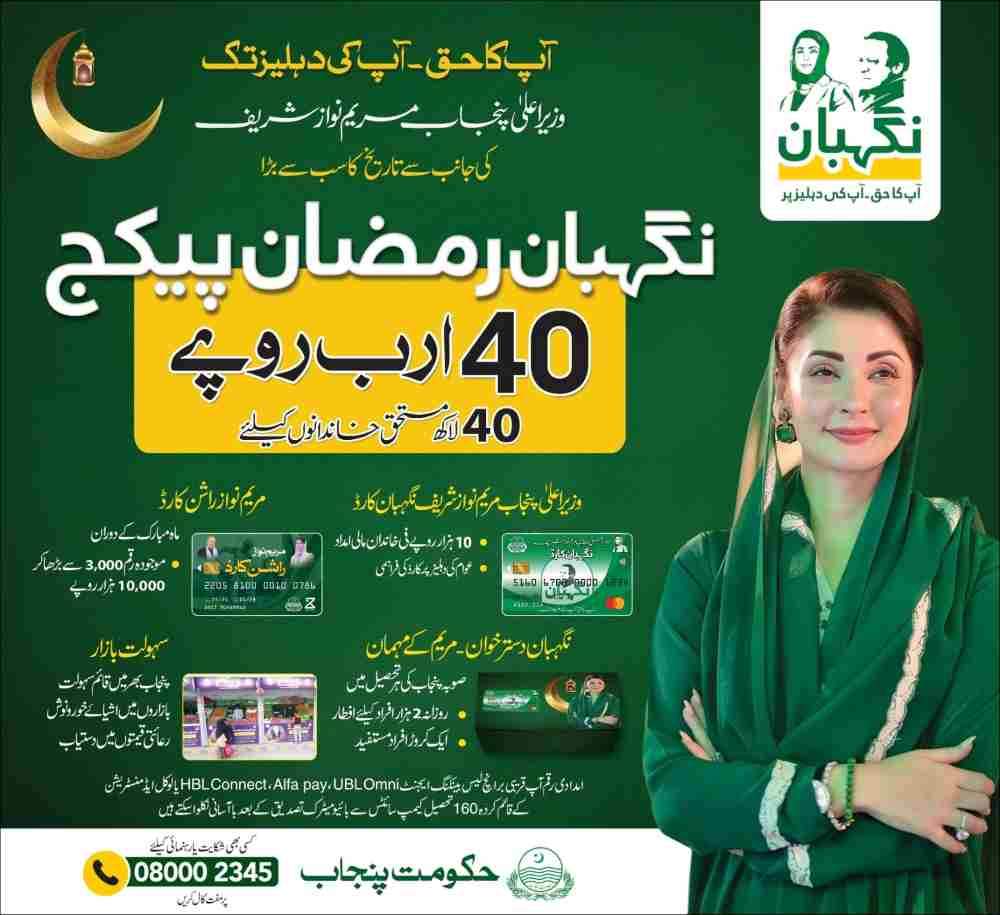
Table Of Contents
Shehbaz Sharif VS Maryam Nawaz Ramzan Package
| Aspect | Shehbaz Sharif (Federal Ramzan Relief Package) | Maryam Nawaz (Punjab Nigahban / Nigehban Ramzan Package) |
|---|---|---|
| Level | National (all provinces, including GB & AJK) | Provincial (Punjab only) |
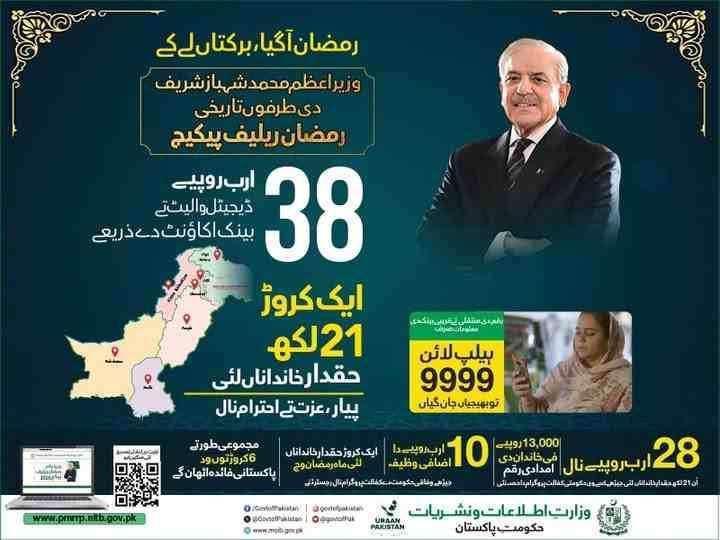
| Total Budget | Rs. 38 billion (approx. $136 million) | Rs. 30–40 billion (varies by reports; e.g., Rs. 40 billion in one major rollout) |
| Beneficiaries | 12.1 million families nationwide | 3–4 million families (reports range from 3M to 4.2M deserving households in Punjab) |
| Cash Assistance per Family | Rs. 13,000 (direct cash transfer; some earlier/related packages had Rs. 5,000–10,000) | Rs. 10,000 (primary cash aid; some reports mention additional elements) |
| Distribution Method | Digital cashless system: Direct transfer to bank accounts or mobile/digital wallets; transparent & cashless | ATM-enabled Nigehban Card (Negahban Card); door-to-door delivery of cards, activation at BoP ATMs/agents or dedicated centers; digital & doorstep focus |
| Additional Components | – Rs. 28 billion for non-Kafalat families – Additional Rs. 10 billion stipend under Federal Kafalat Program – Helpline: 9999 | – Nigehban Card for cash/ration access – Related programs: Sasta Bazaars, Dastarkhwan (free iftar), subsidized flour/sugar, Maryam ke Mehman iftar centers – Livestock distribution & other widow/underprivileged support in some phases |
| Eligibility / Targeting | Low-income/deserving families (often via BISP/NADRA data; poverty-targeted) | Low-income households (via Provincial Socio-Economic Registry – PSER; poverty score typically <30%, income limits) |
| Key Focus / Highlights | Nationwide reach, full digital transparency, no utility stores (to avoid corruption), extended weekend disbursements | Dignified doorstep delivery, no long queues, high-quality items, Punjab-specific extras like subsidized essentials & community iftar |
| Helpline / Registration | Helpline 9999; often via SMS (e.g., CNIC to short codes in past) | Helpline 08000-2345; PSER portal, union councils, or centers for registration |
| Year of Major Launch (Recent) | 2026 (Rs. 38B package prominently launched/announced) | 2025–2026 (Nigahban package with ATM cards & Rs. 10,000 cash) |
What is the 9999 Web Portal and How Does it Work for the 2026 Ramzan Package?
The 9999 Web Portal refers to the integrated digital ecosystem comprising both a USSD/SMS shortcode and an online web interface that powers the Prime Minister’s Ramzan Relief Package 2026. This system connects directly to the National Database and Registration Authority and the Benazir Income Support Programme databases to perform real-time eligibility verification for millions of Pakistani families seeking financial assistance during the holy month.
Unlike traditional relief programs that required physical visits to government offices, the 9999 system represents a fundamental shift toward data-driven, transparent welfare distribution. When you send your CNIC to 9999, your request triggers an automated query that cross-references your household information against the National Socio-Economic Registry poverty score database. The system checks whether your family meets the criteria for the Rs. 13,000 cash assistance approved by the Economic Coordination Committee.
How the 9999 SMS Gateway Functions
The SMS gateway operates through all major Pakistani mobile networks including Jazz, Telenor, Zong, and Ufone. The process follows a straightforward automated workflow:
- Your message containing only the 13-digit CNIC reaches the central government server
- The system validates the CNIC format and checks against NADRA records
- Your poverty score and eligibility status are retrieved from the NSER database
- An automated response SMS is generated and sent back within seconds
- The reply clearly states whether you are eligible or ineligible for the package
The PMRRP Web Portal for Online Verification
For citizens with smartphone access, the Prime Minister’s Ramzan Relief Programme portal offers a more detailed verification experience. The official website pmrrp.nitb.gov.pk serves as the primary online interface where applicants can:
Enter their CNIC number and view comprehensive eligibility information. The portal displays not just a simple eligible or ineligible status but also provides guidance on next steps, including which partner bank or fintech platform will disburse their payment. Real-time dashboards monitored by government officials ensure transparency, with over 1.1 million digital transactions already completed through this system.
Integration with National Databases
The effectiveness of the 9999 Web Portal stems from its deep integration with Pakistan’s core social protection infrastructure. The system pulls data from:
- NADRA for identity verification and CNIC validity
- BISP Kafalat program records for existing beneficiaries
- NSER poverty score database for household economic status
- Provincial socio-economic registries like Punjab’s PSER
This interconnected approach ensures that assistance reaches genuinely deserving families while eliminating duplicate applications and fraudulent claims. The digital verification system processed millions of requests within the first days of Ramadan, with 64 percent of eligible individuals receiving their payments by the 8th of Ramzan.
Who is Eligible for the 9999 PM Ramzan Relief Package 2026?
Eligibility for the 9999 PM Ramzan Relief Package is determined through a transparent, data-driven process that prioritizes Pakistan’s most vulnerable households. The government has established clear criteria based on existing welfare databases and economic indicators to ensure that financial assistance reaches those who need it most during Ramadan. Understanding these requirements helps applicants know what to expect before sending their CNIC to 9999.
The eligibility verification is not a manual approval process but rather an automated check against multiple government databases. When you send your CNIC to 9999, the system instantly cross-references your information with the National Socio-Economic Registry, Benazir Income Support Programme records, and NADRA’s verification systems to determine your qualification status.
Official Government Eligibility Criteria
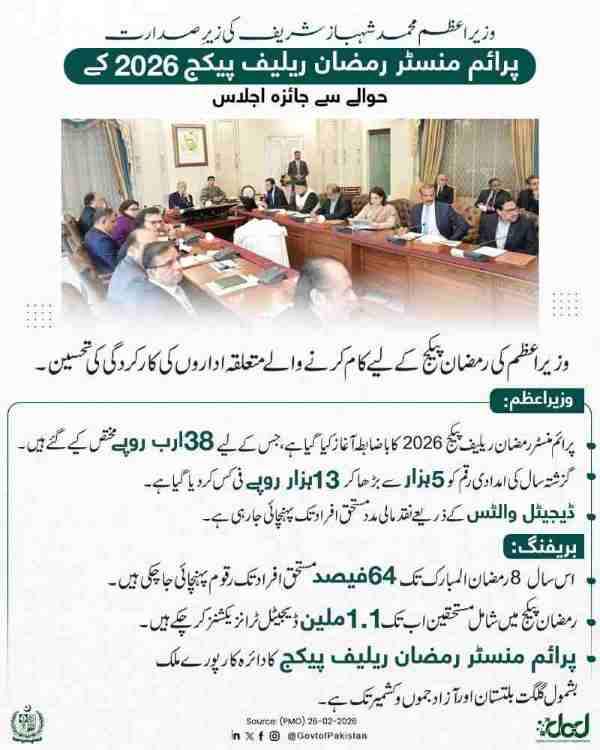
The federal government has established specific conditions that applicants must meet to qualify for the Rs. 13,000 assistance under the 9999 PM Ramzan Package. These criteria ensure that the program’s substantial budget of Rs. 38 billion reaches its intended beneficiaries.
- Valid Computerized National Identity Card possession is mandatory
- Pakistani citizenship with permanent residence in the country
- Household must be registered in the NSER database with a qualifying poverty score
- Family income must fall below the officially designated threshold
- No active taxpayer status in the Federal Board of Revenue records
- Not employed in any government department or institution
- No ownership of significant assets including plots, homes, or shops valued above Rs. 100,000
- No valid passport indicating international travel capacity
BISP Beneficiaries and Automatic Qualification
Families already enrolled in the Benazir Income Support Programme Kafalat scheme receive special consideration for the 9999 Ramzan Package. The government recognizes that BISP beneficiaries have already undergone rigorous poverty verification, making them natural candidates for additional seasonal support.
BISP-registered households typically find themselves automatically pre-qualified for the Ramzan relief package. Their existing poverty score and verified household data streamline the eligibility process. However, even BISP beneficiaries must still send their CNIC to 9999 to confirm their specific status for this particular program, as the Ramzan package operates as a separate initiative with its own funding and disbursement mechanisms.
Who Does Not Qualify for the 9999 Package?
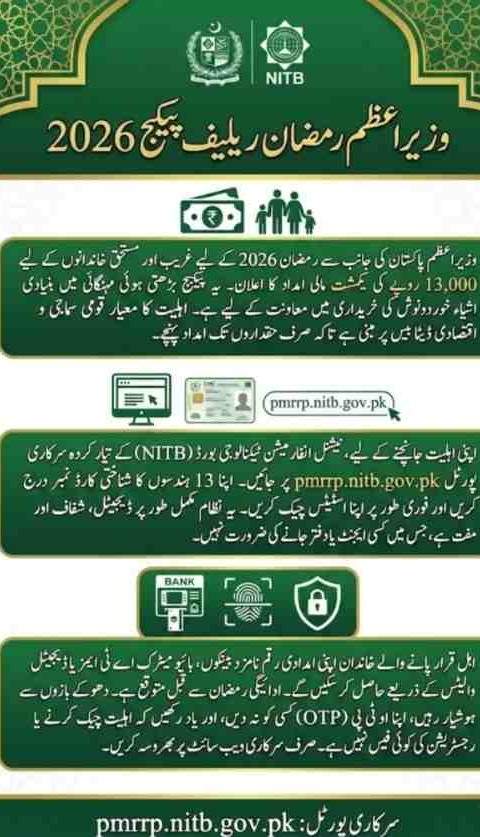
Understanding disqualification criteria is equally important as knowing eligibility requirements. The government has deliberately excluded certain categories to preserve resources for the most deserving families.
High-income government employees across all departments and tiers are automatically ineligible. Owners of registered businesses, commercial properties, or agricultural land exceeding the designated threshold cannot receive assistance. Individuals whose SIM cards are not registered in their own name face automatic rejection. Those with incorrect, incomplete, or outdated records in the NSER database may also find themselves marked ineligible until they update their information through a BISP dynamic survey.
Provincial Residency Requirements
The 9999 PM Ramzan Package covers all of Pakistan including Gilgit-Baltistan and Azad Jammu Kashmir. This nationwide scope means residents from any province or territory can check their eligibility through the 9999 shortcode. However, applicants should understand that Punjab residents may qualify for additional provincial assistance through separate programs, while still remaining eligible for the federal 9999 package.
9999 Online Check: Step-by-Step Guide to Check Your CNIC for Rs. 13,000
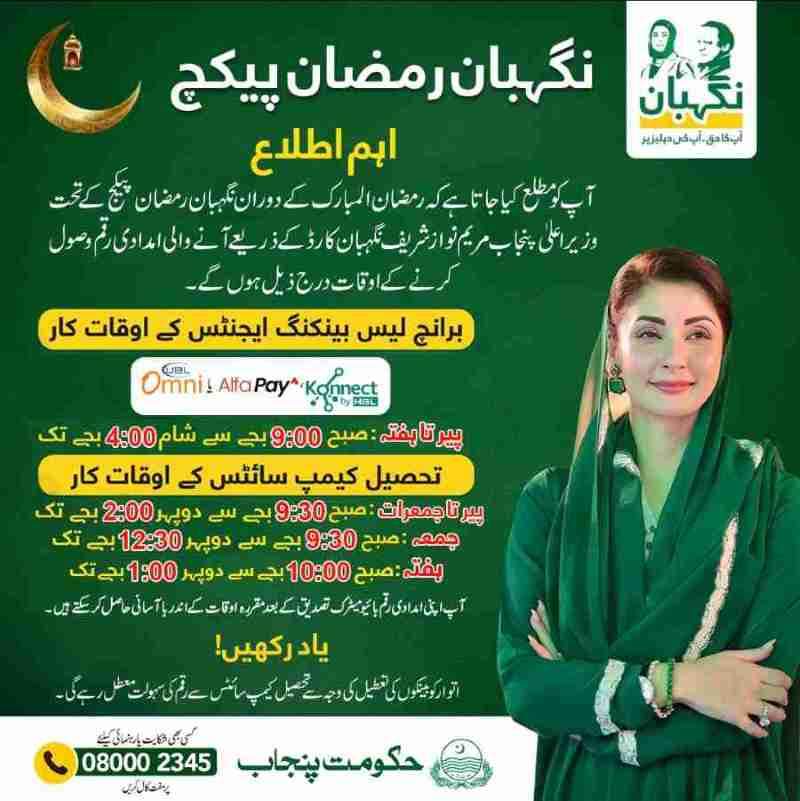
Performing the 9999 online check is a straightforward process designed to be accessible for all Pakistani citizens, regardless of their technical expertise or access to smartphones. The government has deliberately created multiple verification channels to ensure that even individuals in remote areas with basic mobile phones can determine their eligibility for the Rs. 13,000 Ramzan relief assistance. This section provides complete, foolproof instructions for both SMS and web portal methods.
How to Check Your 9999 Ramzan Package Status via SMS
The SMS method remains the most popular and accessible way to perform the 9999 online check, requiring only a basic mobile phone and an active SIM card registered in your name. This offline method works across all networks and has been designed to handle millions of simultaneous queries during the peak Ramadan period.
- Open the messaging application on your mobile phone
- Create a new message with no subject line or additional text
- Type your 13-digit CNIC number exactly as it appears on your card
- Remove all dashes and spaces for example 4210112345678
- Double-check that all digits are correct and the number is complete
- Send this message to the shortcode 9999
- Wait for the automated response which typically arrives within seconds
- Read the reply carefully to understand your eligibility status
The response SMS will clearly indicate one of several outcomes. An eligible message will include instructions about payment collection through partner banks or digital wallets. An ineligible response may explain the reason, such as not meeting poverty score requirements or being a government employee. In some cases, the system may request additional verification or direct you to the nearest BISP office for a dynamic survey.
How to Do the 9999 Online Check on the PMRRP Web Portal
For citizens with smartphone or computer access, the official PMRRP web portal offers a more comprehensive verification experience with additional details about payment methods and collection points.
- Launch your preferred web browser and navigate to pmrrp.nitb.gov.pk
- Locate the eligibility check section prominently displayed on the homepage
- Enter your 13-digit CNIC number in the designated field without dashes
- Type the verification code shown in the image to confirm you are human
- Click the submit button to initiate the database query
- View your complete eligibility status on the results page
- Note any specific instructions about payment collection or required documents
The web portal provides richer information than the SMS response. Eligible applicants can see which partner bank or fintech company will handle their disbursement, whether through HBL Konnect, UBL Omni, JazzCash, or Easypaisa. The portal may also display the nearest collection point and any deadlines for completing biometric verification.
What Information Appears in Your 9999 Result
Understanding the details provided in your 9999 check result helps you take appropriate action. The system returns several pieces of critical information:
Eligibility status appears first, clearly stating whether you qualify for the Rs. 13,000 assistance. Payment method follows, specifying whether funds will arrive via digital wallet, bank transfer, or require collection from a designated center. Disbursement timeline information helps you know when to expect the money. Contact details for further assistance are provided if you encounter problems. Required documents for payment collection ensure you arrive prepared at the distribution point.
Common Mistakes to Avoid During 9999 Online Check
Many applicants face unnecessary delays or rejections due to easily avoidable errors. Understanding these common mistakes helps ensure a smooth verification experience.
Sending an incorrect CNIC number remains the most frequent error. Always verify your 13-digit identity number before sending. Using a SIM card registered to another family member causes mismatches in the verification system. Sending multiple SMS requests in quick succession may trigger fraud prevention mechanisms. Having an expired CNIC leads to automatic rejection regardless of poverty score. Ignoring the response SMS and failing to follow collection instructions results in missed payments.
Understanding Your 9999 Results: Eligible, Rejected, or Pending
Receiving a response from the 9999 system is only the first step in accessing your Ramzan relief assistance. The message you receive contains crucial information about your status and the specific actions you must take to actually receive the Rs. 13,000 cash payment. This section decodes each possible response and provides clear guidance for every scenario you might encounter after completing your 9999 online check.
You are Eligible How to Withdraw Your Rs. 13,000
An eligible status from the 9999 system triggers a well-defined disbursement process designed to get cash into your hands quickly and securely. The government has partnered with twelve banks and financial technology companies to ensure smooth distribution through multiple channels.
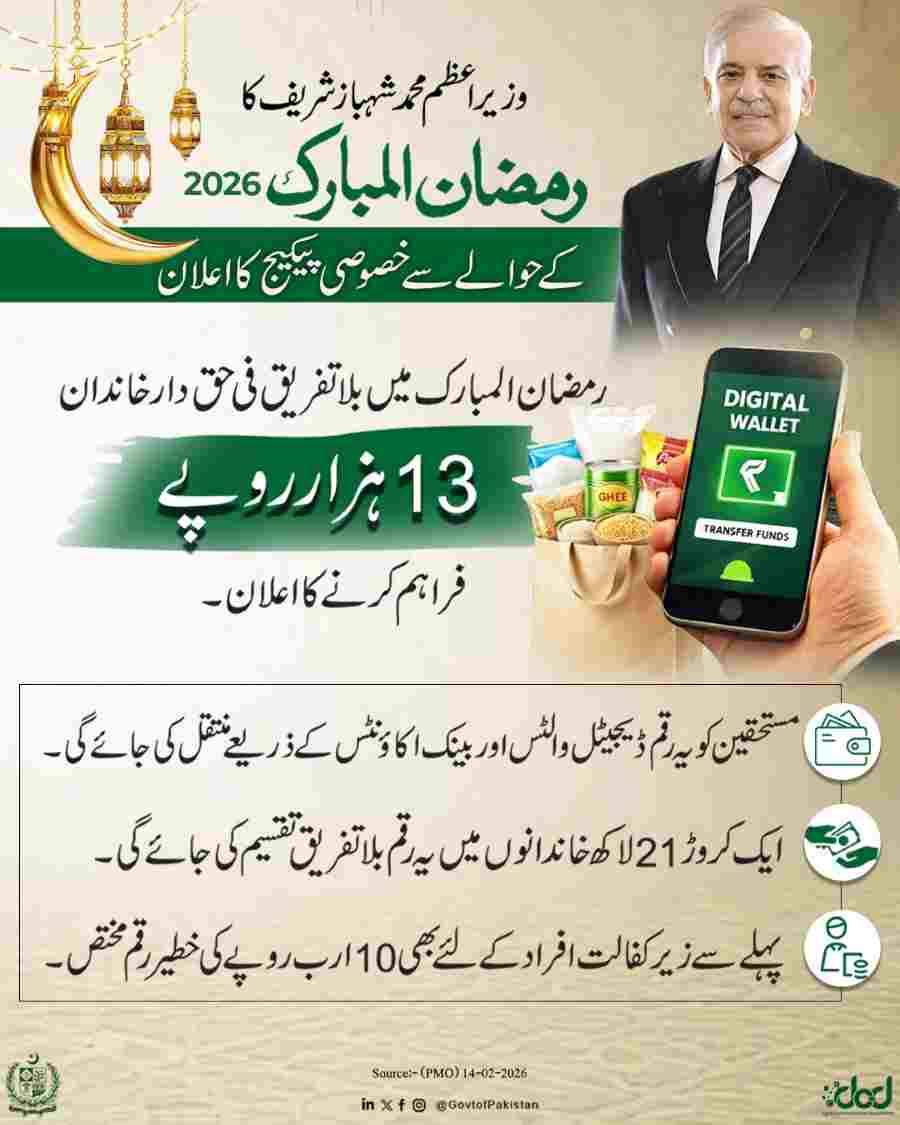
For beneficiaries with registered mobile wallets, the Rs. 13,000 payment arrives directly in their JazzCash or Easypaisa account. This digital transfer method requires that your mobile wallet account has completed biometric verification at an authorized service center. Once the funds appear in your wallet, you can withdraw cash from any agent location, transfer money to another account, or use the balance for direct purchases at partner merchants.
Beneficiaries without mobile wallets receive instructions to visit designated bank branches including HBL Konnect, UBL Omni, or other partner banks. The 9999 response SMS typically specifies which bank to visit and what documents to bring. Over 1.1 million digital transactions were successfully completed through this system, with real-time dashboards ensuring transparent monitoring of every payment.
The withdrawal process follows a straightforward sequence:
- Receive confirmation SMS with eligibility status and payment method
- For digital wallets ensure your account is biometrically verified
- For bank collection visit the specified branch with your original CNIC
- Complete biometric verification at the payment center
- Receive your Rs. 13,000 cash assistance immediately
- Keep the payment receipt for your records
My 9999 Application Status Shows Ineligible What Should I Do
An ineligible response can be disappointing, but it does not necessarily mean you will never qualify for assistance. Understanding why you received this status helps determine your next steps.
The most common reasons for ineligibility include not being registered in the NSER database, having a poverty score above the threshold, being a government employee, or having a SIM card not registered in your name. Each of these situations requires a different response.
If your CNIC is not found in the NSER database, you should visit the nearest BISP tehsil office to complete a dynamic survey. This survey updates your household information and poverty score in the government records. Once your data is entered, you become eligible for consideration in future programs.
If your SIM card is not registered in your name, visit your mobile network’s franchise center to complete the biometric verification process. This step is essential not only for the Ramzan package but also for accessing various government services.
If you are a government employee or taxpayer, you genuinely do not qualify for this poverty-targeted program, and no appeal process exists for these categories.
What Does Pending Status Mean on the 9999 Portal
Some applicants receive a pending status rather than a clear eligible or ineligible response. This intermediate status indicates that your application requires additional verification before a final decision can be made.
Pending status typically occurs when your household information needs updating, when there are inconsistencies between different government databases, or when your application requires manual review by program officials. The system usually provides instructions about what to do next, such as visiting a BISP office with your documents.
Timeframe for Receiving Payment After Approval
Once your 9999 check confirms eligibility, the government aims to disburse payments as quickly as possible. By the 8th of Ramzan, 64 percent of eligible individuals had already received their assistance, demonstrating the system’s efficiency.
Digital wallet transfers typically complete within 24 to 48 hours after eligibility confirmation. Bank collections require you to visit the branch, but the funds are available immediately upon successful verification. The entire process from SMS check to cash in hand rarely exceeds one week for properly verified beneficiaries.
9999 vs. 8070 vs. 8171: Understanding Pakistan’s 2026 Ramzan Relief Portals
The landscape of Pakistan’s social welfare programs can be confusing, especially during Ramadan when multiple relief initiatives operate simultaneously through different shortcodes and portals. Understanding the distinct purposes of 9999, 8070, and 8171 is essential for accessing the correct assistance and avoiding wasted effort. This section provides crystal-clear differentiation between these three major programs.
What is the Difference Between 9999 and 8171 Web Portals
The 9999 and 8171 portals serve fundamentally different purposes within Pakistan’s social protection ecosystem, though both are administered through similar SMS-based verification systems.
9999 Web Portal functions specifically for the Prime Minister’s Ramzan Relief Package. This is a seasonal program operating only during Ramadan, providing one-time cash assistance of Rs. 13,000 to eligible households nationwide. The 9999 system checks eligibility against multiple databases but focuses specifically on this temporary relief initiative. Funds are disbursed through digital wallets and partner banks with the entire process completed within the Ramadan timeline.
8171 Web Portal serves as the permanent gateway for the Benazir Income Support Programme. This portal handles regular quarterly stipends for BISP Kafalat beneficiaries, dynamic survey registrations, and ongoing poverty score management. Unlike the seasonal 9999 program, 8171 operates year-round and manages continuous welfare distribution. BISP beneficiaries checking their status through 8171 receive information about their regular installments, not specifically about Ramzan relief.
The relationship between these portals creates some overlap. Many 9999 beneficiaries are identified using BISP data, so being registered with BISP may increase your chances of 9999 eligibility. However, you must still check both portals separately for their respective programs.
What is the 8070 Code for the Punjab Ramzan Nigehban Program
The 8070 shortcode represents a completely separate provincial initiative: the Punjab government’s Ramzan Nigehban Card program. This distinction is crucial because many citizens confuse the Rs. 10,000 amount mentioned for Punjab with the federal Rs. 13,000 available through 9999.
Punjab Nigehban Card provides Rs. 10,000 cash assistance to over 4 million families across Punjab province. Chief Minister Maryam Nawaz launched this initiative with door-to-door delivery of physical Nigehban Cards that function as ATM-enabled debit cards. Beneficiaries can withdraw cash from over 9,200 ATMs across Punjab without any activation fee or additional steps.
The 8070 SMS service specifically checks eligibility for this Punjab-specific program. Residents of Punjab with valid CNICs showing Punjab addresses can send their CNIC to 8070 to verify their status for the Nigehban Card. This is completely separate from the federal 9999 program, meaning Punjab residents may qualify for both.
Key Differences at a Glance
Understanding these distinctions helps applicants target the correct program for their situation:
- 9999 serves federal Ramzan relief nationwide with Rs. 13,000 assistance
- 8171 handles permanent BISP Kafalat program year-round
- 8070 manages Punjab-specific Nigehban Card with Rs. 10,000 benefit
- Punjab residents can check both 9999 and 8070 for maximum potential assistance
- BISP beneficiaries should use 8171 for regular payments and 9999 for Ramzan-specific aid
- Non-Punjab residents only use 9999 and 8171 as 8070 is Punjab-exclusive
Can You Apply for Multiple Programs
Yes, citizens who meet eligibility criteria for different programs can receive assistance from multiple sources. A Punjab resident who qualifies for both federal and provincial programs could potentially receive Rs. 23,000 total Rs. 13,000 from 9999 and Rs. 10,000 from the Nigehban Card. However, each program conducts its own eligibility verification, and approval for one does not guarantee approval for the other.
Prime Minister’s Ramzan Relief Package 2026: Benefits, Amount, and Scope
The Prime Minister’s Ramzan Relief Package 2026 represents the largest and most comprehensive seasonal welfare initiative in Pakistan’s history, with a record allocation of Rs. 38 billion specifically designed to support low-income families during the holy month. Understanding the full scope of this program helps beneficiaries appreciate the scale of assistance available and the government’s commitment to transparent, dignified distribution.
Official Program Amount and Budget Breakdown
The Economic Coordination Committee approved a substantial budget of Rs. 39 billion for the PM Ramzan Relief Package, with Rs. 19 billion released immediately to begin disbursements. This funding structure ensures that payments reach beneficiaries without delay while maintaining fiscal responsibility through careful monitoring.
Each eligible household receives Rs. 13,000 in direct cash assistance, a significant increase from previous years’ amounts. This enhancement reflects the government’s recognition of rising inflation and the increased financial pressure on low-income families during Ramadan. The program targets millions of families nationwide, with priority given to those already verified through BISP and NSER databases.
The budget allocation covers multiple components:
- Direct cash transfers to eligible households through digital wallets
- Operational costs for partner banks and fintech companies
- Outreach and awareness campaigns across print, electronic, and social media
- Real-time monitoring dashboards and transparency mechanisms
- Support for Gilgit-Baltistan and Azad Jammu Kashmir residents
What is Included in the Ramzan Package Beyond Cash
While the Rs. 13,000 cash assistance forms the core of the program, the Ramzan Relief Package encompasses broader support mechanisms designed to ensure food security and price stability during the holy month.
Subsidized essential items remain available at Utility Stores Corporation outlets nationwide, including discounted rates on flour, sugar, ghee, pulses, rice, and dates. These subsidies operate alongside the cash program, allowing families to stretch their purchasing power further.
The government has also established Ramzan Bazaars and Sahulat Bazaars where essential commodities are available at approximately 15 percent below market rates. These bazaars provide an additional layer of support for families who may not qualify for the cash program but still struggle with Ramadan expenses.
Digital Payment Infrastructure and Partner Institutions
The success of the 9999 Ramzan Package relies on robust partnerships with twelve banks and financial technology companies that handle the actual disbursement of funds to beneficiaries.
Partner institutions include major commercial banks like HBL, UBL, and National Bank, as well as fintech platforms like JazzCash and Easypaisa. This diverse partnership network ensures that beneficiaries across Pakistan, including those in remote areas, have reasonable access to payment collection points.
The digital payment infrastructure processes millions of transactions with real-time monitoring. Over 1.2 million automated robocalls have been made to raise awareness among beneficiaries, ensuring they know exactly when and how to collect their assistance.
Nationwide Coverage and Scope
The PM Ramzan Relief Package extends across all of Pakistan, including Gilgit-Baltistan and Azad Jammu Kashmir. This nationwide coverage ensures that deserving families in every region receive equal consideration for assistance.
Provincial governments coordinate with federal authorities to ensure smooth implementation, with special attention to remote and underserved areas. The program’s digital nature means that even beneficiaries in far-flung regions can check their eligibility through simple SMS without traveling to district headquarters.
Common Problems and Solutions for the 9999 Web Portal
Even with the most streamlined digital system, users occasionally encounter issues when trying to check their eligibility or access their payments. Understanding the most common problems and their solutions saves time and frustration during the busy Ramadan period. This section addresses the frequent challenges reported by 9999 Web Portal users and provides actionable solutions.
Why Am I Not Receiving a Reply from 9999 After Sending My CNIC
A common concern among applicants is sending their CNIC to 9999 and receiving no response, even after waiting for an extended period. This silence typically indicates one of several technical issues that can be resolved through straightforward troubleshooting.
The most frequent cause is sending from a SIM card not registered in your name. The 9999 system cross-references your mobile number with NADRA records, and mismatches trigger automatic rejection without response. Visit your mobile network’s franchise center to verify and update your SIM registration.
Network congestion during peak hours can delay responses. The 9999 system handles millions of queries daily, and occasional delays occur. Wait at least 24 hours before resending your CNIC to avoid duplicate requests that may confuse the system.
Technical errors in message formatting cause silent failures. Ensure you send only the 13-digit CNIC with no dashes, spaces, or additional text. Any extra characters invalidate the query.
If you have tried these steps and still receive no response, use the alternative verification method by visiting pmrrp.nitb.gov.pk directly and checking your status online through the web portal.
CNIC Not Found Error on the 9999 Portal What Does It Mean
Receiving a “CNIC Not Found” message can be alarming, but it does not necessarily mean you are permanently excluded from assistance. This specific error has a clear meaning within the verification system.
“CNIC Not Found” indicates that your household information is not present in the National Socio-Economic Registry database. This typically happens for families who have never participated in a BISP dynamic survey or whose records have not been updated in recent years. It does not reflect your economic status but rather your absence from the database.
The solution involves visiting your nearest BISP tehsil office to complete a dynamic survey. During this survey, enumerators collect detailed information about your household composition, income, assets, and living conditions. This data generates a poverty score that determines your eligibility for various programs. Once your information is entered, you become visible in the system for future assistance.
What Should I Do If Someone Asks for Money to Register Me on the 9999 Portal
This situation represents a serious red flag requiring immediate action. The 9999 SMS service is completely free, and no government program charges registration fees.
Anyone demanding payment for registration, eligibility verification, or faster processing is committing fraud. Government officials never ask for money to process applications, and agents claiming special access to the system are scams.
If approached by someone requesting payment:
- Refuse to pay any amount regardless of promises made
- Do not share your CNIC or personal information with them
- Report the incident to the official helpline immediately
- Warn friends and family in your community about the scam
- Remember that legitimate assistance requires only your CNIC sent to 9999
How to Update Your Mobile Number on the 9999 Web Portal
The 9999 system relies on your registered mobile number for verification and communication. If you have changed your number or the SIM is not in your name, you must update this information.
Visit your mobile network operator’s authorized franchise center with your original CNIC. Request a SIM verification and ensure your number is properly registered in your name through biometric verification. This process takes only a few minutes and resolves most 9999 communication issues.
For beneficiaries who have changed numbers but maintain proper registration, the system automatically recognizes your CNIC regardless of which registered number you use. You do not need to inform any government office about number changes as long as the SIM is properly registered in your name.
Technical Errors During Online Portal Access
Users accessing the PMRRP web portal may occasionally encounter technical difficulties. Common issues include website loading slowly, captcha codes not displaying correctly, or error messages after submission.
These problems typically resolve by refreshing the page and trying again. Using a different browser or clearing your browser cache often helps. Peak usage hours during evening times may cause slower response, so trying during morning hours can improve performance.
Frequently Asked Questions
Is the 9999 web portal active for the year 2026?
Yes, the 9999 web portal and SMS service are fully active for the 2026 Ramzan Relief Package. The Prime Minister formally launched the program with Rs. 38 billion in funding, and millions of beneficiaries have already completed their eligibility checks and received payments.
How can I check my 9999 application status online?
You can check your status by sending your 13-digit CNIC via SMS to 9999 or by visiting pmrrp.nitb.gov.pk and entering your CNIC number in the eligibility check section. Both methods provide instant results.
What is the last date to register for the 9999 Ramzan Package?
The program operates throughout Ramadan, but early registration is strongly recommended. Most disbursements are completed within the first two weeks of Ramadan, so checking your status as soon as possible maximizes your chance of receiving assistance before Eid.
Can I get the 10,000 rupees cash from the 9999 portal if I live in Karachi?
The Rs. 10,000 amount is specifically for the Punjab Nigehban Card program accessed via 8070. If you live in Karachi or anywhere outside Punjab, you are eligible for the federal Rs. 13,000 package by sending your CNIC to 9999. Karachi residents should use 9999, not 8070.
How do I update my mobile number on the 9999 web portal?
You cannot update your number through the portal directly. Visit your mobile network operator’s authorized franchise center with your original CNIC and request SIM verification to ensure your number is properly registered in your name through biometric verification.
Is there a mobile app for the 9999 web portal registration?
Official apps may be available through the Apple App Store or Google Play Store, but the SMS and web portal methods remain the primary and most secure verification channels. Always verify the developer before downloading any app claiming to offer registration services.
Why am I not receiving a reply from 9999 after sending my CNIC?
This typically occurs when your SIM card is not registered in your name. Visit your mobile network operator to verify your SIM registration. Network congestion during peak hours can also cause delays. If problems persist, use the online portal at pmrrp.nitb.gov.pk as an alternative.
Can government employees apply through the 9999 portal?
No, government employees are explicitly excluded from the 9999 Ramzan Package. The program targets low-income households with no government employment and no taxpayer status. This exclusion ensures resources reach genuinely deserving families.
How many times can a family receive the 10,000 Ramzan Package?
The Ramzan relief programs provide one-time assistance per eligible household during the Ramadan period. Each family qualifies for a single payment under the federal program, though Punjab residents may also receive the separate Nigehban Card assistance if eligible.
What documents are required for the 9999 Ramzan Package registration?
You only need your valid CNIC to check eligibility. No documents are required for the SMS verification process. If approved for payment, you will need your original CNIC and possibly biometric verification at the collection point or for mobile wallet activation.

Add a Comment