
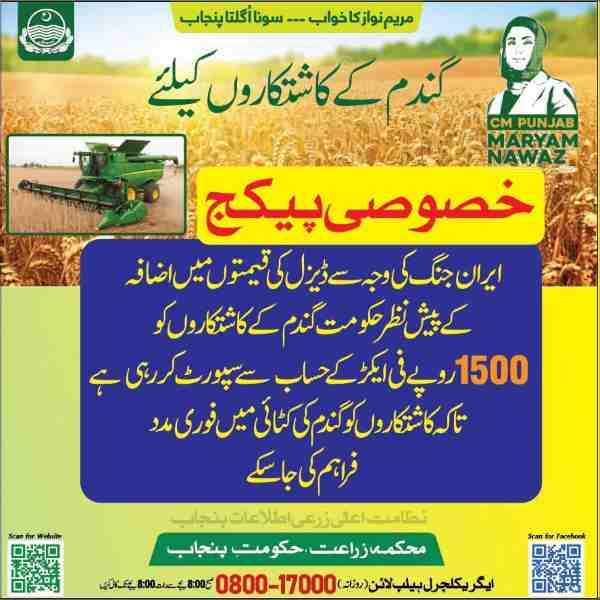
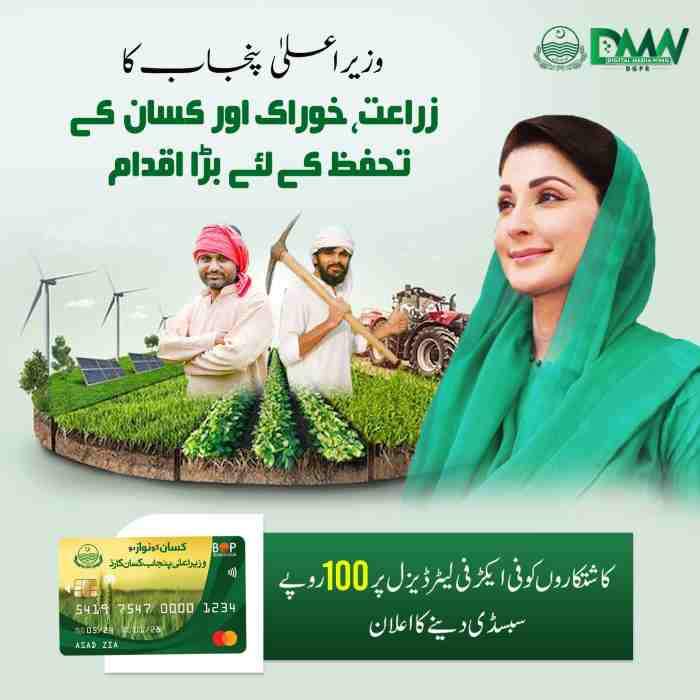
The Diesel Subsidy Scheme is a Punjab government initiative launched by Chief Minister Maryam Nawaz Sharif, providing a subsidy of Rs 150 per liter on up to 10 liters of diesel per acre for wheat farmers owning up to 25 acres.
What You Will Learn From This Guide
- Eligibility Criteria: Who qualifies for the Rs 150 per liter diesel subsidy in Punjab.
- Application Process: Step-by-step registration via the MKB web portal and mobile app.
- Financial Impact: How the subsidy reduces cultivation costs and benefits farmers.
- Disbursement Mechanics: How the subsidy amount is transferred to bank accounts.
- Problem Solving: What to do if your application is rejected or delayed.
Key Takeaways
- Rs 150 Per Liter Subsidy: Farmers receive a direct subsidy of Rs 150 on every liter of diesel, up to 10 liters per acre, significantly lowering fuel costs.
- 25-Acre Land Cap: The scheme is specifically designed for small and medium-scale wheat growers with land holdings up to 25 acres.
- MKB Portal Registration: Applications are processed exclusively through the official Maryam Ko Batayen (MKB) web portal and mobile app, ensuring a transparent digital system.
- Direct Bank Transfers: Subsidy amounts are transferred directly to registered bank accounts or Kissan Cards, eliminating intermediaries and ensuring timely relief.
- Rs 23 Billion Budget: The Punjab government has allocated a substantial budget of Rs 23 billion for this program, aiming to benefit millions of farmers.
- Read More: Diesel Subsidy Scheme (Rs. 150/Liter) – Fuel Subsidy App
- Read More: Sindh Govt Petrol Subsidy Scheme – Petrol Subsidy App
- Read More: Sasta Petrol Subsidy Scheme – Petrol Subsidy For Bikers
- Read More: Bike Petrol Subsidy App – Apply via SMS | Get 20L Fuel
Diesel Subsidy Scheme (For Farmers) – Rs 150/L Subsidy by Maryam Nawaz
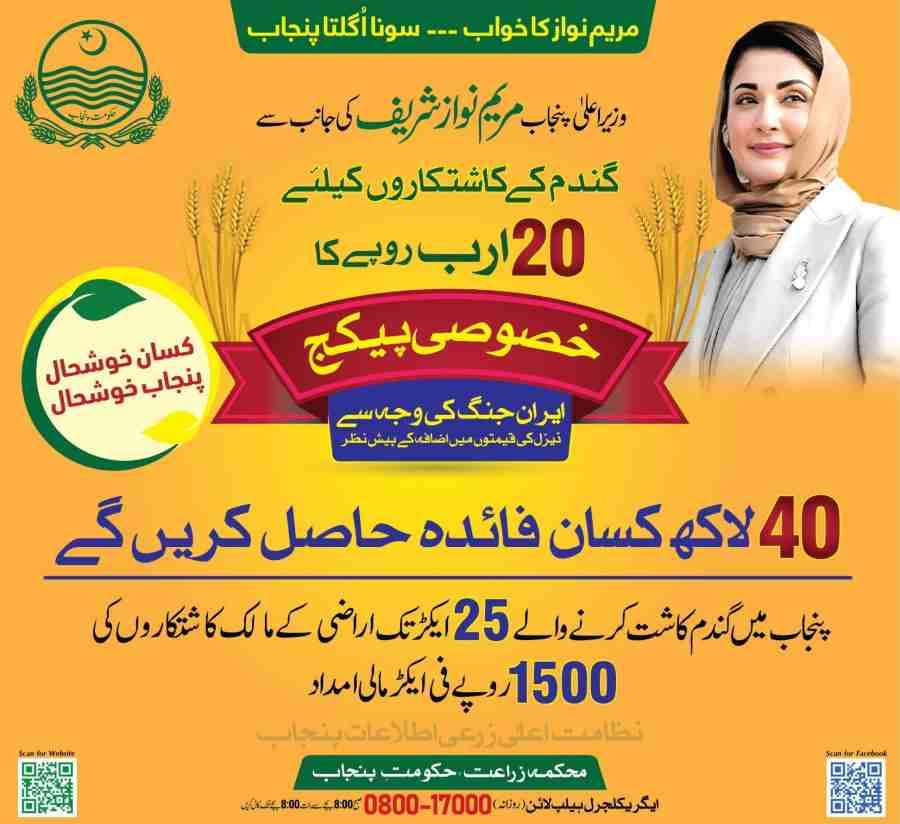
Table Of Contents
What is the Diesel Subsidy Scheme (Rs 150/L) by Maryam Nawaz? – Complete Program Breakdown
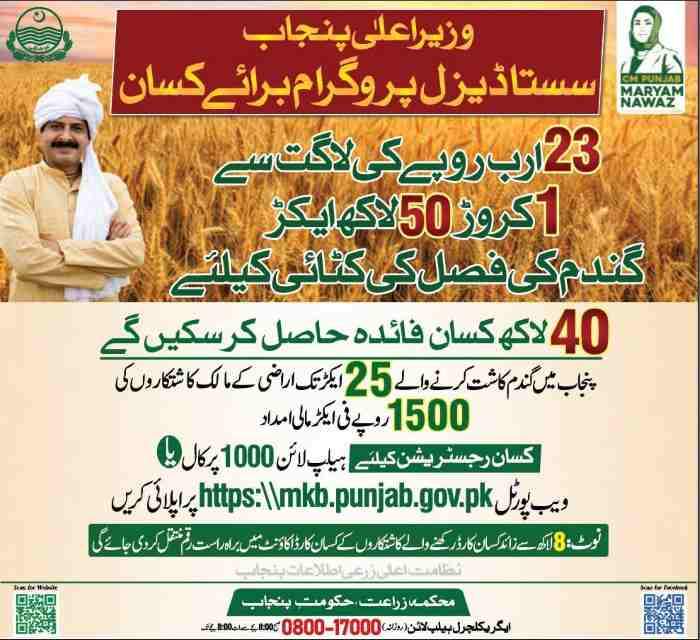
The Diesel Subsidy Scheme by Maryam Nawaz is a direct financial intervention announced in April 2026 to offset rising fuel costs for wheat farmers in Punjab by subsidizing diesel at Rs 150 per liter for 10 liters per acre.
What are the official scheme highlights and budget allocation?
The scheme’s core components are defined by a clear budget and per-acre assistance limits.
- Total Program Budget: The Punjab government has allocated a substantial Rs 23 billion for this Kissan Diesel Subsidy Program.
- Subsidy Amount Per Liter: Eligible farmers receive a direct subsidy of Rs 150 on every liter of diesel purchased for agricultural use.
- Maximum Subsidized Diesel Per Acre: The subsidy applies to a maximum of 10 liters of diesel for each acre of wheat cultivation.
- Total Financial Assistance Per Acre: Farmers receive a total of Rs 1,500 in subsidy per acre (Rs 150/liter x 10 liters).
- Total Assistance for a 25-Acre Farmer: A farmer with the maximum eligible land of 25 acres can receive up to Rs 37,500 in total subsidy.
- Total Expected Beneficiaries: The program is expected to benefit approximately 4 million farmers across the province.
Read More: Petrol Subsidy App – Apply via SMS (9771) | Get 20L Fuel
What was the official announcement date and political context?
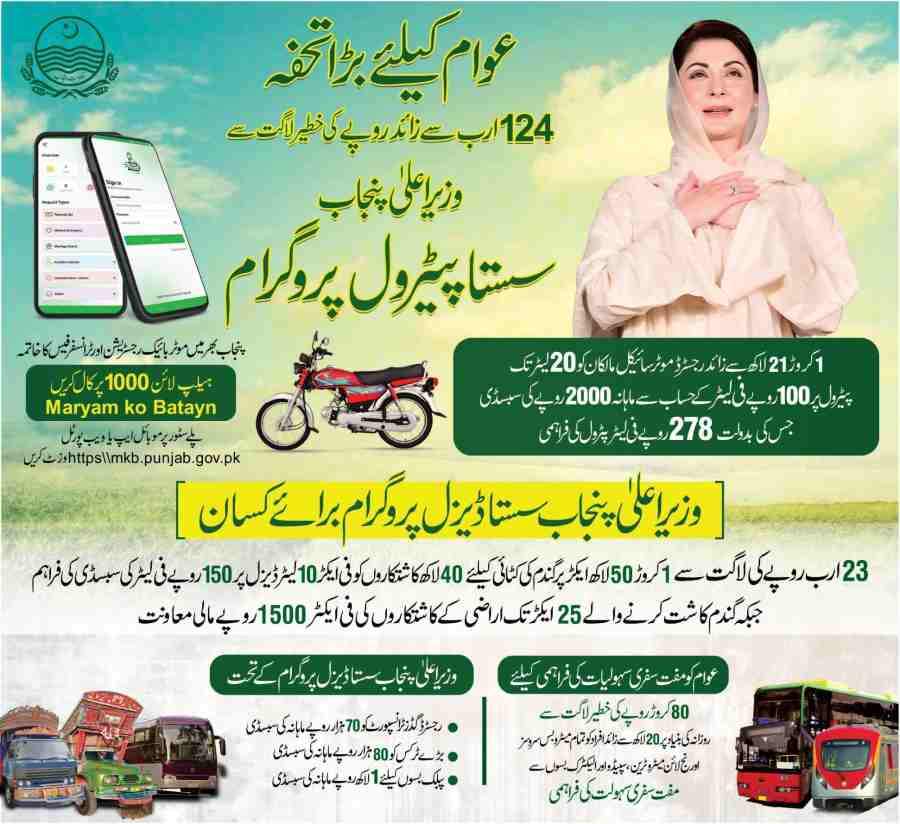
The scheme was launched in direct response to a specific economic pressure point.
- Official Launch Date: Chief Minister Maryam Nawaz Sharif officially announced the relief package in April 2026.
- Primary Catalyst: The scheme was introduced to mitigate the impact of rising global oil prices, which were exacerbated by ongoing international crises, including the Iran war impact on fuel supplies.
- Government Vision: The initiative is part of the broader “Kisan Khushhal, Punjab Khushhal” (Farmer Prosperous, Punjab Prosperous) vision, aimed at strengthening the agricultural backbone of the province.
- Personal Oversight: CM Maryam Nawaz has stated she is personally overseeing the subsidy mechanism to ensure transparent and effective delivery of financial assistance to every eligible farmer.
What is the geographical scope of the Punjab Diesel Subsidy?
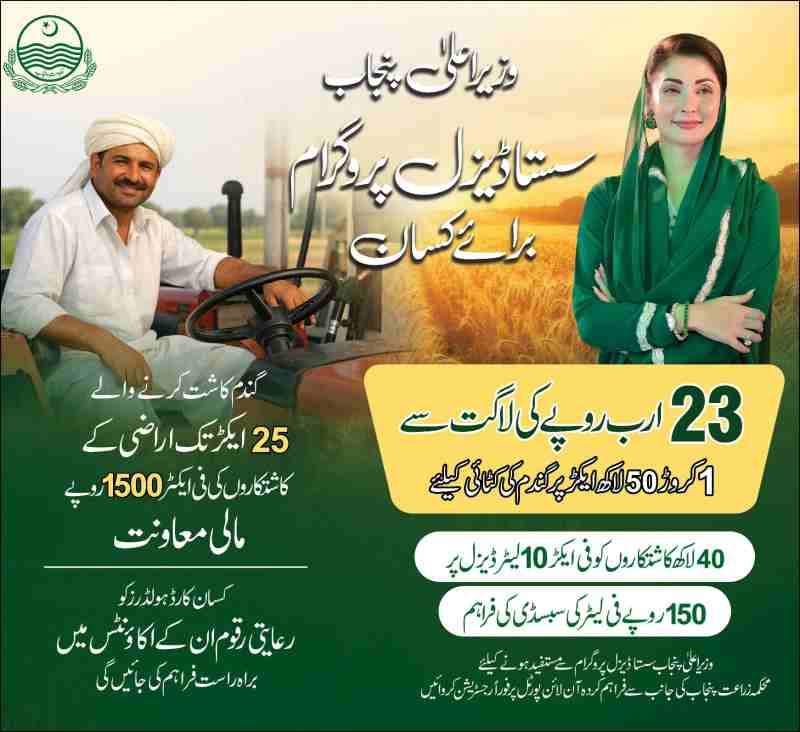
The subsidy is strictly a provincial program with clear geographic limits.
- Province-Specific Program: The Diesel Subsidy Scheme is exclusively for residents of Punjab. It is not available for farmers in Sindh, KPK, Balochistan, or any other province.
- District-Wide Coverage: The scheme covers all 36 districts of Punjab, ensuring that wheat farmers across the province, from Attock to Rahim Yar Khan, can benefit.
- Focus on South Punjab: Special attention is being given to reach farmers in remote areas of South Punjab, including Bahawalpur, Multan, and Dera Ghazi Khan, through simplified registration processes.
How To Apply For The Diesel Subsidy Scheme By Maryam Ko Batain Portal
The Bike Petrol Subsidy Scheme, facilitated through the Maryam Ko Batain portal, offers eligible citizens financial relief on fuel costs for two-wheelers. Below is a streamlined, step‑by‑step guide to completing your application online.
Step‑by‑Step Application Process
Step 1: Access the official portal and log in
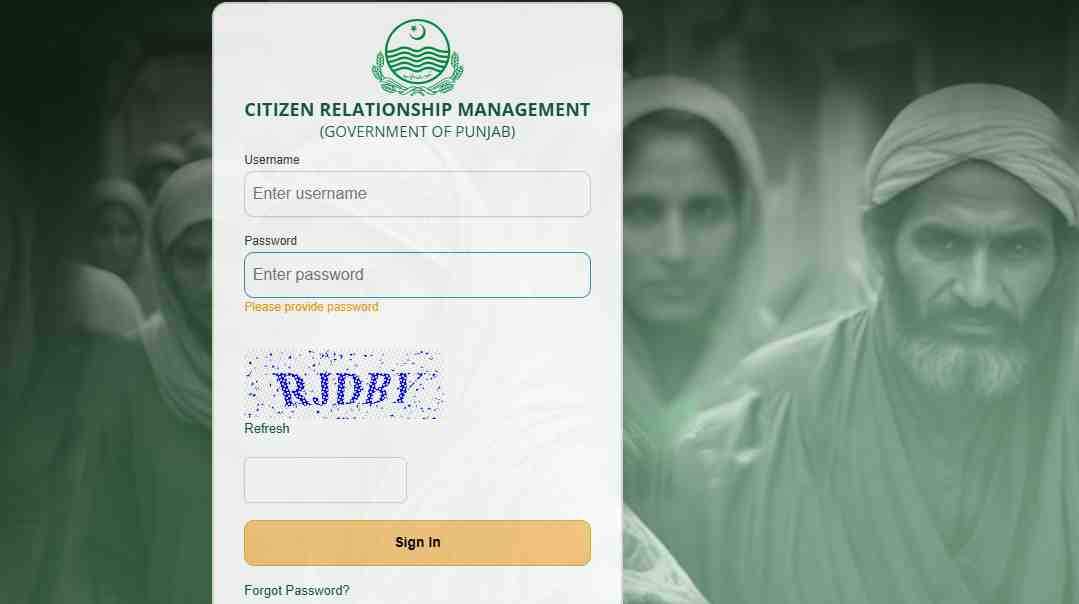
Open the official Maryam Ko Batain portal by navigating to https://crm.punjab.gov.pk/. Enter your registered credentials to log in to your account.
Step 2: Select the Maryam Ko Batain portal option
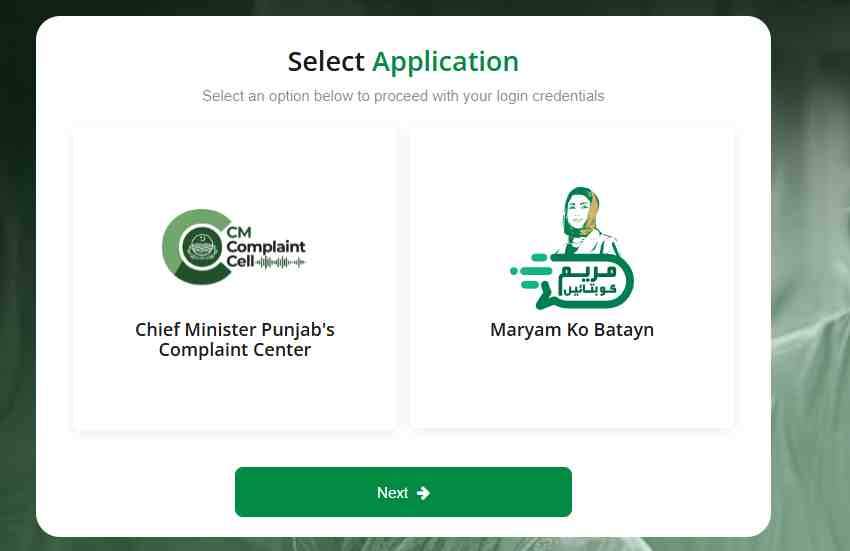
After successful login, locate and select the “Maryam Ko Batain” portal option from the available services. Then, click NEXT to proceed.
Step 3: Complete and submit the online application form
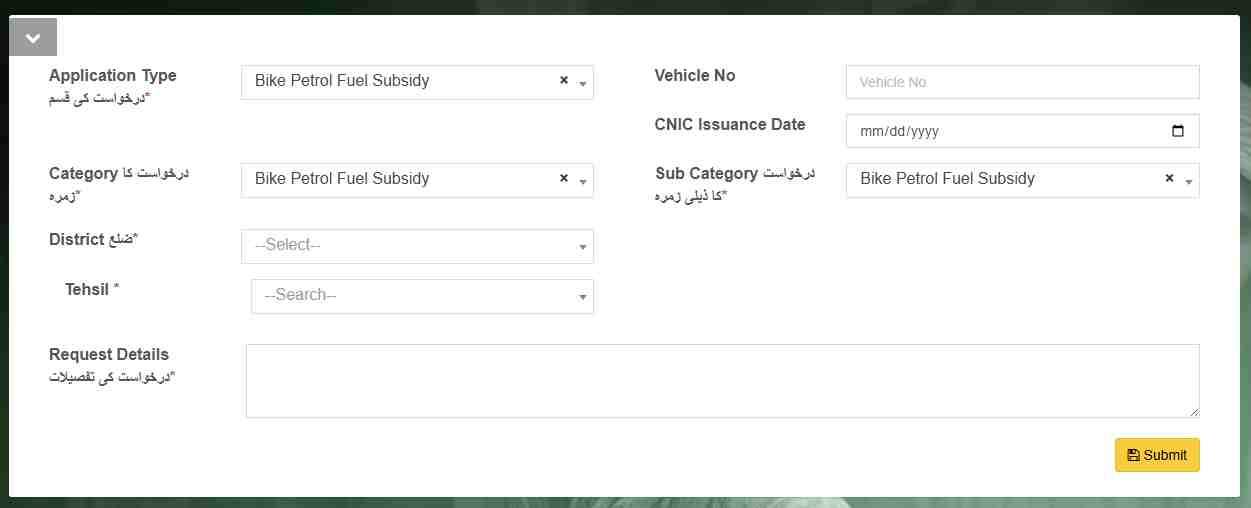
Fill out the online application form by providing all required details accurately. Once the form is complete, click SUBMIT. Use the following link to access the submission page directly:
https://crm.punjab.gov.pk/Complaint/AddComplaint
Note: Ensure all information entered is correct before final submission to avoid processing delays. For further assistance, refer to the official portal’s help section.
Who is Eligible for the Rs 150 per Liter Diesel Subsidy in Punjab? – Complete Eligibility Criteria
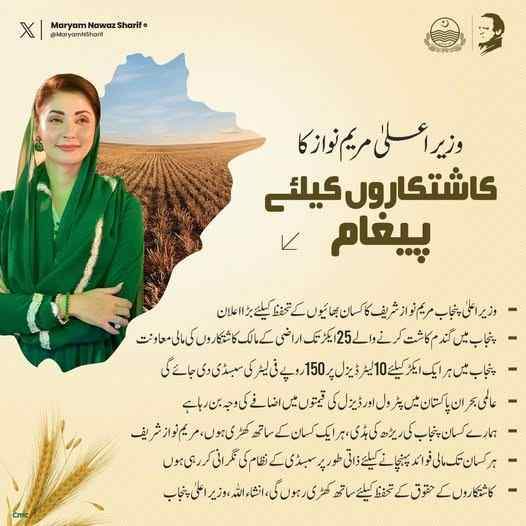
Eligibility for the Rs 150 per liter diesel subsidy in Punjab requires the farmer to be a resident of Punjab, cultivate wheat on up to 25 acres, and be registered with the Punjab Agriculture Department or have a Kissan Card.
What are the land ownership requirements for the diesel subsidy?
Land ownership is the primary determinant of eligibility for this scheme.
- Maximum Land Cap: The subsidy is strictly for small and medium landowners holding up to a maximum of 25 acres of agricultural land.
- No Minimum Land Requirement: There is no minimum land size. Farmers with as little as one acre of wheat cultivation are fully eligible for the subsidy on their respective land holding.
- Ineligibility for Larger Landowners: Farmers with more than 25 acres are not eligible for this scheme, as it is specifically designed for small-scale growers.
- Tenant Farmer Eligibility: Yes, tenant farmers (Muzara) are eligible. They must provide a valid, documented tenancy agreement or a registered cultivation certificate from the local patwari to prove their rights to the land they farm.
What crop types qualify for the Punjab Farmers Diesel Subsidy?
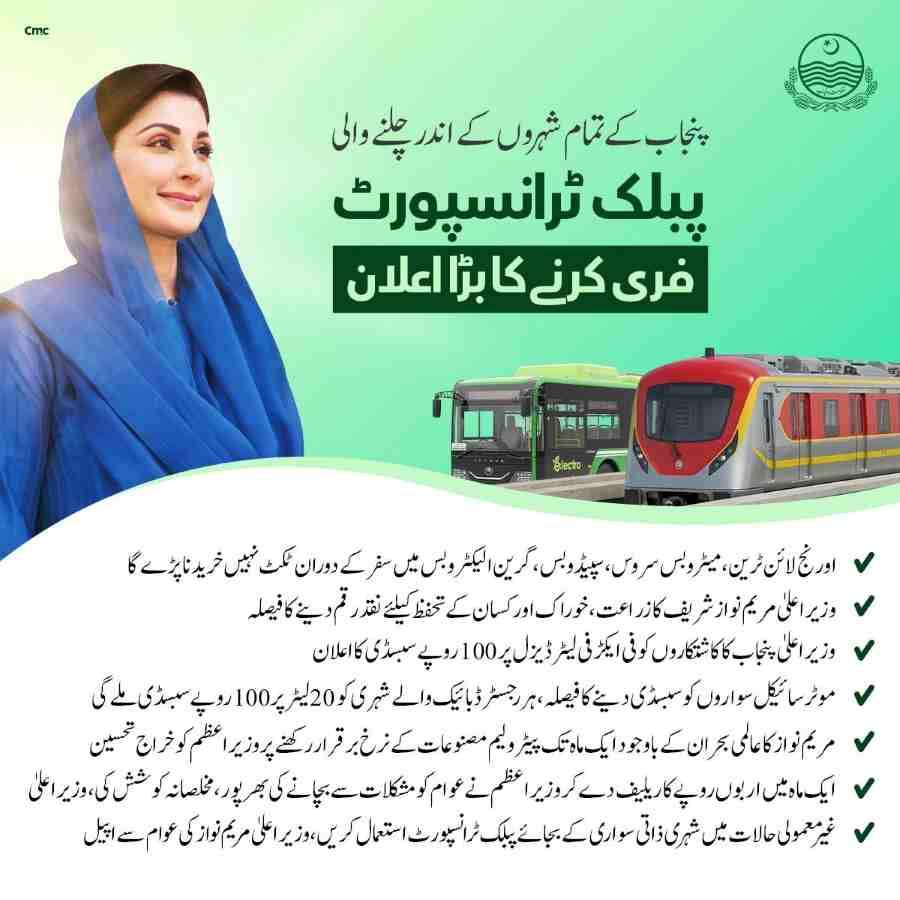
The subsidy is tied to a specific crop to ensure targeted relief.
- Primary Focus on Wheat: The Diesel Subsidy Scheme is exclusively for wheat growers in its current phase. The subsidy is intended to offset fuel costs for wheat cultivation activities like land preparation, sowing, and irrigation.
- Exclusion of Other Crops: The subsidy is currently not available for rice, maize, or sugarcane farmers. The government has indicated that future phases may consider extending the program to other crops.
- Ineligibility for Horticulture: Farmers engaged in horticulture, fruits, or vegetable cultivation are not eligible under this specific wheat-focused scheme.
- No Coverage for Livestock: Poultry or livestock farmers are not eligible, as the subsidy is strictly for crop cultivation diesel use.
What is the role of the Kissan Card in eligibility?
The Kissan Card acts as a key tool for verification and fast-tracking payments.
- Preferred but Not Mandatory: While not strictly mandatory, having a Kissan Card is highly preferred as it pre-verifies a farmer’s data, leading to faster processing and automated disbursement.
- Facilitates Direct Transfer: Over 800,000 existing Kissan Card holders will receive direct financial assistance in their bank accounts, ensuring transparent and timely disbursement.
- How to Get a Kissan Card: Farmers without a Kissan Card can apply for one at their local Agriculture Department office or designated bank branches to simplify future subsidy claims.
- Faster Processing for Card Holders: The verification and payment processing time for Kissan Card holders is significantly shorter compared to non-cardholders, as their land and identity data is already in the system.
What documents are required for the diesel subsidy registration?

Gathering the correct documents beforehand is crucial for a smooth application.
- Complete Document Checklist: The required documents include a valid Computerized National Identity Card (CNIC), land ownership proof (Fard or Malba), or a registered tenancy agreement.
- Bank Account Information: A bank account in the farmer’s name is required for the direct transfer of the subsidy amount. Account details must be provided during registration.
- Crop Inspection Reports: In some cases, the Agriculture Department may request crop inspection reports to verify that wheat has been cultivated on the declared land.
- Mobile Number for Verification: A working mobile number registered in the farmer’s name is essential for receiving application confirmations and status updates via SMS.
How to Apply for the Punjab Diesel Subsidy Scheme 2026 – Step-by-Step Registration Guide
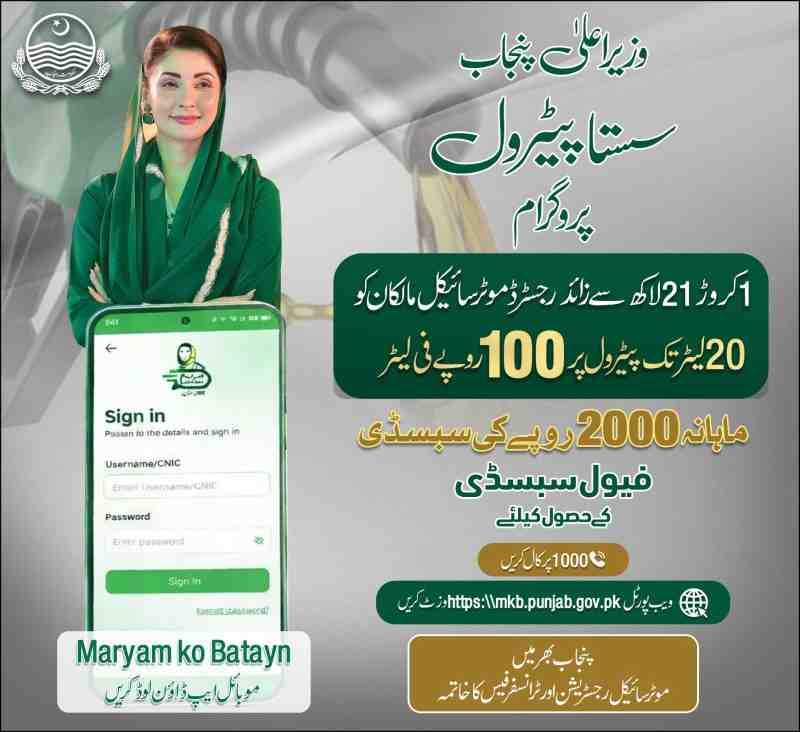
Farmers can apply for the Punjab Diesel Subsidy Scheme 2026 through four official channels: the MKB web portal, the Maryam Ko Batayen mobile app, the 1000 helpline, or in-person at agriculture department offices.
How do I register for the Diesel Subsidy Scheme via the MKB Punjab gov pk web portal?
The MKB web portal is the primary digital gateway for the scheme, designed for a paperless application process.
- Official Web Portal Access: The official website for registration is the Maryam Ko Batayen (MKB) portal, accessible at mkb.punjab.gov.pk.
- Step-by-Step Web Registration:
- Access the Portal: Open a web browser on a desktop or mobile device and navigate to the official MKB Punjab gov pk web portal.
- Create a New User Account: Click on the “Register” or “Sign Up” button. Enter your CNIC number and a valid mobile number to create an account.
- Fill the Online Application Form: Complete the diesel subsidy application form with accurate details, including land size, location, and bank account information.
- Upload Required Documents: Scan and upload clear copies of your CNIC, land ownership proof (Fard), and a passport-sized photograph.
- Submit and Generate ID: Review all the information, click “Submit,” and save the unique application tracking ID generated by the system for future reference.
How to apply via the 1000 helpline and SMS?
The helpline and SMS service provide an accessible option for farmers without reliable internet access.
- Primary Helpline Number: The official helpline number for the Maryam Nawaz Diesel Subsidy Scheme is 1000.
- Operating Hours: The helpline operates seven days a week, from 8:00 AM to 8:00 PM, to assist farmers with their queries and registrations.
- SMS Registration Process: For a quick check, farmers can send their CNIC number (without spaces) to 1000. The system will automatically reply with the eligibility status and provide further instructions on how to complete the application.
- Agent-Assisted Registration: Farmers can call the helpline and speak directly to a support agent who will guide them through the registration process step-by-step, making it accessible even for those with limited digital literacy.
How do I use the “Maryam Ko Batayen” app for the diesel scheme?
The mobile app provides a convenient, on-the-go solution for farmers to manage their application.
- App Availability: The “Maryam Ko Batayen” (MKB) mobile application is available for download on the Google Play Store for Android devices.
- Quick App Registration: After downloading and installing the app, open it and follow the on-screen instructions. The process involves entering your CNIC number, verifying it with an OTP sent to your mobile, and filling out the digital application form.
- Key App Features: Beyond registration, the app allows farmers to check their application status, view payment history, and submit complaints directly from their smartphones.
- Offline Capabilities: The app is designed to work in areas with poor connectivity, allowing farmers to fill out forms offline. The data will be automatically submitted once a stable internet connection is available.
Where can I find the Maryam Nawaz Diesel Subsidy application form offline?
For farmers without digital access, the government has established physical support centers.
- In-Person Application Availability: Yes, farmers can obtain and submit a physical application form by visiting their local Agriculture Department office or the Chief Minister’s Helpdesk.
- Helpdesk Locations: Chief Minister’s Helpdesks are located in local veterinary hospitals and major district agriculture offices across Punjab.
- Assistance for Remote Villages: Agriculture extension officers are being deployed to remote villages to help farmers fill out their forms and collect them for processing, ensuring no one is left behind.
- Manual Application Process: A farmer can request a physical form, fill it out with the help of a staff member, attach photocopies of their documents, and submit it on the spot, receiving a stamped acknowledgment receipt.
What is the step-by-step process after submitting the application?
Understanding the post-submission workflow helps manage expectations.
- Application Confirmation: Immediately after submission, farmers will receive a confirmation message (SMS or in-app notification) containing their unique application tracking ID.
- Verification Process: The Agriculture Department will initiate a verification process, cross-checking the provided CNIC and land data with the official land record database.
- Processing Time: The complete verification process typically takes between 7 to 14 working days, depending on the volume of applications.
- Status Updates: Farmers will receive SMS notifications at each stage of the process, from “Application Received” to “Under Verification,” “Eligible,” and finally “Payment Processed.”
- Online Status Check: Applicants can also check their real-time application status by logging into the MKB portal and entering their CNIC number.
How Does the Rs 150/L Diesel Subsidy Disbursement Work? – Payment Methods and Mechanics
The Rs 150 per liter diesel subsidy is disbursed as a direct cash transfer to the farmer’s registered bank account or linked Kissan Card, not as a discount at the petrol pump.
Will the subsidy be given in cash or as a discount at petrol pumps?
The government has chosen a specific disbursement method to maximize transparency.
- Direct Cash Transfer Method: The subsidy amount will be transferred directly into the farmer’s registered bank account or loaded onto their Kissan Card. This is the sole method of disbursement.
- No Discount at Petrol Pumps: The subsidy is not provided as a discount at the time of diesel purchase. Farmers will pay the full market price at the pump and receive the subsidy amount as a cash reimbursement in their account.
- Rationale for Direct Transfer: The government opted for direct cash transfers to eliminate fraud and prevent middlemen from exploiting the system, ensuring that the full benefit reaches the farmer.
- Farmer’s Responsibility: Farmers are responsible for keeping their purchase receipts as the subsidy amount is calculated based on their declared land acreage, not on actual purchase volume.
Which banks are processing the diesel subsidy payments?
A network of designated banks has been established to handle the payments.
- Designated Banks List: The primary banks processing payments include the Bank of Punjab, National Bank of Pakistan, Habib Bank Limited (HBL), and other major commercial banks partnered with the government.
- No Special Account Required: Farmers do not need to open a new, special account. The subsidy can be deposited into any existing valid bank account, as long as the account holder’s name matches the CNIC used for registration.
- Kissan Card as a Payment Method: For Kissan Card holders, the subsidy amount will be directly loaded onto their card, which can be used to withdraw cash from ATMs or make payments at partner retailers.
- Linking Existing Accounts: During the online application process, farmers will be prompted to enter their bank account details. It is crucial to provide the correct IBAN number to ensure successful transfer.
What is the disbursement timeline for the diesel subsidy?
Knowing the payment schedule helps farmers plan their finances.
- One-Time Payment Per Crop Cycle: The diesel subsidy is a one-time payment for the current wheat crop season. It is not a monthly recurring subsidy.
- Expected First Batch: The first batch of payments is expected to be processed and released after the post-harvest verification phase, likely starting in late May or June.
- Verification Before Payment: Payments will only be released after the Agriculture Department verifies that the declared land was indeed used for wheat cultivation.
- Future Phases: While currently a one-time payment, the government has stated that a second phase for the next crop cycle is under consideration based on the success and impact of the current program.
How do I check my payment status?
Multiple channels are available for farmers to track their payment status.
- MKB Portal Status Check: Farmers can log in to the MKB Punjab gov pk portal, navigate to the “Check Status” section, and enter their CNIC number to view their payment status.
- SMS Status Inquiry: A quick SMS with the CNIC number sent to 1000 will trigger an automated reply detailing the current application and payment status.
- “Payment Processed” Status: This status indicates that the funds have been successfully transferred to the farmer’s bank account. It may take 2-3 business days for the amount to appear in the account.
- Action for Delayed Payments: If the status shows “Payment Processed” for more than a week but the amount is not credited, the farmer should contact the 1000 helpline with their application ID for further investigation.
What is the Financial Impact of the Maryam Nawaz Diesel Subsidy on Farmers? – Cost-Benefit Analysis
The Maryam Nawaz Diesel Subsidy reduces a farmer’s per-acre diesel cost from approximately Rs 2,500 to Rs 1,000, resulting in a 60% savings on fuel expenses for wheat cultivation.
How is the per-acre financial relief calculated?
The financial benefit is straightforward and directly proportional to the land size.
- Current Market Price of Diesel: The current market price of diesel in Punjab is approximately Rs 250 to Rs 280 per liter.
- Effective Farmer Cost After Subsidy: After applying the Rs 150 subsidy, the farmer effectively pays only Rs 100 to Rs 130 per liter of diesel.
- Total Savings for a 1-Acre Farmer: A farmer with 1 acre of wheat receives Rs 1,500 in total subsidy (10 liters x Rs 150), directly reducing their input cost by that amount.
- Total Savings for a 12.5-Acre Farmer: A mid-sized farmer with 12.5 acres of land will receive a total subsidy of Rs 18,750.
- Total Savings for a 25-Acre Farmer: A farmer with the maximum eligible land of 25 acres will receive the highest subsidy amount of Rs 37,500, representing a substantial injection of relief into their farm operations.
How does this subsidy compare to previous government relief programs?
This scheme stands out as the most generous agricultural fuel subsidy in recent history.
- Comparison with 2023 Schemes: Previous federal fuel subsidy programs for farmers in 2023 offered only Rs 50 to Rs 70 per liter, which is less than half of the current subsidy amount.
- Comparison with Other Provinces: The Punjab government’s Rs 150 per liter subsidy is significantly higher than similar programs in other provinces. For example, the Sindh government announced a subsidy of approximately Rs 100 per liter, making Punjab’s program the most generous in the country.
- Comparison with BISP: Unlike the Benazir Income Support Program (BISP), which is an unconditional cash transfer, this diesel subsidy is a targeted input subsidy designed to lower the cost of production and boost agricultural output.
What is the total economic impact on Punjab’s agricultural output?
The subsidy is expected to have a multiplier effect on the province’s economy.
- Boost to Wheat Production: By making cultivation more affordable, the subsidy is expected to prevent land abandonment and encourage farmers to bring their full acreage under wheat cultivation, leading to a potential increase in total wheat production.
- Prevention of Land Abandonment: Without the subsidy, high diesel costs could have made wheat farming unprofitable for small landowners, leading them to leave their land fallow. The subsidy directly prevents this outcome.
- Contribution to GDP: The agricultural sector is a significant contributor to Punjab’s GDP. By supporting farmers and stabilizing production, the subsidy program is projected to have a positive impact on the province’s overall economic growth.
Verification, Rejection, and Appeal Process – What to Do If Your Application Is Denied
If your application for the diesel subsidy is rejected, you have 15 days to file an appeal through the same MKB portal or by visiting the District Agriculture Officer with corrected documents.
What are the common reasons for diesel subsidy application rejection?
Understanding common rejection reasons can help farmers avoid them.
- CNIC Mismatch: The most common reason is a mismatch between the CNIC provided and the name on the land record database. This is often due to spelling errors or differences in name order.
- Land Exceeding 25 Acres: Applications from farmers with total land holdings exceeding 25 acres are automatically rejected. The system does not allow for partial claims.
- Incorrect Crop Declaration: If a farmer declares wheat but an inspection or satellite data reveals a different crop (e.g., rice or sugarcane), the application will be rejected.
- Duplicate Applications: Submitting more than one application from the same CNIC will lead to the rejection of all subsequent applications, as the system flags them as duplicates.
How do I check my eligibility status for the diesel subsidy online?
The online portal provides a transparent view of an application’s journey.
- MKB Portal Status Check: Farmers can log in to their account on the MKB portal and navigate to the “Check Status” or “My Applications” section. Entering the CNIC will display the current status.
- “Pending Verification” Status: This status means the application has been received and is in the queue for document and land record checks. No action is required from the farmer at this stage.
- “Eligible – Awaiting Disbursement” Status: This positive status indicates that the application has been fully approved and the farmer’s name has been added to the payment list. The funds will be transferred soon.
- “Ineligible” Status: If this status appears, a reason for ineligibility will be provided (e.g., “Land exceeds 25 acres” or “CNIC not verified”). The farmer can then proceed to file an appeal.
How to file an appeal for a rejected diesel subsidy application?
Farmers have a clear path to challenge an incorrect rejection.
- Appeal Deadline: Farmers have a strict 15-day window from the date of rejection to file an appeal. Appeals submitted after this deadline will not be entertained.
- Where to Submit an Appeal: Physical appeals must be submitted to the office of the District Agriculture Officer in the farmer’s respective district. For online appeals, the MKB portal has a dedicated “File an Appeal” section.
- Required Documents for Appeal: The appeal must include a copy of the rejection letter (or a screenshot of the online rejection), along with any corrected or additional documents (e.g., a corrected Fard or a fresh tenancy agreement).
- Appeal Review Timeline: The appeal review process typically takes 7 to 10 working days. The farmer will be notified of the decision via SMS and can check the updated status on the MKB portal.
Common Challenges and Farmer Questions – Troubleshooting the Diesel Subsidy Scheme
The most common challenges farmers face with the Diesel Subsidy Scheme include biometric verification failures, land record mismatches, and delays in payment processing beyond 30 days.
What if I don’t have a smartphone or internet access?
The government has made provisions to include farmers without digital access.
- Assistance from Family or Neighbors: Farmers can ask a tech-savvy family member, neighbor, or relative to use their smartphone to complete the online registration on their behalf.
- Support from Agriculture Extension Officers: Farmers can contact their local agriculture extension officer, who is trained to assist with the registration process and may have a dedicated device for this purpose.
- Village Council Support: Village council (Union Council) offices are being equipped to provide assistance to farmers, with staff available to help fill out online applications.
Can I get the subsidy if my land is not registered in my name?
Yes, provisions exist for farmers who cultivate land they do not own.
- Tenant Farmer Eligibility: As confirmed, tenant farmers (Muzara) are eligible to apply for the subsidy.
- Required Proof: To prove their right to the subsidy, tenant farmers must submit a notarized tenancy agreement (Muzara Nama) or a registered cultivation certificate issued by the local patwari.
- Patwari’s Role: The local patwari is a revenue official who maintains land records. Farmers can approach the patwari to obtain an official cultivation certificate for a nominal fee.
What if my biometric verification fails at the bank?
Biometric issues are a common hurdle but have a standard resolution process.
- Causes of Failure: Biometric verification can fail due to worn-out fingerprints, issues with the thumbprint scanner, or a mismatch with the data on the CNIC chip.
- Request Manual Verification: If biometrics fail, the farmer should immediately request a manual verification process at the bank branch. This may involve answering security questions or showing the original CNIC.
- NADRA Resolution: For persistent issues, the farmer may need to visit a NADRA (National Database and Registration Authority) office to have their biometrics updated or their CNIC verified.
- Family Member Collection: In some cases, if the farmer is unable to complete biometric verification due to a medical condition, a direct family member with a verified relationship can be authorized to collect the subsidy on their behalf, subject to additional documentation.
How do I report corruption or bribery related to the diesel subsidy?
The government has established clear channels for reporting misconduct.
- Anti-Corruption Helpline: Farmers can report any instances of bribery or corruption by calling the designated anti-corruption helpline at 0800-XXXXX or the main helpline 1000.
- Anonymous Reporting: The system allows for anonymous reporting. A farmer can file a complaint without revealing their name, protecting them from potential retaliation.
- Zero-Tolerance Policy: The government has stated a zero-tolerance policy for any official, from patwari to agriculture officer, caught demanding a “cut” or bribe for processing a subsidy application.
Official Resources, Helplines, and Digital Platforms for the Maryam Nawaz Diesel Subsidy
The official digital ecosystem for the Maryam Nawaz Diesel Subsidy includes the MKB Punjab gov pk web portal, the Maryam Ko Batayen mobile app, the 1000 helpline, and the Agriculture Department’s district offices.
What is the official web portal for MKB Punjab gov pk registration?
Accessing the correct portal is critical for a safe and successful application.
- Correct URLs: The official and legitimate URLs for the Maryam Ko Batayen (MKB) portal are mkb.punjab.gov.pk and lmkb.punjab.gov.pk.
- Distinguishing Fake Websites: Farmers should be cautious of fake websites that look similar. The official portal will always have “.gov.pk” in its domain name and will never ask for payment or sensitive personal information beyond the CNIC and land details.
- Portal Downtime: In case the portal is down or slow due to high traffic, farmers are advised to try again during off-peak hours (early morning or late evening) or use the mobile app as an alternative.
What is the Maryam Ko Batayen mobile app and how to download it?
The mobile app is a powerful tool for managing the application on the go.
- Official App Name: The official mobile application is called “Maryam Ko Batayen” (MKB).
- How to Download: The app is available for download exclusively on the Google Play Store for Android devices. Farmers should search for “Maryam Ko Batayen” and ensure the developer is the “Government of Punjab” before installing.
- App Functionality: The app allows users to complete the full registration process, check their application status, lodge complaints, and receive push notifications for important updates.
- iOS Availability: As of the launch, the app is primarily available for Android. Farmers with iPhones should check the App Store or use the mobile web portal as an alternative.
What is the 1000 helpline and what support does it provide?
The 1000 helpline is the central support system for all scheme-related queries.
- Primary Helpline: The main helpline number for the Diesel Subsidy Scheme is 1000.
- Language Support: The helpline operates in multiple languages, including Urdu, Punjabi, and English, to assist farmers from all regions of Punjab.
- Complaint Registration: Farmers can call 1000 not just for information but also to register a formal complaint if their application is rejected without cause or if their payment is unduly delayed.
- Callback Policy: In case of high call volume, the system allows farmers to request a callback, ensuring that no query goes unanswered.
Comparison with Other Fuel Subsidy Programs – How Punjab’s Scheme Stacks Up
Punjab’s Rs 150 per liter diesel subsidy for farmers is the highest per-liter agricultural fuel subsidy in Pakistan’s history, surpassing both previous federal fuel subsidies and any provincial scheme in Sindh or KPK.
How does this compare to the federal government’s fuel subsidy?
The current scheme represents a significant increase in support.
- Federal Fuel Subsidy (2023): The federal government’s agricultural fuel subsidy program in 2023 provided only Rs 50 to Rs 70 per liter, which was often criticized for being inadequate in the face of soaring global prices.
- Excise Fuel Subsidy Programs: Previous excise duty relief programs were often general and not targeted at the agricultural sector, leading to benefits being absorbed by other sectors.
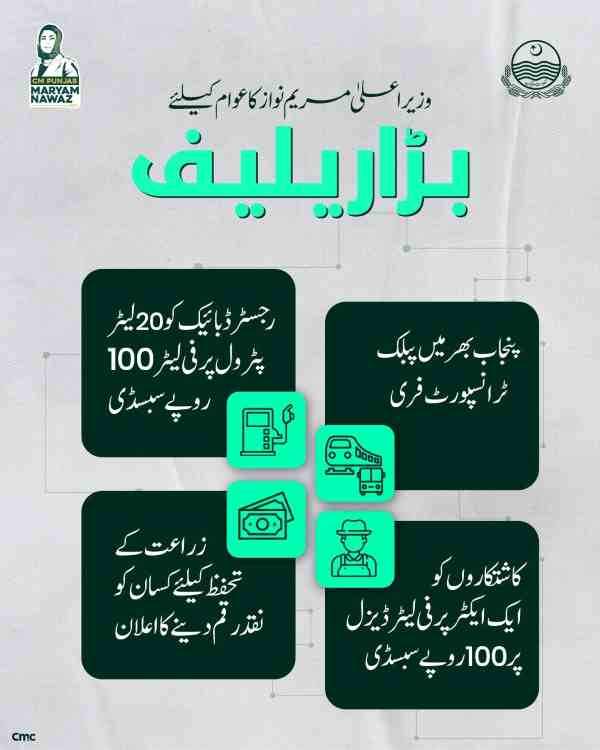
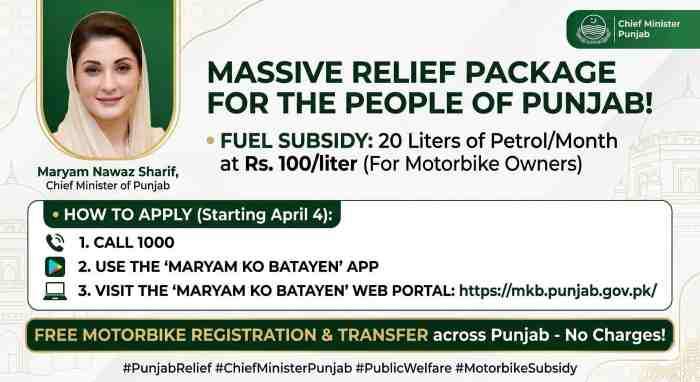
- Bike Fuel Subsidy: While the government also announced a separate Rs 100 per liter subsidy for motorbike owners, the agricultural diesel subsidy is substantially higher, reflecting the government’s priority on food security.
How does Sindh’s diesel subsidy for farmers compare?
The Punjab government has taken a clear lead in supporting its farmers.
- CM Sindh Diesel Subsidy Scheme: The Sindh government also announced a diesel subsidy scheme for farmers, particularly in the Karachi and interior Sindh regions.
- Per-Liter Amount in Sindh: The subsidy amount in Sindh is approximately Rs 100 per liter, which is Rs 50 less per liter than the Punjab scheme.
- Tenant Farmer Coverage: While both provinces cover tenant farmers, the Punjab scheme’s integration with the Kissan Card system offers a more streamlined and transparent process for verification and payment.
What is the “Fuel Subsidy Punjab” program for non-farmers?
The government has launched parallel programs for other segments of society.
- Separate Transport Subsidy: A separate fuel subsidy scheme exists for transport workers, but it has different eligibility criteria, often based on vehicle registration and route permits.
- General Public Relief: The “Fuel Subsidy Punjab” program for the general public, such as the motorbike fuel subsidy, is distinct from the farmer diesel subsidy in both amount and application process.
Future of the Diesel Subsidy Scheme – Will It Continue?
The future of the Diesel Subsidy Scheme depends on global oil prices, the fiscal budget of Punjab, and the political continuity of the current administration, but early indications suggest a possible expansion to rice and maize farmers.
Will the subsidy be extended to other crops?
The government is actively considering expanding the scope of the program.
- Consideration for Rice Farmers: The government has publicly stated that extending the subsidy to rice farmers is under active consideration for the next phase, depending on the success of the current wheat-focused rollout.
- Maize in the Next Phase: Maize is also being evaluated as a potential crop for inclusion in future phases of the diesel subsidy program.
- Horticulture Inclusion: While not an immediate priority, the long-term vision includes supporting horticulture farmers with input subsidies to boost fruit and vegetable production for both domestic consumption and export.
Will the per-acre diesel limit increase?
Discussions are underway to adjust the subsidy parameters based on real-world feedback.
- Proposal to Increase Limit: There is a strong proposal under review to increase the subsidized diesel limit from 10 liters per acre to 15 liters per acre to better reflect actual on-farm fuel consumption.
- Budgetary Implications: Increasing the limit to 15 liters per acre would require an additional Rs 11.5 billion in budget allocation, which is currently under evaluation by the finance department.
Frequently Asked Questions (FAQ) – Quick Answers to Farmer Queries
This FAQ section provides direct, one-sentence answers to the most common farmer questions about the Maryam Nawaz Diesel Subsidy Scheme, organized for quick reference.
Eligibility and Land Questions
- How many acres of land do I need to qualify for the subsidy? You need to own or cultivate up to a maximum of 25 acres, with no minimum land requirement.
- Is the diesel subsidy only for wheat farmers? Yes, in its current phase, the subsidy is exclusively for farmers cultivating wheat.
- Can tenant farmers (muzara) apply? Yes, tenant farmers can apply by providing a valid tenancy agreement or a cultivation certificate from the patwari.
- Are poultry or livestock farmers eligible? No, the subsidy is strictly for crop farmers, specifically wheat growers.
Application and Registration Questions
- How can I apply for the Punjab Diesel Subsidy Scheme? You can apply via the MKB web portal (mkb.punjab.gov.pk), the Maryam Ko Batayen app, or by calling the 1000 helpline.
- How do I register for the Diesel Subsidy Scheme via SMS? Send your CNIC number (without spaces) to 1000 to receive your eligibility status and further instructions.
- What documents are required for the diesel subsidy registration? You will need a valid CNIC, land ownership proof or tenancy agreement, and your bank account details.
- Do I need to visit the Agriculture Department office to apply? No, the process is designed to be completed online or over the phone, but in-person assistance is available at local offices if needed.
Payment and Disbursement Questions
- How will the subsidy amount be transferred to the farmers? The subsidy amount will be transferred directly to your registered bank account or loaded onto your Kissan Card.
- Will the subsidy be given in cash or as a discount at petrol pumps? It is a cash transfer to your bank account, not a discount at the pump.
- How long does the verification process take after applying? The verification process typically takes between 7 to 14 working days.
- What is the maximum limit of subsidized diesel per acre? The subsidy applies to a maximum of 10 liters of diesel per acre.
Problem-Solving Questions
- What should I do if my application for the diesel subsidy is rejected? You have 15 days to file an appeal at your local District Agriculture Office or through the MKB portal.
- Can I get the subsidy if my land is not registered in my name? Yes, as a tenant farmer, you can apply with a notarized tenancy agreement.
- Is there a helpline number for the Maryam Nawaz Diesel Subsidy Scheme? Yes, you can call the central helpline at 1000 for assistance.
- How do I check my eligibility status for the diesel subsidy online? Log in to the MKB portal and enter your CNIC number in the “Check Status” section.
Scope and Limitations Questions
- Is this subsidy available for farmers in Sindh or KPK? No, this scheme is exclusively for farmers who are residents of Punjab.
- Can farmers with more than 25 acres apply? No, the scheme is specifically capped at landowners with up to 25 acres.
- How many total farmers will benefit from the Rs 150/L subsidy? The program is expected to benefit approximately 4 million farmers across Punjab.
- What is the deadline to apply for the Punjab Diesel Subsidy? Check the official MKB portal for the current deadline, as it is typically set for 30 to 45 days from the announcement date.
Digital Platform Questions
- What is the official web portal for MKB Punjab gov pk registration? The official website is mkb.punjab.gov.pk.
- How do I use the “Maryam Ko Batayen” app for the diesel scheme? Download the app from the Google Play Store, register with your CNIC, and follow the in-app instructions for the diesel subsidy application.
- Which banks are processing the diesel subsidy payments? The designated banks include the Bank of Punjab, National Bank of Pakistan, HBL, and other major commercial banks.
- Is a Kissan Card mandatory to receive the Rs 150 diesel subsidy? No, it is not mandatory, but it is highly preferred for faster processing and automated disbursement
Conclusion: Final Summary and Action Plan for Punjab Farmers
The Maryam Nawaz Diesel Subsidy Scheme provides Rs 150 per liter on 10 liters per acre for up to 25 acres of wheat cultivation in Punjab, and eligible farmers should immediately register via the MKB portal or 1000 helpline before the deadline. The scheme represents a massive Rs 23 billion investment in the agricultural sector. Farmers are urged to register as soon as possible, gather all necessary documents, and use only official channels to apply. No payment is required for registration, and farmers should immediately report any requests for bribes to the 1000 helpline. For the latest updates, regularly check the MKB portal or your SMS messages.
Disclaimer: This information is based on the official government announcement of the scheme. While every effort has been made to ensure accuracy, farmers are advised to confirm all details through the official MKB portal or helpline before taking action.

Add a Comment