
What is the CM Punjab Field Hospital Program? It is a flagship healthcare initiative by Chief Minister Maryam Nawaz Sharif that deploys 32 fully equipped mobile medical units to deliver free, quality healthcare services directly to the doorstep of rural and underserved populations across Punjab. This comprehensive guide covers everything you need to know about accessing these life-changing medical services, from helpline numbers and unit locations to the complete range of free treatments available.
What you will learn from this guide:
- Program Overview: What the Field Hospital Program is and why it was launched
- Coverage Areas: Which districts and villages currently have field hospitals
- Free Services: Complete list of medical treatments, tests, and medicines available
- Access Methods: How to find units, contact helplines, and track schedules
- Quality Systems: How the Pay-for-Performance model ensures accountability
- Future Plans: Upcoming expansions and related health initiatives
Key Takeaways
- 32 Field Hospitals Deployed: The program operates 21 mobile healthcare units and 11 diagnostic investigation units across all 36 districts of Punjab, targeting areas with no permanent hospitals.
- Completely Free Services: All consultations, diagnostic tests including ultrasound, X-ray, ECG, laboratory investigations, and essential medicines are provided at no cost to patients.
- Doorstep Healthcare Delivery: Units visit pre-announced locations in rural areas, katchi abadis, and remote villages on scheduled days with full medical teams.
- Live Monitoring System: A 24/7 digital dashboard tracks performance, staff attendance, and patient outcomes in real-time to ensure quality service delivery.
- 30 Million Patients Served: Combined with the Clinic on Wheels initiative, the program has already provided medical care to nearly 30 million people across Punjab.
- Read More: CM Punjab School Nutrition Program: Districts and Food Items List
- Read More: Sehat Sahulat Program (By CM Punjab) | Free Insulin, Dialysis, & Medicines
- Read More: CM Punjab Dialysis Card | Free Dialysis Scheme (by CM Punjab)
CM Punjab Field Hospital Program (Area+Helpline)
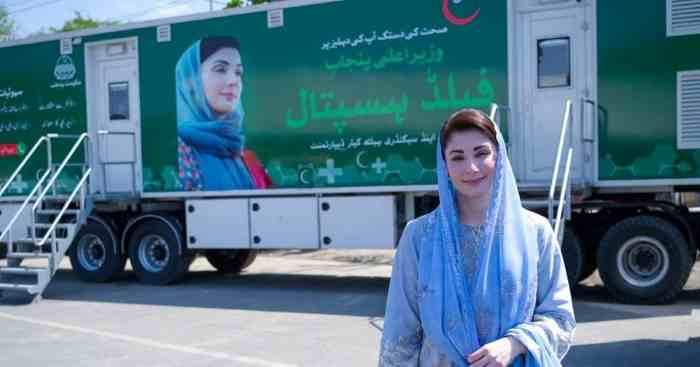
Table Of Contents
What is the CM Punjab Field Hospital Program? An In-Depth Overview
The CM Punjab Field Hospital Program is a revolutionary healthcare delivery system launched by Chief Minister Maryam Nawaz Sharif that uses 32 state-of-the-art mobile medical units to provide comprehensive health services to rural and underserved populations across Punjab. This initiative fundamentally transforms how healthcare reaches citizens by bringing fully equipped hospitals directly to communities that lack permanent medical facilities.
What is the official definition of the CM Punjab Field Hospital Program?
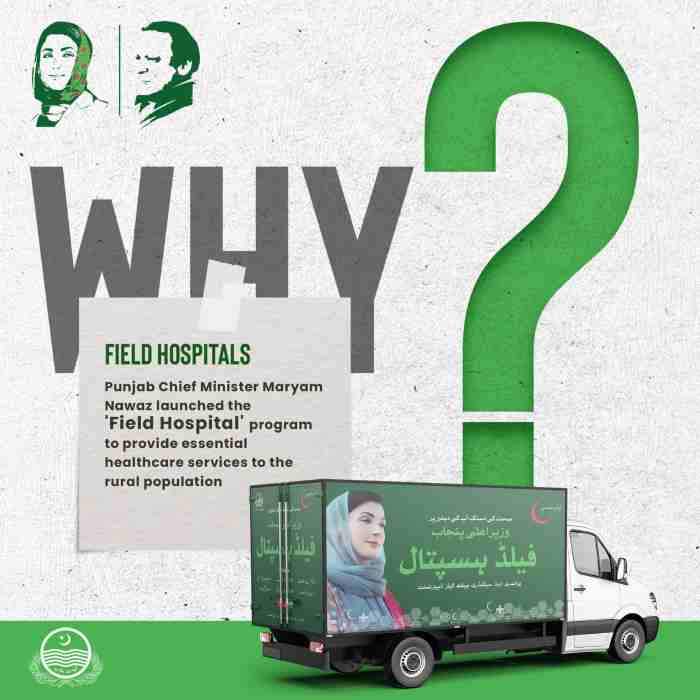
The official definition describes it as a mobile healthcare initiative deploying 21 mobile healthcare units and 11 specialized investigation units (diagnostic units) to deliver essential medical services in rural areas where hospitals or clinics are unavailable. These air-conditioned container-based units function as complete mini-hospitals, equipped with diagnostic laboratories, ultrasound machines, ECG facilities, X-ray equipment, and fully stocked pharmacies.
When was the CM Punjab Field Hospital Program officially launched?
Chief Minister Maryam Nawaz Sharif formally launched the Field Hospital Program in May 2024 after granting official approval during the 5th health reforms meeting in March 2024. The project moved from approval to operational status in just six weeks, demonstrating the government’s urgent commitment to addressing healthcare gaps. The speed of implementation required coordinated efforts between the Health Department, Communication and Works Department, and multiple agencies to convert containers into fully functional medical facilities.
Why did the Punjab Government launch the Field Hospital Program?
Addressing the healthcare gap in remote rural areas: Millions of Punjab residents live in villages and remote areas with no access to hospitals, clinics, or basic medical facilities. These populations previously traveled hours or days to reach the nearest healthcare center, often delaying treatment until conditions became critical.
The challenge of inaccessible Basic Health Units (BHUs) and Rural Health Centers (RHCs): While Punjab has a network of BHUs and RHCs, many remain non-functional due to staff shortages, lack of equipment, or medicine unavailability. The Field Hospital Program bypasses these infrastructure problems by bringing complete, self-sufficient medical units directly to communities.
How is the CM Punjab Field Hospital Program different from traditional hospitals?
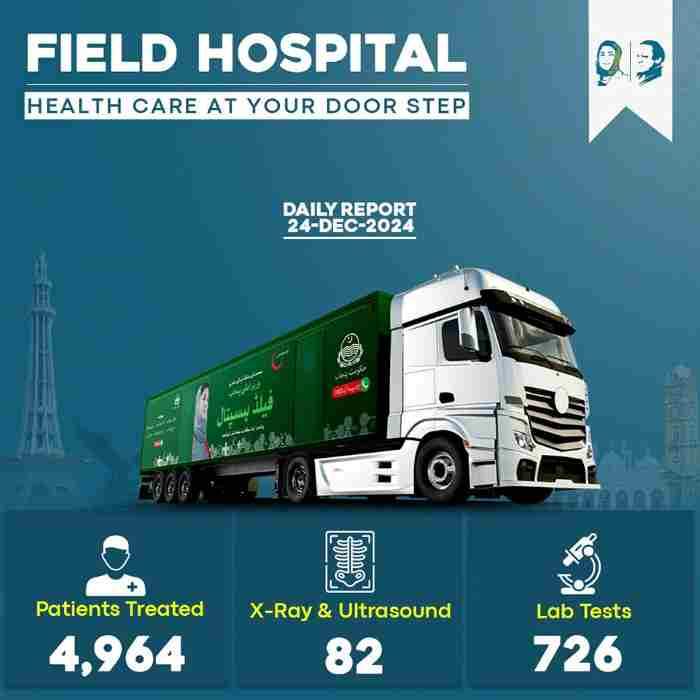
The concept of “healthcare on wheels”: Unlike static brick-and-mortar hospitals that require patients to travel, field hospitals travel to patients. Each unit operates on a scheduled route, parking at central village locations where residents can walk in for treatment without travel costs or time away from work.
The use of converted, air-conditioned containers as medical units: The program repurposes shipping containers into modern, air-conditioned medical facilities. Each container is divided into functional areas including consultation rooms, diagnostic bays, laboratory space, and pharmacy counters. The mobile design allows units to relocate as community needs change.
Is the CM Punjab Field Hospital Program a permanent or temporary setup?
The program operates on a rotational permanent basis. While individual units move between locations, the program itself is a permanent addition to Punjab’s healthcare system. Units continuously cycle through rural areas, returning to communities on regular schedules to ensure ongoing access. This mobility allows maximum coverage with minimum infrastructure investment.
What is the total number of units under the CM Punjab Field Hospital Program?
Breakdown: 21 Mobile Healthcare Units and their function: The 21 mobile healthcare units serve as comprehensive primary care centers. Each unit carries a full medical team including doctors, lady health visitors, vaccinators, and paramedics. These units handle general consultations, maternal and child health services, immunizations, first aid, and chronic disease management.
Breakdown: 11 Mobile Diagnostic Units (Investigation Units) and their specialized role: The 11 investigation units focus exclusively on diagnostic services. They carry advanced equipment including ultrasound machines, X-ray systems, ECG machines, and laboratory testing facilities. These units either operate independently in areas with high diagnostic needs or accompany healthcare units to provide comprehensive one-stop medical services.
Field Hospital Program Coverage: Which Areas and Districts Are Included?
The CM Punjab Field Hospital Program extends across all 36 districts of Punjab, with strategic deployment prioritizing areas having the greatest healthcare access gaps. The coverage strategy ensures that no citizen, regardless of how remote their location, remains beyond the reach of quality medical services.
Which districts in Punjab are currently covered by the Field Hospital Program?
All 36 districts of Punjab currently receive field hospital services, including:
- Northern Punjab: Rawalpindi, Attock, Jhelum, Chakwal, Murree
- Central Punjab: Lahore, Gujranwala, Gujrat, Sialkot, Mandi Bahauddin, Hafizabad
- Western Punjab: Sargodha, Khushab, Mianwali, Bhakkar
- Southern Punjab: Multan, Bahawalpur, Dera Ghazi Khan, Rahim Yar Khan, Muzaffargarh, Layyah, Rajanpur, Lodhran, Khanewal, Vehari
- Eastern Punjab: Faisalabad, Toba Tek Singh, Jhang, Chiniot, Okara, Pakpattan, Sahiwal
- Other districts: Nankana Sahib, Sheikhupura, Kasur, Narowal
How does the government decide which area gets a field hospital?
The Primary and Secondary Healthcare Department uses a data-driven priority system based on:
- Distance to nearest permanent healthcare facility: Areas farthest from hospitals receive priority
- Population density: Villages with larger populations get scheduled visits more frequently
- Health indicators: Areas with high maternal mortality, infant mortality, or disease burden receive priority
- Infrastructure gaps: Locations with non-functional BHUs or RHCs are prioritized
- Community requests: Local representatives and community health inspectors report needs to scheduling authorities
Are the CM Punjab Field Hospitals available in remote and hilly areas like Murree?
Yes, field hospitals actively serve challenging terrain including Murree and other hilly areas. Chief Minister Maryam Nawaz personally conducted surprise visits to field hospitals in Murree to review facilities and service quality. Units operating in mountainous regions use specially adapted vehicles and schedules that account for road conditions and weather patterns, ensuring year-round access for these isolated communities.
What does “Katchi Abadis” coverage mean for the Field Hospital Program?
Katchi abadis refers to informal settlements and slum areas, typically on urban peripheries, that lack formal healthcare infrastructure. The Field Hospital Program specifically targets these underserved communities alongside the parallel Clinic on Wheels initiative, which deploys 200 units dedicated to semi-urban and katchi abadi residents. This dual approach ensures comprehensive coverage of all population segments regardless of housing status or documentation.
Is the CM Punjab Field Hospital Program active in major cities like Lahore?
Clarifying the rural vs. urban focus of the program: While the program primarily targets rural areas lacking healthcare infrastructure, it also serves peri-urban and underserved pockets within major cities. In Lahore, field hospitals deploy to peripheral zones, katchi abadis, and areas where permanent facilities remain inaccessible. However, the program’s core mandate remains serving populations without alternative healthcare access.
What is the coverage area for South Punjab under this healthcare scheme?
South Punjab receives extensive coverage due to its historically limited healthcare infrastructure. Districts including Bahawalpur, Multan, Dera Ghazi Khan, Rahim Yar Khan, Muzaffargarh, Layyah, Rajanpur, Lodhran, Khanewal, and Vehari have multiple field hospital units rotating through their rural areas. The government has established three medical centers in South Punjab as part of the broader healthcare expansion, complementing the mobile units with permanent facilities.
How can I find out if my village is on the route of a CM Punjab Field Hospital?
Introduction to the schedule release and community announcements: The Health Department publishes monthly schedules through multiple channels. Village announcements occur 24-48 hours before a unit’s arrival through mosque loudspeakers, local councilors, and community health workers. Schedules also appear on the official Punjab government website (punjab.gov.pk) and are shared through district health office WhatsApp groups. Residents can also call the 1033 helpline to inquire about upcoming visits to their area.
Are all 36 districts of Punjab targeted by the Field Hospital Program?
Yes, the program explicitly targets universal coverage across all 36 districts. Chief Minister Maryam Nawaz stated at the inaugural ceremony that field hospitals would serve every district of Punjab, bringing healthcare rights to residents of both remote villages and katchi abadis. The deployment strategy rotates units between districts to ensure equitable access over time.
Services and Facilities: What Medical Treatments Are Available for Free?
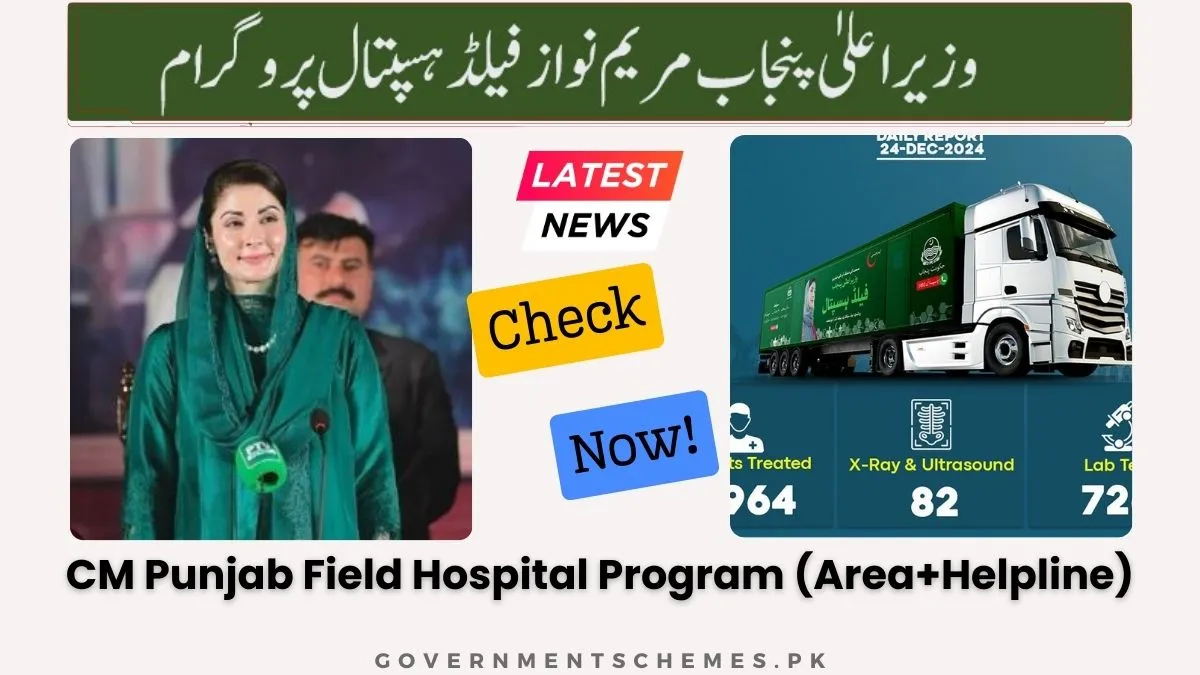
The CM Punjab Field Hospital Program provides a comprehensive range of medical services completely free of charge. From basic consultations to advanced diagnostics, patients receive quality care without any financial burden. This section details exactly what services you can expect when visiting a field hospital unit.
What medical services are offered at the CM Punjab Field Hospitals?
Outpatient Department (OPD): General consultations and check-ups
Qualified medical officers conduct thorough consultations for patients of all ages. Doctors diagnose conditions, prescribe treatments, and refer complex cases to specialized facilities. Each unit handles 100-200 patients daily, with extended hours during peak seasons.
Diagnostic Services: Laboratory tests, X-rays, Ultrasound (USG), and ECG facilities
The investigation units perform:
- Complete blood counts and basic hematology
- Urinalysis and stool examinations
- Blood glucose testing
- Malaria and typhoid rapid tests
- Pregnancy tests
- X-ray imaging for fractures and chest conditions
- Ultrasound scans for abdominal and obstetric cases
- Electrocardiograms (ECG) for cardiac assessment
Pharmacy: Are free medicines available at CM Punjab Field Hospitals?
Yes, all essential medicines are provided free of charge. Each field hospital carries a comprehensive pharmacy stock including:
- Antibiotics and anti-infectives
- Pain relievers and anti-inflammatories
- Antihypertensives and cardiac medications
- Diabetes medications including insulin
- Respiratory medications including inhalers
- Gastrointestinal drugs
- Skin creams and ointments
- Vitamins and nutritional supplements
- Maternal health supplements including iron and folic acid
Maternal and Child Healthcare: Antenatal care (ANC), immunization (EPI), and family planning services
- Complete antenatal checkups including blood pressure monitoring, fetal heart rate checks, and growth assessments
- Tetanus vaccination for pregnant women
- Postnatal checks for mothers and newborns
- Expanded Program on Immunization (EPI) vaccines for children including polio, measles, BCG, pentavalent, and pneumococcal vaccines
- Family planning counseling and contraceptives
- Nutrition counseling for mothers and children
First Aid and Emergency Management: Handling minor injuries and stabilizing patients
- Wound cleaning and dressing
- Fracture immobilization with splints
- Management of minor burns
- Treatment of animal bites and rabies prevention
- Acute allergic reaction management
- Stabilization of emergency cases for hospital transfer
- Oxygen administration for respiratory distress
School Nutrition and Health Programs: Services for children
- Growth monitoring and nutritional assessment
- Deworming campaigns
- Vision and hearing screening
- Dental checkups and basic dental care
- Health education sessions for children and teachers
Are there specialized doctors available in the mobile units?
Each mobile healthcare unit carries at least one qualified medical officer (MBBS doctor). Investigation units have trained technicians and paramedics for diagnostic services. While specialized consultants are not permanently stationed, the units maintain referral linkages with district headquarters hospitals for complex cases requiring specialist attention.
Do the CM Punjab Field Hospitals provide vaccinations for children?
Yes, comprehensive childhood immunization services are a core component. Vaccinators stationed at each unit provide all EPI vaccines according to the national schedule. The program actively targets zero-dose children in remote areas who have missed routine immunization, contributing to Punjab’s goal of universal vaccination coverage.
Can I get a free X-ray or ultrasound at a Punjab mobile health unit?
Yes, both X-ray and ultrasound services are available free of charge at the investigation units. These diagnostic services are essential for accurate diagnosis of fractures, pneumonia, tuberculosis, pregnancy complications, abdominal conditions, and various other medical issues. Patients receive results immediately, allowing doctors to prescribe appropriate treatment during the same visit.
Are laboratory tests free of cost at the CM Punjab Field Hospitals?
Absolutely. All laboratory tests performed at field hospital investigation units are completely free. Patients pay nothing for blood tests, urine tests, or any other diagnostic procedures. The program covers all reagent costs, equipment maintenance, and staff salaries through government funding.
Does the program provide medicines for chronic diseases like Hepatitis, TB, and cardiac ailments?
Doorstep delivery of medicines for chronic patients: The program goes beyond on-site treatment by delivering chronic disease medications directly to patients’ homes. Hepatitis, tuberculosis, and cardiac patients registered with the program receive regular medicine supplies through community health workers and Lady Health Workers, ensuring treatment continuity without requiring repeated visits.
The increase in funding for cancer medicines (from Rs. 2 Billion to Rs. 6 Billion): The government dramatically expanded cancer treatment funding from Rs. 2 billion to Rs. 6 billion, restoring and enhancing free cancer medicine supplies. This increase ensures cancer patients receive uninterrupted treatment, addressing previous complaints about medicine shortages.
Are there Lady Health Workers (LHWs) and vaccinators available at these field hospitals?
Yes, each field hospital unit includes Lady Health Workers and vaccinators as essential team members. LHWs conduct community outreach, identify pregnant women and children needing services, provide health education, and follow up with patients after visits. Vaccinators maintain vaccine cold chains and administer all EPI vaccines according to protocols.
How to Access the Program: Helpline, Schedule, and Locations
Accessing CM Punjab Field Hospital services requires knowing when and where units will be available. This section provides complete guidance on contacting helplines, tracking schedules, and locating the nearest unit to your area.
How can I contact the CM Punjab Field Hospital helpline?
Is 1033 the helpline number for CM Punjab Field Hospitals?
Yes, 1033 serves as the dedicated helpline for the Primary and Secondary Healthcare Department, handling all inquiries related to field hospitals, clinic on wheels, and other health services. Citizens can call from any phone to:
- Inquire about field hospital schedules in their area
- Report issues or complaints about services
- Request information about available services
- Provide feedback on service quality
- Seek guidance on accessing specific treatments
What is the official helpline for the Primary and Secondary Healthcare Department?
The Primary and Secondary Healthcare Department operates multiple contact channels:
- Toll-free helpline: 1033 (available 24/7)
- Complaint cell: Dedicated numbers for each district available on department website
- CM Special Monitoring Unit: Direct reporting channel for serious issues
- District Health Officers: Contact numbers for each district published on official websites
Alternative contact methods: Is there an official website or WhatsApp number?
- Official website: punjab.gov.pk provides program information, schedules, and contact details
- WhatsApp groups: District health offices operate WhatsApp groups for community health workers and local representatives to share schedule updates
- Facebook pages: Official district health department pages post schedule announcements
- Mobile app: The government is developing a dedicated health services app for real-time tracking
How do I find the location of the nearest CM Field Hospital?
Step-by-step guide to checking the mobile unit schedule:
- Call 1033: Provide your village or town name to the helpline operator for immediate schedule information
- Visit punjab.gov.pk: Navigate to the Health Department section for published schedules
- Contact your Union Council office: Local government offices receive weekly schedules
- Ask your Lady Health Worker: LHWs have complete schedule information for their catchment areas
- Listen for announcements: Village announcements occur 24-48 hours before unit arrival
- Check with local mosque: Imams often announce healthcare schedules after prayers
- Contact District Health Officer: The DHO office maintains master schedules for all units in the district
Using the official Punjab government website (punjab.gov.pk) for updates: The website features a dedicated health services portal with downloadable PDF schedules, interactive maps showing unit locations, and real-time updates on schedule changes due to weather or other factors.
How can I track the schedule of a mobile clinic in my area today?
For same-day tracking:
- Call 1033 and select the schedule inquiry option
- Check district health department social media pages for last-minute updates
- Contact your local health facility (BHU/RHC) which receives daily updates
- Ask community health inspectors who work in your area
Do I need an appointment to visit a CM Punjab Field Hospital, or is it walk-in?
All field hospitals operate on a walk-in basis. No appointments or pre-registration are required. Patients simply come to the unit location during operating hours and register at the entrance. The registration process takes 2-3 minutes and collects basic information for record-keeping. Patients are seen on a first-come, first-served basis, though priority is given to elderly patients, pregnant women, and those with visible emergencies.
Will there be an announcement in my village when the field hospital arrives?
Yes, the program requires advance community notification. Standard practice includes:
- Announcements through mosque loudspeakers the evening before arrival
- Information shared with local councilors and community leaders
- Lady Health Workers informing households in their catchment areas
- Posters displayed at union council offices, schools, and local markets
- Mobile phone alerts in areas with good network coverage
Which areas in South Punjab have active field hospitals this month?
For current information, contact the respective District Health Officers or call 1033. The schedule rotates monthly to ensure coverage across all districts. South Punjab typically maintains 10-12 active units at any time, distributed across Multan, Bahawalpur, Dera Ghazi Khan, and other divisions.
Is there a specific phone number for rural healthcare complaints in Punjab?
The role of the Chief Minister’s Special Monitoring Unit (SMU): The CM’s SMU maintains a separate complaint channel for serious issues. Citizens can report:
- Staff absenteeism or misconduct
- Medicine shortages or quality issues
- Equipment malfunctions
- Denial of services
- Any form of corruption or bribery
Reports can be made through the CM’s office website or by calling the Citizen Portal (app based) which forwards complaints to SMU for immediate action.
Contacting the Community Health Inspector for your area: The newly launched Community Health Inspectors Programme deployed 55,000 trained inspectors across Punjab. Each inspector covers specific villages and serves as a direct contact point for healthcare complaints. Inspectors carry government-issued IDs and are authorized to address issues immediately or escalate through official channels. They also conduct household visits to check on patients and verify service quality.
How to report a problem with a field hospital in my village?
- Call 1033: Report the issue directly to the helpline, noting the unit number and location
- Contact District Health Officer: The DHO has authority to address operational issues
- Use Citizen Portal: CM’s citizen complaint app forwards issues to relevant departments
- Inform Community Health Inspector: Inspectors document and escalate problems
- Visit during CM’s open kutchery: Public meetings allow direct complaint submission
The Pay-for-Performance Model: Ensuring Quality and Accountability
The CM Punjab Field Hospital Program incorporates an innovative Pay-for-Performance Model that fundamentally changes how healthcare providers are incentivized. This approach links financial rewards directly to patient outcomes and service quality, ensuring accountability at every level.
What is the “Pay-for-Performance Model” in the CM Punjab Field Hospital Program?
The Pay-for-Performance Model is a healthcare financing mechanism that ties provider compensation to measurable performance metrics rather than fixed salaries alone. Under this system, doctors, nurses, and support staff receive base pay plus performance bonuses based on:
- Patient satisfaction scores
- Number of patients treated
- Quality of care indicators
- Diagnostic accuracy
- Medicine dispensing efficiency
- Patient follow-up rates
- Health outcome improvements
How does the Pay-for-Performance model improve healthcare quality?
Linking financial rewards to patient outcomes and performance metrics: Healthcare providers have direct financial incentives to deliver excellent care. When patients receive proper diagnosis, appropriate treatment, and complete recovery, providers earn higher compensation. This aligns provider interests with patient interests, eliminating the moral hazard where providers might rush through patients or provide substandard care.
Incentivizing doctors and staff to provide high-quality care: The model encourages:
- Thorough patient consultations
- Accurate diagnoses to avoid repeat visits
- Proper medicine prescribing
- Patient education about treatment compliance
- Friendly and respectful bedside manner
- Efficient use of diagnostic equipment
- Complete documentation and record-keeping
How is the CM Punjab Field Hospital Program monitored for quality?
The 24/7 Live Dashboard: How does it track performance in real-time?
A centralized digital dashboard collects data from all 32 field hospitals in real-time. The dashboard displays:
- Current location of each unit with GPS tracking
- Number of patients seen daily, weekly, and monthly
- Staff attendance and duty hours
- Diagnostic tests performed by type
- Medicines dispensed by category
- Patient satisfaction scores from digital surveys
- Referral rates to higher facilities
- Any equipment malfunctions or service interruptions
Senior officials including the Chief Minister can access the dashboard anytime, enabling immediate intervention if any unit underperforms. Green-yellow-red status indicators highlight units needing attention.
Field visits by the Chief Minister and senior officials: Surprise inspections form a key accountability mechanism. Chief Minister Maryam Nawaz personally conducts unannounced visits to field hospital locations, as demonstrated by her Murree inspection where she reviewed facilities and interacted with patients. These visits send clear signals that quality is monitored from the highest level.
Surprise inspections by the Special Monitoring Unit (SMU): The CM’s SMU deploys monitoring teams to conduct random checks of field hospital operations. Inspectors verify:
- Staff presence against attendance records
- Medicine stocks against dispensing logs
- Equipment functionality
- Patient registration accuracy
- Patient satisfaction through exit interviews
What happens if a field hospital is underperforming or has staff attendance issues?
The program includes clear accountability mechanisms:
- First warning triggers immediate corrective action plan
- Repeated issues lead to salary deductions through Pay-for-Performance adjustments
- Staff transfers or replacement for persistent problems
- Contract termination for serious violations
- Public disclosure of performance data to maintain transparency
The live dashboard flags underperforming units automatically, triggering supervisory visits within 24 hours.
Understanding the Difference: Field Hospitals vs. Other Punjab Health Initiatives
Punjab operates multiple healthcare programs serving different populations and needs. Understanding how the CM Punjab Field Hospital Program relates to and differs from other initiatives helps citizens access the most appropriate services for their situations.
How is the CM Punjab Field Hospital Program different from the “Clinic on Wheels”?
Scope: 32 Field Hospitals vs. 200 Clinics on Wheels
The Field Hospital Program operates 32 large, fully equipped units serving deeply rural areas. The Clinic on Wheels initiative deploys 200 smaller units focusing on semi-urban areas and katchi abadis. The larger scale allows coordinated operation and comprehensive service delivery.
Target audience: Rural vs. Semi-urban and Katchi Abadies
Field hospitals target rural populations lacking any permanent healthcare access. Clinic on Wheels serves semi-urban populations, urban slums, and areas with partial healthcare coverage. The two programs complement each other to ensure universal coverage across all settlement types.
Services offered: Diagnostic depth comparison
Field hospitals include comprehensive diagnostic capabilities (X-ray, ultrasound, ECG, laboratory) within each unit or through paired investigation units. Clinic on Wheels units provide basic diagnostics and consultations, referring complex cases to field hospitals or permanent facilities.
What is the difference between a Field Hospital and a revamped BHU/RHC?
Basic Health Units (BHUs) and Rural Health Centers (RHCs) are permanent brick-and-mortar facilities being systematically upgraded across Punjab. The government allocated Rs. 16 billion for upgrading 2,500 BHUs and 300 RHCs. Field hospitals serve areas where these permanent facilities remain unavailable or during the upgrade period when BHUs are temporarily closed for renovation. Once upgraded BHUs become fully operational, field hospitals rotate to other underserved areas.
How does the CM Punjab Field Hospital Program relate to the “Sehat Card” (Health Card)?
Is the Sehat Card valid at Field Hospitals?
The Sehat Card (Health Card) program provides cashless treatment at empaneled public and private hospitals for tertiary care. Field hospitals provide primary and secondary care services directly, so patients do not need Sehat Cards to access them. However, field hospitals can refer patients needing specialized care to Sehat Card empaneled hospitals where the card covers treatment costs.
Addressing complaints about the Health Card program: Chief Minister Maryam Nawaz acknowledged complaints about the Health Card program, noting that while Nawaz Sharif originally created a wonderful project with no complaints, issues emerged after 2018 when healthcare was made a bastion of corruption. The government is addressing these complaints through transparency measures and improved oversight.
List of Sehat Card hospitals vs. Field Hospital services: Sehat Card covers hospitalization, surgeries, and specialized treatments at over 350 public and private hospitals. Field hospitals provide outpatient care, diagnostics, and medicines at the community level. The two systems work together, with field hospitals serving as entry points and referral sources for hospitalization when needed.
CM Punjab Field Hospital vs. Maryam Nawaz Health Clinic: Are they the same?
Maryam Nawaz Health Clinics refer to the upgraded and newly established basic health units operating under the broader health reforms. While Field Hospitals are mobile units, Maryam Nawaz Health Clinics are permanent facilities being renovated to modern standards. Both carry the Chief Minister’s name but serve different functions—mobile versus fixed-site delivery.
Is this program part of the larger PM Health Program?
The Field Hospital Program operates under Punjab’s provincial health budget, separate from the federal PM Health Program. However, both programs coordinate through the National Health Vision to ensure complementary coverage and avoid duplication. The provincial program focuses on primary care access, while federal programs often target specialized tertiary care.
Expansion and Future Plans: What’s Next for the Program?
The CM Punjab Field Hospital Program represents phase one of a comprehensive healthcare transformation. Multiple expansion plans and complementary initiatives are already underway to create an integrated, accessible health system across Punjab.
Is the CM Punjab Field Hospital Program being expanded?
Plans for more Tehsil-level coverage: Chief Minister Maryam Nawaz has announced expansion plans to bring field hospitals to every tehsil (sub-district) level. The current 32 units will increase to ensure more frequent visits to each community and shorter waiting periods between rotations.
Integration with the expanded “Clinic on Wheels” network: The 200 Clinic on Wheels units will be fully integrated with field hospital scheduling to ensure seamless coverage. Patients needing services beyond basic care will receive direct referrals from Clinics on Wheels to nearby field hospitals, creating a coordinated mobile health network.
What other health projects complement the Field Hospital Program?
The upcoming Air Ambulance Service: Launch date and purpose
Pakistan’s first air ambulance service is scheduled for launch, with training already completed. The service will transport critically ill patients from remote areas to tertiary care hospitals within the golden hour, dramatically improving survival rates for heart attacks, strokes, severe trauma, and obstetric emergencies. The air ambulance specifically serves poor citizens who cannot afford private air transport.
Revamping of 2,500 BHUs and 300 RHCs across Punjab
The government released Rs. 16 billion immediately to begin upgrading rural health infrastructure. Renovations include:
- New building construction and repairs
- Modern medical equipment installation
- Staff housing improvements
- Medicine storage facilities
- Ambulance procurement
- Solar power systems for uninterrupted operations
- Digital record-keeping systems
New cardiology institutes in Sargodha, Sahiwal, and Murree
PC-I for Nawaz Sharif Institute of Cardiology Sargodha is completed with June 2026 target completion. Similar institutes in Sahiwal and Murree will follow, bringing specialized cardiac care closer to rural populations. Cath labs in Jhelum and Jhang are also being established.
The plan for state-of-the-art hospitals with cancer and cardiology units in every district
Chief Minister Maryam Nawaz has committed to building modern hospitals with cardiology and cancer units in every district within five years. The first medical city is under development in Lahore, and a specialized cancer hospital for poor patients is planned.
What is the status of the Muhammad Nawaz Sharif Cancer Hospital in Lahore?
The 250-bed Muhammad Nawaz Sharif Cancer Hospital in Lahore is scheduled for completion by June 2026. This specialized facility will provide comprehensive cancer care including chemotherapy, radiation therapy, and surgical oncology services, with a focus on serving underprivileged patients.
Impact and Statistics: The Program’s Success So Far
The CM Punjab Field Hospital Program has achieved remarkable reach since its launch, transforming healthcare access for millions of Punjab residents. This section presents the data demonstrating the program’s impact.
How many patients have benefited from the CM Punjab Field Hospital Program?
Data on patients served (e.g., nearly 30 million combined with Clinics on Wheels): As of early 2026, the combined Field Hospital and Clinic on Wheels initiatives have provided medical care to nearly 30 million people across Punjab. This figure represents approximately one-quarter of Punjab’s population, demonstrating unprecedented healthcare access expansion.
Annual patient target for the Field Hospitals (e.g., 1.5 million): The Field Hospital Program alone aims to serve over 1.5 million patients annually in its current configuration. With planned expansion, this target will increase significantly.
What is the patient feedback on the quality of services?
Patient satisfaction surveys conducted by the SMU indicate high approval rates, with particular appreciation for:
- No-cost services eliminating financial barriers
- Friendly and respectful staff behavior
- Availability of diagnostic services previously inaccessible
- Clean and air-conditioned facilities
- No need for travel to distant cities
- Doorstep medicine delivery for chronic conditions
Success stories from rural Punjab: How Field Hospitals are changing lives
Case Study 1: Early Detection Saves Lives
A 55-year-old farmer in rural Bahawalnagar received a routine blood sugar check at a field hospital, revealing dangerously high levels requiring immediate intervention. Treatment prevented progression to diabetic coma, and the patient now receives regular medication through doorstep delivery.
Case Study 2: Safe Delivery in Remote Area
A pregnant woman in Muzaffargarh district with no previous antenatal care visited a field hospital at 8 months. Ultrasound revealed placenta previa requiring hospital delivery. The unit arranged ambulance transfer to DHQ hospital, ensuring safe delivery for mother and child.
Case Study 3: Child Vaccination Completion
A family in Rajanpur with five children had never received vaccinations due to distance from health facilities. Field hospital visits enabled complete immunization for all children, protecting them from preventable diseases.
The economic impact: Reducing travel costs for poor families seeking medical care
Previous healthcare access required:
- Rs. 500-2000 per trip for transport to nearest town
- Full day lost from work (average daily wage Rs. 500-800)
- Additional costs for food and accommodation during overnight stays
- Lost wages for family members accompanying patients
Field hospitals eliminate all these costs, representing effective income transfer of thousands of rupees per family annually. For chronic disease patients requiring monthly visits, annual savings reach Rs. 50,000-100,000 per family.
Frequently Asked Questions (FAQs) About the CM Punjab Field Hospital Program
Are the medical services at Punjab field hospitals really 100% free?
Yes, absolutely 100% free. No fees are charged for registration, consultation, diagnostic tests including ultrasound, X-ray, ECG, laboratory investigations, or medicines. The government covers all costs to ensure no financial barrier prevents anyone from accessing healthcare. If any staff member requests payment, citizens should immediately report through helpline 1033.
What are the operating hours for the CM Punjab mobile health units?
Field hospitals typically operate from 9:00 AM to 5:00 PM, six days a week. Friday operations may have adjusted hours for prayers. Units remain at each location for 1-3 days depending on population size and healthcare needs. Exact hours for specific locations can be confirmed through the 1033 helpline.
Do the field hospitals provide maternal and child healthcare like deliveries?
Field hospitals provide comprehensive antenatal care, postnatal checks, immunizations, and family planning services. However, they do not conduct deliveries due to space limitations and the need for sterile operating environments. Pregnant women identified as high-risk or near term receive referrals to appropriate facilities with ambulance transport arranged if needed.
Is there an emergency contact for the mobile medical units after hours?
For medical emergencies outside operating hours, citizens should contact the nearest government hospital, call 1122 (rescue service), or reach their district health authority. The 1033 helpline operates 24/7 for information and complaints but is not an emergency medical service.
Can I get a diabetes or blood pressure check-up at a field hospital?
Yes, blood sugar testing and blood pressure monitoring are standard services at all field hospital units. Patients with known diabetes or hypertension can receive regular checkups and medication refills. Newly diagnosed patients receive treatment initiation and ongoing management support.
How do I apply online for the CM Punjab Health Program registration?
No registration is required for field hospital services—simply walk in. For other health programs including Sehat Card and specialized treatment schemes, visit the Punjab Health Department portal linked through punjab.gov.pk. The Community Health Inspectors Programme will soon create digital health profiles for every household, automatically registering all family members for available services.
Is there a list of Maryam Nawaz Health Clinics near me?
Maryam Nawaz Health Clinics refer to upgraded BHUs and RHCs. The complete list with locations and contact information is available on the Punjab Health Department website. You can also call 1033 to locate the nearest functional BHU or RHC to your area.
What is the role of the new Community Health Inspectors in this program?
The Community Health Inspectors Programme deployed 55,000 trained inspectors who conduct household visits, perform basic diagnostic tests including blood sugar checks, administer essential injections, create digital health profiles, and refer patients to field hospitals or other facilities. They serve as the direct link between communities and the healthcare system, ensuring no household is missed.
Are there any lab tests available that are not free?
No, all lab tests performed at field hospital investigation units are completely free. The program does not charge for any diagnostic service. If external tests are required at private laboratories due to equipment limitations, patients receive referrals with information about free testing options at government facilities where available.
Conclusion: A New Era of Public Health in Punjab
The CM Punjab Field Hospital Program represents a fundamental shift in how government approaches public health—moving from reactive, facility-based care to proactive, community-centered service delivery. By bringing fully equipped hospitals directly to people’s doorsteps, the program eliminates the distance, cost, and time barriers that previously kept millions from accessing healthcare. The 32 units operating across all 36 districts have already touched nearly 30 million lives, and expansion plans promise even greater coverage.
The government’s commitment to “proactive governance” and preventive healthcare means diseases are caught early, treatment begins immediately, and health outcomes improve across entire communities. Combined with the Clinic on Wheels initiative, upgraded BHUs and RHCs, air ambulance service, and specialized hospital construction, the Field Hospital Program creates an integrated healthcare safety net that catches every citizen before they fall through the cracks.
Call to Action: Save the 1033 helpline number in your phone today. Check the schedule for your area and visit a field hospital when it arrives—whether for a checkup, vaccination, or chronic disease management. Share this guide with family and neighbors so everyone knows how to access these life-changing free services. Healthcare is now at your doorstep. Use it.
Disclaimer: This article provides information based on publicly available sources about the CM Punjab Field Hospital Program. While every effort has been made to ensure accuracy, readers should verify current schedules, locations, and services through official channels including the 1033 helpline and punjab.gov.pk before visiting.
How does the Field Hospital Program coordinate with the Community Health Inspectors Programme?
Community Health Inspectors conduct household visits to identify individuals needing medical attention, check on chronic disease patients, and inform families about upcoming field hospital visits. They maintain direct communication with field hospital staff, ensuring continuity of care between mobile unit visits. Inspectors also follow up with patients after field hospital visits to check treatment compliance and recovery.
What documentation do I need to bring to access field hospital services?
No documentation is required. Simply visit the unit during operating hours. For chronic disease patients seeking medication refills, bringing previous prescription records helps doctors maintain treatment continuity, but this is not mandatory. The program deliberately minimizes documentation requirements to eliminate barriers for the poorest and most marginalized populations.
Are there field hospitals specifically for women and children?
All field hospitals serve patients of all ages and genders. The presence of Lady Health Workers and female doctors on most units ensures women feel comfortable seeking care. Maternal and child health services are core program components, with dedicated protocols for antenatal care, safe delivery referrals, and complete childhood immunization.
How are medicine stocks maintained in remote locations?
A centralized supply chain management system tracks medicine consumption at each unit in real-time through the live dashboard. Replenishment orders generate automatically when stocks reach minimum levels. Dedicated logistics vehicles deliver supplies to units wherever they are located, ensuring continuous medicine availability even in the most remote areas.
Can I request a specific field hospital location for my village?
Yes, requests can be submitted through:
- Your Union Council representative
- District Health Officer
- 1033 helpline
- Community Health Inspector
- CM Citizen Portal
All requests are evaluated based on need assessment criteria, and schedules adjust periodically to address emerging needs and community requests.

Add a Comment