
The official Gandum Rate in Pakistan for the 2026-27 season has been set by the federal government at a minimum support price of Rs 3,500 per 40 kg, a strategic benchmark designed to protect farmer incomes and stabilize national food reserves. This comprehensive guide breaks down everything you need to know about the current wheat price landscape.
What you will learn from this guide:
- The exact federal and provincial government wheat rates per 40kg.
- How the Gandum rate varies across Punjab, Sindh, KPK, and Balochistan.
- The difference between government support price and open market rates.
- Step-by-step instructions to sell wheat at government procurement centers.
- Details on the CM Punjab Wheat Support Program and Kissan Card.
- The impact of IMF policies and wheat imports on local prices.
- How to find daily updated Gandum rates for your city.
- Read More: Today Wheat Price In Pakistan – Government Rate Per 40 Kg
- Read More: 40 kg Wheat Price In Pakistan Today (Wheat Rate per 40KG)
- Read More: Lost Documents Report Online (Punjab Police) | Loss Report – Step-By-Step
- Read More: Harassment Report Online | Cyber Crime Online Complaint Pakistan
Gandum Rate in Pakistan – Govt Wheat Rate per 40 kg
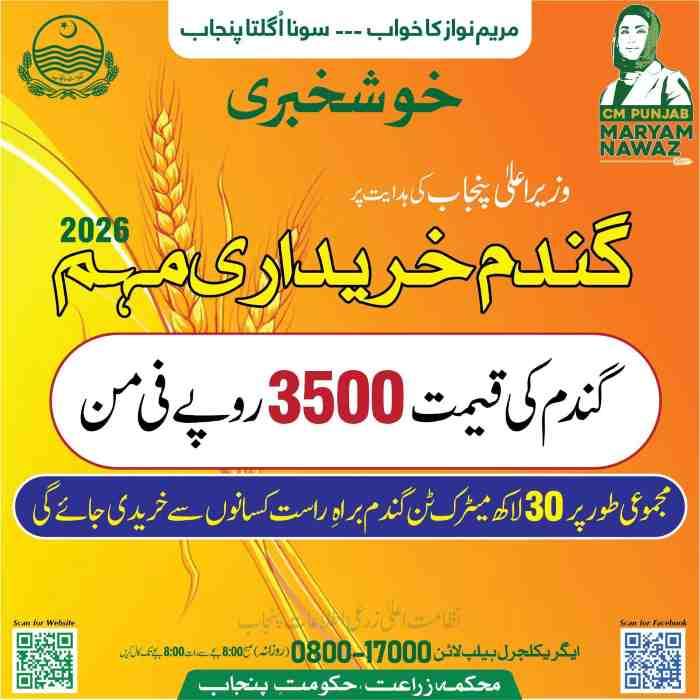
Table Of Contents
What is the Gandum Rate in Pakistan Today? (Federal Government Wheat Rate per 40 kg)
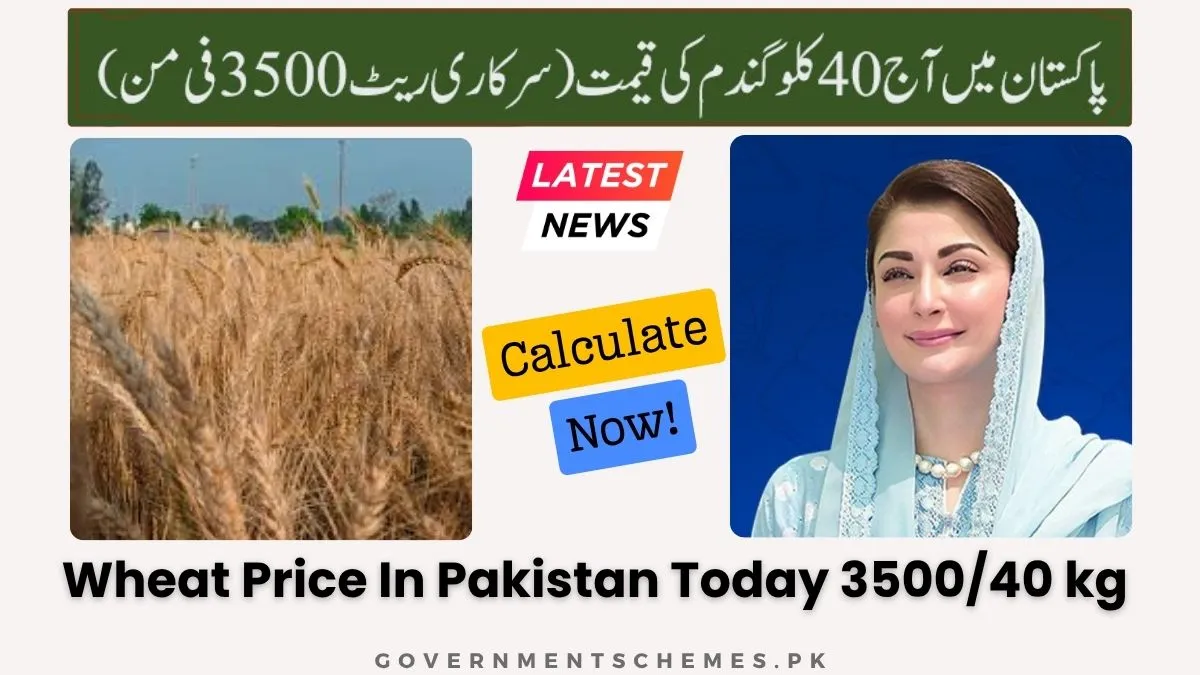
The current official Gandum rate in Pakistan is Rs 3,500 per 40 kg, set as the Minimum Support Price for the 2025-26 wheat harvest. This federal government rate serves as a mandatory floor price for provincial procurement agencies, ensuring that farmers receive a minimum return even if open market prices decline. The federal government has approved a large-scale procurement drive targeting 6.5 million tons at this MSP, signaling strong state backing for the agricultural sector.
What is the current retail price of wheat per kg in Lahore?
In Lahore, the retail price of wheat grain currently ranges between Rs 90 and Rs 110 per kilogram. This retail price is derived from the wholesale 40 kg bag price, which includes milling, transportation, and vendor margins. The government procurement rate of Rs 3,500 per 40 kg translates to approximately Rs 87.5 per kg at the farm gate, but consumer prices in urban centers like Lahore are often 20-30% higher.
What is the current wheat rate in Karachi’s Jodia Bazaar?

In Karachi’s Jodia Bazaar, a primary wholesale market, the Gandum rate currently fluctuates between Rs 2,500 and Rs 3,600 per 40 kg. This rate often deviates from the government support price due to factors such as supply from other provinces, grain quality variations, and immediate local demand. Karachi’s rates are typically volatile due to its reliance on inter-provincial wheat movement, with prices sometimes exceeding Rs 4,000 per 40 kg during supply shortfalls.
How much is the 50kg wheat bag price in Pakistan today?
Based on the official support price, a 50 kg wheat bag would be calculated at Rs 4,375. However, in the open market, the price for a 50 kg bag varies significantly from Rs 3,700 to Rs 5,000 depending on the city, season, and quality. The per-kg price is the primary determinant, so a 50 kg bag typically costs 50 times the prevailing per-kg rate in any given market.
How much is the 100kg wheat price in Pakistan Today?
The official price for a 100 kg wheat bag is Rs 8,750, derived from doubling the 40 kg rate. In the open market, a 100 kg bag can sell for between Rs 7,400 and Rs 10,000 or more, reflecting market premiums and shortages. Large buyers like flour mills often purchase in 100 kg increments to benefit from bulk pricing, though government procurement is standardized at 40 kg.
What is the official Gandum Rate per kg in Pakistan for 2026?
The official support price for wheat in 2026 is Rs 87.5 per kg, calculated by dividing the Rs 3,500 per 40 kg rate by 40. This is the benchmark procurement price for farmers selling to the government. It is crucial to note that this is the procurement price, not the retail consumer price, which includes milling, transportation, and vendor margins.
What is the 1 kg wheat price in Pakistan today?
For the average consumer, the price of 1 kg of wheat grain is rarely sold directly, as it is primarily processed into flour (atta). However, based on the procurement rate, the raw grain cost is Rs 87.5 per kg. The final consumer price for flour is significantly higher, with a 20 kg bag of Atta costing between Rs 2,000 and Rs 2,800, translating to a per-kg cost of Rs 100 to Rs 140 for the finished product.
Why is the Gandum Rate in Pakistan Different Across Provinces? (Punjab, Sindh, KPK, Balochistan)
The Gandum rate can differ across provinces due to variations in local supply, transportation costs, quality standards, and provincial procurement policies. While the federal government sets a uniform indicative price of Rs 3,500 per 40 kg, the actual price a farmer receives can vary based on provincial implementation. Punjab and Sindh have officially announced procurement at this rate, but open market rates in KPK and Balochistan may diverge based on local factors.
What is the latest Gandum rate in Punjab for 2026?
The Punjab government has fixed the wheat procurement price at Rs 3,500 per 40 kg for the 2026 season. Chief Minister Maryam Nawaz announced this initiative, aiming to procure 3 million metric tons of wheat through the private sector at this benchmark rate to ensure timely payments to farmers. The province also provides subsidized wheat to flour mills at Rs 3,000 per 40 kg to control flour prices for consumers.
What is the Gandum rate in South Punjab districts like Multan and Bahawalpur?
In South Punjab districts, including Multan and Bahawalpur, the government procurement rate is Rs 3,500 per 40 kg. However, due to the early harvest and transport logistics, open market rates can initially be lower, sometimes around Rs 2,700 per 40 kg, before stabilizing at the support price. Farmers in these districts are advised to sell at official procurement centers to secure the full support price rather than accepting lower rates from middlemen.
How much is the 40kg wheat price fixed by the Sindh government?
The Sindh government will procure 1 million metric tons of wheat at a support price of Rs 3,500 per 40 kg starting April 1. This decision aligns with the federal government’s policy. For the first time, purchases will be limited to registered Hari Card holders, a move aimed at improving oversight and ensuring that benefits reach genuine farmers directly.
What is the Gandum rate in Sindh today?
As of early April, the Gandum rate in Sindh is showing a steady trend, with open market prices averaging between Rs 2,500 and Rs 3,600 per 40 kg. The official procurement drive beginning April 1 at Rs 3,500 is expected to pull market prices up to this level. The Sindh government has established 109 designated procurement centers across the province to facilitate this process.
How much is the support price for wheat in Khyber Pakhtunkhwa (KPK)?
Khyber Pakhtunkhwa (KPK) has been directed by the federal government to align its wheat procurement with the illustrative price of Rs 3,500 per 40 kg for the 2025-26 season. The provincial government has been briefed to ensure smooth implementation of procurement operations. To counter rising flour prices, the KPK government has also decided to provide wheat at a subsidized rate of Rs 10,414 per 100 kg to the public.
What is the official wheat rate in Balochistan for 2026?
Balochistan’s official wheat procurement rate is set in line with the federal government’s policy at Rs 3,500 per 40 kg. However, due to the province’s remote geography and higher transport costs, the actual price in local markets can be volatile, sometimes exceeding Rs 4,000 per 40 kg. The province has decided to engage private companies for wheat procurement to bolster its strategic reserves.
What is the Difference Between the Open Market Wheat Rate and the Government Rate?
The key difference is that the government rate (Rs 3,500/40kg) is a Minimum Support Price guaranteeing farmers a baseline price, while the open market rate is determined by real-time supply and demand. The open market rate can dip below the MSP when there is a surplus or soar far above it during shortages, as seen in Lahore where prices surged to Rs 5,100 per 40 kg, significantly higher than the government rate.
Why is the open market rate lower than the government support price?
The open market rate can fall below the government support price due to immediate post-harvest supply gluts and the high cost for farmers to transport their crop to distant procurement centers. Middlemen may offer lower prices to farmers who lack the means to store their wheat or transport it to government centers. For example, in recent weeks, the open market rate in some areas has been as low as Rs 2,700 per 40 kg, well below the MSP.
Why is the open market rate higher than the government support price?
The open market rate exceeds the government support price during supply shortages, hoarding, or high inflation. For example, in recent months, prices in Lahore surged to Rs 5,100 per 40 kg, far exceeding the government rate. This occurs when flour mills and retailers compete for limited stocks, driving prices upward. Such spikes often lead to government interventions, including the release of subsidized wheat to stabilize the market.
Read More: PEF Quality Assurance Test (QAT) (Syllabus & Test Date)
How Can Farmers Sell Wheat at the Government Rate? (PASSCO & Provincial Procurement)
Farmers can sell wheat at the government rate by delivering their crop to official procurement centers operated by PASSCO or provincial food departments. The process involves bringing the wheat to these centers, where it is tested for quality, weighed, and the farmer is paid the support price. In Sindh, purchases are limited to registered Hari Card holders, a move aimed at improving oversight and ensuring benefits reach farmers directly.
Where are the government wheat procurement centers located near me?
Government procurement centers are established in key agricultural tehsils and districts across Punjab, Sindh, and other provinces. For example, Sindh has set up 109 centers. Farmers should contact their local Agriculture Department or PASSCO office for the nearest center. In Punjab, procurement is being carried out through private sector aggregators at the benchmark price.
What are the wheat moisture requirements for government procurement?
To ensure quality storage, government procurement centers strictly enforce a maximum moisture content limit of 13-14% for wheat. Wheat with higher moisture is often rejected or accepted only after price deductions, as it is prone to spoilage. The government has previously cited high moisture content, sometimes as high as 18%, as a reason for delaying procurement campaigns.
How much is the deduction per 40kg at government procurement centers?
Deductions at procurement centers can be applied for high moisture content, foreign matter, or broken grains. Farmers can face a price reduction of up to Rs 100-200 per 40 kg if the wheat does not meet the strict quality standards. Specific deduction rates are determined by PASSCO based on the degree of quality deviation, which can significantly impact a farmer’s final payment.
Is there a limit on how much wheat a farmer can sell to the government?
Generally, there is no official upper limit for a farmer selling wheat to the government. However, procurement targets are set per province, such as 3 million metric tons for Punjab and 1 million for Sindh. Small-scale farmers are encouraged to sell, and programs like the Hari Card in Sindh aim to prevent middlemen from exploiting the system and ensure that benefits reach genuine cultivators.
What is the Expected Impact of the IMF Deal on Wheat and Flour Prices?
The IMF deal has led to the deregulation of the wheat market, but with a temporary approval for a support price. The IMF allowed Pakistan to procure 6.2 million tonnes of wheat to replenish strategic reserves under the new Wheat Policy. This policy is a transitional measure, with the long-term goal of reducing direct government intervention in the market and moving towards a more privatized system.
Is the government importing wheat despite local production?
Yes, the government has approved the sale of imported wheat to stabilize the market and meet strategic reserve requirements. The ECC set reserve prices at Rs 4,150 per 40 kg for local wheat and Rs 3,800 per 40 kg for imported wheat. Imports are used to manage deficits and control flour prices, with the government importing wheat even during local production seasons to ensure sufficient supply.
What is the Role of CM Punjab in Determining the Gandum Rate?
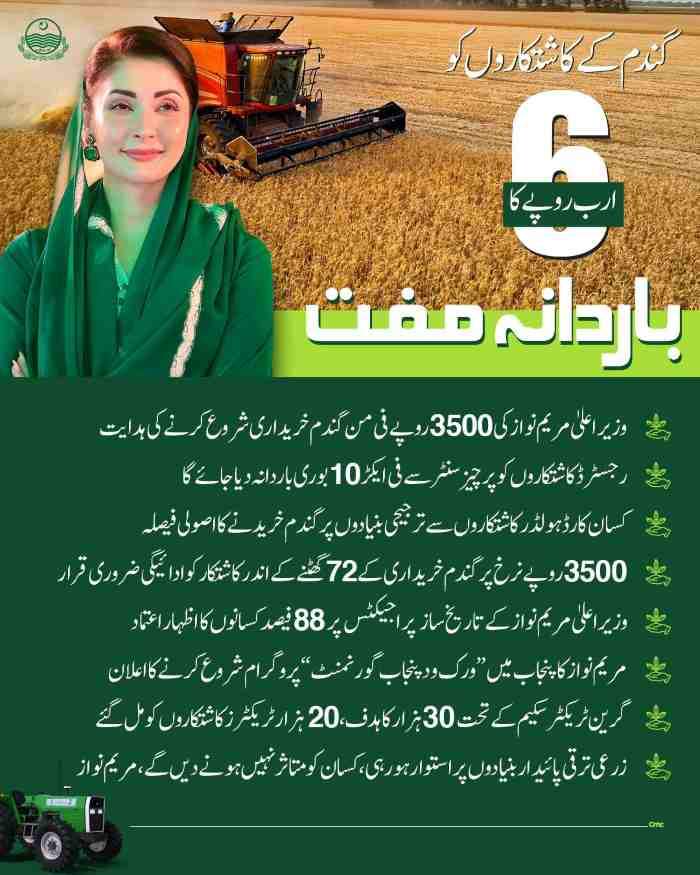
The Chief Minister of Punjab plays a crucial role by announcing the province’s wheat support price and overseeing its implementation. CM Maryam Nawaz announced the Rs 3,500 per 40 kg rate and launched the CM Punjab Wheat Support Program to provide direct financial aid to farmers. The province also maintains strategic reserves, aiming to keep 2.5 million tonnes of wheat to manage price stability.
What is the CM Punjab Wheat Support Program 2026?
The CM Punjab Wheat Support Program 2026 is a government initiative providing financial assistance of Rs 5,000 per acre to eligible farmers. It is designed to cushion farmers against rising input costs and ensure a stable wheat supply. The program targets over 550,000 wheat farmers across the province, with subsidies directly transferred to their Kissan Card accounts.
CM Punjab Wheat Support Program 2026 Registration
Registration for the program is done online through the official portal. Farmers can also register by sending their CNIC to 8070. The registration deadline is May 15. The online system uses automatic land verification through the Punjab Land Records Authority (PLRA) to ensure quick processing and eliminate fraud.
CM Punjab Wheat Support Program Apply Online
To apply online, visit the official portal, enter your CNIC, personal details, and land information. After verification through the PLRA, the subsidy is transferred directly to the farmer’s account. The system sends SMS alerts for application status and approvals, providing transparency throughout the process.
How Does the Kissan Card Affect the Wheat Rate for Small Farmers?
The Kissan Card improves the financial situation of small farmers, indirectly affecting their ability to hold wheat for better prices by providing access to interest-free loans. Through the Kissan Card, farmers can purchase fertilizers and seeds, enhancing their production capacity and reducing their compulsion to sell at low post-harvest prices.
How does the Kissan Card work for wheat farmers?
The Kissan Card functions as a digital wallet for farmers. Loans amounting to Rs 100 billion in interest-free loans have been disbursed through it for agricultural inputs. The Wheat Support subsidy of Rs 5,000 per acre is also directly transferred into the farmer’s Kissan Card account, and the government pays the markup on these loans to benefit flour mills and wheat entrepreneurs.
What is the Price of “Desi Gandum” vs. “Farm Gandum” in the Market?
“Desi Gandum” (local/native wheat) typically commands a higher price in the market compared to “Farm Gandum” (commercially farmed wheat) due to its perceived superior taste and texture for traditional breads. While commercial varieties trade near the government rate of Rs 3,500/40kg, premium “Desi” varieties can sell for Rs 4,000 to Rs 5,000 per 40 kg, depending on the region and demand.
Why are Farmers Protesting Against the Current Government Wheat Rate?
Farmers are protesting because they believe the support price of Rs 3,500 per 40 kg is too low to cover their rising production costs, which include expensive fertilizers, diesel, and electricity. Farmers’ unions have demanded the price be increased to at least Rs 4,000 per maund. Opposition parties have also criticized the government for alleged injustices towards farmers, particularly in relation to wheat procurement policies.
How does the wheat production target for 2026 affect the Gandum Rate?
The government sets an ambitious national wheat production target, which for the Rabi 2025-26 season is 29.7 million tonnes. If the target is met, it can lead to a sufficient supply, which helps stabilize the Gandum rate. A shortfall, however, would increase pressure for higher prices or imports. Preliminary assessments suggest Punjab’s production may decline to between 21 and 21.5 million tonnes against an official target of 22.5 million, potentially impacting rates.
What is the Price of a 20kg Flour Bag (Atta) According to the New Wheat Rate?
Based on the new wheat rate of Rs 3,500 per 40 kg, the raw wheat cost for a 20kg flour bag is Rs 1,750. After including milling, storage, and distribution costs, the retail price of a 20kg bag of Atta typically ranges from Rs 2,000 to Rs 2,800. In Rawalpindi, a 20 kg bag costs around Rs 2,866, while in Karachi it is around Rs 2,600, and in Quetta around Rs 2,850, showing significant regional variation.
Has the Government Increased the Wheat Procurement Price for the 2025–26 Season?
Yes, the federal government has set the procurement price at Rs 3,500 per 40 kg for the 2025-26 season. This was a re-introduction of a floor price after a period of deregulation and is an increase from the low rates seen in previous harvests. The government is also working on a comprehensive long-term wheat policy for the period 2026-2030, aimed at strengthening national food security through modern reforms.
Will the Wheat Price Decrease After the April Harvest?
Typically, wheat prices see a downward trend immediately after the April harvest due to the influx of new supply into the market. However, the full impact depends on the size of the harvest and the effectiveness of government procurement. The support price of Rs 3,500 is designed to prevent a drastic price collapse. Early assessments indicate that arrivals are increasing daily, which may exert downward pressure on open market rates.
Where Can I Find the Daily Updated Gandum Rate for My City?
For the most current and city-specific Gandum rate, farmers and consumers should refer to the official portals of provincial agriculture departments. Zarat Ghar and Zeeshan Agro are also leading private platforms that provide daily updated wheat prices across different cities in Pakistan. These platforms track rates based on city, transportation cost, quality, and type of wheat, providing a comprehensive view of the market.
Disclaimer: The information provided in this article is based on available data and is for informational purposes only. Government policies and market rates are subject to change.
Frequently Asked Questions (FAQs)
Q1: What is the official government rate of wheat per 40kg in Pakistan today?
The official government support price for wheat is Rs 3,500 per 40 kg for the 2025-26 season, set by the federal government as a minimum support price for procurement.
Q2: How can farmers register for wheat procurement at government centers?
Farmers can register by visiting their nearest PASSCO or provincial food department procurement center. In Sindh, registration is limited to Hari Card holders. In Punjab, farmers can also apply online for the CM Punjab Wheat Support Program.
Q3: Is the government buying wheat from farmers at Rs 3,900 or Rs 3,500?
The current official support price is Rs 3,500 per 40 kg. While there were considerations for higher rates, the federal government finalized the rate at Rs 3,500.
Q4: What is the difference between the open market wheat rate and the government rate?
The government rate is a guaranteed minimum support price, while the open market rate is determined by real-time supply and demand. The open market can be lower or higher than the government rate.
Q5: Why is the open market rate lower than the government support price?
The open market rate can be lower due to post-harvest supply gluts and the high cost for farmers to transport their crop to distant government procurement centers.
Q6: How does the Kissan Card affect the wheat rate for small farmers?
The Kissan Card provides interest-free loans for agricultural inputs, reducing the financial pressure on small farmers and allowing them to avoid selling at low post-harvest prices.
Q7: What is the expected wheat production target for Pakistan?
The national wheat production target for the Rabi 2025-26 season has been set at 29.7 million tonnes.

Add a Comment