
The official Today Wheat Price In Pakistan as set by the federal government is Rs3,500 per 40 kilograms for the 2026 harvest season, a rate designed to protect farmer incomes and stabilize the national food supply chain. This comprehensive guide covers everything you need to know about the government wheat rate per 40 kg, including provincial variations, open market comparisons, procurement procedures, and future price forecasts.
What you will learn from this guide:
- The official government wheat support price and how it is determined
- Provincial rates across Punjab, Sindh, KPK, and Balochistan
- How the open market price differs from the government rate
- Step-by-step process to sell wheat to PASSCO and provincial food departments
- Production costs, farmer profit margins, and future price predictions
Key Takeaways

- Government Rate Confirmed: The federal government has fixed the wheat support price at Rs3,500 per 40 kg for the 2026 procurement season.
- Provincial Alignment: Sindh and Punjab have officially adopted the Rs3,500 rate, with procurement centers operational across both provinces.
- Market Discrepancy: Open market wheat prices currently trade 10-15% higher than the government rate, ranging from Rs3,800 to Rs4,200 per 40 kg.
- Farmer Support Programs: The CM Punjab Wheat Support Program 2026 offers Rs5,000 per acre in direct financial aid to registered farmers.
- Production Cost Challenge: Farmers report production costs exceeding Rs4,200 per 40 kg, making the support price insufficient to cover expenses.
- Read More: 40 kg Wheat Price In Pakistan Today (Wheat Rate per 40KG)
- Read More: Lost Documents Report Online (Punjab Police) | Loss Report – Step-By-Step
- Read More: Harassment Report Online | Cyber Crime Online Complaint Pakistan
- Read More: PEF Quality Assurance Test (QAT) (Syllabus & Test Date)
Today Wheat Price In Pakistan – Government Rate per 40 kg
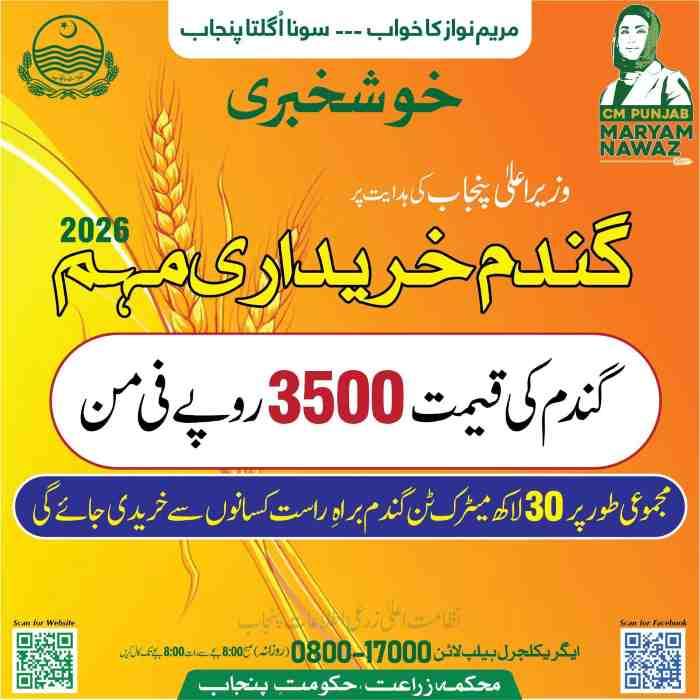
Table Of Contents
What is the official government wheat rate per 40 kg in Pakistan today (April 2026)?
The official government wheat support price in Pakistan today stands at Rs3,500 per 40 kilograms. This rate was approved by the federal government and serves as the minimum procurement price for the 2026 harvest season, ensuring farmers receive a fair return for their crop while maintaining national food security.
How does the federal government determine the annual wheat support price?
The determination process follows a structured multi-stage approach involving several key government bodies:
- The Economic Coordination Committee (ECC) reviews agricultural input costs and inflation data
- The National Price Monitoring Committee assesses supply and demand projections
- Provincial agriculture departments provide local production estimates
- Final approval comes from the federal cabinet after stakeholder consultations
Why did the government set the wheat price at Rs3,500 for the current season?

Several factors influenced the Rs3,500 price point decision:
- Rising input costs: Fertilizer prices have surged, with DAP reaching Rs12,000 per bag
- Inflation adjustment: The rate reflects a 16.6% increase from previous procurement cycles
- Farmer protests: Pressure from agricultural unions demanded higher returns
- Regional competitiveness: The price aligns with regional benchmarks to prevent cross-border smuggling
Is the government rate of Rs3,500 per 40 kg applicable to all provinces?
The federal rate serves as an illustrative procurement price, but provincial implementation varies:
- Punjab: The provincial government has officially adopted the Rs3,500 rate for its procurement campaign
- Sindh: The provincial cabinet has fixed the support price at Rs3,500, aligning with federal policy
- Khyber Pakhtunkhwa: The province generally follows the federally approved rate of Rs3,500
- Balochistan: The provincial government adheres to the federal floor price, though transportation costs create regional variations
What is the difference between the government support price and the open market wheat rate?
The distinction between these two prices is crucial for understanding Pakistan’s wheat economy:
- Government support price (procurement price): Rs3,500 per 40 kg – the rate at which government agencies purchase directly from farmers
- Government release price (sale to mills): Rs4,150 per 40 kg for local wheat – the rate at which PASSCO sells to flour mills
- Open market wholesale rate: Rs3,800 to Rs4,200 per 40 kg – determined by miller demand and private trading
- Retail price per kg: Rs90 to Rs100 – the consumer price after milling, transport, and retailer margins
What is PASSCO purchasing wheat at today?

PASSCO is currently purchasing wheat at the government-fixed rate of Rs3,500 per 40 kg. The procurement target for the current season stands at 6.2 million metric tons nationally, with specific provincial allocations:
- Punjab: 3 million metric tons under the provincial wheat policy
- Sindh: 1 million metric tons through 109 designated procurement centers
- KPK: Procurement through 22 purchase centers established across the province
The payment process has been digitized to ensure transparency. Farmers receive payments through direct bank transfers within 48 to 72 hours of delivery, eliminating the role of middlemen and reducing corruption risks at procurement centers.
What is the current price of wheat in the Sindh open market?
The Sindh open market wheat price currently ranges from Rs3,850 to Rs4,000 per 40 kg. This premium over the government rate exists because private millers offer immediate cash payments and accept slightly lower quality standards than government procurement centers. Farmers in Sindh who do not have Hari Cards or who miss government procurement deadlines often sell to private buyers at these elevated rates, though they sacrifice the guaranteed payment security that government procurement provides.
What are the provincial government wheat rates per 40 kg (Punjab, Sindh, KPK, Balochistan)?

While the federal floor price stands at Rs3,500 per 40 kg, provincial implementation varies due to local procurement costs, transportation logistics, and administrative priorities. Each province operates its own food department and procurement infrastructure, creating slight differences in how the federal rate is applied.
Punjab government wheat rate per 40 kg today (Lahore, Multan, Faisalabad)
Current official rate: Rs3,500 per 40 kg for government procurement centers
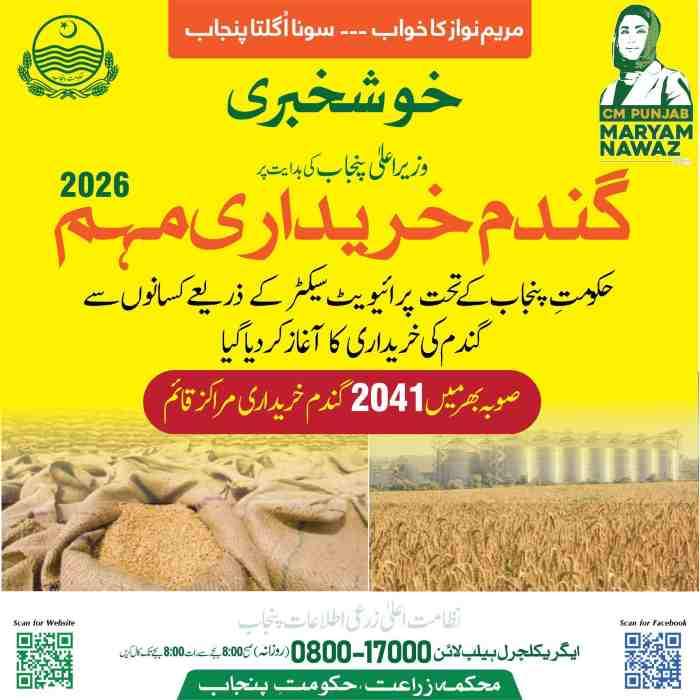
The Punjab government has taken a leadership role in implementing the federal wheat policy. Chief Minister Maryam Nawaz announced the Punjab Wheat Policy 2026, setting the procurement price at Rs3,500 per maund and targeting the purchase of 3 million metric tons of wheat from local farmers.
City-specific market rates in Punjab:
- What is the price of 40 kg wheat in Lahore today?
- Government procurement rate: Rs3,500
- Open market mandi rate (Shahdra Market): Rs3,880 to Rs3,950
- Retail price per kg: Rs90 to Rs95
- 40 kg wheat price in Rahim Yar Khan today
- Government rate: Rs3,500
- Border market rate: Rs3,850 to Rs4,000 (influenced by Sindh market dynamics)
- Transport cost impact: Prices near the Sindh border reflect inter-provincial trading pressures
- Multan and Faisalabad wheat prices
- Multan government center: Rs3,550 with transportation adjustment
- Faisalabad mandi rate: Rs3,600 to Rs3,900 depending on quality and moisture content
- Premium paid for high-protein varieties: Additional Rs100 to Rs200 per 40 kg
CM Punjab Wheat Support Program 2026 details:
The provincial government has launched a comprehensive support package for wheat farmers:
- Direct financial aid of Rs5,000 per acre for registered wheat growers
- Registration deadline: May 15, 2026
- Eligibility criteria: Must own 1 to 5 acres of cultivated wheat land in Punjab
- Registration process: Online portal or local agriculture office submission
- Benefits include access to subsidized seeds, fertilizers, and interest-free loans
Sindh government wheat price per 40 kg (Karachi, Sukkur, Mirpurkhas)
Current official rate: Rs3,500 per 40 kg, fixed by the provincial cabinet sub-committee
The Sindh government has committed to procuring 1 million metric tons of wheat during the 2026 season. Procurement began on April 1 across 109 designated centers established throughout the province.
Why is the Sindh government wheat price sometimes higher than Punjab’s?
Several factors explain Sindh’s occasional price premium:
- Earlier harvest season creates initial supply shortages
- Lower local production relative to consumption creates demand pressure
- Transportation costs from rural growing areas to urban consumption centers
- Quality premiums for varieties preferred by Karachi millers
What is the current price of wheat in the Sindh open market?
The open market rate in Sindh currently ranges from Rs3,850 to Rs4,000 per 40 kg, driven by:
- Private miller competition for high-quality grain
- Export-oriented trading with other provinces
- Cash payment advantage over government bank transfers
40 kg wheat price in Pakistan today Sindh (city-wise breakdown):
| City | Government Rate | Open Market Rate | Key Factor |
|---|---|---|---|
| Karachi | Rs3,500 | Rs3,950 to Rs4,000 | Port city demand premium |
| Sukkur | Rs3,500 | Rs3,850 to Rs3,900 | Proximity to growing regions |
| Mirpurkhas | Rs3,500 | Rs3,880 to Rs3,950 | Harvest season timing |
| Hyderabad | Rs3,500 | Rs3,900 to Rs3,980 | Urban consumption center |
Hari Card system for transparent payments:
For the first time, Sindh has implemented a digital payment system for wheat procurement:
- Only registered Hari Card holders can sell to government centers
- Payments are processed directly to linked bank accounts
- The system eliminates middlemen and reduces corruption
- Farmers receive real-time payment notifications via SMS
Khyber Pakhtunkhwa (KPK) official wheat rate
Current official rate: Rs3,900 per 40 kg for government procurement (higher than federal rate)
KPK has established 22 wheat purchase centers across the province to facilitate local farmers. The provincial food department has set the procurement rate at Rs3,900 per 40 kg, reflecting the higher transportation costs and logistical challenges of operating in mountainous terrain.
What is the official wheat rate in KPK for the current season?
The KPK government has opted for a rate above the federal floor to encourage local production and reduce dependence on wheat imports from other provinces. Key implementation details include:
- Procurement centers operational in Peshawar, Mardan, Swat, and DI Khan
- Quality standards: Moisture content below 13%, weed seed limit under 2%
- Payment timeline: Bank transfers processed within 7 business days
Afghan transit trade impact on KPK wheat prices:
The province’s proximity to Afghanistan creates unique market dynamics:
- Cross-border smuggling of subsidized Afghan wheat can depress local prices
- Security-related transportation disruptions affect supply chains
- International market signals reach KPK faster than other provinces
Read More: PEF Phase 3 School List PDF Download (All Punjab District Wise)
Balochistan wheat price dynamics
Current market range: Rs3,600 to Rs4,500 per 40 kg depending on location
Balochistan faces unique challenges in wheat procurement due to its vast geography and dispersed population. The provincial government generally adheres to the federal floor price of Rs3,500, but actual transaction prices vary significantly based on location.
Transportation cost challenges in Balochistan:
- Quetta region: Rs3,600 to Rs3,800 (closer to Punjab supply routes)
- Coastal areas (Gwadar, Pasni): Rs4,200 to Rs4,500 (sea transport dependence)
- Remote districts (Chagai, Kharan): Rs4,000 to Rs4,300 (overland transport costs)
Subsidy mechanisms for price equalization:
The provincial government provides transportation subsidies to ensure farmers in remote areas receive fair prices:
- Subsidy amount: Rs200 to Rs500 per 40 kg depending on distance from procurement centers
- Payment method: Direct bank transfer after proof of delivery
- Eligible farmers: Those located more than 50 km from the nearest procurement center
How does the government rate of Rs3,500 per 40 kg compare to the open market?
The government rate of Rs3,500 per 40 kg serves as a price floor, protecting farmers from market downturns. However, the actual open market rate in April 2026 is trading 10-15% higher, averaging Rs3,900 per 40 kg due to miller hoarding, reduced crop estimates, and cash payment preferences.
Why are open market wheat prices higher than the government rate?
Several structural factors create the government-to-market price gap:
Quality variance and premium varieties:
- Standard government procurement accepts only Grade A wheat with specific moisture and weed limits
- Premium varieties like Sehar-06 and Fakhr-e-Bhakkar fetch Rs100 to Rs200 more per 40 kg in open markets
- High-protein wheat suitable for specialty flour commands additional premiums
Payment timing differences:
- Government centers pay via bank transfers within 48 to 72 hours
- Open market millers offer instant cash payments
- Farmers with immediate cash needs accept lower open market prices to access instant liquidity
Why are wheat prices falling in Pakistan despite the high cost of production?
Temporary price declines occur when multiple factors align:
- Simultaneous harvest across multiple provinces creates local gluts
- Storage constraints force farmers to sell immediately after harvest
- Reduced miller demand during economic slowdowns
- Government release of strategic reserves to control inflation
What is the price of 1 kg wheat in Pakistan today?
The retail price for wheat grain as a consumer commodity varies by location and purchase quantity:
Consumer-facing prices:
- Retail purchase (1-5 kg): Rs90 to Rs100 per kg
- Bulk purchase (20+ kg): Rs85 to Rs92 per kg
- Kiryana store rates: Rs95 to Rs110 depending on neighborhood
1 kg wheat price in Pakistan today by city:
- Lahore: Rs90 to Rs95
- Karachi: Rs95 to Rs100
- Islamabad/Rawalpindi: Rs92 to Rs98
- Peshawar: Rs88 to Rs92
- Quetta: Rs92 to Rs96
50 kg and 100 kg wheat prices in the open market
Bulk purchases offer better per-kilogram rates for commercial buyers and large households:
50 kg wheat price in Pakistan today:
- Government procurement rate: Rs4,375 (calculated at Rs87.5 per kg)
- Open market wholesale: Rs4,800 to Rs5,000
- Retail bag price: Rs4,500 to Rs4,700
100 kg wheat price in Pakistan today:
- Government procurement rate: Rs8,750
- Open market wholesale: Rs9,800 to Rs10,200
- Commercial buyer rate: Rs9,500 to Rs9,900 (volume discount applied)
Bag weight variations and standard practices:
- Standard commercial bag: 100 kg (two 50 kg bags strapped together)
- Retail consumer bag: 20 kg or 40 kg
- Farmer delivery bag: Usually 40 kg or 50 kg for government procurement
What is the price of a 20 kg flour bag in Pakistan right now?
The relationship between wheat price and flour price follows a predictable conversion formula:
Calculation method:
- 20 kg of flour requires approximately 28 kg of wheat (70% extraction rate)
- Wheat cost: 28 kg × Rs87.5 = Rs2,450
- Milling cost: Rs150 to Rs200
- Sacking and transport: Rs100 to Rs150
- Miller profit margin: Rs200 to Rs300
- Wholesaler markup: Rs150 to Rs200
- Retailer markup: Rs200 to Rs300
Current 20 kg flour bag price range:
- Government-subsidized flour (utility stores): Rs1,600 to Rs1,700
- Standard fine flour (atta): Rs1,800 to Rs2,000
- Premium branded flour: Rs2,100 to Rs2,400
- Whole wheat flour (chakki atta): Rs1,750 to Rs1,950
Why is the government wheat price different from the flour mill rate?
The government wheat price (Rs3,500 per 40 kg) represents the raw grain cost at the farm gate. The flour mill rate includes multiple value-adding processes: milling, extraction losses (65-70% yield), sacking, transport, storage, and profit margins for each intermediary. This results in a 40-50% markup from raw grain to finished flour.
Are flour mills buying wheat at the government-fixed rate?
The answer depends on the type of wheat and the buyer:
Quota wheat vs. open wheat:
- Quota wheat: Mills receive a fixed allocation of government wheat at the release price (Rs4,150 per 40 kg)
- Open wheat: Mills purchase additional quantities from the open market at prevailing rates (Rs3,800 to Rs4,200)
- Imported wheat: Available to mills at Rs3,800 per 40 kg when government releases import stocks
How mills exploit the price difference:
- Mills purchase government quota wheat at Rs4,150
- They blend it with cheaper open market wheat to reduce average cost
- Final flour is sold at consumer prices based on the blended cost
- Profit margins are maintained even when individual wheat prices fluctuate
Is there a subsidy on wheat for farmers in Pakistan?
The government provides indirect subsidies rather than direct cash transfers:
- Support price mechanism: Guaranteed minimum price protects farmers from market crashes
- Input subsidies: Reduced prices for DAP fertilizer and certified seeds through provincial programs
- Credit access: Interest-free loans for small farmers through Kisan Cards and similar schemes
- Direct cash aid: CM Punjab Wheat Support Program offering Rs5,000 per acre
What is the retail price of wheat per kg in Karachi vs. Lahore?
Significant price variations exist between Pakistan’s two largest cities:
Karachi retail wheat prices:
- Government procurement rate: Rs3,500 per 40 kg (Rs87.5 per kg)
- Retail consumer price: Rs95 to Rs100 per kg
- Price factors: Port city import competition, higher transport costs from interior Sindh, miller consolidation
Lahore retail wheat prices:
- Government procurement rate: Rs3,500 per 40 kg (Rs87.5 per kg)
- Retail consumer price: Rs88 to Rs92 per kg
- Price factors: Proximity to Punjab growing regions, multiple miller options, competitive retail market
Reason for the price gap:
- Karachi’s reliance on wheat transported from interior Sindh and Punjab adds Rs5-8 per kg in logistics
- Lahore’s position in the wheat belt allows for lower transport costs
- Market competition is more intense in Lahore with more retail options
How does the international wheat price affect Pakistan’s local rate of Rs3,500?
While the government sets Rs3,500 per 40 kg locally, international CBOT wheat futures and the USD/PKR exchange rate directly influence Pakistan’s import decisions, export potential, and the government’s ability to maintain the support price without triggering inflation.
Current international wheat price trend
Global wheat prices remain volatile due to multiple factors affecting supply and demand:
International benchmark comparison:
- CBOT wheat futures: Fluctuating between $5.50 and $7.00 per bushel
- USD/PKR exchange rate: Directly impacts import cost calculations
- Pakistan’s import parity price: Estimated at Rs3,800 per 40 kg for imported wheat
Key global factors affecting prices:
- Black Sea grain supply disruptions
- Climate-related production shortfalls in major exporting countries
- Changes in import policies of large buyers like Egypt and Indonesia
Is the government importing wheat to control local prices?
The current government strategy focuses on local procurement rather than imports:
Current import status:
- No active import tenders have been issued for the current season
- The government aims to procure 6.2 million tons locally to meet demand
- Strategic reserves are considered adequate to cover any supply gaps
When imports become necessary:
- Domestic production falls below 25 million tons
- Strategic reserves drop below 2 months of consumption
- Open market prices exceed Rs4,500 per 40 kg for an extended period
- Drought or flood events significantly reduce harvest yields
How does the hike in electricity and diesel affect wheat prices?
Energy costs cascade through every stage of wheat production and distribution:
Production stage impacts:
- Tubewell irrigation costs: Diesel price hikes increase water pumping expenses by 30-40%
- Fertilizer production: Urea and DAP prices are energy-intensive, passing costs to farmers
- Tractor fuel: Land preparation and cultivation costs rise with diesel prices
Harvesting and post-harvest impacts:
- Combine harvester fuel: Diesel at Rs320 per liter increases harvesting costs by Rs100-150 per acre
- Transport trucking rates: Long-distance movement from rural to urban centers adds Rs200-300 per 40 kg
- Threshing and cleaning operations: Fuel-dependent machinery adds to processing costs
What is the historical wheat support price trend in Pakistan (2020-2026)?
The wheat support price has seen a steep upward trajectory over the past six seasons, reflecting the cumulative impact of input cost inflation, currency devaluation, and political pressure from farmer unions.
Year-by-year support price progression:
| Season | Support Price (per 40 kg) | Year-over-Year Increase |
|---|---|---|
| 2020 | Rs1,650 | Baseline |
| 2021 | Rs1,800 | 9.1% |
| 2022 | Rs2,200 | 22.2% (Post-flood crisis pricing) |
| 2023 | Rs3,000 | 36.4% |
| 2024 | Rs3,250 | 8.3% |
| 2025-26 | Rs3,500 | 7.7% |
Cumulative increase analysis:
- Total increase from 2020 to 2026: Rs1,850 (112% growth)
- Average annual increase: 13.8% per year
- Real inflation-adjusted increase: Approximately 45% after accounting for general inflation
Has the Pakistan government increased the wheat support price recently?
Yes, the 2025-26 increase of Rs250 per 40 kg was announced in late 2025. This represents a 7.7% increase from the previous season’s Rs3,250 rate. The modest increase reflects the government’s balancing act between supporting farmers and preventing excessive flour inflation for consumers.
What is the expected wheat price for the 2027 harvest?
Market analysts and agricultural economists project several scenarios for the 2027 support price:
Baseline projection: Rs3,800 to Rs4,000 per 40 kg
- Assumes continued input cost inflation of 8-10%
- Incorporates expected currency depreciation of 5-7%
- Factors in farmer pressure for higher returns
Downside scenario: Rs3,500 to Rs3,700
- Would require significant drop in global wheat prices
- Depends on IMF conditions limiting agricultural subsidies
- Could result from bumper harvest reducing scarcity premiums
Upside scenario: Rs4,200 to Rs4,500
- Triggered by severe climate events reducing domestic production
- Accelerated currency depreciation beyond current forecasts
- Regional price pressures from India or Afghanistan
How can farmers sell their wheat directly to the government at the Rs3,500 rate?
Farmers can sell directly at the Rs3,500 per 40 kg rate by registering with PASSCO or their provincial food department, bringing clean, dry wheat to designated procurement centers, and providing their Computerized National Identity Card (CNIC) and land ownership documents. The process has been digitized to ensure transparency and timely payments.
Step-by-step guide to selling wheat to PASSCO
Step 1: Locate the nearest procurement center
- Check the PASSCO website or provincial food department portal
- Call the helpline (0800-12345) for center locations and operating hours
- Centers are typically established in union councils and tehsil headquarters
Step 2: Prepare your wheat for quality inspection
- Ensure moisture content is below 13% (wet wheat is rejected or discounted)
- Remove weed seeds and foreign material (limit under 2%)
- Clean the wheat using manual winnowing or mechanical cleaners
- Store in dry, ventilated bags to prevent moisture accumulation
Step 3: Transport and delivery
- Arrange transport to the nearest procurement center
- Bring the wheat in standard 40 kg or 50 kg bags
- Carry original CNIC and land ownership documents (fard)
- Reach the center during operating hours (usually 9 AM to 5 PM)
Step 4: Quality testing and weighing
- Center staff take samples for moisture and purity testing
- Passed wheat proceeds to weighbridge for measurement
- Quality parameters are strictly enforced; failed loads must be taken back
Step 5: Payment processing
- Approved loads receive a delivery receipt
- Payment is processed via e-payment within 48 hours
- Funds are transferred directly to the farmer’s linked bank account
- SMS confirmation is sent when payment is completed
What is the CM Punjab wheat support program 2026 registration?
The CM Punjab Wheat Support Program provides direct financial assistance to eligible wheat farmers:
Program details:
- Benefit amount: Rs5,000 per acre of wheat cultivation
- Maximum eligible land: 5 acres per farmer
- Total program budget: Rs15 billion
Registration requirements:
- Must be a resident of Punjab province
- Must own or lease agricultural land with wheat cultivation
- Valid CNIC with active SIM registration
- Registered in the Punjab Land Records Authority (PLRA) portal
Registration steps:
- Visit the official Punjab Agriculture Department portal
- Click on “CM Punjab Wheat Support Program 2026”
- Enter CNIC number and verify with mobile OTP
- Provide land details (khasra numbers, acreage)
- Upload supporting documents (fard, CNIC copy)
- Submit application and save confirmation number
Important deadlines:
- Registration opens: March 1, 2026
- Last date to register: May 15, 2026
- No late registrations accepted under any circumstances
Is there a ban on the inter-provincial movement of wheat?
The current status for 2026 is that no formal ban exists, but commercial movement requires permits:
Current regulations:
- Free movement for personal consumption quantities (up to 40 kg per person)
- Commercial movement (above 500 kg) requires permit from provincial food department
- Permits are issued for registered traders and millers only
- Violations result in confiscation of wheat and fines
Why bans are implemented:
- To prevent hoarding by large traders
- To ensure each province meets its local consumption needs
- To stabilize prices during supply shortages
- To protect government procurement targets
Why are farmers protesting the current wheat support price despite it being Rs3,500?
Farmers are protesting the Rs3,500 per 40 kg rate because the cost of production has surged to approximately Rs4,200 per 40 kg. Record-high prices for DAP fertilizer (Rs12,000 per bag), diesel (Rs320 per liter), and pesticides have made the government’s “support price” a loss-making proposition for many growers.
Breakdown of wheat production cost per 40 kg
| Cost Component | Amount (Rs) | Percentage of Total |
|---|---|---|
| Land preparation (plowing, leveling) | 500 | 11.9% |
| Certified seed | 800 | 19.0% |
| Fertilizer (Urea + DAP) | 1,800 | 42.9% |
| Irrigation (diesel/electricity) | 600 | 14.3% |
| Pesticides and herbicides | 200 | 4.8% |
| Harvesting and threshing | 300 | 7.1% |
| Total production cost | 4,200 | 100% |
Implications for farmers:
- Selling at Rs3,500 per 40 kg results in a loss of Rs700 per 40 kg
- For a typical 10-acre farm producing 400 maunds (40 kg units), the total loss exceeds Rs280,000
- Small farmers with 1-5 acres are most vulnerable to these losses
What is the price of seed wheat (Gandum) in Pakistan?
Certified seed wheat prices have also increased, creating additional pressure on farmers:
Current seed wheat rates:
- Certified seed (government-approved varieties): Rs4,000 to Rs4,500 per 40 kg
- Farmer-saved seed (previous crop): Rs3,500 to Rs3,800 per 40 kg
- Imported high-yield varieties: Rs5,000 to Rs6,000 per 40 kg
Why farmers cannot always afford certified seed:
- Certified seed costs Rs500-1,000 more per 40 kg than saved seed
- Saved seed has lower germination rates (70-80% vs 90-95% for certified)
- Lower germination leads to reduced yields, creating a productivity trap
- Government seed subsidies are limited and reach only a fraction of farmers
What is the price of wheat straw (Bhoosa) per 40 kg?
Wheat straw provides an important secondary income source for farmers:
Current straw price range:
- Fresh straw (immediately after threshing): Rs400 to Rs500 per 40 kg
- Dried and baled straw (stored for livestock feed): Rs500 to Rs600 per 40 kg
- Premium quality straw (weed-free, rain-protected): Rs600 to Rs700 per 40 kg
How straw sales offset grain losses:
- A typical acre produces 20 to 25 bales of straw (each bale 40 kg)
- Total straw income per acre: Rs10,000 to Rs15,000
- Straw income can offset 15-25% of the grain production loss
What are the daily wheat prices in major Pakistani cities (Lahore, Multan, Faisalabad, Karachi)?
As of today, the actual transaction price for 40 kg of wheat varies significantly by city, reflecting local supply-demand dynamics, transport costs, and miller competition.
Today wheat price in Pakistan Lahore
- Government procurement center rate: Rs3,500
- Shahdra Mandi wholesale rate: Rs3,880 to Rs3,950
- Retail price per kg: Rs90 to Rs95
- Key price driver: Proximity to growing regions reduces transport costs
Today wheat price in Pakistan per kg (City-wise table)
| City | Government Rate (per kg) | Open Market Rate (per kg) | Retail Rate (per kg) |
|---|---|---|---|
| Lahore | Rs87.5 | Rs97 to Rs99 | Rs90 to Rs95 |
| Karachi | Rs87.5 | Rs98 to Rs100 | Rs95 to Rs100 |
| Multan | Rs87.5 | Rs96 to Rs98 | Rs88 to Rs92 |
| Faisalabad | Rs87.5 | Rs95 to Rs97 | Rs88 to Rs91 |
| Rawalpindi | Rs87.5 | Rs97 to Rs99 | Rs92 to Rs96 |
| Peshawar | Rs87.5 | Rs94 to Rs96 | Rs88 to Rs92 |
| Quetta | Rs87.5 | Rs98 to Rs102 | Rs92 to Rs96 |
40 kg wheat price in Pakistan today Lahore (Specific markets)
Lahore’s major grain markets show different price levels based on buyer competition:
- Badami Bagh market: Rs3,880 to Rs3,950 (largest volume, highest competition)
- Thokar Niaz Baig market: Rs3,850 to Rs3,920 (serving southern Lahore)
- Shahdra grain market: Rs3,900 to Rs3,980 (closest to growing regions)
Today wheat Rate in Punjab Pakistan (Rural vs. Urban)
Significant price differences exist between farm gate sales and urban market purchases:
- Village farm gate rate: Rs3,450 to Rs3,550 (farmers selling directly to miller agents)
- Town mandi rate: Rs3,750 to Rs3,850 (aggregated volume attracting buyers)
- City wholesale rate: Rs3,850 to Rs4,000 (transport and storage costs added)
- Urban retail rate: Rs4,200 to Rs4,500 (consumer-facing prices after multiple markups)
How many kg are in one “maund” of wheat in Pakistan?
The maund is a traditional unit of weight still widely used in agricultural transactions:
- Standard conversion: 1 maund = 40 kg
- Historical context: The maund varied by region historically but was standardized to 40 kg in the metric era
- Usage today: Farmers and traders commonly refer to “maund” when discussing wheat prices, though official government notifications use kilograms
Regional variations to be aware of:
- Punjab and Sindh: 1 maund = 40 kg (standard)
- KPK and Balochistan: Some rural areas still use 37.3 kg maund for certain commodities, but wheat is standardized at 40 kg
- Always confirm the unit when receiving price quotes to avoid confusion
What is the future outlook for wheat pricing in Pakistan (2026-2027)?
Looking toward the 2027 harvest, wheat prices in Pakistan are expected to cross the Rs4,000 per 40 kg threshold due to climate change impacts on water availability, rising imported fertilizer costs, and the government’s commitment to reducing wheat imports to save foreign exchange.
The impact of climate change on wheat production
Climate factors are increasingly affecting Pakistan’s wheat output:
Water availability concerns:
- Reduced Rabi season water flows from glacial melt variability
- Lower reservoir levels in Tarbela and Mangla dams
- Increased reliance on expensive tubewell irrigation
Temperature stress effects:
- Higher than optimal temperatures during grain filling stage reduce yields
- Heat-tolerant seed varieties are being developed but are not yet widely available
- Each 1°C temperature increase reduces yields by 6-8%
Government procurement target for next year
The national procurement strategy focuses on building strategic reserves:
What is the wheat procurement target for the Punjab government this year?
- National target: 6.2 million metric tons
- Punjab allocation: 3 million metric tons (48% of national target)
- Sindh allocation: 1 million metric tons
- KPK and Balochistan: Combined 0.5 million metric tons
- PASSCO strategic reserve: Remaining 1.7 million metric tons
Will the government de-regulate the wheat market?
The debate over wheat market deregulation continues among policymakers:
Arguments for deregulation:
- Private sector efficiency could lower consumer prices
- Reduced government expenditure on procurement and storage
- Elimination of corruption opportunities at procurement centers
Arguments against deregulation:
- Farmers would lose price protection against market manipulation
- Millers could collude to drive prices down during harvest
- Food security would depend on private sector goodwill
- The 2022 wheat crisis demonstrated the need for government intervention
Current policy direction:
- Gradual liberalization with continued government oversight
- Maintenance of strategic reserves even if procurement is privatized
- Pilot programs for private procurement in select districts
- No immediate plans for complete deregulation
How to check the daily official notification for wheat prices in Pakistan?
To check the daily official wheat price notification, stakeholders must visit the PASSCO website, the provincial Food Department websites, or the official Gazette of Pakistan. Price notifications are typically updated every Thursday during the procurement season and immediately when policy changes occur.
Where to find the “Today Wheat Price In Pakistan” official PDF
Official notifications are available through multiple government channels:
- PASSCO website: www.passco.gov.pk under “Procurement Notifications”
- Punjab Food Department: food.punjab.gov.pk/wheat-procurement
- Sindh Food Authority: sindhfood.gov.pk/price-notifications
- Official Gazette of Pakistan: Regular publication of notified rates
Mobile apps and SMS services for price alerts
Technology-based solutions provide real-time price information:
- PASSCO SMS service: Type “WHEAT” and send to 8080 for the latest procurement rate
- Provincial food department apps: Available for Android devices in Punjab and Sindh
- Kissan Portal: Online and mobile access for registered farmers
Frequently Asked Questions (FAQ)
What is the official government wheat rate in Pakistan today?
The official government wheat support price is Rs3,500 per 40 kg for the 2026 harvest season, applicable at all government procurement centers across the country.
What is the price of a 20 kg flour bag in Pakistan right now?
The price of a 20 kg flour bag ranges from Rs1,600 for subsidized utility store flour to Rs2,000 for standard fine flour in the open market.
Is the wheat price per 40 kg the same in all provinces?
The federal support price of Rs3,500 per 40 kg applies uniformly at government procurement centers, but open market prices vary by province due to transport costs and local demand.
How much is 40 kg of wheat in Lahore today?
At government procurement centers, 40 kg of wheat costs Rs3,500. In the open market of Lahore, the same quantity trades between Rs3,880 and Rs3,950 depending on quality and market conditions.
Why is the Sindh government wheat price higher than Punjab’s?
Sindh’s wheat price is occasionally higher due to lower local production, higher transport costs from interior growing regions, and earlier harvest timing that creates initial supply shortages.
What is the difference between PASSCO rate and open market rate?
PASSCO pays the government support rate of Rs3,500 per 40 kg to farmers at procurement centers. The open market rate ranges from Rs3,800 to Rs4,200 per 40 kg, reflecting private miller competition and cash payment advantages.
How can I sell my wheat to the government?
Visit your nearest government procurement center with your CNIC, land ownership documents, and clean, dry wheat. Pass quality inspection and receive payment via bank transfer within 48 hours.
Is the government importing wheat in 2026?
The current government strategy focuses on local procurement of 6.2 million tons, with no active import tenders issued for the current season.
What is the price of seed wheat (Gandum) in Pakistan?
Certified seed wheat prices range from Rs4,000 to Rs4,500 per 40 kg, while farmer-saved seed trades at Rs3,500 to Rs3,800 per 40 kg.
What is the expected wheat price for 2027?
Market projections suggest the 2027 support price will range from Rs3,800 to Rs4,000 per 40 kg, assuming continued input cost inflation and stable currency conditions.
Are flour mills buying wheat at the government-fixed rate?
Mills receive quota wheat from the government at the release price of Rs4,150 per 40 kg, while purchasing additional open market wheat at prevailing rates.
What is the current price of wheat in the Sindh open market?
The Sindh open market wheat price currently ranges from Rs3,850 to Rs4,000 per 40 kg, driven by private miller competition and cash payment advantages.
How does the international wheat price affect Pakistan’s local rate?
International prices influence Pakistan’s import decisions and the government’s ability to maintain the support price without causing excessive inflation in flour markets.
What is the wheat procurement target for the Punjab government?
The Punjab government aims to procure 3 million metric tons of wheat during the current season at the Rs3,500 per 40 kg support price.
Is there a subsidy on wheat for farmers in Pakistan?
The government provides indirect subsidies through the support price mechanism, reduced input prices, and access to credit, rather than direct cash transfers.
Why are wheat prices falling in Pakistan despite high production costs?
Temporary price declines occur due to harvest season gluts, storage constraints forcing immediate sales, reduced miller demand, and government release of strategic reserves.
What is the retail price of wheat per kg in Karachi?
The retail price of wheat grain per kg in Karachi ranges from Rs95 to Rs100, reflecting higher transport costs and port city demand dynamics.
How many kg are in one “maund” of wheat in Pakistan?
One maund of wheat equals 40 kilograms in standard measurement across all provinces.
What is the price of wheat straw (Bhoosa) per 40 kg?
Wheat straw prices range from Rs400 to Rs600 per 40 kg depending on quality, dryness, and storage conditions.
Where can I check the daily official notification for wheat prices?
Official notifications are available on the PASSCO website, provincial food department portals, and through the SMS service by typing “WHEAT” and sending to 8080.
What is the CM Punjab wheat support program 2026 registration?
The program provides Rs5,000 per acre of direct financial aid to registered wheat farmers owning 1-5 acres in Punjab, with registration closing on May 15, 2026.
How does the hike in electricity and diesel affect wheat prices?
Energy cost increases cascade through irrigation, harvesting, and transportation, adding Rs100-300 per 40 kg to the final consumer price.
What is the price of 100 kg wheat in the open market today?
The open market price for 100 kg of wheat ranges from Rs9,800 to Rs10,200, depending on city, quality, and purchase volume.
Is there a ban on the inter-provincial movement of wheat?
No formal ban exists for 2026, but commercial movement above 500 kg requires permits from provincial food departments.
Why are farmers protesting against the current wheat support price?
Farmers protest because production costs have risen to approximately Rs4,200 per 40 kg, making the Rs3,500 support price insufficient to cover expenses, resulting in losses for growers.
What is the price of a 20 kg flour bag in Pakistan right now?
The price ranges from Rs1,600 for subsidized flour to Rs2,000 for standard fine flour, with premium branded options reaching Rs2,400 per 20 kg bag.
How does the government determine the annual wheat support price?
The ECC reviews input costs, inflation data, and supply-demand projections before the federal cabinet approves the final support price.
What is the difference between the government rate and the open market wheat rate?
The government rate (Rs3,500) is the minimum guaranteed price at procurement centers, while the open market rate (Rs3,800 to Rs4,200) reflects private trading dynamics and quality premiums.
What is the official wheat rate in KPK for the current season?
KPK has set its procurement rate at Rs3,900 per 40 kg, higher than the federal rate to account for transportation costs and logistical challenges.
Why is the Sindh government wheat price higher than Punjab’s?
Sindh’s price premium reflects lower local production, earlier harvest timing, and higher transport costs from interior growing areas to consumption centers.
How can farmers sell their wheat directly to the government?
Farmers can sell directly at government procurement centers by providing CNIC, land documents, and clean wheat, receiving payment via bank transfer within 48 hours.
What is the expected wheat price for the 2027 harvest?
Analysts project the 2027 support price will range from Rs3,800 to Rs4,000 per 40 kg, depending on inflation trends and currency stability.
Is the government importing wheat to control local prices?
No active import tenders have been issued for the current season, as the government focuses on local procurement of 6.2 million tons.
What is the current price of seed wheat (Gandum) in Pakistan?
Certified seed wheat costs Rs4,000 to Rs4,500 per 40 kg, while farmer-saved seed trades at Rs3,500 to Rs3,800 per 40 kg.
Are flour mills buying wheat at the government-fixed rate?
Mills receive quota wheat at the government release price of Rs4,150 per 40 kg, while purchasing additional open market wheat at prevailing rates.
What is the retail price of wheat per kg in Karachi?
The retail price of wheat grain per kg in Karachi ranges from Rs95 to Rs100, influenced by transport costs and port city demand.
Why are farmers protesting against the current wheat support price?
Farmers protest because production costs have reached approximately Rs4,200 per 40 kg, making the Rs3,500 support price insufficient to cover expenses.
How many kg are in one “maund” of wheat in Pakistan?
One maund equals 40 kilograms of wheat in standard measurement across all provinces.
What is the price of 100 kg wheat (per bag) in the open market?
The open market price for 100 kg of wheat ranges from Rs9,800 to Rs10,200, varying by city and quality.
Is there a ban on the inter-provincial movement of wheat?
No formal ban exists for 2026, but commercial movement above 500 kg requires permits from provincial food departments.
How does the hike in electricity and diesel affect wheat prices?
Energy cost increases add Rs100-300 per 40 kg to the final consumer price through irrigation, harvesting, and transportation impacts.
Which province in Pakistan has the cheapest wheat right now?
Punjab generally has the most competitive wheat prices due to its position as the country’s primary growing region, with rates 5-10% lower than other provinces.
What is the price of wheat straw (Bhoosa) per 40 kg?
Wheat straw prices range from Rs400 to Rs600 per 40 kg depending on quality, dryness, and storage conditions.
Where can I check the daily official notification for wheat prices?
Official notifications are available on the PASSCO website, provincial food department portals, and through SMS by typing “WHEAT” to 8080.
Disclaimer: Government wheat support prices, open market rates, and procurement policies are subject to change based on Economic Coordination Committee decisions and provincial government notifications. The rates and information provided here reflect current official and market data but should be verified with official government sources before making any financial or agricultural decisions. This article is for informational purposes only and does not constitute financial or legal advice.

Add a Comment