
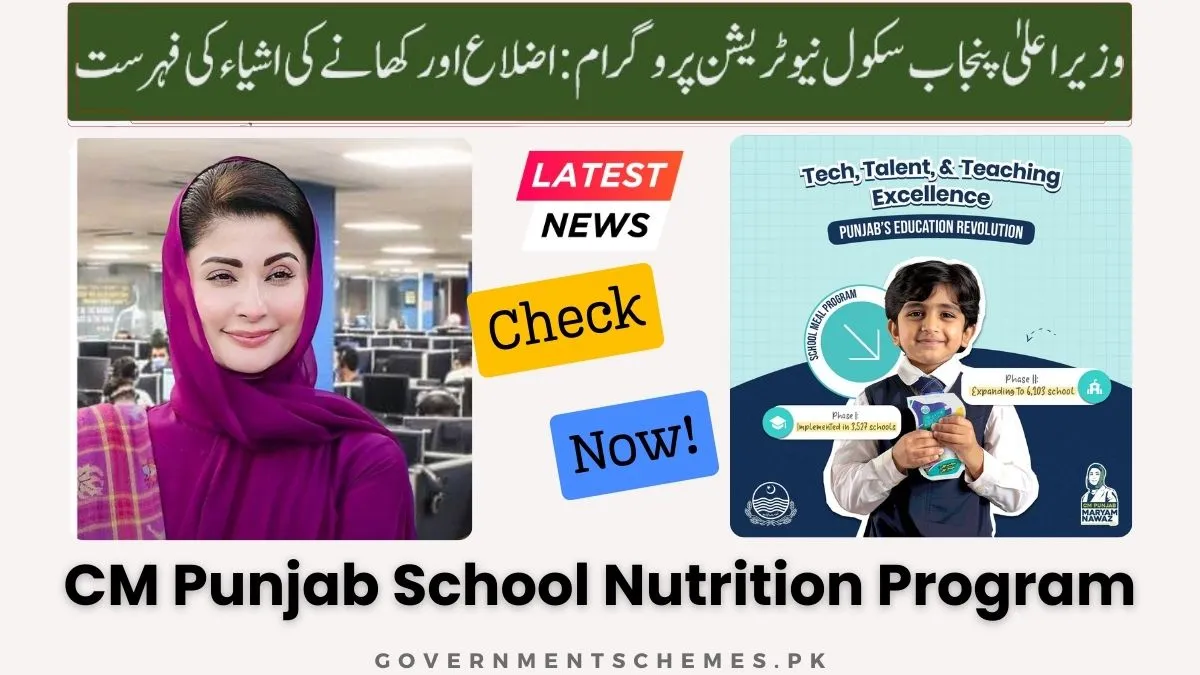
The CM Punjab School Nutrition Program is a landmark government initiative providing free, nutritious meals—specifically milk and biscuits—to hundreds of thousands of primary school students across Punjab to combat child malnutrition and boost educational outcomes. This definitive guide will walk you through everything you need to know: the complete and updated list of districts covered, a detailed breakdown of the food items provided, who is eligible, how the program works, its groundbreaking recycling initiative, and how you can access support or file a complaint.
What you will learn in this guide:
- The complete, up-to-date list of districts where the program is currently active.
- A detailed look at the food items (milk and biscuits) and the science behind them.
- Eligibility criteria and how students are automatically enrolled.
- The innovative “Milk Pack Recycling” policy and its benefits.
- Key statistics on impact, including the 28% increase in student enrollment.
- Official helpline numbers and complaint procedures.
Key Takeaways
- Expansive District Coverage: The program has rapidly expanded from 3 pilot districts to 13 districts across Punjab, including Bahawalnagar, Bhakkar, and recently added Chiniot, Lodhran, and Vehari.
- Standardized Nutritious Menu: Every eligible student receives a daily ration of UHT milk and fortified biscuits, designed by nutritionists to address common deficiencies like iron and calcium.
- Proven Impact on Education: Since the launch, the program has led to a remarkable 28% increase in student enrollment, with over 24,000 new students joining schools.
- Sustainability at its Core: The program features a unique recycling initiative where empty milk packs are turned into durable furniture, with proceeds funding school welfare, aligning with the Green Punjab Policy.
- Read More: Sehat Sahulat Program (By CM Punjab) | Free Insulin, Dialysis, & Medicines
- Read More: CM Punjab Dialysis Card | Free Dialysis Scheme (by CM Punjab)
- Read More: Maryam Nawaz Insulin Program | Free Insulin Scheme (By Insulin Card)
CM Punjab School Nutrition Program: Districts and Food Items List
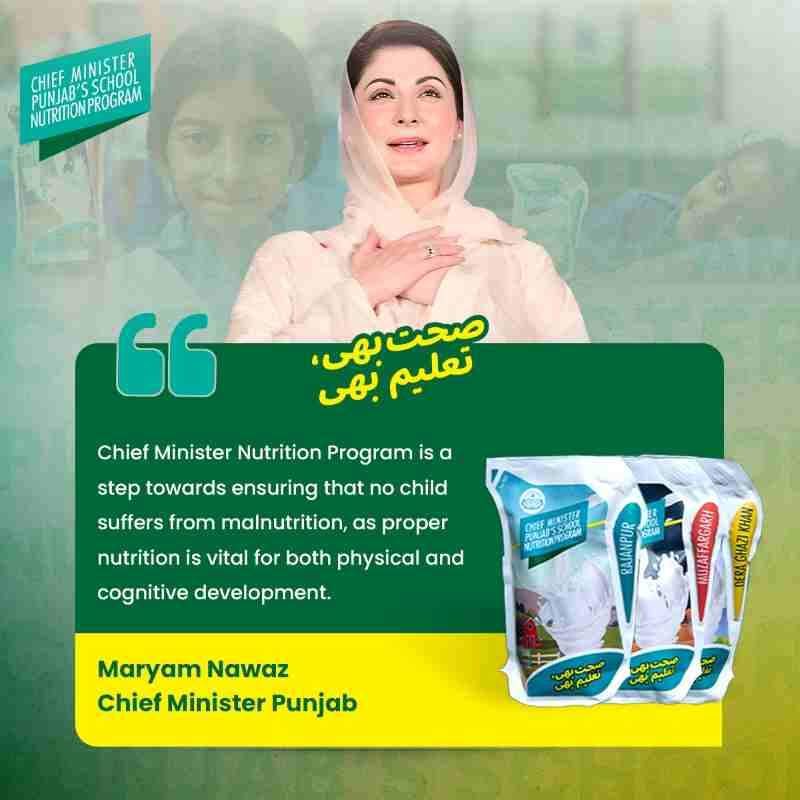
Table Of Contents
Section 1: District-Wise Coverage and Expansion Phases
The CM Punjab School Nutrition Program, initially a pilot project, has demonstrated remarkable growth and is now a key pillar of the province’s education and health strategy. Its phased rollout is a testament to its success and the government’s commitment to reaching every deserving child. Below, we detail the complete geographical footprint of the program.
Which districts are included in the CM Punjab School Nutrition Program?
The CM Punjab School Nutrition Program currently operates across 13 districts of Punjab, covering thousands of government primary schools. This coverage is the result of a carefully planned phased expansion based on need, logistics, and successful pilot outcomes.
Initial Pilot Districts
The program was launched as a pilot in three of the most underserved districts of South Punjab, areas with historically high malnutrition rates and low educational indicators. These foundational districts are:
- Dera Ghazi Khan
- Muzaffargarh
- Rajanpur
This initial phase targeted over 400,000 students across more than 3,500 schools, establishing the operational framework, supply chains, and monitoring systems that would later enable expansion.
First Expansion Phase Districts
After the success of the pilot, the program was scaled up to include five additional districts, broadening its reach to more children in need. The first expansion phase added:
- Bahawalnagar
- Bhakkar
- Layyah
- Mianwali
- Rahim Yar Khan
This expansion brought the program’s total coverage to eight districts, significantly increasing the number of beneficiaries and proving the model’s replicability across diverse geographical areas of Punjab.
Newest Districts Added to the Program
In the most recent expansion wave, the government approved the inclusion of five more districts, bringing the total to 13. This phase focused on districts with high poverty scores and confirmed the government’s commitment to province-wide coverage. The newest districts added are:
- Chiniot
- Kot Addu
- Lodhran
- Taunsa
- Vehari
The inclusion of these districts was marked by official launch ceremonies, with Chiniot being a notable addition where the program now covers approximately 60,000 students across 353 schools.
What is the current total coverage of the program in terms of districts and schools?
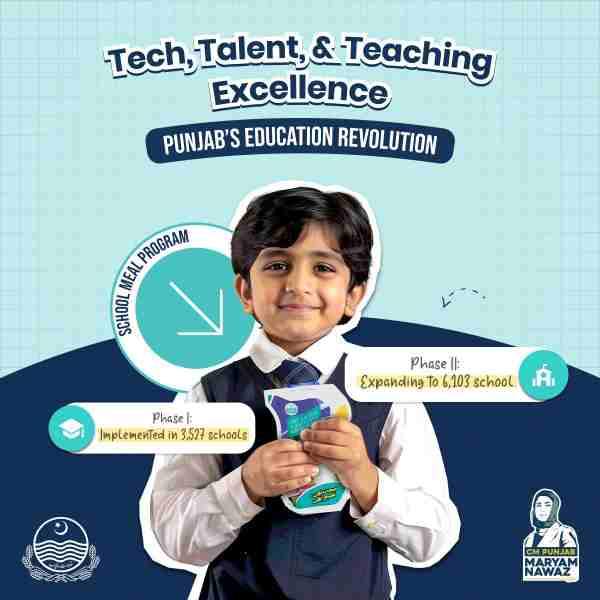
The CM Punjab School Nutrition Program now boasts an impressive operational footprint. As of the latest official data, the program is successfully running in 13 districts. It covers over 8,300 government primary schools, with a near-equal split between boys’ and girls’ institutions to ensure gender equity in nutrition and education. Specifically, this includes more than 4,300 boys’ schools and over 4,000 girls’ schools.
| Phase | Districts Covered | Approx. Schools Covered |
|---|---|---|
| Initial Pilot | Dera Ghazi Khan, Muzaffargarh, Rajanpur | 3,500+ |
| First Expansion | Bahawalnagar, Bhakkar, Layyah, Mianwali, Rahim Yar Khan | ~2,500 |
| Newest Additions | Chiniot, Kot Addu, Lodhran, Taunsa, Vehari | ~2,300 |
| Total | 13 Districts | 8,300+ |
Which Southern Punjab districts are prioritized in the nutrition program?
Southern Punjab has been the primary focus of the CM Punjab School Nutrition Program from its inception. This prioritization is strategic and data-driven, as districts in the southern belt consistently show higher rates of stunting, wasting, and overall child malnutrition according to provincial health surveys.
The original pilot districts—Dera Ghazi Khan, Muzaffargarh, and Rajanpur—are all located in Southern Punjab. Subsequent expansions have also heavily featured southern districts like Bahawalnagar, Rahim Yar Khan, and Lodhran. This focus ensures that the program’s resources are directed to the populations with the most urgent nutritional needs, thereby maximizing its health and educational impact.
Will the Punjab School Nutrition Program expand to all 36 districts?
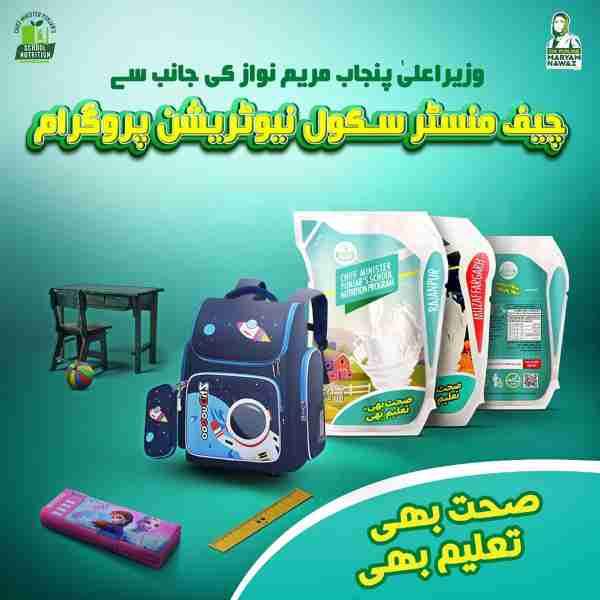
Yes, the government has clearly stated its intention to eventually expand the CM Punjab School Nutrition Program to cover all 36 districts of Punjab. The current phased rollout is designed as a measured, sustainable approach to achieving this goal. Each successful phase builds the administrative capacity, logistical expertise, and financial framework required for larger-scale implementation.
Future expansion plans are already under discussion, with districts such as Rawalpindi, Faisalabad, Sargodha, and Gujranwala being considered for inclusion in subsequent phases. The inclusion of more labor welfare schools and educational institutions in urban centers is also on the agenda, signaling a move towards universal coverage for all primary government school children in the province.
Section 2: The Complete Food Items List and Nutritional Menu
The core of the CM Punjab School Nutrition Program is its scientifically designed food package. The items provided are not just meals; they are carefully selected nutritional interventions aimed at addressing specific deficiencies prevalent among Punjab’s children. Understanding what is in the pack, and why, is crucial to appreciating the program’s value.
What food items are provided to students under the program?
The standard daily ration for each student consists of two primary components: a serving of milk and a serving of biscuits. This combination is chosen for its balanced nutritional profile, ease of distribution, and long shelf life, which is essential for reaching schools in remote areas without reliable cold storage.
The Standard Daily Meal Pack: Fortified Milk and Fortified Biscuits
Every student enrolled in a participating school receives one pack of milk and one pack of biscuits each school day. This consistent supply ensures a steady intake of essential nutrients.
- Fortified Milk: Each child receives one 175ml to 200ml pack of UHT (Ultra-High Temperature) treated milk. UHT processing is critical because it makes the milk shelf-stable for months without refrigeration, even in Punjab’s extreme summer heat. This eliminates the risk of spoilage during storage and distribution. The milk is also fortified with additional Vitamin A and Vitamin D, which are crucial for immune function and bone health.
- Fortified Biscuits: Alongside the milk, students receive a packet of specially manufactured biscuits. These are not ordinary biscuits; they are “fortified” with a precise blend of essential micronutrients. This typically includes:
- Iron: To combat anemia, which affects cognitive development and energy levels.
- Zinc: Vital for growth, immunity, and cell repair.
- Iodine: Essential for brain development and thyroid function.
- Calcium: Working in tandem with the milk’s calcium and Vitamin D for strong bones and teeth.
- Vitamin A: Crucial for vision and immune health.
The combination of milk (providing protein and calcium) and fortified biscuits (providing energy and micronutrients) creates a synergistic effect, maximizing the nutritional benefit for growing children.
Is the milk provided to students UHT treated?
Yes, absolutely. The milk provided under the CM Punjab School Nutrition Program is exclusively UHT (Ultra-High Temperature) treated. This is a non-negotiable specification for the program’s suppliers.
UHT treatment involves heating the milk to a temperature of over 135°C (275°F) for a few seconds to kill all harmful microorganisms and spores. This process is what allows the milk to be stored safely at ambient temperature for up to six months. For a program distributing millions of packs across thousands of schools with varying infrastructure, this is indispensable. It guarantees that when a child opens their milk pack at school, it is safe, fresh, and nutritious, regardless of how long it has been in storage or the temperature outside.
Are the biscuits provided in schools fortified with vitamins?
Yes, the biscuits distributed under the program are specifically fortified with vitamins and minerals. They are produced according to strict government specifications to ensure they serve as a “carrier” for essential nutrients. The fortification formula is designed by nutritionists to complement the milk and fill the most common dietary gaps in the target population. This makes the simple biscuit a powerful tool for public health, delivering a concentrated dose of micronutrients that many children lack in their regular home-cooked meals.
How many milk packs and biscuits have been distributed so far?
The scale of the CM Punjab School Nutrition Program is immense. Since its launch, the program has successfully distributed over 33 million milk packs and more than 12 million biscuit packets to students across Punjab. These numbers are not just statistics; they represent over 33 million instances of a child receiving essential nutrition, which translates into improved health, better concentration in class, and a stronger incentive for families to send their children to school regularly.
What nutrients are included in the school nutrition packs?
The nutrition packs are designed to be a comprehensive supplement to a child’s diet. The key nutrients and their functions include:
- Protein: From milk, for growth and tissue repair.
- Calcium: From milk, for strong bones and teeth.
- Vitamin D: Added to milk, to aid calcium absorption.
- Vitamin A: Added to biscuits, for vision and immunity.
- Iron: Added to biscuits, to prevent anemia and boost energy.
- Zinc: Added to biscuits, for immune function and growth.
- Iodine: Added to biscuits, for brain development.
This targeted nutrient profile directly addresses the deficiencies identified in national nutritional surveys, making the program a precise and effective health intervention.
What is the new menu under Phase-II of the program?
While the milk and biscuits model remains the core of the program, a special Phase-II initiative has been launched to test a more diverse and culturally appropriate menu. This pilot project is running in select schools to assess the feasibility and impact of providing a cooked meal.
Phase-II Menu Expansion: Introducing Meat, Pulses, and Seasonal Fruits
This advanced phase, initially launched for schools in Lahore and now expanding, provides a broader, rotating menu. It is designed to introduce more variety and address protein and fiber needs more comprehensively.
The new menu items for Phase-II include:
- Protein-Rich Items: Meals incorporating chicken and mutton.
- Pulses (Daal): A staple source of protein and fiber in the Pakistani diet.
- Fresh Vegetables: Seasonal vegetables to provide vitamins and minerals.
- Seasonal Fruits: Providing natural sugars, fiber, and antioxidants.
This phase currently covers over 14,000 students in more than 30 government primary schools and several labor welfare schools. The meals are provided for a trial duration to gather data on logistics, cost, student acceptance, and health outcomes before any potential wider rollout.
Read More: CM Punjab Climate Internship Program (PKR 60K Apply Online)
Section 3: Eligibility, Enrollment, and Beneficiary Criteria
A common question from parents and educators is how students can get access to this program. The design prioritizes simplicity and universal access within target schools to avoid administrative hurdles and ensure that every child in need benefits.
Who is eligible for the CM Punjab School Nutrition Program?
Eligibility for the program is based on school enrollment, not on individual application or income level. This universal approach within targeted schools is a key feature of its design.
Eligibility Criteria:
- School Enrollment: The child must be enrolled in a government primary school.
- School Location: The school must be located in one of the 13 districts currently covered by the program.
- Grade Level: The program primarily targets students in primary grades, typically from Grade 1 to Grade 5.
If a child meets these three criteria, they are automatically eligible to receive the daily milk and biscuit pack.
Is the program for both boys and girls?
Yes, the CM Punjab School Nutrition Program is for both boys and girls. The program is strictly non-discriminatory and aims to benefit all children equally. The government data confirms this, showing a near 50/50 split in the number of schools for boys and girls covered under the program. By ensuring girls receive the same nutritional support as boys, the program also tackles gender disparities in health and education, encouraging families to prioritize schooling for their daughters.
What is the age limit for students receiving free meals?
While the program doesn’t enforce a strict age limit, it is designed for children of primary school age. Since it targets students in Grades 1 through 5, the typical age range is approximately 5 to 10 years old. However, a child enrolled in a primary grade at a participating school will receive the meal regardless of being slightly older or younger than the typical age range for that grade.
Are private schools included in the CM Punjab Meal Program?
No, the CM Punjab School Nutrition Program is specifically designed for students in the public education system. Its primary focus is on government schools and, in some pilot phases, labor welfare schools. These institutions cater to children from lower-income backgrounds who are most at risk of malnutrition. The program’s resources are intentionally concentrated on this demographic to maximize its social impact and ensure that public funds reach the most vulnerable populations.
Do parents need to apply for their child to get the food?
No application is necessary. There is no registration form to fill out, no income certificate to submit, and no application fee. The process is seamless and automatic.
How Automatic Enrollment Works:
If a parent enrolls their child in a government primary school located in a covered district, the child’s name is automatically added to the school’s roster. The school administration then uses this roster to account for and distribute the daily meals. As long as the child attends school, they will receive their milk and biscuits. This “automatic” system removes barriers to access and ensures 100% participation of the target demographic within the covered areas.
Section 4: Program Implementation and Logistics
Distributing millions of food packs to thousands of schools every day is a monumental logistical challenge. The CM Punjab School Nutrition Program relies on a robust, multi-layered system involving government oversight, private sector partnerships, and community-level management.
How does the CM Punjab School Nutrition Program work on a daily basis?
The program operates on a well-oiled daily cycle that begins long before the school bell rings.
- Procurement: The government issues tenders and selects private sector suppliers (dairies and food companies) through a competitive bidding process to ensure the best quality at the lowest price.
- Production and Fortification: Suppliers manufacture the UHT milk and fortified biscuits according to strict government specifications, ensuring consistent nutritional content.
- Distribution: Suppliers are responsible for delivering the pre-packed items directly to the schools on a regular schedule, bypassing the need for complex central storage.
- School-Level Management: Upon arrival at a school, the head teacher or a designated “Nutrition Coordinator” receives and verifies the delivery against the school’s student count.
- Daily Distribution: During a designated break time, teachers distribute one milk pack and one biscuit pack to each student.
- Consumption and Collection: Students consume the food in a supervised environment. Afterwards, they are instructed to rinse and return the empty milk packs.
- Recycling Collection: The empty packs are collected, bundled, and stored at the school until they are picked up by recycling partners.
Who is the supplier of milk for the Punjab School Nutrition Program?
The suppliers are reputable private-sector dairy and food companies that are selected through a rigorous and transparent tendering process managed by the Punjab School Education Department. The selection criteria are strict and include:
- The company’s production capacity and infrastructure.
- Their ability to meet the demand across multiple districts.
- Adherence to UHT processing and fortification standards.
- Competitive pricing.
- A proven track record of quality and reliability.
The use of multiple suppliers across different regions helps mitigate risk and ensures a stable, competitive supply chain.
How often are the food items delivered to the schools?
Delivery schedules are designed to ensure a constant supply without overwhelming the schools’ storage capacity. In most districts, deliveries are made on a weekly or bi-weekly basis. This frequency ensures that the products remain fresh within their shelf life and that the school always has enough stock to cover its students. The delivery schedule is coordinated with the school calendar to ensure supplies arrive before they run out, preventing any interruption in the daily meal service.
How does the government monitor the quality of food in schools?
Quality control is a multi-tiered process that involves several government departments to ensure that the food reaching children is safe and nutritious.
Primary Monitoring Mechanisms:
- Supplier Self-Audits: Suppliers are contractually obligated to maintain their own quality control labs and processes.
- School-Level Checks: Teachers and headmasters are trained to conduct basic visual inspections of the delivered items, checking packaging integrity and expiry dates before acceptance.
- Punjab Food Authority (PFA) Inspections: The PFA plays a critical role by conducting unannounced, random inspections at both supplier facilities and schools. They collect samples of milk and biscuits for laboratory testing to verify nutritional content and check for contaminants.
- District Monitoring Teams: Education department officials at the district level are responsible for regular field visits to schools to observe distribution and gather feedback.
- Nutrition Coordination Committees: Each school has a committee comprising teachers and parent representatives to oversee the program’s implementation and report any issues.
Which international organizations are supporting the Punjab school meals?
While the program is a fully funded and managed initiative of the Government of Punjab, it aligns with and receives technical guidance from global best practices in school feeding. The program’s design reflects principles advocated by international bodies focused on child health and nutrition. The government collaborates with these organizations for knowledge sharing, capacity building, and monitoring frameworks, although the operational and financial ownership remains entirely with the Punjab government.
Section 5: The Unique “Milk Pack Recycling” Initiative
One of the most innovative and lauded aspects of the CM Punjab School Nutrition Program is its environmental sustainability component. It transforms a potential waste problem into a resource for schools, teaching students valuable lessons about recycling and responsibility.
What is the “Milk Pack Recycling” policy in Punjab schools?
The Milk Pack Recycling policy is a closed-loop system that requires students to return the empty milk packs after consumption. This isn’t just a cleanliness measure; it’s the first step in a comprehensive recycling process. Students are encouraged to rinse the packs and deposit them in designated collection bins in their classrooms. This simple act fosters a sense of ownership and environmental stewardship among the children.
How are empty milk packs recycled, and what is made from them?
The collected empty milk packs are not sent to landfills. Instead, they are sold to recycling partners who process them. The packs, which are made of high-quality paperboard lined with plastic and aluminum, are a valuable resource. Through a specialized recycling process, they are transformed into durable and useful products for the schools themselves.
Products Made from Recycled Milk Packs:
- Durable Desks and Chairs: The recycled material is compressed and molded to create sturdy classroom furniture.
- Notebooks and Stationery: The paper fibers can be used to make notebooks and other paper products.
- Pencils: Even simple items like pencils are being manufactured from the recycled material.
What are the benefits of the recycled furniture?
The furniture produced from recycled milk packs has several advantages over traditional wood or plastic furniture. It is remarkably durable and long-lasting, with an expected lifespan of up to 40 years. It is also weather-resistant, able to withstand rain and extreme temperatures without rotting or warping. This provides schools with high-quality, virtually indestructible furniture at no additional cost, directly improving the learning environment.
How are the funds from recycling utilized?
The recycling initiative is not just about waste management; it’s a self-funding mechanism for school improvement. The funds generated from selling the used milk packs to recycling companies are deposited into a dedicated account for each school.
How the Funds are Reinvested:
These proceeds are then used exclusively for the welfare and development of the school itself. The funds can be used for:
- Purchasing additional furniture, like the desks made from recycled packs.
- Repairing and maintaining school facilities.
- Buying sports equipment and educational materials.
- Funding small-scale improvement projects identified by the school’s administration and parent-teacher council.
This creates a virtuous cycle: the program feeds children, and the byproduct of that feeding directly contributes to making their schools better.
Section 6: Complaint Redressal and Monitoring Systems
Transparency and accountability are the cornerstones of a successful public program. The Punjab government has established multiple channels for parents, teachers, and citizens to report issues, ask questions, or lodge complaints regarding the school nutrition program.
Is there a complaint number for the Punjab School Nutrition Program?
Yes, there are official helplines dedicated to addressing public queries and complaints related to the School Education Department and the Chief Minister’s initiatives.
Official Helpline Numbers:
- School Education Department Helpline: The primary helpline for issues related to schools, including the nutrition program, is 111-112-020. This number connects callers to a central complaint center where their issues can be logged and tracked.
- CM Punjab Complaint Cell: For any issues related to government schemes and services in Punjab, citizens can also call the Chief Minister’s dedicated complaint cell at 0800-02345. This is a general helpline but can be used for escalation if issues are not resolved at the departmental level.
How can citizens file a complaint online about the school meal program?
For those who prefer digital communication, the Punjab government has a robust online complaint management system.
- Visit the Portal: Go to the official Punjab Citizen Portal or the specific complaint portal for the School Education Department.
- Register Your Complaint: You will need to provide basic details, including your name, contact information, the district, tehsil, and the specific school you are referring to.
- Describe the Issue: Clearly describe the nature of your complaint (e.g., poor quality of milk, short supply, disruption in distribution).
- Get a Tracking Number: Upon submission, the system generates a unique tracking number. You can use this number to follow the status of your complaint online as it is processed and resolved by the relevant authorities.
How does the government ensure accountability and transparency?
Beyond helplines, the government employs several strategies to maintain high standards of accountability.
- Real-Time Monitoring: The program utilizes digital tools for real-time data collection on deliveries and distribution.
- Surprise Inspections: District education officers and PFA teams conduct regular, unannounced visits to schools.
- Digital Audit Trail: Every complaint received via phone or online is logged, assigned, and tracked, creating a transparent record of responsiveness.
- Whistleblower Policies: Teachers and community members are encouraged to report any discrepancies without fear of reprisal.
Section 7: Benefits, Impact, and Statistical Outcomes
The ultimate measure of the CM Punjab School Nutrition Program’s success lies in its tangible impact on the ground. The data emerging from the program paints a clear picture of a transformative initiative that is delivering on its promises.
What are the proven benefits of the CM Punjab School Nutrition Program?
The benefits of the program are multi-dimensional, affecting not just the child’s health but also their educational trajectory and their family’s economic decisions.
How does the nutrition program impact student attendance?
This is arguably the program’s most dramatic success story. By providing a guaranteed meal at school, the program creates a powerful incentive for parents to send their children to school regularly and on time. The impact has been immediate and quantifiable.
Quantifiable Increase in Enrollment:
Since the launch of the CM Punjab School Nutrition Program, there has been a verified 28% increase in student enrollment across the covered districts. This translates to over 24,000 new students who have enrolled in government schools, many of whom may have previously been out of school or engaged in child labor. The promise of a daily, nutritious meal has proven to be a more effective enrollment driver than many traditional awareness campaigns.
What are the health benefits for students?
The primary goal of the program is to combat malnutrition, and it is achieving this on a massive scale. The targeted provision of milk and fortified biscuits directly addresses the high rates of stunting and micronutrient deficiencies prevalent in Punjab.
Combatting Malnutrition and Anemia:
- Reduced Stunting: Consistent access to protein and calcium supports proper physical growth, helping to mitigate the long-term effects of stunting.
- Combating Anemia: The iron-fortified biscuits are a direct intervention against anemia, a condition that causes fatigue, weakness, and impaired cognitive function. By reducing anemia, the program ensures children have the energy to play, learn, and grow.
- Improved Immunity: Nutrients like Vitamin A and Zinc are critical for a healthy immune system, meaning children are better equipped to fight off common childhood illnesses, leading to fewer sick days and better overall health.
How does it impact learning outcomes?
A child who is not hungry is a child who is ready to learn. This simple truth is at the heart of the program’s educational impact.
Enhanced Concentration and Classroom Performance:
- Improved Focus: A nutritious breakfast or mid-day meal stabilizes blood sugar levels, allowing children to concentrate better on their lessons without the distraction of hunger pangs.
- Better Cognitive Function: Nutrients like iron and iodine are essential for brain development and cognitive function. By ensuring adequate intake, the program supports memory, problem-solving skills, and overall academic ability.
- Increased Classroom Participation: When children feel physically well, they are more likely to participate actively in class discussions and activities.
Are there any health screenings for students under this program?
In its expanded phases, particularly in Phase-II, the program incorporates a health monitoring component. Students participating in the cooked meal pilot are often weighed and measured at the start and end of the pilot period. This data is used to track growth indicators like weight-for-age and height-for-age, providing empirical evidence of the program’s health impact. While not a universal full medical screening, this targeted monitoring is a crucial tool for evaluating and refining the program’s nutritional strategy.
Section 8: Financial Overview and Budget Allocation
A program of this scale requires significant financial commitment. The Punjab government has demonstrated its dedication by allocating substantial funds and ensuring timely releases to keep the operations running smoothly.
What is the total budget for the CM Punjab School Nutrition Program?
The CM Punjab School Nutrition Program is one of the largest social protection initiatives in the province’s history. The total approved cost for the project, spanning its initial multi-year implementation phase, exceeds Rs. 6,000 million. This comprehensive budget covers everything from the procurement of milk and biscuits to the costs of logistics, distribution, monitoring, and program management.
To ensure the program’s continuity and expansion, the Finance Department has consistently released funds. Recent allocations have seen releases of over Rs. 2.5 billion specifically earmarked to cover procurement and operational costs, demonstrating the government’s commitment to uninterrupted service for the children.
Section 9: Future Outlook and Program Evolution
The CM Punjab School Nutrition Program is not a static initiative. It is designed to learn, adapt, and grow. Based on the successes and lessons of the pilot and expansion phases, its future looks bright and ambitious.
How is this program different from past school meal schemes in Pakistan?
Past efforts at school feeding in Pakistan have often been fragmented, temporary, or limited in scope. The CM Punjab School Nutrition Program differs fundamentally in several key aspects:
- Scale and Structure: It is a centrally planned, provincially funded program with a clear, phased expansion strategy, unlike ad-hoc schemes.
- Nutritional Science: The menu is not just about providing calories; it is a precisely formulated nutritional intervention based on scientific data on child deficiencies.
- Sustainability Model: The innovative recycling initiative is a world-class feature that sets it apart, turning an expense into a revenue stream for schools.
- Robust Monitoring: The integration of the Punjab Food Authority and digital complaint systems ensures a level of accountability rarely seen in similar programs.
What is the future of the program?
The future of the CM Punjab School Nutrition Program is geared towards expansion and diversification.
- Geographic Expansion: The primary goal is the phased inclusion of all remaining districts of Punjab.
- Menu Diversification: Based on the results of Phase-II pilots, the program may introduce more cooked meals or a varied menu alongside the standard milk and biscuits.
- Inclusion of More Schools: Plans are already in place to include over 70 additional labor welfare schools, broadening the program’s reach beyond the standard government school system.
- Strengthening the Recycling Link: Efforts are underway to expand the range of products made from recycled packs and to further integrate the recycling revenue into school development plans.
Conclusion
The CM Punjab School Nutrition Program stands as a shining example of how a well-designed, adequately funded, and passionately implemented public policy can transform lives. It is more than just a meal program; it is a holistic intervention that simultaneously fights hunger, promotes education, empowers communities, and protects the environment. By tackling malnutrition at its root and creating a powerful incentive for school attendance, it is investing in the very foundation of Punjab’s future: its children. As the program continues to expand and evolve, it promises to create a healthier, more educated, and more prosperous generation for the province.
Frequently Asked Questions (FAQs)
Which districts are covered under the CM Punjab School Nutrition Program?
The program currently covers 13 districts: Dera Ghazi Khan, Muzaffargarh, Rajanpur, Bahawalnagar, Bhakkar, Layyah, Mianwali, Rahim Yar Khan, Chiniot, Kot Addu, Lodhran, Taunsa, and Vehari.
What food items are given to students daily?
Each student receives one pack of UHT-treated fortified milk and one pack of fortified biscuits every school day.
Is the milk provided UHT treated?
Yes, all milk distributed is UHT (Ultra-High Temperature) treated to ensure it is shelf-stable, safe, and does not require refrigeration.
Are private school kids eligible for this program?
No, the program is currently designed for students enrolled in government primary schools and select labor welfare schools in the covered districts.
How many students are currently benefiting from this scheme?
The program benefits hundreds of thousands of students, with over 400,000 covered in the initial phases alone, and the number growing with each district expansion.
What is the Milk Pack Recycling policy?
Students are encouraged to return their empty milk packs. These are recycled into durable products like school desks and notebooks, and the funds generated are used for the development of the schools.
How can I register a complaint about the school meal program?
You can call the School Education Department helpline at 111-112-020 or the CM Punjab Complaint Cell at 0800-02345. You can also file a complaint online through the official Punjab Citizen Portal.
What is the helpline number for the Punjab School Education Department?
The official helpline number for the School Education Department is 111-112-020.
Has the program increased school attendance?
Yes, the program has led to a remarkable 28% increase in student enrollment in the covered districts, with over 24,000 new students joining schools.
Is the program only for primary classes (1-5)?
Yes, the program primarily targets students enrolled in primary grades (1 to 5) in government schools.
What nutrients are included in the school nutrition packs?
The packs provide protein and calcium from milk, and essential micronutrients like iron, zinc, iodine, and Vitamin A from the fortified biscuits.
How does the government monitor the quality of food?
The Punjab Food Authority (PFA) conducts regular, unannounced inspections and laboratory tests of the milk and biscuits at both supplier facilities and schools.
Are the biscuits provided in schools fortified with vitamins?
Yes, the biscuits are specially fortified with a precise blend of vitamins and minerals, including iron, zinc, iodine, and Vitamin A.
What is the new menu under Phase-II of the program?
Phase-II is a pilot project in select schools introducing a more diverse cooked menu that includes meat, pulses (daal), fresh vegetables, and seasonal fruits.
Will the Punjab School Nutrition Program expand to all 36 districts?
Yes, the government has announced its intention to gradually expand the program to cover all districts of Punjab based on the success of the current phases.
Disclaimer: This article is based on publicly available information and official government announcements regarding the CM Punjab School Nutrition Program. While every effort has been made to ensure accuracy, readers are advised to consult official government sources and notifications for the most current and legally binding information, as program details are subject to change.

Add a Comment